Search This Blog

De Omnibus Dubitandum - Lux Veritas

Showing posts with label Homeless. Show all posts

Saturday, April 13, 2024

California’s Most Magnificent Homelessness Failure

The Golden State leads the way in bureaucratic incompetence. 

By | Apr 12, 2024 @ Liberty Nation News, Tags Articles, Good Reads, Opinion, Politics
 California’s Most Magnificent Homelessness Failure

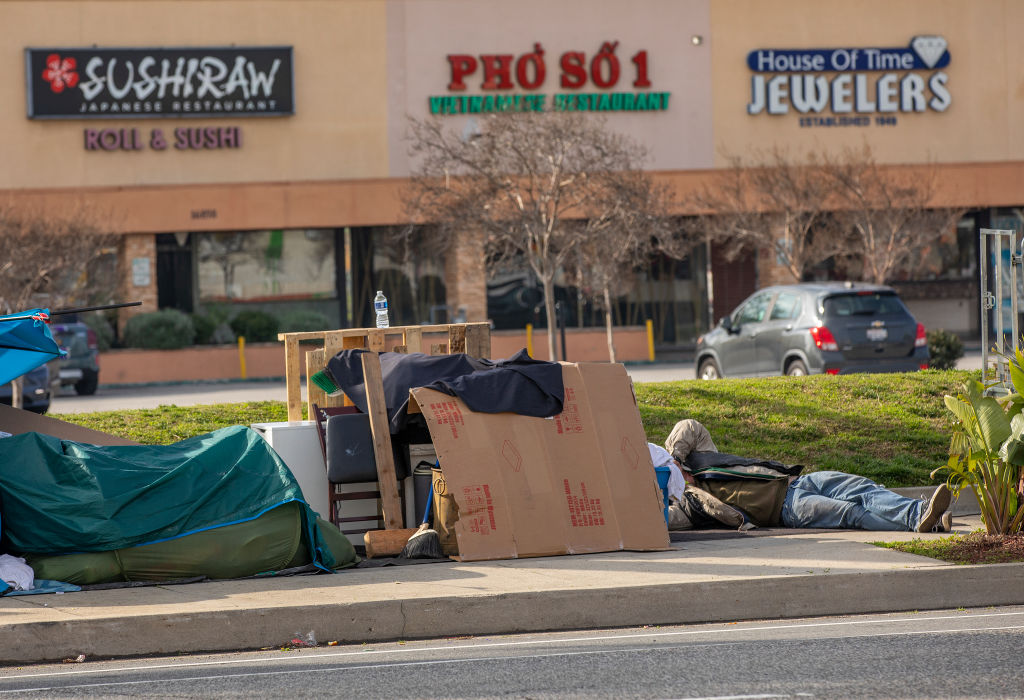
Every once in a while, a political story lands that cuts through the partisan divide and exposes itself as the quintessential paradigm of what is wrong at the heart of government. Corruption is often dismissed as the price of having politicians; dishonesty is deemed pervasive but predictable. Still, the two most cardinal sins of a bureaucracy that seeks to administer our very experience of life are incompetence and apathy. Both of these have been exposed in California’s efforts to mitigate the growing homelessness crisis within its borders.

The Fix Is in for Homelessness

A new report by the state auditors covering fiscal years 2018 to 2023 – released April 9 – found that around $24 billion of taxpayer funds spent on fixing the rampant vagrancy that afflicts the state didn’t really do much of anything. In fact, the auditors concluded that the California Interagency Council on Homelessness (Cal ICH) – the outfit responsible for doling out the cash and coordinating agencies – stopped tracking the results of the expenditure in 2021.

So not only did the cash not achieve the desired results, the responsible agency decided to stop even quantifying what results there were! The cherry on top of this particularly poor-tasting cake is – according to the report – that Cal ICH did not even evaluate the data it did collect.

The Cost of Failure

Let’s consider the numbers for a moment. California spent roughly $24 billion to fix or ameliorate a problem for which it is well known – indeed, it is by a huge measure the worst place in the nation for vagrancy. According to USAFacts, “California had the highest number of people experiencing homelessness of any state: 181,399.”

If the bureaucratic behemoth that administers the splurge of taxpayer funds had just doled out the cash directly, each homeless person would have received more than $130,000.

Would this have solved homelessness in the Golden State? Not entirely. But it would have made more of an impact for those who are homeless due to financial issues. It could have provided funds to start new lives elsewhere in the United States, where that kind of money goes a long, long way. Instead, it appears good money was sent after bad, and the administrators figuratively closed their eyes and stopped looking at what – if any – impact the taxpayer largesse was having.

Lessons Most Certainly Not Learned

State Sen. Dave Cortese, the Democratic lawmaker who initially asked for the report, responded: “Unfortunately, there is a balkanized approach to data collection and outcomes, with no centralized system for tracking our investments. This audit underscores the urgent need to establish best practices and create a blueprint for how the State of California and our cities can address our most visible challenge.”

One might consider asking why a “blueprint” was not considered before the expenditure of $24 billion.

An Accountability Deficit

Who will answer for the profligate spending that failed to achieve anything of substance beyond squeezing Golden Staters for more of their hard-earned money? If one has been even partially politically aware over the last few decades, the answer becomes clear: no one. But should Democrats in California have a crisis of conscience and decide to push for answers, they may just be met with a Sir Humphry Appleby-style* response:

“If you ask me for a straight answer, then I shall say that, as far as we can see, looking at it by and large, taking one thing with another in terms of the average of departments, then in the final analysis it is probably true to say, that at the end of the day, in general terms, you would probably find that, not to put too fine a point on it, there probably wasn’t very much in it one way or the other as far as one can see, at this stage.”

But then why would any form of accountability be necessary when the political leanings of the state make it almost an impossibility that they will be voted out in the next election?

*Sir Humphry Appleby was a civil servant in the British comedy sitcom Yes, Minister, and Yes, Prime Minister.

 
Read More From Mark Angelides

Tuesday, January 2, 2024

The Progressive Approach To Homelessness Comes To Madison, Wisconsin

December 23, 2023  Francis Menton @ Manhattan Contrarian

“Homelessness” is one of my favorite topics because it provides an endless supply of examples of clear, dramatic, and immediate failure of the government programs supposedly intended to assist the poor and vulnerable. All of the big progressive cities follow some version of the same policies, which in summary amount to spending more and more money to provide “housing first” as the obvious solution to homelessness. All of these cities have rapidly stepped up spending over the past decade on promises to the voters to solve the homelessness problem with more subsidized housing; and all of them have then seen homelessness rise relentlessly along with the spending. It’s almost impossible to believe that nobody can learn from this experience.

For today I’ll provide the latest update from Los Angeles, as well as look at how a very similar approach has worked out in the smaller (but equally progressive) city of Madison, Wisconsin.

In a post back in March, I went into considerable detail about the efforts over the past several years of the City and County of Los Angeles to solve homelessness by ramping up spending to build new housing units into which the homeless can be placed. In 2016 the voters passed a special bond issuance, called Proposition HHH, in the amount of $1.2 billion. An LA-based non-profit called Local Housing Solutions, which advocated for Proposition HHH, described the initiative as providing funding mostly for “permanent supportive housing units for people experiencing homelessness.”

And then, as recounted in my post, in the aftermath of the referendum and as the spending took place over the following several years, the number of homeless people counted in LA City and County proceeded to go from 44,359 in 2015 to 69,144 in 2022.

Next, in early 2022, the efforts in LA to solve homelessness by spending ever more public funds on supportive housing got another big jolt of funding, this time when the City agreed to add some $3 billion of spending as part of a settlement of a lawsuit. In my March 2023 post I promised to check back in another year or so to see if all the spending is starting to make any difference at all. Checking back today, I find that a big official survey of homelessness was conducted in LA back during the summer, with the results reported in the Los Angeles Times on June 29. The results will not surprise any reader here:

The homeless count for Los Angeles County is in, and officials say the numbers are discouraging. The annual point-in-time count released Thursday by the Los Angeles Homeless Services Authority found a 9% increase in Los Angeles County and a 10% increase in the city of Los Angeles.

The Times provides the following chart showing the inexorable rise of homelessness over the past nine years:

Does anyone think that if we just allow more time for the whole $3 billion to get spent that that will turn things around?

Well, all of that is taking place in the big, faceless, soulless City of Los Angeles, with its huge and unaccountable bureaucracy. Perhaps we should look to a much smaller and more intimate, if equally progressive, place.

So, consider the latest news out of Madison, Wisconsin (population about 270,000). Like Los Angeles, Madison has also adopted the official orthodox progressive “housing first” policy as its way of addressing homelessness. How is that going? The Wisconsin State Journal has the story on December 21 (h/t Ann Althouse):

2 biggest Madison homeless projects could close within months, leaving city scrambling . . . . The two biggest "Housing First" initiatives for the homeless in Madison don't have enough money to continue operating and could be closed and sold early next year. As a result, the city of Madison is chasing options to ensure that dozens of vulnerable people aren't put out on the street.

The Wisconsin State Journal piece contains some substantial history on the projects, including the adoption of the “housing first” orthodoxy and the oodles of public funds from many sources that got poured in:

At the time of their conception, Rethke Terrace and Tree Lane were seen as big, bold attempts to get the homeless off the streets or out of temporary shelter into new, four-story, modern buildings with units that provided privacy, bathrooms and kitchens. . . . The projects were largely financed by federal tax credits provided by the Wisconsin Housing and Economic Development Authority. . . . The two developments got financial assistance from the city, Dane County and the federal low-income housing tax credits. Also, the city and county housing authorities assigned project-based housing vouchers to 54 of the 60 studios at Rethke and 40 of the 45 units at Tree Lane. 

With all that money available, how did it all go so wrong? The Wisconsin State Journal quotes Madison Community Development Director Jim O’Keefe:

"We didn’t get here overnight; the conditions at these properties developed as the result of years of neglect and inattention on the part of their property managers . . . and owners. . . .”

“Years of neglect”? Looking further in the article, we find that one of the projects (Rethke) opened in 2016, and the other (Tree Lane) in 2018. That makes five years in one case, and seven in the other, to go from brand new to uninhabitable. Both, moreover, had been subject to City “nuisance orders” as early as 2019, at which point the paint would have been barely dry.

So as of now, a receiver has been appointed, and he has asked the court to “immediately commence the process of winding down the projects,” including helping tenants to relocate.

Perhaps the model of building brand new housing, and then handing it out with no demands or expectation of responsible behavior (let alone rent) in return, has some kind of fundamental problem. But don’t expect the people currently administering these programs ever to figure that out. Their solution will always be more money and a bigger staff for their agency.

Wednesday, November 15, 2023

California Hides Its Shame as Biden and Xi Prepare to Meet

Residents are fired up over Democrats’ double standards.

By Nov 14, 2023 @ Liberty Nation News

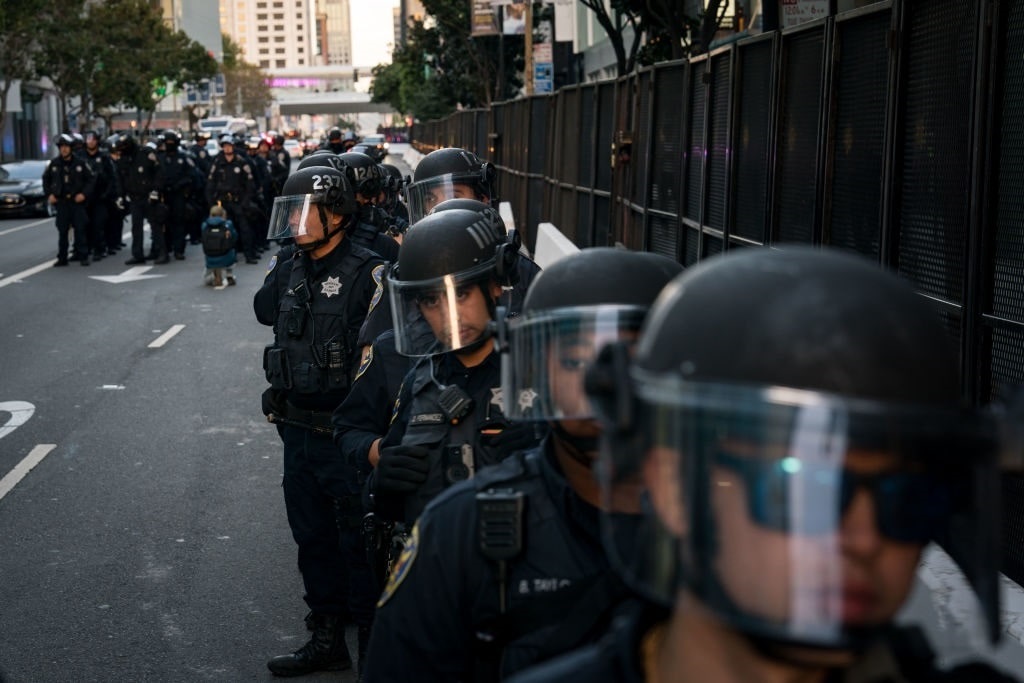
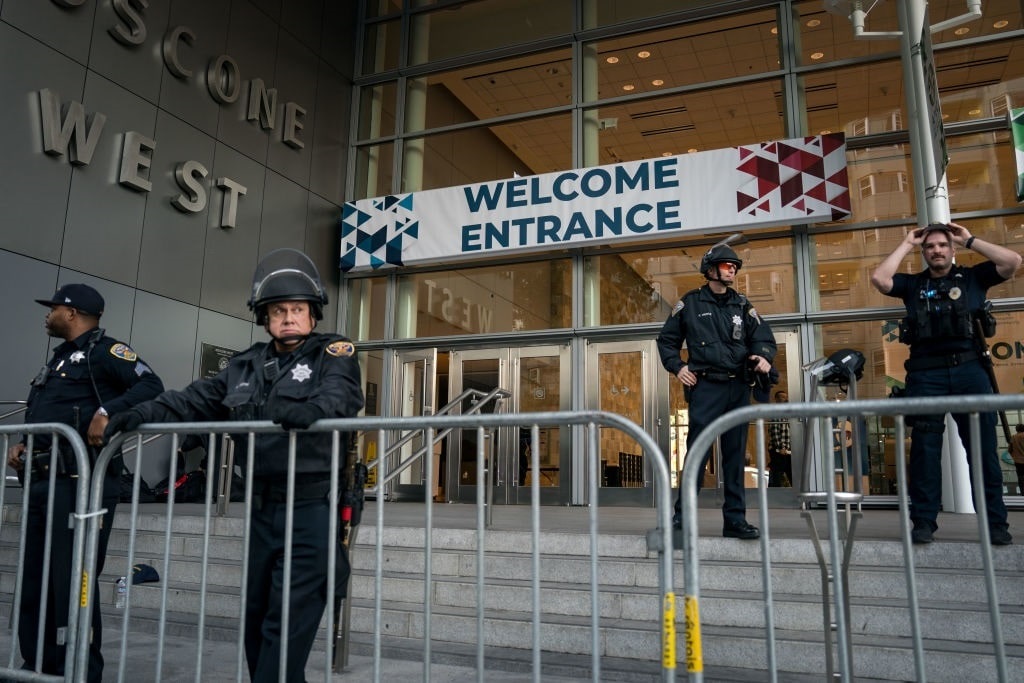
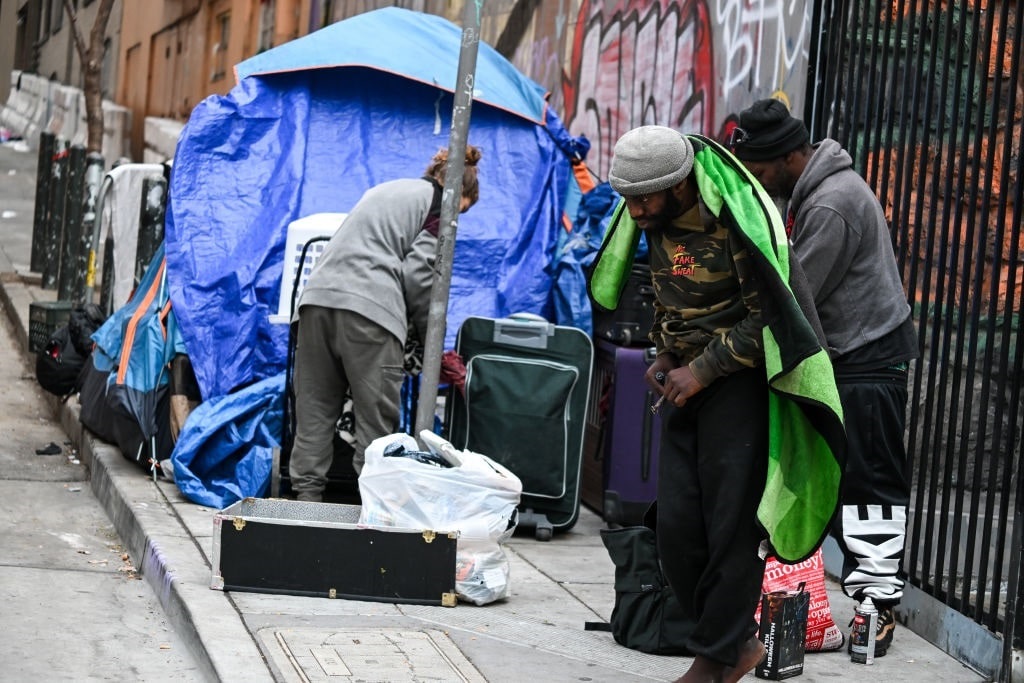
Most people take measures to make their homes look presentable when having company over, right? So what do you do if you are a public official preparing to host a summit with China’s President Xi Jinping? “Cleaning house” takes on a whole new meaning in San Francisco, CA, where it involves sweeping the drug addicts under the rug and hiding evidence of the City by the Bay’s overwhelming homelessness and crime. Democrat policymakers are being dubbed hypocritical for temporarily sprucing up the city, as well as building fences to protect those attending the Asia-Pacific-Economic Cooperation (APEC) conference this week.

California Lawmakers Criticized for Double Standards

GettyImages-1779064376 APEC

(Photo by Kent Nishimura/Getty Images)

California Governor Gavin Newsom surprised many by openly admitting the scrubbing was done to impress the out-of-towners. During a press conference, he said, “I know folks say, ‘Oh they’re just cleaning up this place because all these fancy leaders are coming into town.’ That’s true, because it’s true.”

“The sidewalks in the APEC zone, including sticky and urine-perfumed Van Ness Avenue, have been silver polished on the Eve of APEC,” Sebastian, a San Francisco resident, told California Globe. “Walking along Van Ness Ave today was like walking along twice-a-day-mobbed Orchard Road in Singapore.”

The End Wokeness account on the social media platform X has 1.8 million followers and wrote, “San Francisco’s homeless population was entirely cleared out for Xi Jinping. The Government can easily fix our cities overnight. It just doesn’t want to.”

Of course, while San Francisco officials may try to hide behind street-sweepers and fences, they can’t escape from the crime-ridden morass they’ve created. Local news outlet SFist has already run the headline “First Crime-Related Embarrassment of APEC: Czech News Crew Robbed.” In a poignant illustration of how far the city has fallen, the site reported, “Czech newsman Bohumil Vostal was shooting outside City Lights Bookstore in North Beach when he and his crew were approached by three masked suspects with guns … Sadly, Vostal says he was trying to shoot a segment that would portray San Francisco in a positive light, adding, ‘I’m one of those many people who used to read Jack Kerouac’s On the Road, and I was so much looking forward to visit your city.'”

Black metal fenced barricades have been constructed outside the Moscone Center, where the conference will take place. In a city already choked with traffic, streets will be closed, some buses won’t be running, and parking is eliminated within the area. Residents in the APEC security zone must pass through security checks from Nov. 14 – 18 just to go home, according to Sebastian. He added:

“They are essentially locking the dignitaries up to keep them from discovering just how bad and dangerous the town is. And these are the Democrats who say that border fencing doesn’t work. The same leftists that claim that fences and walls do not work and are inhumane are the same leftists that live behind fences and walls.

Asians Against Wokeness posted on X about the city’s wall, saying, “Woke liberals fear/respect Xi Daddy more than their fellow Americans. Soft core authoritarians fear/respect hardcore authoritarians.”

Another X account, Inconvenient Truths by Jennifer Zeng, who writes about China and has 244,300 followers, posted, “U.S. taxpayers’ money is being used to protect the ‘safety’ of a communist dictator, suppressing the voices of the public living in America.”

Meetings with Chinese President

President Joe Biden will be meeting with Xi on Wednesday, Nov. 15, to discuss “issues in the U.S.-PRC [People’s Republic of China] bilateral relationship, the continued importance of maintaining open lines of communication, and a range of regional and global issues,” the White House announced. “[T]he Leaders will also discuss how the United States and the PRC can continue to responsibly manage competition and work together where our interests align, particularly on transnational challenges that affect the international community.”

Newsom also met with Xi recently, traveling to China in October to discuss matters of climate control and a shared partnership. The governor’s office wrote on X at the time:

“The only way we can solve the climate crisis is to continue our long-standing cooperation with China. As two of the world’s largest economies, the work we do together is felt in countless communities on both sides of the Pacific.

“Despite major differences, we share our humanity – our desire to feel protected, connected and respected is universal – and that humanity is what should drive us to work together to stop the greatest existential threat our planet has ever known.”

GettyImages-1644659059 (1) homeless

(Photo by Tayfun Coskun/Anadolu Agency via Getty Images)

Despite Newsom’s evident hopes when it comes to building relations with China, APEC has angered a broad swath of political activists – for all sorts of reasons.

A protest on Sunday, Nov. 12, had thousands of people demonstrating against the conference. Those in attendance included Palestinian liberation advocates, climate change activists, and anti-capitalist organizations, who packed the Embarcadero Plaza and marched up Market Street toward the Moscone Center.

“The U.S. is attempting to push free trade policies in the Asia Pacific Rim. And we see a history of those policies being detrimental to workers’ rights and the environment,” said Narissa Lee, representative of the No to APEC Coalition.

California lawmakers such as Newsom and Nancy Pelosi have been strong advocates against a border wall, calling it inhumane and ineffective, yet when it comes to protecting themselves, dignitaries, and most importantly, their carefully cultivated facade of competence and good governance, those barriers become the most necessary of evils.

Tags:  | Articles, Good Reads, Opinion, Politic

 
Read More From Kelli Ballard


Monday, September 4, 2023

The Whole Idea Behind Homeless Advocacy Is To Not Solve The Problem

September 02, 2023 @ Manhattan Contrarian

Perhaps it is a little early for another update here on the “homelessness” situation in San Francisco. (My last update was about six months ago in March 2023.). But there is a good reason for an update now: At least a few people seem finally to be catching on that the basic idea behind “homelessness” advocacy is to exploit an issue that brings forth great human empathy to generate vast taxpayer funds and then to not solve the problem. The spending continues and increases without limit. There is way too much money — for advocates — in “homelessness” for the problem ever to get solved, or even to decrease materially.

Two recent pieces from Bay Area writers commenting on the situation are: Sanjana Friedman at Pirate Wires, August 17, “San Francisco's Homeless Ticking Time Bomb”; and Susan Dyer Reynolds in the Marina Times August edition, “Fraudenbach: How the Coalition on Homelessness is holding San Francisco hostage.”

From the intro to Friedman’s piece:

The hardest thing you’ll ever have to comprehend in terms of San Francisco’s government is the city’s leaders aren’t incompetent. This is what they want. . . . Once acquainted with the basic facts of the crisis, including the incredible sum of money dedicated to solving the problem, the average San Franciscan concludes the city must be run by morons. . . . Even with supportive services, the numbers don’t add up. This is because the average person assumes the small cabal of activists who run the city’s bloated homeless industrial complex want to temporarily shelter and rehabilitate the homeless. They do not.

(Emphasis added.). So, what do they want?

The goal of San Francisco’s activist government is to provide every person who moves to the city with a free, one-bedroom apartment for the rest of their life.

Needless to say, that goal is completely impossible to achieve.

My March 2023 post recounted the story of the big 2018 referendum, where San Francisco voters approved a payroll tax on city businesses to raise an additional $300 million per year to address the homelessness crisis, and to finally solve it once and for all. The $300 million got added to prior spending of about $285 million, close to doubling prior city spending on the homelessness issue. Note that these figures only include spending on the Department of Homelessness and Supportive Housing (HSH), and do not include other amounts of government spending on the homeless individuals, including cash grants, welfare, food stamps, Medicaid, and much more.

Friedman has the latest numbers on homelessness headcount and spending put out by the city, which as she states “don’t add up.” The number of “homeless” in the city is given as 7,800, of which 4,400 sleep in the streets and 3,400 in shelters. (These numbers are based on a survey taken in 2022, which is more recent than the 2021 data used in my March post.). In a city of just over 800,000 people, this is just shy of 1% of the population. Spending this year for HSH is said to be $672 million. If spent on the 7,800 identified as homeless, that would come to more than $86,000 per head — a fantastic sum, given that none of the money actually goes to the supposed beneficiaries in cash. Rather, all of it is spent on the Homeless Industrial Complex to provide shelters and “services.” (The homeless people get cash and in kind benefits from other programs outside of this budget.)

But Friedman goes on to say that more than half (56%) of the budget of HSH does not go to the current homeless population, but rather to provide something called “permanent supportive housing” (PSH) to some 9,000 people who were previously homeless. That would be approximately $3500 per month for each of these people. Friedman describes the deal they get:

[T]here are no PSH-wide income maximum or minimum cutoffs, and no PSH-wide requirement that the tenant show progress in becoming financially independent, such as by working an ever-increasing number of hours, or even regularly looking for a job. If you're hopelessly addicted to drugs, SF will essentially enable your addiction in perpetuity, or for as long as you want.

If the remaining 44% of the $672 million is dedicated to the 7,800 currently on the streets or in shelters, that would come to about $3200 per month for each of them, the majority of whom live on the streets. Again, that $3200 is only for “homelessness” services, and does not include food, clothing, medical care, or anything else, all of which are provided by other government handouts.

Anyway, some 9,000 got the PSH apartments, and promptly another 7,800 turned up for the next round.

And, from Reynolds’s piece:

San Francisco’s homeless advocates believe money is the answer, with organizations coaching new arrivals to say they’re “from San Francisco” while helping them navigate the system. The “nonprofits” themselves complete what has become a billion-dollar industry chasing its own tail, with 59 providers receiving $240.6 million in fiscal year 2019–20, according to the latest audit by the city’s budget and legislative analyst.

Money may not be the answer to the homelessness problem, which never improves no matter how much is spent. However, it is clearly the answer for the advocates, who are pocketing money by the hundreds of millions. Remember, of that $240.6 million mentioned in Reynolds’s piece, exactly zero goes to the homeless individuals. All of it goes to the service providers. (The other $400+ million of the HSH budget also does not go to the homeless people, but rather to the government workers.)

Reynolds’s piece culminates with this quote from ex-San Francisco Mayor Willie Brown:  

“[The homelessness problem] is not designed to be solved. It is designed to be perpetuated. It is to treat the problem, not solve it.”

He sure got that one right. There is way too much money in homelessness for the problem ever to be solved.

Friday, March 10, 2023

Update On California Homelessness

March 09, 2023 @ Manhattan Contrarian 

A recurring theme here is the utter failure of progressive government social service spending programs to ever make a dent in, let alone solve, the problems they have been created to address. Whatever the problems may be — poverty, food insecurity, housing, etc., etc. — once massive government spending programs to “solve” them are put in place, the problems never show significant improvement, and more often than not get worse, at least according to official measures, the longer the programs continue and the more is spent.

An extreme case of this phenomenon is the problem of “homelessness” in California. This issue deserves special attention for two reasons. First, compared to issues like, say, poverty or hunger, which are massive and have indefinite boundaries, homelessness is much smaller and far more discrete. The “homeless” are a specifically identifiable group, and even in the very worst cases are fewer than 3% of the population of any given city. And second, in the major California cities of San Francisco and Los Angeles, advocates several years ago called for large but specific amounts of spending to address the problem, and explicitly promised that they had identified the appropriate solutions, and if the voters would go along, this spending would end the scourge of homelessness once and for all.

I first addressed the issue of “homelessness” in San Francisco in an October 26, 2018 post with the title “The Morality Of Our Progressive Elite.” The occasion for the post was a referendum about to be put to the voters of San Francisco in November of that year, imposing a new payroll tax on all employers in the city intended to raise some $300 million per year of fresh funding to address the problem of homelessness “from every angle” and solve it once and for all. The $300 million would more than double the then level of city spending on homelessness, which was $285 million per year. The advocacy for the referendum was led by Salesforce, Inc., San Francisco’s largest employer, and its billionaire founder and co-CEO, Marc Benioff. Benioff had penned an op-ed for the New York Times the day before my post, explaining that the new tax was a matter of basic morality (“It’s time for the wealthiest businesses and business owners to step up and give back to the most vulnerable among us.”), and would definitely work because there was a “comprehensive” plan that had been “developed by experts” and would address the problem “from every angle.”

The latest detailed data I can find on the San Francisco homeless population and spending come from this Hoover Institution Report from May 2022, with 2021 data. The title is “Spiraling Out of Control.” The Report gives the level of spending on homeless services in San Francisco as $1.1 billion per year — meaning that even after adding the $300 billion from the voter-approved payroll tax to prior annual spending of $285 billion, the level of spending had again doubled. And for that, here’s what San Francisco got:

Since 2016, the number of homeless in San Francisco has increased from 12,249 to 19,086, which comes out to about $57,000 in spending per homeless person per year. With a total population of about 860,000, roughly 2.2 percent of San Francisco residents are homeless, which is over 12 times the national average. There is little doubt that as San Francisco spends more, homelessness and its impact on the city worsens.

For a more recent update without comprehensive data, here is a piece from the AP on December 28, 2022:

San Francisco [is] a city that has come to be seen as an emblem of California’s staggering inability to counter the homeless crisis. Homeowners, businesses and local leaders in San Francisco are frustrated with visible signs of homelessness — which includes public streets blocked by sprawling tents and trash.

And now that Salesforce’s advocacy has gotten all San Francisco employers saddled with a special payroll tax supposedly to “solve” the homelessness problem, I hope that you weren’t counting on Salesforce itself to stick around to pay the tax. A few weeks ago it announced big layoffs, many concentrated in its San Francisco headquarters. From Market Watch, January 12:

Salesforce, Inc. . . . has disclosed a wave of layoffs at its San Francisco headquarters in a filing with the State of California. A total of 752 job cuts will become effective March 24. . . . The letter said the cuts . . . affect employees at three locations in San Francisco.

So what is San Francisco’s plan going forward? You guessed it: the Board of Supervisors is recently out with a new Report proposing to add approximately $500 million of additional annual spending on homelessness, on top of amounts already being spent. ABC7 News in San Francisco reports on February 2 that one San Fran supervisor is at least skeptical:

[The new Report] suggests spending nearly $1.5 billion over the next three years in addition to the money already expected to be spent. That comes out to about $70,000 per shelter bed per year, according to [Supervisor] Mandelman. "That just seems like way too much to me. It's more than other communities spend on shelter," said Mandelman.

Don’t expect Mandelman’s lonely voice to slow this one down. In San Francisco, faith in the efficacy of government programs and spending to solve social problems like homelessness is completely impervious to evidence.

Meanwhile, down in Los Angeles, the voters thought they got out in front of the homelessness issue with a somewhat different approach, approving a $1.2 billion bond issue back in 2016 to build supportive housing for the homeless. The referendum went by the name Proposition HHH. Here is a description of the initiative:

Los Angeles voters passed Proposition HHH in 2016, which enabled City officials to issue $1.2 billion in bonds for the development of permanent supportive housing units for people experiencing homelessness. In addition to funding permanent supportive housing development, the bonds can be used to help build temporary shelters. The passage of Proposition HHH is notable because it received the support of a broad and unique coalition of public and private stakeholders in LA, including labor unions and private and nonprofit housing developers.

And how did that one work out? Here is a table of the number of homeless in Los Angeles City and County going back to 2015, from something called the Los Angeles Almanac:

The numbers just march inexorably up and up year after year. Looks like the $1.2 billion approved by the voters in 2016 either failed to make a dent, or was counter-productive. So what is the latest? The City of Los Angeles agreed in 2022 on another round of massive spending to build housing for the homeless, this time $3 billion instead of the paltry $1.2 billion in the last round. This time, the agreement to spend the money is in the form of settlement of a lawsuit, which I guess circumvents the need to go back to the pesky voters for approval. From NBC News, April 1, 2022:

The city of Los Angeles has agreed to spend up to $3 billion over the next five years to house some of its 41,000 residents who are homeless, according to a proposed settlement announced Friday. . . . The settlement stems from a complaint filed in 2020 by a group of business owners, residents and community leaders that accused city and county officials of failing to address the desperate circumstances homeless people face, including hunger, crime, squalor and the coronavirus pandemic.

We’ll check back in another year or two to see how close this new funding has come to “solving” the homelessness crisis.


Thursday, November 17, 2022

Homelessness: A Political Industry by Robert Socha

November 16, 2022 By Robert Socha Political, Christian and Conservative Issues

Homelessness has become an epidemic in the United States of America. It has exploded into a subculture that demands special immunities and privileges. To compound the issue, activist judges have made horrific decisions favoring vagrancy, loitering, and upholding an inconceivable “right” to be homeless that supersedes the rights of property tax-paying citizens. Somehow the judiciary manufactures a “right” to privacy that comes out of the 4th amendment, I believe, allowing for a person to encamp on public lands.

Laws are in place, so there is some form of order in a chaotic world. But unfortunately, homelessness breeds lawlessness and invites crime. Some unfortunate souls down on their luck have found themselves homeless through circumstance or error. These are people who will seek shelter and work diligently to reconcile their situation by finding work and accommodation. Regrettably, many who find themselves homeless are in that position voluntarily and have no interest in recovery........To Read More....

Monday, May 2, 2022

Latest Progressive Policy Disaster: Homelessness In San Francisco

April 29, 2022 @ Manhattan Contrarian 

Three and a half years ago, in November 2018, the good people of San Francisco enacted by a referendum called Proposition C a new special corporate payroll tax which would raise multiple hundred million dollars per year for the specific purpose of finally and once and for all solving the problem of homelessness. During the run-up to that referendum, in October 2018, I had two posts discussing Proposition C, the nature of the progressive thinking behind it, and its prospects for success. On October 26 it was “The Morality Of Our Progressive Elite”; and on October 30 it was “More On The Morality Of Our Progressive Elite.”

Toward the end of that second post, I posed this question: “[What are] the prospects that San Francisco’s new $300 million might actually reduce the population deemed ‘homeless’?” My answer was: “Right around zero.”

In the intervening three plus years, I have from time to time checked back to see how it was going with San Francisco’s great project to end homelessness. But up until now I haven’t been able to find good information. Among other issues, the implementation of the new tax was delayed for two years by litigation. However, the information drought on this subject has now ended. On April 26 the San Francisco Chronicle ran a big feature article on the subject, with the headline “Broken Homes” (behind paywall). On April 28, that article was then reviewed and commented on by Steven Hayward at PowerLine (“California’s Ongoing Suicide Attempt”), and by Erica Sandberg at the City Journal (“San Francisco’s Housing First Nightmare”).

And the answer is: The results are far, far worse than mere failure to reduce the population deemed homeless. Since 2018 San Francisco’s spending on the homeless has soared by approximately a factor of four. But meanwhile the number of people deemed homeless has increased by somewhere between 47% and more than 250% (depending on what data you believe for the number of homeless in SF back in 2017). And, at least if you accept the Chronicle’s current reporting, the conditions under which the homeless live have seriously deteriorated. It is an epic disaster of progressive public policy.

How could everything have gone so terribly wrong?

Let’s begin by reviewing where we were back in 2018. The occasion for my October 26, 2018 post was that an op-ed had appeared in the New York Times on October 24 advocating for the passage of Proposition C, and raising some $300 million annually of incremental tax money, as a matter of basic morality. The headline was “The Social Responsibility of Business,” and the author was Marc Benioff. (In case you don’t recognize the name, Mr. Benioff is the founder of salesforce.com, and at the time in 2018 his net worth was estimated as around $6 billion (today it’s more like $8 billion)). Although his personal wealth would have been more than sufficient to fund the $300 million annually should he have chosen to do so, Mr. Benioff argued in his op-ed that the funding should be imposed as a matter of tax obligation on all of the City’s larger businesses:

The business of business is no longer merely business. . . . It’s time for the wealthiest businesses and business owners to step up and give back to the most vulnerable among us.

In the op-ed, Mr. Benioff used a figure for the then homeless population of San Francisco as 7500. For that number Benioff cited to this official San Francisco government report titled “San Francisco 2017 Homeless Count & Survey.” (Go to page 12 of that Report and you will find that they give the very precise figure of 7,499.)

And to those objecting that these kinds of government spending programs never work and always make the problem at hand worse, Mr. Benioff was ready with the answer:

Under a comprehensive plan developed by experts in the field, this new funding would address this crisis from every angle. It would provide more bathrooms, so that people wouldn’t have to relieve themselves on city streets. More than 1,000 new shelter beds. Up to $75 million to treat the severely mentally ill. Up to $150 million for 4,000 additional units of housing, including for youth and families with children. And assistance or subsidies to help thousands of residents stay in their homes — to help prevent San Franciscans from becoming homeless in the first place.

We have a “comprehensive plan.” It has been “developed by experts.” It addresses the problem of homelessness “from every angle.” Obviously, it will work. How could it not?

With that, let’s move to the latest data as reported in the Chronicle (via Hayward at PowerLine). Here is the chart:

The number of homeless is now given as 19,086 for 2020, the latest year available. If the number of 7,499 provided in that very official-looking Report for 2017 were accurate, the 19,086 in 2020 would represent an increase of some 254%. Oh, but they now give a figure for 2017 of 13,014. And how did the number of homeless in San Francisco five years ago suddenly nearly double? I can’t find any explanation for that. It would not be the first instance of bureaucrats changing the data of the past in order to make themselves look better in the present. (See, e.g., my series on The Greatest Scientific Fraud Of All Time.). And even if you believe the new figure of 13,014 homeless for 2017, there would still have been an increase of some 47% to get to the most recent count of 19,086.

And meanwhile the spending has gone completely wild. The $300 million of Prop C funds added to 2018 spending of $285 million would have brought total spending to around $585 million; but the chart says that the Department of Homelessness budget actually soared all the way to $1.1 billion by 2021. And according to the note, they apparently didn’t even use the Prop C funds, but instead those funds were “put on reserve” while a gusher of federal “Covid-19” money flooded in. If the number of homeless in 2021 remained at the 2020 figure of 19,086, the $1.1 billion of spending in 2021 would represent almost $58,000 per homeless person, or $232,000 for a family of four. Even if the number of homeless experienced another significant increase in 2021 (highly likely), the spending would still likely represent well over $50,000 per homeless person.

For that kind of money, at least San Francisco should surely be able to buy decent housing accommodations for the homeless people. And indeed, the principal idea behind Prop C and the massive increase in spending was a so-called “housing first” policy, where the problem of homelessness was to be instantly solved by the simple device of providing the housing that the homeless people lacked.

But in fact, it turns out that the conditions under which San Francisco’s homeless live are more squalid than ever. Indeed, the terrible conditions of the housing are the chief focus of the Chronicle piece, as well as of the reviews by Hayward at PowerLine and Sandberg at the City Journal. From the Chronicle:

But because San Francisco leaders have for years neglected the hotels and failed to meaningfully regulate the nonprofits that operate them, many of the buildings — which house roughly 6,000 people — have descended into a pattern of chaos, crime and death, the investigation found. Critically, the homelessness crisis in San Francisco has worsened. . . At least 166 people fatally overdosed in city-funded hotels in 2020 and 2021 — 14% of all confirmed overdose deaths in San Francisco, though the buildings housed less than 1% of the city’s population. The Chronicle compiled its own database of fatal overdoses, cross-referencing records from the medical examiner’s office with supportive housing SRO addresses, because HSH said it did not comprehensively track overdoses in its buildings. Residents have threatened to kill staff members, chased them with metal pipes and lit fires inside rooms, incident reports show.

From Sandberg at the City Journal:

A long-term SRO resident who wishes to remain anonymous notes the lack of oversight and accountability. “The Departments of Homelessness and Supportive Housing and Public Health are in violation of housing rights and human rights,” she says. “Supportive housing? There is no support. DPH could give a rat’s ass about health. If you’re a woman, your life will be a living hell. No one cares. High functioning people regress. Some want to stay sober, but they can’t. Eventually they pick up a pipe again because almost everyone around them is using.”

There was never any real question about where this was headed. The fact is and always will be that a government bureaucracy tasked with solving a social problem will never solve the problem, and instead will manipulate the problem to increase so as to justify ever increasing amounts of staff and funding for the bureaucracy. Sorry, Mr. Benioff. You may be a very smart guy, and you may be very good at starting and growing a tech company and making a billionaire of yourself. But you don’t understand the first thing about how government spending on social programs works. In that, you have plenty of company from the whole world of progressives and leftists.


Monday, November 8, 2021

San Francisco is a Mess, and They're Shocked, Outraged and Terrified! Imagine That!

Residents of a Tenderloin-area building say they're scared to go outside because of aggressive homeless people who've set up the city's biggest vagrant camp.  They are occupying an alley near their high-end building, where units have fetched more than $1 million.  One man living in the encampment is known to throw feces, while others steal, break into the garage, and litter the area with garbage, attracting rats  ‘This seems to be a safe space for chop shops, drug trafficking,' one woman said.  The encampment grows as data shows that San Francisco's attorney general is taking a more lenient approach to charging criminals with thefts.
  
Well, that's a great big schadenfreude!  
 
These leftists, especially the wealthy leftists, stood atop their own self-righteous mountain and looked down their noses at the "dispicables" and those bitter Americans "clinging to their guns and Bibles".  After all, if you disagreed with them you were either racist, xenophobic, Islamophobic, or crazy!  Or worse yet, you thought the Constitution was supposed to be the law of the land, and even worse than that, you think laws should be enforced, criminals prosecuted and sent to jail.  Imagine that!
 
Well, they've gotten what they wanted, a totally leftist government at every level of government in California. California is now a state totally controlled by lunatics.  So, how's that working out for them?  Apparently not very well, and they're whining about it!  Imagine that! 
  
 
Well, oodie boodie boo, poor little muff muffs.   It turns out the little muff muffs don't like the mess, having a homeless lunatic throw feces at them, thugs breaking into their garages, the litter and garbage everywhere along with the accompanying surge in rats, and I'm sure other pests including bed bugs.  Not to mention the stench from these misfits urinating and crapping wherever they please, or being accosted by them.  Imagine that!
 
In their arrogance they elected officials that are refusing to prosecute criminals, and crime surged. Imagine that!  All of this was perfectly predictable, except to these arrogant, smug and self righteous leftist minds, because ideology really does make smart people dumb.  
 
This isn't an exclusively California problem, it's a massive leftist problem nationwide.  It's the same in NYC, L.A., Chicago, Detroit, Portland, Seattle and Minneapolis, all run by leftists, all going up in flames.  Filled with bums, thugs and misfits, all of whom are a massive non-productive burden socially and economically in these cities, and it's become so rampant, it's a burden on the nation, and now the nation is bring run by the same kind of lunatics who are working to make this America's standard, and they, and their co-conspirators in the media try to convince the nation's "dispicables", and those "clinging to their guns and Bibles", who are the ones who are insane.  Imagine that!  
 
Well, they talked the talk, shouldn't they be required to walk the talk?  Yes, but get this. They don't want to.   
 
Imagine that!

Tuesday, October 26, 2021

Order in Austin?

This November, voters in Texas’s capital have a chance to reject the progressive agenda on public safety.

Michael Hendrix  October 25, 2021

It was a decision made in the dead of the night: on June 20, 2019, at 2 a.m., Austin’s city council legalized homeless camps and panhandling. A year later, in August 2020, the council voted to defund the city’s police budget by more than a third. These decisions sparked immediate consequences for public order—and eventually a fierce backlash from a not-so-silent majority that rejected the council’s progressive agenda on homelessness (though the effects of these policies linger in parts of the city).

This November, Austin voters will have another chance to vote in favor of restoring order. Pending the outcome of Proposition A, Austin could become one of the first major American cities to have its citizens vote to “refund” and restaff the police.

Restoring order will be an uphill battle. The council’s decision to allow homeless encampments had an abrupt impact on Austin. “We quickly saw a difference,” said Greg McCormack, executive director of Front Steps, a local homeless-services provider. Craig Staley, owner of local bodega chain Royal Blue Grocery, agreed: “They changed the world downtown in about three weeks.”

After having been flat for years, homelessness in Texas’s capital exploded. Homeless from other cities migrated across Texas to camp in public. The situation rapidly became unstainable—and deadly. Exposed to the elements and to each other, 10 percent of the city’s homeless died in 2020 alone, with substance abuse being the leading killer. The wave of death continued despite record sums of spending on homeless services: nearly $70 million this fiscal year, combined with over $200 million in federal funding. A study of public spending on the 250 “most expensive” homeless individuals in Travis County tallied a combined annual cost of $223,000 per person.........To Read More....

My Take - As you read this piece you begin to see a picture of insanity emerging.  The Mayor and nine city council members were against Proposition B, and there's apparently been a defund police movement that's been acted on by the city but dropping the police budget "from $434.5 million in 2019 to $292.2 million. The city council also cut three cadet classes and 150 officers from the budget", and of course this cities leftist leaders spread lies and misinformation about further changes. 

Result?  Filling the city with bums, druggies, criminals and cutting the police force substantially has resulted in......okay, get ready.....here it comes......are you ready for this shocker.  There's been more serious crime!  Wow!.....isn't that a shocker.....imagine that.......less police results in more crime........whodathunkit. 

  • The questions everyone should be asking are these:
  • What is the goal of these leftist politicians?
  •  Why would any city elect people this insane?
  • And while their proposition passed with by 58% to 42%, who in the world is this 42%?
  • Are all these people fleeing the insanity in California bringing it to Texas?

 Houston:  We have a problem.


Sunday, July 11, 2021

This Tale of Two States Features the Fight for America’s Soul

By Lawrence Kudlow 

You could also think of it as Donald Trump versus Kamala Harris — or maybe we should think of it as Kamala Harris and Nancy Pelosi versus Donald Trump. I don’t mean to shortchange, or disrespect, President Biden by choosing his veep, but I see his political future as late afternoon or well into the evening.

Or you could think of it as a presidential race between Florida’s governor, Ron Desantis, and California’s governor, Gavin Newsom. The current California governor and former San Francisco mayor first has to survive a gubernatorial recall.

Kudos to New York Post columnist Kyle Smith who laid out the battle between California and Florida in a compelling way. “Those differences,” Kyle writes, “are growing into a chasm of philosophical and practical contrasts between two basic models for the American future. Call them the California way and the Florida way.”.............To Read More....


Friday, June 4, 2021

The Richest Homeless in the World

June 02, 2021 @ Sultan Knish Blog

Last year, Davon Brown, a former fashion model turned homeless activist, conned his way into an LA Ritz-Carlton luxury suite alongside Jed Parriot, the son of a producer on Grey's Anatomy.

It was May Day, Brown was wearing a blazer and sunglasses. The former fashion model and son of a wealthy producer were there to ‘occupy’ a luxury suite for the homeless. And demand that the city take over hotel rooms and hand them out to the population of junkie vagrants.

Los Angeles Mayor Eric Garcetti held a press conference and assured Brown that he would get him a room. When the son of the Grey's Anatomy producer was asked how to spell his name, he sneered, "“Parriott, like Marriott—which has 900 empty rooms.”

Jed, a Democratic Socialists of America activist, appears to live in a $1.3 million home in Silver Lake owned by a trust controlled by his parents: a prolific TV producer and a TV actress.

The trust also appears to own at least one other home, with 4 bedrooms, in the city.

Later that year, Davon Brown, still handsome, neatly groomed, and with the sleek physique of a gym rat, was at the center of the Echo Park homeless encampment. LA had just renovated the park in a hip neighborhood when it was taken over by the homeless and hopelessly befouled.

Brianna Moore, a talented 18-year-old concert violinist with offers from MIT, decided to get involved in the summer of protests. After a series of Black Lives Matter marches, she joined the homeless cause, and died in an Echo Park tent after taking cocaine laced with fentanyl.

The death of the sweet-faced white teenage honor student accomplished what months of complaints by local residents did not. But as LA authorities prepared to remove the encampment, Davon and Jed were once again at the center of things.

Davon’s publicist was hyping him in Hype Magazine as a champion for the homeless while promoting his new single. Jed showed up in a BMW X5 and sneered at local homeowners, “We need to be really telling these property owners, ‘Sorry, you’re going to have to tough this out.’”

Echo Park was finally evacuated this year, but Davon’s Instagram is filled with shirtless photos and glamor shots, many of which appear to come from Echo Park. And DSA-LA is touting Davon as “our unhoused comrade”. Meanwhile LA keeps trying to solve its “homeless crisis”.

The latest solution is a tent encampment filled with $2,600 tents.

When the homeless crisis first took off, LA voters had approved a $4.6 billion package of homeless tax hikes. The taxes were not on the homeless, but on the people who still had homes. The people who were taxed out didn’t become homeless, they just left California.

And the Homeless-Industrial Complex quickly got to work finding homes for junkie vagrants in the way that only Los Angeles and its corrupt social justice welfare state can manage to do.

The first apartments cost an average of $479,000 a unit. Some went as high as $650,000 a unit. But that wasn't good enough. Two years later, the cost of an average unit hit $531,000, with some apartments going up to $746,000. Building an apartment in Los Angeles for a crackhead was costing more than the price of a mansion in some parts of the country.

Despite all those high prices, only 228 apartments were actually built in four years.

City Controller Ron Galperin performed an audit on the $1.2 billion allocated for the homeless in 2016, and blamed the lack of progress on "red tape" and "a lot of consultants".

Unable to build apartments for less than the cost of a mansion, Los Angeles launched a pilot program to build 8x8 aluminum sheds for the homeless for only $130,000 each. The average cost of a home in LA is $500 per square foot. The aluminum sheds with 64 square feet of space managed to completely blow that away. But the no-bid contract probably helped.

Since apartments were too expensive and even tiny homes cost too much, LA turned to tents.

The homeless had been setting up their own tent encampments for free. So the city launched a pilot program to have the government set up tents for the homeless for only $2,600 per tent.

That’s $2,600 a month.

Each tent in a parking lot near the 101 freeway in East Hollywood costs twice as much as the rent on a local apartment. It actually costs more than the average month’s rent in LA. You can find two-bedroom apartments in Beverly Hills that cost less than a government homeless tent.

Say what you will about self-constructed homeless shacks, they don’t cost $2,600 a month.

Not only is the government setting up homeless tent cities across Los Angeles, but taxpayers are now also on the hook for $2,600 for every tent.

Controller Galperin explained that, "doing nothing also costs a lot of money."

Government employees know that’s very true.

The government tent city was outsourced to Urban Alchemy, a social welfare non-profit that has raised eyebrows by scoring million dollar contracts in San Francisco and Los Angeles to offer cleaning services, showers for the homeless, and tent cities. Urban Alchemy gets these contracts under the name of its financial sponsor: Hunters Point Family.

Urban Alchemy CEO Lena Miller explained that it all costs so much money because her organization employs "long-term offenders" and pays them $19 an hour.

Only California Democrats could pay criminals to service junkies in tent cities that cost more than most apartments. But only California Democrats could set up shacks that cost more per square foot than most houses and apartments for the homeless that cost more than luxury suites. Nothing is too good for the homeless and their publicists and consultants in California.

While a lot of money gets spent, nothing really gets done.

LA keeps trying to scale down its solutions, but ends up spending more the smaller the solution.

The city tried to set up portable toilets which cost $339,000. Over a hundred thousand of that money goes to bathroom attendants. But over in Sacramento, the state’s capital, a homeless bathroom cost $1 million. When the Guggenheim Museum unveiled a solid gold toilet as one of its art exhibits, it was estimated to cost over $1 million. The homeless could have had a gold toilet for the cost of the free government toilets that they’re getting from the welfare state.

But they could have also had luxury condos with gyms and swimming pools for the cost of the apartments that are being built, but never actually get built, to house them.

California’s homeless are the richest homeless in the world. And while they may never see any of the money that gets spent on them by the Democrat Homeless-Industrial Complex, the cash bleeds into the pockets of the professional bleeding hearts who are getting rich off the poor.

The homeless tent cities aren’t going anywhere. They’re making too much money.

There will still be junkies lying in their own filth in tents under the freeway, but where they once did so for free, taxpayers will now be paying $2,600 a month for them to lie in their own filth.

That’s why no one except the homeless can afford to live in Los Angeles.

Daniel Greenfield is a Shillman Journalism Fellow at the David Horowitz Freedom Center. This article previously appeared at the Center's Front Page Magazine.

Click here to subscribe to my articles. 

Thank you for reading.

Tags: , , ,

Author Image

About Daniel Greenfield
Daniel Greenfield is a journalist investigating Islamic terrorism and the Left. He is a Shillman Journalism Fellow at the David Horowitz Freedom Center

Related Posts:


Sunday, March 7, 2021

San Francisco is paying $5,000 per month for each homeless tent

John Sexton March 5, 2021

 https://hotair.com/wp/wp-content/uploads/2021/03/SF-safe-sleeping.jpg

Homelessness is really expensive for the people who are paying for it. Last year, San Francisco set up six “safe sleeping villages” during the pandemic, including one right outside City Hall. Basically these sites are sanctioned tent camps where the homeless live on city property with bathrooms and free meals. It turns out the city is paying $5,000 per month for each tent:..........To Read More....


Monday, January 20, 2020

California’s Environmentalist Democrats Force Children to Swim in Diluted Sewage

By Daniel Greenfield Saturday, January 18, 2020 4 Comments

California’s gold rush began when gold was discovered on a fork of the American River. Its end can also be found on the American River which no longer contains gold, but instead high levels of E. coli bacteria.

The cause of the contamination is only a mystery to the political establishment in the nearby capital.

"A grocery sack containing what appeared to be human feces hung from a branch over the American River," a recent Sacramento Bee story began.

The American River had been named by John Sutter. The Swiss immigrant went bankrupt when his land was overrun by gold prospectors. The new invaders aren’t trying to get rich. They already are. The benevolence of the state’s government in Sacramento means that they get everything for free.

Sutter’s son had founded Sacramento. And Sacramento’s Democrat majority is ‘unfounding’ California. Now the filth of its social welfare policies is fouling the confluence of the Sacramento and American rivers, where explorers once marveled at an expansive landscape, vagrants have set up tent cities.

E. coli levels at beaches are supposed to be at 88 or below, and anything over 1,000 is supposed to lead to a beach closure. At 500, there’s a 10% chance of gastroenteritis and a 4% risk of febrile respiratory disease. But at Discovery Park, the numbers went as high as 2419.6 in December 2019.

The E.coli levels had climbed so high that labs could no longer even properly measure them.

Discovery Park is a convenient getaway for Sacramentans. More recently however, visitors describe mountains of trash, waste, and needles. “Don't walk, wade or swim without shoes, used needles have been strewn throughout the park,” one Californian wrote. “I found crack heads, hookers, and crazy people screaming obscenities and throwing punches at anyone who came too close,” another described.

"I have been threatened by homeless trying to hit me, bitten by a homeless person’s dog," one intrepid visitor reported. "I have seen cleanup crews load as many as 4 bins the size of railroad cars with trash and it still isn't enough."

Sacramento County has put up signs warning people to wash their hands after touching the water and not to drink the water or even swim if they have open cuts, while blaming the E. coli contamination on bacteria from the “intestines of mammals – from wildlife to humans”. While that’s scientifically true, it isn’t the bears or the beavers that turned the river into a foul stew of bacteria. It’s the people.

Californians are swimming and tubing in water that Democrat politicians have made hazardous.

The environmental movement was built on claims of pollution, real or false, before leaving behind the field of actual health risks to people for science fiction fantasies about planetary destruction, ice ages and global warming. Meanwhile at Tiscornia Beach, at the confluence of the American and Sacramento Rivers, the EPA’s threshold, a level of contamination that would make 32 out of 1,000 people sick, had been repeatedly exceeded. A professor referred to samples of the river water as “diluted sewage”.

That’s a problem considering that the American River is used to provide drinking water to Sacramento.

But officials will spend the next three to four years gathering samples to understand the problem.

What can happen to the swimmers, campers, and boaters while the officials spend years gathering samples and shifting blame for the problem?

This summer, a Shigella outbreak infected multiple people on the Santa Ana River. Shigella is potentially fatal. The Downey Park area was shut down for a week over the summer. After a week, the authorities insisted that there was probably nothing wrong with the river, but warned everyone to wash their hands after touching the river. Just not in the river which has homeless encampments nearby.

One obvious concern is that the Santa Ana River is used for drinking water across Orange County. While that water supply in Orange County is unlikely to be affected by the water pollution near Downey Park, the contamination is a warning that the homeless problem is not just a threat to campers and swimmers. Rivers like these are vast and have natural cleansing mechanisms, but everything has a limit.

The Sacramento River provides 31 percent of California’s water supply. The American River is a crucial elements of Sacramento’s water supply. The Santa Ana River is vital to Orange County’s water resources.

No part of any body of water from which drinking water is drawn should consist of “diluted sewage”.

The San Diego River is the largest local source of drinking water for San Diego County. Homeless encampments began to pop up alongside the San Diego River leading to piles of garbage and waste.

Earlier this year, the San Diego Water Board asked local agencies to, in the words of the local FOX affiliate, “curtail the flow of human fecal matter into the San Diego River.”

"It was surprising to find out there was actually a lot of human waste present in the San Diego River water shed," David Gibson, the Executive Officer of the Water Board, said. "There are organisms like noroviruses that cause massive illnesses on cruise ships that we're finding in our own water.”

Tracking the spread of infections caused by homeless waste is difficult. Most people don’t even associate bouts of stomach problems with a recent weekend swimming or boating on the water.

Or surfing.

In one study of 654 surfers, researchers noted a 3-fold increase in ear infections and a 5-fold increase in infected open wounds. Exposure to seawater had come to mean exposure to human fecal matter.

Surfing, the quintessential Californian sport, has been endangered by the state’s homeless policies.

The California lifestyle of beaches, swimming and surfing, hiking and camping, increasingly means risky contact with human waste. And the illnesses, from the merely gastrointestinal, to even more serious disease outbreaks, reflect the transformation of a prosperous state into a Third World country.

Environmentalists once obsessed over Love Canal. Today they ignore the contamination of California and the environmental hazards for families, especially children, because it’s politically incorrect.

While movies like Dark Waters depict corporate villains who cover up environmental catastrophes that harm families, in California, it’s the party of the environmentalists that has overseen an unprecedented environmental catastrophe that has affected some of the state’s major rivers and drinking supply.

And it’s the Democrats and their leftist organizations who have been covering up the threat.

No state is more obsessed with environmental virtue signaling than California. From windmills to solar panels, from plastic bag bans to straw bans, from a refusal to construct dams to putting fish ahead of farmers, Sacramento has imposed an environmentalist dystopia on its progressive populace.

Meanwhile Democrat social policies have left local children swimming in water that is diluted sewage.

Daniel Greenfield is a Shillman Journalism Fellow at the David Horowitz Freedom Center. This article previously appeared at the Center's Front Page Magazine.

Click here to subscribe to my articles. And click here to support my work with a donation.

Thank you for reading.

Friday, October 18, 2019

Why Politicians Aren't Incentivized to Fix Big Problems Like Homelessness

By Alex Berezow — October 10, 2019

Somehow, it's election season again. Although the general election isn't until November 2020, campaigning began in early 2019. Basically, in America, the presidential campaign cycle is roughly two years long. This is insane.

In other countries like Japan or Canada, campaign length is measured in days or weeks, not months or years. The rest of the time, politicians are doing what they were elected to do: govern. They don't spend half of their time in office campaigning about what they plan to do while in office.

It's tempting to speculate that this is a contributing factor to our society's inability to fix big problems. It seems to me that a long campaign season makes American politicians uniquely incentivized not to solve them. It's easier to raise money and scare up enough votes to get elected by promising change rather than actually delivering it.

Consider the following: Most Americans agree that immigration is a good thing, but most also agree that our immigration system needs sweeping changes. Americans are concerned about the size of the national debt. Most Americans want more spending on infrastructure.

Yet, how many of you are willing to bet that we will see a deal on immigration, the national debt, or infrastructure in the next year? Next five years? Next ten years? Ever? I'm certainly not confident. When I was a kid in the 1990s, immigration and the national debt were hot topics. They still are nearly 30 years later.

Will We Ever Fix the Problem of Homelessness?

Perhaps what vexes me the most is our inability to solve the problem of homelessness. In 2018 in the Seattle area, 191 people died on our streets. Public safety and public health have both deteriorated. Infectious disease outbreaks are common, as are fatal drug overdoses. Why do we allow this to continue?

Because, once again, politicians aren't incentivized to solve it. Believe it or not, there is talk about the existence of a "homeless-industrial complex," similar to the military-industrial complex that President Eisenhower warned about. (See this excellent article by Christopher Rufo in City Journal.) In the case of the latter, there was a concern that the military and defense industry were incentivized to advocate for war rather than peace.

Similarly, the homeless-industrial complex is incentivized to not solve the problem of homelessness. In cities like Seattle, self-appointed homeless advocates, who often earn six-figure salaries, wield enormous political power and influence. They support politicians who support them and vice versa. Like war, if homelessness ever goes away, they lose both money and power.

Combine that self-serving interest with our nation's political climate, and that is a nasty recipe for politicians to actually benefit from not solving problems. If people have to die because of inaction, so be it. That's the cost of winning.
Tags: 
homelessness

Please Help Fund Our Work

 If you follow our work, you know that we here at ACSH go after the fraudsters, the hucksters and the snake-oil peddlers. And when we're not debunking their misleading or dangerous junk science, we're always aiming to give you the most accurate and dependable health news. But we can only continue to do that with support from our readers and friends who value what we do. So if you can please donate. Thank you.