Protests are breaking out in the Philippines over China's takeover of Thitu island near the Spratly and Paracel chains in the South China Sea, which is an island recognized in international law as belonging to the Philippines. The Philippine protests are about China. But they're really directed at the Philippines's president, Rodrigo Duterte, who up until now has tried to persuade everyone that he's a tough guy -- who by his actions was all in for bowing to China.
The mask is off. The locals are protesting that he's really not that tough. So now he's got this, as reported by Asia Times:............. Seems that appeasing Beijing wasn't such a bright idea after all. A lot of countries are disputing China over those islands, but only Philippines, under Duterte, thought appeasement would be the way to go with the ravenous behemoth to its northwest. Bowing down to China has not only cost the Philippines an island, it's now leading to domestic turmoil. ..........To Read More.
George Clooney is calling for a boycott of Brunei-owned luxury hotels because that nation has an anti-gay death penalty. Did I miss all the protests against Iran for having similar laws? Nope, Hollywood, almost all the media and other Democrats actively supported Barack Obama when he and his administration gave Iran hundreds of billions while they continually pledge death to America.
Why aren’t Clooney and other Democrats supporting Trump for his boycotts and sanctions of Iran instead of condemning him for pulling out if they are so concerned about LBGT rights?........
To Read More...
For over two years, we have been tormented or delighted, depending on one's political preference, by the opinions and or declarations avowing President Trump's guilt with regard to collusion with Russia. It was all a made-up scam from the beginning, but the media and the leftist loons have beaten this dead horse relentlessly in the fervid hope it would see Trump forced from the office he legitimately won.
Our horrific media who has long worked hand in glove with the Democrats, has spent hundreds of hours, over 500,000 columns, articles and op-eds asserting Trump's guilt. It was all a hoax from the outset, fabricated within a few days of Hillary 's loss to Trump. Most of those who got on board the Russia collusion hoax knew it was a lie from day one. But they embraced the lie wholeheartedly........
Why are the people who lack intelligence, common sense and true patriotism the ones elected to office and the men and women who are actually not only smart but wise left to educate and encourage the rest of us with their words of wisdom but not from positions of power? Can it be that they are too smart to run for office? Indeed................
The leftists have to invent things to be mad about...........There can only be anger, dissatisfaction and rage against old crimes, slights and perceived offenses.
That is what the left traffics in, rage at counterfeit crimes, transgressions committed by long-dead people, even if they worked tirelessly to bring about change..........To Read More......
An endocrine disruptor (also called an “environmental estrogen”) is supposedly any one of a variety of chemicals that, at extremely low-level exposures, well below those considered safe by EPA and other regulatory authorities, disrupt the human or animal hormonal system to cause diseases or conditions such as development defects, infertility, obesity, Alzheimer’s, autism, cancer and others.
A key argument of those advancing this thesis is that standard laboratory tests fail to pick up on these hazards because the harmful effects of the endocrine disrupting chemicals or compounds, often called EDCs for short, vanish as the dose increases (though they may increase again as the dose is raised even higher). In other words, EDC advocates discard the proven toxicological principle that “the dose makes the poison,” i.e. that toxic effects of a substance increase as dose or exposure to the substance increases. In fact, they turn it on its head, saying that for this special class of chemicals, the reverse is true.
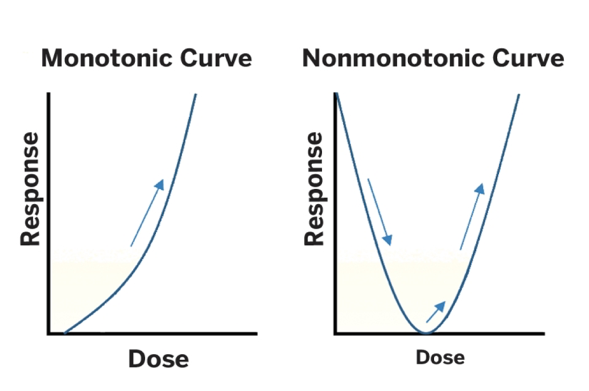
This contrast is illustrated in the graphs below. The standard dose response — seen in all toxicology to this point – is called a “monotonic” curve, meaning it is always moving in one direction, up or down. EDC advocates say that these special compounds produce a U-shaped or “non-monotonic” dose-response curve.(1)
It is important to note that the existence of the non-monotonic dose response which is key to the endocrine disrupter scare and is which is loudly advocated by a small group of activist scientists remains only a hypothesis and has never been scientifically validated. Twenty-two years after the EDC thesis was first advanced, not a single chemical has even been demonstrated to act non-monotonically that is, to cause harm at low doses but not at higher ones.
The standard dose response, seen in all toxicology, is “monotonic”: the greater the exposure, the greater the harm. The “non-monotonic” dose response claimed by EDC activists has never been demonstrated.
Useful concepts
Activists often (intentionally) try to confuse the public about endocrine disruptors on two key issues:
Low vs. high exposures. The endocrine disruptor scare is exclusively about low-dose or low-level exposures to chemicals in the environment. Activists often throw into the mix examples of harm caused by high-level exposures to chemicals.
Harm vs. mere effects. Activists often tout the results of studies that report chemicals caused some biological effect to occur vs. actual harm. Prior to being dubbed “endocrine disruptors” by the activists, substances that act like hormones to produce effects at small doses but no harms, were referred to in a more neutral terms as “endocrine modulators” by scientists.
The endocrine disruptor scare is about actual harm caused by low-level exposures to chemicals in the environment. More on these points below.
Dose makes the poison
Toxicology is the study of poisons. A basic principle of toxicology is “the dose makes the poison.” This means that any substance can produce poisonous, toxic or harmful effects if one is exposed to enough of it. Here are three variations of this principle.
Example: Ingesting too much arsenic can be fatal. Nonetheless, some arsenic can be safely ingested without any toxic effect.
Example: While we cannot live without drinking water, drinking too much water can cause death by upsetting the body’s electrolyte balance and fatally disturbing brain function.
Example: While inhaling too much carbon monoxide can cause death, the human body naturally produces a necessary but small amount of carbon monoxide.
There is no example in toxicology where any non-zero exposure to a substance causes harm. Every substance has a safe or no-effect exposure level.
Distinguishing between harmless biological effects and harmful or adverse effects.
A related principle to “the dose makes the poison” is the distinction between mere biological effects and actual harm following exposure to a substance. Mere exposure to a substance does not necessarily cause a harmful or toxic effect (i.e., the dose makes the poison). But all exposures cause biological effects. Drinking water, for example, causes biological effects, ranging from beneficial (if you are dehydrated), neutral (in case of normal hydration) or harmful (in case of overhydration). The mere occurrence of an effect does not imply that the effect was harmful or adverse.
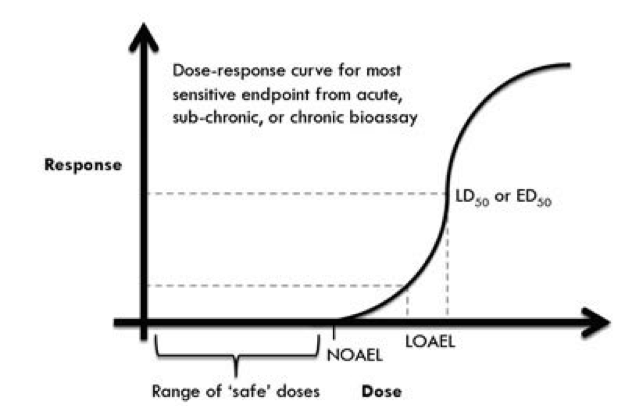
Dose-response. The relationship between exposures (or doses) and effects is called the “dose-response” relationship. It may be represented graphically by a dose-response graph or “curve” (See below). This curve illustrates some of the aforementioned concepts. The ‘no-observed-adverse-effect-level’ or NOAEL is the highest dose at which no biological effect is observed. The lowest-observed-adverse-effect is a point or range at which biological effects begin to be observed. (The LD50 is the point at which half the lab animals are outright killed by the dose it is not relevant to this discussion.)
It will be seen later that the “low-dose hypothesis” area of the endocrine disruptor scare involves doses at the NOAEL and below — the “hypothesis” being that any non-zero exposure to an endocrine disruptor can cause an adverse effect. The low-dose hypothesis, then, is contrary to everything that is has been observed in standard toxicology.
Natural versus synthetic endocrine modulators
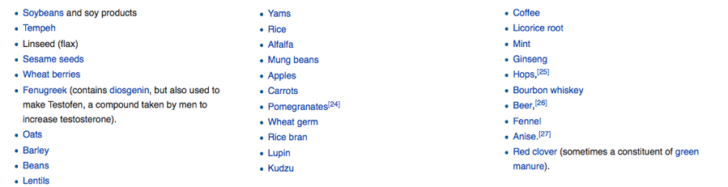
Many natural substances may also have hormone-like effects. Phytoestrogens, for example, are not produced by our endocrine system but are present in many of the vegetables and fruits that make up a healthy diet. Below is a list of some phytoestrogens.(2)(3)
One of the problems with the EDC scare as advanced by the activists is that they almost exclusively focus on made-made, synthetic chemicals, even though our exposure to so-called EDCs from natural sources, which are known to be safe and even healthy – are massively higher. Stephen Safe, a toxicologist at Texas A&M University, points out that “the total hormonal activity of the synthetic modulators we receive from industrial activity is 40 million times lower than that from the natural components of foods we eat.”(4) [Italics added]
Bisphenol A, or BPA, a substance used to harden plastics, and phthalates, substances that make them more flexible, have become a prime focus of EDC claims and have been removed from many household products as a result. But according to researchers at King’s College in the United Kingdom, their tests on laboratory animals showed that one natural estrogen found in plants “is 10 to 100 times as potent as bisphenol A. They also found that three different phthalates — the chemicals that caused the British dairy panic — produced no hormonal effects whatsoever.”(5)
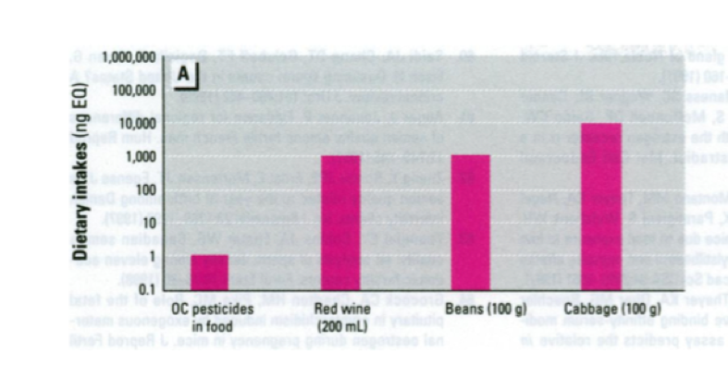
Red wine, beans and cabbage, for example, range from 1,000 to 10,000 times more active as endocrine modulators than organochlorine pesticide residues found in food.(6) The chart, below, shows that eating 100 grams (3.5 ounces) of cabbage provides an estrogen exposure 10,000 times greater than that from typical daily consumption of foods with organochlorine pesticide residues.
Origin the endocrine disruptor scare: Rise and fall of the cancer hypothesis
Rachel Carson dramatically alleged various harms to human health and the environment caused by industrial chemicals in her 1962 book “Silent Spring.”
In 1965, the Johnson administration expressed this concern by the creation of the Department of Environmental Health Sciences (DHES) housed within the National Institute of Health (NIH). In 1969, the DEHS was converted into an “institute” within the NIH called the National Institute for Environmental Health Sciences.
Also in 1965, the World Health Organization (WHO) established the International Agency for Research on Cancer (IARC). By 1970, IARC established its “Monogram Program” to evaluate chemicals and other agents for carcinogenic potential.
In 1970, President Nixon combined a number of ongoing federal environmental regulatory efforts occurring in separate federal agencies into one Environmental Protection Agency. One of EPA’s first major acts was to ban DDT, the insecticide of focus in Rachel Carson’s “Silent Spring.” DDT was banned despite an EPA administrative law judge concluding after seven months of hearings and 9,000 pages of testimony that there was no evidence that DDT had harmed humans or wildlife. The EPA administrator making the decision, William Ruckelshaus, did not attend a single moment of the DDT hearings and, according to his staff, did not even read the transcript. Later, Ruckelshaus became fundraiser for the Environmental Defense Fund, the activist group that led the charge to get DDT banned.
In the early 1970s, the Nixon administration launched its “war on cancer,” which in turn led to federal regulatory focus on the possibility that chemicals in the environment caused cancer. By 1974, NIEHS established a program to study the links between chemicals in the environment and cancer. In 1976, the Toxic Substances Control Act (TSCA) was enacted to enable EPA to regulate the use of chemicals. One of the driving forces behind TSCA was concern that chemicals in the environment caused cancer.
In 1978, the National Toxicology Program was formed within NIEHS to coordinate and lead toxicology programs in the federal government. NTP was made a permanent program in 1981.
So by the early 1980s, EPA, NIEHS/NTP and IARC were extensively involved in toxicology, with particular focus on trying to link chemicals in the environment to cancer.
But even by the time of TSCA (1976), scientists knew that it would be very difficult, if not practically impossible, to link chemicals in the environment or consumer products with cancer.
Absent strong epidemiological evidence, characterizations of a substance’s carcinogenic potential had to be based on laboratory animal tests that are very controversial and of unclear if not dubious relevance to humans.(7)
In 1990, molecular biologist Bruce Ames reported that naturally occurring chemicals (like those in raw and cooked food) are as likely to test positive for carcinogenicity in laboratory tests as synthetic chemicals (like pesticides). Since humans are exposed to much greater levels of the natural chemicals without apparent effect, exposure to the synthetic chemicals is not likely to be of any significance.(8)
A 1999 study, for example, reported that 85 percent of the chemicals and agents studied by NTP over the years exhibited either carcinogenic or anti-carcinogenic activity in laboratory animal tests.(9) This result is difficult if not impossible to reconcile with real-world exposures to chemicals and disease incidence.
Origin the endocrine disruptor scare: Rise of ‘endocrine disruptor’ controversy
The failure of the chemicals-cause-cancer hypothesis prompted activists to search for new ways to link industrial chemicals with adverse health and environmental consequences.
After a career as pharmacist, Theo Colborn earned a PhD in zoology in 1985 at age 58. She studied the effects of chemicals in the environment on Great Lakes wildlife. Colborn began working at the environmental activist group World Wildlife Fund in 1987 and then with the environmental activist sponsor, the W. Alton Jones Foundation, in 1990.(10)
In 1991, Colborn convened like-minded individuals under the auspices of the W. Alton Jones Foundation in the first of a series of conferences in Racine, WI that came to be known as “Wingspread.”(11) During that meeting, the term “endocrine disruption” was coined.(12) The Wingspread “Consensus Statement” concluded that chemicals in the environment, even at low doses, “can cause alterations of the developing immune system” such that “the potential exists for widespread immunotoxicity in humans and wildlife species because of the worldwide lack of appropriate standards.”(13)
It should be noted that, to the extent the issue of chemicals in the environment had been discussed among scientists prior to the first Wingspread conference, they were referred to more benignly as “endocrine modulators.” The Wingspread re-branding of potential “endocrine modulators” as “endocrine disruptors” was clearly meant produce alarm among an ignorant public.
On August 23 1994, the endocrine disruptor scare was reported in the New York Times in an article titled “Pesticides May Leave Legacy of Hormonal Chaos.” Referring to some wildlife populations, Colborn stated, “I’d say we are on a fast track to extinction… You would expect the same thing to happen to human populations.” A toxicologist from the American Council on Science and Health noted, “We suspect there is a lot of baloney here. On the other hand, to develop the hard science to refute it is going to be a formidable task.” The New York Times article concluded with “But for now the science simply does not know enough to say just how serious a threat they pose.” The article foreshadowed some of the endocrine disruptor claims to come including synergistic effects of combinations of endocrine disruptors, sperm count decline, endocrine disruptors in plastics and the low dose controversy.
It’s worthwhile to note this excerpt from the New York Times article:
But perhaps the greatest fears expressed about the effects of endocrine disruptors on humans have to do with sex and reproduction. The case of the Taiwanese boys may reflect the effects of high doses. But more insidious and threatening in the long run, say Dr. Colborn and others, may be the subtle effects of low doses in the womb. As was shown with the synthetic hormone DES, prescribed from 1948 to 1971 to prevent miscarriages, exposure of the fetus to endocrine disruptors can cause reproductive problems that do not become evident until many years later.
DES was a medication and so at best, an example of a high-dose effect consistent with traditional toxicology (i.e., the dose makes the poison). “DES is not only a potent estrogen, but it was administered at relatively high doses… In contrast synthetic environmental endocrine-disrupting compounds tend to be weakly active,” observed toxicologist Stephen Safe.(14)
In July 1995, the National Research Council (NRC) of the National Academy of Sciences formed a Committee on Hormonally Active Agents in the Environment to “critically review the literature on hormone-related toxicants in the literature…”(15) The Committee was formed by the Clinton administration under contracts from the EPA, Centers for Disease Control and Prevention and Department of Interior.(16)
The precise origin of this Committee is unknown but one can easily imagine that it was quietly lobbied for by endocrine disruptor advocates. The Executive Summary section of the report indicates it was “driven by considerable public interest.” The report’s Introduction section states, “In recent years, there has been increasing concern regarding [potential adverse human health effects of various environmental contaminants designated by some scientists as “endocrine disruptors” (Thomas and Colborn 1992; Colborn et al. 1993 ).”(17, 18) However, Theo Colborn’s name only appears once, for example, in the New York Times prior to the announcement of the formation of the NRC committee and that was in a letter to the editor.(19) While there are various other media stories quoting Colborn in national and local media between 1989 and 1995, it is not at all clear that this supports the notion of “considerable public interest” in or “increasing concern” for endocrine disruptors.
In March 1996, the book “Our Stolen Future: Are We Threatening Our Fertility, Intelligence and Survival A Scientific Detective Story” was published with Colborn as a co-author along with journalist Dianne Dumanoski and then-director of the W. Alton Jones Foundation and Wingspread Consensus Statement signatory, John Peterson Myers.
In its March 19, 1996 coverage of “Our Stolen Future,” the New York Times reported (as excerpted):
In a warning supported by allies who include Robert Redford and Vice President Al Gore, some environmentalists are asserting that humans and wildlife are facing a new and serious threat from synthetic chemicals/
But issues like declining sperm counts are a matter of heated dispute among experts…
But its message is controversial. Although some biologists agree that there is reason for concern about these chemicals, especially to certain populations of fish and birds, many others say there is no factual basis for the book’s alarms, several of which have been refuted by careful studies…
In a foreword, Mr. Gore compares it with “Silent Spring,” Rachel Carson’s classic 1962 book that set off a movement to ban DDT and other pesticides. He describes the new book as “critically important”…
But several leading scientists view such positions as premature at best. They say that the case for ridding the world of these chemicals seems fueled more by hyperbole than facts and that many of the claims of demonstrable harm, when examined, turn out to be a house of cards.
These scientists say they are not arbitrarily dismissing fears that trace amounts of synthetic chemicals might injure people and wildlife. But, they say, there is a difference between a hypothesis and convincing evidence.
“It’s hypothesis masked as fact,” said Michael A. Gallo, a professor of toxicology at the Robert Wood Johnson Medical School in New Brunswick, N.J.
This assessment was also shared by Dr. Bruce Ames, a professor of biochemistry and molecular biology at the University of California at Berkeley. “It’s a political movement and it’s based on lousy science,” said Dr. Ames, who was a member of a National Academy of Sciences panel that recently reported that pesticide residues in food were not an important cause of cancer.
Scientists agree that certain synthetic chemicals may mimic reproductive hormones. And, they say, there is no doubt that some of those chemicals, at certain times and places, have reached levels that adversely affect wildlife.
But, the question is, what, if any are the effects of minute amounts of these chemicals on humans? And that is where environmentalists like Dr. Colborn part company with many scientists.
One issue, scientists say, is that the amounts of the synthetic chemicals are so minuscule that they might be dwarfed by naturally occurring hormones in plants that have the same effects. Dr. Stephen Safe, a professor of toxicology at Texas A & M University, has calculated that synthetic chemicals contribute less than one one-thousandth of 1 percent of the amount of estrogenlike compounds that people consume in their diets…
Another possibility raised in the book is that endocrine-disrupting chemicals can cause parents to neglect or abuse their children.
“What about the breakdown of the family and frequent reports of child abuse and neglect?” the authors wrote. “If scientists have found evidence of careless parenting in contaminated bird colonies, do these chemicals have any role in similar phenomena among human parents? Reacting to reports of growing neglect and violence against children by their parents, some commentators have ventured that there must be something wrong with these people, some basic instincts seem to be missing.”
But Dr. Zahm of the cancer institute dismissed the argument that endocrine-disrupting chemicals in the environment could cause such a variety of ills as “a leap — in the quantum category.
“We shouldn’t go beyond what our data show,” she added.
In June 1996, just months after the widely publicized release of “Our Stolen Future,” a study was published by Tulane University researchers in the journal Science reporting that combinations of pesticides and other chemicals in the environment could be as much as 1,500 times more potent as so-called “endocrine disruptors” than the individual chemicals.(20) In an unusual move, Science also editorialized favorably about the new study.
In reaction to the Tulane study, EPA administrator Carol Browner stated, “The new study is the strongest evidence to date that combinations of estrogenic chemicals may be potent enough to significantly increase the risk of breast cancer, prostate cancer, birth defects and other major health concerns.” The head of EPA’s Office of Pesticides and Toxic Chemicals said, “I was astounded by the findings. I just can’t remember a time where I’ve seen data so persuasive… The results are very clean looking.”
In July 1996, Congress inscribed the notion of endocrine disruptors into federal law. The Food Quality Protection Act ordered EPA to set up a program for screening pesticides and other industrial chemicals for their ability to act as endocrine disruptors.(21) The legislative history indicates reliance on the Tulane study.(22)
The EPA program for screen endocrine disruptors is called the Endocrine Disruptor Screen Program (EDSP). As of May 2011, the EDSP had “not determined whether any chemical is a potential endocrine disruptor.” (23)
As of the present, EPA has evaluated 52 chemicals and reported the following results: evaluated based on Tier 1 screening, intended to identify whether a substance has the potential to have hormonal activity:(24)
There was no evidence for potential interaction with any of the endocrine pathways for 20 chemicals.
14 chemicals that showed potential interaction with one or more pathways, but EPA determined it enough information to conclude that they do not pose risks.
Of the remaining 18 chemicals, all 18 showed potential interaction with the thyroid pathway, 17 of them with the androgen pathway, and 14 also potentially interacted with the estrogen pathway. These chemicals are moving on to Tier 2 screening, intended to ascertain their effects in real-world systems.(25)
The Tulane Study is retracted because of scientific misconduct
To recap, the endocrine disruptor scare was launched for public consumption by “Our Stolen Future” in March 1996. About ten weeks later, a new study in a prestigious journal appeared to lend credibility to concerns about endocrine disruptors. One month after the study, the notion of endocrine disruptors had been enshrined in federal law.
By November 1996, four laboratories had tried but failed to replicate the Tulane findings – a highly unusual outcome in the controlled setting of laboratory research. In January 1997, Science printed a letter from scientists NIEHS, Texas A&M University and Duke University reporting the Tulane results could not be replicated. A month later, the highly regarded international science journal Nature published results from British researchers who could not replicate the Tulane findings.(26)
The Tulane researchers initially responded to critics by claiming special conditions in their laboratory. But “special conditions” are the stuff of magic, not science. Scientific findings are supposed to describe the world in general, not some special place.
In July 1997, the Tulane team finally threw in the towel and retracted their study. In a letter to Science they wrote, “We . . . have not been able to replicate our initial results . . . (and) others have been unable to reproduce the results we reported.”(27)
In 1999, the NRC Committee on Hormonally Active Agents in the Environment (the mysteriously formed Committee established in July 1995) issued its eponymous report. The Committee failed to confirm the hypothesis of “Our Stolen Future,” concluded that, “Although there is evidence of harmful health and ecological effects associated with exposure to high doses of chemicals known as hormonally active agents – or endocrine disruptors – little is understood about the harm posed by exposure to the substances at low concentrations, such as those that typically exist in the environment, says a new report from a National Research Council committee.” [Emphasis added]
Author’s Comment: The phrase “little is understood” is political/weasel language meant as a compromise between reality (i.e., there is no evidence that endocrine disruption occurs) and the needs/goals/threats of activists and their researcher allies (i.e., we’ll scream, bloody murder if you embarrass us by stating reality). This is obviously politics, not science.
The NRC Committee confirmed that the traditional dose-response relationship still held true for so-called “endocrine disruptors” i.e., harm is only observed at high doses/exposures. This conclusion, however, would just force activists to resort to claims about low doses/exposures causing harm (discussed below).
In October 2001, the Department of Health and Human Services’ Office of Research Integrity determined that the Tulane study results were produced by scientific misconduct: “Dr. Arnold committed scientific misconduct by intentionally falsifying the research results reported in Table 3 of a paper published in the journal Science and by providing falsified and fabricated materials to investigating officials at Tulane University in response to a request for original data to support the research results and conclusions reported in the Science paper. In addition, [the Public Health Service] finds that there is no original data or other corroborating evidence to support the research results and conclusions reported in the Science paper as a whole.”(28)
Theo Colborn favorably cited two of Arnold’s co-authors on the retracted Science paper, John McLachlan and Louis Guillette, in “Our Stolen Future.” Arnold, McLachlan and Guillette are also cited numerous times in the 1999 NRC report as are other of Arnold’s co-authors.
The Rise of the Low Dose Hypothesis
Recall that National Institute of Environmental Health Sciences (NIEHS) traces its roots back to the 1960s pesticide scare launched by Rachel Carson’s 1962 book “Silent Spring.” NIEHS has since been a hotbed for activist-researchers. Not only does NIEHS conduct its own “research”, it provides grants to extramural researchers. NIEHS also publishes its own journal, Environmental Health Perspectives, to spotlight research its activist editors desire. NIEHS has tried to come to the rescue of the endocrine disruptor scare at least twice in 2000 (low dose hypothesis conference, discussed below) and 2007 (consensus statement on BPA, discussed later).
After the NRC report failed to endorse the endocrine disruptor hypothesis and, by extension, the basis of the legally-mandated EPA Endocrine Disruptor Screening Program, the EPA requested the NIEHS and NTP to convene a group to evaluate “the scientific evidence on reported low-dose effects and dose-response relationships for endocrine disrupting chemicals in mammalian species that pertain to assessments of effects on human health.” The “review” of the Endocrine Disruptors Low Dose Peer Review Panel occurred on October 10-12, 2000.(29)
Keeping in mind the previously discussed distinction between mere biological effects and harms caused by exposure to chemicals, the two key conclusions of the NIEHS Panel to have great significance going forward were:
“Low-dose effects… were demonstrated in laboratory animals exposed to certain endocrine agents.”
Several studies provide credible evidence for low-dose effects of bisphenol A (BPA).
An NIEHS Panel conclusion that was equally significant but soft-pedaled was that, “The toxicological significance of many of these findings has not been determined.” The importance of this conclusion is a recognition that just because a chemical exposure produces a detectable/discernible biological effect, that does not mean that the biological effect is necessarily harmful.”
The NIEHS Panel’s low-dose and BPA conclusions were largely based on the research of University of Missouri professor and “Our Stolen Future” hero Frederick vom Saal.
Vom Saal claimed his experiments on laboratory mice showed that very low doses of some chemicals — thousands of times lower than then-extant safety standards — increased prostate weight in male mice and advanced puberty in female mice. But no other laboratory had been able to reproduce vom Saal’s work. Traditionally, reproducibility of experiments is necessary before results may be considered “scientific.”
Vom Saal all but guaranteed that his work will never be reproduced. His experiments involved a unique strain of mice that he inbred in his laboratory for about 20 years. His mice were genetically unique. When the mice stopped producing the results he wanted, he killed them. Without the same strain of mouse, vom Saal’s experiments could not be reproduced by others and his work could not be thoroughly evaluated.
When the NIEHS Panel asked the public to nominate studies to be reviewed, they had set clear ground rules that a study’s raw data had to be submitted to the panel as a prerequisite for the study to be considered. The NIEHS Panel wanted to subject the data from these studies to “independent analysis.”
Vom Saal’s studies were nominated, but he refused to submit his data. Inexplicably, the panel changed the ground rules to include vom Saal’s studies anyway.
The BPA controversy
Though BPA was mentioned in “Our Stolen Future,” it wasn’t until the 2000s that it became the poster child of the endocrine disruptor scare.
The 2000s witnessed a dramatic increase in the number of studies published on BPA. In 1990, the year before the first Wingspread conference, only 70 papers on BPA were published in the scientific literature that year. For 2001, the number published had increased to 294. By 2014, there had been over 800 studies on BPA published in the literature.(30) It is important to note that the volume of studies being published was caused by the vast amounts of federal grant money being dispensed to BPA researchers rather than any important results they were reporting.
By the mid-2000s, legislation and regulatory action against BPA began to crop up on state, city and foreign government levels. This activity occurred among conflicting government reports on BPA. Some highlights include the following:
In 2005, California became the first state to try to ban BPA from consumer products.(31) That bill having failed, San Francisco tried to ban BPA in 2006.(32)
None of this activity was slowed one bit by the 2007 report from the National Institute of Health Center for the Evaluation of risks to Reproduction that concluded that BPA had little to no effect on human health.(33)
In 2007, a so-called “expert panel” of NIEHS scientists, grantees, and collaborators issued the Chapel Hill consensus statement on potential health effects of exposure to BPA. The panel concluded that current levels of BPA in people are higher than what is needed to cause harm in animals, and that the safe dose established by the EPA needs to be lowered.(34) Notable panel members included Fred vom Saal (spotlighted in “Our Stolen Future” and excused from providing data to 2000 NIEHS low dose panel), Linda Birnbaum (current head of NIEHS), Louis Guillette (spotlighted in “Our Stolen Future” and co-author of retracted Tulane study), John McLachlan (spotlighted in “Our Stolen Future” and co-author of retracted Tulane study), John Peterson Myers (co-author of “Our Stolen Future”) and Ana Soto (“Spotlighted in Our Stolen Future”).
In 2010, Health Canada declared BPA to be a “toxic substance.”(35) But a WHO panel concluded the Health Canada action was premature.(36) In late 2010, however, the European Commission voted to ban BPA in baby bottles starting in 2011.(37) In October 2011, US industry announced BPA was no longer present in sippy bottles.(38) The FDA formalized the sippy bottle ban in July 2012.(39) In December 2012, Suffolk County, NY banned BPA from cash register receipts.(40)
In December 2014, the FDA reaffirmed that BPA is safe in food containers and cans.(41) In January 2015, the European Food Safe Authority concurred that BPA was unlikely to pose a risk to consumers.(42)
In April 2016, California announced it would require labeling of food container with BPA.(43)
In February 2018, the NIH and FDA released a report that concluded even “high” doses of BPA found in water bottles and other products had only “minimal effects.” And those effects could have been a coincidence.(44)
CLARITY on BPA
In 2012, NIEHS and the FDA started an “multipronged, consortium-based approach to optimize BPA-focused research investments to more effectively address data gaps and inform decision making.”(45)
CLARITY-BPA has two components:(46)
Core Study. A two-year guideline-compliant study of potential BPA toxicity in rats, which was conducted according to federal regulatory and statutory guidelines for toxicity testing (i.e., the Good Laboratory Practices standard).
Grantee Studies. Studies conducted by university researchers but testing a broader range of health endpoints, including genetic impacts, cardiovascular disease, obesity, and behavior. The Grantee Studies used animals raised in the same conditions and exposed to the same doses of BPA as the Core Study.
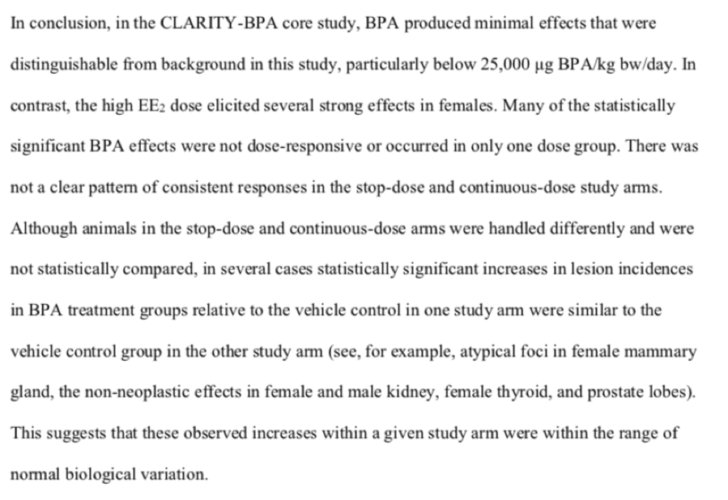
The draft Core Study was released for public comment in February 2018. The draft conclusion — that there are no discernible effects of BPA — is below:
In addition to the CORE study, 13 academic researchers received about $8 million in funding to participate in CLARITY. To avoid researcher bias, the academic researchers received coded animals so they would not know which BPA dose group any animal came from. They were then required to upload their raw data to a government database before the code could be broken and dose group details were disclosed to them. After disclosure the researchers were able to analyze their data.
While all thirteen academic researchers have completed their work, the results from only five of the thirteen researchers have been published since 2015. Consistent with the CORE study, no-to-minimal effects were reported in those studies.
Below are the 13 academic researchers, their areas of research for CLARITY.
The bolded academics have not published their results as of February 2019.
Obstructive voiding disorder – Fred vom Saal, University of Missouri
Testes function – Kim Boekelheide, Brown University
Ovarian dysfunction and abnormal hormone levels – Jodi Flaws, University of Illinois at Urbana-Champaign
Neurobehavioral effects – Heather Patisaul, North Carolina State University; Cheryl Rosenfeld, University of Missouri.
Immune dysfunction – Norbert Kaminski, Michigan State University
Metabolic disease – Andrew Greenberg and Beverly Rubin, Tufts University
Obesity – Nira Ben-Jonathan, University of Cincinnati
Cardiovascular effects – Scott Belcher, University of Cincinnati
Thyroid effects on brain and intestine – R. Thomas Zoeller, University of Massachusetts, Amherst
Mammary – Ana Soto, Tufts University
Uterus – Shuk Mei Ho, University of Cincinnati
Prostate – Gail Prins, University of Illinois at Chicago
The eight researchers who have not published their results have been critics of BPA in the past and should be motivated to publish their results if they indicated that BPA was not safe. But so far – just silence. It should be noted that academic researchers Fred vom Saal and Ana Soto were originally featured in “Our Stolen Future.”
The Grantee Studies data is scheduled to be released in August 2018. The final BPA-CLARITY report is scheduled to be released in August 2019.
The Sperm Count Controversy
In 1992, Danish research Niels Skakkebaek reported, “There has been a genuine decline in semen quality over the past 50 years. As male fertility is to some extent correlated with sperm count the results may reflect an overall reduction in male fertility. Citing three studies, including a 1990 study by John McLachlan (of retracted Tulane study infamy), Skakkebaek concluded his study with, “Whether estrogens or compounds with estrogen-like activity (as proposed by some) or other environmental or endogenous factors damage testicular function remains to be determined.”(47)
By 1993, Skakkebaek had fully subscribed to the endocrine disruptor scare in an article in The Lancet:, “We argue that the increasing incidence of reproductive abnormalities in the human male may be related to increased estrogen exposure in utero, and identify mechanisms by which this exposure could occur.”(48)
Theo Colborn embraced Skakkebaek’s claims in “Our Stolen Future.” Although Colborn noted that Skakkebaek’s claim “is still meeting with a skeptical response in parts of the medical community,” she dismissed the skepticism by comparing it to “similar disbelief at the first news that a dramatic hole had developed in the Earth’s protective ozone layer over Antarctica…”(49)
State of California researcher Shanna Swan joined the sperm count fray in 1997 with her 1997 study in Environmental Health Perspectives that claimed, “This analysis demonstrates that the decline in sperm density reported by [Skakkebaek in 1992] is not likely to be an artifact of bias, confounding or statistical analysis.” Swan declined to address the “cause(s) of the decline.”(50)
Swann tried to tie the alleged decline in sperm count with exposure to pesticides in a 2003 Environmental Health Perspectives study. She reported lower sperm counts among sperm donors in rural, agricultural Columbia, Missouri versus donors in more urban areas like Los Angeles and New York City.(51)
Swann and Skakkebaek have been at it ever since, constantly claiming that sperm counts are declining and that endocrine disruptors might be responsible.
Toxicologist Stephen Safe has been skeptical of the claims of Skakkebaek and Swan. In 2012, Safe wrote, “The initial endocrine disruptor hypothesis which suggested a link between in utero exposures to estrogens and decreased sperm counts is not supported by most studies but is still championed by Skakkebeck and some of his co-workers…”(52)
Safe added, “The claims and controversies regarding EDCs have continued for almost 20 years and there are no signs of resolution. It is noteworthy that two preeminent reproductive biologists who have made highly significant contributions to this field have developed skepticism on the claimed effects for BPA… In a commentary, Sharpe, a coauthor of the initial endocrine disruptor hypothesis, clearly answered in the affirmative the title of his highlight ‘Is it time to end concerns over the estrogenic effects of BPA?’”
Sharpe was Skakkebaek’s co-author on the initial 1992 study.
Maugh T, Chemical carcinogens: how dangerous are low doses? Science 06 Oct 1978: Vol. 202, Issue 4363, pp. 37-41. http://science.sciencemag.org/content/202/4363/370.
Ames B et al. Dietary Pesticides (99.99% all natural). Proc Natl Acad. Sci Vol. 87, pp.7777-7781, October 1990.
Crump K et al. Estimates of the proportion of chemicals that were carcinogenic or anticarcinogenic in bioassays conducted by the National Toxicology Program. Environ Health Perspect 1999 Jan;107(1):83-8.
“This project was supported by Contract No. CX 824040-01-0 between the National Academy of Sciences and the U.S. Environmental Protection Agency and the U.S. Centers for Disease Control and Prevention, and Cooperative Agreement No. 1445-CA09-96-0027 between the National Academy of Sciences and the National Biological Service of the U.S. Department of the Interior.” https://www.nap.edu/read/6029/chapter/1#ii
Thomas KB and T Colborn. Organochlorine endocrine disruptors in human tissue. Pp. 365-394 in Chemically Induced Alterations in Sexual Development: The Wildlife/Human Connection. T Colborn and C Clement, eds. Princeton NJ: Princeton Scientific Publishing.
Colborn T, FS vom Saal and AM Soto. Developmental effects of endocrine disrupting chemicals in wildlife and humans. Enviro Health Perspect 101(5):378-384 1993.
From the H. Rept. 104-669 – FOOD QUALITY PROTECTION ACT OF 1996 (https://www.congress.gov/104/crpt/hrpt669/CRPT-104hrpt669-pt1.pdf): “The Committee is aware of recent scientific reports indicating that some pesticides may imitate, enhance, or block the activity of hormones in humans and wildlife. For example, a linkage has been suggested between human exposure to chemicals that imitate estrogen and breast cancer. Since hormones govern fundamental bio- logical functions such as reproduction, growth, and metabolism in humans and other species, the Committee believes that it is important for EPA to obtain data about the potential hormone-disrupting effects of pesticides in order to make informed regulatory decisions under FIFRA. The Committee notes that the Agency has commissioned a report from the National Research Council to examine the issue more closely and identify data gaps that exists in current testing requirements. The Committee has reviewed and considered this issue and has determined that the EPA currently has sufficient authority to request information related to such effects. The Committee recognizes there are efforts ongoing to design and implement research to objectively assess and characterize the risk of endocrine disruptors on human health and the environment. Therefore, the Committee expects the Agency, within 4 years of the date of enactment of this Act, to evaluate the need for and, if necessary, to use its existing authorities under sections 3 and 4 of FIFRA to establish standards for data requirements, to determine whether a pesticide can disrupt hormonal activity. Collection and analysis of data specified in EPA standards related to disruption of hormonal activity should not delay reregistration eligibility decisions for pesticides first registered before 1984.
It has now become clear that General Michael Flynn was set up and sandbagged by rogue FBI agents while the national security director, Susan Rice, an agent for President Obama, was orchestrating a domestic political intelligence operation of historic magnitude.
Almost two years ago, Kristen Welker,Dafna Linzer, and Ken Dilanian of NBC News told us:
The evidence presented to date in public makes the case that the Obama White House was using intelligence/ counterintelligence practices and procedures against innocent Americans for political purposes. In undertaking such an effort, one of the most import aspects of any intelligence collection effort is to build out the "social network" of your targets and then send out that "work in progress" of social network analysis to others to continue to expand one's knowledge base of "who is connected to whom." Content analysis is the parallel part of that equation, and NSC director Susan Rice's engagement accomplishes both those objectives.
The revelations about the growth of the Surveillance State should be of huge concern to all Americans, Democrats, Republicans, and independents.
It is evident that the former administration was creating a target list of political opponents under the false flag of national security. It is a perfect time of opportunity to say stop and enough! Please all just remember the rule of law and the Constitution, especially the Fourth Amendment.
Many early supporters of President Trump have been frozen out of his administration by individuals who could not even spell "Trump Nation." But that did not stop the Deep State from targeting them in an illegal counter-intelligence operation. Of those early supporters who did make it into administration no one suffered more than General Flynn.............To Read More.....
National and state prosecutors’ associations have blasted the Cook County state’s attorney’s office for its handling of the Jussie Smollett case, with an Illinois group saying Kim Foxx “has failed in her most fundamental ethical obligations to the public.”The Illinois Prosecutors Bar Association said the dismissal of the charges — without any admission of guilt by Smollett — was “an affront to prosecutors across the state” as well as police, victims of hate crimes and the county as a whole................“The case in Chicago illustrates a point that must be discussed in an effort to ensure fairness in our criminal justice system: the rich are treated differently, the politically connected receive favorable treatment, and Lady Justice sometimes peeks under her blindfold to see who stands before her,” said the statement from the national group...........To Read More....
My Take - The rich and powerful who commit crimes and are immune to justice are leftists for the most part, otherwise the Clintons would be in prison right now. Not to mention a host of leftists working for them and Obama.
So. Here we are on the good side of history as the United States of America, God’s greatest gift to the human race, has just escaped a media/leftist coup. Ever since Mr. Trump defied all of the pundits and the pollsters and won the election in November of 2016, the media and the leftists have been planning and executing a leftist/media coup against the Constitution.
The bare bones of the coup were apparent almost immediately. The media swore up and down that there had been “collusion” between the Trump campaigns and Russia to defeat Hillary Clinton and fail to put a Clinton on the throne of America. Now, please bear in mind, that there never was any evidence of such collusion. Plus, no one knew what it would look like if it had existed. Would it be mountains of newsprint saying how great Trump was, coming from pro-Russian media here? No such things ever were seen.
Could it have been some major peace move in Ukraine by Russia contingent upon Trump winning? We never saw any sign of that either. Could it have been an immense contribution from the Russian gold hoard to the Trump campaign? No hint of that either..........To Read More.....
My Take - This is in my opinion a load of horse pucky. Mueller is corrupt to the bone, and his career is evidence of his corruption.As for Karl Rove, I wouldn't trust him if he told me day was light and night was dark.
On a recent program by Mark Levin featuring John Solomon and Sarah Carter, there was one statement – or thought – that I find uttered time and time again by some of the right’s best spokespeople, that continually blows me away. Many of our people when speaking of the falsehoods and false narratives spun by the major media (print and television), lament the lack of fairness and objectivity of the media Left. They seem to think that the leftist news outlets -- its journalists and anchors -- are simply not adhering to professional standards and confusing their mission of reporting news with their personal political beliefs.
Nothing could be further from the truth. It is true that many of the media Left fall into Lenin’s “useful idiot” category. The Lesser Cuomo comes to mind here, as does Joy Behar, Chris Matthews, and Matthew Dowd. However, many others, though truly loathsome, likely can’t get by on the excuse that they can’t distinguish fact from opinion. The reptilian Bill Maher, John Oliver, and Stephen Colbert come to mind here, as do the vapid Dan Rather and Bob Woodward of bygone eras. These people know full well what is fact, what is opinion, and what is fiction. But the fiction just keeps on coming. Why?
To that answer, I simply say, follow the money. Specifically, the paychecks. To use the old axiom, these clever folks know full well on what side their bread is buttered. They are not confused regarding their objectivity. They are lying! And of course, they know it. .............So please, let’s wake up, stop sleepwalking, and realize that we are being shot at -- and yes, they do mean to hit us. ...............To Read More....
A recent article that appeared in the March 28 Wall Street Journal, "The Two Americas Have Grown Much Fiercer," by Peggy Noonan, is part of an editorial trend of late decrying the divided state of America in these times. As is typical in these pieces, the author does not place the onus for our fractured state on one side or the other, but instead promotes a theme of "Can't we all just get along?" From the point of view of the "Trumpian" camp, this writer is here to reply with a resounding "no," at least not until the core issue that motivates the tens of millions of Americans who support our sitting president is addressed.
Those who try to explain America's current divisions by citing polarization into "extreme" camps miss a major aspect of the Trump phenomenon: Trump really doesn't represent an "extreme" political figure. The "extreme polarization" model might have more teeth if we had elected say, Ted Cruz, who is a doctrinaire conservative on every issue, but Trump really can't be accused of that; this was a major factor in his appeal. Like Reagan, he too was once a Democrat.
He has taken positions that are very much at odds with the stereotype of the "Daddy
Warbucks" image of a rapacious, uncompromising tool of Big Money portrayed by the Left. For example, just this past week, he overruled his education secretary and insisted that the Special Olympics remain funded. Though there has been some tinkering at the margins, entitlements have not been slashed. Though generally supportive of gun rights, he banned bump stocks and is favorably disposed toward "Red Flag" laws that are staunchly opposed by gun rights advocates. His SCOTUS appointments, while decidedly conservative, are hardly extreme right-wing ideologues.
Pope Francis was at it again, offering up a confused "narrative" about illegal immigration in his bid to hector Western nations seeking to control their lawless borders through the construction of border walls. This time, his Marxist analysis of things got in the way of his theologically-charged argument, making him look like a V.S. Naipaul-style third-world boob.
With a hat tip to the Daily Caller, get a load of this interview he gave to a Spanish journalist, blasting the West' for building walls against human surges of unvetted illegal immigrants, reported by Crux:...........To Read More......
My Take - As you read this you can't help but wonder what's wrong with this man's mind. It must take a ton of intellect to do the mental gymnastices to be able to twist reality into this lunatic's view of how the world works, and believe it! The other thoughts that must course through any rational Catholic's mind is this. Who picked this guy? And secondly. Can the Pope be fired or excommunicated?
General Electric, a giant company with 280,000 employees and $120 billion in revenue, has run into extreme problems during the last few years. The price of its stock has crashed and the dividend has been reduced to practically nothing. This is, I think, the result of very bad management in previous years. Of its major divisions, Aviation (jet engines) and Healthcare (equipment) seem to be doing well. Renewable Energy and Power are more problematic. Both these divisions support the delivery of electricity. Renewable Energy makes wind turbines and Power makes gas and steam turbines.
Together these two divisions lost about $500 million on $36 billion sales in 2018.
In GE’s 2018 10-K report, the poor performance of the Power segment is blamed on “renewable energy penetration.” The implication is that GE is unable to sell as many gas and steam turbines because these are being replaced by renewable energy, meaning wind or solar power. But wind and solar power require backup plants that provide power when the erratic wind or solar is sleeping. Those plants almost always require gas or steam turbines.
Wind and solar can’t displace fossil fuel plants, because those plants are needed to carry the full load when wind or solar is not generating electricity.
In the 10-K report, GE claims that “Renewable energy is in a rapid transition period and is on track to become a fully commercialized, unsubsidized source of energy, successfully competing in the marketplace against conventional energy sources.” This claim is hilariously ignorant. GE is repeating the propaganda of the wind and solar industries. GE is part of the wind industry, but it should not substitute propaganda for facts in its 10-K.
............Read more
There are some remarkable stories of the private sector showing initiative when governments fail to maintain infrastructure.
In response to dithering by government, residents and businesses in Hawaii put up $4 million to fix an important community road.
Smugglers in Russia repaired a road to facilitate untaxed trade between Russian and Belarus.
I also wrote about a guy in England who was fed up with the slow pace of road repairs and built a private toll road.
Regarding the final example, here’s a video on his project.
I’m particularly amused that this example of practical libertarianism (I’m guessing without the cost overruns that are inevitable with government) was made possible because zoning laws (normally an obstacle to sensible land use) basically allowed the organizer to ask for forgiveness afterward rather than permission beforehand.
To be sure, these isolated examples are hardly a sign that infrastructure is going to be privatized in the United States.
But maybe we can at least learn a lesson on whether we should have more centralization and control from Washington, versus more decentralization and private-sector involvement.
Regarding the former, Chris Edwards explained for FEE that the federal gas tax should not be increased since politicians impose taxes for the ostensible purpose of building and maintaining roads, but then they divert the money to other programs that buy more votes.
…a federal gas tax increase makes no sense. State governments own America’s highways, and they are free to raise their own gas taxes whenever they want. Indeed, 19 states have raised their gas taxes just since 2015, showing the states are entirely capable of raising funds for their own transportation needs. …Also consider that gas taxes used to be a more pure user charge for highways, but these days gas tax money is diverted to inefficient nonhighway uses such as transit. …About 20 percent of those funds (about $8 billion) are diverted to transit and other nonhighway uses. …In 2016, state governments raised $44 billion from fuel taxes, and they diverted 24 percent—14 percent to transit and 10 percent to other activities. …The states also raised $38 billion from vehicle fees. They diverted 34 percent of those funds—13 percent to transit and 21 percent to other activities.
Regarding the latter, the City Manager of Milford, Delaware, wrote a column for the Washington Post about benefiting from private financing for road repairs.
…when I heard that a Domino’s marketing campaign was paying municipalities to repair potholes in return for credit for the work, I quickly responded. …Our role was easy. In exchange for a $5,000 check, Domino’s wanted its logo and a tagline saying “Oh yes we did” in spray chalk on the road next to each repair. …In two weeks, they fixed more than 40 potholes of different sizes — about 20 to 25 percent of the potholes that appeared after the winter. …The program has elicited some complaints about what it means that a pizza chain is funding basic government projects. …But we saw this as a great idea for our community. …In many communities, there’s a constant competition between paying for police and paying for everything else. …if we demonstrate good stewardship of our resources, then hopefully fewer people will complain about paying taxes. …sometimes that means letting Domino’s pick up the tab.
Incidentally, sometimes “anarchists” decide to fix potholes without even waiting for permission.
Let’s close with some libertarian-themed humor.
Some people apparently thing that roads wouldn’t exist in the absence of government. This is an anti-empirical sentiment since many of the first main arteries in America were private roads. And we still have private highways being built today.
Not to mention plenty of neighborhood developments and office parks (or even stairs) that are examples of privately financed and privately maintained infrastructure.
Yet there are still doubters, so this sarcastic image is for them.
Speaking of sarcasm, this next image is a clever combination of two concepts.
First, politicians have an insatiable appetite to tax us over and over again.
Second, they don’t fulfill the responsibilities that they claim only government can handle.
The bottom line is that Washington should have no role in infrastructure. And even if you think infrastructure should be handled by state and local government, that definitely does not (or should not) imply a large public sector.
Geopolitical Futures reports for this last week are insightful. Syrian Militias are no longer being funded by Iran to the same extant they were. As a result their fighters are not being paid, their families aren't being cared for and it appears even the quality of their food isn't good. That was inevitable as it was clear Middle East economics was based on oil. and that's not going to do it for them any longer. And since there's not one Islam dominated nation in the world that's a natural capital generator this should have been expected.
I have to assume this is an across the board situation for all the many terrorist factions that are like a Hydra. When you cut off one head two grow from the stump. But that growth can only occur if there’s money pouring into these groups.
For years I’ve been saying the only way to contain these Islamic terrorists is to keep them broke and keep them over there.
Turkey is going through a small but growing economic crisis due to excess spending that was intended to grow the economy, which made many believe Turkey was a bigger power in the Middle East than I thought it was. Erdogan's meddling is going to cost them big time now, and I don't think this is going get any better in the forseeable future
They're playing a dangerous economic game involving Trump and Russia, in an apparent attempt to show they don’t need the U.S. with their wanting to purchase military hardware from Russia. That’s gong to back fire on them as the U.S. doesn’t need the parts they’re producing to build F-35 aircraft. Why they’re letting these loons do it in the first place is a puzzle to me, but ending that will certainly have an impact on them and others. They need to get this. We don’t need them, they need us.
I kept a steady course in believing there’s only one country in the Middle East that’s a true capital generator, and that’s Israel. Turkey is now contracting its economy and it has a load of debt, and the value of their currency is dropping steadily. This isn’t a good time for Erdogan, especially since elections are just around the corner.
Here’s the question. What does he do if his party loses the election?
As the world’s economy contracts, and Trumps trade sanctions around the world will hasten that, Turkey and all these Islamic tyrannies will start to suffer even further, especially since they no longer control the world’s oil supply, or the cost of it.
As time goes by Algeria may become important news as Algerians are unhappy with their political system, and no one sees a way out. That needs watching for all the newsies out there and I’m convinced France may be dragged into this in some way.
Based on other information by Geopolitical Futures outlining the unending protests in Algerian history they're still not happy even though their current President has dropped out of running for another term. Fundamentally, once again, they're not a true capital generating nation. They're economy is an oil based economy, and oil isn't going to cut it any longer. I expect this to grow, and their military, which has stayed out of all this, may become involved.
It seems to me there are two questions that need to be asked:
What do they really want?
What will replace what they have?
I think that answer is they don't know for both questions.
Up Date: In Turkey it appears Erdogan's party, the AKP, is facing some serious defeats in the election. They appear to have lost the mayor's race in Ankara and most likely Istanbul. Geopolitical Futures points out that Turkey is a complicated nation with strong internal divisions between the secular minded and the religious minded and of course the Kurds, but at this point Erdogan is still in charge, and still holds a majority in Turkey, but it's clear to me they're going to have some serious economic issue within the next five years that may actually split the nation into regionally autonomous areas.
In Algeria the President is going to step down and it appears there's going to be a peaceful transition of power, but it still remains unclear what everyone wants in Algeria, with the exception of a violent overthrow of the government. All the disasters of the "Arab Spring" cause may have made an in presession on the Algerians, and at least they don't want that.
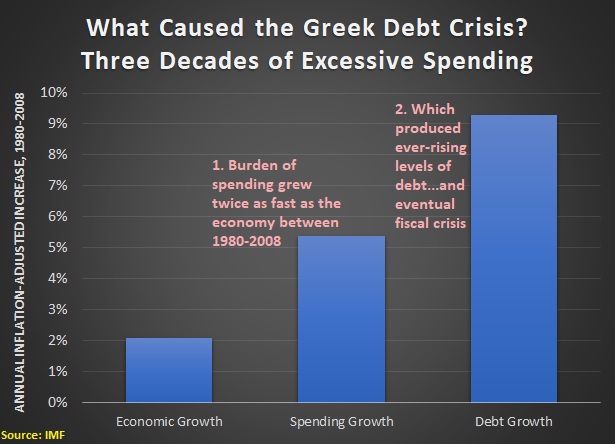
But red ink is merely a symptom. I used numbers from Greece in this interview to underscore the fact that the real problem is government spending.
The discussion was triggered by comments from the Chairman of the Federal Reserve.
Federal Reserve Chairman Jerome Powell said Wednesday that reducing the federal debt needs to return to the forefront of the agenda, warning that the government’s finances are unsustainable. “I do think that deficits matter and do think it’s not really controversial to say our debt can’t grow faster than our economy indefinitely — and that’s what it’s doing right now,” Powell said.
As I noted in my comments, Powell is right, but he’s focusing on the wrong variable.
To be more specific, politicians are violating my Golden Rule.
Spending grew too fast under Bush. It grew too fast under Obama (except for a few years when the “Tea Party” was in the ascendancy). And it’s growing too fast under Trump.
Most worrisome, the burden of spending is expected to grow faster than the private sector far into the future according to the long-run forecast from the Congressional Budget Office.
That doesn’t mean we’ll have a crisis this year or next year. We probably won’t even have a crisis in the next 10 years or 20 years.
But I cited Greek data in the interview to point out that excessive spending eventually does create a major problem.
Here’s the data from International Monetary Fund’s World Economic Outlook database. To make matters simple (I should have done this for the interview as well), I adjusted the numbers for inflation.
So how can America avoid a Greek-style fiscal nightmare?
P.S. By contrast, proponents of “Modern Monetary Theory” argue governments can finance ever-growing government by printing money. For what it’s worth, nations that have used central banks to finance big government (most recently, Venezuela and Zimbabwe) are not exactly good role models.
Recently, my wife and I sat down to watch a documentary on Netflix about the “Flat Earth” movement. This small movement of people sincerely believes that NASA, along with every other space agency in the world, has been lying to us about the earth being a globe and that the earth is actually a flat disc shape.
I have a strange fascination with this conspiracy theory. I’m fascinated not because any facts or science support the conclusion that the earth is flat (they don’t), but because people actually believe in a flat earth despite irrefutable proof to the contrary. It hurts my brain to think that people can believe something so obviously absurd.
It’s entertaining to observe the mental gymnastics these people go through to try to justify their fantasies. You see this with not only Flat Earthism but also things like 9-11 trutherism, “chemtrail” conspiracy theories, beliefs that the moon landing was faked, etc.
After seeing a tweet from conservative blogger Matt Walsh, in which he made the comparison between the Russian collusion hoax and various other baseless conspiracy theories, it occurred to me that those on the far Left are basically flat earthers. They relentlessly hold on to their various delusions despite all facts and evidence.
For instance, how many on the Left still believe that Justice Brett Kavanaugh is a serial gang rapist based on the absurd and obviously false claims of Michael Avenatti (who, by the way, was recently charged with extortion and fraud) who represented Julie Swetnick? Leftists on Twitter still assert this nonsense from time to time..........To Read More....
When Barack Obama implemented his unilateral amnesty for illegal aliens who claimed to have entered this country before the age of sixteen, the illegally amnestied illegals qualified for many benefits.
One of these were FHA loans.
FHA loans are government-backed mortgages meant for poorer Americans unable to qualify for normal mortgages. Democrat abuse of the FHA helped lead to the Great Recession and in the years afterward, FHA insured loans hit losses of $70 billion. By 2012, the FHA was $16 billion in the hole and had to be bailed out. The delinquency rate for FHA loans is still more than three times higher than normal loans, and depending on the period, have hovered between 8% and 14%. Time to bring in the illegal aliens.
When Obama illegally implemented DACA, a program exempting certain illegal aliens from government action, they were also allowed to apply for FHA loans. How many illegal aliens obtained FHA loans?
In December, a letter from three Senate Democrats claimed that HUD barred “approximately 800,000 individuals approved for DACA from FHA-insured mortgage loans”. This refers to the total number of DACA illegal aliens and it’s unknown how many of them have obtained FHA loans in past years.
Ellie Mae’s millennial tracker estimated that the average size of an FHA loan to millennials is $186,454. Potential exposure to illegal alien mortgages could then climb as improbably high as $150 billion.
It’s unknown how many illegal aliens have taken out FHA loans, but some media stories have cited loan officers for whom illegal alien FHA loans represent a significant percentage of their business.
The Trump administration has applied the brakes to this avalanche of taxpayer-insured mortgages to illegal aliens. The Department of Housing and Urban Development (HUD) had begun notifying lenders that the FHA was no longer in the illegal alien mortgage business. The reasons were common sense. DACA illegal aliens, or in media spin, DREAMERs, were not legal residents and weren’t being legalized.
Under Obama, FHA rules had been bent so far backward that people who were not only non-citizens, not only non-permanent residents, but weren’t even legally here, were having taxpayers guarantee their mortgages. Not only hadn’t the Democrats learned anything from the Great Recession, they were determined to make the irresponsible behavior of the FHA a decade ago seem sober and sensible.
And they aren’t giving up.
The December letter by Senator Menendez, who had recently been on trial for corruption charges, Senator Booker, on whose watch the $100 million poured into Newark public schools dissipated, and Senator Cortez-Mastro, who had been accused of taking dirty money, claimed to be, “appalled that the Trump Administration would exploit a federal government program to deny Dreamers an opportunity of owning their own home.” But it was the Democrats who had exploited a federal government program meant for poor Americans to benefit not only foreigners, but illegal aliens with no right to be here.
The letter by the three Senator Democrats falsely claimed that President Trump was targeting a “portion of the American public”, when in fact illegal aliens are not part of the American public. They demanded, “sound and unambiguous legal reasoning” for the move. The sound and unambiguous reasoning would be that illegal aliens are not legally resident in the United States and therefore do not qualify for loans.
The illegal alien mortgage business, built on the backs of American taxpayers, is obviously profitable. But it’s also a silent nuclear weapon threatening mass destruction of the economy in case of deportations.
The more illegal aliens end up with FHA loans, and as those FHA loans are turned into Ginnie Mae Mortgage Backed Securities, deporting DACA illegal aliens would risk mass defaults on FHA loans which are backed by American taxpayers. Quite a few Ginnie Mae bonds are being held by Japan and China.
That’s why HUD’s move of stopping the flow of FHA loans to illegal aliens is so vital and important.
Not only do FHA loans endanger our economic security, they also endanger our national security. Their very existence serves as political leverage to prevent the government from enforcing the law. Every illegal alien mortgage not only robs American taxpayers, but puts them at risk of even worse losses.
And considering the role of mortgage backed securities in the Great Recession, the threat is real.
However, HUD has carefully avoided taking a clear position to prevent the inevitable lawsuits and overrides by Obama and Clinton judges embedded in the federal judiciary. Instead HUD officials have successfully warned off many lenders by creating ambiguity about the status of DACA FHA loans.
The riskier illegal alien FHA loans appear, the more irresponsible taking them on will seem. And lenders will be aware of the shadow of the “False Claims Act” hanging overhead if they bite on illegal loans.
This is far from an ideal solution. But it’s an understandable response by a crippled executive branch that has had its legal powers stripped from it by Democrat activists operating under the guise of judges.
But taxpayer-backed mortgages for illegal aliens are only the tip of the tottering FHA iceberg that President Trump needs to begin shutting down to avoid another recession caused by bad loans.
FHA loans to non-citizens are also extended to non-permanent residents and even to “refugees”. The Office of Refugee Resettlement had even been promoting Freddie Mac’s Islamic Sharia-compliant mortgages for Muslim “refugees”. Foreigners here under Temporary Protected Status, a category that the Trump administration has begun winding down, are also potentially eligible for FHA loans.
The FHA is deeply dangerous and troubled. It is in desperate need of reform.
American taxpayers have long been exploited by the FHA as a piggy bank to pay off Democrat voters. But DACA FHA loans have taken this a step further by taking the economy hostage for illegal aliens.
The FHA loan was created to serve Americans. If it is to continue to exist, it should only serve Americans.
There has never been any reason given why the United States government should be extending its credit on behalf of foreigners, whether they are residents, temporary workers or, let alone, illegal aliens.
The risk of such loans has been rolled into the overall risk for Americans. And the buck was passed.
The artificial stimulation of the housing market isn’t reason enough for the government to be putting the economy at risk and taxpayers on the hook for the illegal aliens whom Democrats hope to turn into voters. DACA was an illegal policy. FHA loans for DACA recipients piles illegality on illegality.
American taxpayers should be let off the hook for illegal alien mortgages before the cost grows too high.

 Origin the endocrine disruptor scare: Rise and fall of the cancer hypothesis
 There are some remarkable stories of the private sector showing initiative when governments fail to maintain infrastructure.


 The real crisis is that spending is growing faster than the private sector (Powell needs to learn the six principles to guide spending policy).

Federal Reserve Chairman Jerome Powell said Wednesday that reducing the federal debt needs to return to the forefront of the agenda, warning that the government’s finances are unsustainable. “I do think that deficits matter and do think it’s not really controversial to say our debt can’t grow faster than our economy indefinitely — and that’s what it’s doing right now,” Powell said.