Search This Blog

De Omnibus Dubitandum - Lux Veritas

Showing posts with label Social Distancing. Show all posts

Wednesday, April 2, 2025

Covid Lies and the Human Consequences

Sunday, September 26, 2021

Over 3,000 Doctors and Scientists Sign Declaration Accusing COVID Policy-Makers of ‘Crimes Against Humanity’

By Debra Heine  September 24, 2021 @ American Greatness

A “Physicians’ Declaration” produced by an international alliance of physicians and medical scientists strongly condemns the global strategy to treat COVID, accusing policy-makers of potential “crimes against humanity” for preventing physicians from providing life-saving treatments for their patients and suppressing open scientific discussion.

The document states that “one size fits all” treatment recommendations have resulted in needless illness and death.

As of 1:00 Friday afternoon, the declaration had garnered over 3,100 signatures from doctors and scientists around the world.

A group of physicians and scientists met in Rome, Italy earlier this month for a three day Global Covid Summit to speak “truth to power about Covid pandemic research and treatment.”

The summit, which was held from September 12 to September 14,  gave the medical professionals an opportunity to compare studies, and assess the efficacy of the various treatments that have been developed in hospitals, doctors offices and research labs throughout the world.

The document, reprinted below in its entirety, sprang from that conference.

The Physicians’ Declaration was first read at the Rome Covid Summit, catalyzing an explosion of active support from medical scientists and physicians around the globe. These professionals were not expecting career threats, character assassination, papers and research censored, social accounts blocked, search results manipulated, clinical trials and patient observations banned, and their professional history and accomplishments altered or omitted in academic and mainstream media.

Dr. Robert Malone, architect of the mRNA vaccine platform, read the Rome Declaration at the summit.

Thousands have died from Covid as a result of being denied life-saving early treatment. The Declaration is a battle cry from physicians who are daily fighting for the right to treat their patients, and the right of patients to receive those treatments – without fear of interference, retribution or censorship by government, pharmacies, pharmaceutical corporations, and big tech. We demand that these groups step aside and honor the sanctity and integrity of the patient-physician relationship, the fundamental maxim “First Do No Harm”, and the freedom of patients and physicians to make informed medical decisions. Lives depend on it.

We the physicians of the world, united and loyal to the Hippocratic Oath, recognizing the profession of medicine as we know it is at a crossroad, are compelled to declare the following;

WHEREAS, it is our utmost responsibility and duty to uphold and restore the dignity, integrity, art and science of medicine;

WHEREAS, there is an unprecedented assault on our ability to care for our patients;

WHEREAS, public policy makers have chosen to force a “one size fits all” treatment strategy, resulting in needless illness and death, rather than upholding fundamental concepts of the individualized, personalized approach to patient care which is proven to be safe and more effective;

WHEREAS, physicians and other health care providers working on the front lines, utilizing their knowledge of epidemiology, pathophysiology and pharmacology, are often first to identify new, potentially life saving treatments;

WHEREAS, physicians are increasingly being discouraged from engaging in open professional discourse and the exchange of ideas about new and emerging diseases, not only endangering the essence of the medical profession, but more importantly, more tragically, the lives of our patients;

WHEREAS, thousands of physicians are being prevented from providing treatment to their patients, as a result of barriers put up by pharmacies, hospitals, and public health agencies, rendering the vast majority of healthcare providers helpless to protect their patients in the face of disease. Physicians are now advising their patients to simply go home (allowing the virus to replicate) and return when their disease worsens, resulting in hundreds of thousands of unnecessary patient deaths, due to failure-to-treat;

WHEREAS, this is not medicine. This is not care. These policies may actually constitute crimes against humanity.

NOW THEREFORE, IT IS:

RESOLVED, that the physician-patient relationship must be restored. The very heart of medicine is this relationship, which allows physicians to best understand their patients and their illnesses, to formulate treatments that give the best chance for success, while the patient is an active participant in their care.

RESOLVED, that the political intrusion into the practice of medicine and the physician/patient relationship must end. Physicians, and all health care providers, must be free to practice the art and science of medicine without fear of retribution, censorship, slander, or disciplinary action, including possible loss of licensure and hospital privileges, loss of insurance contracts and interference from government entities and organizations – which further prevent us from caring for patients in need. More than ever, the right and ability to exchange objective scientific findings, which further our understanding of disease, must be protected.

RESOLVED, that physicians must defend their right to prescribe treatment, observing the tenet FIRST, DO NO HARM. Physicians shall not be restricted from prescribing safe and effective treatments. These restrictions continue to cause unnecessary sickness and death. The rights of patients, after being fully informed about the risks and benefits of each option, must be restored to receive those treatments.

RESOLVED, that we invite physicians of the world and all health care providers to join us in this noble cause as we endeavor to restore trust, integrity and professionalism to the practice of medicine.

RESOLVED, that we invite the scientists of the world, who are skilled in biomedical research and uphold the highest ethical and moral standards, to insist on their ability to conduct and publish objective, empirical research without fear of reprisal upon their careers, reputations and livelihoods.

RESOLVED, that we invite patients, who believe in the importance of the physician-patient relationship and the ability to be active participants in their care, to demand access to science-based medical care.


Thursday, September 16, 2021

Increasing Evidence that Lockdowns and Social Distancing are Harming Kids

Zachary Yost Zachary Yost  –

Last Thanksgiving, I argued that the state-mandated policy of lockdowns and social distancing to combat Covid-19 was an assault on our very humanity that was having grave consequences the central planners didn’t seem to even begin to understand. Opponents of lockdowns have been pointing out these unintended consequences from the very beginning, ranging from people falling back into their addictions, increased domestic violence, to a widespread failure to detect treatable diseases like cancer before it became too late. As bad as these are, the negative consequences for children have been especially heartbreaking as more and more evidence piles up that the government’s Covid mitigation measures are doing serious harm to children of all ages across the country. In short, the past year has been simply brutal for the mental and physical health of kids and young adults.

A recently released CDC report found that visits to emergency rooms for attempted suicide around the country for children aged 12-17 at first decreased when the lockdowns began in the Spring of 2020, but then quickly skyrocketed past the previous year’s levels for the same time frame compared to 2019. From July 26 to August 22, 2020 emergency room visits for suspected suicide attempts among adolescents were up 22.33 percent compared to that timeframe in 2019. This winter was even worse, with a 39.13 percent increase in visits for adolescent suicide attempts between February 21 and March 20 of 2021.

However, when separated by sex, these numbers become even more shocking. In the summer measurement period, the number of visits to the emergency room for attempted suicide for adolescent females was actually 26.16 percent higher for the same timeframe in 2019, whereas it had increased “only” 10.84 percent for adolescent males. In the Winter of 2021, the rate is even more shocking and divergent, with an astounding 50.55 percent increase for adolescent females compared to a 3.71 percent increase for adolescent males.

As unfortunate as it is, this data likely only begins to scratch the surface of the trauma and long-term negative effects the past year has had on kids. A research letter published in the Journal of the American Medical Association reports that children, like adults, have been gaining weight during the pandemic. The study separated children into three cohorts, ages 5-11, 12-15, and 16-17, and found that the percentage of children who were overweight or obese had increased in every cohort. The increase was greatest among the 5-11 cohort, with an 8.7 percent absolute increase from 36.2 percent before the pandemic to 45.7 percent when the study was conducted. For the 12-15 and 16-17 cohorts, the absolute increase was found to be 5.2 percent and 3.1 percent, respectively. The authors noted that “Most of the increase among youths aged 5 through 11 years and 12 through 15 years was due to an increase in obesity” (as opposed to merely becoming overweight).

Given the numerous negative health effects that come from being overweight or obese, such trends should be setting off alarm bells for the public health officials who seem to be constitutionally unable to factor in the concept of trade-offs into their pronouncements and policy recommendations.

It is very possible that in the decades to come the cost of treating obesity-related health issues, both in human health and monetary terms, will far outweigh the supposed benefits derived from the Covid mitigation methods that led to the weight gain in the first place. For just one example, the CDC states that “Heart disease is the number one killer of both men and women” and being overweight or obese is a major contributor to heart disease risk factors. For reference, heart disease killed 690,000 people in 2020, over twice as many people as were killed by Covid itself.

But the data gets even worse. A recently released pre-print study that has been submitted to the journal Developmental Cognitive Neuroscience has found a disturbing decrease in verbal, nonverbal, and overall cognitive scores for infants born since the start of the pandemic when compared to infants born before January 2019. According to the authors, “Across all measures, we found cognitive scores were significantly reduced during the pandemic by 27 to 37 points (or almost two full standard deviations)” for children born during the pandemic.

The authors note that much more research is needed, but hazard some potential explanations, noting that “masks worn in public settings and in school or daycare settings may impact a range of early developing skills, such as attachment, facial processing, and socioemotional processing.” The authors also note that the fact that the staff conducting the assessments were wearing masks may have contributed to the shockingly low scores. It is worth noting that economist Emily Oster, who has been a prominent voice in the debate about reopening schools, argues that the results of the study are highly improbable given what is known about how IQ scores operate.

Hopefully, Oster is correct and infants born during the pandemic are not as developmentally impaired as the study suggests. On the other hand, it would not be surprising to learn that the widespread use of masks would be having a negative effect on infant development of some kind. Vanessa LoBue, an assistant professor of psychology at Rutgers, has written that “Decades of research from many different labs suggest that faces are quite special for infants right from birth” and that over the next few months of life “faces will become a newborn’s favorite stimulus.” LoBue notes that newborns have an amazing and rapid ability to learn about and differentiate between faces and expressions. She also notes that “infants’ expertise with facial expressions becomes an extremely valuable tool for learning in the second half of the first year” as infants look to others for facial cues to guide their actions as they begin to explore the world. It is a very real possibility that widespread masking is negatively affecting the development of this crucial developmental process. 

While scientists are only just beginning to truly unravel the numerous negative unintended consequences of Covid mitigation efforts, these preliminary studies and data are clear that children are suffering under the masking and social distancing regime. While it is unfortunately too late to stop the harm that has already been done, it is not too late to stop such destructive policies going forward or to ensure that we learn from this disastrous episode in public health history and take steps to ensure that they are not adopted again in the future. 

Zachary Yost

Zachary Yost

Zachary Yost is a freelance writer and researcher who lives in his hometown of Pittsburgh. Publications he has written for include The Washington Times, The Washington Examiner, the Mises Wire, and The American Conservative, among others. You can subscribe to his newsletter here, or contact him at Zyost81@gmail.com and follow him on Twitter @ZacharyYost.

Get notified of new articles from Zachary Yost and AIER.


Tuesday, August 3, 2021

Covid Policy and Outcomes

Gerald P. O'Driscoll, Jr Gerald P. O’Driscoll, Jr.  – August 2, 2021 @ American Institute for Economic Research 


Did shelter-in-place (SIP) policies work? More precisely, did they reduce excess deaths?

A recent NBER working paper addresses the question (Virat Agrawal, Jonathan H. Cantor, Neeraj Sood, and Christopher M. Whaley, ‘The Impact of the Covid-19 Pandemic and Policy Responses on Excess Mortality,’ Working Paper 28930, National Bureau of Economic Research, June 2021).

Early studies found that SIP policies slowed transmission of Covid-19; more recent studies question that finding (2). This paper is very much in the questioning mode. The authors use the concept of excess deaths as a measure of all-cause mortality. It compares actual deaths in a geographic location at a point in time to expected deaths based on historical data (3). Their data come from 43 countries and all 50 states. They use an event study approach. The results are striking.

“…we fail to find that SIP policies saved lives. To the contrary, we find a positive association between SIP policies and excess deaths. We find that following the implementation of SIP policies, excess mortality increases.” The result is statistically significant only for the international comparison (4). Much of the paper discusses the possible reasons for the empirical results.

It must be noted that, conceptually, the outcome of SIP policies was always ambiguous. This is true for two reasons. First, it is possible that individuals might have voluntarily adopted measures to protect themselves from infection. Indeed, it is absurd to make the counterfactual that individuals would take no actions on their own to protect themselves until ordered to do so.

Second, SIP policies might reduce deaths from Covid-19 but increase deaths from other causes. There is direct evidence for that. In fact, the authors adduce three potential explanations for why SIP policies did not reduce excess mortality.

First, they refer to the possibility that individuals did in fact change behavior even before SIP policies. So, SIP policies might have only a modest impact on mobility. That is what some prior studies have found. Second, the authors note the possibility “that SIP policies increased deaths of despair due to social and economic isolation effects….” They cite estimates that, between March and August 2020 drug overdoses, homicides, and unintentional injuries increased, though suicides declined. And, third, they cite studies showing that SIP policies led to reductions in non-Covid-19 healthcare (16). I’d add that these possibilities were identified contemporaneously by critics of SIP policies, including by signatories of the Great Barrington Declaration.

The authors conclude modestly that “in light of this evidence continued reliance on SIP policies to slow COVID-19 transmission may not be optimal” (16). Instead, they advocate for the use of vaccinations and therapeutics (16-17).

There is a Hayekian critique of SIP and allied policies. The knowledge of particular circumstances of time and place is widely dispersed throughout society. Individuals know more about their specific situations, including exposure risks, than could any centralized public health officials. They certainly know how many precautions they have already taken. The dispersed information cannot be aggregated in one mind, however brilliant that mind might be. The argument against central planning of public health is analogous to that against central planning of an economy.

There is an allied issue, namely social distancing. Both policies seek to regulate social interactions. This produced the famous Six-Foot rule in closed spaces. The problem is the rule was predicated on the assumption that “the primary vector of pathogen transmission is the large drops ejected from the most vigorous exhalation events, coughing and sneezing” (Martin Z. Bazant and John W. M. Bush, “A Guideline to Limit Indoor Airborne Transmission of COVID-19.” Proceedings of the National Academy of Sciences of the United States of America 2021 Vol. 118 No. 17 e2018995118, p. 1). If the assumption were valid, the Six-Foot rule might be justified. Unfortunately, “there is now overwhelming evidence that indoor airborne transmission associated with relatively small, micron-scale aerosol droplets plays a dominant role in the spread of COVID-19, especially for so-called ‘superspreading events,’ which invariably occur indoors.” Bearing heavily on the transmission process is the kind of ventilation in the room. The authors rely on the concept of “well-mixed spaces” to conclude that generally “one is no safer from airborne pathogens at 60 ft than 6 ft” (2).

Most of the paper is devoted to technical, model-theoretic calculations of safe-spacing. They present two case studies. One is for classrooms. Under reasonable assumptions (including mask wearing), they conclude “school transmission would be rare” (7). But their analysis “sounds the alarm for elderly homes and long-term care facilities…” (7). The Six-Foot rule fails very quickly, in as little as 3 minutes. It is no wonder that hospitalizations and deaths were so high in these facilities.

They conclude that the six-Foot rule is inadequate, and they offer “a rational, physically informed alternative for managing life in the time of COVID-19” (11). I can only concur that in social distancing as with SIP policy, rationality was absent. Science was repeatedly invoked, but at least the actions I examined here were not supported by science. The reason for this may have been identified by Lord Acton in the 19th century. “Power tends to corrupt, and absolute power corrupts absolutely.”

Gerald P. O’Driscoll, Jr.

Gerald P. O'Driscoll, Jr

Gerald P. O’Driscoll, Jr. is a Senior Fellow at the Cato Institute. He has previously served as Vice President and Economic Advisor at the Federal Reserve Bank of Dallas, Vice President and Director of policy analysis at Citigroup, and director of the Center for International Trade and Economics at the Heritage Foundation. He also served as Staff Director of the International Financial Institution Advisory Commission (Meltzer Commission). He is a widely-quoted expert on international monetary and financial issues. His popular works have appeared in leading publications, including the Wall Street Journal. He is a frequent guest on national radio and television programs, including Fox Business News, CNBC and Bloomberg.

O’Driscoll earned his M.A. and Ph.D. in economics from UCLA and his B.A. in economics from Fordham University.

Get notified of new articles from Gerald P. O’Driscoll, Jr. and AIER.


Sunday, April 25, 2021

COVID-19 Quick Takes—Part Six

April 26, 2021  By Michael D. Shaw @ HealthNewsDigest

Here we go again with more items on COVID-19 that you may not have seen in the mainstream media. Of course, cancel culture existed in the field of medicine long before that term originated. Some day, someone might just figure out how many lives were lost because of this. Only, don’t hold your breath.

1.     Herd immunity—This term is defined by the Association for Professionals in Infection Control and Epidemiology (APIC) as occurring “…when a high percentage of the community is immune to a disease (through vaccination and/or prior illness), making the spread of this disease from person to person unlikely.” All they venture to say about COVID-19 is:

“A large percentage of the population will need to be immune against the disease (through infection or vaccination) before herd immunity will be achieved. It is not known when that will happen, but it will depend on how many people get vaccinated.” And that’s about as noncommittal as it gets.

Other voices suggest that herd immunity for COVID-19 will never be achieved, and support this contention with five reasons…

  • It’s unclear whether vaccines prevent transmission…..According to mathematical biologist Shweta Bansal, of Georgetown University, “Herd immunity is only relevant if we have a transmission-blocking vaccine. If we don’t, then the only way to get herd immunity in the population is to give everyone the vaccine.” As it is, determining how well these new vaccines block transmission is far from simple.
  • Vaccine roll-out is uneven…..Dr. Bansal notes that previous vaccination efforts suggest that uptake will tend to cluster geographically, and no community is an island. Even countries with high vaccination rates are at the mercy of their neighbors. There is also the matter of kids not being vaccinated, although most believe that kids are not a big source of transmission.
  • New variants change the herd-immunity equation…..This is troubling. Some epidemiologists believe that the longer it takes for everyone to get vaccinated, the more time variants will have to develop. Worse, variants could possibly evolve that might actually thrive in people immunized for the original strain. A case in Brazil indicates that even with a supposedly sufficient rate of infection, the expected herd immunity failed to manifest, and a spike of new infections appeared. As with all epidemiological studies, there are multiple sources of error, but the Brazil experience does not build confidence.
  • Immunity might not last forever…..Bansal says that there is conflicting data on this, and she might be thinking of this study, which showed T cell antibodies to SARS-CoV-2 in blood drawn in 2015.
  • Vaccines might change human behavior…..The specter is raised that people may return to normal behavior before enough community immunity exists. But, this premise begs the question over whether universal lockdowns and other non-pharmaceutical interventions actually work. There is quite a bit of literature extant suggesting that they don’t. And here. Moreover, the atrocious modeling of Imperial College has been put to the test, and has failed miserably.

2.     Do masks do any good?—A review article out of Stanford (replete with 67 references), which should be getting much more publicity, concludes that:

“The data suggest that both medical and non-medical face masks are ineffective to block human-to-human transmission of viral and infectious disease such SARS-CoV-2 and COVID-19, supporting against the usage of face masks.”

Wearing face masks has been demonstrated to have substantial adverse physiological and psychological effects. These include hypoxia, hypercapnia, shortness of breath, increased acidity and toxicity, activation of fear and stress response, rise in stress hormones, immunosuppression, fatigue, headaches, decline in cognitive performance, predisposition for viral and infectious illnesses, chronic stress, anxiety and depression.”

3.     Don’t believe the inflated COVID-19 death toll—In a scrupulously documented piece, Anthony Colpo obliterates the sensational numbers being touted endlessly. Among his key points:

  • CDC admits 95% of COVID-19 victims had multiple comorbidities
  • Fact checkers are demonstrably biased
  • There were multiple ways in which the numbers could be inflated, ranging from peer pressure to ICD codes that allow for all contingencies: U07.1 COVID-19, virus identified; and U07.2 COVID-19, virus not identified. I guess that could explain how a November, 2020 murder-suicide was initially listed as two COVID-19 deaths.

Nothing builds trust as well as flat-out lying, right?


Sunday, April 18, 2021

Coronavirus, Fauci and America in Crisis

https://blogger.googleusercontent.com/img/b/R29vZ2xl/AVvXsEgDdJXy3OAHLJn_MpiNbbpiEfmKMk5o52EaM_ErYTz_AQiD3zo-sQWOUuwWSVBiV4IJ3FlQV6T-I03A9NYvk-Cw_z_XUAGBaqiTjOITYXOGIJAACqAjGX9XDktXKqx-gc3w6FR9l1Ki6Us/w49-h64/My+Picture+2.jpg By Rich Kozlovich

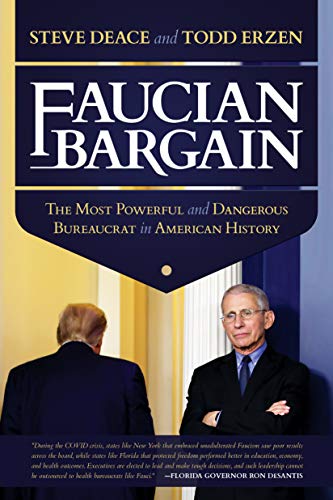
Fauci is a corrupt and dangerous idiot.  He's bounced back and forth like a rubber ball, and yesterday I posted this piece from Jeffrey Tucker, Three Books on the Covid/Lockdown Catastrophe, and one of them is this one: Faucian Bargain: The Most Powerful and Dangerous Bureaucrat in American History by Steven Deace and Todd Erzen, noting the authors, "Not mincing words, they call this famous doctor “one of the most diabolical destroyers of self-governance and rugged individualism in all of American history.” It’s hard to disagree"

From the beginning I’ve stated this pandemic "crisis" is not science, it’s hysteria, and time has shown me to be correct. don't work.  Lockdowns don't work.  Social distancing doesn't work, and here

I've stated only two things work.  Vaccines and herd immunity.  As for this virus being extremely contagious, I  think that's predicated on numbers that have been shown to be fraudulent, so that's up in the air, and not just those tested, which is a farce since this has never been done on this scale in the past, but also those who've died, and once again we see fraud occurring unendingly. The contagious nature of this virus is being overrated, just like the global warming doom sayers. Lessons In Woke "Science": Covid-19 And Climate.

I've stayed out of the vaccine arguments for two reasons.  First, I've seen studies in my industry come under attack and found those attacks were meaningless, and I've seen studies come under attack and proved absolutely valid.  Secondly, I don't feel competent enough to evaluate studies until I seen enough history.  But my ignorance isn't singular as Jordan Schachtel notes in this P&D post There Is No Such Thing as a Public Health Expert.

The accounts I've read go back and forth to the point I have no idea who's right and who's wrong, who's lying and self serving, and who's altruistic, with the exception of Fauci, and the Cuomo governor crowd.  They're vile. 

Predicated on all I've seen, written about and posted from others, this isn't about public health it's about big government tyranny, taking the normal and natural fears of people and turning it into junk science hysteria.  Keep the people terrified, isolated and broke and you create an dependent society of obedient automatons.  

There is one thing I do know.  There's problems with new technology all the time and there's problems with vaccines that have proven "safe" all the time.  This will have to play out to know what's really factual.  Here's the link to my


Saturday, April 17, 2021

Three Books on the Covid/Lockdown Catastrophe

In the early days of the lockdown, Amazon experimented with curating which books they would and would not publish on the crisis. Or call it what it really is, given our times: censorship. 

Among the first books hit was AIER’s own Coronavirus and Economic Crisis. The publication was delayed for weeks, then the Kindle edition was stopped for several more weeks. Still, the publication date is now listed as March 28, 2020, meaning that AIER had one of the first, if not the first, book out on the topic, just two weeks after the lockdowns began. 

In the meantime, Amazon has loosened up, perhaps because the sales of a different point of view were potentially too lucrative to pass up. Indeed, I see many dozens of such books out there, all taking issue with the CDC’s narrative and the lockdown policy agenda. I’m thrilled by this. For that matter, AIER has published an additional four books on the topic, including my own Liberty or Lockdown

 https://www.aier.org/wp-content/uploads/2021/04/5153bf5SS7L.jpg

I’ve been waiting for a bestseller, and it has arrived: Faucian Bargain: The Most Powerful and Dangerous Bureaucrat in American History by Steven Deace and Todd Erzen, two media commentators in the tradition of Rush Limbaugh. 

This short book (it took me under an hour to read) is not strong on scientific rigor, but its sheer readability helps account for its huge seller status. Anyone who has lived and breathed the data, studies, and history pertaining to this terrible moment in history might find himself frustrated that the authors prioritize razzle-dazzle rhetoric and conservative-style talking points ahead of precision, citation, and calm exposition.

However, I don’t think our times permit that level of literary scrupulosity. The important point is that people are downloading and reading this in great numbers. This is good because the main storyline of the book is 100% correct. Not mincing words, they call this famous doctor “one of the most diabolical destroyers of self-governance and rugged individualism in all of American history.” It’s hard to disagree. 

Dr. Anthony Fauci has played an outsized role in pushing lockdowns, disease panic, and flagrantly bad science via his major means of communication: interviews with sympathetic media on TV. Among many, he has obtained a godlike status but the authors show that he acts more as a political performance artist. Artists improvise, play roles depending on the need, and seek approval above all else. That’s their main complaint against him – his fawning for the camera, his changing lines, his pseudo-scientific and imprecise but seemingly impressive blather, and it is correct. 

The authors draw attention to a huge mystery of his role early in the lockdowns. On February 28, he wrote in the New England Journal of Medicine that Covid-19 might “ultimately be more akin to those of a severe seasonal influenza.” On March 8, he told media that “there’s no reason to be walking around with a mask.” That was then, and, as they point out, he was mostly correct on these points in retrospect. 

I will let the authors continue the story:

And now, we come to March 11. The day the earth stood still. The day our way of life ended, with no definitive hope of when it might return. For that is the day Fauci testified before Congress that COVID-19 would be “10 times more lethal than the seasonal flu.” This is the statement that sent shockwaves across the country and launched us into lockdowns…. what changed in those eleven days? What new piece of evidence or data did Fauci acquire to inspire such an about-face?

This is the crucial question. To be sure, there was already panic in the air on March 8, when South by Southwest was summarily shut down by the Austin, Texas mayor. There was talk of locking down everywhere, with the New York Times whipping up a big panic on its main podcast and op-Ed page. Even then, hardly anyone believed it would happen. That Fauci testimony was indeed the turning point. His whole demeanor seemed to be warning the assembled politicians that many of them will die. It was crazy stuff. 

So what is our authors’ theory as to why he made the shift? They quote an anonymous White House employee who was there during the early days to the effect that Fauci became consumed by fame and celebrity. The more he called for lockdowns, the more panic he spread, the more he enjoyed the spotlight, and the more the media saw their ratings rise. 

And let’s be real, the media loved every minute of it. It’s not just media bias, but the media ratings matter, too. They have to blow this up, focus on the fight back and forth, and make the virus into the Malaysian flight that CNN kept on and on with. It has to be all catastrophic all of the time, or people will make their own decisions and go about their lives. And if there’s anything the media in Washington cannot handle, it’s the average American making decisions in their lives without the supposedly valuable input. So Fauci feeds off the media, and the media feeds off of Fauci. Both of them clinging to each other to make both of them more relevant.

That sounds plausible. There is an additional problem raised by 300 pages of emails discovered via FOIA that detail Fauci’s own relationship with China. Even our authors, who cover the released emails, don’t seem entirely aware of the implications of a US delegation having travelled to China in mid-February to learn from Beijing the art of virus suppression. I cannot account for this myself. Why would Fauci step up to volunteer as our own Manchurian public health official? Why carry water for the CCP? At the age of 80, he surely is beyond being paid off or bribed or whatever. Did he really come to believe that China had the only way out? It all seems hard to believe. 

Despite the pop feel, the obvious bias, the red meat from beginning to end, the authors are pointing to a dreadful scandal, and it is wholly understandable that this would inspire anger. Rightly so. 
 https://www.aier.org/wp-content/uploads/2021/04/51w0v8Ye4oL._SY346_.jpg

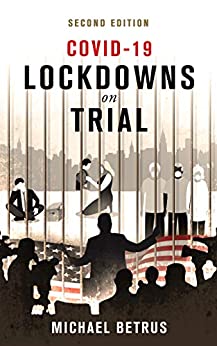
For a book with more data and evidence, in addition to a longer perspective on how free societies deal with pandemics, I would suggest Lockdowns on Trial by journalist Michael Betrus. The book came out in the summer but the 2nd edition came out in November 2020. The prose is elegant and mercifully calm. As I did in my book, he covers the policy response to previous lockdowns. He cites a huge amount of the literature showing a lack of any correlation between lockdown policies and disease mitigation. 

The main merit of this book, in my view, is that it shows that in terms of pathogens and disease, these times have not been without precedent. We’ve been here before. Indeed, humanity has never not been here, with germs and so on floating and swirling all around us, many of them mutations of previous pathogens, all the while with our immune systems adapting and scaling to absorb them and fight them. With the exception of a few American cities in 1918, and only then for a brief time, this country has always dealt with infectious disease as a normal event to be handled by medical professionals, not an exceptional catastrophe to be managed by politicians and bureaucrats. 

The burden of this book is to prove that these are in fact normal times or should have been regarded as normal times, which is to say that the mass panic was wholly unjustified. To that end, the book goes into some detail about the seemingly endless confusions over predictions, testing, data over infections and cases, and deals squarely with rampant issues of misclassification and exaggeration, the nursing home scandals, and also the details concerning demographic risk of SARS-CoV-2, the actual lethality of Covid-19 by age and comorbidities, and the deaths and how to count them. 

Insofar as I am in a position to judge based on my own knowledge, I find this book highly credible in addition to readable, with mercifully little in the way of politicized argumentation. Most impressive among these books, the author deals with the astonishing costs of lockdowns, which are not only economic but also social, cultural, and medical. Remarkably, lockdowns performed in the name of public health have in fact devastated public health. 

The book includes detailed debunkings of hundreds of media-touted myths of superspreader events, surges, outbreaks, spread in restaurants and bars, in addition to bringing all of this in focus with a proper emphasis on severe outcomes rather than cases as such. 

Other issues covered here: media bias, censorship, masks and their (lack of) effectiveness, the complete absence of evidence of some relationship between lockdowns and disease outcomes, and the outlying states around the world with no lockdowns and excellent outcomes. The chapters on suicides, drug overdoses, depression, learning loss, missed treatments, weight gain, business closures, and more terrible things, are enormously depressing and hard to read. Indeed, I’m hard-pressed to think of a single issue of note not covered in this book. 

The book has a conclusion I like: the lockdowns did not do what they were supposed to do, they caused unspeakable collateral damage, and therefore should be lifted everywhere immediately. 

I do have one argument with the author: I do not agree that stopping flights from China and Europe was a good idea, even with the information we had at the time. The presumption always should be about the freedom to travel. There are no ways to do counterfactuals here but the virus was already in the US, so I seriously doubt that these blocks achieved anything in terms of public health. Plus, they violate human rights. 

Day to day, my number one major annoyance in life – okay maybe not the whole of life but certainly my annoyance with the media – is the way in which terrible outcomes of lockdowns are frequently attributed to the “pandemic.” At the New York Times, this is daily prattle, almost assuredly imposed by editors. Writers can pen stories about depression, job loss, crisis in industries, disrupted supply chains, hunger and suffering, and everything else, so long as the causal agent is always named as the pandemic. The lockdowns, goes the implication, were just what one has to do in the presence of the new pathogen.
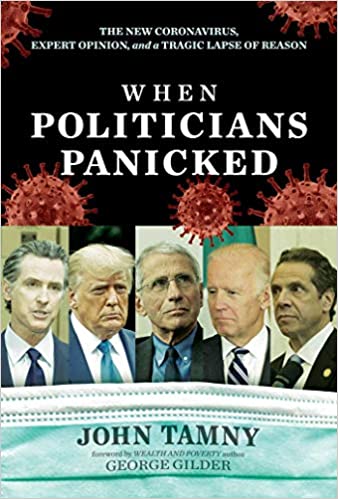
 

This is why I absolutely adore John Tamny’s fabulous book When Politicians Panicked. It doesn’t cover cell biology, death and case data, PCR testing scandals, hospitalizations, or virus trajectories at all. It keeps the focus on what really matters: how politicians smashed our economic lives out of a complete panic of what else to do. “To blame this on the coronavirus is to excuse ineptitude that is the normal when the combined, decentralized knowledge of millions and billions of humans is ignored in favor of the central and highly limited knowledge of a very few politicians, and even fewer experts.”

Tamny proves decisively that lockdowns were the cause of the crushed economy that was otherwise healthy, and this did not have to be. His fascinating spin on the China issue will challenge any reader. He points out that the market signals coming out of China even in the worst days of the pandemic were in fact not revealing anything terribly disruptive in terms of disease outcomes. US companies in China tested their employees and found few cases and no deaths. No American company with a deep stake in Wuhan was showing any level of market response to the pandemic. Tamny watches these markets carefully and concluded early on, by virtue of the information they were providing, that this virus itself represented minimal if any threat at all to social and economic functioning. Its severe outcomes were limited to the health and well-being of a small demographic and that would be treated medically and not politically. 

The reason this did not happen is the core thesis of the book. The politicians panicked. Lockdowns became the default response, though they had never been tried before, and a test of leadership grit. Real men and real women lock down to control the virus! That was the ethos stemming from panic. “What happened was an imposition of command-and-control that has always suffocated economic growth.” Tamny further shows that economic growth has always been a precondition for good health outcomes, so it makes no sense at all to shut it down. He will not call what resulted a recession, on grounds that this would be insulting to a very natural market process. It was pure destruction, and pointlessly so, since the virus should always have been treated as a medical matter. 

The book excels – and is thus far singular – in addressing the complete failure of the various stimulus packages intended to substitute for a functioning economy. It can never work. Whether the stimulus is fiscal or monetary, the government can only take from the private sector and redistribute it but it can never make up for losses associated with lockdowns. The author is right on target in associating this with Khrushchev-style economics (I thought that was my original insight; Tamny had it first). The Soviet dictator imagined that governments could outperform markets in a way that made markets irrelevant and unnecessary, exactly as the lockdowners thought that government could easily. 

Tamny’s book succeeds mightily in intellectually crushing the lockdown deniers (people who pretend like it never happened), and for that reason it is enormously satisfying. Somehow out of the three books mentioned here, this is the one that is most heartbreaking and most maddening since it shows decisively that none of this was necessary. None of it. The lockdowns were a monumental distraction from the job that needed to be done, and which always needs to be done, which is to promote good health outcomes. 

Tamny is willing to ask unaskable questions such as: what if the politicians had done nothing? His answer might shock anyone who has yet to rethink the tragic events of the last year. He says we would have been better off and the severe outcomes from the disease better because of the nursing home scandals and the collateral damage. In other words, the “mitigation” efforts not only wrecked the economy; they wrecked public health too. 

I’m so grateful to John Tamny for writing this book, which says exactly what needs to be said, and ends just the right way: it is time to reassert the primacy of freedom. 

These are three of what will be thousands of books that will be appearing in the coming years on these tragic times. I’m willing to wager that most of these books will severely condemn the policy decisions of the last year, just as these have done. There will be a reckoning. These books are an excellent start. 

Jeffrey A. Tucker

Jeffrey A. Tucker is Editorial Director for the American Institute for Economic Research.

He is the author of many thousands of articles in the scholarly and popular press and nine books in 5 languages, most recently Liberty or Lockdown. He is also the editor of The Best of Mises. He speaks widely on topics of economics, technology, social philosophy, and culture.

Jeffrey is available for speaking and interviews via his emailTw | FB | LinkedIn

Books by Jeffrey A. Tucker


Monday, April 5, 2021

Disease Is the Newest Excuse for Segregation

Jeffrey A. TuckerApril 3, 2021  @ American Institute for Economic Research

Walking through several airports to catch planes this week, I stepped on hundreds of stickers with the exhortation “Keep a Safe Distance. Stay 6 Feet Apart.” 

 https://www.aier.org/wp-content/uploads/2021/04/shutterstock_1685631415-800x438.jpg

It’s just a silly sticker at this point, an embarrassing relic of the great 2020 disease panic during which our usual sensibility that people have inherent dignity and rights was displaced by the phobia that human beings are mere disease vectors and spreaders of killer germs. 

There was never any science behind it. “It’s almost like it was pulled out of thin air,” Linsey Marr of Virginia Tech told the New York Times (which miraculously printed the comment). 

By now, no one pays attention to these exhortations. It’s an impossible rule to follow. We are used to hearing and reading it and strangely overlook it as the latest goofy thing. 

The truth is more serious. The notion that separation is safer than integration is dangerous and contrary to the good life as we’ve come to understand it over half a millennium. 

Staying separate as a slogan has gradually mutated into a whole philosophy of life, one with a pernicious history and deeply troubling implications for social life. The idea that we can separate in order to stay clean has found its way into some of the more grim policies of our history, including eugenics, Jim Crow laws, segregation, and much more. 

The vaccine passport adds to the idea that we – the rich, the privileged, the medically certified as clean – can gather with each other, while excluding the unclean, the poor, the uncertified, the unvaccinated. If we do this, we can live better healthier lives. Keep people apart, they say, and the pathogens can’t get to us. 

If you think this is a caricature or an exaggeration, consider the recent writings of a person whom I would argue is the nation’s most influential lockdowner, Donald J. McNeil, Jr. He was the New York Times reporter most responsible for ginning up disease panic back in late February 2020. He has an authoritative-sounding voice. He has journalistic experience but no medical training. Still he seems to know what he is talking about, so when he predicted 4-plus million deaths in the US from SARS-CoV-2, people got very scared. 

The Times gave him the platform he needed. He has since been fired from the Times, not for his preposterously irresponsible “journalism” but for saying an inappropriate word while on a Times-sponsored student trip to Peru in 2019. Since then, he has started his own Medium account. I’m glad for that because he can thereby reveal all. 

As it turns out, the Times was restraining him. I wish there were more polite terms but now we can discover the real truth: what he favors would wreck life as we know it. 

Consider his latest blast: Ground the Planes. He is not kidding. “What may be the most effective way to stop huge surges in infections during a pandemic?” he asks. “Ground the planes.” 

Not the next pandemic. This one. Now. 

“Last Thanksgiving, I actually did write a note suggesting this to the editors of The New York Times editorial page. It was deemed a bit crazy,” he admits. “I don’t think it is.”

The whole piece gets weirder and weirder. He doesn’t want to stop travel just for now. He wants to stop it permanently, including driving in cars from state to state. Not just for the coronavirus but for purposes of all disease prevention. 

Listen to this:

Normally, viruses tend to stay within networks of people.

We know this from many diseases, including H.I.V. — it can enter a country like Kenya, Thailand or the United States and smolder along for a while at a low level, undetected. Then, suddenly, when it hits a network where there is lots of unprotected sex or lots of sharing of contaminated needles, it can explode to infect the majority of those in that network. Famous studies of sex workers in Nairobi, drug injectors in Bangkok and gay men in San Francisco have demonstrated that again and again.

But the virus often then stays largely within that network. It does not necessarily spread to the rest of the population.

We see that with other viruses too — even ones that are far easier to transmit than H.I.V. The more insular the community, the most likely the virus is to stay contained. The last polio outbreak in the United States, in 1979, stayed largely within the Amish communities who had imported it from a global Mennonite convocation. The 2019 measles outbreak in New York City and its suburbs stayed almost entirely within the ultra-Orthodox Jewish community even as [it] travelled back and forth between Brooklyn and other ultra-Orthodox communities in Israel, Britain and Ukraine.

Even SARS-CoV-2, despite being globally disseminated, and for which there was no vaccine until fairly recently, has spread through networks.

It is well-known that, in the first wave in New York City in the spring of 2020, the virus hit some communities especially hard, including black and Hispanic New Yorkers with front-line jobs. But it also hit Hasidic Jews, who had just celebrated Purim together. It hit Filipino nurses, who often worked in hospitals and nursing homes short on personal protective gear. It hit ambulance crews of all races who had to transport the sick. It hit transit workers of all races. And so on.

Outside of New York City that spring, it hit almost nowhere in the Mountain States — except in one unique type of setting: skiers and ski resort workers in Sun Valley, Idaho; Vail, Colorado and a dozen other Rocky Mountain ski towns fell sick and died. Presumably, that was the virus moving from the Italian and Austrian Alps to America using wealthy skiers as vectors.

Normally, networks don’t cross very much. People tend to hang out with like-minded people. Hasidic Jews attend services with Hasidic Jews, ambulance drivers eat lunch with other ambulance drivers, skiers drink mulled wine with other skiers, sorority sisters and fraternity brothers attend the same parties, and so on.

But mass gatherings send diseases leaping from one network to another. Historically, the hajj to Mecca has spread many epidemics, including cholera and polio. A Catholic youth conference in Australia in July 2008 — high flu season in Australia — remixed influenza strains all over the world.

When we cancel basketball games and cruise ship sailings, we recognize that mass gatherings are dangerous. But those are fairly localized.

We need to recognize that mass gatherings on a national scale are even more dangerous. Events like spring break are just the kinds of opportunities that viruses seek out. We would be smart to get ahead of them however we can. Cutting off or tightly constraining air travel at crucial moments could be one way to accomplish that. Hard as it would be on some parts of the economy, a failure of our vaccines would be far harder on our nascent recovery and send us rapidly backwards.

I quote the whole passage just so that you know I’m not exaggerating. What we have here is a completely different worldview from that which built modernity. There is always a pathogen. There is always a new pathogen. There is always a bug, a germ, and sickness, and yes, they can always spread and they do, which is one reason we have such strong immune systems. We’ve embraced exposure, through trade, travel, socializing, and mixing. 

His theory, in contrast, is that we shouldn’t mix. Jews in a small community should stay there. Same with Islam: this Mecca pilgrimage has to go. So too with Catholic international events. The Amish should keep their diseases to themselves. (His obsession with religious groups here is a special kind of pathogen.) 

Don’t leave your community. Don’t leave your kind. Break all networks. Stop physical gatherings. Use the law to keep people only among their own kind. This is the path to help. Let’s just call the plan extreme physical distancing. It’s the reductio ad absurdum of what we’ve been through for the last year. Leave it to McNeil to take the logic all the way through to the end, to romanticize a world in which life was short, boring, and brutal.

To celebrate this amounts to a rejection of almost all progress in civilization since the end of the Middle Ages, when roads became passable, when people first could leave their feudal estates, when people obtained money and could make choices of where and with whom they wanted to live. 

I suspect that McNeil would not regard this as a criticism. He is the author of the earlier pro-lockdown blast from the New York Times (February 28, 2020): “To Take On the Coronavirus, Go Medieval on It.” 

“The medieval way, inherited from the era of the Black Death, is brutal,” he explained in what is surely one of the most astonishing articles ever printed by the paper. “Close the borders, quarantine the ships, pen terrified citizens up inside their poisoned cities.”

His latest call fully to reinstate state-managed segregation of everyone only completes that vision. 

Sunetra Gupta is fond of saying that we need to completely rethink our relationship between each other, our political order, and the presence of pathogens. Long ago, we evolved an implicit social contract. We would grant human rights, the freedom to travel and mix, to risk exposure in exchange for the possibility of progress, to live with new pathogens in exchange for which we gradually realize the ideal of universal human dignity. 

The answer is not fear, not segregation, not lockdowns, not the imposition of medieval rules and castes. The answer is freedom and human rights. Somehow those institutions served us well over many hundreds of years, during which time the human population has mixed ever more, and has grown ever healthier with longer lives. The segregationist path will doom us all. 

 
 https://www.aier.org/wp-content/uploads/2017/12/headshot-wpv_254x234.jpg

Jeffrey A. Tucker

Jeffrey A. Tucker is Editorial Director for the American Institute for Economic Research.

He is the author of many thousands of articles in the scholarly and popular press and nine books in 5 languages, most recently Liberty or Lockdown. He is also the editor of The Best of Mises. He speaks widely on topics of economics, technology, social philosophy, and culture.

Jeffrey is available for speaking and interviews via his emailTw | FB | LinkedIn

Get notified of new articles from Jeffrey A. Tucker and AIER.

Saturday, April 3, 2021

Coronavirus in an Alternate, Rational Universe: What Might Have Been

March 31, 2021 Dr. Michael Hurd

In a rational and free society, the reaction to coronavirus would not have been hysterical or tyrannical. People would have been left free to decide for themselves how to avoid getting this virus. All would have been fine — at least as fine as it has been, with none of the economic and social upheaval and decline. Of course, Donald Trump would likely still be President, and the country would not be under the stranglehold of an emerging one-party dictatorship, including the obliteration of the Bill of Rights itself.............. To Read More

Friday, April 2, 2021

Sunk Cost Fallacies, Politicians, and the Nigerian Prince Scam

Even when all evidence clearly shows the big payday isn’t ever going to come, people still often send more and more money to the scammers. Our politics is much the same.
By

I had intended this article to be about the concept of sunk cost and how it seems to be driving this entire, endless COVID-19 insanity.   “Sunk cost” simply means expenses one has already incurred that cannot be recovered. When we talk of sunk cost, it doesn’t have to mean only money; it can also be time or any other resource, including reputation. Yet just because one has already spent resources on something doesn’t mean one should continue spending on it. ...........

One year into COVID lockdowns, it is time to focus on the future when deciding what course to set. Instead, we see governors across the country repeating many of the same actions and strategies that haven’t generated the desired results, leading to even more draconian actions and demands in their ever more frantic chase of the elusive sunk cost. ..............They are chasing the sunk cost fallacy to their own ruin...............But at least the Nigerian prince victims pay for their own stupidity. In this COVID-19 disaster, innocent people pay for the bureaucrats’ blunders..........To Read More....


Monday, March 29, 2021

Supreme Court Judge Expects People Will Be Forced To Wear Masks, Stay Home For TEN YEARS

'It's politically unrealistic to expect the government to backtrack now 

 26 March, 2021 Steve Watson

British former Supreme Court judge Lord Sumption has warned that “social controls” brought about by the coronavirus pandemic may be kept in place by governments for up to a decade.  “It’s politically unrealistic to expect the Government to backtrack now,” commented Sumption, who has been highly critical of the government’s ‘totalitarian’ lockdown policies.

The judge compared the reaction to rationing after the Second World War, which went on for nine years, adding that this time “I think it may be even longer.” “An interesting parallel is the continuation of wartime food rationing after the last war. People were in favour of that because they were in favour of social control,” he said during a ‘Sketch notes on’ podcast.

“In the 1951 general election, the Labour party lost its majority entirely because people with five years more experience of social control got fed up with it. Sooner or later that will happen in this country,” he added.  Sumption’s warning comes in the wake of Public Health England officials stating that restrictions will remain in place for as long as other countries have not vaccinated everyone, a process likely to take years............

Now that Brits have allowed society to be permanently deformed, with polls routinely showing vehement support for lockdown and other pandemic rules, things are never going to be the same again.

Having allowed the precedent that the government can put the entire population under de facto house arrest on a whim, look for the policy to be repeated over and over again with different justifications that have nothing to do with COVID-19.

As we previously highlighted, one of those justifications will be man-made global warming, with climate lockdowns set to become a regular reality.............To Read More....