Search This Blog

De Omnibus Dubitandum - Lux Veritas

Showing posts with label Flu. Show all posts

Wednesday, April 2, 2025

Covid Lies and the Human Consequences

Wednesday, October 26, 2022

COVID: Just another flu

Now that some sanity has returned to public health, we can have a sensible discussion about COVID.  Is it a unique virus or just another flu virus?  Politicians and public health officials would have you believe that it is unique and that you should follow "their" science to deal with it.  But, as you will see, their intentions can be capably described by H.L. Mencken: "The whole aim of practical politics is to keep the populace alarmed (and hence clamorous to be led to safety) by menacing it with an endless series of hobgoblins, all of them imaginary."

James O. Eifert, commander of the Florida National guard, recently acknowledged that "there have been only 95 U.S. service-member deaths attributed to COVID from a total military population of 2.154 million.  That's a mortality rate of 0.004% — and a case-survival rate of 99.98%, based on the 421,807 infections the Pentagon has reported as of July 1.  By contrast, the military's suicide rate during 2020 was about seven times as great (0.027%)."

Let's unpack what Commander Eifert is saying.  We use the term "Case Fatality Rate," CFR.  It is the number of people who die from a specified disease divided by all individuals diagnosed with the disease over a period of time.  Most CFR reporting by public health officials during the so‑called pandemic used numbers of people testing positive for the COVID virus (i.e., confirmed cases) instead of individuals diagnosed with a disease.  We use the same definition...........To Read More....

My Take -  I'm shocked, shocked I tell you.  The bug man has been proven right....... again.  For those who've been reading P&D regularly, you will hopefully remember this was my contention from the beginning.  The only thing no one knew was these vaccines were not going to work, wouldn't prevent transmission, but importantly, it never occurred to us they would be killing people.  All for a "flu" that has an overall 99.7% recovery rate.  

Thursday, May 6, 2021

The Incredible Vanishing Flu

May 6, 2021 By Brian C.Joondeph, MD

Seasonal influenza, also known as “the flu,” visits America every year, similar to tornados, thunderstorms, heat waves, and snowstorms. As tracked by the CDC, over the past decade symptomatic flu cases ranged from 9 to 45 million cases per year in the US. Hospitalizations varied from 140 to 810 thousand, and deaths from 12 to 61 thousand, depending on the particular year, strain of influenza, and effectiveness of the vaccine.

This year, “flu activity is unusually low at this time” according to CDC surveillance. Since late September 2020, they recorded only about 2000 cases, a minute fraction of the tens of millions of cases in past years.

Hospitalizations this flu season are minimal with only 224 confirmed influenza hospitalizations from September 2020 to mid-April 202, nowhere near the hundreds of thousands of hospitalizations in past seasons.

Deaths are harder to measure since the CDC conveniently changed how deaths are characterized this past year. Instead of pneumonia, influenza, and COVID being in separate categories, now it’s called PIC, lumping the three entities together.

For children, the CDC doesn’t use PIC as COVID hospitalization or death in children is exceedingly rare, unless the child is immunocompromised. In each of the past three years, pediatric deaths ranged from 144 to 198 per year. This current flu season has seen only one single child die from the flu.............. Are the vanishing flu cases just a numbers game, the CDC playing three-card Monte, hiding flu cases while America bets her economy on this con game, the American people coming up short and the Democrats always winning? Was it every really about the virus?.......To Read More..... 

Thursday, February 15, 2018

A Young Mother Died Because Her Flu Meds Were Too Expensive - Or Did She?

By Josh Bloom — February 12, 2018 @ American Council on Science and Health
"Mom of 2 dies of the flu after deciding medication was too expensive." 
AOL News, 2/20/18

The message is clear. Had Heather Holland been able to afford the $116 copay for a box of Tamiflu, the flu that killed her would now be a thing of the past and she would probably be back to work. There is at least some implicit blame of the pharmaceutical industry as well. Just an ordinary story.


Except it's probably all wrong. There are a number of clues in the story that explain to us why this is so.

The original story appeared in the Waterford Democrat News on Monday, February 5th. According to her husband Frank, Ms. Holland, who died on February 4th, came down with the flu around Sunday, January 28th. Ms. Holland saw her doctor, who prescribed Tamiflu. But she decided that the $116 co-pay was too expensive and did not fill the prescription.

Later in the week (the time interval is not clear) Frank Holland filled the prescription, but by Friday, February 3rd his wife was gravely ill; the Tamiflu made no difference. By Saturday Ms. Holland was hospitalized and undergoing dialysis. She died the next day.

What really happened in this awful story can be gleaned from clues, which no one in the press seemed to notice. Once we understand what these clues mean, a very different story emerges.
  1. Timing: If Ms. Holland did not see her doctor immediately after she felt ill, chances are that the absolute earliest that she could have begun Tamiflu treatment would have been a day or two after she came down with the flu. Tamiflu is a highly imperfect drug (1). Its efficacy is modest at best, and to derive any benefit from it, the victim of the flu must take the drug within 24 (possibly 48) hours of the beginning of symptoms. After that, it won't work. And in this case, it didn't matter. Keep reading.
  2. Sudden deterioration: This years' flu is killing people in at least two different ways: 1) from secondary infections, such as pneumonia, and 2) directly and rapidly because it provokes a violent overreaction of the immune system, which creates a very dangerous condition called a cytokine storm. (2) Cytokine storm is very similar to septic shock, another serious malfunction of the immune system that kills about 50% of those who have it.
  3. Treatment by the hospital: As is the case with sepsis, a cytokine storm commonly causes rapid irreversible kidney damage. This explains why Ms. Holland received dialysis and died shortly thereafter. There is no other reason that she would be given dialysis (3)
  4. Cause of death: The fact that Ms. Holland died from kidney failure, not pneumonia, makes it almost a given that she was the victim of cytokine storm. Tamiflu will not protect you from a cytokine storm.
So, the real story is really quite different from what is being told in the press. Ms. Holland did not die because she couldn't afford flu medication. The medication would have made no difference. She died because she was unfortunate enough to have an immune system that went haywire when presented with a particular flu strain. The only thing that might have made a difference would have been a flu shot (assuming she hadn't gotten one already).

I cannot stress enough how important it is to get this vaccine. It is extremely safe and even though the strains in the vaccine don't do a very good job of matching those that are circulating, it still can offer partial immunity to whatever strain you catch (4). This one's a no-brainer.

NOTES:

(1) See: It's The Flu Season From Hell. Should We Take Tamiflu?
(2) See: This Year's Flu Is Different - It Kills In Two Ways
(3) Unless Ms. Holland already had severe kidney disease. This was not mentioned in any of the stories and would be unlikely for a healthy woman that age.
(4) Dr. Richard Whitley, Distinguished Professor of Pediatrics, Division Director Pediatric Infectious Diseases at the University of Alabama, private communication. 

Thursday, January 4, 2018

Some Bad Flu News: H3N2 is a Major Player this Year

By Julianna LeMieux — January 2, 2018 @ American Council on Science and Health

Flu season is ramping up and the cases that have already occurred are being used to make predictions on what will be coming down the pike when it peaks in a month or two.

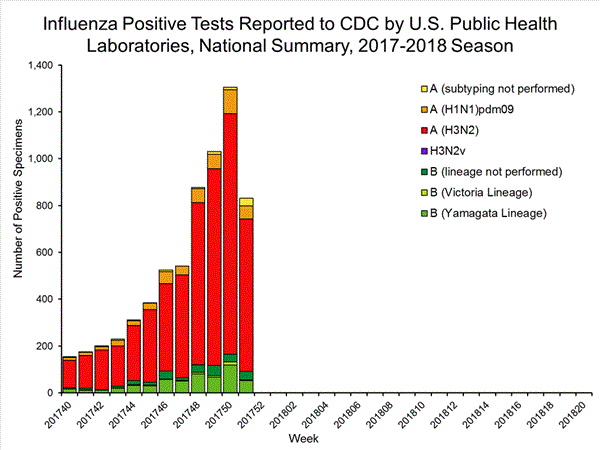
So far this flu season, influenza A (H3N2) viruses have been predominant in the United States (represented by the red bars in the graph below.) This information interests health officials as this particular strain is more concerning than others. Previous flu seasons when H3N2 led the pack were more severe, especially among young children and older adults. Between the years 2003 to 2013, the three flu seasons that were dominated by H3N2 strains of the flu had the highest mortality rates.

Flu season is ramping up and the cases that have already occurred are being used to make predictions on what will be coming down the pike when it peaks in a month or two.

So far this flu season, influenza A (H3N2) viruses have been predominant in the United States (represented by the red bars in the graph below.) This information interests health officials as this particular strain is more concerning than others. Previous flu seasons when H3N2 led the pack were more severe, especially among young children and older adults. Between the years 2003 to 2013, the three flu seasons that were dominated by H3N2 strains of the flu had the highest mortality rates.

What does the name H3N2 mean? There are many different flu strains and one place that they differ is in two major proteins on the outside of the virus - the Hemagglutinin (H) and Neuraminidase (N). For more on this, please read here.
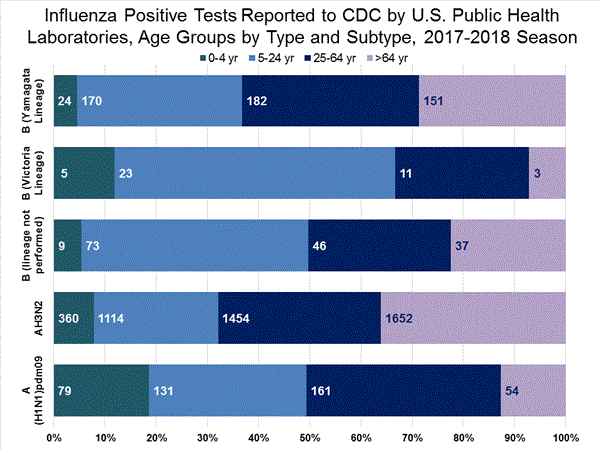
This news is most concerning to those affected by H3N2 which, according to the graph below, has been older people (shown in light purple.) The numbers of positive tests for H3N2 are shown on the fourth bar down and show that the group with the largest number of cases are in people greater than 64 years old (over 35%.)

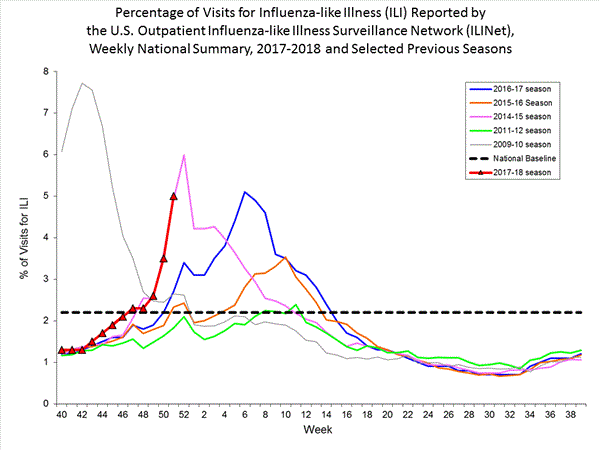
What should we expect in the next few months, then? Looking at the trends from the past few years, there is reason to be concerned. The graph below shows the number of visits for influenza-like illness (not confirmed cases) for the last few years. The bold, red line below shows the numbers for the current season - riding along the path of the early spiking 2014-2015 season. Only time will tell where the number of cases will take us from here, but, we're off to a very foreboding start.

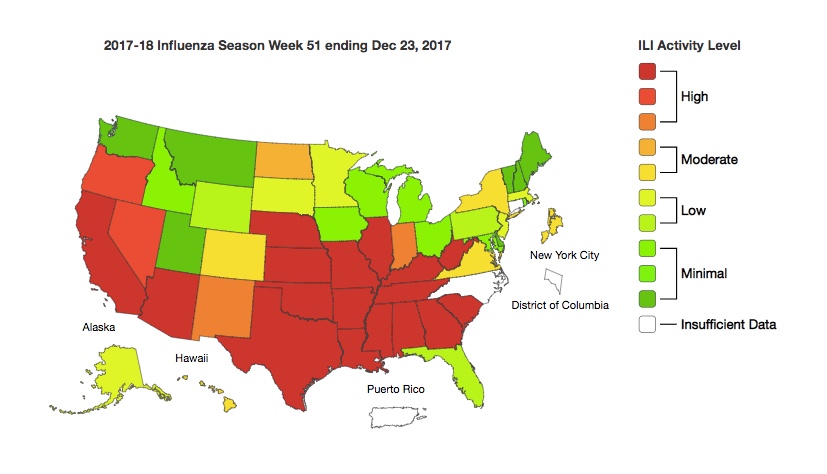
Other data shows that the southern region of the United States is reporting more flu-like activity so far. This may be because they are seeing more of it, but, it also could be simply that they are reporting more of it.

Lastly, there are the heartbreaking stories emerging on social media of children who are dying from the flu. The CDC reports that the majority of children who die from the flu are not vaccinated. Even though the vaccine is not perfect, and is not a guarantee against all flu-like illnesses, what is known is that it will offer protection and it will lessen the course of the disease, even if you or your child contract influenza. And, it is not too late! It takes about two weeks for your body to build up immunity the virus after vaccination. Being protected come mid-January is important as that is when cases tend to increase. We will keep the updates coming here at ACSH, but, in the meantime, please take another look at these graphs, realize that this looks like its going to be a rough flu season, and protect yourself and your children.

 H1N1? H2N5? What Do Flu Names Mean?
 
By Julianna LeMieux — October 4, 2016   @ American Council on Science and Health

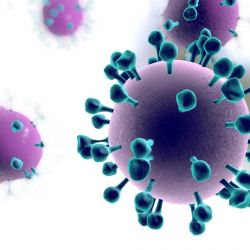
Influenza virus
The fall brings with it cooler days, apple picking and flu season.
We know what the symptoms of the flu are, how it is spread and the importance of getting a flu shot. What we may not know is the difference between the strains of the influenza virus and why are they referred to by the letters H and N - followed by numbers.

This may be a bit "inside biology" for some, but, in case you are wondering what these names mean and how they come about, here is a look into the virology behind the influenza virus.

Strains of influenza are characterized by two proteins that are on the outer surface of the virus: hemagglutinin and neuraminidase. This is where the "H" and "N" in the name come from. The proteins can be seen in the picture above, represented by the blue "spikes" on the outside of the virus. Both of these proteins are required for the virus to cause an infection and perform complementary functions. The hemagglutinin is critical for the virus to be able to attach to, and then enter the cell. Without hemagglutinin, the entire process of infection could not be initiated.

Once in the cell, the virus takes over the normal cell machinery and uses it to make many copies of itself.

Then, the neuraminidase enzyme comes into play. Neuraminidase is required for the newly made viruses to escape the host cell, where they can then perpetuate the infection. It's role is to clip the newly made viruses from the membrane of host cell and release them. Without neuraminidase, the new viruses would stay attached to the host cell, unable to infect new cells.

When a person becomes infected with influenza virus, their body's immune system responds by making antibodies to the H and N proteins. Then the antibodies bind to the H and N proteins, and block them from doing their job, stopping the virus in its tracks.

However, with influenza virus, the situation is even more complicated.

Influenza's complexity starts with the fact that there are 14 versions of H protein and 9 versions of N which means that there are a total of 144 varieties of flu. Not all of these 144 are infective.

Additionally, there are two major processes that create a complicated situation even worse. These are called antigenic drift and antigenic shift.

Antigenic drift means that either H or N change in a particular strain. This results in new strains, and this trips up the immune system. When H and N mutate, it is possible that they change so much that the antibodies may not bind to them anymore, leaving the virus fully infective.

The concept of antigenic shift is more complicated, but, stay with me for a moment. In order to understand antigenic shift, first we must understand how the genome of influenza is stored inside the virus. Influenza belongs to the orthomyxoviridae family of viruses. This means that, unlike our genes, which are made up of DNA, the flu virus's genome is made up of RNA - eight separate pieces of RNA. Flu is an example of an RNA virus with the hemagglutinin and neuraminidase genes are found on different pieces of RNA.

When two different strains of flu infect a cell at the same time, the pieces of RNA (eight from each virus) mix together. This is called reassortment and results in a new strain.

In looking at the figure below, let's say that strain A (with the green RNA) is an H1N1 virus and strain B (with the blue RNA) is an H2N5. In the figure, both of these viruses are infecting the same cell at the same time. When in the cell, the 16 pieces of RNA mix together and the virus that is released from the cell is different (a combination of some green RNA and some blue RNA) from either of the original ones that went in.

This process makes pandemics more likely because the strain that results from the reassortment may be a more dangerous strain and also one that no one has been exposed to before.

courtesy of viralzone.expasy.org

Within the past century, there have been four flu pandemics (worldwide epidemics.) They occurred in 1918 (H1N1 - swine flu), 1957 (H2N2), 1968 (H3N2) and 2009 (H1N1) and experts agree that it is not a matter of if, but when, the next pandemic will strike. It is not simple to predict which flu strain will be wreaking havoc next and the flu vaccine varies in how effective it is from year to year.

Knowing about the complexity of the influenza virus's genome and its ability to undergo antigenic shift and drift help us understand, at least to some extent, what we are up against each year.


Wednesday, November 27, 2013

Why Won't HHS Approve Crucial Flu Vaccine?

by Jeff Stier

The incompetence, dissembling and lack of transparency at the Department of Health and Human Services (DHHS) is already well-established. But the degree to which the mess at HHS jeopardizes our health is only beginning to come to light. And it has nothing to do with Obamacare.

As we approach a busy holiday travel season, as cold weather grips much of the nation and as flu season gets into high gear, HHS is failing to make clear their intentions about when they'll green-light the manufacture of a vaccine for the particularly deadly H7N9 strain of avian flu from China.

H7N9 spread from chickens to humans in China this spring. It killed approximately a third of the people infected. So HHS was right to quickly partner with pharmaceutical firms to develop, test, and order some 20 million doses of vaccine to stockpile for those on the front lines, such as military and first responders. While the doses could be manufactured in record time, 60 days according to estimates, a supply must be in place (but not administered) before a pandemic starts......To Read More......

Monday, April 26, 2010

Whelan Was Right. Get The Shot!

by Rich Kozlovich

There has been a great deal of talk over the last year as to whether everyone should have gotten the H1N1 flu shot. Personally, I have always thought it was a waste.  Even those I read regularly, and have a great deal of respect for, have disagreed. Dr. Elizabeth Whelan of the American Council on Science and Health (ASCH) has been consistent from the very beginning on this issue. GET THE SHOT!

Wisely or unwisely, I have never had a flu shot in my life. I am not opposed to immunization shots, I got a ton of them in the service, I just didn't think it worthwhile in the case of flu shots.  In my younger years I used to get the flu every year….and I believe that is why I don’t seem to get it anymore. Once exposed to a virus the body then has a certain natural immunization, provided you survived.

Maggie Fox, Health and Science Editor for Reuters published an article entitled, 1976 shot may protect against modern swine flu. It turns out that “People who got immunized against the 1976 "swine flu" epidemic that never happened may have benefited from the shots after all -- they may have been protected from the 2009 H1N1 swine flu strain.”

She further points out that “The study, published on Friday, supports a theory that different strains of flu virus cycle in and out of circulation and that getting a flu vaccine every year may protect people from as-yet unseen flu strains in the future.”

Until this article I felt the shots would be a great idea if they knew which strain was going to attack that year, but since they were only guessing....it was a waste.  I have decided that my thinking on this issue has been seriously flawed. Clearly, as the years went by people got shots for different strains in different years. It must be concluded that even if the shot for that strain didn’t attack that year, it would eventually attack in some other year and the body would then have some residual resistance to that strain.

Whelan points out that one of the problems regarding this issue is that the public demands that these vaccines be made available on demand, and then don’t get the shots. What happens to the left over vaccine? It gets thrown away eventually, and this occurs every year. This is costly! Now, that is a waste.

I stand corrected and I am now in complete harmony with Dr. Elizabeth Whelan of the American Council on Science and Health.  Sorry it took me so long Doc.