Search This Blog

De Omnibus Dubitandum - Lux Veritas

Showing posts with label Josh Bloom. Show all posts

Monday, August 4, 2025

Badly-Needed Mercury Chemistry Lesson for RFK Jr., and His ACIP Picks

By Josh Bloom — Jul 30, 2025 @ American Council on Science and Health

Mercury, the element, is no longer used in thermometers, but it remains at the center of a decades-long debate over vaccine safety, despite the science being crystal clear. At the heart of this confusion is thimerosal, a mercury-containing preservative wrongly accused of causing autism. What follows isn’t a rehash of that conspiracy theory, but rather a crash course in chemistry. It's something RFK Jr. and his CDC picks need to know.
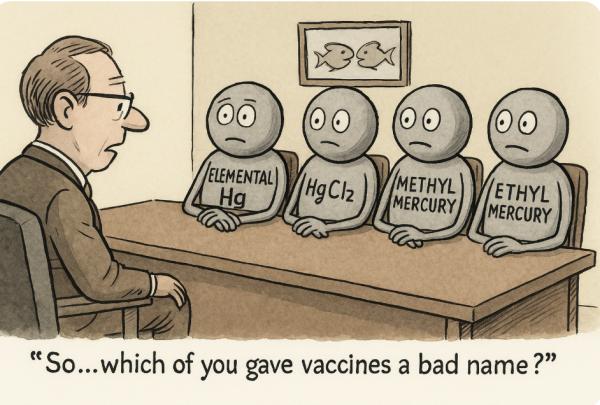
#Generated by AI

As difficult as it is to believe, we are still having a debate about thimerosal, thanks to vaccine "skeptic" Robert F. Kennedy Jr., who is the head of HHS. 

Kennedy and the ACIP [1] "experts" he selected are raising long-discredited concerns about thimerosal, aka "ethylmercury," a preservative that was falsely linked to autism [2].

I won't be delving into this controversial topic; others with far more expertise have discussed this in length. But the underlying confusion about "good" vs. "bad" mercury can be answered with some rather basic chemistry. An understanding of this chemistry should (but probably won't) defuse at least some of the overblown claims of neurotoxicity of the particular "form" of mercury that is used in multi-dose flu vaccines (and nowhere else). Nonetheless, here are some facts. These are not debatable.

All Mercury is not the same.

The word "mercury" is pretty much guaranteed to strike fear into the heart of much of the population. Sometimes this fear is justified; sometimes it is not. Here's a brief summary of 4 relevant forms of mercury. Some are scary, while others are not. 

(For the ACSH video that explains the different types of mercury, click here: https://tinyurl.com/5ewejz3u)

  1. Elemental mercury (Hgo)

Elemental mercury, aka "quicksilver," is one of the two elements that are liquids at room temperature [3], the other being bromine. Although it is chemically unreactive, most mercury found on Earth is in the form of cinnabar, a bright red to brown crystalline mineral composed of mercury and sulfur. The pairing of mercury and sulfur is not a coincidence. For reasons that are beyond the scope of this article, the two elements form a very strong bond. Mercury simply loves sulfur.

Despite its fearsome reputation, elemental mercury (Hg⁰) is less toxic than most people think, at least in liquid form. It was even used in ancient China as an “immortality elixir.” When swallowed, liquid mercury is poorly absorbed by the gastrointestinal tract; however, a small portion is converted into mercury chloride, a far more toxic and readily absorbed compound. The real danger lies in mercury vapor: it is readily inhaled, absorbed through the lungs, and transported to the brain and central nervous system. Chronic exposure—even to small amounts—can result in chronic mercury poisoning, historically known as “mad hatter syndrome.” 

Let's pause for a story.

When I was at the University of Virginia, one research group in the chemistry department worked with air-sensitive compounds that spontaneously combusted when exposed to air. To prevent this, they kept everything under constant high vacuum, using a specialized mercury vacuum pump to achieve better pressure. Unfortunately, this meant the lab air was chronically contaminated with mercury vapor. By the time I left, most of them were bald. Ugly, too. These pumps are long gone. Don't know about the chemists.

        2. Mercury (II) salts (inorganic)

Soluble inorganic mercury+2 salts are deadly neurotoxins. Examples include mercury (II) chloride and nitrate. There are no medical uses for these chemicals, although they were used in the 17th-19th centuries as a laxative, reportedly by President Lincoln (they made him cranky). Mercury salts should be avoided, which isn't all that difficult since they have no known medical use, approved or otherwise.

         3. Methylmercury (organic mercury)

Methylmercury, an organomercury compound [3], is largely responsible for the confusion surrounding mercury in vaccines. While it sounds similar to ethylmercury, aka thimerosal, the preservative used in some flu vaccines , the two differ significantly, particularly in how they are metabolized and excreted. Methylmercury is poorly eliminated from the body and accumulates in tissues, especially the brain. More on this below.

Figure 1. The chemical structure of methylmercury. Although commonly referred to as “methylmercury,” the compound exists in a partially ionic form, such as methylmercury chloride, with a +1 charge on the mercury atom balanced by a counterion, like chloride, which is functionally similar to a sodium salt.

Its chemical stability, lipid solubility, and ability to cross the blood-brain barrier make methylmercury especially dangerous. It was once used topically to treat skin infections, but this practice was abandoned decades ago due to absorption through the skin, leading to systemic neurotoxicity.

Methylmercury, which is the form of mercury that accumulates in fish, has NEVER been used as a vaccine preservative.

       4. Ethylmercury, aka Thimerosal

The difference between ethylmercury and methylmercury may only be the letter "M," but pharmacologically, it's night and day (Figure 2). 
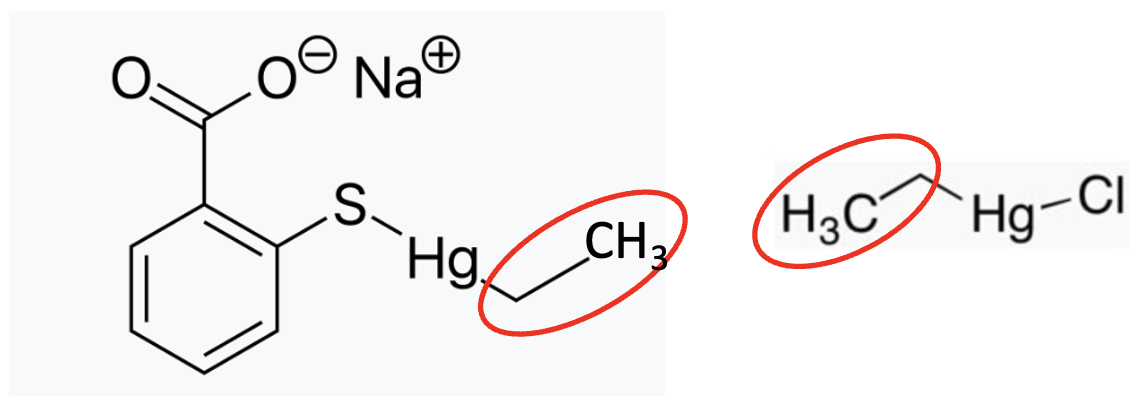
 

Figure 2. Although thimerosal (left) is commonly called ethylmercury (right), this is a "nickname" for ethyl(2-mercaptobenzoato-(2-)-O,S) mercurate(1-) sodium salt, if you prefer. Note that the thimerosal contains (and breaks down to) ethylmercury. The ethyl groups are indicated by the red ovals.

To understand the significant differences in toxicity between methylmercury and ethylmercury, it is necessary to examine the metabolism of each. These guys are so similar looking. How different can they really be? Plenty.

The half-life of methylmercury in humans is about two months. For ethylmercury, it's about one week. The result? Methylmercury accumulates in the body while ethylmercury is cleared. Figure 3 puts this in perspective.
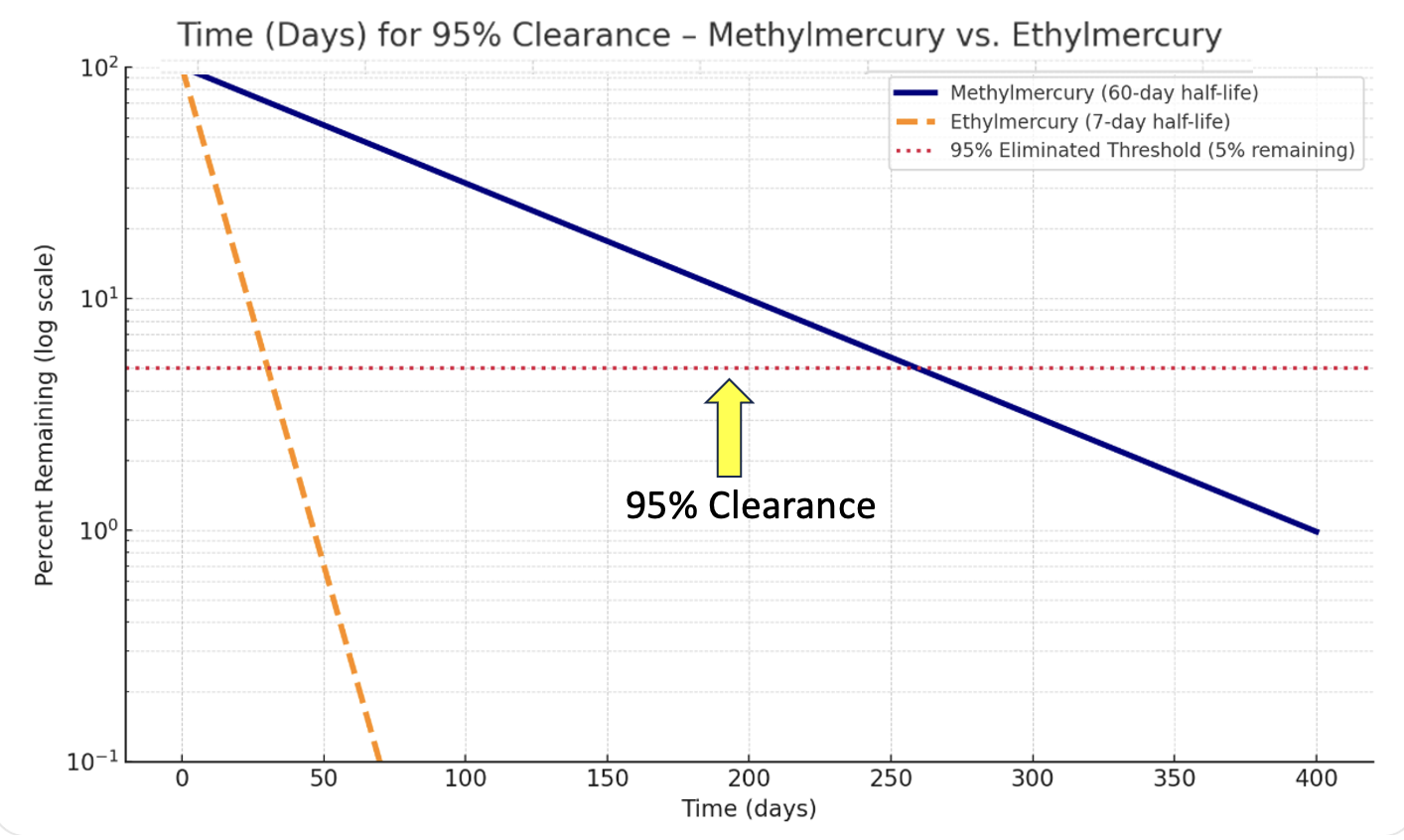
Figure 3. Modeled clearance of methylmercury (blue) versus ethylmercury (orange). Note the rapid elimination of ethylmercury compared to the months-long persistence of methylmercury.

Why? This requires a little chemistry.

When ethylmercury enters the bloodstream ("packaged" as thimerosal), the compound is rapidly dealkylated (ethyl group is removed) by a common metabolic pathway called oxidative dealkylation. That means the ethyl group is stripped away, leaving behind inorganic mercury (Hg²⁺) and a two-carbon fragment that is oxidized to acetaldehyde and then acetic acid, similar to the way that ethanol is metabolized. By contrast, the oxidative metabolism of methylmercury is slower for reasons that are beyond the scope of this article. This is why methylmercury persists in the body for much longer. 

Ignorance isn't bliss. It's just ignorance.

So let’s stop pretending that all forms of mercury are interchangeable—or equally dangerous. The continued fearmongering over thimerosal ignores basic toxicology and serves only to undermine trust in vaccines. Ethylmercury is not methylmercury. One clears in days; the other persists for months. If we’re going to have public debates about medicine, they should at least be grounded in chemistry. Otherwise, we’re just poisoning the conversation.

NOTES:

[1] The ACIP (Advisory Committee on Immunization Practices) is a CDC-affiliated panel of medical and (supposedly) public health experts that provides guidance on vaccine schedules and safety.

[2] When thimerosal was removed from nearly all childhood vaccines starting around 2001, autism rates continued to rise. So much for that theory? So, how did anti-vaxxers respond? They moved the goalposts and started blaming...pretty much everything else in the vaccine.

[3] Organometallic compounds are "normal" organic (carbon-containing) molecules that have a carbon atom bonded to a metal. Many of them are highly reactive. 

 Tags:

 
Profile picture for user Josh Bloom

Dr. Josh Bloom, the Director of Chemical and Pharmaceutical Science, comes from the world of drug discovery, where he did research for more than 20 years. He holds a Ph.D. in chemistry.

Monday, June 30, 2025

The EPA Grows A Pair And Takes A Stand On Glyphosate

By Josh Bloom,  Aug 13, 2019 @ American Council on Science and Health
Sometimes facts beat hype. This week was one of those times. The EPA, after years of compiling and evaluating data, declared that it would not approve labels for the herbicide glyphosate that contained a cancer warning. This puts the U.S. agency in direct opposition to California's absurd Proposition 65, which would require a cancer warning label on the chemical -- even though it would be incorrect. The U.S. now joins a dozen other countries that have already determined glyphosate is safe as used.

You might as well get pissed off in advance because if you don't much care for scientific evidence you're not going to enjoy this a whole lot. Sorry, but facts are facts, and in this case, the US EPA has them right while the State of California has them wrong.

By any measure, California's Proposition 65 is an exercise in madness. 

The law, which is officially titled "The Safe Drinking Water and Toxic Enforcement Act of 1986," was well-intended at the time it was written – to stop pollutants from being discharged into water. Now it has nothing to do with water; it is merely an excuse for predatory trial lawyers, to file lawsuits against companies, small and large, with the laughable goal of "protecting the public" by suing companies that fail to "warn the public" about harmless products like purses, shoes, Tiffany lamps, and bird feeders, as well as hotel rooms, and amusement parks. How, did these evil companies –many being small family businesses – fail to adequately warn us? By not putting an immensely stupid label on things that cannot possibly hurt you. (See Should California Put A Warning Label On Your Penis?). So it should not be surprising that California wants a Prop 65 label put on the controversial herbicide glyphosate.

Except, the EPA doesn't see it that way when it comes to glyphosate (1). The agency recently announced that it would not permit California to put a cancer label on the chemical. And rightly so. 

Some will write off the EPA's recent decision to reject a cancer warning label for glyphosate as partisan politics or big money influencing a government agency. It is neither. Instead, we are seeing a rare case of honesty that is based on scientific evidence, not nonsense. The EPAs decision is scientifically sound on every level. 

"We will not allow California's flawed program to dictate federal policy, EPA Administrator Andrew Wheeler 

Good for him. Wheeler is dead-on. The "evidence" supporting the carcinogenicity of the chemical is not only flimsy; it is a product of fraudulent research by the International Agency on Cancer Research (IARC). Here is an excerpt from my colleague Dr. Alex Berezow's complete annihilation of IARC and its findings:

"We now have an answer... The Times reports that Christopher Portier, a key IARC advisor who lobbied to have glyphosate listed as a carcinogen, accepted $160,000 from trial lawyers representing cancer patients who stood to profit handsomely by suing glyphosate manufacturers. Mr. Portier's failure to disclose such an obvious conflict of interest has exploded into a textbook case of scientific fraud." Dr. Alex Berezow, Glyphosate-Gate: IARC's Scientific Fraud, October 2017

IARC's "evidence," such as it is, was the lone culprit in designating glyphosate as a carcinogen. Epidemiological studies have found no connection between cancer industrial workers who routinely handle the stuff. Biochemical assays that are suggestive of DNA damage or mutation all come up negative. Aside from IARC's made-up baloney, there are no valid animal studies that show that it causes cancer. Regulatory agencies from the US, Canada, the EU, France, Germany, Switzerland, New Zealand, Brazil, Japan, Australia, and Korea all state that glyphosate does not pose a risk of toxicity or carcinogenicity. 

Yet, California, based on IARC's phony findings wanted to slap an incorrect label on it based on the findings of a corrupt group. 

A rare win for science and a loss for faulty activism. How refreshing. 

NOTE:

(1) This week's announcement was not the first time that EPA has objected to the cancer label. In 2017 the agency released the Glyphosate Human Health Risk Assessment, which was a basis for the 2019 decision.

Related content:


Josh Bloom

Director of Chemical and Pharmaceutical Science

Dr. Josh Bloom, the Director of Chemical and Pharmaceutical Science, comes from the world of drug discovery, where he did research for more than 20 years. He holds a Ph.D. in chemistry.

Recent articles by this author:

Tuesday, October 6, 2020

When it Comes to Chemicals, Silent Spring Institute Should Stay Silent

By Josh Bloom — October 1, 2020 @ American Council on Science and Health

The anti-chemical Silent Spring Institute has commissioned a ridiculous study, one that reaches a conclusion akin to pointing out that a circle is round. It's a bunch of nonsense. Here's why.

In the mood for some hilarity? I am.

A new press release from the Silent Spring Institute (SSI) makes me wonder whether they've jumped the gun on April Fool's Day. Don't believe me?

"Consumers who avoid products with harmful chemicals on the label have lower body burden."

I'll go into the "details" later but let's cut to the summary: People who avoid certain chemicals have less of those chemicals in their bodies. Duh?

Isn't that a bit like saying:

"People who swing an ax at their forehead are more likely to have an ax embedded in their foreheads than people who do not swing an ax at their forehead."

Although the organization commissioned a study (1) that essentially proved that circles are round, what's behind this silliness is worth discussing: Endrocrine disruptors, the poster children of junk science. 

These chemicals, which supposedly screw up your hormones, are the bread and butter of groups like the Environmental Working Group (EWG) and the Natural Resources Defense Council (NRDC) – very well-funded environmental groups that should stick to environmental issues (2). This much becomes obvious when you look at the leadership of these places – a bunch of lawyers and political science majors. You'd think that with all that money they might be able to find a living chemist or two. 

It would seem not. NRDC produced a gag-provoking video that equated chlorpyrifos (a widely used insecticide) with Nazi nerve gas weapons. I cheerfully shredded this nonsense in 2018 (See NRDC's Hitler-Pesticide Video Worthy Of Joseph Goebbels). You'll have to read my article to get a glimpse of how ridiculous the video is, but suffice it to say that when it was time for an opinion about chemistry, guess who NRDC used as their "chemical expert"? 

Forget it. You'll never guess.

It was New York Times columnist Nicholas Kristoff, a fine man (and writer) but a complete nincompoop when it comes to chemistry. Kristoff is so afraid of chemicals that he won't touch cash register receipts because they contain a little bisphenol A (BPA) on the paper (See Why I Don't Write About Pottery From The Ming Dynasty And Nick Kristoff Shouldn't Write About Science). More on BPA later.

"In a study led by Silent Spring Institute, researchers found that consumers who avoided products containing specific endocrine disruptors had significantly lower levels of the chemicals in their bodies."

I could not agree more – it's the ax in the forehead thing again. But there's also a common but insidious trick in this sentence, one that anti-chemical groups use ad nauseam; equating the presence of a chemical with harm from that chemical. It's a bunch of nonsense because phony chemical scare articles almost always avoid mentioning the dose (exposure). Without this information, it is impossible to determine real harm. But that doesn't stop SSI from trying.

The study is sort of a joke. A bunch of people (726) signed up for a "crowdsourced biomonitoring project," which involved sending in urine samples which were tested for 10 suspected endocrine disruptors. Then the participants completed an online survey about which products they use and whether they avoid ones with specific chemicals listed on the label. Here are the results;

1. A dead horse was re-beaten: People who avoided certain chemicals had fewer chemicals in their urine. Blah blah...

2. But not always. There was one exception - people who tried to avoid products containing BPA had just as much BPA in their urine as those who didn't. Why? Because BPA is ubiquitous. It is used to make beverage containers and to provide a safe seal in can liners so just about everyone in the US has some of it in their urine (3,4). Does this make it harmful? Nope. In fact, evidence shows the opposite (5,6).

BPA is one of the most studied chemicals in the galaxy. Academics have based their entire careers on trying to find something wrong with it and have made some absurd claims. But despite numerous studies supporting the safety of the chemical, the FDA nonetheless conducted the exhaustive two-year CLARITY-BPA study in rats. The conclusion:

"After considering these data, the levels of exposure, and the extent of metabolic inactivation of BPA upon ingestion, most international regulatory agencies have concluded that current nonoccupational BPA exposures do not pose a credible risk to humans."

I've written many articles about BPA. I recommend "BPA Is Just As Dangerous As It Never Was". It is especially obnoxious.

There is plenty more wrong with the study, but it's time to quit – almost. I can't let this go by:

"With the current pandemic, we see how diseases associated with environmental chemicals also make people more vulnerable to COVID-19--yet another reason to reduce exposures in the population."

Dr. Robin Dodson, environmental exposure scientist

It is disgraceful and exploitive to claim that trace chemicals have any impact on COVID-19. There is zero evidence to back this up.

Let's finish up with a little fun. Silent Spring is so afraid of chemicals that they even developed an app to help you avoid chemicals. Check it out. Anything wrong with this picture?

Hmmm... Photo: SSI website

Look at her arm. She's trying to avoid trace quantities of mostly harmless chemicals with an app despite having a whole bunch of not-so-harmless chemicals injected into her skin. Sort of like worrying about radiation from your microwave oven while vacationing in the ruins of Chernobyl. That app is going to be as useful as a snowmobile in Egypt. FYI, let's see what Katharine Sanderson writing in Chemical and Engineering News had to say about tattoos:

"Tattoo inks contain a wide range of chemicals and heavy metals, including some that are potentially toxic. Because of concerns about this potential toxicity, last year, the Joint Research Centre, which provides advice to the European Commission, issued a report highlighting the need for funding into research on tattoo ink toxicity and how tattoo inks break down in the body."

Once more, we have a bunch of activists making a whole lot of noise about nothing. Wouldn't it be better if they were silent? Maybe someone should read them the Miranda warning. 

Rim shot.

NOTES:

(1) Dodson, R.E., K. E. Boronow, H. Susmann, J.O. Udesky, K.M. Rodgers, D. Weller, M. Woudneh, J.G. Brody, R.A. Rudel. 2020. Consumer behavior and exposure to parabens, bisphenols, triclosan, dichlorophenols, and benzophenone-3: Results from a crowdsourced biomonitoring study. International Journal of Hygiene and Environmental Health. DOI: 10.1016/j.ijheh.2020.113624

(2) Ask yourself why environmental groups are dabbling in toxicological/medical matters. What does this have to do with the environment? Is it possible that these groups are heavily funded by the organic food industry, which wants you to believe that you can live a chemical-free life?

(3) Calafat, A.M., X. Ye, L.Y. Wong, J.A. Reidy, and L.L. Needham. 2008. Exposure of the U.S. population to bisphenol A and 4-tertiary-octylphenol: 2003-2004. Environmental Health Perspectives 116 (1):39-44. 8

(4) Why are these chemicals (or, more likely, their metabolites) found in urine? It's because your liver is doing its job – converting chemicals, drugs, etc. into water-soluble derivatives that are then excreted. The concentrations in blood, which might have some physiological significance, were not determined. With some rare exceptions, chemicals do not bioaccumulate; they are processed and eliminated. Just like nature intended.  

(5) From the EPA (2018) "EPA does not intend to initiate regulatory action under TSCA at this time on the basis of risks to human health."

(6) Of course, there are still groups and a few agencies that have safety concerns about BPA. No amount of research will ever change this.


Saturday, October 5, 2019

Can Nuclear Waste Be Safely Transported?

By Josh Bloom — October 3, 2019 @ American Council on Science and Health

The National Museum of Nuclear Science
 & History near Albuquerque New Mexico.
 Don't Miss It.
The anti-nuclear crowd uses an assortment of scares to turn public opinion against the use of nuclear power, one of them being the risk of an accident when spent nuclear fuel is transported to where it is to be disposed of. Are they right? Or is it possible to safely move nuclear waste around?

Yesterday I learned quite a bit about this when I visited the National Museum of Nuclear Science & History near Albuquerque New Mexico. It's a fascinating museum full of amazing exhibits – a must-see for anyone in the area.

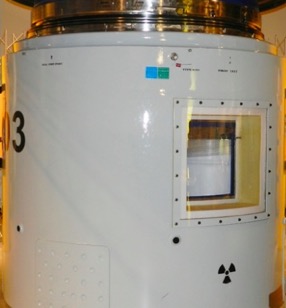
One exhibit demonstrates the conditions in which the containers used to transport nuclear waste must withstand without breaking open or exploding.


A nuclear waste container. The plexiglass window
 is not part of the container; it enables
people to view the contents of the container.
 

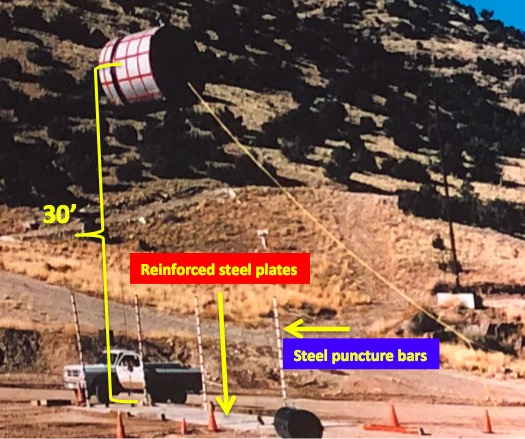
There are different types of nuclear waste with very different levels of radiation; the precautions for medical nuclear waste are less stringent than those for spent fuel from reactors. The containers used for the latter must withstand conditions that look like they might come from a Road Runner cartoon. Here are some of them.

Falls and punctures
  • Containers are cooled to -20°F.
  • They are dropped (in multiple orientations) from 30 feet onto an unyielding reinforced steel plate.
  • They are dropped multiple times onto 30 feet steel puncture bars.
There's more...

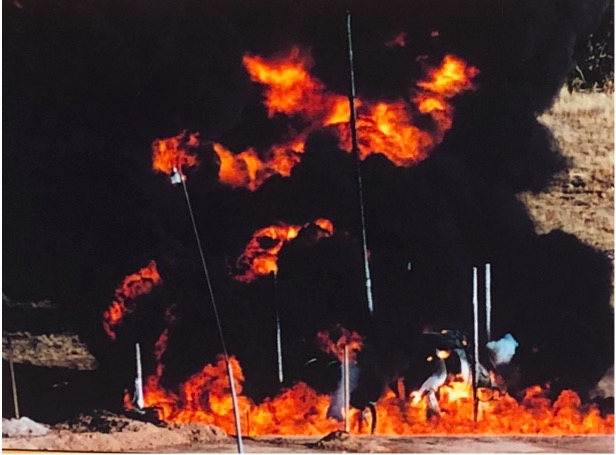
Fire and pressure
  • Containers are burned for 30 minutes in a pool of jet fuel at a temperature of 1425°F.
  • They are submerged in 50 feet of water (21 psi).


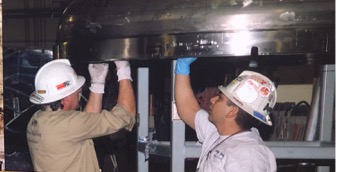
    • The container itself, as well as its contents, are tested to ensure that they are "leak-tight" according to criteria developed by the Nuclear Regulatory Commission. 
    Of course, none of these tests guarantee that there will be no accidents or release of nuclear contamination, but the record has been impressive so far. In 2013 there were two fires, one in a truck and the other on a ship that exposed the containers to high temperatures. Neither accident resulted in the release of radioactive material.

    Additionally, a 2016 report issued by the US Department of Energy Nuclear Fuels Storage and Transportation Planning Project concluded that "The quantity of [spent nuclear fuel] shipped worldwide to date is at least 87,000 metric tons of heavy metal" and "Review of the data sources shows that all of these shipments were undertaken without any injury or loss of life caused by the radioactive nature of the material transported. In general, there have been few transportation accidents worldwide in the history of transporting SNF, and none have had significant radiological consequences."

    Given the current emphasis on fuels and their environmental impact, the public should be aware of the real risks and track record of transporting nuclear waste. Barrels of spent uranium will not fall off the back of a truck and burst open in the middle of a city, nor will they explode or leak in a fire.

    ACSH has maintained for years that nuclear energy is clean and, with rare exceptions, safe. And it is now safer. (See my colleague Alex Berezow's companion piece on a new proposal for nuclear waste storage.)

    Neither wind nor sun is capable of meeting the world's energy needs. Dismissing the use of nuclear energy because of false or overhyped scares helps no one except the activists.

    Thursday, October 3, 2019

    The EPA Grows A Pair And Takes A Stand On Glyphosate

    By Josh Bloom — August 13, 2019 @ American Council on Science and Health

    You might as well get pissed off in advance because if you don't much care for scientific evidence you're not going to enjoy this a whole lot. Sorry, but facts are facts, and in this case, the US EPA has them right while the State of California has them wrong.
     
    By any measure, California's Proposition 65 is an exercise in madness. 
     
    The law, which is officially titled "The Safe Drinking Water and Toxic Enforcement Act of 1986," was well-intended at the time it was written – to stop pollutants from being discharged into water. Now it has nothing to do with water; it is merely an excuse for predatory trial lawyers, to file lawsuits against companies, small and large, with the laughable goal of "protecting the public" by suing companies that fail to "warn the public" about harmless products like purses, shoes, Tiffany lamps, and bird feeders, as well as hotel rooms, and amusement parks.

    How, did these evil companies – many being small family businesses – fail to adequately warn us? By not putting an immensely stupid label on things that cannot possibly hurt you. (See Should California Put A Warning Label On Your Penis?). So it should not be surprising that California wants a Prop 65 label put on the controversial herbicide glyphosate.
     
    Except, the EPA doesn't see it that way when it comes to glyphosate (1). The agency recently announced that it would not permit California to put a cancer label on the chemical. And rightly so. 
    Some will write off the EPA's recent decision to reject a cancer warning label for glyphosate as partisan politics or big money influencing a government agency. It is neither. Instead, we are seeing a rare case of honesty that is based on scientific evidence, not nonsense. The EPAs decision is scientifically sound on every level. 
    "We will not allow California's flawed program to dictate federal policy,"
    EPA Administrator Andrew Wheeler 
    Good for him. Wheeler is dead-on. The "evidence" supporting the carcinogenicity of the chemical is not only flimsy; it is a product of fraudulent research by the International Agency on Cancer Research (IARC). Here is an excerpt from my colleague Dr. Alex Berezow's complete annihilation of IARC and its findings:
    "We now have an answer... The Times reports that Christopher Portier, a key IARC advisor who lobbied to have glyphosate listed as a carcinogen, accepted $160,000 from trial lawyers representing cancer patients who stood to profit handsomely by suing glyphosate manufacturers. Mr. Portier's failure to disclose such an obvious conflict of interest has exploded into a textbook case of scientific fraud."
    Dr. Alex Berezow, Glyphosate-Gate: IARC's Scientific Fraud, October 2017
     
    IARC's "evidence," such as it is, was the lone culprit in designating glyphosate as a carcinogen. Epidemiological studies have found no connection between cancer industrial workers who routinely handle the stuff. Biochemical assays that are suggestive of DNA damage or mutation all come up negative. Aside from IARC's made-up baloney, there are no valid animal studies that show that it causes cancer. Regulatory agencies from the US, Canada, the EU, France, Germany, Switzerland, New Zealand, Brazil, Japan, Australia, and Korea all state that glyphosate does not pose a risk of toxicity or carcinogenicity. 
     
    Yet, California, based on IARC's phony findings wanted to slap an incorrect label on it based on the findings of a corrupt group. 
     
    A rare win for science and a loss for faulty activism. How refreshing. 
     
    NOTE:
     
    (1) This week's announcement was not the first time that EPA has objected to the cancer label. In 2017 the agency released the Glyphosate Human Health Risk Assessment, which was a basis for the 2019 decision. 


    Tuesday, September 3, 2019

    The Great Opioid Shakedown of 2019 Will Be a Pyrrhic 'Victory'

    By Josh Bloom — August 28, 2019 @ American Council on Science and Health.

    (Editor's Note:  This is an issue that impacts a great many people, as a result this article generated a lot of comments.  I recommend reading them. Follow the link.  RK)

    Oklahoma's August 26th verdict against Johnson & Johnson was never a question of "if," only "how much." Recently, it's been all the rage to assign blame for today's "opioid crisis," justified or not. And once the blaming starts so do the lawsuits.

    There could not be a better time. Doctors, dentists, distributors, drug companies, Donald Trump, and maybe even Donald Duck have all assumed the role of villain in the ongoing decade-long debacle, while the real villains are no doubt smirking all the way to the bank (1).

    But it's the drug companies that have all been squarely in the sights of lawyers and state officials; whether there was actual blame or not doesn't really matter. As the notorious Willie Sutton once answered when asked why he robbed banks, "that's where the money is." It's now the "perfect swarm" – lawyers, hatred for pharmaceutical companies, buckets of money, and a plausible but false narrative that overprescription of prescription pain meds led to opioid abuse and addiction.

    On the surface, what just started happening to the pharmaceutical industry on Monday, thanks to Oklahoma's $572 million oh-so-predictable victory against Johnson & Johnson for causing the "opioid crisis," (2,3,4) may superficially resemble what happened to the tobacco industry in 1998, but that's where the similarities end.

    The $246 billion that the tobacco industry agreed to pay in order to shield itself from state lawsuits, which began in 1994 when Mississippi attorney general sued Big Tobacco. Moore (rightfully) claimed that cigarette smoking caused diseases that the state had to pay to treat, so it wasn't unreasonable that the industry should cough up (sorry) some serious money to atone for its business practices.
    "The state is obligated to pay for those for our citizens that are not covered in other ways, and we feel like they're caused by the tobacco products."
    Mike Moore, 1994 in an NPR  interview
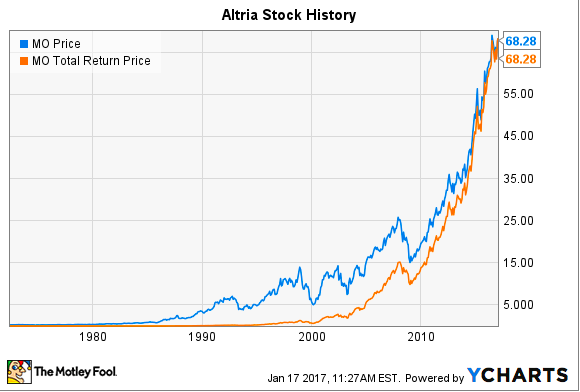
    Whether or not you agree with the verdict, the amount of the settlement or whether the settlement would be used for its stated purpose – smoking cessation programs (it didn't) – it's at least reasonable that tobacco companies, which by definition, sell deadly products should assume some of the cost for the harm they cause. In the end, maybe a bunch of Philip Morris shareholders got stung (they didn't, see Figure 1) but even if the $246 billion didn't provide much help to the general public, at least it didn't hurt anyone, especially the shareholders.

    Atria (formerly Philip Morris) stock price by year. Source: The Motley Fool

    Not this time. There will be pain in the form of pain. Tobacco companies continued to sell cigarettes and did just fine. This is where the two examples diverge.

    Once this mess is in the rearview mirror and Americans have moved on the next drug of choice (5) (and they always do) the results will be predictable:
    • A bunch of rich lawyers
    • States grabbing what they can and spending it on... who knows.
    • Good luck trying to find a company insane enough to manufacture opioids.
    • Good luck trying to find a doctor who is brave enough to write prescriptions for the opioids that won't be available.
    • Wait until you see what the pills cost, assuming you can get them at all.
    That's the harm that will inevitably come out of this disgraceful chapter in American history. Not only will millions of people have suffered and died unnecessarily but whatever has transpired in the last decade could be like Shangri-La compared to what's ahead.

    Johnson & Johnson's worldwide sales in 2018 totaled $81.6 billion. I cannot find what portion of that amount came from opioid sales, but it is very likely to be insignificant. This can be inferred from a statement of Brad Beckworth, the lead attorney for Oklahoma:

    “[J&J] made billions of dollars from it over a 20-year period."
     
    Let's guess that that number is $10 billion. Since 2005, J&J's annual sales have averaged roughly $70 billion. Let's call it $60 billion to be conservative. This comes out to $1.2 trillion over this 20-year period. If the company earned $10 billion during this time then its opioid sales comprise 0.8% of the company's revenue during this period. Chump change. J&J would be out of its mind to continue to manufacture and sell opioids, given the 2,000 lawsuits it still faces, which will almost certainly add up to far more than whatever the company earned selling the drugs. Please believe that other companies that are facing this kind of exposure are thinking just this. So, who, if anyone, will bother to make these drugs? Maybe no one.

    Or maybe these guys...


    I wrote about Valeant (which doesn't even exist anymore) (6) back in 2016 when the company raised the price of dirt-cheap calcium EDTA, an antidote to lead poisoning, and not by a little:
    After resolving manufacturing problems that caused shortages, Valeant pursued the hallmark strategy that made it infamous — taking sky-high price hikes. Before Valeant took control, the list price for a package of [calcium EDTA] vials had been stable at $950. But in January 2014, Valeant boosted the price to $7,116. By December 2014, several more increases took the price to $26,927, according to Truven Health Analytics.
    Ed Silverman, Pharmalot (STAT). October, 2016.
    If I've got this right, then in 10 years, assuming that the opioid crusade doesn't come crashing down, then your prescription pain meds, assuming you can get them at all, could easily run $1,000 for a few days worth of Vicodin, maybe more.

    Then the US public (maybe even the clueless media) will see (and feel) the damage done by the CDC, PROP, predatory lawyers, and states that are so eager to join the scrum and scoop up every penny they can for money that will probably not even be used to do a damn thing to help current addicts –the few that will be alive, thanks to fentanyl, or prevent future addiction or death.

    Then we're all looking at a world of pain. Nice country.

    NOTES:

    (1) Self-proclaimed (but thoroughly unqualified) expert Andrew Kolodny has been consulting for Oklahoma for a mere $725 per hour and is estimated to have earned $500,000 so far. Nice gig. Does this have anything to do his actions over the past decade regarding opioids? You tell me.
    (2) Regardless of the facts of the case, J&J is most certainly guilty of having deep pockets.
    (3) Before you accuse me of being a shill for J&J 1) read Johnson & Johnson's Shameless Exploitation Of The Opioid Crisis, 2) then shut up.
    (4) J&J does not manufacture opioids, it just supplies the materials to other companies.
    (5) This is already happening. Methamphetamine is roaring back onto the scene, once again thanks to government bumbling. See Why Sudafed Is Behind The Counter: A Meth Chemistry Lesson.
    (6) Valeant changed its name to Bausch Health Companies in 2018. Tiger. Stripes.

    Sunday, August 11, 2019

    Chemicals With Strange, Stupid Names

    By Josh Bloom — July 9, 2019

    Now You Have To Read This, Right?

    Nomenclature – the "art" of naming organic chemicals – is crazy making.  That's because multiple systems of nomenclature are used to describe chemical compounds. Some of them make sense because the name can be used to determine the structure of the chemical (and vice versa); these are called systematic names. Some of the names make no sense at all; they are just names which give no information about the chemical.


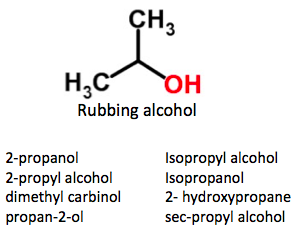
    To show how insane nomenclature can be, here are some of the names of one of the simplest organic chemicals in the world - isopropyl alcohol, which is commonly known as "rubbing alcohol."
     
    I’m Keeping it simple. Eight different names for rubbing alcohol (1). And you wonder why only dipsticks become chemists?
     
    Aside from "rubbing alcohol," all eight of the names for isopropyl alcohol (commonly called IPA, so that makes nine) are "correct" - any organic chemist would be able to look at the names and draw the chemical structure above or look at the structure and come up with at least most of those names.
     
    Nine names for a simple solvent? Why? It's because the nomenclature of organic compounds is an unadulterated nightmare, consisting of "systematic" names - those that identify specific structures and “trivial names,” which have nothing to do with the structure of the chemical and can be pretty crazy.
     
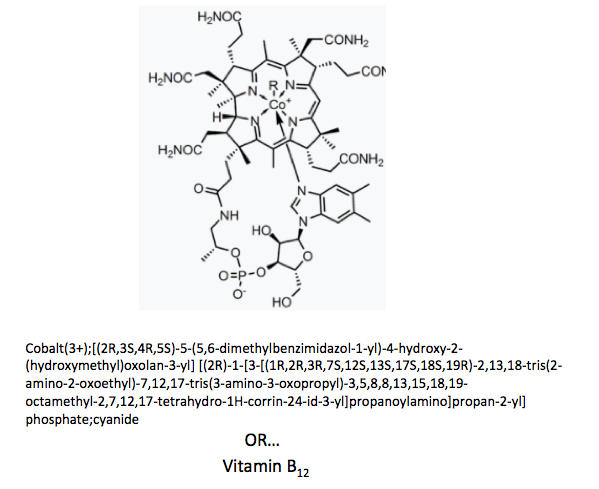
    Although systematic names are technically identifiers of any unique chemical structure this doesn't mean that a chemist can necessarily convert the name to a structure or the other way around. Some of them are too complicated to figure out (2). For example, the monster below has two very different names. Which would you pick?
     
    The structure and two rather different names for one vitamin. Madness. 
     
    While systematic names, even the sicko ones like above, at least (nominally) identify a single chemical, trivial names do not. These names come from all over the place. Some were named hundreds of years ago, some are named after a living organism from which they were isolated, once in a while some egomaniac will name one after himself. You name it. They can be rather amusing. Let's take a look at three sub-categories of chemicals that have trivial names... 
     
    1. NATURAL PRODUCTS NAMED AFTER THEIR SOURCES
     
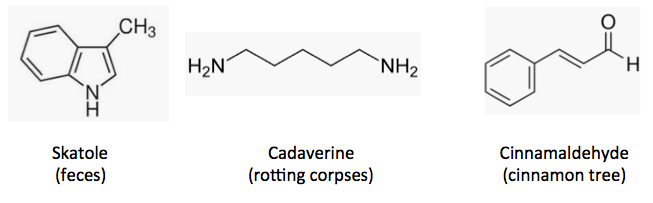
    Enormous numbers of organic chemicals are found in nature, especially from plants and marine life. Their names are somewhat logical since they are often named after the source of the chemical (Figure 1).
    Figure 1. (Left) The name skatole, aka 3-methylindole, is derived from skato - Greek for feces. Open a bottle of it and you'll see why. Yuck! But in low concentrations, skatole is used in perfumes. Perhaps the expression "you smell like s###" was derived from this, but I doubt it. (Center) Cadaverine, aka, 1,5-diaminopentane, is one of the polyamines that form in decomposing flesh. You won't enjoy this one either. They not only smell like death, but they also smell like semen - perhaps an olfactory treatise on the cyclic nature of life. (Right) Cinnamaldehyde - a chemical that comes from the bark of the cinnamon tree (aren't we organic chemists clever?) gives cinnamon its flavor and scent. (3)
     
    2. NATURAL PRODUCTS WITH PLAIN OLD CRAZY NAMES
    Some chemicals, especially natural products, end up with names that appeal to our inner juvenile idiot. Their names - all are trivial names - may or may not have anything to do with the chemical's source or what its properties. (Figure 2).

     
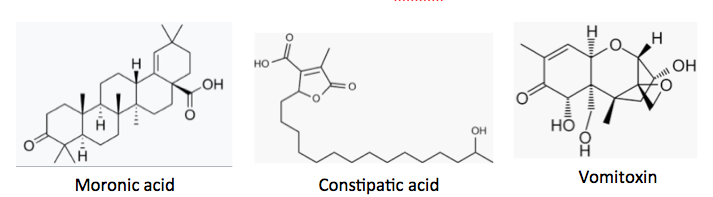
    Figure 2. (Left) Moronic acid can be isolated from mistletoe and sumac. It possesses neither intellect nor the lack of it, but it is quite poisonous. It also forms the basis for a pretty good insult if you leave off the "-id." (Center) Constipatic acid (probably my favorite) has nothing to do with sitting in agonizing futility on the porcelain throne awaiting the blessed event. It is simply one of many natural products derived from the Xanthoparmelia lichen. I can find no good explanation for its name nor do I really care. It just cracks me up. This is officially open for speculation, so readers - give it your best.  (Right) What the name vomitoxin lacks in subtlety it makes up for in accuracy. The chemical is a mycotoxin - a toxic metabolite made by fungus. A well-known family of chemicals in this class are the aflatoxins - carcinogenic and highly toxic metabolites of Aspergillus molds. Vomiting is the least of your problems if you ingest enough of these compounds, which form when grains, nuts, and corn sit around in warm, moist conditions. 
     
    3. CHEMICALS WITH INTENTIONALLY PROVOCATIVE NAMES
     
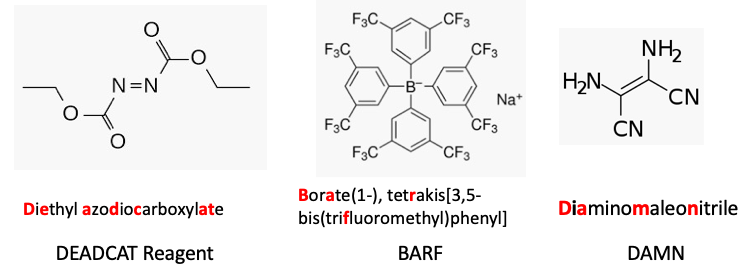
    Remember that chemistry sense of humor I alluded to? It's rare, but apparently, some others have it, not just yours truly. How else can you possibly explain these? (Figure 3). All of these are synthetic reagents - chemicals that are used to convert one chemical substance to another.


    Figure 3. Synthetic chemicals with intentionally juvenile or provocative names.
     
    Contest: Anyone wanna make these into a sentence? I'll start:
     
    "Damn, that dead cat on my lawn made me want to barf."
     
    4. THIS POOR GUY CAN'T HELP IT
     
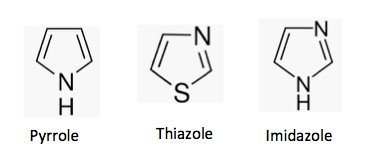
    Like the DIck Hertz's, Hugh G. Reckshun's and Lewis Stewlz's of the world, sometimes chemicals just get stuck with a bad name. This one is very bad, but it is also chemically correct. Poor guy. Here's why it's correct. Five-membered rings sometimes end in -ole. Nomenclature rules. Here are three of them.
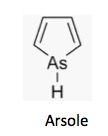
    So it should not be surprising that these guys have a relative that contains arsenic as part of the ring...
     
    Let's open up the contest and let this unfortunate fellow in too. I won't play. Yet. 
     
    Let 'em rip, boys and girls. Do you worst.
     
    NOTE:
    Nomenclature Specialist ca., 1961
    (1) Ethanol is also called rubbing alcohol (just what we need). To prevent imbibers from buying it from a pharmacy shelf it is denatured - made undrinkable. Methanol (wood alcohol) is commonly added as a poison to prevent people from drinking the alcohol.
    (2) Before computers named chemical compounds, someone had to do it. There were actual chemical nomenclature specialists who sat around and named these damn things all day. They looked a bit like this...


    (3) No - it doesn't matter whether the cinnamaldehyde comes from the tree or a factory. The two are identical. The "natural" flavor is identical to the "artificial" flavor."

    Friday, August 2, 2019

    Opioids: Bad Science, Bad Policy, Bad Outcomes

     
    There’s an old joke about the drunk who’s hunting for his lost keys under the lamppost, not because he thinks they’re there, but because the light is good. Well, that’s what the feds and state governments are doing to try to quell the epidemic of opioid addiction and overdoses.
     

    The problem is quite real, but legislators and regulators are making incorrect assumptions and adopting flawed strategies. And then, there are some flawed clinical studies and statements by the U.S. surgeon general that conspire to create misunderstanding of the landscape. 
     
    For a start, the problem isn’t currently prescribed opioids, such as fentanyl, morphine, oxycodone, and hydrocodone. A study published earlier this year in the New England Journal of Medicine found that from 2012 to 2017, a time when the overdose death rate was markedly accelerating, the rate of opioid prescriptions in patients who had not previously used opioids fell 54%, a decline driven by a decreasing number of prescribers...........To Read More....


    Tuesday, July 30, 2019

    What Do Neutralizing Skunk Odor &Tylenol Poisoning Have in Common?

     By Josh Bloom — July 25, 2019

    One of the many fascinating aspects of organic chemistry is how seemingly different reactions work in the same exact way. There can be no better example of this than phenomenon than two very different functions – saving victims of Tylenol poisoning and neutralizing the smell of skunk spray – operating by an identical mechanism - a chemical reaction called a Michael addition.
    Robert H. Cichewicz and colleagues at the University of Oklahoma have been looking for natural products that could "de-skunk" people and pets and they have a candidate called pericosine A -  a metabolite that was isolated from sea hare-derived fungus Periconia byssoides............. More @ American Council on Science and Health

    Please Help Fund Our Work If you follow our work, you know that we here at ACSH go after the fraudsters, the hucksters and the snake-oil peddlers. And when we're not debunking their misleading or dangerous junk science, we're always aiming to give you the most accurate and dependable health news. But we can only continue to do that with support from our readers and friends who value what we do. So if you can please donate. Thank you.

    Sunday, July 28, 2019

    Oh-Klahoma! 8 Questions J&J Should Ask Andrew Kolodny

     By Josh Bloom — June 18, 2019 @ American Council on Science and Health

    Are These Guys Singing And Dancing  
    In Anticipation Of A Big Payout?
    Image udiscovermusic.com
     The state of Oklahoma is smelling blood in the water and it is going after blood money.   State Attorney General Mike Hunter has a very big "blood donor" in his sights: Johnson and Johnson, the maker and seller of opioid drugs, has been accused of deceptive marketing that contributed to the state's addiction problem. J&J has a whole lot of blood - a market cap of $372 billion - and Oklahoma a whopping transfusion. According to the Wall Street Journal, the state is talking about approximately $17 billion for "abatement."
    “[The company] used a deceitful, multibillion-dollar brainwashing campaign’’
    Oklahoma Attorney General Mike Hunter,  May 28, 2019 (Bloomberg News)
    Not surprisingly, Andrew Kolodny, a tireless self-proclaimed expert on drugs and addiction, has been chosen to testify for the state. How could it be anyone else? If you take the news at face value Kolodny is not only the expert on opioids but perhaps the only person on earth even remotely qualified to speak about them -– which is, of course, a bunch of nonsense.

    This is why I'm offering J&J's attorneys, eight questions that I would ask Kolodny if I had the chance.

    No charge.

    (Before you accuse me of being a J&J puppet or lackey, perhaps you ought to read this: "Johnson & Johnson's Shameless Exploitation Of The Opioid Crisis". I wrote it earlier this year.)

    1. Opioids are used almost exclusively for control of pain. Do you have any formal training in pain management? Have you ever treated pain patients?

    2. "When was last time you saw a patient? When was last time you prescribed a drug to a patient? What was the drug?"

    3. "You and your organization PROP have recommended a 90 morphine milligram equivalents (MME) maximum dose per patient per day. Some states have enacted legislature based on MME limits. But critics have claimed that the concept of MME itself is flawed because of significant genetic variability in opioid metabolism from patient to patient. How do you answer those critics"? (1)

    4. "All drugs have risks and benefits. Focusing on only the risks will necessarily give rise to an inaccurate portrayal of a given drug. What are the risks and benefits of alternative treatments for pain, such as NSAIDS, acetaminophen, systemic anti-inflammatory steroids, spinal injections, and gabapentanoids?"

    5. "You have repeatedly referred to prescription analgesics as 'heroin pills.' Are you stating that Vicodin or Percocet are equivalent in analgesic potency, addiction potential, and overdose risk to heroin?"

    6. "Chronic pain patients, even those who have been treated successfully for years, are being forcibly tapered off their medicines. Are you in favor of forced tapering? If so, why? You have also stated that 'the number of doctors who are inappropriately tapering pain patients is likely very small.' Do you have data to support this statement?

    7. You have also stated that “'[pain patients are] being effectively manipulated to controversialize the CDC guidelines.” Do you have any proof or evidence to support this statement?"

    8. "Will you, anyone in your family, friends or associates benefit financially from restrictions placed on prescription opioid drugs?"

    Is Kolodny a believable witness, let alone an expert? I guess that depends upon how he answers questions like these. Assuming that Johnson and Johnson’s lawyers ask them.

    Prediction: I have no idea what J&J did or did not do wrong, but the company is probably doomed no matter what. J&J has a big bull$eye on its back and Judge Thad Balkman, who will decide the case, is listening to a lot of bull.

    But I could be wrong. After all, this is not an expert opinion.

    NOTE: (1) See "Opioid Policies Based On Morphine Milligram Equivalents Are Automatically Flawed"

    Please Help Fund Our Work
    Just like money, debunking junk science doesn't grow on trees. And we've done a lot of it recently in the media. But we are only able to do what we do because of the generous support of readers like you.
    So please donate 

    Monday, July 22, 2019

    Dr. Aric Hausknecht Responds to SG Jerome Adams' Tylenol Recommendation

    By Josh Bloom — July 12, 2019 @ American Council on Science and Health

    #Special to ACSH.

    ACSH friend Dr. Aric Hausknecht, a New York neurologist and pain management physician, has taken issue with the July 4th advice tweeted by Surgeon General Jerome Adams, M.D., which recommended the use of IV Tylenol for post-op pain.

    Dr. Hausknecht gave us exclusive permission to print his response to Dr. Adams.

    I am writing in response to recent comments made by the U.S. Surgeon General, Jerome Adams, regarding the use of intravenous acetaminophen for anesthesia and post-operative pain relief. The Surgeon General implies that acetaminophen (Tylenol) is equally efficacious to intravenous (IV) opioids for pain relief. Apparently, his comments are based upon, Comparison of the Analgesic Effect of Intravenous Acetaminophen and Morphine Sulfate in Rib Fracture; a Randomized Double-Blind Clinical Trial,  Emerg (Tehran). 2015 Summer; 3(3): 99–102. The authors of this paper concluded, "The findings of the present study showed that IV acetaminophen and morphine have the same therapeutic value in relieving the pain of rib fracture."

    However, this study was carried out on a limited population group, 54 patients in total, and the statistical analysis is of questionable validity. At best, this study establishes a need for further inquiry, but in no way does this study provide adequate evidence to use IV acetaminophen as a substitute for IV opioids.

    In another related paper, Intravenous versus Oral Acetaminophen for Pain: Systematic Review of Current Evidence to Support Clinical Decision-MakingCan J Hosp Pharm. 2015 May-Jun; 68(3): 238–247, the authors performed a literature review from 1948-2014 and "summarized and evaluated the available published literature describing efficacy, safety, and pharmacokinetic outcomes of randomized studies assessing oral versus IV dosage forms of acetaminophen." The authors concluded, "For patients who can take an oral dosage form, no clear indication exists for preferential prescribing of IV acetaminophen." On the basis of this comprehensive review, the authors concluded, "Therefore, on the basis of current evidence, if a patient has a functioning gastrointestinal tract and is able to take oral formulations, IV formulations (of acetaminophen) are not indicated."

    Additionally, IV acetaminophen is FDA approved for use in the management of mild-to-moderate pain and moderate-to-severe pain with adjunctive opioid analgesics. It is not clear why a physician who is in a position to shape public policy would recommend  standards of care that suggest that IV acetaminophen is equally efficacious to IV opioids when: 1) that premise is unproven, 2) there is strong evidence that oral acetaminophen is equally efficacious to IV acetaminophen,  3) IV acetaminophen should probably not be administered to a patient that can tolerate oral administration, 4) IV acetaminophen is not FDA approved as a stand-alone analgesic agent for mild-to-moderate pain and moderate-to-severe pain, and, 5) it is contrary to good and accepted medical practice that has established that opioids are more efficacious than acetaminophen for postoperative pain and for moderate-severe pain.
    I remain,

    Aric Hausknecht, MD
    Diplomate American Board of Psychiatry and Neurology
     
     
    And then to follow up

    US Surgeon Gen. Backpedals on Flawed Tylenol Study. Cause of ACSH.
    Dr. Jerome Adams celebrated Independence Day by trumpeting a study which concluded that Tylenol worked as well as morphine for controlling the pain from a broken rib. But the study was complete nonsense. ACSH caught the Surgeon General and now he's backpedaling like the woman in the bicycle scene from The Wizard of Oz (played backward of course)..............To Read More.....

    Please Help Fund Our Work - If you follow our work, you know that we here at ACSH go after the fraudsters, the hucksters and the snake-oil peddlers. And when we're not debunking their misleading or dangerous junk science, we're always aiming to give you the most accurate and dependable health news. But we can only continue to do that with support from our readers and friends who value what we do. So if you can ... Please Donate. Thank you.

    How Toxic Is Sumithrin (Anvil) Mosquito Spray?

    By Josh Bloom — July 17, 2019 @ American Council on Science and Health

    It's mosquito season in the Northeast and we had a very wet spring. Which means there are going to be 1) a whole bunch of mosquitoes, and 2) a whole bunch of people arguing about whether to spray them or not. The purpose of this article is to examine the toxicology of Sumithrin – the active ingredient in the commonly used insecticide Anvil – and come up with a realistic picture of whether Sumithrin is a deadly poison, a non-toxic chemical, or something in between.

    Sumithrin, aka d-phenothrin, is a commonly used insecticide which belongs to the pyrethroid family of chemicals – synthetic analogs of the chemicals that are found in chrysanthemum flowers that the plant makes for self-protection against insects (1). Sumithrin is a general-purpose insecticide; it is used to kill or control fleas, scabies, and head lice. It also kills ticks—a benefit I’ll discuss later.

    There are a number of standard methods used to determine the risk of chemicals. Here are some of the most widely used.

    1. ACUTE TOXICITY

    One way to gauge the toxicity of a chemical is to determine the amount of it required to kill 50% of a group of lab animals (usually rats and mice) with a single dose. This measurement is called the LD50, which is short for Lethal Dose 50%. The LD50 is expressed in milligrams per kilogram (mpk) of body weight of the animal. For example, if Chemical X has an LD50  of 10 milligrams per kilogram, then the dose of the X required to kill half the rats would be 5 milligrams (an average rat weighs 0.5 kilograms). If Chemical Y has an LD50 of 2,000 mpk this means that it would take 100 mg of Y - about 20% of the body weight of the animal - to kill half the rats. This is an enormous dose for a rat or any other mammal.

    So, a high LD50 means that the chemical in question has low toxicity. Conversely, a low LD50  indicates that the chemical has significant toxicity. Although LD50 values in rodents cannot be directly converted to a lethal dose in humans, they serve as a rough approximation of human toxicity, especially when these values are consistent across a number of different animal species. So, it would be incorrect to say that the lethal dose of Chemical X, which is 5 mg in rats, would be 700 mg in humans (average weight 70 kilograms). But it would be fairly safe to conclude that Chemical X will be more toxic to people than Chemical Y, and probably by a lot.

    LD50 VALUES OF SOME CHEMICALS AND DRUGS

    The scientific literature contains an enormous amount of data on the toxicity chemicals. One especially useful source is TOXNET, an NIH website which contains toxicity and carcinogenicity data, etc. on 400,000 chemical compounds. All of the toxicity data contained in this article is derived from the TOXNET database.

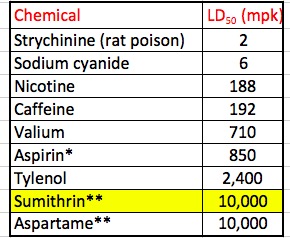
    Figure 1 contains rat LD50 values for selected chemicals and drugs.

    Figure 1. LD50  values of sumithrin and other representative chemicals and drugs. Strychnine (top) is the most toxic chemical in the group. Toxicity decreases from top to bottom.

    * The value for aspirin is the average of two peer-reviewed studies.

    ** The LD50 values of sumithrin and aspartame (NutraSweet) are not 10,000 mpk; they are higher than that. No lethal dose in rats could be identified for either chemical, so the value is usually written as >10,000. When something has an LD50 of >10,000 the only way it will kill you is if you get run over by a truck carrying it.

    Of the nine chemicals and drugs listed in Figure 1 acetaminophen (Tylenol) is the least toxic, with the exception of aspartame and sumithrin, which are non-toxic. Calculating a lethal human dose, as I mentioned before, cannot be done by using the same LD50 value and adjusting the dose size from rats to humans. But just to illustrate the lack of acute toxicity of sumithrin, I did the "math" anyhow. If rat LD50 values were the same as those of humans, then the toxic dose of sumithrin in people would be 182 grams - 36 teaspoons. You are unlikely to eat 36 teaspoons of permethrin.

    2. CUMULATIVE EXPOSURE

    Most people have an incorrect impression about everyday chemicals that we are exposed to. They believe that we live in a cocktail of toxic substances, which build up in our bodies and that this is responsible for the surge in cancer rates we are now seeing. There are two problems here:

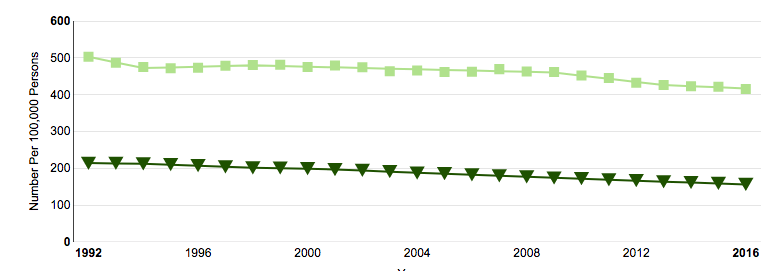
    1. There is no surge of cancer rates. They have remained steady or slightly declined over the past 24 years.


    Age-adjusted incidence (top) and mortality (bottom) of all cancers (per 100,000 people) between 1992-2016. Source: Cancer Stat Facts: Cancer of Any Site.

    2. With few exceptions, chemicals do not accumulate in our bodies. This is because of our livers – the primary site of metabolism of drugs and chemicals, natural or synthetic – break down the chemicals or drugs that pass through them, converting these substances into water-soluble metabolites that are usually excreted in the urine.

    Sumithrin, like most chemicals, does not bioaccumulate. In rats, the half-life in blood is about one hour (rapid metabolism), meaning that after one hour half of it is gone and after 8 hours (four half-lives) almost all of the sumithrin is gone. Even after administration of a single 200 mg dose (2% of the weight of the rat), more than 95% of the chemical was metabolized and eliminated after 48 hours.

    Also, keep in mind that these numbers represent the fate of sumithrin when taken orally. Sumithrin is not very efficient in penetrating the skin, so skin exposure will give low blood levels to begin with.

    Even though the chemical has very low toxicity when inhaled by rats, when it is inhaled in large quantities by humans, sumithrin can cause "nausea, vomiting, throat irritation, headache, dizziness, and skin and eye irritation," but the hysteria surrounding spraying is unwarranted. According to data from the Poison Control Center between 1992-2005, there was an average of 180 exposures per year with only 25% of these (45) resulting in symptoms (2). So it is not surprising that a 2011 paper, "Bystander Exposure to Ultra-Low-Volume Insecticide Applications Used for Adult Mosquito Management," concluded:
    "Our results support the findings of previous risk assessments that acute exposures and risks to humans from [Ultra-Low-Volume] insecticides are well below regulatory levels of concern." C. Preftakes, et.al, International Journal of Environmental Research and Public Health. 2011 Jun; 8(6): 2142–2152.
    3. A LITTLE DOES NOT EQUAL A LOT

    Paracelsus, the "father of toxicology."
    Image: Wikipedia
    Although this statement seems self-evident, it is mind-boggling how often people get it wrong by failing to differentiate between the biological effects of trace quantities and a bottle full of the same chemical, even though in the 16th century the Swiss physician Philippus Aureolus Theophrastus Bombastus von Hohenheim, aka, Paracelsus, coined the phrase "All things are poison, and nothing is without poison, the dosage alone makes it so a thing is not a poison," which has been shortened to "the dose makes the poison"

    This simple adage is the main reason that sumithrin can be sprayed to kill mosquitoes while sparing humans. Common mosquitoes weigh 2.5 mg. An average human weighs 70 kilograms, which is 28 million times more than the mosquito.

    This is why such insecticides can be toxic to bugs but not toxic to people, but it is not the only reason. It is also known that mosquitoes metabolize sumithrin more slowly than humans, so it builds up in the bugs but not in people (3).

    4. CARCINOGENICITY

    There are a number of ways to evaluate whether a chemical will be carcinogenic in humans. Here are the two most important:

    1) Genotoxicity (DNA damage). Chemicals that damage DNA always raise a red flag because gene damage can be a precursor to cancer. Many experimental drugs have met with an untimely demise because of a positive Ames test (3). Although not all chemicals that are genotoxic are carcinogens, most carcinogens are genotoxic. There are a number of other lab tests that are used to determine the possible carcinogenicity of chemicals.

    2) High dose rodent studies. Rat models of cancer are notoriously awful. Part of the reason is that rats are not little humans, but the primary reason is the way the tests are conducted. Typically, rats are fed a very high dose – much higher than a human will ever be exposed to – for their entire lives (two years) and then examined for tumors. Although this model is clearly unrealistic, the high dose feeding is only part of the problem. The choice of rats is the other. The Sprague-Dawley rat is frequently used for this experiment; this rat is bred to easily develop tumors, so much so that the control animals (not given the chemical being tested) develop so many tumors that it can be difficult to determine whether a chemical caused the tumor or the rat developed it on its own.

    Sumithrin is neither genotoxic nor carcinogenic. There is no agency, US or international, that lists the chemical as a possible carcinogen. Even California's insane Proposition 65, which requires cancer warning labels on hundreds of chemicals (also on hotel rooms, in cars, handbags...and much more) does not contain sumithrin. But the list does contain alcohol – a known human carcinogen. It would be unusual to see people hiding in their homes with the windows closed and air conditioners running when people walk by drinking beer.

    5. OTHER LIFE FORMS

    Sumithrin is more toxic to dogs and (especially) cats than it is to rodents, birds, or humans. The primary routes of exposure include flea collars and indoor foggers. Sumithrin is highly toxic to bees, fish, and amphibians. It should not be sprayed in waterways.

    6. PERSISTENCE IN THE ENVIRONMENT

    Sumithrin decomposes to non-toxic breakdown products within a few hours (in the air) and less than a day on the surface of plants. Its half-life in soil is 1-2 days and it is not water-soluble, so groundwater contamination is unlikely.

    7. TO SPRAY OR NOT TO SPRAY

    It is easy to conclude that any given chemical or drug should not be used if one examines only the risks of using it without considering the risks of not using it. Both mosquitoes and ticks are vectors for numerous (and emerging) bacterial and viral infections and when they are not controlled, human disease will inevitably result.

    West Nile (mosquitoes) and Lyme (ticks) are well-known, but other pathogens transmitted by mosquitoes can be deadly. Chikungunya virus, once rare to the US, is now found in 35 states. The infection is rarely fatal but can be incapacitating for weeks. Dengue virus is endemic to Africa but has now been found in Texas, Hawaii, and the Florida Keys. Eastern Equine Encephalitis (EEE) perhaps the most dangerous of all mosquito-transmitted diseases, so much so that it is considered to be a potential bioterrorism weapon. It is spread to horses and humans by mosquitoes. Although still rare, the fatality rate for infected humans is 50-75%. Zika, which causes severe birth defects in the babies of infected mothers, Western Equine Encephalitis, St. Louis Encephalitis, and LaCrosse Encephalitis are still uncommon but all are now found in the US. All of these viral infections are spread by mosquitoes. (5)

    In addition to Lyme, ticks spread a number of viral infections, such as Rocky Mountain Spotted Fever, Colorado Tick Fever, and Powassan Encephalitis.

    At the heart of this controversy is the fallacy that "natural is better." It is not, despite the brilliantly successful advertising campaign of the organic food industry, copycat traditional food manufacturers which have hopped on the bandwagon, and the dietary supplement industry, which has pushed such ridiculous claims to the point where they resemble satire. The only difference between "natural" substances and their man-made counterparts is the source of the chemical or food. Your body cannot tell the difference between a chemical from a grape or one from a lab. All that counts is the properties of the chemical in question. Virtually all of the "natural" Vitamin C you buy comes from factories in China, where it is manufactured from glucose. Yet, it is no different from Vitamin C extracted from oranges.

    Public health decisions require sound science, not reflexive reactions based on misinformation, ignorance, or personal beliefs. Whether the issue is vaccination or pest control, feel-good, easy-sounding memes may be attractive alternatives to actual facts, but in the absence of sound science the easy answer is usually the wrong answer.

    NOTES:

    (1) Insecticide marketers engage in a sleight-of-hand by saying pyrethroid insecticides are in the same chemical family as the natural pesticides from chrysanthemums. This is technically true, but meaningless. It implies that the insecticides are somehow safer because they are "related" to chrysanthemums. That is nonsense. Each pyrethroid has its own toxicity profile. Sumithrin is safe because it is non-toxic, not because it is structurally similar to the natural insecticides.

    (2) Reference: d-Phenothrin (Sumithrin®): Occupational and Residential Exposure Assessment for the Reregistration Elibibility Decision (RED); U.S. Environmental Protection Agency, Office of Prevention, Pesticides and Toxic Substances, Office of Pesticide Programs, U.S. Government Printing Office: Washington, DC, 2007; pp 1-23.

    (3) Another "active" ingredient found in Anvil insecticide is piperonyl butoxide.
    Piperonyl butoxide is not an insecticide, rather, it inhibits the enzyme that clears sumithrin from the mosquito, making it more effective. Piperonyl butoxide is neither toxic nor carcinogenic. There is one case report of a fatal overdose, but the victim drank between one pint and one quart of the chemical.

    (4) The Ames test, a widely used and important method for determining carcinogenicity uses bacteria to test for the ability of chemicals to mutate genes. It was invented by biochemist Dr. Bruce Ames in the 1970s. Ames was one of the founders of ACSH.

    (5) This information is available from the American Mosquito Control Association, a non-profit group funded by the CDC.

    Please Help Fund Our Work - If you follow our work, you know that we here at ACSH go after the fraudsters, the hucksters and the snake-oil peddlers. And when we're not debunking their misleading or dangerous junk science, we're always aiming to give you the most accurate and dependable health news. But we can only continue to do that with support from our readers and friends who value what we do. So if you can ... Please Donate. Thank you.