Search This Blog

De Omnibus Dubitandum - Lux Veritas

Showing posts with label ACSH. Show all posts

Monday, August 4, 2025

Badly-Needed Mercury Chemistry Lesson for RFK Jr., and His ACIP Picks

By Josh Bloom — Jul 30, 2025 @ American Council on Science and Health

Mercury, the element, is no longer used in thermometers, but it remains at the center of a decades-long debate over vaccine safety, despite the science being crystal clear. At the heart of this confusion is thimerosal, a mercury-containing preservative wrongly accused of causing autism. What follows isn’t a rehash of that conspiracy theory, but rather a crash course in chemistry. It's something RFK Jr. and his CDC picks need to know.
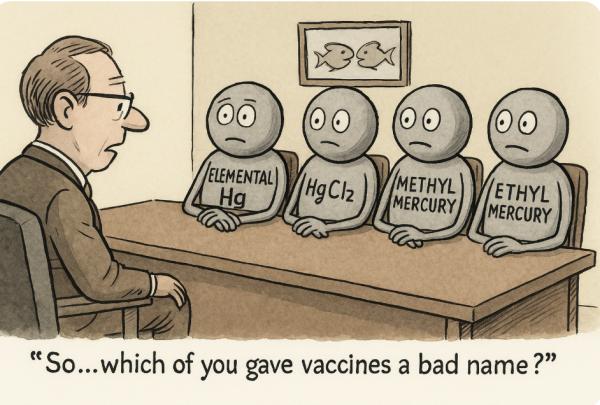
#Generated by AI

As difficult as it is to believe, we are still having a debate about thimerosal, thanks to vaccine "skeptic" Robert F. Kennedy Jr., who is the head of HHS. 

Kennedy and the ACIP [1] "experts" he selected are raising long-discredited concerns about thimerosal, aka "ethylmercury," a preservative that was falsely linked to autism [2].

I won't be delving into this controversial topic; others with far more expertise have discussed this in length. But the underlying confusion about "good" vs. "bad" mercury can be answered with some rather basic chemistry. An understanding of this chemistry should (but probably won't) defuse at least some of the overblown claims of neurotoxicity of the particular "form" of mercury that is used in multi-dose flu vaccines (and nowhere else). Nonetheless, here are some facts. These are not debatable.

All Mercury is not the same.

The word "mercury" is pretty much guaranteed to strike fear into the heart of much of the population. Sometimes this fear is justified; sometimes it is not. Here's a brief summary of 4 relevant forms of mercury. Some are scary, while others are not. 

(For the ACSH video that explains the different types of mercury, click here: https://tinyurl.com/5ewejz3u)

  1. Elemental mercury (Hgo)

Elemental mercury, aka "quicksilver," is one of the two elements that are liquids at room temperature [3], the other being bromine. Although it is chemically unreactive, most mercury found on Earth is in the form of cinnabar, a bright red to brown crystalline mineral composed of mercury and sulfur. The pairing of mercury and sulfur is not a coincidence. For reasons that are beyond the scope of this article, the two elements form a very strong bond. Mercury simply loves sulfur.

Despite its fearsome reputation, elemental mercury (Hg⁰) is less toxic than most people think, at least in liquid form. It was even used in ancient China as an “immortality elixir.” When swallowed, liquid mercury is poorly absorbed by the gastrointestinal tract; however, a small portion is converted into mercury chloride, a far more toxic and readily absorbed compound. The real danger lies in mercury vapor: it is readily inhaled, absorbed through the lungs, and transported to the brain and central nervous system. Chronic exposure—even to small amounts—can result in chronic mercury poisoning, historically known as “mad hatter syndrome.” 

Let's pause for a story.

When I was at the University of Virginia, one research group in the chemistry department worked with air-sensitive compounds that spontaneously combusted when exposed to air. To prevent this, they kept everything under constant high vacuum, using a specialized mercury vacuum pump to achieve better pressure. Unfortunately, this meant the lab air was chronically contaminated with mercury vapor. By the time I left, most of them were bald. Ugly, too. These pumps are long gone. Don't know about the chemists.

        2. Mercury (II) salts (inorganic)

Soluble inorganic mercury+2 salts are deadly neurotoxins. Examples include mercury (II) chloride and nitrate. There are no medical uses for these chemicals, although they were used in the 17th-19th centuries as a laxative, reportedly by President Lincoln (they made him cranky). Mercury salts should be avoided, which isn't all that difficult since they have no known medical use, approved or otherwise.

         3. Methylmercury (organic mercury)

Methylmercury, an organomercury compound [3], is largely responsible for the confusion surrounding mercury in vaccines. While it sounds similar to ethylmercury, aka thimerosal, the preservative used in some flu vaccines , the two differ significantly, particularly in how they are metabolized and excreted. Methylmercury is poorly eliminated from the body and accumulates in tissues, especially the brain. More on this below.

Figure 1. The chemical structure of methylmercury. Although commonly referred to as “methylmercury,” the compound exists in a partially ionic form, such as methylmercury chloride, with a +1 charge on the mercury atom balanced by a counterion, like chloride, which is functionally similar to a sodium salt.

Its chemical stability, lipid solubility, and ability to cross the blood-brain barrier make methylmercury especially dangerous. It was once used topically to treat skin infections, but this practice was abandoned decades ago due to absorption through the skin, leading to systemic neurotoxicity.

Methylmercury, which is the form of mercury that accumulates in fish, has NEVER been used as a vaccine preservative.

       4. Ethylmercury, aka Thimerosal

The difference between ethylmercury and methylmercury may only be the letter "M," but pharmacologically, it's night and day (Figure 2). 
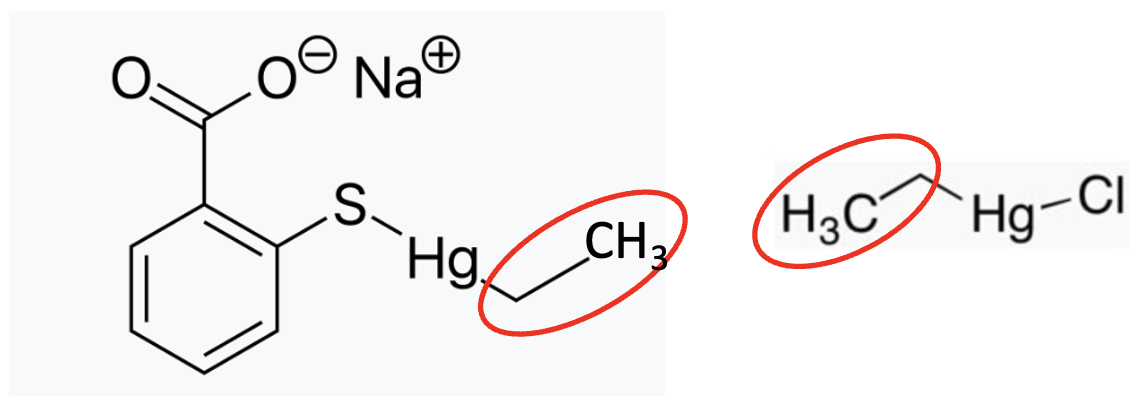
 

Figure 2. Although thimerosal (left) is commonly called ethylmercury (right), this is a "nickname" for ethyl(2-mercaptobenzoato-(2-)-O,S) mercurate(1-) sodium salt, if you prefer. Note that the thimerosal contains (and breaks down to) ethylmercury. The ethyl groups are indicated by the red ovals.

To understand the significant differences in toxicity between methylmercury and ethylmercury, it is necessary to examine the metabolism of each. These guys are so similar looking. How different can they really be? Plenty.

The half-life of methylmercury in humans is about two months. For ethylmercury, it's about one week. The result? Methylmercury accumulates in the body while ethylmercury is cleared. Figure 3 puts this in perspective.
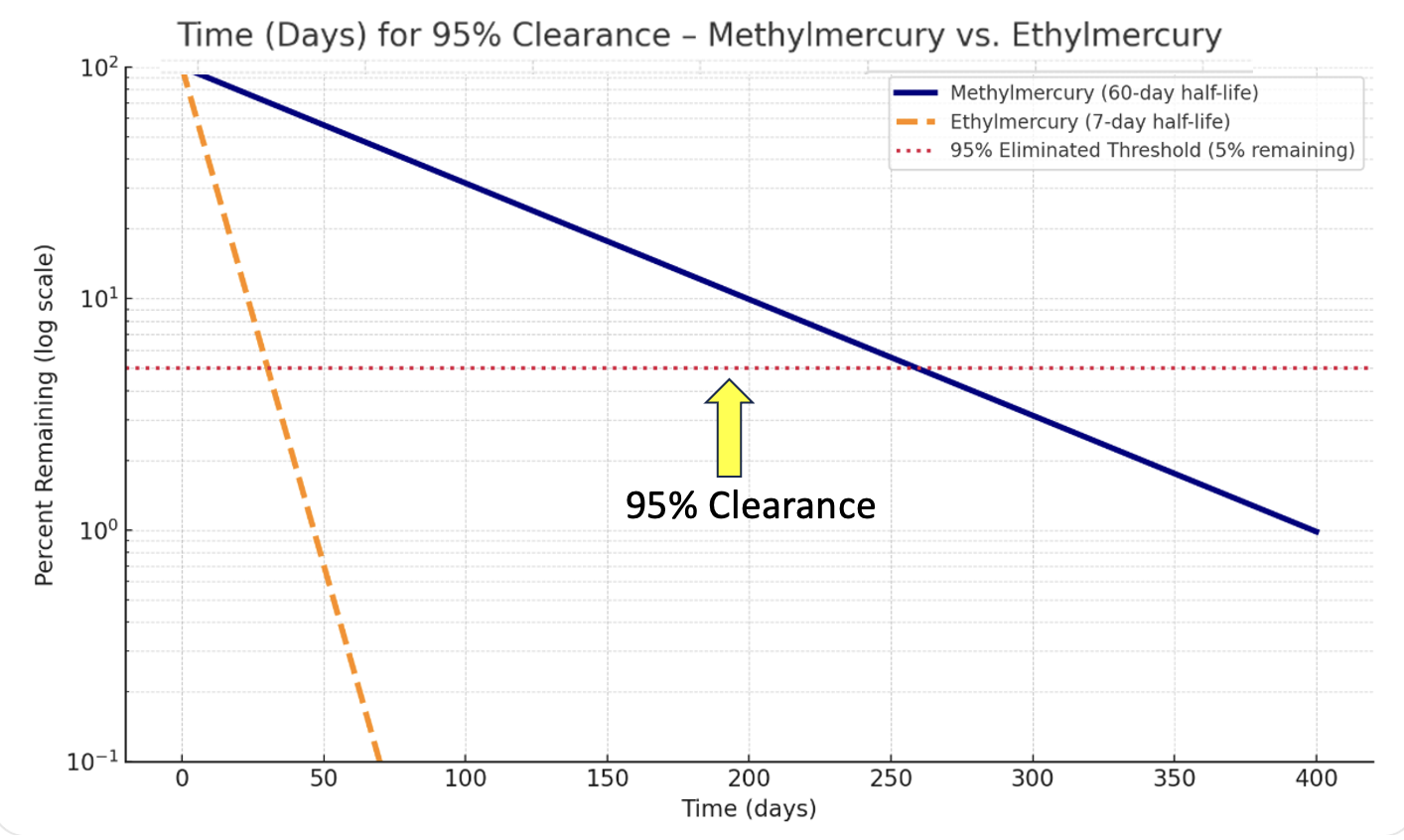
Figure 3. Modeled clearance of methylmercury (blue) versus ethylmercury (orange). Note the rapid elimination of ethylmercury compared to the months-long persistence of methylmercury.

Why? This requires a little chemistry.

When ethylmercury enters the bloodstream ("packaged" as thimerosal), the compound is rapidly dealkylated (ethyl group is removed) by a common metabolic pathway called oxidative dealkylation. That means the ethyl group is stripped away, leaving behind inorganic mercury (Hg²⁺) and a two-carbon fragment that is oxidized to acetaldehyde and then acetic acid, similar to the way that ethanol is metabolized. By contrast, the oxidative metabolism of methylmercury is slower for reasons that are beyond the scope of this article. This is why methylmercury persists in the body for much longer. 

Ignorance isn't bliss. It's just ignorance.

So let’s stop pretending that all forms of mercury are interchangeable—or equally dangerous. The continued fearmongering over thimerosal ignores basic toxicology and serves only to undermine trust in vaccines. Ethylmercury is not methylmercury. One clears in days; the other persists for months. If we’re going to have public debates about medicine, they should at least be grounded in chemistry. Otherwise, we’re just poisoning the conversation.

NOTES:

[1] The ACIP (Advisory Committee on Immunization Practices) is a CDC-affiliated panel of medical and (supposedly) public health experts that provides guidance on vaccine schedules and safety.

[2] When thimerosal was removed from nearly all childhood vaccines starting around 2001, autism rates continued to rise. So much for that theory? So, how did anti-vaxxers respond? They moved the goalposts and started blaming...pretty much everything else in the vaccine.

[3] Organometallic compounds are "normal" organic (carbon-containing) molecules that have a carbon atom bonded to a metal. Many of them are highly reactive. 

 Tags:

 
Profile picture for user Josh Bloom

Dr. Josh Bloom, the Director of Chemical and Pharmaceutical Science, comes from the world of drug discovery, where he did research for more than 20 years. He holds a Ph.D. in chemistry.

Monday, June 30, 2025

The EPA Grows A Pair And Takes A Stand On Glyphosate

By Josh Bloom,  Aug 13, 2019 @ American Council on Science and Health
Sometimes facts beat hype. This week was one of those times. The EPA, after years of compiling and evaluating data, declared that it would not approve labels for the herbicide glyphosate that contained a cancer warning. This puts the U.S. agency in direct opposition to California's absurd Proposition 65, which would require a cancer warning label on the chemical -- even though it would be incorrect. The U.S. now joins a dozen other countries that have already determined glyphosate is safe as used.

You might as well get pissed off in advance because if you don't much care for scientific evidence you're not going to enjoy this a whole lot. Sorry, but facts are facts, and in this case, the US EPA has them right while the State of California has them wrong.

By any measure, California's Proposition 65 is an exercise in madness. 

The law, which is officially titled "The Safe Drinking Water and Toxic Enforcement Act of 1986," was well-intended at the time it was written – to stop pollutants from being discharged into water. Now it has nothing to do with water; it is merely an excuse for predatory trial lawyers, to file lawsuits against companies, small and large, with the laughable goal of "protecting the public" by suing companies that fail to "warn the public" about harmless products like purses, shoes, Tiffany lamps, and bird feeders, as well as hotel rooms, and amusement parks. How, did these evil companies –many being small family businesses – fail to adequately warn us? By not putting an immensely stupid label on things that cannot possibly hurt you. (See Should California Put A Warning Label On Your Penis?). So it should not be surprising that California wants a Prop 65 label put on the controversial herbicide glyphosate.

Except, the EPA doesn't see it that way when it comes to glyphosate (1). The agency recently announced that it would not permit California to put a cancer label on the chemical. And rightly so. 

Some will write off the EPA's recent decision to reject a cancer warning label for glyphosate as partisan politics or big money influencing a government agency. It is neither. Instead, we are seeing a rare case of honesty that is based on scientific evidence, not nonsense. The EPAs decision is scientifically sound on every level. 

"We will not allow California's flawed program to dictate federal policy, EPA Administrator Andrew Wheeler 

Good for him. Wheeler is dead-on. The "evidence" supporting the carcinogenicity of the chemical is not only flimsy; it is a product of fraudulent research by the International Agency on Cancer Research (IARC). Here is an excerpt from my colleague Dr. Alex Berezow's complete annihilation of IARC and its findings:

"We now have an answer... The Times reports that Christopher Portier, a key IARC advisor who lobbied to have glyphosate listed as a carcinogen, accepted $160,000 from trial lawyers representing cancer patients who stood to profit handsomely by suing glyphosate manufacturers. Mr. Portier's failure to disclose such an obvious conflict of interest has exploded into a textbook case of scientific fraud." Dr. Alex Berezow, Glyphosate-Gate: IARC's Scientific Fraud, October 2017

IARC's "evidence," such as it is, was the lone culprit in designating glyphosate as a carcinogen. Epidemiological studies have found no connection between cancer industrial workers who routinely handle the stuff. Biochemical assays that are suggestive of DNA damage or mutation all come up negative. Aside from IARC's made-up baloney, there are no valid animal studies that show that it causes cancer. Regulatory agencies from the US, Canada, the EU, France, Germany, Switzerland, New Zealand, Brazil, Japan, Australia, and Korea all state that glyphosate does not pose a risk of toxicity or carcinogenicity. 

Yet, California, based on IARC's phony findings wanted to slap an incorrect label on it based on the findings of a corrupt group. 

A rare win for science and a loss for faulty activism. How refreshing. 

NOTE:

(1) This week's announcement was not the first time that EPA has objected to the cancer label. In 2017 the agency released the Glyphosate Human Health Risk Assessment, which was a basis for the 2019 decision.

Related content:


Josh Bloom

Director of Chemical and Pharmaceutical Science

Dr. Josh Bloom, the Director of Chemical and Pharmaceutical Science, comes from the world of drug discovery, where he did research for more than 20 years. He holds a Ph.D. in chemistry.

Recent articles by this author:

Thursday, August 5, 2021

GMO Drama: Philippines Approves Golden Rice, Greenpeace Demands Poor Children Go Blind Anyway

By Cameron English — July 30, 2021 @ American Council on Science and Health

The Philippines has finally approved Golden Rice, a genetically engineered crop designed to combat vitamin A deficiency. Greenpeace, never content to let evidence guide its agenda, has trotted out some mealymouthed justifications to urge regulators to reverse the decision.

“Vitamin A deficiency [VAD] is the leading cause of preventable blindness in children worldwide,” the American Academy of Ophthalmology noted last year. “An estimated 250,000 to 500,000 children become blind every year because of vitamin A deficiency. Half of these children die within a year of losing their sight.” In 2016 alone, VAD killed more than a million people.

The condition is most prevalent in poor nations like the Philippines, and the country's regulators have finally approved genetically engineered (GE) Golden Rice (GR), a crop developed literally decades ago to boost intake of beta carotene, which converts to vitamin A. Regulators in the US, Canada and Australia have determined that GR is safe for human consumption and poses no risk to the environment.

Naturally, the environmentalist group Greenpeace has reacted to the Philippines approval with feigned shock. The anti-GMO outfit “denounced the government’s approval of the commercialization of Golden Rice,” Business Mirror reported on July 26, “saying that the genetically modified organism (GMO) would make it more difficult for farmers to recover from the adverse impact of the pandemic.”

There's an eight-letter word to describe Greenpeace's assertions here. We'll leave it unsaid to keep this story family friendly, but there isn't a shred of evidence to justify the group's ongoing and unethical opposition to Golden Rice. Their claims are in italics, my replies follow.

'The continued approval of genetically modified ‘GM’ crops including so-called ‘Golden Rice’ will further drag down farmers amid climate and Covid struggles,' said Wilhelmina Pelegrina, Senior Campaigner for Greenpeace Southeast Asia.

Filipino farmers have grown GE crops for 14 years now; their yields are up and their pesticide use has plummeted. They're quite happy with these results, as any sensible environmentalist should be. It means the country is producing more food with fewer inputs. That's good for human health and the climate.

Moreover, as a vitamin-fortified rice, GR will help those in need develop and maintain a properly functioning immune system, which of course is critically important during a pandemic. Countries with high levels of VAD are plagued by infectious diseases. If anything, Golden Rice and other biotech crops are powerful weapons against the country's climate and COVID struggles.

Instead of relying on GM crops such as GR that have no proven benefits to farmers and consumers, the DA should promote ecological agriculture that works with and for farmers, and which offers Filipinos diverse grains, fruits, and vegetables for diverse diets, ensuring food and nutrition security.”

This sounds like sage advice, but it's useless and, frankly, a little insulting at this point. Imagine telling a desperately poor single mother she needs a “diverse” financial strategy that includes judicious spending habits, savings and a balanced investment portfolio. “Thanks, Dave Ramsey, now how do I pay my rent this month?” you could imagine her asking.

Because Greenpeace has no reasonable argument against GR's introduction, they have to pivot away from the issue at hand. Nobody denies that humans need a diverse diet to lead healthy lives, but this doesn't mean incremental steps in the right direction are harmful. 

“This is like arguing that until we find a cure for cancer we should not treat patients by means of surgery, chemotherapy or radiation therapy,” science writer Ed Regis told me during a 2019 interview. The point is that every effective strategy is worth pursuing. GR, vitamin supplementation and other dietary interventions work in concert; they aren't mutually exclusive.

Greenpeace argued that the commercialization of Golden Rice happened despite 'longtime opposition from Filipino farmers, scientists, consumers, health advocates, and environmental groups who have clamored for stricter regulatory systems for GM crops on the basis of the precautionary principle.'

It can be difficult to address the concerns of activist groups because they understand the world fundamentally differently than scientists do. For many decades, the environmentalist movement has ensconced itself in a subjective, postmodern framework. Scientific research, the argument goes, is a social construct. It cannot be trusted because it's used by the powerful to advance some secretive, nefarious political agenda.

This is why Greenpeace appeals to fallacious arguments from popularity against GR in the face of overwhelming evidence of its safety and efficacy. The fact that many groups oppose GE crops is utterly irrelevant to the empirical questions about public health and environmental protection we're concerned with.

Activist groups and individuals who can't or won't grasp that foundational concept deserve our skepticism. Fortunately, it appears that the Philippines has finally had enough of Greenpeace's antics. Golden Rice is moving forward, and the world will be a slightly better place as a result.

Saturday, June 19, 2021

The Emperor - IARC - Has No Clothes

By Susan Goldhaber MPH — June 14, 2021 @ American Council on Science and Health

As we’re in the midst of a reevaluation of whether the Virology Laboratory in Wuhan, China was the true source of the Covid-19 virus that caused the pandemic, a theory which the World Health Organization (WHO), many U.S. scientists, and the media rejected for over a year’s time, there is another issue that warrants a complete reexamination: The International Agency for Research on Cancer’s (IARC’s) assessment of glyphosate. 

This is not a new issue. In fact, the ACSH has published numerous articles on this over the years, beginning in 2017. [1] Currently, there is no transparent review process for the assessments of the IARC Monographs program, even when there is clear counter-evidence from many other respected organizations.  This resulted in the IARC assessment of glyphosate as the central document in billions of dollars of litigation that ultimately resulted in an $11 billion settlement in 2020 that resolved the bulk of the lawsuits claiming that Roundup (glyphosate) caused cancer.  

I hope that we are finally at a place when a few influential scientists with integrity will have the courage to speak out and demand that the 2015 IARC assessment of glyphosate be retracted or revised.

Background

Roundup (glyphosate) is the world’s best-selling weedkiller and has been used for over 45 years. It is effective against a wide variety of weeds and has lower toxicity compared to other products it has replaced (such as atrazine and alachlor).   

In 2015, IARC classified glyphosate as “probably carcinogenic to humans.” IARC, based in Lyon, France, is a semi-autonomous unit of the WHO, the health agency for the United Nations. Since 1971, IARC has evaluated over 1000 chemicals or substances for inclusion in “IARC Monographs on the Identification of the of the Carcinogenic Risk to Humans” series. Two-thirds of the funding of the IARC Monograph program comes from U.S. agencies, with grants from the National Cancer Institute (NCI) and the National Institute of Environmental Health Sciences (NIEHS) totaling almost a million dollars per year.

The purpose of the IARC Monographs program is to evaluate the available scientific evidence to determine the likelihood that a chemical causes cancer. The evaluation is carried out by a “working group of independent international experts.” But how independent are they really? Most U.S. scientists are dependent on grants and contracts from U.S. agencies such as the NCI and NIEHS that support IARC. It would be foolhardy to speak out against IARC, which could threaten their standing in the scientific community and, therefore, their livelihood.    

What Do Other Agencies Say?

IARC is the only agency that has concluded that glyphosate poses a carcinogenic risk. The following is a list of agencies that have concluded that glyphosate is not carcinogenic: 

  • US Environmental Protection Agency
  • Health Canada
  • European Food Safety Authority
  • European Chemicals Agency
  • Food and Agriculture Organization of the United Nations
  • French Agency for Food, Environmental and Occupational Health & Safety
  • German Federal Institute for Risk Assessment
  • Australian Pesticides and Veterinary Medicine Authority
  • Federal Food Safety and Veterinary Office (Switzerland)
  • Environmental Protection Authority (New Zealand)
  • National Health Surveillance Agency (Brazil)
  • Food Safety Commissions of Japan
  • Rural Development Association (S. Korea)

“Our scientists left no stone unturned in conducting this review. They had access to all relevant data and information from federal and provincial governments, international regulatory agencies, published scientific reports, and multiple pesticide manufacturers. To help ensure an unbiased assessment of the information, Health Canada selected a group of 20 of its own scientists who were not involved in the 2017 re-evaluation to evaluate the notices of objection”. Health Canada

All of the other agencies conducted similarly detailed reviews. So why was IARC the only Agency to consider glyphosate a “probable human carcinogen”?  

What is the basis for the IARC Classification?

  1. Evidence in humans: IARC excluded the results from the largest and most comprehensive study on human exposure to glyphosate, the Agricultural Health Study, led by scientists at the NCI. This study examined 54,000 pesticide applicators in Iowa and North Carolina. The reason given for not including this study was that when the IARC working group met in 2015, the results were not yet published. When the results were finally published in 2018, the paper reported no significant increases in 20 different tumor types, including Non-Hodgkin’s Lymphoma. However:
  • At least one group member had seen the unpublished results and knew that they found no evidence of a link between glyphosate and cancer but chose not to reveal this information at the meeting.
  • There are questions about why the data on Non-Hodgkin’s lymphoma was not published before the IARC meeting, even though draft papers were prepared containing the data. 
  1. Cherry-picked results from animal studies: IARC primarily based its assessment of glyphosates potential carcinogenicity on several rodent studies. Within the same study, IARC’s experts ignored the results showing no increase in tumor incidence and selected a few positive results. 
  2. Changes in drafts: Draft versions of the IARC glyphosate assessment showed that negative conclusions about glyphosate leading to tumors in animal studies were replaced or deleted and neutral or positive statements were added in their place. 
  3. Hazard vs. Risk: Unlike the vast majority of scientific agencies, IARC measures hazard: considering whether the chemical could cause cancer under any circumstance instead of risk: determining the likelihood that a chemical will cause cancer. To get a fuller discussion, see my previous article on this issue.

Scientific Community Response 

The response from the scientific community has been to try and win the public debate by accusing the critics of IARC of being in the pockets of corporations. 

Instead of welcoming and addressing criticism of IARC, in a 2015 letter and commentary published in the Journal of Environmental Perspectives, 124 scientists argue that the criticisms of IARC by a “vocal minority” may denigrate the process that has served public health well for many years. It is easy to see why so many scientists signed this letter. Their livelihood often depends on grants from NCI and NIEHS, the Agencies that support IARC, and criticism involving self-examination is never welcome in the scientific community.

Take a minute to review the reported conflicts of interest in this letter. To begin with 

“This work was conducted with no direct funding, but was supported in part by the Intramural Research Program of the NIH (NCI and NIEHS).” [emphasis added]

Many signators now serve as expert witnesses for plaintiffs in litigation around a host of chemicals and their effects. Others have served or continue to serve on IARC monograph working groups. 

One of IARC’s stated core principles is that the expert scientists serving in their working groups should be independent with no conflicts of interest. This has been used to ban scientists who work for industry from being in their working groups. 

“No matter how loud the voice, no matter how many people are speaking it, doesn’t make it true. But how can I tell? 

One tell-tale sign is if your voice is suppressed or vilified when you try to question that voice.”

Charles Glassman MD

Conflicts of interest are not simply financial but can often be belief-driven. The deliberate exclusion of scientists with conflicting interests in favor of glyphosate because of “bias” in IARC’s glyphosate study is an example. But when you cherry-pick your experts, you facilitate group-think, another bias that stifles the discourse that lies at the heart of science and these deliberations. 

 It is much easier to sign a letter of support than to actually examine the criticisms that may result in changes to a process that has benefited a select few scientists (those chosen to be on IARC Working Group panels) over the years. Despite all the back and forth about who was financially remunerated and by whom, it is important to recognize that there has been no scientific rationale put forth to justify the actions taken by IARC on glyphosate.

Conclusions

The U.S., as the major funder of the IARC Monographs program, should insist that IARC develop a transparent review and appeals process. In addition, the U.S. needs to ensure that IARC’s conflict of interest policy is changed to include conflicts such as working as litigation consultants in trial lawsuits.  Finally, as stated earlier, the IARC assessment of glyphosate should be retracted or revised.        

“The systematic exclusion by IARC of researchers with real or perceived industry conflicts of interest decreases the likelihood that the strongest arguments defending a suspect agent against claims of carcinogenicity will be presented and discussed during Working Group deliberations, and thus increases the probability that the agent will be classified as posing a carcinogenic hazard to humans, regardless of the strength or weakness of evidence supporting that conclusion.” 

R Tarone Conflicts of interest, bias, and the IARC Monographs Program

[1] Who is Afraid of Roundup?, EPA Refutes Study Claiming Glyphosate Boosts Cancer Risk, Claims That Criticism Of IARC Are Industry-Driven Do IARC More Harm Than Good, Roundup Cover Up? Glyphosate Funny Business At IARC, Round Up Cover-Up, Part 2: Why Did IARC Exclude Selective Evidence?    

Sources: Reuters In glyphosate review, WHO cancer agency edited out “non-carcinogenic findings”

Reuters Cancer agency left in the dark over glyphosate evidence

IARC Monographs on the Identification of the of the Carcinogenic Risk to Humans   


Saturday, January 9, 2021

Top 10 Junk Science and Bogus Health Claims ACSH Debunked in 2020

By Alex Berezow, PhD — December 30, 2020 @ American Council on Science and Health

Though we spent about nine months of the year focused almost exclusively on COVID, we did find time to debunk pseudoscientific nonsense. Here are the top 10 junk science and bogus health claims we debunked in 2020.

The ACSH mission statement is very clear: "To publicly support evidence-based science and medicine and to debunk junk science and exaggerated health scares." Basically, we were founded in 1978 to combat misinformation, long before the advent of "fake news" and "fact checkers."

This year was no different from any other year. Though we spent about nine months of it focused almost exclusively on the coronavirus, we did find time to debunk pseudoscientific nonsense. Here are the top 10 junk science and bogus health claims we debunked in 2020:

10. A team of researchers at Yale claimed a link between fracking and sexually transmitted diseases. In what has to be one of the worst articles we have ever seen, a group from Yale implausibly claims that fracking is linked to the spread of chlamydia and gonorrhea but not syphilis, and that fracking produces this effect in Texas but not Colorado or North Dakota. This is data dredging at its absolute worst, and the only real question is how something this embarrassingly awful could get published in the first place.

9. The Atlantic published an article called "America's Favorite Poison," which scolded us over the dangers of alcohol and waxed poetic for the Prohibition Era. This was before the COVID pandemic, so the media was searching hard for things to scare Americans about. The Atlantic focused on alcohol, using cherry-picked data to parrot the unsubstantiated claim that even moderate drinking is unsafe. The Atlantic went on to publish a series of articles on COVID denial, apparently oblivious to the fact that media sensationalism is one of the leading reasons why the public fails to take real threats like the coronavirus seriously.

8. AARP scares elderly people into eating organic food. If the coronavirus wasn't scary enough, AARP Magazine published an article by Mark Bittman, an organic food activist who once claimed that GMOs cause leukemia. Contrary to scientific evidence, Mr. Bittman encourages elderly people -- many of whom are on limited incomes -- to spend those precious dollars on overpriced organic food.

7. The journal "Science" accepted and then rejected an article on my career as a junk science debunker because I'm a "corporate shill." After nine revisions and two months of editing, a column I submitted to the prominent journal Science was spiked by a senior editor. Why? Because I'm a corporate shill, of course. The delicious irony is that the journal has a page on its website in which it literally begs corporations to send money. We have long known that the scientific publishing industry is thoroughly corrupt and increasingly useless, but it's quite another thing to experience it first-hand.

6. The healthcare system is financially benefiting from the coronavirus. When the pandemic hit the U.S., some people claimed that hospitals and doctors could illicitly benefit themselves by diagnosing a patient with COVID, even if he or she didn't actually have it. There is no merit to this allegation. Besides, any hospital caught doing something like that can get fined.

5. Environmentalists oppose the very policies they endorse. Pretty much every year, a story about how environmentalists are hypocrites usually makes the top 10 list. It's like shooting fish in a barrel. This year, electric car-loving environmentalists opposed the construction of an electric car manufacturing plant in Germany. The Union of Concerned Scientists opposed programs meant to conserve water and energy because it made labor unions mad.

4. Michael Shellenberger, a prominent environmentalist, was called a "white supremacist" for debunking myths about climate change. Mr. Shellenberger is an ecomodernist, a person who believes that technologically savvy humans can fix big problems, like climate change. As part of his mission, he debunks climate myths, such as the notion that wildfires are getting worse. For his evidence-based arguments, he was censored by Forbes and called a "white supremacist." Our society has learned that, when you're losing an argument, the best way to respond is to try to destroy the other person's character and career.

3. Politicians keep blaming the opioid crisis on prescription drugs. We know why people are dying from opioid overdoses: The drugs they are taking, such as heroin purchased from the neighborhood dealer, are laced with illegal fentanyl. Yet, politicians keep going after prescription opioids, as if they are the cause of our current problems. They are not. In the meantime, patients who need powerful painkillers are being forced to suffer due to cruel policies that restrict access to these vital medicines.

2. Anti-vaccine activists smell a coronavirus conspiracy. Children's Health Defense, the ironically named organization founded by anti-vaxxer RFK, Jr., believes that the COVID pandemic is little more than a conspiracy by elites to immunize the world and make Big Pharma wealthy. Since most of society has been begging the pharmaceutical and biotech industries to rescue us from the coronavirus, hopefully this renewed confidence will help bury anti-vaccine ideology for good.

1. COVID is caused by glyphosate or 5G. Of the many conspiracy theories out there regarding COVID-19, none are dumber than the notion that glyphosate (a pesticide) or 5G wireless technology caused it. Yet, one of the proponents of the former is an MIT senior research scientist. A different scientist claims that our cells are being poisoned by 5G, and in response, they produce viruses. Our fact checkers rated these claims as:


Wednesday, June 3, 2020

How to Make Money by Spreading Anti-GMO Propaganda

Anti-GMO activists routinely label scientists and biotech supporters "shills for Monsanto." However, a new study suggests that those who spread GMO disinformation are the ones who are actually motivated by money.

By Alex Berezow, PhD — December 3, 2019 @ American Council on Science and Health

The anti-GMO movement is bizarre in so many ways. The topic is essentially non-controversial in the scientific community, with 92% of Ph.D.-holding biomedical scientists agreeing that GMOs are safe to eat.

Yet, GMOs have become a perverse obsession among food and environmental activists, some of whom have gone so far as to accuse biotech scientists of committing "crimes against nature and humanity." Why? What's in it for them?

A new paper published by Dr. Cami Ryan and her colleagues in the European Management Journal examined this issue. They came to the conclusion that many of us had already suspected: It's all about the Benjamins, baby.

The Monetization of Disinformation: The Case of GMOs

The authors, who work for Bayer (which acquired Monsanto), begin by explaining the attention economy. Like most everything else, from money to coffee beans, human attention can be thought of in strictly economic terms. Attention is a scarce commodity; there is only so much of it to go around. Entire businesses, like social media, have developed a revenue model that relies on capturing as much of your attention as possible. In various ways, that attention can be monetized.

To quantify the attention that the topic of GMOs receives, the authors utilized BuzzSumo, a website that aggregates article engagement from all the major social media sites, such as Facebook and Twitter. The authors identified 94,993 unique articles from 2009 to 2019, and then whittled down the list to include only those domains that published at least 48 articles on GMOs (which is an average of one per month for four years). Thus, the researchers identified 263 unique websites.

And now, the depressing results. By far, the most shared articles on GMOs came from conspiracy, pseudoscience, and/or activist websites.

The image on the right depicts the top 25 websites based on median article shares. Of these, only two -- The Guardian and NPR (highlighted green) -- are widely considered to be mainstream news outlets. (It should be pointed out, however, that The Guardian is often not a reliable source of information on science, technology, and public health.)

It isn't a coincidence that many of these same websites also peddle snake oil. Mercola.com, for instance, is a website that sells everything from hydrogen-infused water to krill oil supplements for your pet. The website publishes anti-GMO and anti-vaccine articles, as well as a whole host of other fake health news, in order to drive traffic to itself. Then it sells the reader phony medicine.

If you're wondering how Mercola.com gets away with this, here's how: (1) It's not illegal to lie, and (2) It's not illegal to sell phony medicine, provided that there is a tiny disclaimer somewhere on the website admitting that the FDA hasn't evaluated any of the health claims. Here's Mercola's:


Perhaps Dr. Ryan's next research project should be how to put Mercola.com and its ilk out of business.

Source: Camille D. Ryan, Andrew Schaul, Ryan Butner, John Swarthout. "Monetizing Disinformation in the Attention Economy: the case of genetically modified organisms (GMOs)." European Management Journal. In press. 2019. doi: 10.1016/j.emj.2019.11.002

Sunday, November 17, 2019

Academic Bias Against Industry Is Toxic Hypocrisy

By Alex Berezow — November 5, 2019 @ American Council on Science and Health

There is a pervasive bias in academia against scientists who work in industry. It is often said that such individuals aren’t "real scientists." The less charitable describe them as having gone over to the "dark side." For at least two reasons, this is a shameful and hypocritical way to characterize industry.

First, academic-industry partnerships are often extremely productive. The former provides the basic discoveries and theoretical foundations that the latter can implement in the form of real-world technologies. Several universities now have technology transfer offices whose goal is to patent (and profit from!) academic research by identifying industry partners that can bring a product to market. The university collects royalties if a product is successful.

Second, industry provides nearly 2/3 of all research funding in the United States. According to R&D Magazine, in 2019, industry paid for $375.8 billion of the $581 billion spent on research and development in the United States. If industry research were to disappear, America's dominance in science and technology would evaporate along with it.
For these reasons, industry should be celebrated, not derided1. But that's not what we get. Instead, industry is routinely pilloried -- sometimes fairly, oftentimes unfairly -- both by academics and the media.

Writing in Forbes, astrophysicist Dr. Paul Sutter argues that Big Data is trouble for science. Why? He says:
As science becomes more and more data heavy and leans more and more on Big Data techniques, the students who are naturally gifted or most talented or most passionate about Big Data aren't going to end up in science, they're going to end up in the industry. [Emphasis added]
That statement reveals that Dr. Sutter believes that (1) industry scientists aren't real scientists, and (2) it's bad if too many smart people are attracted to industry. Therefore, Big Data itself is bad. That's a curious line of reasoning, but such pretzel-twisting logic isn't uncommon.

Dr. David Gorski (a.k.a. "Orac"), who blogs for Respectful Insolence and Science-Based Medicine, is also perpetually vigilant for corporate stooges2. While he agrees with us that vaccines are vital to public health, he claims that we only support vaccines because we're shills for Big Pharma, apparently notwithstanding the fact that our organization includes microbiologists, epidemiologists, and medical doctors, many of whom are academics.

This bizarre phenomenon of seeing shills everywhere one looks has also infected journalism. A team of journalists at NYU, led primarily by Charles Seife, routinely accuse others of malfeasance on behalf of industry. (One article written by Mr. Seife attacking plant geneticist Dr. Kevin Folta as an industry shill was so bad that it had to be retracted.) Yet, while Mr. Seife accuses all those around him of being industry shills, his employer NYU collected more than $1 billion in royalties for just a single drug that it patented and licensed to Big Pharma.

The fervor with which the "corporate shill" label is applied is akin to McCarthyist zeal. That's unfortunate. The truth is that if the science is accurate, then it doesn’t matter who paid for it — be it Monsanto, Vladimir Putin, or the Devil himself. Funding only matters if the science is inaccurate. That's when it's appropriate to ask, "Who funded this and why?"

Notes

(1) Yes, industry should be criticized when it behaves poorly.
(2) Dr. Gorski works for Wayne State University, which like many universities, has a technology transfer office. According to its website, "the University expects to receive a reasonable royalty" from industry if a technology it patents makes money. If Dr. Gorski's criteria apply equally to everyone, that would make his employer a corporate shill.


Saturday, October 19, 2019

When Experts Make Mistakes: 3 Ways to Spot Junk in Science Journals

By Cameron English — October 11, 2019

The popular press regularly botches its science reporting. Not a week goes by without an exaggerated headline about the so-called “vaping epidemic” or a news story erroneously warning that an innocuous pesticide causes cancer.

Fact checking the media's sloppy science journalism is one of my favorite pastimes, but it also prompts an important question: why does the press bungle its science coverage so frequently? Sometimes it's because reporters are gullible, ideological, or have no particular interest in or knowledge of the topic they're covering. But another serious problem is that universities, science journals, and individual experts often get things wrong. The scientific community knows this all too well, as cancer epidemiologist Geoffrey Kabat recently explained:
[T]he public and journalists – the consumers of information about health – need to be aware of something that researchers know well – there is no [study] that is so dreadful that it cannot be published somewhere.
If you're a consumer of science news, or just a curious person looking for information on nutrition or medicine, you have to learn how to spot junk science in sources that are typically reliable and evaluate claims made by people who are usually trustworthy. So here are a few guidelines that have helped me separate sound research from misinformation, as both a science writer and a consumer..............To Read More...

Please support the work of the American Council on Science and Health. Your Donations to ACSH Will Be Doubled!

Friday, October 11, 2019

The Weighty Cost of Diabetes

By Chuck Dinerstein — October 7, 2019

Two new studies, one surgical, the other medical come to similar conclusions - significant weight loss alters the course of Type 2 diabetes.

In the first study, 867 40 to 69-year-old, patients with new-onset diabetes were randomized into treatment or control groups. Seven hundred thirty had both their weights and HbA1c measured initially and at five years and represented the study group. It was predominately Caucasian (97%), male (61%), and with a BMI of about 34. At the end of 5-years, 30% of patients who lost 10% or more of their body were in remission from diabetes. And the incidence of remission followed the degree of weight loss – the kind of dose-response to treatment that suggests underlying physiologic changes.

The researchers considered several associated behavioral changes, smoking cessation, less alcohol or caloric intake, fewer fats, more exercise, you know the litany. But with the exception of a small improvement with diminished alcohol intake, none of those changes made a difference – it was solely that drop in weight.
"These findings suggest that remission is achievable without intensive lifestyle interventions or extreme calorie restrictions."

Of course, the study has some fine print. First, while a weight loss of this magnitude during the five years achieved this result for some patients, it was more effective earlier in the course of the disease. The more important caveat and one many of us know first-hand, losing that amount of weight and keeping it off is far easier said than done. And that brings us to the second study.

When is a "bug" a feature?

One of the most frequently performed operations in the mid-20th century was a host of procedures for treating peptic ulcers, stomach ulcers. They have been substantially entirely supplanted by medications like ranitidine (Zantac currently under recall). But even though all those different operations on the stomach "cured" the ulcers, many had an adverse side effect, significant weight loss. Innovative surgeons turned that adverse effect, that operative "bug" into an operative benefit with the introduction of bariatric surgery – alterations of the GI tract meant to reduce a patient's weight.

There are several operations categorized as bariatric surgery, some designed to diminish the size of the stomach, increasing the onset of satiety and reducing caloric intake; others that re-arrange the GI tract to reduce capacity and alter metabolism. All are associated with significant weight reduction and have been offered to patients who are significantly obese. A new study looks at how patients, with Type 2 diabetes, undergoing bariatric procedures fare for adverse cardiovascular outcomes – the usual concerns of heart attacks, strokes, and other problems.

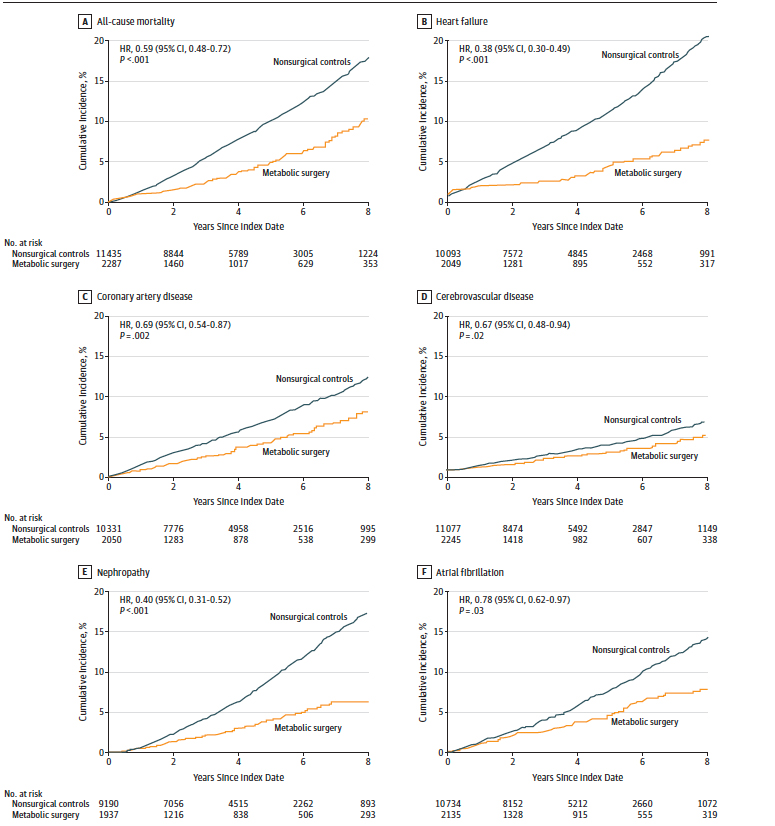
Roughly 2300 patients undergoing bariatric surgery and with a history of Type 2 diabetes were followed for approximately four years and compared with control patients who did not undergo bariatric surgery. An inspection of the two groups suggests that the control patients were at best "similar" rather than the same, so the effect size I am reporting should be taken with a grain of salt.

These patients were far more overweight at a BMI of 40 or higher than the previous study. The surgical group had more dyslipidemia and hypertension; the control group more smokers and blacks.

The cumulative incidence of all-cause mortality, coronary artery disease, heart failure, cerebrovascular disease (strokes) atrial fibrillation, and nephropathy (kidney disease) were all reduced over the 8-year follow up for the surgical patients as compared to the controls.


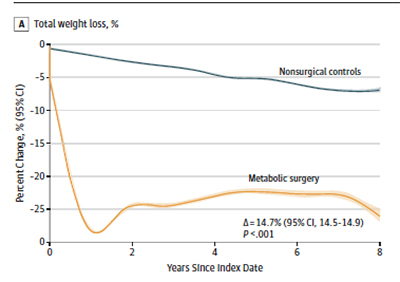
But for me, the critical finding is the profound and long-standing weight loss from the surgery, as depicted on the right. These patients not only had remission from diabetes but significant reductions in the need for medications for both hypertension and dyslipidemia.

"We speculate that the lower rate of MACE after metabolic surgery observed in this study may be related to substantial and sustained weight loss with subsequent improvement in metabolic, structural, hemodynamic, and neurohormonal abnormalities."

The surgery is not a free ride, as with all procedures, there can and were complications; 0.7 % of patients died within 90 days of surgery (for open-heart surgery that percentage is about 3.7%). Five percent needed open surgical revision, while 16% had revisions of their operation by more non-invasive means. The authors are not suggesting that bariatric surgery be the primary treatment.
What I think is clear is that in well-motivated patients, a 10% weight loss can "reverse" Type 2 diabetes and show significant improvements in many associated cardiovascular diseases. And weight loss, whether or not assisted by bariatric surgery, had a more substantial impact on adverse cardiovascular outcomes than the new generation of medications for diabetes advertised with an "added cardiovascular benefit." The signal from the studies is strong; at least for me, losing a significant amount of your "over" weight is strong medicine.

Source: Behaviour change, weight loss and remission of Type 2 diabetes: a community‐based prospective cohort study Diabetic Medicine DOI:10.1111/dme.14122 and Association of Metabolic Surgery With Major Adverse Cardiovascular Outcomes in Patients With Type 2 Diabetes and Obesity JAMA DOI: 10.1001/jama.2019.14231


Your Donations to ACSH Will Be Doubled!

Request From the American Council on Science and Health

Many years ago, a friend asked: "Why do you do what you do?" The reply was simple: "To make a difference." That's why Elizabeth Whelan, Norman Borlaug and Frederick Stare founded ACSH 41 years ago. The American public was getting bad information. Those three set out to change that.

And of late, we've been making quite a difference. Dr. Josh Bloom got the U.S. Surgeon General to walk-back an erroneous statement, equating Tylenol and IV-morphine. Dr. Alex Berezow worked with an ACSH science advisor, who's an AMA board member, to stop the AMA from declaring glyphosate unsafe.

But we can't do this important work without funding.

We have to pay rent and to keep the lights on. You can help by donating today. And if you give this week your gift will have twice the impact. As you probably know, an ACSH donor has pledged to DOUBLE our online gifts, and we're 76 percent of the way to our goal. But we need to hit that worthy target within the next two weeks. So please give: JUST CLICK HERE

Wednesday, October 9, 2019

Your Donations to ACSH Will Be Doubled!

Request From the American Council on Science and Health

Many years ago, a friend asked: "Why do you do what you do?" The reply was simple: "To make a difference." That's why Elizabeth Whelan, Norman Borlaug and Frederick Stare founded ACSH 41 years ago. The American public was getting bad information. Those three set out to change that.

And of late, we've been making quite a difference. Dr. Josh Bloom got the U.S. Surgeon General to walk-back an erroneous statement, equating Tylenol and IV-morphine. Dr. Alex Berezow worked with an ACSH science advisor, who's an AMA board member, to stop the AMA from declaring glyphosate unsafe.

But we can't do this important work without funding.

We have to pay rent and to keep the lights on. You can help by donating today. And if you give this week your gift will have twice the impact. As you probably know, an ACSH donor has pledged to DOUBLE our online gifts, and we're 76 percent of the way to our goal. But we need to hit that worthy target within the next two weeks. So please give: JUST CLICK HERE

Monday, October 7, 2019

One Of The Four Horsemen of The Alternative Doesn't Like Us, And More Media Links

By Hank Campbell

1. Dr. Gary Null, one of the Four Horsemen of the Alternative (along with Oz, Chopra and Weil), is now most famous for hosting a conspiracy theory radio program and producing straight-to-video movies funded by organic food groups.

Environmental Working Group has never produced a science study but they have overturned 500,000 biologists, according to Null, while the US EPA, which just cleared glyphosate of weird claims made by an IARC Working Group that was hijacked by an Environmental Defense Fund consultant, is secretly suppressing damaging data about Monsanto.

He makes even wackier claims, like that former FDA official and current ACSH friend Dr. Henry I Miller, has "a history of denying smoking’s association to cancer and heart disease" - his source for that specious claim, the website GMOSeralini.org, which is a puppet site created to support the known anti-GMO fraud Gilles-Eric Seralini. He gushes about the corporate mouthpiece US Right to Know, which he claims is "devoted to exposing what the food industry and Big Agriculture corporations such as Monsanto don’t want the public to know" - but leaves out that 97 percent of their funding is from the organic corporations they were created to support. What does Sourcewatch make of that fact? Nothing, because they are a political site devoted to undermining data and promoting the executive director's political party. She doesn't criticize US Right To Know because she serves on the board of US Right To Know. They are all Deniers For Hire, and the only people hiring them hate science.

Yet those two groups are his primary sources. Using that echo chamber, he further claims Genetic Literacy Project and University of California at Davis are secretly lobbying groups and that we are shills for Big Chemical, because we note there is nothing wrong with BPA - which the EPA also showed, along with every reputable science body. The only thing he left out of his random screed is that GMOs cause autism. There is no point in going on, Null is nuts. You can read his long-winded polemic against science on something called Center for Research on Globalization here.

2. You read last week about food activist Michael Pollan's unhinged, libelous jab at us. His lack of a clue is understandable, if slimy, because he hasn't learned anything in the last 25 years, however what is worse is another pseudo-journalist, this one at a site called Thrillist, doing the same thing while blatantly plagiarizing him. These people are paid little, they have to pump out a lot of volume and have pageview quotas. I get why stealing from the New York Times makes sense to companies like that, but it's still icky and will make it hard to get a job at a real media outlet.

3. Voice of America has joined in on calling on the corrupt UN to fix the mess it created in Haiti, citing our Dr. Julianna LeMieux.
Vaccinating all 10 million Haitians on the island would cost over $100 million, according to the American Council on Science and Health.
"That said, when you break something in a store, you have to buy it," Dr. Julianna LeMieux of ACSH wrote on their website. "It's time for the international body to give its health experts the financial support they need to correct the catastrophe it created."
Since VOA is syndicated, it was also on

Newsgram - http://www.newsgram.com/fighting-cholera-urgent-part-of-haitis-hurricane-recovery-say-doctors/?source=acsh.org
Citizen Digital - https://citizentv.co.ke/news/combating-cholera-urgent-part-of-haitis-hurricane-recovery-145153/?source=acsh.org

The National Memo - http://www.nationalmemo.com/cholera-outbreak-haiti/?source=acsh.org
Numerous other scientific studies also pointed toward the role of the peacekeepers. Julianna LeMieux, senior fellow in molecular biology at the American Council on Science and Health, recently wrote, “The scientific community has known for years that the U.N. brought cholera to Haiti.”
and other sites picked up the topic again:
AlterNet

How the U.S. and U.N. Set the Stage for a Major Cholera Outbreak in Haiti
Numerous other scientific studies also pointed toward the role of the peacekeepers. Julianna LeMieux, senior fellow in molecular biology at the American Council on Science and Health, recently wrote, “The scientific community has known for years that the U.N. brought cholera to Haiti.”

4. Want to read what other countries think about our food policy? You'd better learn Spanish.
La razón por la que Obama ya nunca habla de comida en sus discursos ("The reason why Obama would never talk about food in his speeches")

http://www.playgroundmag.net/food/razon-Obama-comida-discursos_0_1841815832.html?source=acsh.org

Sloppy translation: The best summary of President Obama's solution for food issues came from the American Council on Science and Health, who termed the Obama garden the work of "organic limousine liberals", which is the same as saying left-wing snobs.

5. Finally, Center for Inquiry covers what to us was the most interesting part of the Wikileaks release of John Podesta emails - his ongoing belief in magic, like that we are hiding a UFO conspiracy, that vaccines cause autism and GMOs cause everything else. Some people deny that certain science positions are held more strongly by one party - but the evidence is clear.
Also revealed, UFO enthusiast and Clinton campaign chair John Podesta is anti-GMO and holds some tiresome views about FDA and industry collusion to sidestep safety concerns. 
http://www.centerforinquiry.net/blogs/entry/10_13_16/?source=acsh.org


Saturday, October 5, 2019

Can Nuclear Waste Be Safely Transported?

By Josh Bloom — October 3, 2019 @ American Council on Science and Health

The National Museum of Nuclear Science
 & History near Albuquerque New Mexico.
 Don't Miss It.
The anti-nuclear crowd uses an assortment of scares to turn public opinion against the use of nuclear power, one of them being the risk of an accident when spent nuclear fuel is transported to where it is to be disposed of. Are they right? Or is it possible to safely move nuclear waste around?

Yesterday I learned quite a bit about this when I visited the National Museum of Nuclear Science & History near Albuquerque New Mexico. It's a fascinating museum full of amazing exhibits – a must-see for anyone in the area.

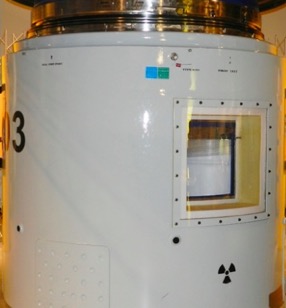
One exhibit demonstrates the conditions in which the containers used to transport nuclear waste must withstand without breaking open or exploding.


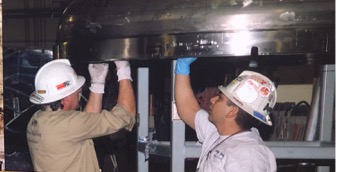
A nuclear waste container. The plexiglass window
 is not part of the container; it enables
people to view the contents of the container.
 

There are different types of nuclear waste with very different levels of radiation; the precautions for medical nuclear waste are less stringent than those for spent fuel from reactors. The containers used for the latter must withstand conditions that look like they might come from a Road Runner cartoon. Here are some of them.

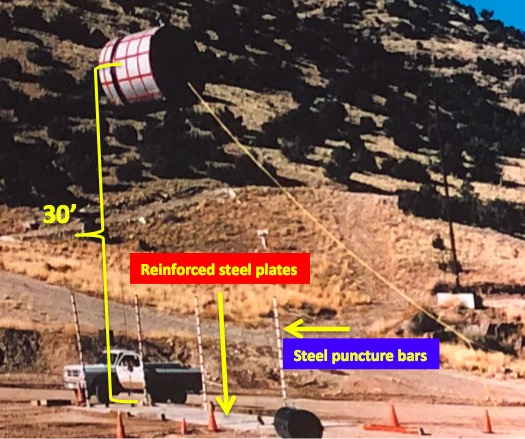
Falls and punctures
  • Containers are cooled to -20°F.
  • They are dropped (in multiple orientations) from 30 feet onto an unyielding reinforced steel plate.
  • They are dropped multiple times onto 30 feet steel puncture bars.
There's more...

Fire and pressure
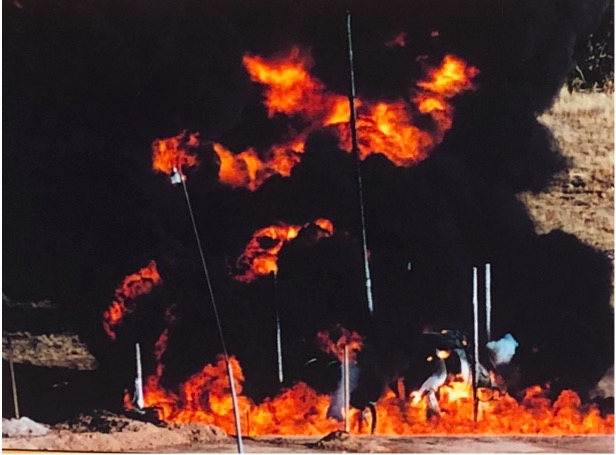
  • Containers are burned for 30 minutes in a pool of jet fuel at a temperature of 1425°F.
  • They are submerged in 50 feet of water (21 psi).


    • The container itself, as well as its contents, are tested to ensure that they are "leak-tight" according to criteria developed by the Nuclear Regulatory Commission. 
    Of course, none of these tests guarantee that there will be no accidents or release of nuclear contamination, but the record has been impressive so far. In 2013 there were two fires, one in a truck and the other on a ship that exposed the containers to high temperatures. Neither accident resulted in the release of radioactive material.

    Additionally, a 2016 report issued by the US Department of Energy Nuclear Fuels Storage and Transportation Planning Project concluded that "The quantity of [spent nuclear fuel] shipped worldwide to date is at least 87,000 metric tons of heavy metal" and "Review of the data sources shows that all of these shipments were undertaken without any injury or loss of life caused by the radioactive nature of the material transported. In general, there have been few transportation accidents worldwide in the history of transporting SNF, and none have had significant radiological consequences."

    Given the current emphasis on fuels and their environmental impact, the public should be aware of the real risks and track record of transporting nuclear waste. Barrels of spent uranium will not fall off the back of a truck and burst open in the middle of a city, nor will they explode or leak in a fire.

    ACSH has maintained for years that nuclear energy is clean and, with rare exceptions, safe. And it is now safer. (See my colleague Alex Berezow's companion piece on a new proposal for nuclear waste storage.)

    Neither wind nor sun is capable of meeting the world's energy needs. Dismissing the use of nuclear energy because of false or overhyped scares helps no one except the activists.