Search This Blog

De Omnibus Dubitandum - Lux Veritas

Showing posts with label Diabetes. Show all posts

Thursday, June 19, 2025

Israel is Killing Gaza With Obesity

By Daniel Greenfield @ Sultan Knish Blog

In 2015, a decade after Israel had withdrawn from Gaza leaving it, as terrorist apologists in the media insisted, an “open-air concentration camp”, weight loss centers began to pop up.

Gaza’s Arab Muslim population was overeating badly.

A 2013 study found 1 out of every 5 adolescents in Gaza was overweight or obese which was comparable to rates in the United States. By 2020 in the combined ‘Palestinian’ occupied areas of Gaza, Judea and Samaria, overweight rates shot up from 20% to 34% among boys and from 24% to 32% among girls. If the Arab Muslim populations were living under oppression and terror, how had their adolescent obesity rates gone from 1 in 4 to as much as 1 in 3?

And it’s not just the adolescents.

A global nutrition report found that nearly 30% of men and 42% of women in the combined areas are obese. In Gaza specifically, 64% of mothers were overweight or obese. How could this wave of obesity be reconciled with the simultaneous claim that 60% of households in Gaza are “food insecure’” The mothers of quite a few of those “food insecure households” are obese.

The shortage of research studies being carried out under Hamas rule makes it difficult to estimate how fat Gaza’s occupiers were, but a revealing data point is that a study conducted in 2019 estimated that among adults over the age of 42, 45% had Type 2 Diabetes and 16.8% had undiagnosed Type 2.

Another Gaza report citing Hamas Ministry of Health numbers claimed that 9.6% of the population in Gaza has diabetes and it’s the cause of 11.2% of one out of nine deaths. If Gazans were living in hunger, why do their diabetes rates look like those of America or Europe?

In 2015, a decade after Israel had withdrawn from Gaza leaving it, as terrorist apologists in the media insisted, an “open-air concentration camp”, weight loss centers began to pop up.

Gaza’s Arab Muslim population was overeating badly.

A 2013 study found 1 out of every 5 adolescents in Gaza was overweight or obese which was comparable to rates in the United States. By 2020 in the combined ‘Palestinian’ occupied areas of Gaza, Judea and Samaria, overweight rates shot up from 20% to 34% among boys and from 24% to 32% among girls. If the Arab Muslim populations were living under oppression and terror, how had their adolescent obesity rates gone from 1 in 4 to as much as 1 in 3?

And it’s not just the adolescents.

A global nutrition report found that nearly 30% of men and 42% of women in the combined areas are obese. In Gaza specifically, 64% of mothers were overweight or obese. How could this wave of obesity be reconciled with the simultaneous claim that 60% of households in Gaza are “food insecure’” The mothers of quite a few of those “food insecure households” are obese.

The shortage of research studies being carried out under Hamas rule makes it difficult to estimate how fat Gaza’s occupiers were, but a revealing data point is that a study conducted in 2019 estimated that among adults over the age of 42, 45% had Type 2 Diabetes and 16.8% had undiagnosed Type 2.

Another Gaza report citing Hamas Ministry of Health numbers claimed that 9.6% of the population in Gaza has diabetes and it’s the cause of 11.2% of one out of nine deaths. If Gazans were living in hunger, why do their diabetes rates look like those of America or Europe?

The suffering of diabetes patients in Gaza during their Jihadist campaign against non-Muslims has been one of the narratives put out by the pro-Hamas humanitarians, none of whom have thought to ask why the condition is so prevalent in a place that supposedly has no food.What was the cause of these high rates? According to the study, “Palestinians consume large amounts of homemade desserts, cakes, sweetened tea, and coffee” and have a massive sugar intake. They eat too much and too well despite supposedly being “refugees” while starving to death in an “open air concentration camp” complete with lavish malls, restaurants and hotels.

Since Hamas launched the Oct 7 genocide campaign, its occupying population in Gaza has been painted as victims and bombarded with massive amounts of food supplies. Over the course of the war, the terrorist population was sent 92,000 truckloads of aid. The amount of aid coming into Gaza actually doubled after its residents began a genocidal campaign of murder, rape and kidnapping of regional minority groups. Compare that to 1,500 truckloads of aid for Sudan and even less for many struggling African populations dealing with actual famine.

Massive amounts of food were dumped on Gaza. The Biden administration, falsely claiming that there was an urgent famine and the population, according to Vice President Kamala Harris, had been reduced to eating “leaves”, air dropped supplies which the local population rejected and criticized on social media. It built a failed $250 million pier to deliver aid that cost the life of an American soldier and injured many others all to deliver food to the non-starving Gazans.

What’s been the result of this massive outpouring of free food? Hamas leaders, terrorists, spokesmen and media operatives have grown unmistakably fat as food has become a form of currency. Not only is there no famine, but Gazans are gorging themselves and even Hamas’ own dubious numbers show Americans are three times as likely to die of malnutrition as they are.

1.8 million tons of aid, including 1.3 million tons of food, have been delivered to Gaza since the launch of their genocidal Hamas campaign. That’s over 1 ton of aid for every adult in Gaza.

Is this good for the enemy population in Gaza? Probably not. When deaths due to diabetes and out of control glycaemic rates are soaring, the last thing it needs is more free food. The UN’s WFP deliveries included snack bars and the current GHF program overseen by the U.S. and Israel is likely also delivering foods not ideal for a population already eating itself to death.

The false claims that Israel is killing the invasive population in Gaza with hunger is false, but the massive truckloads of aid being brought in to save the Hamas supporters from a famine that doesn’t exist may be even more lethal. Gaza, like the rest of the ‘Palestinian-occupied’ territories is a massive welfare state subsidized by the U.S., the UN and the Europeans. And people in welfare states tend to do very little work, eat all the free food they can get, grow fat and violent, and then go off looking for something to destroy. Gaza may be the worst welfare state in the world, but it is a welfare state and its own habits are deadlier to it than Israel.

If Israel is killing Gaza’s enemy population with anything, it’s not hunger, it’s obesity.

But the obesity epidemic in Gaza is fed by the UN, international pressure from world leaders and diplomats, and their own lies about being reduced to eating leaves and dirt.

Gaza’s Arab Muslims are eating themselves to death on their own lies. The torrent of free food will lead to greater obesity, worse diabetes trends and other dietary diseases. And it’s their political allies and international enablers who are killing them with endless free food.

The UN and the EU can promise to save Gaza, but no one can save them from themselves. 

Daniel Greenfield is a Shillman Journalism Fellow at the David Horowitz Freedom Center. This article previously appeared at the Center's Front Page Magazine. Click here to subscribe to my articles. And click here to support my work with a donationThank you for reading.


Sunday, October 4, 2020

Latest Research On Type 2 Diabetes

October 5, 2020 By Michael D. Shaw @ HealthNewsDigest

Over the past few years, this column has covered type 2 diabetes in several articles. The most recent one examined the non-typical case of skinny type 2s. Another discussed the link between lack of sleep and the disease. Yet another one took a hard look at the notion of glycemic control.

During the past months we have focused on the COVID-19 pandemic, but now it is time for an update on significant type 2 diabetes developments.

We start by looking at the two latest landmark studies. You will note that these sorts of studies usually have catchy acronyms.

CANVAS

This study examined type 2 patients at high risk for cardiovascular events, and sought to determine if daily canagliflozin will reduce cardiovascular mortality, nonfatal myocardial infarction or nonfatal strokes when compared to placebo.

The study concluded that canagliflozin had a lower risk of cardiovascular events and reduced the rate of renal decline and heart failure hospitalization compared to those who received placebo but a greater risk of amputation. Relatively modest reductions in HbA1C were reported.

Canagliflozin is sold under the name Invokana®.

CREDENCE

This study examined type 2 patients with certain types of diabetic nephropathy, and sought to determine if canagliflozin at a dose of 100mg/day reduces the risk of end-stage kidney disease, doubling of serum creatinine from baseline, and death from renal or cardiovascular disease compared to placebo.

The study concluded that canagliflozin reduces the risk of the composite end-point of end-stage kidney disease, doubling of serum creatinine from baseline, and death from renal or cardiovascular disease when compared to placebo. The study did not directly report mortality due to infection though it did demonstrate an increased incidence of genital mycotic infections, particularly in males.

We continue with some quite recent findings…

Regular use of acid reflux drugs linked to heightened risk of type 2 diabetes. This prospective analysis was published in Gut and summarized the results of three prospective cohort studies involving 204,689 participants. Regular PPI (proton pump inhibitor) users had a 24% higher risk of diabetes than non-users. The risk of diabetes increased with duration of PPI use. Possible mechanisms are given, but messing with the gut biome can have all sorts of negative effects.

Metformin treatment linked to slowed cognitive decline. Readers with type 2 are surely familiar with the widely prescribed first-line diabetes drug metformin. This study examined 1,037 community-dwelling older participants without dementia aged 70–90 years at baseline, and found that those type 2s who were on metformin showed significantly slower global cognition and executive function decline than those not on the drug.

It has been known for some time that type 2s tend to be more subject to dementia, and some authorities, including Diane Kress, have long believed that dementia and Alzheimer’s are strongly related to an insulin imbalance. In fact, there are those who believe that diabetes, coronary heart disease, dementia, vascular issues, and kidney malfunction are all intimately related via insulin problems.

How about this one? Loneliness predicts development of type 2 diabetes. This was a longitudinal observational population study with data on 4,112 diabetes-free participants from the English Longitudinal Study of Ageing. And, yes, there actually is a tool available to assess loneliness.

A total of 264 (6.42%) participants developed type 2 diabetes over the follow-up period. Loneliness was a significant predictor of incident type 2 diabetes independent of age, sex, ethnicity, wealth, smoking status, physical activity, alcohol consumption, BMI, HbA1C, hypertension and cardiovascular disease.

What can we make of all this? Type 2 diabetes is becoming increasingly common, and symptoms and complications beyond the characteristic hyperglycemia range from almost non-existent to extremely serious. It is easy enough to explain the condition away in obese individuals as the body’s adaptation to an overabundance of food intake, but no reasonable etiology for skinny type 2s has ever been proffered. And no one has yet worked out how insulin seems to be related to so many metabolic processes that bear little obvious connection to glucose metabolism.

This is one of the paradoxes of medicine. Technology and longevity keep improving, but our chronic diseases—forever the bane of our species—are always with us.


Friday, October 11, 2019

The Weighty Cost of Diabetes

By Chuck Dinerstein — October 7, 2019

Two new studies, one surgical, the other medical come to similar conclusions - significant weight loss alters the course of Type 2 diabetes.

In the first study, 867 40 to 69-year-old, patients with new-onset diabetes were randomized into treatment or control groups. Seven hundred thirty had both their weights and HbA1c measured initially and at five years and represented the study group. It was predominately Caucasian (97%), male (61%), and with a BMI of about 34. At the end of 5-years, 30% of patients who lost 10% or more of their body were in remission from diabetes. And the incidence of remission followed the degree of weight loss – the kind of dose-response to treatment that suggests underlying physiologic changes.

The researchers considered several associated behavioral changes, smoking cessation, less alcohol or caloric intake, fewer fats, more exercise, you know the litany. But with the exception of a small improvement with diminished alcohol intake, none of those changes made a difference – it was solely that drop in weight.
"These findings suggest that remission is achievable without intensive lifestyle interventions or extreme calorie restrictions."

Of course, the study has some fine print. First, while a weight loss of this magnitude during the five years achieved this result for some patients, it was more effective earlier in the course of the disease. The more important caveat and one many of us know first-hand, losing that amount of weight and keeping it off is far easier said than done. And that brings us to the second study.

When is a "bug" a feature?

One of the most frequently performed operations in the mid-20th century was a host of procedures for treating peptic ulcers, stomach ulcers. They have been substantially entirely supplanted by medications like ranitidine (Zantac currently under recall). But even though all those different operations on the stomach "cured" the ulcers, many had an adverse side effect, significant weight loss. Innovative surgeons turned that adverse effect, that operative "bug" into an operative benefit with the introduction of bariatric surgery – alterations of the GI tract meant to reduce a patient's weight.

There are several operations categorized as bariatric surgery, some designed to diminish the size of the stomach, increasing the onset of satiety and reducing caloric intake; others that re-arrange the GI tract to reduce capacity and alter metabolism. All are associated with significant weight reduction and have been offered to patients who are significantly obese. A new study looks at how patients, with Type 2 diabetes, undergoing bariatric procedures fare for adverse cardiovascular outcomes – the usual concerns of heart attacks, strokes, and other problems.

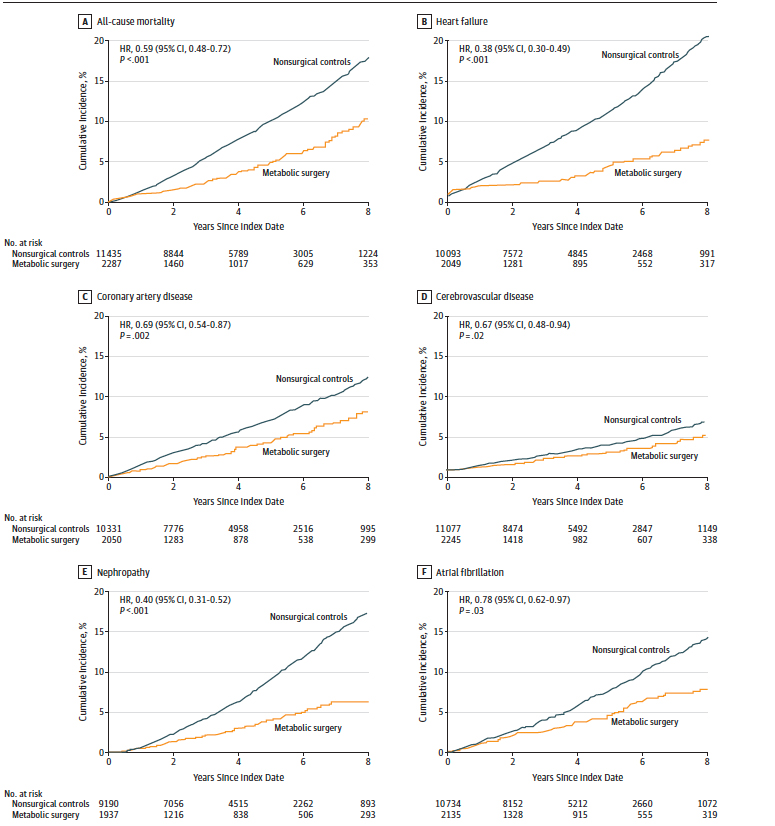
Roughly 2300 patients undergoing bariatric surgery and with a history of Type 2 diabetes were followed for approximately four years and compared with control patients who did not undergo bariatric surgery. An inspection of the two groups suggests that the control patients were at best "similar" rather than the same, so the effect size I am reporting should be taken with a grain of salt.

These patients were far more overweight at a BMI of 40 or higher than the previous study. The surgical group had more dyslipidemia and hypertension; the control group more smokers and blacks.

The cumulative incidence of all-cause mortality, coronary artery disease, heart failure, cerebrovascular disease (strokes) atrial fibrillation, and nephropathy (kidney disease) were all reduced over the 8-year follow up for the surgical patients as compared to the controls.


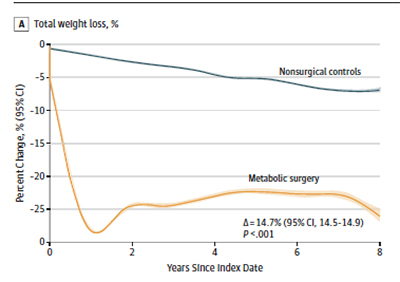
But for me, the critical finding is the profound and long-standing weight loss from the surgery, as depicted on the right. These patients not only had remission from diabetes but significant reductions in the need for medications for both hypertension and dyslipidemia.
"We speculate that the lower rate of MACE after metabolic surgery observed in this study may be related to substantial and sustained weight loss with subsequent improvement in metabolic, structural, hemodynamic, and neurohormonal abnormalities."

The surgery is not a free ride, as with all procedures, there can and were complications; 0.7 % of patients died within 90 days of surgery (for open-heart surgery that percentage is about 3.7%). Five percent needed open surgical revision, while 16% had revisions of their operation by more non-invasive means. The authors are not suggesting that bariatric surgery be the primary treatment.
What I think is clear is that in well-motivated patients, a 10% weight loss can "reverse" Type 2 diabetes and show significant improvements in many associated cardiovascular diseases. And weight loss, whether or not assisted by bariatric surgery, had a more substantial impact on adverse cardiovascular outcomes than the new generation of medications for diabetes advertised with an "added cardiovascular benefit." The signal from the studies is strong; at least for me, losing a significant amount of your "over" weight is strong medicine.

Source: Behaviour change, weight loss and remission of Type 2 diabetes: a community‐based prospective cohort study Diabetic Medicine DOI:10.1111/dme.14122 and Association of Metabolic Surgery With Major Adverse Cardiovascular Outcomes in Patients With Type 2 Diabetes and Obesity JAMA DOI: 10.1001/jama.2019.14231


Friday, May 4, 2018

Two New Directions In Healthcare

By Michael D. Shaw March 12, 2018 @HealthNewsDigest
 
Even for those who pay little attention to the world of healthcare, the matters of rampant opioid addiction and type 2 diabetes are unavoidable. Recently, a blast of contrarian knowledge on both topics hit the popular media—although such viewpoints were not exactly unknown within the medical/scientific community.

Opioids


In August, 2017, this column ran a story on the opioid crisis. Perhaps the most shocking statistics presented were these:
That article also quoted a chronic pain specialist who decried restrictions on such prescriptions. Surely, it is not a big leap to link new heroin addicts to those same patients who are unable to get their opioid pain meds (such as oxycodone) any longer. After all, heroin was introduced in 1898 as a morphine substitute; that is, a pain-relieving drug. Ironically, it was supposed to be less addictive, but this was soon found out to be a misconception.

In addition, the heroin high is considered to be far more pronounced than that of morphine.
Still, most chronic pain sufferers would gladly choose addiction over constant torment. And, if they could obtain pharmaceutical grade heroin, that might be a long-term answer to some. The trouble is, of course, that the quality and potency of street heroin can vary widely, so fatal overdoses are not uncommon. A horrible problem, you would agree. But, what if opioids had no pain-relieving advantage over non-opioid drugs such as acetaminophen (Tylenol), ibuprofen and lidocaine?
That’s the conclusion of a paper published March 6, entitled “Effect of Opioid vs Nonopioid Medications on Pain-Related Function in Patients With Chronic Back Pain or Hip or Knee Osteoarthritis Pain: The SPACE Randomized Clinical Trial.” [Strategies for Prescribing Analgesics Comparative Effectiveness]

Perhaps this work will begin to turn the tide against the pernicious activities of the Sackler family, and its fraudulent promotion of Oxycontin as having a low potential for addiction, along with the controversial pain as a fifth vital sign marketing scheme.
Type 2 diabetes (Glycemic control)

This column has run a host of articles on type 2 diabetes, including several on the topic of glycemic control (striving for a particular HbA1C value, and low fasting blood glucose numbers). The latest entry, relevant to this discussion, is entitled “Glycemic Control For…What Exactly?” In that piece, we observed that the orthodox notion of intense glycemic control being the preferred therapy is by no means universally accepted. Indeed, several references were cited, including one from 2009 in the Annals of Internal Medicine entitled “Glycemic Control in Type 2 Diabetes: Time for an Evidence-Based About-Face?”

On March 6, this same journal, published by the American College of Physicians, ran Clinical Guidelines, entitled “Hemoglobin A1c Targets for Glycemic Control With Pharmacologic Therapy for Nonpregnant Adults With Type 2 Diabetes Mellitus: A Guidance Statement Update From the American College of Physicians.” Four guidance statements are put forward, but the first two set the stage…

Guidance Statement 1: Clinicians should personalize goals for glycemic control in patients with type 2 diabetes on the basis of a discussion of benefits and harms of pharmacotherapy, patients’ preferences, patients’ general health and life expectancy, treatment burden, and costs of care.
Guidance Statement 2: Clinicians should aim to achieve an HbA1c level between 7% and 8% in most patients with type 2 diabetes.

Of course, these precepts go hard against the orthodoxy preached by the American Diabetes Association and, might I say, Big Pharma. Cold comfort that the ADA and ACP recommendations are supposedly based on reviewing the same literature. Let me proffer an explanation:

The American College of Physicians is composed primarily of active, real-world physicians who see patients, and know only too well the complications and difficulties of intense glycemic control. The ADA is a disease trade association, whose medical personnel tend to be academics. Lest we forget, their reaction to the ACCORD study, which showed serious negative effects of tight glycemic control, was somewhat muted.

If you are so inclined, consult the major literature yourself, or read learned summaries on WikiJournalClub. Chances are, you will agree with ACP’s assessment.

Monday, December 11, 2017

Diabetes Treatment And Insulin Price Fixing

By Michael D. Shaw December 11, 2017 @ Health News Digest
 
In a rare case in which a Nobel Prize was awarded less than two years after the honored treatment modality was demonstrated, Canadians Frederick Banting and John Macleod shared the 1923 prize for their discovery of insulin. Banting’s first patient was 14-year-old Leonard Thompson, who at the time was close to death, but did live for another 13 years.

His first long-term success was with Elizabeth Hughes Gossett, who lived to the age of 73. She was the daughter of Supreme Court Chief Justice Charles Evans Hughes. Ironically, the treatment was so effective that she chose to deny that she had been sick as a child, and expunged all references to diabetes from her father’s papers.

Sadly, as is far too common in big-time science, there was plenty of dissent between Banting and Macleod, who headed up Banting’s lab at the University of Toronto. Macleod did not immediately buy into what Banting was doing, with good reason—as earlier researchers had failed to isolate what would be named “insulin.” Moreover, Banting always thought that Macleod claimed too much credit, although various accounts of the discovery also cast blame on Banting’s attitude.

Indeed, Banting thought the prize should have been shared between himself and his assistant Charles Best. Banting gave half of his prize money to Best, and Macleod followed suit by giving half of his to biochemist James Collip, who perfected the purification of insulin, at least on a small scale. Nonetheless, Banting bore a lifelong resentment toward Macleod. Apparently, there was even dissent on the Nobel Committee as to how the prize should have been split.

In early 1923, an American patent was awarded to Banting, Collip, and Best for insulin and their production method. The trio promptly sold their rights to the University of Toronto for $1 each. Patent protection would assure that the manufacture of insulin would be restricted to reputable pharmaceutical houses, that could guarantee the purity and potency of their products. An early licensee was Eli Lilly, and their collaboration was crucial in driving production on a larger scale.
Despite these good intentions, by 1941, Eli Lilly; distributor Sharp & Dohme; and drug maker and distributor E.R. Squibb & Sons were indicted for conspiring to unlawfully “bring about arbitrary, uniform, and non-competitive prices for insulin and to prevent normal competition in the sale of the drug.” Health writer Mike Hoskins unearthed a contemporary story from the Indianapolis Star in which titan Eli Lilly, Jr. himself was quoted, stating that 13 price decreases on insulin had been made between 1923-41. And that, “Our price is now 3.5% of what it was when it was first sold in 1923, and today it costs the average diabetic just 7.5 cents per day.”

Some fines were issued, and that was that. Still, it does seem absurd that 94 years after the patent was issued, there still is no such thing as “generic insulin.” Instead, the price has climbed since the 1970s with the popularization of synthetic insulin, and constant patentable improvements (some more significant than others). And, the situation keeps getting worse.

In January, a class action lawsuit was filed against Sanofi, Novo Nordisk, and Eli Lilly, for offenses related to price-gouging.

One approach to lowering insulin prices would be to cut demand. Virta Health is now touting a peer-reviewed study in which a cohort of mostly overweight individuals, all with type 2 diabetes, and most on at least one medication, showed marked improvement in HbA1c levels. The program involved sustained carbohydrate restriction to achieve nutritional ketosis.

Of the initial 262 subjects, 112 (42.7%) experienced a decrease in their medications with another 21 (8.0%) having their medications eliminated. For those on insulin, 87% of them reduced or eliminated their dosages.

Another study just published in The Lancet put overweight type 2s on a strict diet. Of the participants who lost more than 30 pounds, 86% were free of diabetes after one year. Notably, none of these patients were on insulin. However, the work shows that type 2 diabetes can be put into remission in certain cases, and that drugs are not the only answer.

Tuesday, November 7, 2017

Can Lack Of Sleep Cause Type 2 Diabetes?

By Michael D. ShawOctober 23, 2017 @ Health News Digest
 
According to a CDC report released last July, more than 100 million U.S. adults are now living with diabetes or prediabetes. Among other findings, figures in 2015 indicate that 30.3 million Americans—a shocking 9.4 percent of us—have diabetes. The rest are in the prediabetic category. Making matters worse, of those 30.3 million, 7.2 million are undiagnosed.

Notwithstanding that these statistics are likely inflated, the numbers are nothing short of appalling. World estimates for 2015 ring in at over 400 million adults, with a goodly number of them being undiagnosed, as well. To put things in perspective, in 1980 the number of diabetics worldwide was around 108 million.

So, what happened? Most experts point to the staggering rise in obesity. After all, insulin resistance can be considered a mechanism in controlling excessive weight. The trouble, of course, is that this “weight” in the form of glucose remains in the blood, creating hyperglycemia, and thus diabetes.
However, not all overweight people are diabetics, and how does one explain the ten percent or so of type 2s who are of normal weight? “Genetics” is the most common—if specious—response. What, pray tell is the mechanism whereby this gene, or genes, creates hyperglycemia? Don’t hold your breath waiting for an answer.

Instead, consider the notion that lack of sleep could be a factor. Experts cite various aspects that might be in play here:
  1. Several key hormonal processes can be affected by short sleep duration. Moreover, glucose tolerance (the ability to maintain proper blood glucose levels) varies in a circadian rhythm, including during the different stages of sleep.
  2. In a nasty twist, being hyperglycemic can cause poor sleep. Talk about your vicious circle. For one thing, high glucose levels will prompt more frequent urination; and few things interrupt a good night’s sleep more than having to awaken for that reason—perhaps multiple times per night.
  3. Then, if that poor sleep makes you feel tired during the day, you might be inclined to munch on carb-laden snacks or comfort foods—triggering a nice spike in blood glucose. What about coffee? Some research suggests that for type 2s, caffeine can also raise glucose levels.
To be sure, individual sleep needs vary, and with so many metabolic processes being involved—not to mention stress and aging—determining your ideal is far from easy. According to Mark Mahowald, MD, director of the Minnesota Regional Sleep Disorders Center in Hennepin County:
“On average, we need 7.5 hours per night, but your sleep requirement is genetically determined and varies. It can be about four hours on the short end to 10 or 11 on the long end.” OK, but how do you know if you’re sleep-deprived? Mahowald says, “If you use an alarm clock, you are. If you were getting adequate sleep, your brain would awaken you before the alarm goes off.”
Sorry doc, but I’ll have to respectfully disagree. As many of us know, waking up without an alarm, or before the alarm sounds, could be a function of stress, anticipation of an important event during the day such as a big meeting or an out-of-town journey, or just the force of habit.

Back in August, 2011, a superb review article entitled “Does lack of sleep cause diabetes?” was published in the Cleveland Clinic Journal of Medicine. As the authors put it…
“Several lines of evidence indicate that chronic lack of sleep may contribute to the risk of type 2 diabetes mellitus. Adequate sleep and good sleep hygiene should be included among the goals of a healthy lifestyle, especially for patients with diabetes.”
Finally, for those wondering whether strategic naps can make up for lack of nighttime sleep, the answer seems to be “sort of.” I fear that perfect sleep, along with perfect health and a perfect diet, are benchmarks that will continue to elude most of us.

Friday, October 28, 2016

Shining a Light On AMA's Dim View of Led Street Lamps

By Erik Lief

Small towns and big cities across America are replacing overhead streetlight bulbs with brighter, longer-lasting versions. Embraced by communities mostly as a money-saving measure, the move can also deliver added quality-of-life benefits, in some cases even deterring crime by illuminating areas of town that were once poorly lit.

However, the American Medical Association is seeing the switch in a whole different light, even raising some health concerns that it's calling potentially "harmful." But to us, those concerns seem baffling and somewhat overblown, because when the AMA's policy statement is examined it's hard to discern what its concern is all about...... Read more

My Take - You may wish to read the comments to see why every new development becomes an issue, whether is or not.  This is another one of those issues that will take time to sort out, but I keep coming back to what I consider important points in all of these kinds of issues. 
  • Are we living longer healthier lives than ever before?  Apparently we are! 
  • Do we really have any idea what really triggers diabetes, especially type 2, which I have?  Apparently we don't! 
  • Do we know for sure what the biological mechanism LED lighting triggers to cause these ailments.  Apparently we're not sure!
  • Can LED lighting cause so many different ailments?  Apparently that's what we're expected to believe.
  • How can LED lighting trigger so many different biological mechanisms to cause so many different ailments?  Apparently no one knows.
  • Are so many of these kinds of claims speculation or science?  Apparently speculation is the grease that makes media science go.
As I said - this will take time to sort out, but with activists time, science, facts and reality are inmmaterial.  The glyphosate issue is another example of that! 

As for why Americans can't sleep - I'm one of them.  I'm 70 years old, and old people don't sleep well, ask my mother who's 91.  The baby boomer generation has been entering that old age arena - and they don't sleep well as a result - and that's a massive population. 

The world is a mess, the economy is a mess, our social strata is erupting to the point no one feels safe.  Talk about stress!  Is it possible all these problems are stress related?  I don't know, but over the years I've read articles claiming stress causes ..... well..... everything.  Let's not get carried away until time sorts this out and eliminates all this speculation and these correlation is causation fallacies.  Show me the biological mechanism that makes it happen and we will be on the same side. 

Tuesday, October 25, 2016

Nutrition Activists Go After American Diabetes Assoc., CDC & Everyone Else

By Hank Campbell — October 12, 2016 @ American Council on Science and Health

Is the U.S. Centers for Disease Control and Prevention on the take from Big Soda? Dr. Tom Frieden will be surprised to hear that their $7 billion budget is moved by a tiny marketing sponsorship at some events. As would the American Heart Association, American Diabetes Association, Juvenile Diabetes Research Foundation (JDRF), and we here at the American Council on Science and Health. But that is the inference made by a 'follow the money' conspiracy correlation brought about by the American Journal of Preventive Medicine.

All of those groups are advocates for public health and all, including some 90 others, received occasional funding from a large soda company in the past. And they are implicated in the American obesity epidemic.

It's obviously a good time to jump on soda companies. Coca-Cola funded a perfectly sensible group at the University of Colorado School of Medicine (who noted accurately for decades prior that if you burn as many calories as you take in you won't gain weight) and not only apologized for it, they have basically apologized for being in the soda business at all. The researchers returned the money even though they had said nothing different for decades.  Then we got another conspiracy story in JAMA, this time alleging that one paper in the 1960s somehow absolved sugar of any health guilt and pointed the finger at fat, which swayed both policy makers and the public - and the scientists behind it got a grant for a measly $6,500.(1)

Running a non-profit is very difficult. Everyone is competing for a finite pool of money and it would be great if there were enough foundations to support us all, but there just aren't. Most of our donors are individuals but we will surely take a check from any company that wants to send it, just like the ~100 groups implicated in the paper. Go to any panel hosted by a large non-profit and you will see corporate sponsors everywhere, because it isn't possible to fulfill our missions without accepting unrestricted grants where we can get them. That does not mean any positions change based on that. I have never taken a donation with a stipulation attached and never will.

And why wouldn't JDRF take money from Coke? They support research for the autoimmune disease version of diabetes, type 1, it is not caused by soda. The CDC has been heavily criticized for creating a metric for prediabetes that has almost no clinical relevance, they wouldn't do that if they were in cahoots with Big Soda. I even audited our content here to make sure we hadn't unwittingly been swayed by nominal grants from Coca-Cola and found that our content didn't change at all; we said what we had always said even during occasions where we got sporadic grants, that soda is a treat and bans and taxes on one food are not a magic bullet for obesity any more than banning one kind of bullet would end crime.

I imagine those other groups undertook a similar audit. Heck, the only way the authors knew about the funding was because the companies provided it.  Meanwhile, the soda companies were lobbying against bills that implicated soda as some special cause of obesity and diabetes, so the authors suggest our groups were "inadvertently participating in their marketing plans."

We're not picking and choosing science and health positions based on donors or their marketing or lobbying agendas, inadvertently or not. If we mollified our statements based on that we wouldn't be the trusted consumer advocates we are (2) and we wouldn't get donations from the public. Some shills can be funded - U.S. Right To Know is 97 percent funded by organic food corporations who pay them to scaremonger genetically modified foods - but individuals won't give you money if they don't like your work and believe in your mission.

And you clearly do. We appreciate that trust.

NOTES:

(1) Meanwhile, the researcher who wrote that paper claiming Big Sugar was as awful and conspiratorial as Big Tobacco got $400,000 from the foundation of Johnson & Johnson, and then went on a bender about e-cigarettes. What does Johnson & Johnson make? Nicoderm CQ patches, which e-cigarettes compete with.

(2) To everyone not on the kooky side of the activism fringe, at least. Michael Pollan tried to claim we were a "chemical industry front group" because we don't think his high-walled Berkeley garden can actually feed the world. How can we be a front group for Big Chemical and Big Sugar at the same time? It makes no sense, but then again I am not getting "consulting" agreements and speech honorariums from the food corporations I endorse, like he does.

Sunday, September 25, 2011

The American Council on Science and Health, 2011: Week 38

The presence of linked articles here are merely a way of showing what is going on, whether I agree or disagree with the positions presented. Rich Kozlovich

ASTHMA

Gasping for common sense
If you're someone who relies on an over-the-counter inhaler to cope with asthma, you should be sure that you have a doctor's prescription for an albuterol inhaler by the end of this year.

CANCER

For women with BRCA mutation, diagnosis comes earlier in the younger generation
In a new study comparing the difference in the age at breast cancer diagnosis between older and younger generations of women with the BRCA1 and BRCA2 breast cancer gene mutations, researchers from the University of Texas MD Anderson Cancer Center found that breast cancer is diagnosed about eight years earlier in the younger women.

American Cancer Society goes after the wrong target
Just last week we reported that the smoking rate in New York City dropped to an all-time low of 14 percent - down from 22 percent in 2002.

Men need to know the facts of life — post-prostate cancer
A study just published in the Journal of the American Medical Association has found it possible to approximate men's level of sexual function after treatment for prostate cancer.

Surprising uptick in mortality for premature babies when they grow up
It's been shown previously that infants born prematurely suffer an increased risk of adverse health effects, but does this effect continue into adulthood?

BPA is adult- and kid-friendly
Last year, ACSH released a report highlighting breast cancer organizations that relied on flawed science and chemophobia to support the alleged link between environmental chemicals and breast cancer.

DIABETES

BPA not linked to type 2 diabetes: Who said it was, anyway?
As we have often noted,independent and government-sponsored studies worldwide have repeatedly found that normal exposure to the plastic hardener bisphenol-A (BPA) poses no risk to human health.

Diabetes and dementia: Linked through insulin
Systemic insulin resistance is the hallmark of type 2 ("adult onset") diabetes. Studies done over the past several years have also found that a similar mechanism applies in the brain cells of Alzheimer's patients. Now, a study of over 1,000 people in Japan has found that diabetics may be at an increased risk for Alzheimer's disease (AD).

DIALYSIS

Dialing up the dialysis
Patients suffering from kidney disease rely on dialysis in order to stay alive. Without functioning kidneys to remove the waste and fluids that accumulate in the body, the majority of the 400,000 Americans with this condition have their blood purified by a dialysis machine three days a week. Yet a major study suggests that thrice-weekly treatment may not be frequent enough...

ORGANIC

Soy disappointing: Supplements don’t prevent post-menopausal artery-hardening
The case for soy as a cure-all continues to be called into question.

PESTICIDES

Bedbugged about insecticides? Just use as advised
In a number of U.S. cities (New York, for instance), bedbugs have become a relatively common concern. Do> you also need to be worried about the insecticides used to combat them? Well…yes and no.

PHARMA

Possible problems with Zofran could be bad news for chemo patients
Nausea and vomiting, possibly the most unpleasant side effects of chemotherapy, have been treated for the past twenty years with a drug called ondansetron (Zofran).

Cheaper might not be better
It was just ten years ago when in the face of the AIDS pandemic, wealthier nations and big pharma agreed to give up patent rights and profits in order to provide developing nations with vital treatments.

The problem with big government pharma
What will be the upshot if the federal government sets up its own drug development and commercialization program?

HEART

No support for routine ECG screening
When it comes to deciding whether to screen asymptomatic adults for coronary artery disease (CAD) with either a resting or exercise ECG, the U.S. Preventive Services Task Force (USPSTF) has not changed its guidelines since its recommendation in 2004 against such routine screening.

STUDIES, TRUE, FALSE AND MISLEADING

Little white lies in stroke research?
Does the proverbial apple a day really prevent stroke, as a Dutch study now in the journal Stroke suggests?

TOBACCO

Results of a new snus survey led to misleading conclusions
Upon initially reading the results of new research that found that nearly 30 percent of U.S. male smokers between the ages of 18 and 24 who were living in snus test market areas had tried the product, Dr. Ross thought the study was going to finally reveal the truth about snus and other smokeless tobacco products - that they can help smokers get off deadly cigarettes.

VACCINATIONS

Double dose on vaccine news
We've been saying it for nearly a decade now: Vaccinating infants and schoolchildren against the flu will result in major health benefits.

If there is a health scare today, the American Council on Science and Health will most likely have the answer by tomorrow; and for members it will appear in your e-mail. No effort on your part, except to read the answer. All that the ACSH is interested in are the facts and they are prepared to follow them wherever they lead. Who can ask for more?  Please Donate Now!

###

Sunday, July 3, 2011

The American Council on Science and Health, 2011: Week 25

The presence of linked articles here are merely a way of showing what is going on, whether I agree or disagree with the positions presented. Rich Kozlovich

Points to Ponder

Our Dr. Bloom calls attention to America’s disappearing scientists
Writing in today's New York Post, ACSH's Dr. Josh Bloom points out a troubling trend that may be hindering America's ability to compete globally on the scientific front: science jobs are quickly vanishing in the U.S.

Supremes protect generic makers after dissing innovators
The Supreme Court handed down a decision yesterday that represents a significant victory for the pharmaceutical industry.

Activist Scaremongering

Unwarranted chemical fears leach into the delivery room
The precautionary principle has given birth to fears that infants delivered via Cesarean section or with the aid of forceps are at risk of phthalate and bisphenol A (BPA) "contamination."

More on the EWG’s dirty dealings on fruits and veggies
The Environmental Working Group's (EWG) most recent alarmist Dirty Dozen list is meant to scare folks about the trace levels of pesticides on fruits and vegetables - especially apples. Why? See Dr. Joe Schwarcz's smart riposte.

Dr. Nestle takes on the scaremongers of EWG
ACSH staffers were pleasantly surprised to find an op-ed in the Los Angeles Times underlining the scientific illiteracy and irresponsibility of the anti-pesticide scare tactics consistently used by the Environmental Working Group (EWG) in their semi-annual Dirty Dozen reports.

Cancer

CT scans may detect lung cancer early enough to help
A new study in the New England Journal of Medicine has found that screening for lung cancer with low-dose spiral computed tomography (CT) does reduce mortality; however, the screening method's high rate of false positives means that it should be used judiciously.

The FDA makes a very difficult (but correct) decision on Avastin
Should the cancer drug Avastin be approved as a treatment for metastatic breast cancer?

Finally we know for sure: sunscreens really do protect against melanoma
In case you're still wondering whether you really need to have someone rub sunscreen on your back at the beach, new evidence for the benefits of sun block have been published in the Journal of the American Medical Association.

Fears High price to pay for late-stage prostate cancer drugs?
In the past 15 months, the FDA has approved three new drugs for the treatment of late-stage prostate cancer. Two of them - Dendreon's Provenge and Johnson & Johnson's Zytiga - were shown in recent clinical trials to add between two and five months to median survival (about a year and a half after using docetaxel, the current standard of care approved in 2004) for men with late-stage cancer. Though some experts are hopeful that we are on the verge of a breakthrough in finding more effective

Breast cancer updates: Screening saves, and so does post-op radiation
On the breast cancer front, new studies are promoting the use of two well known preventive measures.

Diabetes

Disappointing relative benefits for intensive treatment of diabetes
In a recent study of over 3,000 type 2 diabetes patients diagnosed through screening, intensive multifaceted treatment led to a small but statistically significant reduction in risk factors, compared to a usual care treatment group.

For some diabetics, metformin might bring sweeter news
The findings of a study to be presented at Saturday's annual meeting of the American Diabetes Association in San Diego show that people aged 65 or older being treated with metformin for type-2 diabetes face a lower risk of heart problems or stroke compared to individuals taking sulfonylureas to control their blood sugar.

Can surgery cure diabetes? Maybe — for a while, at least.
In other weight loss news, one of the authors of a new study recommends that weight loss surgeries, such as gastric bypass and gastric banding, become front line type 2 diabetes treatments.

Obesity

LA Times replaces soda with potatoes, tongue in cheek
What's next, a tater tax? asks the Los Angeles Times, noting the trend toward "imposing taxes on the culinary villain du jour."

Possibly the worst dietary study ever conducted
Every now and then, a new study turns up warning consumers that diet soda is too good to be true...

News from all over on the obesity front
Ladies and gentleman, boys and girls: there are obesity updates for all.

AAP’s junk stance on fast food ads
Quick, run for cover: junk food ads are out to get your children and make them fat. Or at least that's what the American Academy of Pediatrics'(AAP) is now preaching.

Regulations

Made-up cosmetics concerns
The Safe Cosmetics Act, now in a 2011 edition, is back in Congress - and its claims about cosmetics ingredient safety are about as superficial as the products it's intended to regulate.

STD’S

ACSH’s Dr. Bloom looks at “How Far We’ve Come in the Battle Against AIDS”
In the June 24 issue of Medical Progress Today, ACSH's Dr. Josh Bloom considers how we will one day recognize May 2011 as "a remarkable turning point in the history of the struggle against AIDS."

Prescriptions better than love letters for STDs
Epidemiologically speaking, having your doctor write a prescription for your lover may be preferable to sending a love letter.

Tobacco

Brad Rodu counters prohibitionists’ attacks on smokeless tobacco
"Smokeless tobacco and e-cigarettes are being recognized as safer, satisfying cigarette substitutes by increasing numbers of American smokers," writes ACSH advisor and professor of medicine at the University of Louisville Brad Rodu.

Graphic cigarette labels. Is the FDA blowing smoke?
Writing in the Chicago Tribune, columnist Steve Chapman harshly criticizes the FDA's latest mandate requiring cigarette packs to prominently display graphic warning labels.

Tobacco companies contest cigarette plain packaging proposal in Australia
On the heels of the new graphic cigarette warning labels comes a proposed law in Australia that aims to institute plain packaging for all cigarette brands.

Vaccinations

Liz Szabo talks science, finally!
After publishing a consistent stream of fear-mongering, anti-chemical stories for USA Today, we'd like to finally applaud journalist Liz Szabo for her article yesterday on the importance of childhood vaccinations.

If there is a health scare today, the American Council on Science and Health will most likely have the answer by tomorrow; and for members it will appear in your e-mail. No effort on your part, except to read the answer. All that the ACSH is interested in are the facts and they are prepared to follow them wherever they lead. Who can ask for more?  Please Donate Now!

###

Saturday, April 23, 2011

American Council on Science and Health, 2011: Week 15

###

Taken to heart: Calcium supplements may lead to cardiac problems A new meta-analysis warns that when assessing whether to take calcium supplements, you may need to consider that the risks to heart health could outweigh the benefits.

Forty years later NEJM reflects on DES, an actual endocrine disruptor Forty years after publishing the groundbreaking study linking in utero diethylsilbestrol (DES) exposure to a rare vaginal cancer - clear-cell adenocarcinoma (CCA) - the New England Journal of Medicine (NEJM) has come out with a historical perspective piece on this incredible story.

2010: Smallest increase in drug spending The seemingly immutable rise of prescription drug spending in America is slowing, according to a new report released Tuesday by the consulting firm IMS Health.

Controlling painkilling drug abuse: A double-edged sword The fact that generic vicodin has topped the list of most commonly prescribed drugs reflects a growing national drug abuse problem. To combat this worrisome public health trend, President Obama has proposed an "unprecedented" initiative, instituting a government-wide approach to counter prescription drug abuse.

Obama blames coal for kids’ asthma President Obama claimed Tuesday that air pollution from coal can cause asthma in children.

New Alzheimer’s guidelines focus on much earlier detection The National Institute on Aging and the Alzheimer's Association are issuing new medical guidelines today that divide Alzheimer's disease into three stages.

Good and bad plastic news In a comprehensive review of bisphenol A (BPA) published in the journal Critical Reviews in Toxicology, the German Society of Toxicology (GST) analyzed about 5,000 studies and concluded that, "[BPA] exposure represents no noteworthy risk to the health of the human population, including newborns and babies."

Organ donors should not face insurance hurdles — yet they do! ACSH staffers were taken aback this morning when we read that certain insurance companies have been denying applications or offering coverage with steep premiums to healthy organ donors.

Smoking ill effects know no gender — and no boundaries for harm Two new studies should give you two more reasons to quit smoking or even better, never to start in the first place.

Chemophobia might fracture natural gas initiatives As an unscientific follow-up to last week's interminable "toxic sugar" story is another chemophobic rant from The New York Times. This time it's about chemicals involved in the hydraulic fracturing (hydrofracking) process used to release natural gas from shale deposits deep underground.

Overkill: Radioactive iodine for early, low-risk thyroid cancer According to a new study published in the journal Cancer, patients with early stage, low-risk thyroid cancers should think twice before allowing their doctors to prescribe standard radioactive iodine-131 (RAI) treatment.

“Get up and shake that thing!” Prolonged sitting poses health threat New studies supply some confirmation that whether you're overweight or in shape, a sedentary lifestyle can cut years off your life, even if you work out multiple times a week, and whether you're overweight or trim.

Vancouver clean needle program: Another plus for harm reduction In February, ACSH commended the efforts of North America's only "safe injection site" - Insite - for successfully reducing the number of new HIV infections in Vancouver, B.C. by 52 percent since 1996. Now a new study published in The Lancet shows that Insite is also contributing another form of harm reduction: decreasing the number of deaths from drug overdoses.

Big pharma backs flu data-sharing deal for developing countries Diplomats from the World Health Organization (WHO) announced Saturday that the International Federation of Pharmaceutical Manufacturers and Associations (IFPMA) has officially committed to providing sufficient and affordable supplies of flu vaccine to developing countries in exchange for the global sharing of virus samples with WHO's laboratories in order to make the most effective, targeted vaccine possible.

There’s beef over new skewed study on staph bacteria in meat and poultry The results of a study released last week conducted by researchers at the Translational Genomics Research Institute (TGen) in Phoenix found that 47 percent of beef, chicken, pork and turkey samples were contaminated withStaphylcoccus aureus (S. aureus), a bacteria linked to illnesses ranging from mild skin infections to life-threatening diseases.

More of the same: EWG and Sen. Lautenberg promote precautionary principle  Much to the delight of the Environmental Working Group (EWG), Sen. Frank R. Lautenberg (D-NJ) continues to trumpet scientifically senseless and burdensome regulation to "protect" children from so-called toxic chemicals.

TNF Blockers get an added warning The FDA is requiring drug makers of tumor necrosis factor (TNF) blockers to include an additional warning to their product label, cautioning of an increased risk for Hepatosplenic T-Cell Lymphoma (HSTCL), a type of blood cancer primarily reported in adolescents and young adults on TNF blockers.

Drink up: Diet soda consumption not linked to diabetes In a classic example of mixing up cause and effect, Harvard University researchers exonerated diet sodas and other artificially-sweetened beverages from previous studies linking their consumption to diabetes.

Dr. Wolfe’s message: Stay fat America Dr. Sidney Wolfe, director of Public Citizens' Health Research Group, has never met a drug he didn't hate.


###

Saturday, February 19, 2011

American Council on Science and Health, 2011: Week Six

By Rich Kozlovich


Over many years of reading ACSH's Dispatches I have always been amazed at how much they review....and on how many subjects. Although I have strong opinions on many green issues and write about them, I mostly stay within my own realm of pest control and the chemistry involved. The people at ACSH cover so many topics and issues each week that it amazes me. When visiting their web page you will find so much information on these topics that it makes me wonder how many people actually work there. When in reality....I don't think there are all that many, which makes their work all the more impressive.

In days gone by I decided to organize all of this stuff by topic and publish the links once a month, but there was just way too much information, way too many issues, way too many topics….and it got way too complicated, so I abandoned that little project. My problem is that I have a job that interferes with my life. However, this week I have attempted to organize this week's links topically to some small extent. Beginning this week I will also be adding some of my own comments at the end of some of the links, much as I do in my weekly newsletter.

I hope everyone enjoys this week's offerings.


Whatever Happened to AIDS?
ACSH's Dr. Josh Bloom has published a paper today on the largely untold story of how one of the scariest diseases of the 20th century - AIDS - was beaten back by modern pharmaceutical research.

Investor’s Business Daily hails ACSH AIDS paper
Today's Investor's Business Daily includes an editorial lauding the new paper by ACSH's Dr. Josh Bloom on the central role that the American pharmaceutical companies played in taming the AIDS epidemic.

Experts say X-rays, scans for lower back pain lack support
The American College of Physicians (ACP) announced new guidelines for the assessment of lower back pain that call for fewer imaging scans.

New FDA-approved 3-D mammography devices may add extra dimension to breast cancer detection
There's good news for women worried about their annual mammogram - the FDA has just approved a new 3-D mammography device that may help doctors more accurately detect breast cancer.

Health reform’s emphasis on early diagnosis: more harm than good?
Speaking of unnecessary medical procedures, a Q&A article in the Los Angeles Times with Dr. H. Gilbert Welch highlights his views on the potential public health consequences of preventative medicine.

High fiber diet may increase longevity
Some may start scouring their cupboards to dig into a fiber-rich meal after a study was published in the Archives of Internal Medicine, which reveals that eating more fiber may help people live longer.

Some researchers need to wake up and smell the energy drink
If it were left up to ACSH's Dr. Gilbert Ross, he would add a sub headline to the article "Energy Drinks May Hurt Kids: Study" that would read, "Then Again, Maybe They Don't."

India’s growing malnutrition could be ameliorated by approving biotech crops and pesticides
In a New York Times article Saturday, journalist Vikas Bajaj highlights the food struggle in rural India, where many people are confronted by the problems of malnutrition and soaring food prices. 
It is interesting that over all of these many years countries practicing "organic" agriculture couldn't wait to adopt modern techniques, including the use of GMO's, fertilizers and pesticides. Norman Borlaug proved beyond any shadow of a doubt that in order to feed the world we need these techniques.

It is also interesting that those living in the comfort of the first world who decry the use of these products and techniques, claiming great harm to society and the environment don't move to the countries that according to them should be paradisiac. I have also found that those who are the most vociferous in their demands are urban dwellers with access to more than enough food to care for all of their needs and the needs of their neighbors.

Even if they are "organic" grazers, that doesn't alter the fact that the enormous amounts of food produced with modern technuques permits their "organic" lifestyle. Eliminate modern techniques and food production will drop, prices will increase, and dystopia will follow. RK
New report shows that even without other risk factors obesity is deadly Yesterday's issue of the journal Heart reports on a study performed in Britain on 6,082 middle-aged men diagnosed with high cholesterol but with no history of heart disease or diabetes. The study authors wished to know whether obesity alone increased the likelihood of a fatal heart attack. Therefore, they controlled for other risk factors, including cigarette smoking, high blood pressure, diabetes, high cholesterol and arterial disease.

Study confirms calorie listings don’t have much bite
Last month we reported on a study in the Seattle-area showing that listing the calories in different items offered at fast food restaurants did not affect customers' eating habits. This conclusion is bolstered by a new study undertaken in New York City and Newark, New Jersey published online by the International Journal of Obesity.

FDA loosens the belt on Lap-Band surgery
After rejecting the approval of three new weight-loss drugs in the past few months, the FDA on Wednesday implemented a change which represents a minor advance in the fight against the obesity epidemic: lowering the requirements for patients who wish to use Allergan's Lap-Band stomach-restricting device.

Diabetics get sweet news on salt intake
An observational study published in the journal Diabetes Care is calling into question recent Dietary Guidelines for Americans that recommend adults, and especially diabetics, should consume no more than two-thirds of a teaspoon of salt per day, or about 1.5 grams.

FDA denied: Drug development down as companies face steeper regulations
The prognosis for the approval of innovative new drugs is more dismal than ever.

New anticoagulant Pradaxa offers benefits over mainstay Coumadin
Three different heart groups - the American Heart Association, the American College of Cardiology and the Heart Rhythm Society - all have just announced that the recently approved anticoagulant dabigatran (Pradaxa) should be considered as an alternative to warfarin (Coumadin) as treatment for patients suffering from atrial fibrillation.

Avastin eyes new indication for retinopathy of prematurity
Roche Holding AG's cancer drug Avastin has been shown in a new study published in this week's New England Journal of Medicine to hold great promise for treating retinopathy of prematurity, a devastating condition among some premature babies.

Keeping a watchful eye out for a major risk factor for blindness
t turns out that the French don't just produce good wine. A just released study published in the Archives ofOphthalmology of 700 diabetic men and women in Western France shows that the risk of retinopathy in diabetic patients is directly related to their glycemic levels. Retinopathy in diabetics is one of the leading causes of visual impairment in adults of middle-age and older. The degree of glucose control in the diabetic population was monitored using both fasting blood

Cold hard evidence for zinc remedy? Not quite
A new study from the medical clearinghouse Cochrane Database indicates that zinc-containing medications may shed days off cold symptoms compared to a placebo, but the jury is still out on the best formulation recommended for consumers.

Careful! Cold medicines are not for small children
While more consumers may begin looking to zinc as remedies for their colds, new data indicate that many parents are inappropriately administering other over-the-counter (OTC) cold remedies to their infants.

CSPI call for caramel color ban is artificially flavored with misrepresented science
When ACSH first heard about the latest push for an FDA ban by the Center for Science in the Public Interest (CSPI) - this time for the supposed "carcinogen" and caramel coloring byproduct 4-methylimidazole (4-MEI), found in colas  - we thought this would be just another one of the activist group's dead end stories.

Banning e-cigarettes on planes flies in the face of science
Today, the U.S. Court of Appeals refused to reevaluate an appellate court's December 2010 decision to not grant the FDA the authority to regulate e-cigarettes as medical devices. Yet this court decision has not stopped the U.S. Department of Transportation from banning e-cigarettes on U.S. flights.

Senators’ pitch for MLB smokeless tobacco ban
If two Senators have their way, baseball fans will no longer have to watch their favorite ball players spit in the dugout or field - at least not tobacco, that is.

Small businesses needlessly burdened with CPSIA over-regulation
Representatives from the Consumer Product Safety Commission (CPSC) testified yesterday before the subcommittee of the House Energy and Commerce Committee alongside representatives of various small businesses and manufacturers regarding the Consumer Product Safety Improvement Act (CPSIA) of 2008.

______________________________________________________________
If there is a health scare today, the American Council on Science and Health will most likely have the answer by tomorrow; and for members it will appear in your e-mail. No effort on your part, except to read the answer. All that the ACSH is interested in are the facts and they are prepared to follow them wherever they lead. Who can ask for more?  Please Donate Now!

###