By
Duggan Flanakin September 13th, 2022 Energy
Shades of Emanuel Macron!
California Governor Gavin Newsom has
horrified his core constituency by announcing his state will NOT be
shutting down the Diablo Canyon nuclear power plant. The state legislature, perhaps remembering that power outages two
decades ago led to Gov. Gray Davis being recalled, voted to extend the
life of the plant until 2030, only because of an urgent need to boost
uncertain grid reliability:
The last-minute decision not to close Diablo Canyon, for now reverses the anti-nuclear trend begun by Boy Governor Jerry Brown in the 1970s that stopped all new construction and eventually led to the closure of power plants at San Onofre and Rancho Seco.
Across the United States, according to the fifth annual ecoAmerica survey, support for nuclear energy has risen to 60% (up from Gallup-reported 51% in 2015. Business Wire says
support for nuclear has never been higher, though the survey also
reported a majority still harbor fears about nuclear solid waste
disposal, health and safety, security and weaponization, and cost.
According to the survey, despite these concerns support for spending
more on next-generation nuclear energy research and development has
grown to over 60%, not far behind the 77% who support wind and solar
energy and far above the 47% who still support natural gas R&D.
Despite the nation’s continued heavy reliance on oil and coal, these
fuels command support at low levels of just 36% and 27%, respectively.
The failure of the U.S. to match the pace of France’s 1980s adoption
of nuclear power plants is a major reason for today’s alleged climate
change “disasters,” according to Anthropocene Institute nuclear engineer Dinara Emakova. This “failure” is largely due to massive protests following the relatively minor incident at Pennsylvania’s Three Mile Island power plant in 1979.
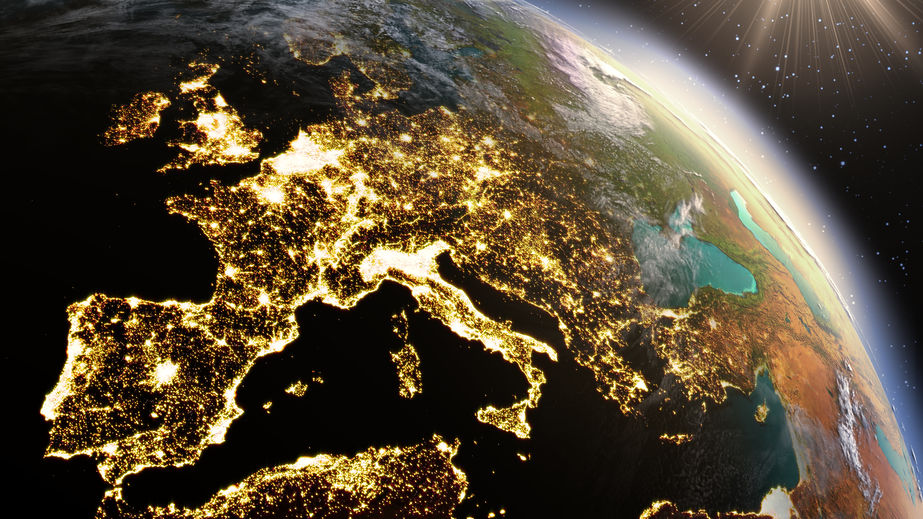
Speaking of France, back in February (just before the Russia-Ukraine war broke out), President Emanuel Macron announced his country would build six new nuclear reactors in the coming decades. What a reversal from Macron’s 2018 promise to shutter 14 of the nation’s existing 58 nuclear reactors by 2035!
By contrast, the German government, reacting to the Fukushima nuclear incident in Japan, closed three of
its remaining six nuclear reactors in January, a major step in
fulfilling the 2011 commitment to end nuclear power generation by the
end of 2022. The German retreat from nuclear began in 2002 under Gerhard
Schroeder. Angela Merkel originally opted for extending the life of
German nuclear plants but conceded to the anti-nuke movement after
Fukushima.
Spain, Italy, Belgium, and Austria have also pledged to close
existing nuclear power plants, while the British – who are even calling
for fracking and renewed oil and gas exploration and development in the
North Sea – are bullish on nuclear energy today despite plans to close
five of its eight old reactors. Finland and Hungary are also building new nuclear plants, and Poland, Romania, and the Czech Republic want to go nuclear.
The German retreat now seems ridiculous given that Japan, the only
nation that suffered significantly from nuclear incidents since
Chernobyl, has recommitted to nuclear power. Just days ago,
Yasutoshi Nishimura, Japan’s minister of economy, trade, and industry,
announced that nuclear power is once again the key to his nation’s
energy security.
Nishimura stated that Japan has already secured 10 plants for
reactivation and is working to reactivate another seven plants by the
end of 2023. With the nation currently 94% dependent on
imports for its energy supply, the 1 million tons worth of energy
produced by each reactivated nuclear plant will go a long way toward
securing energy for the nation’s future, he added.
According to the Energy Information Administration,
as of July 1, the U.S. had 92 reactors operating at 54 nuclear power
plants in 28 states. These power plants have supplied about 20% of
America’s electricity since 1990. Surprisingly, the EIA says that the
U.S. has the world’s largest nuclear electricity generation capacity of
any nation and has generated more nuclear electricity than any other
country.
On the other hand, the most recent nuclear
power plant in the U.S. is Watts Bar Unit 2 in Tennessee, which went
online in October 2016. Two other units in Georgia – Vogtle Units 3 and 4
— remain in the construction stage. Despite Congressional directives
dating to 2006, the “nuclear renaissance” projected by the U.S. Nuclear
Regulatory Commission has yet to generate any other new reactor
licensing applications. One reason may be the oppressive regulatory
jungle that nuclear operators have to negotiate.
Beyond Nuclear, which opposes nuclear energy, reported in January
that no utilities are seeking new construction or operating licenses for
earlier nuclear designs (Gen I and II), and the demonstrated failure of
prior applicants has caused many companies to suspend or cancel
initiation of new Gen III light water reactors in the U.S.
Beyond Nuclear also claims the “nuclear renaissance” has proven to be
an “empty propaganda slogan,” and says the NRC and the nuclear industry
are now hoping that an American nuclear future is achievable through
construction of thousands of small modular reactors (SMRs). But
opponents argue that these SMRs can be weaponized if exported to other
nations, and that the cost per energy generated is higher than that for
larger reactors.
The group further notes that back in January the NRC staff rejected a
license application for an “advanced reactor” filed by Okio
Incorporated, which wanted to design, construct, and operate its pilot
“Aurora PowerHouse” microreactor at the Idaho National Laboratory. Once
again, Beyond Nuclear and 27 other anti-nuke consumer and environmental
groups fought the application.
So, while panic-stricken California lawmakers have
perhaps extended their political lives by NOT shutting down Diablo
Canyon, and despite a more favorable climate in the U.S. for nuclear
energy than at any time since Three Mile Island and Chernobyl, any hopes
for nuclear supplying this nation with new electricity are about as
likely as the Washington Generals beating the Harlem Globetrotters.
Other nations, despite their own anti-nuclear activists and funding
concerns, are much more likely to move ahead with nuclear power than the
United States. China and India are
building new nuclear power plants at a rate that will soon push both
nations ahead of the U.S. in nuclear energy generation. Even
energy-deprived African nations are actively seeking a nuclear future.
With three-quarters of America still Jonesing for wind and solar
(though often not in their own backyards), and anti-nuke groups with
huge war chests, I might even bet on the Generals.
This article originally appeared at Real Clear Energy
-
 Duggan Flanakin
Duggan Flanakin
is the Director of Policy Research at the Committee For A Constructive
Tomorrow. A former Senior Fellow with the Texas Public Policy
Foundation, Mr. Flanakin authored definitive works on the creation of
the Texas Commission on Environmental Quality and on environmental
education in Texas. A brief history of his multifaceted career appears
in his book, "Infinite Galaxies: Poems from the Dugout."