Those monthly numbers specifically show that workers lost a lot of
ground in 2021 and 2022. There’s been a bit of progress since then, but
the best-case scenario is that workers have merely recovered their
losses.
Which means zero overall economic progress over the past four years.
Today, let’s look at some annual numbers from the Census Bureau, which just published its yearly report on income in the United States.
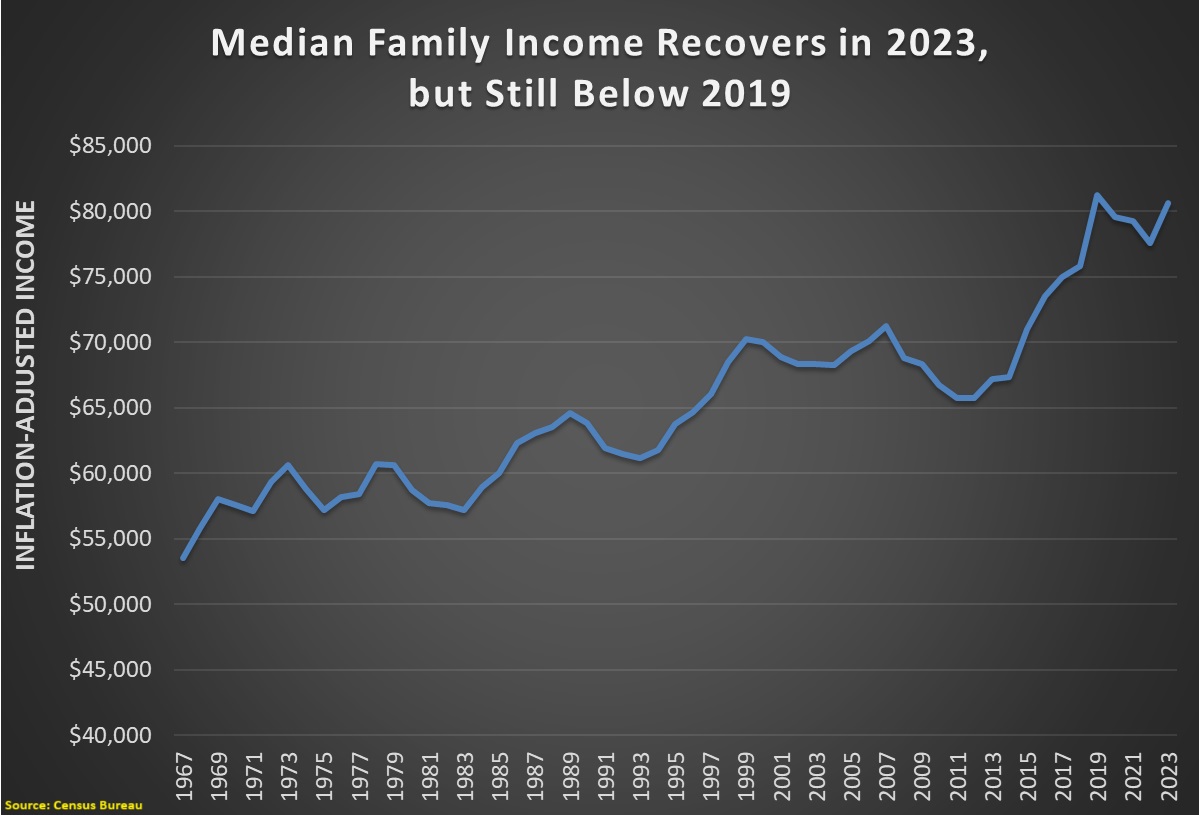
The good news is that median family income rose last year. The bad
news is that families are still worse off than they were before the
pandemic.
So is this good economic news or bad economic news? Is it good political news? If so, is it good for Harris or Trump? Here are some excerpts from Abha Bhattarai‘s report in the Washington Post.
Household incomes rose last year for the first time since
2019 but are still lower than they were before the pandemic, according
to a new U.S. Census Bureau report that helps explain why
so many Americans remain dissatisfied with the economy… After
inflation, median household income rose to $80,610 last year, up from
$77,540 in 2022 but less than the $81,210 families brought home in 2019.
…White households saw a 5.4 percent increase in income, while median
incomes for their Black, Asian and Hispanic counterparts remained
largely flat. …The White House…has struggled to persuade Americans that
they’re better off financially than they were four years ago.
My assessment is that neither Harris nor Trump will benefit from
these numbers. The somewhat good news in 2023 is offset by the very bad
news the previous two years.
So the tiebreaker may be the monthly Labor Department numbers for
2024. I’ll be sure to do a column when new data gets released in early
October.
Median household income dropped by more than $1,000 in
Reagan’s first two years, and even dropped by a couple of hundred
dollars in 1983, yet that did not preclude big improvements in 1984 and a landslide reelection for the Gipper. So there is still time for Biden to turn things around.
I’ll stick with that analysis, other than replacing Biden with Harris.
Now that I’ve issued my amateur political analysis, I’ll close with
hard-headed economic analysis. If we want more jobs, higher wages, and
better living standards, free markets and limited government are the
right approach.
(Editor's Note:Dan and I diverge on what he's calling Trump's "protectionism", but I'm concerned about the "endless spending" no matter who's elected. RK)
Is Federal Reserve monetary policy restrictive? Chair Jerome
Powell and many of his colleagues have insisted that conditions are
tight, meaning that policymakers are decelerating money supply growth to
slow down the economy. A tidal wave of data suggests that if the
desired objective is to eradicate inflation by slowing the economic
landscape, then either more interest-rate hikes or higher-for-longer
rates might be necessary to erect a mission-accomplished banner on the
USS Marriner Eccles.
Federal Reserve Money Supply Data
For the fourth consecutive month, the Federal Reserve’s M2 money
supply – a measurement of the nation’s money supply – increased in June,
ballooning by $73 billion to $21.03 trillion. This is the first time
that the country’s money stock has touched this level since February
2023. In fact, it is inching closer to where it was when Fed officials
launched the institution’s quantitative tightening cycle (a blend of
hikes to interest rates and reducing the balance sheet) in March 2022.
What’s more, this is a complete reversal of what occurred
throughout last year. In December 2022, money-supply growth had tumbled
by nearly 1% for the first time since the Fed started publishing this
data in January 1960, taking over from the Census Bureau. Historically,
the money stock has contracted three other times over the past century.
Despite the Eccles Building allowing its printing press to rest for a
little bit, the amount of money in circulation is approximately 36%
higher than before the coronavirus pandemic. In February 2020, the M2
was $15.432 trillion, more than double its level prior to the 2008-2009
global financial crisis.
Money supply statistics are valuable insights. Say’s Law – an
economic concept from 19th-century economist Jean-Baptise Say – explains
that the total supply of goods and services will equal the total demand
for goods and services. This is most noticeable in the financial
markets when supply manufactures its own demand, to paraphrase John
Maynard Keynes. Investors will tap into this liquidity and drive up
equity prices, distorting the fundamentals.
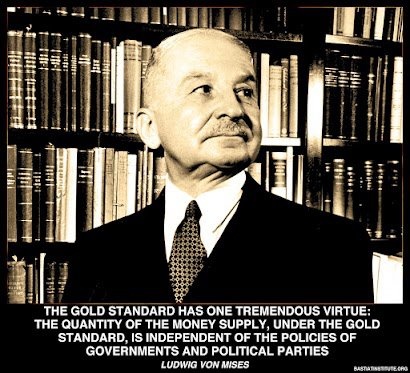
Or, based on the economic literature written by Ludwig von Mises and
others in the Austrian school, inflation (money supply expansion) cooks
up recessions and depressions, manufactures malinvestment, and erodes
freedoms.
Is Policy Restrictive?
For all the claims of how restrictive monetary policy is, a chorus of
Fed economists has questioned the narrative. Kansas City Fed economists
penned a May 2024 paper titled “Current Monetary Policy May Be Less
Restrictive Than It Seems.” Citing the previous inflation cycle in the
1980s, they asserted that “current monetary policy may need to remain
restrictive for longer to return inflation to target.”
Other high-profile names, such as Dallas Fed chief Lorie Logan, have
entertained this possibility. “There are also important upside risks to
inflation that are on my mind, and I think there’s also uncertainties
about how restrictive policy is and whether it’s sufficiently
restrictive to keep us on this path,” Logan said at the Louisiana
Bankers Association’s annual conference in May.
The Fed’s inflation target is 2%, and though Powell does not believe
the personal consumption expenditure (PCE) price index or the consumer
price index (CPI) will reach that percentage until 2026, he conceded
that the central bank could pull the trigger on a rate cut before
inflation returns to this level. As Liberty Nation News has reported, the reason emanates from the wisdom of economist Milton Friedman,
who contended that monetary policy operates with a “long and variable
lag.” This means that it takes as long as two years before the effects
of Fed policy decisions are felt in the broader economy, including
inflation.
Various data points highlight that US financial conditions are
certainly loose. For example, the Chicago Fed’s National Financial
Conditions Index has been parked in subzero territory for four straight
years, meaning that the nation has been entrenched in loose financial
conditions. How is this possible with a benchmark interest rate of 5.25%
to 5.5%? It must have been and continues to be the Federal Reserve’s
money-supply expansion.
Is it any wonder why one prominent economist gives the organization
an “F” grade? “The US Federal Reserve is not paying any attention to the
money supply. Chairman Powell has trashed the money supply idea,”
economist Steve Hanke recently told host Julia La Roche. “That’s why the
Fed has been unable to predict the course of inflation.”
Everyone Can Taste the Cuts
Everyone, from the Federal Reserve to the financial markets, can taste the rate cuts.
The central bank’s Summary of Economic Projections indicates a
quarter-point reduction. The futures market is pricing in at least two
rate cuts before the year’s end. The big banks are forecasting several
rate cuts in 2025. Of course, it might be a case of déjà vu all over
again, as the public had projected 2024 to be the year of extensive
slicing and dicing by the central bankers. Data from the 1970s and 1980s
signal that the United States could be reliving history, meaning that
the Fed would have to delay or hike should there be a revival of
inflationary pressures next year and beyond. As the old saying goes,
follow the money. In this case, it is easy to find: the Eccles
Building’s basement.
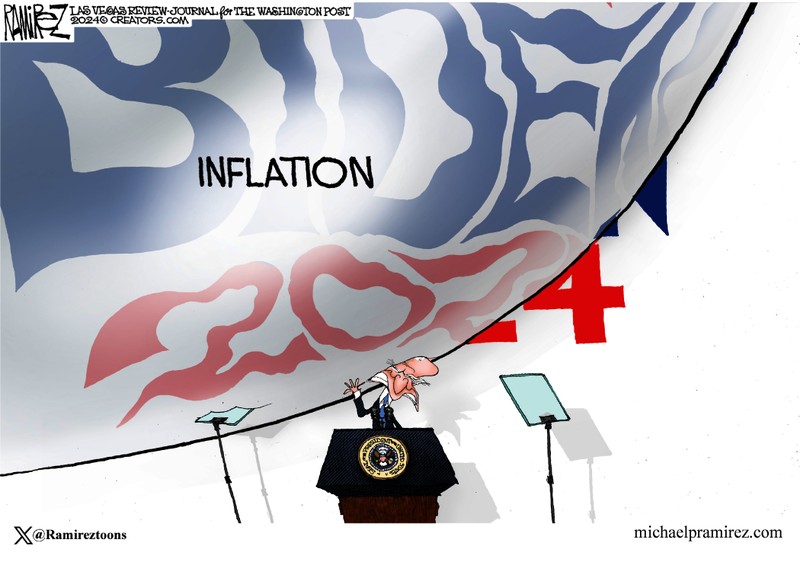
Economists say inflation is the result of bad monetary policy. The Biden White House, however, says inflation is caused by greedy companies.
I debunk that nonsensical claim in this excerpt from a recent discussion on Let People Prosper.
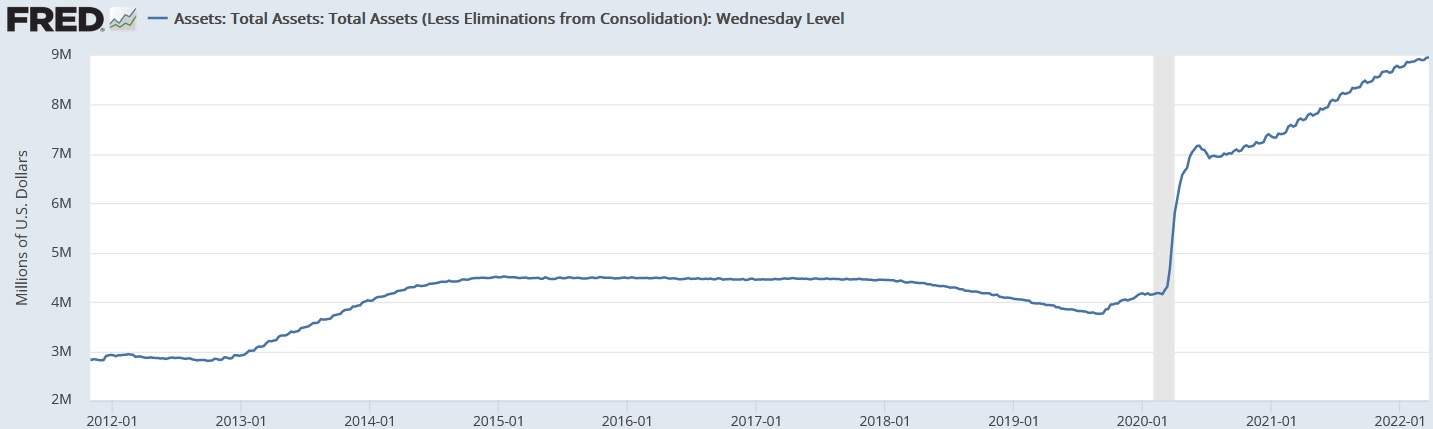
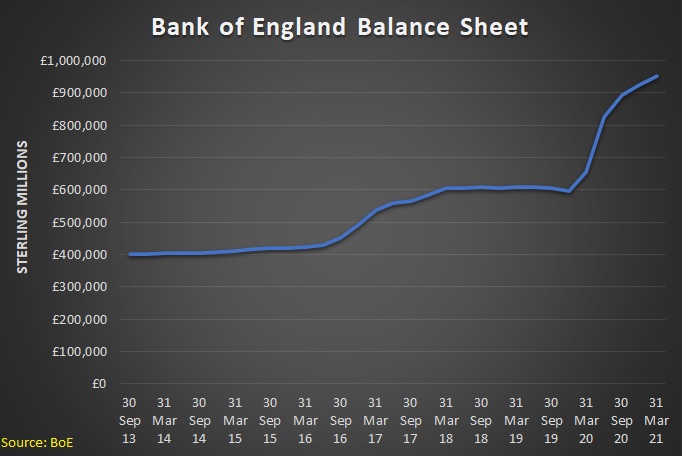
At the risk of stating the obvious, everything you need to know about inflation is captured in this chart. Simply stated, the Federal Reserve dramatically increased liquidity in 2020 and 2021. That meant a lot more money sloshing around the economy, above and beyond what would have been necessary to keep pace with economic activity.
Which is why the White House has decided to engage in victim-blaming.
In an article for the New York Times, Nicholas Nehamas, Jim Tankersley and Kellen Browning report on the White House’s blame-shifting strategy.
As high prices at grocery stores, gas pumps and
pharmacies have soured many voters on his first term, President Biden
has developed a populist riposte: Blame big corporations for inflation,
not me. …progressives are urging Mr. Biden to…make “greedflation,” as
they call it, a driving theme of his re-election bid. …Inflation soared
under Mr. Biden in 2021 and 2022… What Republicans call “Bidenflation” has become one of the president’s
biggest political liabilities in his rematch with Mr. Trump. …Mr. Biden
has…attacked corporations for pricing practices in certain sectors such
as meatpacking, snack foods, concert tickets and gasoline..........
Some
economists close to his White House disagree that corporations’ raising
prices to juice profits is a major driver of inflation. …There are signs
that Mr. Biden plans to emphasize this issue more in the coming weeks.
…a campaign spokeswoman…said Mr. Biden had “repeatedly taken on
corporate greed” and would be “telling that story every day in every
possible way on the campaign trail, from ads to door knocking and more.”
I’m not the only one to mock Biden’s strategy.
In her column for the Wall Street Journal, Allysia Finley says Biden and his allies are “inflation deniers” for trying to blame the private sector.
Behold the political left’s version of “stop the steal,” a
device that blames corporate greed and malfeasance for inflation.
…Democrats from President Biden on down promote this conspiracy theory
to dupe voters. …Retailers are getting squeezed by higher costs for
products, labor, energy, rent and insurance. Since
the start of the pandemic, food prices at stores have increased by 25%,
less than the bump in average grocery worker wages (33%) and farm
product prices (32%). …......
Democrats have even introduced the Price Gouging
Prevention Act, which would empower the FTC to impose de facto price
controls on food, gasoline and other products. The result? Widespread
shortages.
Mr. Biden has joined his party of inflation deniers. In March
he convened a “Strike Force” to “root out and end illegal corporate
behavior that raises prices for Americans…” A San Francisco Federal
Reserve study last month refuted that inflation has been caused by
price-gouging. …...............What’s fueling inflation? Excessive fiscal and monetary
stimulus.
But I’m digressing. The bottom line for today is that Joe Biden and
his allies are wrong to blame businesses. The entire private sector
(households and businesses) are the victims of inflation.
P.S. To understand inflation, click here and here. Or, if you want to dive into the issue, click here.
Of course, it’s never easy to define populism. My shorthand
definition is that a populist is someone who exploits economic ignorance
to push policies that sound appealing to voters in the short run (such
as protectionism, industrial policy, or class warfare) but do economic damage in the long run.
So I was very interested to see that three German economists (Manuel Funke, Moritz Schularick, and Christoph Trebesch) authored some research about populism and economic policy for the Kiel Institute for the World Economy.
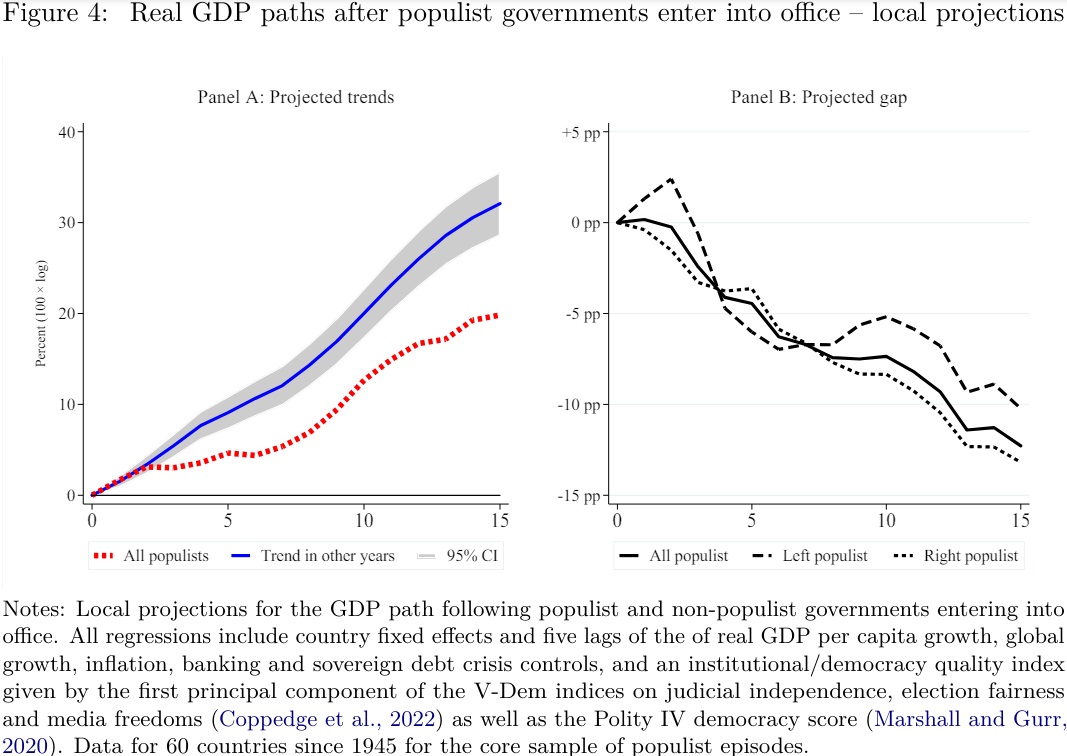
Just in case some readers are pressed for time, the biggest takeaway
from their study is that populism leads to less prosperity – as captured
by Figure 4.
Their study looks at both left-wing populists and right-wing populists. Both versions produce negative economic consequences.
Though Figure 6 shows that leftist populists seems to do more damage than rightist populists.
Here are some highlights from their findings.
A core empirical challenge is to identify populist
leaders. Our database on populists in power is the most ambitious
exercise to classify populist leaders to date, spanning more than 100
years and 60 large countries. …According to today’s workhorse
definition, populism is defined as a political style centered on the
supposed struggle of “people vs. the establishment”…Populists place the
narrative of “people vs. elites” at the center of their political
agenda… In
the empirical analysis, we use a variety of different empirical
strategies that all paint a similar picture: populism has large economic
costs. Over 15 years, GDP per capita and consumption decline by more
than 10% compared to a plausible non-populist counterfactual.
Moreover,
despite their claim to pursue the interests of the “common people”
against the elites, the income distribution does not improve on average.
…we also look at other outcomes and present evidence that economic
disintegration, unsustainable macro policies, and the erosion of
institutions typically go hand-in-hand with populism. Trade and
financial integration falls, suggesting that populists often deliver on
their promises of fostering economic nationalism and protectionism
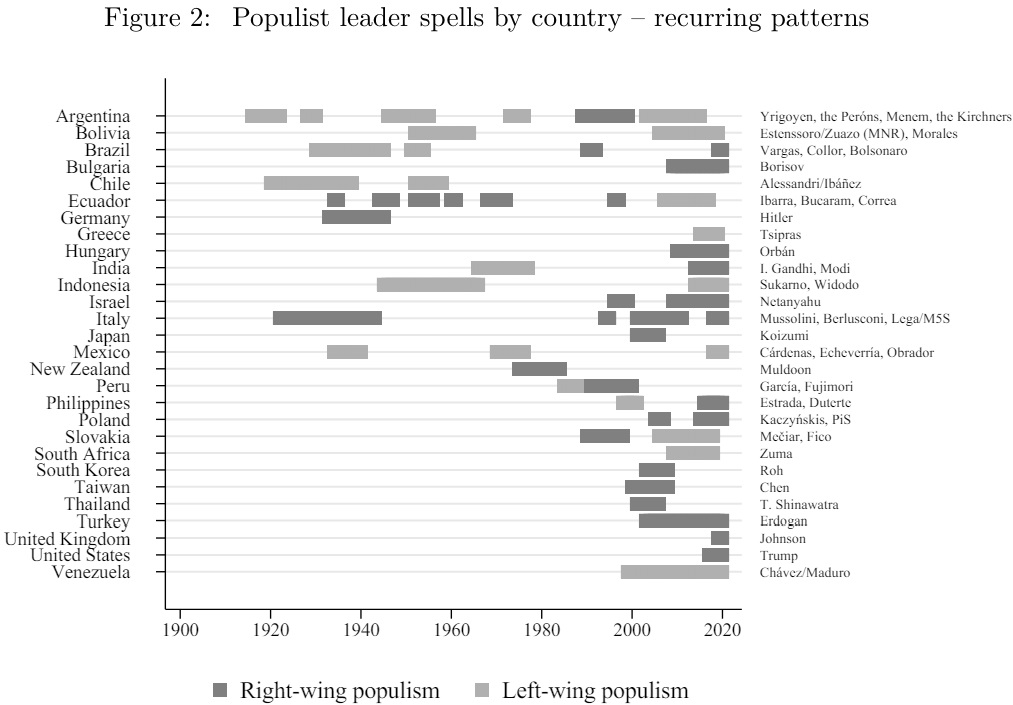
If you’re wondering which politicians are populists, here’s their list.
I don’t have any objections to the politicians listed above, but if
populists are politicians who gain power by whipping up antagonism
against the “establishment” and the “elite,” then why isn’t Franklin Roosevelt on the list?
Or how about Brazil. I can understand Bolsonaro being included, but why not Rousseff or Lulu?
Moreover, why not include every socialist government, most of which
usually gain power after campaigning on class-warfare agendas?
I could list other examples, but let’s return to the study and share
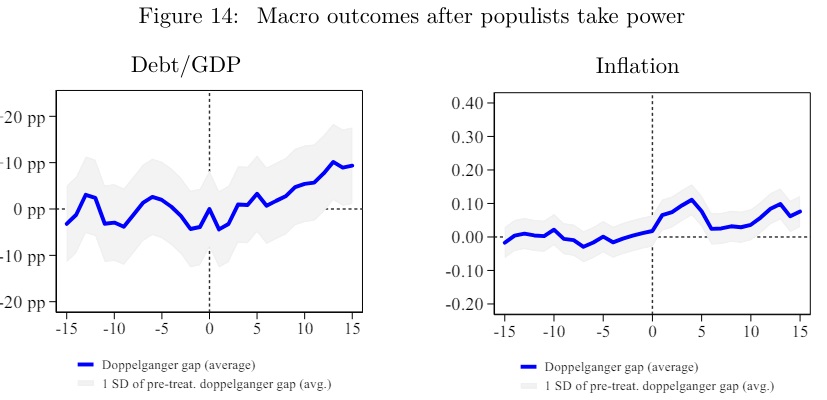
more of the findings. Unsurprisingly, populist governments are
associated with more debt and more inflation.
All of which confirms my shorthand definition that populists do things that seem popular in the short run (spend money and print money) but do damage in the long run.
By Robin Itzler, From Her Patriots Neighbors Newsletter
Editor's Note: This is a selected commentary from Robin's weekly newsletter
Patriot Neighbors. Cartoons may be added by me, if you wish to get the full edition, E-mail her at PatriotNeighbors@yahoo.com to get on her list, it's free. RK
No matter which party is in power, Deep State bureaucracies
that run our federal government consistently gaslights the American public.
Hey,
didn’t you write this last week about the inflation numbers?
Speaking of inflation … the Consumer
Price Index ROSE in March to 3.5 percent. FOURTH MONTH IN A ROW INCREASE. Thank
you, Joe Biden!
Government gaslighting holds true for
the monthly jobs report released by the U.S. Bureau of Labor Statistics (BLS).
According to BLS, in March, the U.S. economy added 303,000 jobs and left the
unemployment rate at 3.8 percent.
Yeah, right. Does this feel like a healthy economy to you?
Of the 303,000 March jobs, 72,000 were
healthcare related (i.e., businesses that are connected to the government,
i.e., Medicare, Medicaid, Obamacare, etc.).
Of the 303,000 March jobs, 71,000 were added in government.
The majority of new jobs are part-time.
For the 12 months ended March 2024, more than 650,000
native-born Americans lost their jobs.
For the 12 months ended March 2024, more than 1 million
foreign-born workers got jobs.
The labor force participation rate has held steady and in
March at 62.7 percent.
Using BLS’ own statistics, that means there are fewer
people working now than before the COVID-19 “scamdemic.”
The BLS monthly jobs report is
meaningless and should be placed at the bottom of a bird cage! Eleven out of 12
monthly reports in 2023 were revised down several months after Joey paraded to
the podium to talk about the great jobs report. (Maybe they promised him ice
cream afterwards.)
This trend continues into 2024!
February’s job report was revised down by 5,000.
January’s job report was revised down by an
astounding 124,000.
December’s job report was revised down by 43,000.
How many people in the private sector
could continually give their CEO an important report and come back month after
month with revisions?
Of course the propaganda media insists that's all a huge Bidennomic success story. Well, if you like that "success" story, here are 11 more Bidenomic "success" stories.
Bidenomic "Success" Stories
The executive coaching firm Challenger, Gray &
Christmas released a report that employers in the U.S. announced 90,309 job
cuts in March. This was a 7 percent INCREASE in job cuts from February.
That is the highest monthly total since January 2023, when there were 102,943
cuts.
President and CEO of Job Creators
Network Alfredo Ortiz said of the March jobs report:
"Looking under the hood of today's jobs report shows it isn't the
home run that Democrats and the media claim. Approximately, half of all jobs
created last month came in unproductive government or quasi-government
healthcare sectors. Full-time jobs continue to decline, while part-time jobs
are on the rise. The Main Street labor market is far weaker than the topline
numbers or the conditions on Wall Street or K Street suggest."
Corn Pop disagrees and says that is a
lot of malarkey. Let’s look at some recent Bidenomics successes:
99-Cents Only Store (discount retailer) – Began liquidating and
shutting all its 371 stores on April 5.
Aludyne (lightweight solutions) – The Georgia company is
letting 193 employees (8 percent) go of its 2,300-employee workforce.
Apple (technology) – Included in its state
filing that it will be laying off 614 workers in California. The affected
employees worked at eight different facilities in Santa Clara.
Bloomer Chocolate Company (food) – By the end of May, will be
closing its factory in Chicago’s Fulton River District, which puts 226 people
out of a job.
Lands’ End (retail) – Has laid off 10 percent of
its corporate staff.
Lidl (grocery store chain) – Plans to layoff about 200
corporate level employees.
Quaker Oats (food) – The Chicago-based unit of
Pepsico since 2001, opened its Danville, Illinois plant in 1969. The company
announced the plant would be closing, which means 500+ jobs will be gone.
ShipMonk (eCommerce) – Will lay off 148 of its
600 workers (25 percent reduction) by June 30.
Student Transportation of America
(transportation for public and private schools) – The Florida headquartered
company has about 5,000 staffers and will say goodbye to 225 of them.
Transunion (credit reporting) – Recently reduced its staff
by 640 jobs.
Unilver (consumer goods) – Will be laying off 7,500
workers worldwide.
"You know, if you let me write $200 billion worth of hot checks every
year, I could give you an illusion of
prosperity, too." 1988—Texas Senator Lloyd Bentsen
Democrat Vice President nominee; said during a debate
By Robin Itzler
No matter which party is in power, Deep State bureaucracies that run our federal government consistently gaslights the American public. In 1983, when Republican Ronald Reagan was in the White House, housing finance expenses was removed from the formula for determining the consumer price index (CPI). Home ownership was replaced with a less-volatile metric based on rent.
Former Treasury Secretary Lawrence Summers, who served in Democrat Bill Clinton’s administration, along with others conducted an inflation analysis. Using the pre-1983 calculation (home ownership expenses), inflation would be much higher than reported by the Biden administration.
This explains why Biden & Company ridiculously insists that the economy is doing great. Yet, few Americans believe them. We see rampant inflation every time we go grocery shopping – more in next article.
Items may only increase by a few pennies, but all those items in your grocery cart that increase by a few pennies every week is more than the rate of inflation!
On April 10, we will learn the CPI for March. The Deep State’s goal is to keep Democrats in power. Expect Federal Reserve Chairman Jerome Powell to follow through on the promised three rate cuts in this election year.
Putting food on the table has become harder than ever thanks to "Bidenomics." As costs for everyday items continue to rise, American families are struggling more and more to foot the bill.
Check off the items from the list below to compile your weekly grocery list and see how much more expensive your bill has become under Joe Biden.
Then a list of items most people buy every week appears. Check off the items that you normally purchase. When you are done shopping, you will see how little the items in your grocery cart cost you under Trump and how much it costs now under Biden thanks to BIDENFLATION.
Okay, so how do you determine you're paying more under Biden than Trump? Here's the answer, and all you have to do is click here and go shopping at Biden-Mart!
Commentaries and insights selected from Robin's weekly newsletter
Patriot Neighbors. Cartoons may be added by me. If you wish to get the full edition,
E-mail her at PatriotNeighbors@yahoo.com to get on her list, it's free.
There are two things the Democrats will have to use
in their campaign against trump, and that is abortion, and fascism. The trouble
is it's blatantly obvious more and more people are realizing it's the
Democrats who are the real fascists, and more and more people are finally realizing
abortion really isn't about health care, it's about murdering the
innocent unborn. That's why the Democrats will go all out on voter fraud in this election.
Joe Biden is vile beyond belief, and virtually everything he's done in the last three and a half years has been so destructive to America it can't be called anything short of treason. He support of Islamists, his economic policies, and his support of criminals, and his immigration polices are just the tip of the ice berg of corruption, incompetence, and treason.
For him to give billions to Iran is insane, and it really is treasonous. Schumer is
completely contemptible, or the man is completely insane. Either way,
he's disgusting, he's lying, and both he and Biden are traitors to western civilization.
Israel is the canary in the coal mine, this isn't like Ukraine where we
really don't have skin in that game. The real danger to western
civilization isn't from Russia, it's from Islam.
China has infiltrated, with the help of powerful Americans, just about every American institution working to destroy America. This TikTok issue highlights that to the tee, and I have no idea what's in Trump's mind not supporting the House bill trying to fix this.
I would like to point out all of these issues with Russia and China go back to WWII and the administration of Franklin Delano Roosevelt. His administration was considered the most heavily infiltrated government in the history of the world, and FDR had to know it, and supported it.
The dismantling of AmericaMarch 16, 2024 by Bob KingsleyToday’s liberals deplore personal freedom because it defies their desire for oversight and control.
George Soros has funded the election of radicals, racists, Marxists, anti-Americans for political office, especially prosecutors who refuse to prosecute, judges who refuse to judge, and legislators who refuse to adhere to their oaths of office, and people are dying unnecessarily, including "a black 11-year-old trying to step in where an empty prison
system, police with their hands tied behind their backs and a Soros DA
left him to fight and die to save his mother's life."
Kamala, Who Has No Kids, to Visit Abortion Clinic - The one campaign stop that really, truly matters. The Biden campaign has nothing to run on next year except abortion. So Kamala will visit the one campaign stop that really, truly matters. Vice President Kamala Harris plans to tour a Planned
Parenthood clinic in Minnesota that provides abortion services Thursday,
according to three sources familiar with the planning. A 59-year-old childless woman who got her political start as the
trophy girlfriend of an aging corrupt mayor is quite the ad for Planned
Parenthood’s services......
Biden, Schumer, Islam, Treason
After Iran Killed 3 U.S. Soldiers, Biden Gives It $10B Sanctions Waiver Treason. This story is worse than it sounds. And while that’s true of nearly everything this administration does, it’s truly true here. Iran’s terror militias launched a wave of rocket attacks
against American soldiers in Iraq and Syria under Biden..........Now, three US Army soldiers were killed and over 30 were wounded in
an Iranian-backed drone attack on a position on the Jordanian-Syrian
border. This is the worst death toll in some time. Beyond that, Iran was behind the Hamas Oct 7 attack which killed over
30 Americans and we’re in a battle with its Houthi proxies over
shipping in the Red Sea.............
Biden Admin Comes Crawling to CAIR Supporters of Oct 7 Attack -The Biden admin condemned the “antisemitic statements” of the very Islamists it’s now appeasing. After the despicable farce of Sen. Schumer’s speech, part of the
Biden administration’s pressure campaign on Israel, the Hamas supporters
are making it clear that it’s still not enough. Back in December, CAIR boss Nihad Awad, who had a long history of defending Hamas, celebrated Oct 7..........
Sen. Schumer Picks Hamas and Biden Over Israel (VIDEO) “Israel has a moral obligation to do better”. Sen. Schumer, claiming to speak as
“the highest-ranking Jewish elected official in our government”,
condemned Israel’s war against Hamas, equated the Jewish State to Hamas
as an “obstacle to peace” and threatened the Jewish State with
intervention and pressure by the Biden administration unless it rejects
Netanyahu, the war and begins appeasing the terrorists and giving them a
state. All of that is there..................
Janet Yellen warns inflation decline might not be ‘smooth – FOX Business CPI Report: Consumer Inflation and Prices Were Up Again in February – AP So what’s to be done with this kind of news?
Double down on “Let them eat cake”. After a few months of this…
Americans are unusually down on a solid economy. NBC News, Why Americans Hate a Good Economy- The Atlantic, ‘The economy isn’t sick right now,’ economist says—here’s why Americans still feel like it is – CNBC
....the media has decided to double down and declare that people are stupid for noticing inflation.....
Crime
The Latest Victim of Soros DAs is a Black 11-Year-Old Who Died Defending His Mother “His 5-year-old brother was also in the home.” - Criminal justice reform dismantled our criminal justice system by
claiming that it was racist. These pro-crime policies unleashed a world
of terror, killed thousands of people and made our cities too dangerous
to live in. This is just the latest of these stories. It’s the story of what
happens when the criminal justice system won’t do its job. And that
leaves a black 11-year-old trying to step in where an empty prison
system, police with their hands tied behind their backs and a Soros DA
left him to fight and die for his mother’s life.......
China, TikTok
China’s Meltdown Over TikTok Ban Tells You All You Need to Know - China would rather lose TikTok’s revenues than lose control over Americans. The pro-TikTok lobby within the conservative movement (I debated one
of them) has kept insisting that the Chinese corporation exists
separately from the regime and has nothing to do with it. That ambiguity collapsed the moment the House bill passed. Beijing is in full “Wolf Warrior” mode now. It described Congress as
“bandits”, accused America of opposing “free speech”, cited the ACLU
(ironically created by a Communist ally to support Communism), accused
America of “bullying” and warned that this “will eventually backfire on
the US itself”.................
Editor's note: This next piece isn't from The Point and is a regular Frontpage Magazine featured article by Daniel. RK
Our Cold and Bloody War with China- March 15, 2024 - Peter Schweizer reveals why the powerful turn a blind eye while China kills Americans. In November, Biden and Chinese Communist President Xi met once again,
this time at the mansion used for the exteriors of the TV show, ‘Dynasty’,
to talk about the relationship between the two countries. And yet all
these months after the three hour meeting, nothing changed. Biden had met with Xi everywhere from the Bay Area to Bali with no result. Why?
n ‘Blood Money: Why the Powerful Turn a Blind Eye While China Kills Americans’, Peter Schweizer, the journalist and investigator behind ‘Clinton Cash’, follows up on his work in ‘Red-Handed: How American Elites Get Rich Helping China Win’ to expose an entire network of corruption that is not only stealing America’s future, but has also claimed countless lives.
Blood Money is a war story illustrated with the Sun Tzu
maxims that drive the larger strategic thinking of the Chinese military
apparatus about how to “subdue the enemy without fighting”..................
Eco-Terrorism
Court Frees Eco-Vandals Who Attacked Painting to Avoid “Chilling Effect” on Vandalizing Art - Why do leftists feel like they vandalize classic art with impunity? Because they run the system. “Treason doth never prosper, what’s the reason? For if it prosper, none dare call it Treason.” Left-wing terrorism likewise never prospers, because if it prospers, it’s just the government. Why do leftists feel like they can pull down statues, attack federal
buildings, shut down airports, stage nationwide race riots, and
vandalize classic art with impunity?............
Editor's Note: I published this in 2015, and given all this talk about inflation, I think this is worth publishing again, and especially after yesterday's SOTU, we are in serious need of clarity. RK
On July 9, 2013 Ryan Young
published an article titled, Regulatory Inflation, starting out saying that; “Turns out
bad regulations have a rather large side effect.” He goes on to explain the
reality of regulations, which also explains why increased taxes of the ‘rich’,
and the ‘corporations’ is in reality a hidden tax on the least able to afford
increases in the things they buy. He says:
In their book Democracy in Deficit, Nobel-winning economist
James Buchanan and co-author Richard Wagner observed that government spending
can create inflation “[t]o the extent that resources utilized by government are
less productive than resources utilized by the private sector…”The same
principle applies to regulation…
Imagine a simplified economy that consists of just two
things: 100 dollars and 100 apples, with the price of an apple being one dollar
each. If new regulations pass that make it harder to produce apples, the next
year there are only 90 apples produced. Their price goes up from $1 to $1.11.
In the real world the ‘rich’ don’t pay taxes - they
increase prices. The same is true regarding regulations. It’s all part of the
cost of doing business and any business that fails to increase their prices in
face of increasing costs due to tax increases or regulations will eventually go
out of business. But ultimately all these costs will fall right on to the backs
of the poor.
The analysis in this article I liked the best was
dealing with EPA regulations regarding energy production. He states;
Here’s an example. Last year [2012], the U.S. Environmental
Protection Agency (EPA) issued a rule concerning coal power plant emissions
that it estimated would cost about $9.6 billion per year. The only demographic
that would receive any potential health benefits from this regulation is truly
niche: the unborn children of subsistence-level fisherwomen who consume more
than 225 pounds per year of self-caught fish exclusively from 90th percentile
most-polluted bodies of inland freshwater. And by the EPA’s own analysis, the
biggest benefit is an additional 0.00209 IQ point per fisherwoman’s child. This
is literally too small to be measured. The EPA has never identified any such
person, so the rule is almost purely wasteful (its unstated purpose is
to give fossil fuels an artificial competitive disadvantage). Since the money
supply isn’t reduced to match this wealth reduction, the result is an
EPA-induced $9.6 billion reduction in purchasing power among everybody who uses
fossil fuels —that is, the entire U.S. economy.
So who benefited from these unnecessary regulations?
The so-called alternative energy groups, who can’t begin to match the
production of traditional energy producers, but society as a whole suffers
another jab at the general welfare of its citizens.
Think of all of the nation’s wealth as a pie. Every
time one of these expensive valueless regulations is passed it takes a small
slice out of that pie. Remember that this is not an investment that will create
more wealth, no matter what EPA directors and green misfits say - these
unnecessary regulations - which are growing to the tune of approximately 80,000 pages
a year at the federal level eating up two trillion dollars a year of the nation’s wealth. A continuing and unending leech on our national
economic health. And the poor suffer the
most.
In 1996 the Food Quality Protection Act was passed and
the pest control industry lost two categories of pesticides, carbamates and
organophosphates. The result? Bed bugs are now a national plague. Who benefited from this? Surprisingly, it was the pest control industry, because
the cost of bed bug work skyrocketed right through the atmosphere. As a result
I am confronted by angry owners of companies from my industry who don’t want
effective old chemistry returned, and resent those who are working toward that
end.
Municipalities pass regulations regarding use of
pesticides on public property making emotional claims that are misleading and
ultimately false. But nonetheless they demand that everyone who provides
services to their community must 'go green', or adopt Integrated Pest
Management standards. What happens? The costs triple or more. So who benefits?
Believe it or not it's the pest control and lawn care people who benefit
because their making more money than ever. As a result I am seeing far less
resistance to these foolish costly regulations. But who suffers? Society as a
whole as this eats away at the pie of common wealth.
As these things continue at some point the nation’s
wealth will have been consumed by government and a small corrupt elite. You may
wish to read the article 'A Toxic System': Why Austerity Still Isn't Working in Greece
– and Austerity Means Cuts, Not More Spending. What brought the
Greeks to this nightmare? Over regulation, massive debt, large incompetent
bureaucracy, sweetheart deals for major corporations and incompetent
leadership. Sound familiar?
He ends this article with this statement; Perhaps
some regulatory deflation is in order. I agree, but that can’t happen as
long as the EPA exists and all these other agencies exist. The Interior
Department, which supposedly has oversight of the EPA, is rampant with green
misfits - as a result nothing will change until the EPA is dismantled. And it shouldn't end there.When you see the abuse of American’s rights by
the Bureau of Land Management, the U.S. Fish and Wildlife Service and the Army
Corp of Engineers - it’s clear they need purged also.
After
the pandemic-era inflation bombs went off, from the CARES Act to the
American Rescue Plan to the Federal Reserve’s multi-trillion-dollar
stimulus and relief measures, flames engulfed the US economy. The
economic landscape began dousing the fire after the consumer price index
(CPI) reached 9.1% in June 2022. Nearly two years later, the
inflationary disaster’s smoke and stench remain throughout the country,
and it is unclear when the byproducts of the manufactured calamity will
be extinguished from American life. Why all the pessimism? The latest
CPI data is one factor.
An Inflation Summary
In January, the annual inflation rate eased to 3.1%, down from 3.4%
in December but higher than the consensus estimates of 2.9%. The core
CPI, which excludes the volatile energy and food components, was flat at
a higher-than-expected 3.9%. On a month-over-month basis, the CPI and
core CPI rose at a hotter-than-expected pace of 0.3% and 0.4%,
respectively.
The most significant contributors to last month’s inflation reading
were mainly on the services side, including natural gas (2%),
electricity (1.2%), transportation (1%), medical care (0.7%), and
shelter (0.6%). Food prices jumped 0.4%, while energy costs tumbled
0.9%. Additionally, new vehicles were flat, used cars and trucks slumped
0.3%, and apparel dropped 0.6%.
Headlines across the mainstream media landscape were quite gloomy,
with even CNBC personality Steve Liesman telling viewers that “it was
just a lousy month when it came to inflation.” You cannot blame the
cheerleaders in the press for feeling bearish because a deeper dive into
the report revealed uncomfortable truths: kitchen staples (bread,
coffee, and eggs) were more expensive, rents were higher,
vehicle-related costs surged, and day-to-day services increased.
Unfortunately, it gets worse. Real (inflation-adjusted) average
weekly earnings turned negative in January for the first time in seven
months. Moreover, while the growth rate of inflation is slowing, the
seasonally adjusted CPI climbed to nearly 310 points, up 19% since
President Joe Biden arrived at the White House.
The Volcker Era
Financial markets tanked on the news, with the leading benchmark
indexes deep in the red. The US dollar and Treasury yields soared. Why
did these three events happen on Wall Street? The Fed.
Investors no longer anticipate the central bank pulling the trigger
on the first rate cut in May. Fed Chair Jerome Powell already confirmed
that the Federal Open Market Committee (FOMC) will not slash rates at
next month’s powwow. The futures market is now penciling in the first
reduction to the Fed funds rate in June, according to the CME FedWatch
Tool.
For the central bank, it is a balancing act. The economy and labor
market remain intact, but this is also helping to keep the inflation
flame alive. A solid economic climate affords the Eccles Building the
luxury to keep interest rates higher for longer without disrupting
activity. The longer the Fed keeps rates high, the greater the risk of
overtightening and breaking something. In addition, the central bank’s
higher-for-longer mantra would keep bond yields elevated, making
borrowing costs – for both the US government and consumers – continue to
be above trend. Should the Fed cut rates prematurely, it potentially
leaves the door open for a pivot back to raising rates and repeating the roller coaster ride of the 1970s, 1980s, and early 1990s.
The Usual Suspects
So, despite all the actions fiscal and monetary policymakers have
taken, why is the inflation beast still swimming in the Swamp? The usual
suspects are alive and well. Money supply growth has reaccelerated. The
federal government is spending more than it receives. The Treasury is
borrowing $1 trillion over the next six months. Washington has yet to
understand why the progress on inflation has ground to a halt. But
please tell the American people why Russian President Vladimir Putin
invading Ukraine and Corporate America engaging in the practice of shrinkflation are the root causes of the folks’ unhappiness and suffering.
The British economy recently has been hammered by rising prices for the same reason that the American economy and the Eurozone economies were hurt by inflation.
Simply stated, central bankers engaged in reckless monetary policy.
For purposes of today’s column, the main lesson to be learned, as Milton Friedman taught us many years ago, is that “inflation is always and everywhere a monetary phenomenon.”
But lets focus on a practical application of that lesson, which is
that politicians should not inaccurately blur the lines between monetary
policy and fiscal policy.
I’m motivated to address this issue because of a story, written by Kylie Maclellan and Andy Bruce, that was published last week by Reuters.
British finance minister Jeremy Hunt said…he would not
implement tax cuts that would push up inflation… Hunt…hopes will revive
the fortunes of both a stagnant British economy and the governing
Conservatives…
He has been under pressure from some Conservative
lawmakers who,
alarmed at the opposition Labour Party’s big lead in opinion polls,
have demanded he deliver tax cuts.
“We do want to bring down the tax
burden but we will only do so responsibly,” Hunt told Sky News. “The one
thing we won’t do is any kind of tax cut that fuels inflation.” …Hunt’s
options are limited after heavy state spending on the COVID-19
pandemic…
“If we’re going to be a dynamic, thriving, energetic, fizzing
economy, we need to have a lower tax burden,” Hunt told Times Radio,
adding that the only way to bring personal taxes down was to spend
public money more efficiently.
Mr. Hunt is wrong to imply that tax cuts have anything to do with inflation.
Which leads us to ask why he would create a false linkage. There are two possible explanations.
He thinks Keynesianism, with its misguided focus on aggregate demand, is the correct way of understanding the economy.
He doesn’t want significant tax cuts and is using inflation as an excuse so that his party can continue to spend more money.
For what it’s worth, both explanations are probably accurate, which
explains why the U.K. Conservative Party is in such bad shape and will
be resoundingly – and deservedly – defeated in the next election.
Are they creating too much money because they want to finance more government spending with modern monetary theory, like Turkey, Argentina, or Sri Lanka?
My rule of thumb has been that developed nations make Mistake #1 and developing nations make Mistake #2.
But that may be changing because of irresponsible fiscal policy in richer nations.
For instance, the European Central Bank has been propping up Italy, financing a big chunk of that nation’s deficit spending.
And I worry something similar may be happening the United States.
Let’s expand on that column, thanks to a a new study from the International Monetary Fund.
Authored by Daniel Garcia-Macia, it crunches a bunch of data to
develop estimates of how governments benefit from unexpected inflation.
This paper has shown that inflation surprises help to
reduce deficits temporarily and debt ratios persistently. Deficit-to-GDP
ratios decline as the nominal values of the economy’s output and of tax
bases generally rise, generating more revenues. …an
unexpected bout of inflation will erode part of the real value of
government debt persistently, both owing to the initial improvement in
fiscal balances and the nominal GDP denominator effect. …Unexpected
inflation may offer some breathing room for debt ratios but attempts to
keep surprising markets and economic agents have historically proven
futile or harmful. …Another important dimension is which budget items
are automatically or de facto indexed for inflation and by which
mechanism.
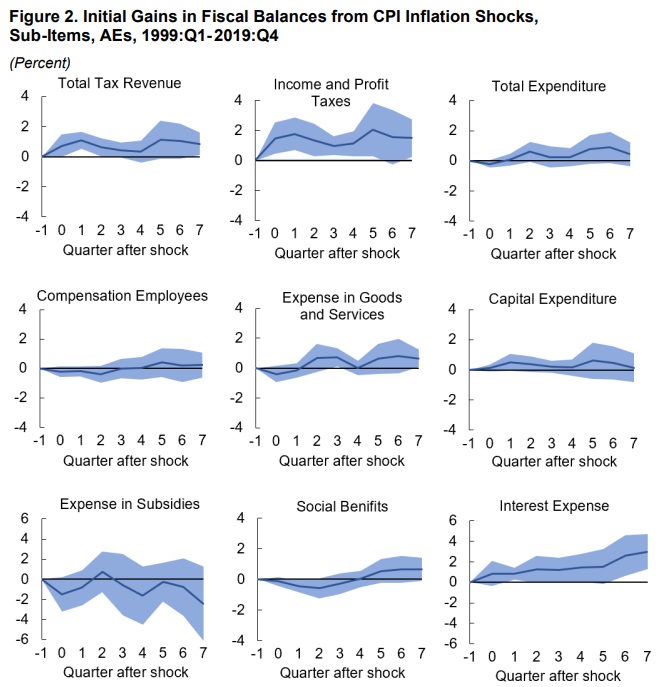
Here’s a look at different fiscal variables and how unexpected inflation during a two-year period.
What politicians presumably care about are the first two charts on
the first row. You can see that inflation leads to more tax revenue,
especially from taxes on income and profits.
I fear that they are less concerned (if at all) about the fact that inflation is bad for taxpayers and bad for the economy.
Sadly, there’s not much people can do to protect themselves from inflation. Unless, of course, we figure out an alternative to central banks.
They create too much money because they want to finance more government spending based on the nutty idea of modern monetary theory (an approach that has failed in places like Turkey, Argentina, or Sri Lanka).
In Part II, let’s consider whether there are ways to block or discourage irresponsible monetary policy.
But
don’t hold your breath expecting that kind of radical reform.
Politicians are not going to surrender their power over a key variable
in the economy.
But it’s also not terrible realistic, especially since there are good reasons to think governments today wouldn’t implement and maintain it in a sensible manner.
So most proponents of good policy today focus on more targeted reforms, most of which are designed to discourage central bankers from imposing inflationary policy.
But not everyone favors anti-inflation policies. In an editorial about various GOP economic proposals, the Washington Post criticizes any limits on the powers of the Federal Reserve.
Even worse is the rising urge to attack the Federal Reserve.While
in office, Mr. Trump mused publicly about firing Fed Chair Jerome H.
Powell. Entrepreneur Vivek Ramaswamy wants to restrict the Fed’s mandate
to “stabilize the dollar & nothing more.”
Mr. Pence wants to end the Fed’s dual mandate — minimizing inflation
and maximizing employment — in favor of an inflation-fighting-only
mission. Mr. DeSantis vows to “rein in” the Fed and stop its development
of a digital currency. Since the early 20th century, Fed independence
has undergirded U.S. prosperity; meddling with the central bank would
cause immediate and immense economic harm.
The editorial is wrong. If you want to know whether the Fed has “undergirded U.S. prosperity,” just watch this video and you’ll quickly learn the Fed has been a destabilizing force, producing boom-bust cycles (and the busts are always worse than the booms).
Regarding some of the specific ideas cited in the editorial, Pence
and Ramaswamy are right to say that the Fed should focus solely on price
stability, which is just another way of saying we should not have Keynesian monetary policy.
And kudos to DeSantis for opposing a central bank digital currency. Governments would have vast new powers to abuse if cash was eliminated.
Back
in the day, the goal for many young people was to leave the nest and
live on their own. They could spoil their appetites by eating chocolate
chip cookies before dinner, stay up late watching television, and leave
their beds untidy. Today, because the cost of living is spiraling out of
control, the sweet birds of youth are staying in the coop or moving
back home with mom and dad, new research has found. While this
ubiquitous development might be the subject of scorn, can anyone blame
Generation Zers and millennials for living at home in their room
upstairs surrounded by posters of Britney Spears and the Back Street
Boys?
Bidenomics 101: Living at Home
According to a new Harris Poll-Bloomberg News survey,
half of young adults are still living at home with their parents. Most
do not want to be shamed for the transition back, as close to 90% of
polling respondents stated that their peers should not be judged for
this setback. Roughly three-quarters of participants noted that the
decision was mainly financial. They stated that the driving factors were
saving money, taking care of older family members, being unable to live
independently, helping out with family expenses, and setting aside
money for a down payment.
Can Anyone Blame Them?
Sure, it
is easy to poke fun at the current generation of kidults who choose to
work remotely on a bed of plushies in their Power Rangers pajamas. But
the reality is that the economic situation is broken for millions. Price
inflation and the overall cost of living are the primary reasons for
many of these unique trends. Let’s take a peek at four components that
impact young people the most: food, transportation, shelter, and student
loans.
Food inflation has skyrocketed in recent years, with
supermarket prices still 3% higher than they were a year ago. Within the
Bureau of Labor Statistics consumer price index (CPI), many items
remain elevated or have reaccelerated their upward trend, from chicken
(+1.3%) to potatoes (+0.6%). Outside of the CPI, shoppers are witnessing
massive jumps in a basket of goods: olive oil, orange juice, and
avocados.
As
crude oil prices march toward the critical $100 threshold, the pain at
the pump is being felt by motorists, including young folks who might
already be paying an arm and a leg for their clunker. The national
average for a gallon of gasoline is close to $4. This impacts standard
transportation services, a CPI category that has spiked 10.3%
year-over-year and risen 2% month-over-month. In addition, a McDonald’s
cashier has seen his or her public transportation costs jump by 3.9%,
while TikTok influencers have seen their airline fares climb by nearly
5%.
Median national rent prices stood at $2,052 in August, just $2
short of last year’s record high of $2,054. Even if young people had
the means to purchase a residential property, the median mortgage
payment was $2,161 in July. Across the country, shelter costs have
swelled considerably; the index is up at an annualized basis of 7.3%.
The good news? There has been an apartment construction boom since the
onset of the public health crisis. The bad news? New builds are expected
to dry up soon because of ballooning borrowing costs and surging input
costs, be it labor or raw materials.
After a more than three-year COVID-related pause, student loan payments
will begin again in October. In total, student loan debt is about $1.57
trillion. This massive red ink might have been serviceable before the
coronavirus pandemic, but now that interest rates are at their highest
levels in more than two decades, college and university graduates will
find it harder to keep their heads above water.
Just Get a Good Job, Bro
But
some may counter that young people living at home can get a good job.
Indeed, labor conditions are tight, and nominal wage growth has been
terrific. The chief challenge is that the job market is easing amid a
slowing economy and rising interest rates. The other problem is that
real (inflation-adjusted) wages are down 3% since 2021. So, obtaining a
worthwhile employment opportunity is one ring on the ladder to success.
When paychecks do not stretch
very far and purchasing power is eroded daily, millions might feel
financially insecure and apprehensive to wave goodbye to mom and dad and
rent an overpriced apartment that may have cockroaches, zero sunlight,
and a blue-haired next-door neighbor with “Orange Man Bad” and “I’m With
Her” stickers plastered on the front door.












 <
<