Search This Blog

De Omnibus Dubitandum - Lux Veritas

Showing posts with label Solar Energy. Show all posts

Wednesday, March 26, 2025

Energy Fantasy Versus Reality In Woke-Land -- Part III

M @ Manhattan Contrarian

JP Morgan Chase — that’s the largest bank in the country. It has been headed for almost 20 years by celebrity CEO Jamie Dimon. For much of the 20 years, Chase and Dimon have been known for their fealty to woke orthodoxies, at least in their official pronouncements. For example, here is a Forbes piece from October 2020 citing Dimon on the subject of “systemic racism.” 
 
(Pithy quote: “Systemic racism is a tragic part of America’s history. . . . It’s long past time that society addresses racial inequities in a more tangible, meaningful way.”)

The fealty to woke orthodoxies has in the past extended in particular to the subject of “climate change.” In April 2021 JPM put out a big announcement of plans to facilitate investment of some $2.5 trillion in what they called “climate action and sustainable development.” In October 2021, JPM joined the so-called Net Zero Banking Alliance, then being organized by the UN (led by Mark Carney), promising to starve fossil fuels of investment capital in order to reduce CO2 emissions.

But meanwhile, over at J.P. Morgan Asset & Wealth Management, they have a guy named Michael Cembalest, who currently has the title Chairman of Market and Investment Strategy. For some 15 years, Cembalest has put out an annual Report called the Annual Energy Paper. I have covered a couple of Cembalest’s prior reports, here for 2021, and here for 2022. The titles of both those posts included the words “Fantasy Versus Reality In Woke-Land.” Cembalest is just out with the 2025 version of his Annual Energy Paper, so consider this to be Part III of this series.

These Reports by Cembalest are far from perfect. At a basic level, the Reports accept the ideas that there is a real energy transition going on, that it is somehow important, and that use of fossil fuels must eventually be eliminated. I don’t know if Cembalest really believes those things himself, or if accepting them for purposes of your public reports is the price of holding a highly-paid job at JPM. Either way, while I consider the failure to question those ideas to be a major flaw of these Reports, that failure does not prevent Cembalest from taking a serious and realistic look at many aspects of the supposed energy transition that are completely failing.

I’ll start with a couple of sections of this year’s Report that I consider to be the strongest: those covering hydrogen and carbon capture and storage (CCS).

Hydrogen

Cembalest’s section on hydrogen, beginning at page 45, is titled “Frydrogen: the cancellation of green hydrogen projects when exposed to the sunlight of energy math.” The reason for use of the word “fry”: 

“[M]any hydrogen projects are being fried (terminated) since the energy math didn’t work.”

Cembalest quotes Hanns Neubert in the June 2024 German MIT Technology Review:

“Electrolyzers, which do not exist, are supposed to use surplus electricity, which does not exist, to feed hydrogen into a network that does not exist in order to operate power plants that do not exist. Alternatively, the hydrogen is to be transported via ships and harbors, which do not exist, from supplier countries, which - you guessed it - also do not exist.”

There is a long list of some 12 insurmountable obstacles standing in the way of a green hydrogen economy. My favorite:

The green hydrogen economy barely exists despite mountains of taxpayer subsidies promoting supply. In the US, for example: a production tax credit of $3 per kg is equivalent to $91 per MWh based on the energy content of hydrogen (i.e., greater than wholesale electricity prices which averaged between $30 and $50 per MWh in 2024).

(Note that the $91/MWh tax credit for green hydrogen is just the subsidized portion of the cost of making the fuel; the $30-50/MWh wholesale cost of electricity includes all elements of making the electricity, not just the fuel.)

CCS

In a section on CCS on page 19 of the Report, Cembalest correctly takes note of the fact that after decades of hype, CCS has gone absolutely nowhere. He calls the CCS “citation-to-usage ratio” (that is, the number of citations of CCS in academic papers divided by the actual operating capacity of CCS facilities) “the highest ratio in the history of science.” A chart shows current U.S. capacity of operating CCS facilities at about 0.1% of CO2 emissions. If all planned facilities actually get built (highly unlikely based on experience), then the percent of emissions captured would go to around 0.8% of emissions.

https://images.squarespace-cdn.com/content/v1/503a5bade4b0b543ed240317/1aebd26a-d106-4760-8292-eb766a51cef8/Screenshot+2025-03-16+at+10.48.09%E2%80%AFPM.png?format=2500w

Another interesting chart shows that CCS facilities that have been built capture far from all of the CO2 emissions from the plant in question, despite consuming substantial portions of the energy production of the plant. Here is a portion of that chart:

Capturing 55-75% of the emissions of a coal power plant is never going to satisfy the environmental zealots. So what’s the point?

OK, those were the strong parts of the Report. Let’s get to the fundamental flaw.

Solar power

The biggest theme of this year’s Report is “Heliocentrism.” The title of the Executive Summary of the Report is “Heliocentrism and the speed of the energy transition.” Why the term “heliocentrism”?  

“For purposes of this paper, heliocentrism refers to the view that rapid growth in solar power and energy storage are at the heart of the energy transition, and that new investment in complementary thermal power generation is no longer required.”

Cembalest says that there are “believers in heliocentrism,” apparently lots of them, and lays out their case for them:

Believers in heliocentrism point to rapid growth in global solar capacity which more than doubled over the last three years. If BNEF projections are correct, solar capacity will double again from 2024 to 2027. Solar is now the dominant form of global capacity additions, comprising 60% of new capacity in 2024 and by our estimates ~75% in 2027. According to Carbon Brief, the International Energy Agency underestimated solar capacity growth for years and has been trying to catch up as shown below. Globally, the combination of wind and solar power generation has soared past nuclear and should surpass hydropower in 2025.

Cembalest then states that “there are a couple of ‘buts’ to keep in mind.” That’s putting it mildly! As the “buts,” Cembalest mentions that solar facilities have annual capacity factors in the range of 15-20%, and that producing electricity from solar panels does not solve the issue of non-electrified uses of energy, like transportation, industry, and most space heating. Fair enough. But he never gets to the biggest problem, which is dealing with the problem of intermittency as the penetration of solar generation into the grid increases.

The problem of energy storage is barely mentioned. There is this on page 5:

EIA analysts I spoke with cite a “staggering” amount of battery storage being added to the US grid: another 38 GW by 2027 on top of 22.5 GW already in place. This suggests that some natural gas peaker and baseload plants could eventually be displaced.

Well, how “staggering” is that? It’s really discouraging that Cembalest does not even use the correct units for describing battery capacity (which are watt-hours rather than watts). But assume that we are talking about standard 4-hour lithium-ion batteries. A few minutes of simple arithmetic would show that this “staggering” amount of storage is a tiny fraction of what would be needed to back up a predominantly solar electrical grid. The U.S. used 4,086 TWh, or 4,086,000 GWh, of electricity in 2024. Dividing by 8760 (hours in a year), that’s 466 GWh every hour. 38 + 22.5 GW of batteries would total 60.5 GW, times 4 hours’ duration would come to 242 GWh of storage. So, about half an hour’s worth. Full backup of a predominantly solar grid would take about 500 to 1000 hours of storage. So the “staggering” 242 GWh is around 0.05% - 0.1% of the storage that would be needed. An almost meaningless amount.

Cembalest’s conclusion is that while solar generation is increasing rapidly, it is only increasing “linearly,” which is not nearly fast enough to overtake all fossil fuel generation in any short number of years. Thus, “[A]s a general principle, . . . the US and Europe are a long way off from no longer needing both baseload and backup thermal capacity.”

Well, sorry Mike, but you’ve missed the big picture. If you had done the arithmetic, you could easily have seen that solar is not just “a long way off” from powering the grid without thermal backup; solar is never going to be the main source energy for a developed economy. You owed it to your clients to tell them that this can’t work, and there is a Green Energy Wall coming; but you failed.

Meanwhile, there is at least some reason to think that JPM at the highest levels has finally started to see reality and re-think its green energy commitments. Just in January, JPM quit the Net Zero Banking Alliance. Maybe by the time next year’s Report rolls around, the shackles will have been taken off Mr. Cembalest, and he can give his readers a dose of the truth.

Wednesday, February 19, 2025

Providing Trump Facts he Needs on Wind and Solar

By Craig Rucker, President @ CFACT


 The Trump Administration is hard at work returning sound energy policy to America.  

  • CFACT has been researching and educating policymakers and the public on climate and energy issues for decades.  
  • CFACT scholars are providing Administration officials with the hard facts and policy heft they need to turn our energy economy around.

Doug Burgum is America's new Secretary of the Interior.  Take a look at our coalition letter to Secretary Burgum.

President Trump's executive order on wind turbines was a major leap forward, however as always, the devil is in the details.  The EO may leave room for wind profiteers such as Virginia's Dominion Energy to slip more monstrous turbines through the legal cracks and onto our coast. 

"It is with a sense of real urgency we are writing to you today."  We wrote, "we much appreciate President Trump's Emergency Order for temporary withdrawal of all areas on the outer continental shelf from offshore wind leasing. We count twenty-two projects that have been paused. However, eleven projects have already received approvals with four of those under construction. Leasing and permitting will be reviewed for these approved projects but may take time... We recommend the Interior Department work with NMFS to immediately revoke the Letters of Authorization and order an immediate cession of construction until a review is complete."

Similarly, the Bureau of Ocean and Energy Management {BOEM) is in danger of mindlessly stumbling on with some of Biden's most ridiculous wind energy policies like a zombie that doesn't know it's dead.

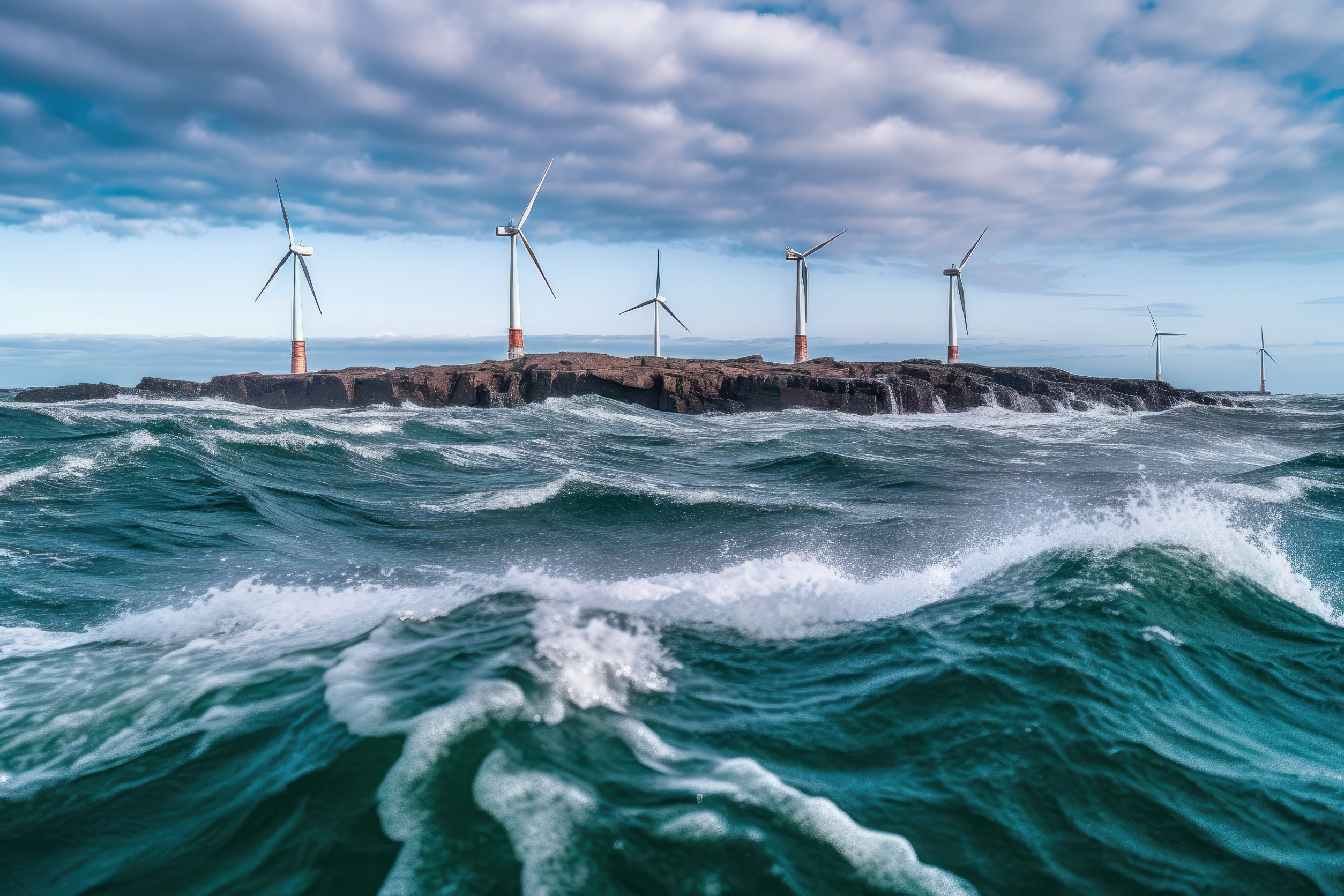
Big wind corporations are trying to erect floating wind turbines off California's beautiful coast.  CFACT readers and supporters know that we have been relentlessly pointing out the flaws and dangers of this floating folly for years.

We lay out to a detailed list of reasons why California's "programmatic environmental impact statement" on California floating wind "is woefully inadequate. In fact it specifically avoids those issues that justify cancelling the Program." We decisively conclude that, "the full Offshore Wind Program needs to be assessed for the entire West Coast before any project is approved for construction. This required assessment is missing in action. Based on this assessment the cumulative impacts then have to be minimized. Capping the authorized harassment of each threatened species may be the best way to avoid destructive."

In recent years CFACT senior advisor David Wojick has been perhaps America's number one star on offshore wind turbine analysis.  David Wojick digs deep into the scientific facts and arcane policy documents the government has relied on and spotlights their flaws as does no one else.

David's most recent post at CFACT.org lays out a simple, extremely daring approach to protect America from the dangers both wind and solar pose for our environment and electric grids.  David proposes that the Federal Energy Regulatory Commission (FERC) make full use of its unique authority and prevent future hookups of intermittent / unreliable energy sources such as wind and solar.

Places such as Europe and Australia have wasted vast sums on wind and solar and have nothing positive to show for it.  They have transformed places of natural beauty into sterile wind and solar deserts while radically raising the costs of energy for business and homeowners.  They have destabilized their electric grids while doing nothing meaningful to alter the temperature of the Earth.

America has been provided with voluminous examples of what not to do on energy.

CFACT will continue to provide the Trump Administration with the facts it needs to avoid the energy mistakes so many others have made.

For nature and people too.

Monday, January 6, 2025

Greenies Lie, Period!

By Rich Kozlovich

As it turns out, the greenies make things up, ludicrous things that only the brain dead can accept, you see, according to them "climate change is making plants less nutritious − that could already be hurting animals that are grazers".  Really?  And they know that how?  Let's try and get this right:

Never believe anything the green pushers, including the media, tell you. Their previous predictions have been pure garbage or propaganda to push an agenda, and they clearly care more about money and power than our length and quality of life. It is pathetic and dangerous when almost all people pretending to be journalists just regurgitate what they are told on “climate change” and “global warming” instead of doing research and asking questions. They are great contributors to the dumbing down of society, especially the children.

For many years I've written about the green movement and I learned from very early on, they lie, so when I write, I start with that foundational premise, and after I do the research on any subject they're ranting about..... guess what I find. They lied!

As for their doom and gloom, Chicken Little, the sky is falling predictions, they're pathetic. Here is my Failed Predictions file, along with my commentaries, If Green Prediction Was a Corporation, They'd Have a Monopoly on Being Wrong! And I particularly like this one, A Prince Who Was Potty, is Now a King Who is Potty, and Dangerously So!

Many years ago a customer who knew about my articles asked if I believed in global warning. I said, yes, and I believe in global cooling, but I don't believe mankind has anything to do with either one, and that's the issue. As for their climate models and predictions, that's garbage in and garbage out, as a result their timelines for disaster have come and gone, and the world is still here.

Environmentalism is part and parcel of a green globalist, one world government tyrannous socialist secular religion, with disaster mongering and lying as the central tenets of that religion.

A thousand years ago during the Medieval Warming Period the world was substantially warmer than it is today, and none of the disasters they're predicting for today occurred then, and there's no reason to believe they will occur now.

The world actually needs more CO2, not less. Climate change and CO2 have nothing to do with each other, except, climate change precedes CO2, not the reverse, and CO2 does not change the climate.   All that's absolutely known, and now we see Michigan is going to destroy 400 acres of woodland to build a solar farm with solar panels made in China.   

Remember 35 years ago the greenies were outraged at the controlled timber harvesting in the Northwest claiming logging was killing the spotted own.  After destroying that industry it was disclosed logging that was killing them at all, it was the barred owl, and the greenies knew that right from he start.  They lied, and now where are these green misfits over Michigan destroying 400 acres of forest to make way for solar panels?  The greenies have very selective outrage because their not about the environment, they're about destroying western civilization, and sadly so many of them at the base are nothing more than useful clueless idiots.

And now look at what that darned global warming has caused. Record-breaking wind, ice, and snow to impact 250 million Americans. Yes, and worse, global warming is now going to cause major winter storms and blizzard conditions in at least a dozen states, and even Washington DC. The answer?  Cut down more trees.   

Criminals have a code: "never give up on the con", and they haven't.

Monday, July 15, 2024

America’s Shrinking Farmland Threatens Food Security

Solar panel fields have been reclassified as farms. 

ByJul 13, 2024 @ Liberty Nation News, Tags: Articles, Climate Change, Opinion

Around the world, farmland is being converted to residential and industrial uses as farms consolidate, urban populations strain land resources, and narrow profit margins discourage would-be farmers. This shrinkage of agricultural acreage has been underway in America and Western Europe for a century. Climate change policies under the Biden administration have flushed renewable manufacturing industries with a trillion dollars in taxpayer funds, stimulating land price inflation, rewarding a handful of “stakeholders,” and pummeling local farms. The nation’s future food security is endangered.

Indiana’s Farmland Shrinkage

A study commissioned by the Indiana legislature in 2023 determined the state had lost 345,682 acres of farmland from 2010 to 2022. The detailed analysis states: “The results show that agricultural land was most likely to be lost in areas around the edges of cities and suburban areas.” The legislature notes in its recommendations:

“Consider what is an alarming level of lost farmland acres as it pertains to food security. When should a county, state or the country be concerned? Task the legislature to consider the threshold in which the lost number of acres significantly reduces access to food.”

Addressing the 2022 US Census of Agriculture data showing the nation’s farmland had shrunk by 2% since 2017, and the number of farmers had declined 7%, USDA Secretary Tom Vilsack recently expressed this ominous query: “Are we okay with losing that much farmland or is there a better way?”

Finding a ‘Better Way’

There is, of course, a better way – but farmers and local food production are eclipsed in Washington by corporate lobbyists, animal rights activists, climate cultists, conservationists, and environmentalists. The Biden administration has increased endangered species regulations that requires 30% of all American land be preserved as wild and launched a massive spending spree on renewable energy manufacturing. All that competes for space with prime farmland across the nation.

Indiana’s investigation reports that overall agricultural productivity for the state increased over the same period, likely attributable to advances in GMO (genetically modified organisms) technologies in corn and soy crops. However, 39% of the nation is currently farmland. If social justice ideologues attack cows as destructive to the climate, vegans condemn omnivores as barbarians, factories and swimming pools replace pastures, vast areas are eminently domained into “rewilding,” and solar panel arrays eclipse renewable grass blades, where exactly will the nation’s food be produced?

Perhaps yet more gleaming factories will be constructed on once-productive farmland to grow synthetic meats from calf fetuses in stainless-steel tanks or house billions of roaches, worms, or spiders for processing into bug-burgers. That is the globalist way.

Greenhouse gases and alleged climate change have been leveraged to wage war on farmers and rural Americans for a quick gorging at the government’s pig trough. These same policies would afford nearly limitless power to national or globalist authorities to dominate what humanity eats, drinks, drives, and thinks. The world is told that not only cows and land but also the entire food chain must be taken over to stave off global warming!

The foundation of liberty has always been local food supplies, which are now rapidly consolidated and regulated. As American novelist and poet Wendell Berry cautioned, “Small-scale, diverse farms are the best defense against a dangerous concentration of power.”

The power is concentrating, and it aspires to control food. Farmland isn’t just for Bill Gates and Mark Zuckerberg anymore. As the number of American-owned family farms declines, foreign ownership of US farmland has escalated. A USDA Farm Service Agency Report of foreign land holdings through December 31, 2020, reflected this accelerating trend:

“Foreign persons held an interest in nearly 37.6 million acres of U.S. agricultural land as of December 31, 2020. This is 2.9 percent of all privately held agricultural land and 1.7 percent of all land in the United States … This is an increase of over 2.4 million acres from the December 31, 2019 report.

Farming Solar Panels in Lieu of Food

Ironically, the Indiana study included solar panel arrays as farmland in its calculations: “Agriculture officials relied on data from the state Department of Local Government Finance [DLGF] and the U.S. Department of Agriculture to create its findings. The report stated that the DLGF includes uses like renewable energy in its counting for farmland.” This is par for the fraudulent renewables course. The Department of Energy boasts:

“Since President Biden took office, across the nation, companies have announced more than 500 planned investments in at least 450 new or expanded clean energy manufacturing facilities totaling over $160 billion in announced private and public sector investments into solar; electric vehicle assembly, components, and chargers; battery; and offshore wind manufacturing.”

Donald Trump was widely mocked for references to “clean coal.” Yet, clean energy manufacturing facilities for solar, EV components, batteries, and wind turbines all generate massive amounts of toxic chemical pollution, including innumerable “forever chemicals.”

These allegedly climate-saving factories and the suburban sprawl they seed eat up farmland, sparing the landscape the supposed scourge of grazing cows but intruding ever more between consumers and the soil microbiome that sustains them.

 
Read More From John Klar

Thursday, June 27, 2024

This Energy Transition Thing Really Is Not Happening

June 25, 2024 @ Manhattan Contrarian 

From reading the left-wing media, you know (or think you know) that there is an energy “transition” going on. This is something that must happen as a matter of urgent necessity. Vast government subsidies are being disbursed to assure its rapid success. Fossil fuels are rapidly on the way out, while wind and solar are quickly taking over.

For example, you may well have seen the big piece last August in the New York Times, headline “The Clean Energy Future Is Arriving Faster Than You Think.”

Across the country, a profound shift is taking place . . . . The nation that burned coal, oil and gas for more than a century to become the richest economy on the planet, as well as historically the most polluting, is rapidly shifting away from fossil fuels.

But if you read that piece, or any one of dozens of others from the Times or other “mainstream” sources, what you won’t find are meaningful statistics on the extent to which fossil fuel use is declining, if at all, or the extent to which renewables like wind and solar are actually replacing them.

That’s why the Manhattan Contrarian turns instead to dry statistical data to try to get the real story. Several years ago I discovered an annual book of energy data called the Statistical Review of World Energy. At the time, the Statistical Review was produced by the international oil company BP. I first covered one of these Reviews in this post from July 2019. A couple of years ago BP apparently decided to get out of this business, and turned the product over to something called the Energy Institute. EI then produced a Statistical Review in June 2023 (covering 2022), and now is just out on June 20, 2024 with a Statistical Review covering 2023.

Most of the Statistical Review consists of just spreadsheets of numbers. There are some charts, but relatively few. But the takeaways are too obvious to hide. The big one is this: there is no energy “transition” going on, at least not in the sense that “renewables” are actually supplanting fossil fuels. Yes there is some considerable amount of “renewable” wind and solar electricity generation getting built (with huge government subsidies). But it is not replacing fossil fuel generation. Rather, fossil fuel generation continues to increase, and its share of overall energy production has barely budged.

Here is EI’s June 20 Press Release, which summarizes the five “key stories” that it says emerge from the statistics. The first one is the big one — increasing energy consumption led by increased production and consumption of fossil fuels:

Record global energy consumption, with coal and oil pushing fossil fuels and their emissions to record levels. Global primary energy consumption overall was at a record absolute high, up 2% on the previous year to 620 Exajoules (EJ). Global fossil fuel consumption reached a record high, up 1.5% to 505 EJ (driven by coal up 1.6%, oil up 2% to above 100 million barrels for first time, while gas was flat). As a share of the overall mix they were at 81.5%, marginally down from 82% last year.

And of course, “emissions” continue to rise:

Emissions from energy increased by 2%, exceeding 40 gigatonnes of CO2 for the first time.

No matter how much the federal government or any state threatens to punish you for your sin of fossil fuel use, aggregate global emissions from such use are not going to go down within our lifetimes.

The second “key story” relates to the contribution, or lack thereof, of solar and wind. Here EI engages in some modest spinning to make things look less bad than they are for the solar and wind promoters; but there’s not much they can do:

Solar and wind push global renewable electricity generation to another record level. Renewable generation, excluding hydro, was up 13% to a record high of 4,748 TWh. This growth was driven almost entirely by wind and solar, and accounted for 74% of all net additional electricity generated.

4,748 TWh of renewable generation — wow, that’s a lot! Or is it? Do you notice how they suddenly switched units from Exajoules to Terawatt hours when they changed from talking about fossil fuels to solar and wind. Does anybody around here know the conversion factor? Yes — it’s 277.778 TWh per EJ. That means that the 4,748 TWh of “almost entirely” solar and wind power generated in 2023 came to all of 17.1 EJ, which is just 2.7% of the 620 EJ of world primary energy consumption. Could you have imagined that it could be so little, after decades of over-the-top promotion and trillions of dollars of subsidies?

And pay attention to that line “wind and solar . . . accounted for 74% of all net additional electricity generated.” Does that somehow sound like a transition is happening? It’s the opposite. If wind and solar were actually taking over, they would have to account for 100% of additional generation, plus large further amounts to replace fossil fuel generators. As long as wind and solar account for less than all of additional generation, then fossil fuels are continuing to increase, and there is no “transition” going on at all.

I mentioned that there were relatively few charts in the Review, but some of them are striking. Here is one of my favorites, showing global coal consumption from 1965 to 2023:

lOver that period, North America and Europe have cut their consumption almost by half, from almost 40 EJ per year to around 20. But over the same period the consumption in the rest of the world has gone from about 20 EJ to around 140, multiplying by a factor of 7. And don’t be fooled by the apparent leveling off of increases in total consumption in the last several years. That reflects continuing decreases in North America and Europe, which are more than offset by larger increases in the Asia Pacific region.

Robert Bryce at his Substack has many more details from the EI Statistical Review, plus several charts that he has created from the EI data. He is much better at creating charts than I am. The title of Bryce’s article is “Numbers Don’t Lie.” Bryce also has a figure for the amount of government subsidies that have gone to wind and solar generation since 2004: $4.7 trillion. That much money to fund a supposed “transition” that isn’t occurring at all.

The story is going to be effectively the same every year until finally the promoters give up on the wind/solar scam.

Saturday, June 1, 2024

Private Property Rights

A common issue when wind or solar projects are being proposed

At public hearings about industrial wind and solar projects, the issue of private property rights frequently comes up. Almost always it is a claim that a potential leaseholder has the right to lease his property to a wind or solar developer.

Like many aspects of these contentious matters, this is a decoy: intentionally inserted by the wind or solar advocates to confuse things. (Remember that creating confusion is a major strategy used by those who want to control us: see here.)

Put another way, private property rights claims are a purposeful distraction from the real subject at hand: the net consequences to the community from the proposed wind or solar project.

We live in a democratic country with a long history of protecting private property rights, so very few of us are against them. But what are “Private Property Rights”?

In short, they are the property owner’s right to do what they are legally allowed to do with their property — as long as their actions have no material adverse impact on their neighbors, or the rest of the community.

A parallel concept is that you have a right to extend your fist — yet that right ends at the beginning of another person’s nose. In other words, your “right” ends when it infringes on another person’s rights.

This is also the principle behind zoning, which is in effect in many parts of the country. Without zoning, an adult club could operate next to a school, or a gas station could be built in a residential neighborhood. Zoning protects the rights of property owners while also protecting the general welfare of the community.

Further, if the focus is on “rights” what about the fundamental rights that nearby homeowners have regarding wind or solar projects? Who is protecting those? Should a leaseholder who wants to make a quick buck really have the right to undermine their neighbors’ peaceful use and enjoyment of their homes?

So how does this all apply to a person who wants to get paid for industrial wind turbines (or industrial solar panels) being on their property?

The leaseholder’s private property rights are important and should be carefully considered. However, as stated above, their rights have limits. For example, in most cases they do not have an entitled right to be a knowing causal agent:

  1. - of adverse health effects to their neighbors,
  2. - of devaluing proximate homes,
  3. - of crop yield reductions to nearby farms,
  4. - of causing pollution and other interference with aquifers,
  5. - of harm to wildlife and livestock of the community,
  6. - of degrading the ecosystem in the area,
  7. - of impacting hunting in approximate lands,
  8. - of reducing tourism to the area,
  9. - of interfering with regional weather and navigation radar, or
  10. - of raising electricity rates in the region.

Turbine or solar leaseholders are likely unaware of the magnitude and severity of these issues, because they certainly wouldn’t have been told about them by the wind or solar developer, or by our local legislators, or by state agencies.

However, there are studies that document every one of these ten problems. Further, they were done by independent experts — people who have no dog in the fight.

Now it’s likely that landowners (and their developer partner) will arbitrarily deny that these consequences can happen. If they are so sure, then the solution is easy: for them to provide a written, legal, financially-backed guarantee against all of these matters.

Ideally, this would be incorporated into a well-written wind ordinance (like this) that protects the rights of those who are not in this for personal financial gain.

For example, a wind or solar ordinance should include a Property Value Guarantee to protect the most valuable asset of citizens near these projects: their homes.

It is a statutory obligation that local legislators protect the health, safety, and welfare of the citizens in their community, so they usually have the authority to pass such a guarantee. If it turns out that the wind developer’s claims are accurate (that there is no devaluation), the cost to them will be trivial. So it’s fair to all.

Without proper wind and solar ordinances what we have is a situation where the profits are privatized (e.g., to select landowners and the developer), but the costs are borne by the community.

That is not fair or reasonable from any perspective.

PS — Often when wind or solar promoters lose the private property rights fight, they then try to play their trump card: the proposed development is really all about saving the planet! Not surprisingly that assertion is bogus as well (e.g., see here or here).


Here are other materials by this scientist that you might find interesting:

Check out the Archives of this Critical Thinking substack.

WiseEnergy.orgdiscusses the Science (or lack thereof) behind our energy options.

C19Science.infocovers the lack of genuine Science behind our COVID-19 policies.

Election-Integrity.infomultiple major reports on the election integrity issue.

Media Balance Newsletter: a free, twice-a-month newsletter that covers what the mainstream media does not do, on issues from COVID to climate, elections to education, renewables to religion, etc. Here are the Newsletter’s 2024 Archives. Please send me an email to get your free copy. When emailing me, please make sure to include your full name and the state where you live. (Of course, you can cancel the Media Balance Newsletter at any time - but why would you?

Leave a comment

Share

Thanks for reading Critically Thinking About Select Societal Issues! Please pass a link to this article on to other associates who might benefit. They can subscribe for FREE to receive new posts (typically about once a week).

Friday, February 23, 2024

Green Crime: An Electric Car, Wind and Solar Crime Wave

By @ Sultan Knish Blog 

Biden’s Inflation Increase Act intends to spend $7.5 billion taxpayer money to build charging stations for electric car owners. Two years later, no EV chargers were built. And that’s good.The modern sheen of the electric car is running into the medieval state of American cities.

Seattle began installing dozens of EV chargers only for thieves to show up and raid at least eight of the charging cables for copper requiring thousands of dollars worth of repairs. In response, the city is planning to put the chargers high up on poles that can only be lowered by an app. This will cost even more money and in an environment in which brazen copper thieves toppled an FM radio tower in Oklahoma, isn’t likely to deter the criminals.

EV owners who suffered from copper theft while leaving their cars to be charged in public places were told by the Seattle Police Department to “stay with the vehicle if you can while it’s being charged,” Considering that it can take an electric car hours to charge, that’s gonna be a wait.

In Oakhurst, CA , every cable was cut on a Tesla ‘supercharger’ station almost as soon as it had been set up. At a nonprofit in Van Nuys, 38 cables were stolen. Since the thieves rarely see any real punishment in cities where property crime has effectively been legalized, it’s getting worse.


The problem has become commonplace enough that Biden’s Department of Energy rolled out a special guide to stopping charging cable theft by warning that “the theft of EV charging cables can lead to a decrease in the use of EVs, which can have a negative impact on the environment.” Proposals from the DOE include charging your electric car at home.

Not that only charging electric cars at home is enough because thieves have taken to going after charging cables right in driveways as the EVs are being charged overnight.

Charging cables for the already overpriced electric cars can cost over $1,000.

Thieves on bicycles ride from suburban house to house, seizing cables and riding away with them. It’s estimated that an experienced crook can make off with one cable in 13 seconds.

And so electric car owners are warned to make sure that they lock their car in the garage. Then they’re told to lock their cables with padlocks and make sure their insurance covers their cables.

The incredible convenience of electric cars is now such that owners can only charge them while locked in their garages, with a padlock on the cable and the cable under the car’s wheel.

But it’s not just Teslas. Copper thieves are coming for every piece of ‘green’ infrastructure.

In Fresno, CA, $100,000 in copper wire was stolen from a solar farm, but wind farms, because they’re often far away from people, are an even more attractive target for copper thieves. And wind turbines have massive amounts of copper in them, making them even more desirable.

Copper thieves cut into a turbine, haul out cables and then drive away causing as much as millions of dollars in damage. Such thefts have been reported from Arizona to Minnesota to Iowa to Massachusetts, Internationally in the UK, there was a 48% increase in solar and cable ‘green’ copper theft, and 5,000 major solar thefts across Europe.

But where is all that copper going? The answer is appropriately green. It’s being recycled.

After the copper is stolen, it’s taken to recycling centers, many of which boast of their “sustainability” and contributions to the planet. There the copper is resold, often to China, which spurred the original copper boom, and transformed into more green energy equipment that the copper thieves will steal and then recycle to continue the cycle of environmental crime.

Green energy gear, from EV charging cables to solar panels and wind turbines, require a lot of copper. This demand for copper raises the price of copper and drives copper thefts.

Recycling soda and beer cans depended on homeless people digging through the trash and hauling giant garbage bags full of cans to be exchanged for 5 cents each. Copper theft is a more advanced version of the same game. The perpetrators are often addicts stealing copper and turning it over to organized criminals or selling it to recyclers and buying fentanyl.

Videos have documented trucks picking up ‘harvested’ copper and providing fentanyl.

That’s the kind of dysfunctional misery that the green revolution rests on and always has. The recycling junkie thieves aren’t just looking through the trash for Coke cans, they’re tearing up copper wire, but that’s a difference in scale, not in substance. Recycling was always theft.

Biden’s Department of Energy claims that looting electric cars is a threat to the planet. “EVs are an essential part of the transition to a more sustainable future, and any obstacles to their adoption must be addressed,” it warns. But it doesn’t call for cracking down on crime.

And it’s the electric cars and other green tech that’s driving the copper theft wave.

Electric cars use four times as much copper as real cars. One Tesla needs a mile of copper just to hook up the battery packs. Solar panels need 5.5 tons of copper for each megawatt. A wind farm can use as much as 7,000 tons of copper. There’s nothing ‘green’ about any of this.

Green energy demands a lot of mining and then outsources that to Communist China. And China helps the cartels manufacture fentanyl which they trade to junkies for copper.

From the Chinese Communist perspective, it’s a beautiful virtuous cycle.

The zombies they create steal our copper, send it to them and they resell it to us. The more we go ‘green’, the more copper we need, and the more China makes money by selling us ‘green’. And the more Americans it can turn into fentanyl zombies to steal it back to China.

Green crime does pay: at least for thieves, Communists and environmentalists. 

Daniel Greenfield is a Shillman Journalism Fellow at the David Horowitz Freedom Center. This article previously appeared at the Center's Front Page Magazine. Click here to subscribe to my articles. And click here to support my work with a donation.Thank you for reading.

Monday, August 7, 2023

The Great Wind and Solar Land Grab

By August 5th, 2023 199 Comments @ CFACT

Which is more environmentally friendly — an energy source that uses one unit of land to produce one unit of electricity or a source that uses 100 units of land to produce one unit of electricity?

The answer should be obvious.

Nevertheless, “green” energy advocates call for a huge expansion of wind, solar, and other renewables that use vast amounts of land to replace traditional power plants that use comparatively small amounts of land.

Vaclav Smil, professor emeritus at the University of Manitoba in Canada, extensively analyzed the power density of alternative sources used to generate electricity. He defined power density as the average flow of electricity generated per square meter of horizontal surface (land or sea area).

Estimating power density is complex. Smil included plant areas, storage yards, mining sites, agricultural fields, pipelines and transportation, and other associated land and sea areas in his analysis.

Smil’s work allows us to compare the energy density of electricity sources. If we set a nuclear plant to one unit of land required for one unit of electricity output, then a natural gas-powered plant requires about 0.8 units of land to produce one unit of output. A coal-fired plant uses about 1.4 units of land to deliver one unit of power.

But renewable sources require vastly more land. A standalone solar facility requires about 100 units of land to deliver the same average electricity output as a nuclear plant that uses one unit of land.

A wind facility uses about 35 units of land if only the concrete wind tower pads and service roads are counted, but over 800 units of land for the entire area are spanned by a typical wind installation.

Production of electricity from biomass has the poorest energy density, requiring over 1,500 units of land to output one unit of electricity.

As a practical example, compare the Ivanpah Solar Electric Generating System in the eastern California desert to the Diablo Canyon Nuclear Plant near Avila Beach, California.

The Ivanpah facility produces about 793-gigawatt hours per year and covers an area of 3,500 acres. The Diablo Canyon facility generates about 16,165-gigawatt hours per year on a surface area of 750 acres. The nuclear plant delivers more than 20 times the average output on about one-fifth of the land, or 100 times the power density of the solar facility.

To approach even 50 percent renewable electricity using primarily wind and solar systems, the land requirements are gigantic.

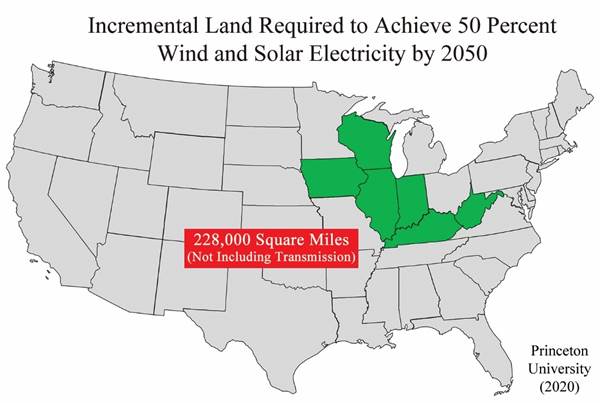
Net-Zero America,” a 2020 study published by Princeton University, calls for wind and solar to supply half of U.S. electricity by 2050, up from about 14 percent today. The study estimated that this expansion would require about 228,000 square miles of new land, not including the additional area needed for transmission lines.

That is larger than the combined area of Illinois, Indiana, Iowa, Kentucky, West Virginia, and Wisconsin. This area would be more than 100 times as large as the physical footprint of the coal and natural gas power systems that would be replaced.

Taking land for wind and solar can seriously impact the environment.

Standalone solar systems blanket fields and deserts, blocking sunlight and driving out plants and animals. Since 2000, almost 16 million trees have been cut down in Scotland to make way for wind turbines, a total of more than 1,700 trees felled per day. This environmental devastation will increase the longer net-zero goals are pursued.

Wind and solar require vast amounts of land to generate the electricity required by modern society. Without fears about human-caused climate change, these systems would be considered environmentally damaging.

Net-zero plans for 2050, powered by wind and solar, will encounter obstacles with transmission, zoning, local opposition, and just plain space that are probably impossible to overcome.

Author

  • Steve Goreham

    Steve Goreham is a speaker, author, and independent columnist on energy, sustainability, climate change, and public policy. More than 100,000 copies of his books are now in print, including his latest, Outside the Green Box: Rethinking Sustainable Development.

Wednesday, November 23, 2022

Oh No! Say it Ain't So!

By Rich Kozlovich 

For years these snotty arrogant Eurocrats looked down their noses at Americans, and when Trump became President and put America on a path to energy independence and exportation, they injected themselves with high octane arrogance sending their level of contempt through the stratosphere. 

Which of course all the media, celebrities and leftist worldwide enjoyed thoroughly. But that didn't prevent them from buying American oil and natural gas. And now all their virtue signally about green energy being the wave of the future has completely failed. They're now using coal, stopped shutting down nuclear plants....and.... all of a sudden nuclear ....watch out now....here it comes.....nuclear is green, and we know that must be true because Greta Thunberg has given her imprimatur on it.

How much longer before coal becomes green?  Reality really bites doesn't it?  And now their economies are heading into the toilet.  Companies all over Britain are closing because they can't afford the energy costs to keep their business open, and that's true for Germany.  That's a great big schadenfreude for me.  

So, what are the people of Europe doing to offset this lack of sufficient, readily available and inexpensive energy?  They're cutting down their trees, Now, how green is that?  It must be green since that's what they have to do to build massive fields of solar panels, so it must be green.   Right?  

Or maybe green isn't green as much as it's an environmental disaster. 

It’s easy to argue that the “green” movement is causing much more environmental harm than good. High energy costs are leading to poverty, which in turn leads to less investment in environmental protection and nature conservation. Biodiversity-rich forests are being cleared away to make room for wind parks and people are increasingly burning wood to stay warm as an alternative to natural gas and heating oil.

Well, Greenpeace and other environmental nitwits are really upset at this, but no one really cares.  

So, what's the solution?  Well, we could follow the advice of the World Economic Forum and eliminate  billions from the world's population.  Any volunteers?


Wednesday, October 26, 2022

Megatons Of Toxic Waste from Solar Panels: Ticking Time Bomb

| Sep 28, 2022 | @ America Out Loud

Most people seem to believe that wind and solar panels produce no waste and have no negative environmental impacts. This is entirely wrong, explains energy and environment expert Isaac Orr, Policy Fellow at the Center of The American Experiment.

He says everything humans do has an environmental impact, whether it be mining, using a coal-fired power plant, or even tourism. When it comes to energy and environmental policy, the real question to ask is not “will there be an impact?” but rather, “can the impacts be minimized?” and “do the benefits outweigh the costs?”

Because everything has an effect on the environment, everyone must understand the impacts of all energy sources so we can make the best possible energy decisions. Whether we recognize it or not, we are constantly making trade-offs in our lives.

A recent article in Grist warns of a looming onslaught of solar waste as solar panels in the United States begin to reach the end of their 25-year lifetimes. The article begins:

“Solar panels are an increasingly important source of renewable power that will play an essential role in fighting climate change. They are also complex pieces of technology that become big, bulky sheets of electronic waste at the end of their lives — and right now, most of the world doesn’t have a plan for dealing with that.”

While their role in fighting climate change is untrue but the rest is accurate.

Unlike other forms of electricity generation, like nuclear plants or coal plants, there doesn’t seem to be any foresight on how to deal with the waste that will be generated when solar panels and wind turbines reach the end of their short lifetimes. Remember, nuclear plants can run for 80 years, as can coal plants, with proper maintenance and upkeep, but even the best wind turbines and solar panels will last for just 25 years or less, creating staggering amounts of waste products.

The article continues:

“But we’ll need to develop one [a plan for dealing with the waste] soon, because the solar e-waste glut is coming. By 2050, the International Renewable Energy Agency projects that up to 78 million metric tons of solar panels will have reached the end of their life, and that the world will be generating about 6 million metric tons of new solar e-waste annually.”

This is an enormous amount of waste. For context, the amount of nuclear waste created from generating electricity in the United States for the last five decades is about 90,000 metric tons. During this time, nuclear power has provided nearly 20 percent of the nation’s electricity.

This means solar panels are expected to generate 866 times more waste in the next 30 years than nuclear power has generated in the last 50. And unlike nuclear waste, which is safely stored on site, nobody knows what will happen to these solar panels at the end of their useful lifetime because solar panels are not easily recycled. According to Grist:

“Standard electronics recycling methods don’t cut it for solar panels. Recovering the most valuable materials from one, including silver and silicon, requires bespoke recycling solutions. And if we fail to develop those solutions along with policies that support their widespread adoption, we already know what will happen.

“If we don’t mandate recycling, many of the modules will go to landfill,” said Arizona State University solar researcher Meng Tao, who recently authored a review paper on recycling silicon solar panels, which comprise 95 percent of the solar market.

“Solar panels are composed of photovoltaic (PV) cells that convert sunlight to electricity. When these panels enter landfills, valuable resources go to waste. And because solar panels contain toxic materials like lead that can leach out as they break down, landfilling also creates new environmental hazards.”

Not only are solar panels not required to be recycled, but their disposal can also lead to potential environmental problems. If broken panels in landfills can leach lead or other heavy metals, it stands to reason that other broken panels at solar arrays could potentially result in similar contamination. However, we won’t know if that happens because solar panels are not held to the same environmental standards as other projects.

Solar panels require no baseline water testing or soil sampling to measure metal levels in the soil before the panels are installed. These baseline tests will give us a “before” photo of the environment and allow us to determine if solar panels have damaged the environment during their useful lifetimes.

Solar panels are required to be recycled in the European Union, but, with the exception of Washington state, the U.S. has no solar recycling mandates whatsoever. Most of the time, solar panels go to landfills or are exported overseas for reuse in developing countries with weak environmental protections, according to Grist.

So few solar panels are recycled because they aren’t cost-effective. According to Grist:

“Tao and his colleagues estimate that a recycler taking apart a standard, 60-cell silicon panel can get about $3 for the recovered aluminum, copper, and glass. Meanwhile, Vanderhoof [Sam Vanderhoof, CEO of Recycler PV Solar] says that the cost of recycling that panel in the U.S. is anywhere between $12 and $25 — after transportation costs, which oftentimes equal the cost to recycle.’ At the same time, it typically costs less than a dollar to dump a solar panel in a solid waste landfill in states that allow it.

“We believe the big blind spot in the U.S. for recycling is that the cost far exceeds the revenue,” Meng said. “It’s on the order of a 10-to-1 ratio.”

There’s nothing wrong with putting solar panels in a properly designed landfill facility. Landfills are equipped with modern technology to protect groundwater and the environment. Putting the solar panels in one of these designated waste facilities is a much better alternative to sitting abandoned in farm fields after reaching the end of their useful lifetimes.

Unfortunately, most people still don’t understand that wind and solar require enormous amounts of metal. Much of this metal is mined in Third World countries with few protections for workers or the environment. Then, after the solar panel is no longer useful to Americans, they are shipped to developing countries for reuse or disposal. The potential contamination then becomes their problem, not ours.

If this is the “circular economy” that environmentalists talk about, then the circle is simply exploiting the environment in poor countries to get the metals needed to make solar panels and foisting the panels back on the developing world after we don’t want them anymore.

And these people have the gall to talk about “environmental justice.”


Avatar

Dr. Jay Lehr is a Senior Policy Analyst with the International Climate Science Coalition and former Science Director of The Heartland Institute. He is an internationally renowned scientist, author, and speaker who has testified before Congress on dozens of occasions on environmental issues and consulted with nearly every agency of the national government and many foreign countries. After graduating from Princeton University at the age of 20 with a degree in Geological Engineering, he received the nation’s first Ph.D. in Groundwater Hydrology from the University of Arizona. He later became executive director of the National Association of Groundwater Scientists and Engineers.

Tom Harris is Executive Director of the Ottawa, Canada-based International Climate Science Coalition, and a policy advisor to The Heartland Institute. He has 40 years experience as a mechanical engineer/project manager, science and technology communications professional, technical trainer, and S&T advisor to a former Opposition Senior Environment Critic in Canada’s Parliament.


Monday, October 17, 2022

Scott Melbye: Even the Left Recognizes Green Energy Transition a ‘Colossal Failure’

Sean Moran  

Scott Melbye, the president and CEO of Uranium Royalty Corp., told Breitbart News Saturday that even the left has now realized that the transition to green energy has been a “colossal failure.”  Breitbart News Saturday host and Breitbart News Washington Bureau Chief Matthew Boyle opened the interview by noting that green energy icon Greta Thunberg has capitulated and admitted that she would like to see Germany continue using its nuclear power plants.  Melbye took this as an implicit admission from the left that a country cannot solely run on green energy, as it is intermittent and oftentimes unreliable.

“When you have the poster child of the progressive left come out and acknowledge that nuclear energy is an important part of the energy mix, I think you now have the left realizing what we all have seen with our very own eyes is that this transition to green energy has been a colossal failure,” Melbyre explained to Breitbart News Saturday. “It’s been a failure because it’s relied more on ideology. This idea that renewables that run only 30 percent of the time can run our electricity is insane.”............To Read More...


Wednesday, October 12, 2022

Surprise, Surprise, Fossil Fuels Gets Equal Support with Wind and Solar


In writing for the Associated Press, Mathew Brown and Michael Phillis uncovered a previously well-kept secret from the wind and solar energy lobbies. They had been had by the cleverness of Senator Joe Manchin. The man who is alternately hated by both parties. It came months after the current administration had canceled $192 million of leases in the Gulf of Mexico. But the industries set back were short-lived.

In order to get more money to support failed renewable energy on public lands, oil and gas industry lobbyists, with Senator Manchin’s help, were able to push through a deal that no climate change alarmist could love. Just the opposite, in fact.

While the Inflation Reduction Act concentrates on so-called clean energy incentives that might reduce emissions of carbon dioxide, it simultaneously buoys oil and gas interests by mandating the leasing of vast areas of public lands and off the nation’s coasts. And it locks renewables and fossil fuels together.

If the Biden administration wants wind and solar on public lands, it must first offer new oil and gas leases.

As a result, US oil and gas production, along with carbon dioxide emissions, will keep growing. Andrew Gillick of Enverus, an energy analytic company said this ends the idea that fossil fuels will become obsolete. The folks that think oil and gas will be gone in 10 years are not thinking through what this means.

Both supply and demand will increase over the next decade, and all these plans for Net Zero and decarbonization will begin to look like what they are, stupid, silly, impossible; take your pick.

The law reinstates within 30 days the 2700 square miles of Gulf leases that had been withheld. It ensures companies like Chevron will have a chance to expand and override concerns of previous judicial rulings. The fossil fuel industry’s ambitions are now directly linked to wind and solar development.

The bill prohibits leasing of federal lands and waters for renewable energy unless the government has offered at least two million acres of public lands and 60 million acres in federal waters for oil and gas leasing during the prior year. The law does not require the leases to be sold, only to be offered for sale.

The leasing provisions happily mark a failure in the efforts of environmental zealots to impose a nationwide leasing ban. It scuttles Biden’s promise to stop all oil and gas development on his first day in office.

A stream of potential drilling sites is crucial for companies to maintain future production because wells can take years to develop, and some yield nothing, said Jim Noe, an industry lobbyist. He worked with the Senate staff on the climate bill leasing provisions.

The demand for oil and gas will not decline. These new leases will bring many high-paying jobs, unlike the mythical jobs of the renewable energy industry.

Intelligent people understand that the country cannot run on the wind and sun, yet they tell us this story daily. At last, we have sensible legislation that understands this.


Dr. Jay Lehr

Dr. Jay Lehr is a Senior Policy Analyst with the International Climate Science Coalition and former Science Director of The Heartland Institute. He is an internationally renowned scientist, author, and speaker who has testified before Congress on dozens of occasions on environmental issues and consulted with nearly every agency of the national government and many foreign countries. After graduating from Princeton University at the age of 20 with a degree in Geological Engineering, he received the nation’s first Ph.D. in Groundwater Hydrology from the University of Arizona. He later became executive director of the National Association of Groundwater Scientists and Engineers.

Tuesday, July 22, 2008

Solar power realities

This is from an e-mail to Jon Ray's blog "Greenie Watch".

A comment by someone who knows from professional experience -- received via a reader. The report focuses on Tasmania, which is in roughly the equivalent latitude to Italy. So what is bad in Tasmania will be worse in Britain (for instance). As for Sweden or Canada, stop laughing! Jon Ray

I am one of those people who supply and maintain solar and wind power installations to power electronic systems at remote (unpowered) sites -- e.g. two way radios up on mountain tops.

Twenty plus years ago, a couple of us had a good look at the possibility of making a dollar or two out of flogging this emerging technology to the great unwashed. We didn't bother because it didn't stack up energy wise or financially. I admit the efficiency of the solar panels us mere mortals can afford has improved a bit since then (at least 8%) but the figures are still similar.

A loose look at the energy required to make the things verses the energy output of them during their average lifetime was not really surprising. The panel would return enough energy in the first year to smelt the aluminum in its frame and its mounting and transport the manufactured panel to us. We could not get energy figures for melting the silicon so the wafers could be grown and then cut up to make the semiconductors but overall it will be high so we guessed that it would take at least 100Kwh . This equates to 3 years output from the panel used up by the time it is delivered on site.

But it doesn't end there. Over the life of a set of panels the owner will probably need 3 or 4 sets of batteries. These are full of nice things like lead and acid and plastic and are very heavy. Then there is the magic box called the inverter. This is the box that converts the panel power up to the 230 volts mains power that we use. These are full of electronic things that take a lot of energy to make and have a reasonably short life span - say 10 years. You must include the energy costs for making and transporting these items to site in the overall energy that the solar panels must return during their lifetime. A battery pack of say 13kw h weighs in at approximately 500kg. So during the life of a set of panels you are going to have to transport 2 tons of them from (say) Sydney to Hobart and back again. Do the energy calculations on that one considering that the energy output per annum from each panel equates to about 4.5 litres of petrol.

I must qualify the above by saying that in our lovely clean green (work in the tourism industry or starve) state we don't get a lot of sun for large chunks of the year. When we are working out the energy budget for a solar site we allow an average of 3.5 hrs a day full output from the panels and have battery backup to allow for 14 - 28 days (site dependant) with no output. When the batteries are fully charged you can store no more so you effectively get no output from the panels. Therefore the extra output in summer is not usable unless you seriously upscale the battery capacity. Up in Queensland you can get away with less than half the number of panels for the same load. In drier climates panels seem to last a bit longer as well.

There are some interesting practical considerations that must be considered when using these things. It never ceases to amaze me how many people seem surprised to discover that a solar panel needs to get actual direct sunlight on it to give a worthwhile output. This can be a simple task of (wait for it - shock horror - sit down Rev. Bob in case you have a nasty turn) cutting down the trees to the height of the panels because the sun gets pretty close to the horizon down here in winter. Or if you have built your house on the southern side of a hill or taller building it is even simpler - you need to move the house or increase the number of panels to compensate. An extra $10k - $40k will usually suffice.

In Tasmania more than 50% of houses don't have a clear enough view north to make solar panels worthwhile and if you elevate them you begin to shadow the house to the south of you. This means you can never optimize the energy return from the panels. And what about our nice green leafy suburbs? When your northern neighbour's trees get high enough to shade your panels you lose output. Or if a leaf blows onto one of your panels the output goes down. (if you cover approximately 5% of the face of the panel the output will drop to almost zero.) The government will have to bring in draconian chain saw laws and you will have to have a photo license and a chainsaw safe to own one. Panels need to be cleaned regularly. Feathered airfoil excrement is especially effective in stopping them working.

Every time you need to have the system serviced the serviceman will use petrol in his van to get there. This will probably average using the equivalent energy output of one panel for a year for each trip and that does not count the energy required to make the van in the first place.

There is little doubt that in Tassie a solar installation as a collective item over its life is a net energy sink not a source. It is no different financially. My last electricity account for my workshop lists the cost as 18.5c per kwh or 21.4c including supply charge and for this my installation costs can be amortized over a 50 year life span. Over a 20 year life an $800 panel will return me 900kwh or $166.50 worth of electricity. Don't forget that out of the massive savings you have made there you must buy batteries, inverter, have it installed, pay the interest on the money you borrowed to buy the system and maintain it.

Note that this energy consumption would require 136 panels ($110,000.00), 14 day battery backup $13,500.00 (weight 1.6 tons, life 10 years), three phase inverter $15,000.00 (expected life 5 - 10 years). Interest alone would exceed $1,675.00 for the same period I paid the electricity authority $334.95. (Don't forget that if the batteries went flat and I had no electricity to run the workshop I would still have to pay my employees so a system failure could wipe me out. I would have to have a generating plant and/or duplicate equipment to allow for that. Even if you quadrupled the energy output from the panels the figures don't add up.