Paradigms and Demographics

Everything is to be Questioned!

Search This Blog

De Omnibus Dubitandum - Lux Veritas

Showing posts with label Property Rights. Show all posts

Saturday, June 1, 2024

Private Property Rights

A common issue when wind or solar projects are being proposed

John Droz jr. May 30, 2024 @ Critically Thinking About Select Societal Issues

At public hearings about industrial wind and solar projects, the issue of private property rights frequently comes up. Almost always it is a claim that a potential leaseholder has the right to lease his property to a wind or solar developer.

Like many aspects of these contentious matters, this is a decoy: intentionally inserted by the wind or solar advocates to confuse things. (Remember that creating confusion is a major strategy used by those who want to control us: see here.)

Put another way, private property rights claims are a purposeful distraction from the real subject at hand: the net consequences to the community from the proposed wind or solar project.

We live in a democratic country with a long history of protecting private property rights, so very few of us are against them. But what are “Private Property Rights”?

In short, they are the property owner’s right to do what they are legally allowed to do with their property — as long as their actions have no material adverse impact on their neighbors, or the rest of the community.

A parallel concept is that you have a right to extend your fist — yet that right ends at the beginning of another person’s nose. In other words, your “right” ends when it infringes on another person’s rights.

This is also the principle behind zoning, which is in effect in many parts of the country. Without zoning, an adult club could operate next to a school, or a gas station could be built in a residential neighborhood. Zoning protects the rights of property owners while also protecting the general welfare of the community.

Further, if the focus is on “rights” what about the fundamental rights that nearby homeowners have regarding wind or solar projects? Who is protecting those? Should a leaseholder who wants to make a quick buck really have the right to undermine their neighbors’ peaceful use and enjoyment of their homes?

So how does this all apply to a person who wants to get paid for industrial wind turbines (or industrial solar panels) being on their property?

The leaseholder’s private property rights are important and should be carefully considered. However, as stated above, their rights have limits. For example, in most cases they do not have an entitled right to be a knowing causal agent:

  1. - of adverse health effects to their neighbors,
  2. - of devaluing proximate homes,
  3. - of crop yield reductions to nearby farms,
  4. - of causing pollution and other interference with aquifers,
  5. - of harm to wildlife and livestock of the community,
  6. - of degrading the ecosystem in the area,
  7. - of impacting hunting in approximate lands,
  8. - of reducing tourism to the area,
  9. - of interfering with regional weather and navigation radar, or
  10. - of raising electricity rates in the region.

Turbine or solar leaseholders are likely unaware of the magnitude and severity of these issues, because they certainly wouldn’t have been told about them by the wind or solar developer, or by our local legislators, or by state agencies.

However, there are studies that document every one of these ten problems. Further, they were done by independent experts — people who have no dog in the fight.

Now it’s likely that landowners (and their developer partner) will arbitrarily deny that these consequences can happen. If they are so sure, then the solution is easy: for them to provide a written, legal, financially-backed guarantee against all of these matters.

Ideally, this would be incorporated into a well-written wind ordinance (like this) that protects the rights of those who are not in this for personal financial gain.

For example, a wind or solar ordinance should include a Property Value Guarantee to protect the most valuable asset of citizens near these projects: their homes.

It is a statutory obligation that local legislators protect the health, safety, and welfare of the citizens in their community, so they usually have the authority to pass such a guarantee. If it turns out that the wind developer’s claims are accurate (that there is no devaluation), the cost to them will be trivial. So it’s fair to all.

Without proper wind and solar ordinances what we have is a situation where the profits are privatized (e.g., to select landowners and the developer), but the costs are borne by the community.

That is not fair or reasonable from any perspective.

PS — Often when wind or solar promoters lose the private property rights fight, they then try to play their trump card: the proposed development is really all about saving the planet! Not surprisingly that assertion is bogus as well (e.g., see here or here).


Here are other materials by this scientist that you might find interesting:

Check out the Archives of this Critical Thinking substack.

WiseEnergy.org: discusses the Science (or lack thereof) behind our energy options.

C19Science.info: covers the lack of genuine Science behind our COVID-19 policies.

Election-Integrity.info: multiple major reports on the election integrity issue.

Media Balance Newsletter: a free, twice-a-month newsletter that covers what the mainstream media does not do, on issues from COVID to climate, elections to education, renewables to religion, etc. Here are the Newsletter’s 2024 Archives. Please send me an email to get your free copy. When emailing me, please make sure to include your full name and the state where you live. (Of course, you can cancel the Media Balance Newsletter at any time - but why would you?

Leave a comment

Share

Thanks for reading Critically Thinking About Select Societal Issues! Please pass a link to this article on to other associates who might benefit. They can subscribe for FREE to receive new posts (typically about once a week).

Pledge your support for Critically Thinking About Select Societal Issues

Posted by Rich Kozlovich at 4:24 AM No comments:
Email ThisBlogThis!Share to XShare to FacebookShare to Pinterest
Labels: John Droz, Property Rights, Solar Energy, Wind Energy

Monday, September 6, 2021

The Property We Have in Our Rights

September 5, 2021 By Christopher Slager

No person has a natural or a divine right to rule over another person unless the latter person gives intelligent consent.  This is a fundamental axiom of our American government.  The axiom takes root in the ideas expressed by Thomas Jefferson in the Declaration of Independence: "We hold these truths to be self-evident: That all men are created equal; that they are endowed by their Creator with certain unalienable rights; that among these are life, liberty, and the pursuit of happiness; that, to secure these rights, governments are instituted among men, deriving their just powers from the consent of the governed[.]"

The president of the United States, however, ignores these principles and continues to push public- and private-sector employers to force vaccine mandates on their employees.  Many companies have acquiesced.  More companies will follow.  Let's look to an action taken by Delta Airlines as one example.

Chief financial officer Ed Bastian recently grafted a $200 surcharge onto Delta's company-sponsored health care plan.  Delta requires new employees to be vaccinated.  The surcharge affects only current Delta employees who remain unvaccinated.  Bastian's decision to surcharge Delta's unvaccinated employees exemplifies a coercive initiative instituted by the federal government, leading Delta to an abuse of its employees.

Herein lies the danger.  When our national government co-opts cooperation from corporate entities to actualize the goals of the federal government for COVID-19, our individual right to private property and the property we have in our rights are placed in jeopardy.  Let's look at three of these jeopardized rights with the assistance of another Founding Father.

On March 27, 1792, the National Gazette published James Madison's letter titled "On Property."  Madison begins the letter by defining both the particular and the broader understanding of the word property. ...........To Read More...

Posted by Rich Kozlovich at 1:43 AM No comments:
Email ThisBlogThis!Share to XShare to FacebookShare to Pinterest
Labels: Constitution, Mandates, Property Rights

Monday, July 5, 2021

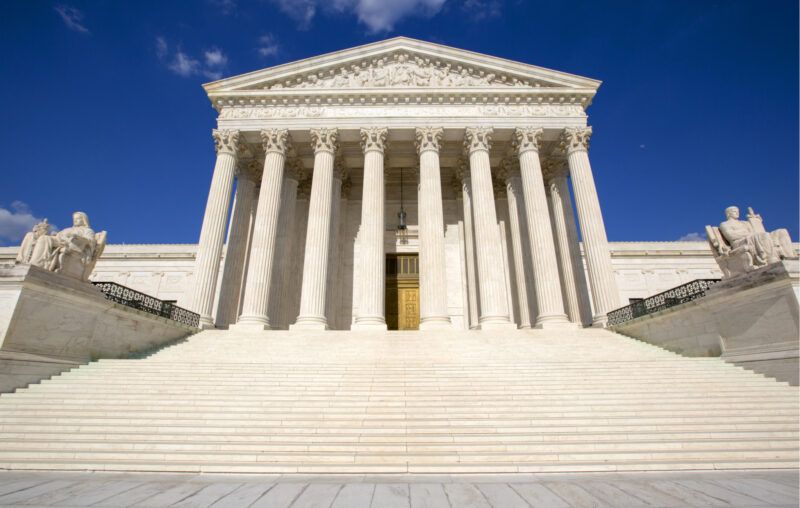
Supreme Court Grants Rare Win For Economic Freedom

Ethan Yang Ethan Yang  – July 1, 2021 @ American Institute for Economic Research


Economic and civil liberties should not be seen as two ideals to be weighed separately but as one set of inalienable rights that are inherent to our humanity. What is economic prosperity worth if you can’t speak your mind? What value is there to having civil protections if everything else in your life is regulated into despair? Oftentimes civil and economic freedom are intertwined in such intimate ways that there really is no difference. Sadly, today economic rights have taken a second class status under the current judicial status quo, which is why policies that infringe on things like free speech receive plenty of scrutiny yet arbitrary regulations on business pass with almost no oversight. 

This is why a recent Supreme Court decision, Cedar Point Nursery v Hassid, is such an important win for those concerned with economic freedom, specifically property rights. The case was decided on June 23, 2021, and was split 6-3 on “expected ideological lines.” Although there was likely much nuance in the thinking of the various justices, the win is a much-welcomed departure from the Progressive status quo of deference to the will of the state. The case itself concerned an “access regulation” in California that allowed labor unions to enter a private property in this case, Cedar Point Nursery, provided that they dispense notice to the Agricultural Relations Board. After doing so, the owner of the property is mandated to allow access without contestation. Such a policy seems to have been clearly put in place at the behest of politically influential labor unions and to the expense of private citizens. 

A Rare But Important Victory

Ilya Shapiro and Sam Spiegleman from the Cato Institute weigh in on the matter by explaining:

Cedar Point will go down as a big and clean win for property rights. California’s law is no mere labor regulation: it grants a right to be on the owners’ land three hours per day for 120 days per year. Ending it respects the constitutional rights of both the property owners and union officials, who lose only the ability to trespass for a third of the year.

The Fifth Amendment’s Takings Clause provides, “nor shall private property be taken for public use, without just compensation.” Here, even though the state didn’t seize any property outright, the Supreme Court has long recognized that if a regulation “goes too far,” it’s functionally equivalent to the use of eminent domain.

The Court’s recognition here that state-sanctioned trespasses, even if not permanent and continuous, are compensable takings is a major victory for property‐​rights advocates who have toiled for decades to expand the universe of per se takings beyond the narrow scope of permanent physical invasions or total‐​value‐​loss regulations.

In particular, Cato’s Amicus Brief on the matter explains three basic points on why California’s labor regulation was unconstitutional and curtailed property rights, thus requiring at minimum, just compensation. 

The first being that allowing labor unions to simply enter private property with a permission slip from the government violated the right to exclude. If you cannot exclude people from your property, it has ceased to be private property. The fact that the government has given itself the power to grant that decision makes the use of such powers a per se taking of private property. 

The second argument is that the state of California has clearly not implemented the access regulation to make businesses safer, nor does the regulation confer reciprocal advantages, which would also make it a per se taking. Allowing labor unions to forcefully enter a private business and stir up commotion is by no means a necessity for safety nor is that benefiting the community as a whole.

The third point is that the state does not have the justification to use its police power because not allowing union trespassing on private land does not in any sense of the imagination pose a safety risk. 

For decades, the state and a deferential court system have allowed the gradual unraveling of property rights to the will of the regulatory state. This has justified the aforementioned relegation of economic freedoms and autonomy to second-class status, with the government being able to intervene in economic life provided that it can merely find a rational basis. In the case of Cedar Point Nursery, California’s law essentially allowed property rights to be confiscated by the state for union access, three hours a day, 120 days a year, without just compensation. This was justified as being a “labor regulation” and “necessary for public safety”.

The Supreme Court finally handed a rare, but hopefully, consequential victory to those who respect the institution of property rights. In this case, the Court ended what was an incoherent charade to skirt around the 5th Amendment’s Takings Clause. A charade that attempted to call a blatant appropriation of private property to bolster the power of unions at the expense of property owners an exercise in public safety. 

The Importance of Strong Property Rights

Our entire civilization is built on the foundation of private property. Such an institution not only creates strong economic incentive structures that lead to good practical outcomes but also has an important moral foundation. National Affairs recounts the rhetoric surrounding the Civil Rights Act of 1866 by writing:

Illinois Senator Lyman Trumbull, the leading champion of the legislation in the Senate, explained that the “first section of the bill defines what I understand to be civil rights: the right to make and enforce contracts, to sue and be sued, and to give evidence, to inherit, purchase, sell, lease, hold, and convey real and personal property.”… As a member of the House from Ohio argued, “It is idle to say that a citizen shall have the right to life, yet to deny him the right to labor, whereby alone he can live. It is a mockery to say that a citizen may have a right to live, and yet deny him the right to make a contract to secure the privilege and reward of labor.

The right to private property is the right to the products of your own labor. The right to your own labor and its products is the right to your body. Professor Emeritus at Vanderbilt University, James W. Ely, writes:

(T)here are few examples of free societies that do not respect the rights of property owners. One could persuasively maintain that without guarantee of property rights the enjoyment of other individual liberties, such as freedom of speech, would be meaningless. Put simply, the absence of a system of private property renders self-government unlikely. As Justice Joseph Story explained in 1829: “That government can scarcely be called free, where the rights of property are left solely dependent upon the will of a legislative body.

For much of American history, this admiration and recognition of property rights remained a cornerstone of political as well as legal thought. However, much with everything concerning the size and scale of American government, this drastically changed during the 20th century, most notably during the Progressive Era. Ely writes:

Like the Progressives, the New Dealers were impatient with constitutional restraints on governmental power. They quite openly set out to revise constitutional law and reduce private economic rights. Despite some initial judicial resistance, the New Dealers were remarkably successful in achieving their goals and fundamentally altering the legal landscape. Modern constitutional law bears only a faint resemblance to the original constitutional design.

Ely concludes by noting that although many of the judicial precedents have been unwound, the Progressive Era’s legacy on property rights is still salient. The new battle over the soul of constitutional interpretation has only begun and the end result is yet to be seen.

Key Takeaways

Cedar Point was a rare, well deserved, and sorely needed victory for private property rights, a once sacred institution that has all been desecrated over the years. In this case, the Supreme Court affirmed the right of individuals and dealt a blow to cronyist labor unions and their enablers in the government. The Court’s decision marks a step in the right direction towards a judicial regime that enforces the Constitution and does not view it as simply a welcome mat for the ambitions of state actors. Although it is only one decision, it should send a clear signal that in this country, under this constitution, the inalienable rights of individuals shall be protected from the mob as well as the Leviathan.

READ MORE

Ethan Yang

Ethan Yang

Ethan Yang is an Adjunct Research Fellow at AIER as well as the host of the AIER Authors Corner Podcast.

He holds a BA in Political Science with a concentration in International Relations with minors in legal studies and formal organizations from Trinity College in Hartford Connecticut. He is currently pursuing a JD from the Antonin Scalia Law School at George Mason University.

Ethan also serves as the director of the Mark Twain Center for the Study of Human Freedom at Trinity College and is also involved with Students for Liberty. He has also held research positions at the Cato Institute, the Connecticut State Senate, Cause of Action Institute and other organizations.

Ethan is currently based in Washington D.C and is a recipient of the 13th Annual International Vernon Smith Prize from the European Center of Austrian Economics Foundation. His work has been featured and cited in a variety of outlets from online media to radio broadcast.

Get notified of new articles from Ethan Yang and AIER.
SUBSCRIBE


Posted by Rich Kozlovich at 5:54 AM No comments:
Email ThisBlogThis!Share to XShare to FacebookShare to Pinterest
Labels: California, Eminent Domain, Ethan Yang, Private Property, Property Rights, SCOTUS, Unions

Friday, October 2, 2020

Is a Desalination Plant “Systemic Racism”?

K. Lloyd Billingsley  •  Friday September 25, 2020 •  1 Comment

“California American Water withdrew its application to the California Coastal Commission for a permit to construct a desalination plant in the Monterey Bay,” reported Josh Copitch of KSBW, so the Commission canceled its September 17 meeting. Opponents of the desalination plant hailed the Commission’s new policy on “environmental justice” for nixing the project.

Marina city planning commission member Kathy Biala told KSBW “disadvantaged communities, communities of color in specific, are often victimized by larger organizations that often build environmentally damaging projects in those areas.” Marina mayor Bruce Delgado said his city would have received no water from the project but been saddled by “all the adverse impacts.” Delgado claimed 66 percent of his constituents are “non-white,” and “it doesn’t get any more textbook perfect of an example to exemplify what systemic racism looks like.” To say the least, that charge is highly dubious, unlike the water needs on the Monterey Peninsula............  

The real back story here is the California Coastal Commission, an unelected body that overrides scores of elected governments on land-use issues. For decades, the Commission has run roughshod over property rights and its regulatory zealotry now blocks improvement of the water supply. Monterey Peninsula residents have a case that the Coastal Commission, not a desalination plant, is the true injustice inherent in the system..................To Read More....


Posted by Rich Kozlovich at 5:45 AM No comments:
Email ThisBlogThis!Share to XShare to FacebookShare to Pinterest
Labels: California, Environmental Justice, Property Rights

Sunday, August 23, 2020

Rights, Religion, and Property

The State Department’s Commission on Unalienable Rights reveals an animus against natural liberties that betrays an aspiration to expand the reach of government even further.

By Russell A. Berman • August 22, 2020 

The State Department’s Commission on Unalienable Rights has issued a report on the rationale to pursue human rights as a primary goal for American foreign policy. Rights have a bipartisan pedigree. In our modern history, it was the Democrat Jimmy Carter who first defined human rights as a U.S. foreign policy mission. But Republican Ronald Reagan and his Secretary of State George Shultz made rights advocacy a constant component of their hard-nosed negotiations with the Soviets.

Barack Obama took a different path. Reacting against his predecessor George W. Bush’s policy of democracy promotion, he and Secretary of State John Kerry proved largely oblivious to rights concerns—most egregiously in the disregard for human rights in their negotiations with Iran. 
It is surely time to bring rights back to the forefront of foreign policy—that is the context of the commission’s report.

There is also a second context: the evident fragility of the rights agenda around the world.......To Read More.......
Posted by Rich Kozlovich at 9:07 AM No comments:
Email ThisBlogThis!Share to XShare to FacebookShare to Pinterest
Labels: Freedom of Religion, Property Rights, Rights

Sunday, August 9, 2020

Teen Vogue op-ed calls for ending property rights, decries 'cruelty of payment-based housing'

The columnist says, 'basically we just need to abolish landlords' 

News August 07, 2020 Breck Dumas

Teen Vogue published an op-ed declaring that no one should have the right to own real property, pushing for the abolishment of landlords while decrying the "cruelty of payment-based housing."

What are the details?

Columnist Kandist Mallett warned that "an eviction crisis is coming" due to the heavy job losses resulting from the coronavirus pandemic, pointing to the toll on the U.S. as evidence of "the failures of capitalism."

"The pandemic didn't create this housing crisis, but it did further expose the cruelty of payment-based housing," Mallett wrote, arguing further:
Instead of seeing housing as a right and something that should not be commodified, the state enlists its own armed forces — sheriffs and police — to remove occupants from residences if they cannot pay rent. The lack of protections for non-landowners should be to no surprise from a country founded on the genocide and colonization of indigenous peoples.
Mallet closed her piece by saying, "We need a housing movement based on a rejection of the construct that any one person should own this earth's land.  "Teen Vogue promoted the op-ed on Twitter with an excerpt that reads, "While we're working to abolish the police, we must also work to dismantle what the police were put here to protect: property.'........"If my rent money is paying for my landlord's mortgage, shouldn't I be part owner?" ...........To Read More....
My Take - Property rights are foundational to a stable and successful economy.  One of the reasons Russia never advanced after the fall of the Soviet Union, and relies on energy production as the only real major source of capital for the nation, is they failed to create property rights.  Property rights is foundational to capital generation.  It creates potential, incentive, innovation, exploration of new directions of capital generation.  It inspires the enlightened self interest that builds massive potentials for capital generation.   

Their government still owns everything. The result is a society with no incentive and no motivation beyond three hots and a cot, and now that's disintegrating,  and guess what, Putin,  their new Czar, is not so popular now.  And it's going to get worse for Russia, China and the rest of the socialist world. America is done playing their lopsided game of international trade and economics.  

And so now these idiots want America to be Russia.  Hard to believe, but then again, it is "Teen Vogue", so why would we expect anything really intelligent.
Posted by Rich Kozlovich at 7:07 AM No comments:
Email ThisBlogThis!Share to XShare to FacebookShare to Pinterest
Labels: Property Rights, Teen Vogue

Thursday, August 22, 2019

Poverty, the Compassion Cartel, and Environmental Racism

August 5, 2019 by Tom DeWeese Environment, Featured, Property Rights, Sustainable Development, United Nations

In 2006, I was surprised to find myself sitting at a formal dinner in the middle of a 200-year-old debating society at Cambridge University in England. In a few minutes I, and five others were about to engage in a debate over the usefulness of the United Nations. But here, for a few minutes longer, at the long dinner table with the crisp, white tablecloth, I was sitting next to one of my fellow debaters, Salis Shetty, the head of the UN’s Millennium Project.

I had ignored him through most of the dinner, but with just a few minutes left before the debate I finally turned to him and said, “You realize you don’t have a prayer, don’t you?”

He looked at me and asked, “About what?”

I replied, “Ending poverty by 2015 through the use of redistribution of wealth.” (That was one of the eight listed goals of the UN’s Millennium Project, accepted by world leaders in 2000.)

He said, “Yes, I know.”

I began to talk with him about the need to help the poor escape from poverty on their own rather than being condemned to life-long bread lines. I talked about the need to establish private property rights as a means to build wealth. I mentioned that there was estimated to be almost $10 trillion in “dead capital”(property in the world that no one is allowed to own or invest in). That’s enough capital to help a lot of poor people break out of their dire situation.

Mr. Shetty looked at me as I made these observations and said, “Hernando de Soto.”

“Yes!”  That’s exactly whom I was quoting. De Soto is an economist from Peru who has made it his life’s work to help end poverty in the world by promoting private property ownership.

To my amazement Mr. Shetty looked at me and said, “I have associates who are looking on this (de Soto’s ideas) favorably.” Just as he said those words, the call came for us to head to the debating hall for our event. Of course we were on opposite sides.

As soon as the debate was over (I was outnumbered five to one, as usual) I made a beeline to Mr. Shetty and said, “You and I started a conversation and I want to finish it.” A few weeks later I traveled to New York City to meet with him in his UN office. During that meeting, he told me that, in his city in India, the local government was beginning to go over property records and officially register ownership, something that had never been done before. The result was that the economy of the community was starting to improve.

That is exactly the point that Hernando de Soto is making as he travels the world meeting with national leaders. The core reason for poverty is bad government. In most of the world, people may “own” their homes, perhaps via an underground economy, but they have no official records through the government to prove it. Without that official proof or registration, they have no means to use the property for equity loans and investment, so it is essentially dead capital, as de Soto has labeled it.

In his book, “The Mystery of Capital, Why Capitalism Triumphs in the West and Fails Everywhere Else,” de Soto explains the major difference between the American system and most other nations of the world. Here, every single piece of privately held property — homes, even large equipment, is registered. In fact, the County Registrar’s office is one of the most important tools of freedom because it’s where every American can prove ownership of their property. Because of that system, average Americans can use their property as a tool to obtain loans. At least 60% of American companies have been started thorough equity loans on private property. And those privately held companies went on to employ about 60% of the American workforce. That is how private property ownership made the United States the richest nation in the world, almost over night. Lack of such a system is the reason much of the rest of the world fell into extreme poverty. In those cases the people have no way out of poverty and are forced to rely on government handouts. 
                 
De Soto’s book was called “The blueprint for a new industrial revolution,” by the Times of London. Today de Soto travels the world, meeting with world leaders who seek his guidance on how they can end poverty in their nations. Yet, when he tells them the secret is private ownership of property, many balk, telling him with a troubled smile, that the people in their nations “just aren’t ready for such a policy – they don’t understand the concept of private property ownership.” So the promise of a great new financial revolution that could spread wealth and freedom to every corner of the world never gets off the ground.

A few years ago I had the great privilege of a private meeting with Hernando de  Soto. He told me a story of one such meeting he had with a national leader. He’s been in enough meetings with world leaders that he can now almost anticipate what they are going to say. In this particular meeting, he said he knew the leader was going to tell him that his people just weren’t ready for private property ownership.  So, before the meeting, de Soto sent a team into the neighborhood around the presidential palace and knocked on doors to ask the people if they owned their homes. Every single one of them said yes, they owned their home. So de Soto’s team members asked each to produce any kind of evidence they might have to show that ownership. They did. It might have been a bill of sale, a receipt or even a copy of a will. In any case, they had something to prove their ownership in a country where property ownership was not supported by the government.

De Soto took copies of these items with him to the meeting, and before the discussion could begin about how the people of his country didn’t understand private property ownership, Hernando de Soto spread his evidence on the table and said to the leader, “your people understand property ownership, now let’s discuss how they can legally own it and build capital from it.”

There are three main reasons the world has not experienced de Soto’s new financial revolution. First is bad government led by dictators who refuse to give up their power over the people by supplying them the means for ending poverty. Poverty is very helpful to dictators because poor people are powerless to rise up against them. Poverty is also convenient to rouse the rabble against political opponents and spread fear.

Those who are barely hanging on from meal to meal are easy to scare with threats from any proposal that dares to differ from the redistribution schemes, even if, in the long run, that would be the best means for them to find a way out of poverty. The Left has used this fear effectively to build hate and resistance against those who promote free enterprise.

The second reason the world is sinking into ever greater poverty is the Environmental movement- the new-style dictatorship that actually prefers people to remain poor, living in mud huts with no infrastructure, running water or electricity. That, they claim, is sustainable.

Believe it or not, there is a worldwide Sustainable Development policy to prohibit funding of development projects in Third World countries if the projects don’t fit the environmental agenda. It’s called the Equator Principles. According to their own documents, the Equator Principles were established in association with the World Bank’s International Finance Corporation in 2003. They have been adopted by at least 73 financial institutions around the world, covering over 70% of international projects such as dams, mines, and pipelines. At least three leading American financial institutions are associates of the Equator Principles, including Bank of America, JP Morgan Chase and Citigroup.

In short, such policy actually leads to what can only be called Environmental Racism. A few white, rich people who live in luxury in their first-world nations have made a determination that some who now live in mud huts with no indoor power and no clean running water, must stay that way because these elites have determined it is more ‘sustainable” for the planet.

Stopping development for the poor has become a major drive by Sustainablists. At the Earth Summit in 1992, Chairman Maurice Strong famously said “Isn’t the only hope for the planet that the industrial nations collapse? Isn’t it our responsibility to bring that about?” Zero economic growth is the announced goal to assure their well-ordered sustainable society stays dormant, thereby assuring their control. Of course, the result will only be more poor people – all in the name of saving the environment.

But fear not, these same power mongers aren’t satisfied to condemn just those already living in poverty. Apparently they are so determined to control every human action on the planet that they are equally happy to condemn the rest of us to such a future – for the planet, of course. Author Ted Trainer has written a book entitled “Transition to a Sustainable and Just World,” which is really nothing more than a blueprint for establishing Marxist principles into your local community. In the book Trainer writes, “The alternative has to be the simpler way, a society based on non-affluent lifestyles within mostly small and highly self-sufficient local economies under the local participatory control and not driven by market forces or the profit motive, and with no economic growth. There must be an enormous cultural change away from competitive individualistic acquisitiveness.” The call for zero economic growth was also heard at the UN’s Rio+20 Summit in 2012.  Trainer’s motto for us all is that “you must live on less!” That is their definition of Sustainable Development. Of course they only mean this future for you and me, not the powerful elite.

Such ideas of destroying human civilization are, in fact, rampant throughout the Green movement. Paul Ehrlich, professor of Population Studies at Stanford University demanded that “a massive campaign must be launched to de-develop the United States. De-development means bringing our economic system into line with the realities of ecology and the world resource situation.” Apparently, the advocates of such a desire to make us all poor have missed a very important fact. Only in wealthy nations do people have enough money and time to worry about protecting the environment. The poor worry only about one thing – survival. It is also in the poorest areas where population numbers explode. In rich, secure nations populations are actually going down. So it would seem logical that if one wants to protect the environment and reduce populations then Capitalism would be the economic system of choice. But of course, none of this is really about helping the poor or the ecology. It’s about power.

The third reason for depressed economies and a growing number of poor is what I call the “Compassion Cartel.” Government, private charities and foundations have made poverty big business. It’s the excuse for nearly every governmental spending program. Help the poor! Tax the rich! How dare they get wealthy while others suffer? And the preferred way to eliminate poverty is redistribution of wealth. It’s easy to convince someone to donate to a cause when emotions and guilt are employed. Reason and rational thought take a backseat.

Back to my debate in Cambridge: After the debate was over, the hosts sponsored a reception. As I entered the door, I was confronted by one of the students, who asked with puzzlement – “sir, you really don’t believe in redistribution of wealth?”

I answered, “No, it’s theft.”

And she said, “But if you have more than you need, shouldn’t you share it with someone who needs it?”

I said, “Why should I?”

She looked like I had slapped her. Here she was, one of the bright young students at one of the great schools in the world, and she had never heard an argument against redistribution of wealth or for a free market. As I spoke to her, giving detail after detail about how a free market and property can eliminate poverty, more than 50 other students began to gather around.

I explained that if I take money from each of them today to feed someone more unfortunate, then tomorrow they will need another meal –and again the next day, and the next. You have gained nothing in the battle to help them, other than to delay their agony another day. At best you have offered a band aid. At worse, such policy doesn’t prevent poverty. Something else is causing that poverty and you haven’t addressed it. So, tomorrow there will be more poor, and more the next. And each time you will be forced to provide more and more aid from your now dwindling funds, until one day you too may find yourself forced to be in the receiving line. When I finished my explanation there was a moment of silence and then the young student said, “What an interesting point of view. How can I learn more?”

I wanted to scream “Economics 101!”

Today, anyone who points out such economic facts in a failed welfare system is called heartless and probably racist. What kind of evil person calls helping the poor theft?  Well, take a good look at the world we live in. According to Mr. Shetty’s Millennium Project, there are currently 1.2 billion people living in poverty. Fifty thousand deaths a day occur worldwide as a result of poverty. Every year more than 10 million children die of hunger and preventable diseases. More than half the world’s population lives on less that $2 per day and 800 million people go to bed hungry every night.

To combat all of this we have the Compassion Cartel. We have thousands of charitable organizations and faith-based programs designed to feed the children, along with education programs designed to create awareness of poverty and starvation. Their ads run on television nightly pulling at our heartstrings to “do something.” Most of these charities have built huge private organizations, with highly paid administrators working out of impressive buildings with large staffs. That doesn’t include the huge government programs operating at an even larger scale on your tax dollars. As I said, poverty is big business.

Every politician preaches the gospel of helping the poor and as a result, more than half of every American’s pay check disappears into government coffers even before it hits our own pockets. Billions of dollars of aid pour into federal and international programs to distribute to countries around the world to help feed the poor. Poverty reductions have been set. Goals have been announced, Deadlines for ending poverty have been determined and every national and international leader has signed documents to pledge that poverty must be eradicated. In 2015 it was called Agenda 2030. In 2019 it’s called the Green New Deal.

What is the result of this worldwide focus on poverty? Well, we have more poor! It’s a growth industry. Why? Because not one of these programs offers a single plan to allow the poor to help themselves. Instead, the Compassion Cartel has sentenced every single poor person in the world to a future of life-long breadlines, allowing them to be victims of demagogues, con artists and harsh, hopeless, futureless lives. There is no consideration for their goals and dreams and no real understanding of the hopelessness of their lives. And the middle class of once wealthy nations like the United States is quickly dissolving under the burden of the redistribution schemes. Result – more poor in our once proud nation.

If the self-proclaimed compassion industry had true concern for the poor, it   would begin an international drive to empower the poor by allowing them to build their own wealth – thereby getting themselves off of the breadlines.

Hernando de Soto has offered that way. He has called for the establishment of private property rights that would allow people around the world to build personal wealth and the ability to invest in new enterprises that would, in return, employ more, help build infrastructure to allow still more to have electricity, heat, cooling and clean water in their homes, improving health and the quality of their lives. Step by step these improvements would lead to creating more wealth worldwide, reducing the burden on the rest of us, and in turn, help all of us build even more wealth, strengthening quality of life. Help the poor help themselves and it will also help you. That is a winning compassion for all.

But to take such a step would require a rejection of socialism and an embracing of capitalism. And that, says the Compassion Cartel, can never be allowed, because that would lead to empowering individuals to control their own lives.

Instead, in the name of compassion, sustainable oppression in a well-ordered society is so much more efficient.

   Tom DeWeese tom@americanpolicy.org
 
Tom DeWeese is one of the nation’s leading advocates of individual liberty, free enterprise, private property rights, personal privacy, back-to-basics education and American sovereignty and independence.

Posted by Rich Kozlovich at 5:02 AM No comments:
Email ThisBlogThis!Share to XShare to FacebookShare to Pinterest
Labels: Capitalism, Property Rights, Sustainable Development, Tom DeWeese

Monday, July 1, 2019

Supreme Court dishes property owners a Fifth Amendment victory

By Bonner Cohen, Ph. D. @ CFACT

In a decision that sent chills down the spines of environmental groups and raised the spirits of property rights advocates, the U.S. Supreme Court June 21 removed a significant legal barrier that, for decades, had effectively barred aggrieved landowners from challenging local ordinances in federal court.

The court’s 5-4 ruling restores property rights to the full constitutional status the Framers envisioned when they included the Fifth Amendment’s Taking Clause in the Bill of Rights, opening federal courts to property owners seeking “just compensation” for the taking of their property by government.

Property owners’ access to federal courts had been effectively blocked since 1985, when the Supreme Court, in what is known as its Williamson precedent, ruled that landowners must first bring takings claims against local governments to state courts before proceeding to federal court. Williamson is short for Williamson County Regional Planning Commission v. Hamilton Bank of Johnson City.

Catch 22

Supreme Court ditches Clean Water Act conviction posthumouslyFor property owners, Williamson created a Catch-22 situation, because, under a subsequent Supreme Court ruling, a federal court generally must defer to a state court’s resolution of a claim for just compensation. Property owners caught in this Catch-22 were cast into a neverland of endless, bank-account-draining litigation in state courts, with little hope of ever receiving their day in court at the federal level.

“The takings plaintiff thus finds himself in a Catch-22. He cannot go to the federal court without going to the state court first; but if he goes to the state court and loses, his claim will be barred in federal court,” Chief Justice John Roberts wrote. “The federal claim dies aborning.”

In reversing the 34-year-old Williamson precedent, the Supreme Court will allow takings plaintiffs to bring their cases to federal court, where, if successful, they will receive the just compensation guaranteed them under the Constitution.

“We now conclude that the state-litigation requirement imposes an unjustifiable burden of takings plaintiffs, conflicts with the rest of our takings jurisprudence, and must be overruled,” Roberts said, speaking for the majority.

The case, Knick v. Township of Scott, that led to the reversal of Williamson involves Rose Mary Knick, owner of a 90-acre property in eastern Pennsylvania on which a cemetery is situated. Knick challenged an ordinance by Scott Township requiring that cemeteries “be kept open and accessible to the general public during daylight hours.” The ordinance, she and her attorney argued, constituted a taking of her property. Knick filed a takings claim in federal court, but the court, citing Williamson, said she could not bring the suit without going through state proceeding first. She was stuck in the Catch-22.

“This decision is a very long time coming for Rose and other property owners who have had federal court doors slammed shut in their face whenever they seek compensation for a government taking of their private property,” Pacific Legal Foundation (PLF) attorney Dave Breemer, who represented Knick in the case, said in a statement. “The Court’s decision sends a message that constitutionally-guaranteed property rights deserve federal protection just like other rights.”

Fracking Bans and Mineral Rights

Alston & Bird attorney Paul Beard believes the ruling will have a far-reaching effect on energy and environmental policy, especially at the local level.

“In the energy-regulation space, we can expect more – and more successful – challenges to statutes and ordinances that, to take examples from recent trends, destroy or significantly damage oil, gas, and mineral rights. Think fracking bans,” he told E&E News (June 21) in an email.

In fact, the ruling may deter policymakers from adopting such ordinances for fear of triggering litigation, he added.

The United States is unique in its protection of mineral rights. Landowners not only have surface rights – such as the right to grow crops on the surface of their land – but also mineral rights – such as the right to access oil or natural gas located beneath their property. Mineral rights enabled the fracking boom that, over the past decade, propelled the U.S. to the world’s top producer of oil and natural gas. Owners of property situated atop shale formations entered into voluntary agreements with oil and gas companies that allowed the latter to extract the hydrocarbons while generously compensating the former. The arrangement has completely upended global energy markets.
In a bid to derail America’s global energy ascendency, environmentalists and their political allies have enacted local fracking bans, and New York Gov. Andrew Cuomo has decreed a statewide fracking ban.

The Supreme Court’s reassertion of the Takings Clause raises, as attorney Paul Beard suggests, intriguing questions about the constitutionality of bans that deny landowners their mineral rights.

Author

  • Bonner Cohen, Ph. D.
    Bonner R. Cohen, Ph. D., is a senior policy analyst with CFACT.
Posted by Rich Kozlovich at 4:25 AM No comments:
Email ThisBlogThis!Share to XShare to FacebookShare to Pinterest
Labels: CFACT, Eminent Domain, Fracking, Property Rights

Sunday, May 5, 2019

A personal story of Cuba expropriating US investments

May 5, 2019 By Silvio Canto, Jr.

As most people know, the story of the U.S. embargo goes back several administrations. It was created to punish the Cuban government for stealing U.S. properties without compensating U.S. citizens who owned them. The embargo was later strengthened in 1996, when Cuban Migs shot down a plane carrying representatives of "Brothers to the Rescue," a Miami-based organization identifying Cubans in rafts in the Florida Straits. Under President Obama, there were talks to resolve the issue.

 Unfortunately, the talks did not get anywhere because Raúl Castro knew that President Obama would never walk away from the negotiation or crack the whip on the regime. President Trump has taken the matter to a different level. He is using these claims as leverage to get Cuba out of Venezuela.

In fact, ExxonMobil is moving forward with a suit alleging that Cuba has been using and profiting off its property seized in 1960. "Let's roll" is all I can say. .............Read more

Posted by Rich Kozlovich at 6:51 AM No comments:
Email ThisBlogThis!Share to XShare to FacebookShare to Pinterest
Labels: Cuba, Property Rights

Friday, April 26, 2019

Press Release: Buckeye Institute

Contact: Lisa Gates, Vice President of Comms
(614) 224-3255 or Lisa@BuckeyeInstitute.org
FOR IMMEDIATE RELEASE     April 25, 2019
The Buckeye Institute: Even Citizens of That State Up North
Deserve to Have Their Property Rights Protected
Buckeye Files Amicus Brief in Rafaeli, LLC v. Oakland County
 
Columbus, OH -- On Wednesday, The Buckeye Institute filed an amicus brief asking the Supreme Court of Michigan to rule in favor of Uri Rafaeli in the case Rafaeli, LLC v. Oakland County and stop the government from taking his private property to pay a negligible tax bill. Mr. Rafaeli is represented by the Pacific Legal Foundation.
 
"This case is absurd! The fact that the government would sell Mr. Rafaeli's property for an $8.41 mistake and then sell it for $25,500 and keep the profits is unconscionable, not to mention unconstitutional," said Robert Alt, president and chief executive officer of The Buckeye Institute. "Even citizens of That State Up North deserve to have their property rights protected from government abuse and overreach."
 
Rafaeli, LLC v. Oakland County stems from an underpaid property tax bill-of $8.41. Before Mr. Rafaeli was able to fix the mistake, Oakland County, Michigan sold his property for $25,500 and pocketed the profits, which is currently allowed under Michigan's tax foreclosure law.
 
As The Buckeye Institute argues in its brief, any profits above the cost of the unpaid tax bill and the costs associated with the foreclosure should be paid back to the property owner, just as is required in the private sector when a mortgage company forecloses on a property. Mr. Rafaeli should have been paid $25,401.59 minus the actual cost of the sale incurred by Oakland County.
 
In a similar case challenging Michigan's foreclosure laws before the United States Court of Appeals for the Sixth Circuit, Judge Raymond Kethledge wrote in dissent that confiscation of tax sale profits was the "sort of behavior [that] is called theft."

# # #
 
Founded in 1989, The Buckeye Institute is an independent research and educational institution -- a think tank -- whose mission is to advance free-market public policy in the states.
The Buckeye Institute is a non-partisan, non-profit, and tax-exempt organization, as defined by section 501(c)(3) of the Internal Revenue code. As such, it relies on support from individuals, corporations, and foundations that share a commitment to individual liberty, free enterprise, personal responsibility, and limited government. The Buckeye Institute does not seek or accept government funding.
Posted by Rich Kozlovich at 6:09 AM No comments:
Email ThisBlogThis!Share to XShare to FacebookShare to Pinterest
Labels: Buckeye Institute, Property Rights

Saturday, June 2, 2018

Farmer settles $2 million lawsuit against high-flying Green realtors

May 31, 2018 by Bonner Cohen, Ph. D., 2 Comments @ CFACT


While the terms of the settlement cannot be disclosed, Boneta is pleased with the outcome of her ordeal. “Justice has been served,” Boneta said triumphantly. “But no American should have to endure ten years of torment. No amount of money can ever make up for the suffering my family and I have had to go through.”

Boneta is the owner of a 64-acre farm located in Fauquier County, Va., about 50 miles west of Washington, D.C. Nestled on the edge of the picturesque Blue Ridge Mountains, Liberty Farm, as her property is known, has been painstakingly restored by Boneta, whose family purchased it in 2006. In addition to producing a variety of crops, the property serves as an animal-rescue farm, providing a home for sheep, goats, alpacas, emus, llamas, and other animals.

But casting a dark shadow over Liberty Farm have been efforts by well-connected people who, she believes, coveted her land. In her lawsuit against Phil and Patricia Thomas, Boneta accused the pair of malicious interference in her business, relentless harassment, and a host of other disturbing actions. Phil Thomas is owner of Thomas &  Talbot Real Estate in high-end Middleburg, Va.; Patricia Thomas is principal broker with the firm and an attorney licensed to practice in the Old Dominion.


Targeting her Mortgage

Court records in Fauquier County show that the realtors colluded with an environmental group and government officials to purchase the farmer’s mortgage and otherwise meddle with her mortgage, including contacting the lender several times demanding that it sell her mortgage to the realtors.

Court records also show that the realtors contacted various government agencies demanding that they investigate Boneta for such activities as carving pumpkins on her farm, hosting hay rides, and allowing visitors to pick their own vegetables. Records also reveal that Patricia Thomas used her law firm’s letterhead in letters to government officials urging them to take action against Boneta.

To avoid her communications from coming to light under the Freedom of Information Act, Thomas, court records show, sent packages with documents she obtained using her Virginia realtor license to the residences of government officials. These documents included Boneta’s banking records.

In one bizarre incident, court records show that Patricia Thomas called 911 one winter day claiming that Boneta’s cattle were freezing, requiring authorities to spend taxpayer funds to send inspector to her farm, only to find that the animals were in good care. More details on the harassment of Boneta can be found here.

Such was the demonization of Boneta that she was forced to shut down her farm in 2012. But public outrage over her mistreatment led in 2014 to enactment of legislation – known as the “Boneta Bill” — in the Virginia General Assembly that provided additional protection to farmers and enabled her farm to reopen.

Boneta has also filed suit against the Warrenton, Va.-based Piedmont Environmental Council (PEC), in which she accuses the group of colluding the Thomases and of abusing its oversight of a conservation easement the PEC holds on her farm. That suit is still pending, and the future of the PEC’s oversight of the conservation easement remains in doubt.

“Fight for the American Dream”

What is not in doubt is that, in coming out swinging against the Thomases and the PEC, Martha Boneta has shown that the little guy or gal can fight back and win. Thanks to the example she has set, Boneta was named as one of the nation’s most amazing women by Country Women magazine. Two film documentaries – “Farming in Fear” and “Unsung Hero” have been made about her struggle to hold on to her farm.

“No matter how long it takes, stand you ground, and justice will be served,” she says. “When the bad guys try to steal your land and everything you have worked for your entire life, dig in your heels and fight for the American Dream.”

About the Author: Bonner Cohen, Ph. D.
Bonner Cohen, Ph. D.
Bonner R. Cohen, Ph. D., is a senior policy analyst with CFACT.


Posted by Rich Kozlovich at 2:36 AM No comments:
Email ThisBlogThis!Share to XShare to FacebookShare to Pinterest
Labels: Boneta, Property Rights

Wednesday, May 16, 2018

Why Property Rights Matter

I have produced a brand new special report on property rights! It is called Why Property Rights Matter.  I am offering this special report as a free ebook, download it by clicking the button below. Please help share this important message with your friends, family, and neighbors.


DOWNLOAD FREE PDF EBOOK

Why Property Rights Matter shows how people today perceive property rights in a dramatically different way from the ideals held by our founders and early Americans. The result in that change is leading to a frightful loss of freedom and prosperity across the nation. Federal policies, armed with tax-payer funded grants, lead to local planning programs that are displacing people from their land, both in the cities as well as in the rural areas. Eminent Domain is the weapon of choice to destroy neighborhoods and small business.

DOWNLOAD FREE PDF EBOOK

Featured in Why Property Rights Matter

  • The Lost Definition of Property Rights
  • Ten Points to Define True Property Rights
  • What are Land Patents and How Are They Used
  • Why Our Founders Believed Property Ownership Was Vital to a Free Society
DOWNLOAD FREE PDF EBOOK

Please remember to share this email

Share

Tweet

Forward

Yours in Freedom,

Tom DeWeese

President
Posted by Rich Kozlovich at 4:34 AM No comments:
Email ThisBlogThis!Share to XShare to FacebookShare to Pinterest
Labels: Property Rights, Tom DeWeese
Older Posts Home
Subscribe to: Posts (Atom)

About Me

My photo
Rich Kozlovich
Truth is the sublime convergence of history and reality. Everything we’re told has a historical context and foundation. Everything we’re told should bear some resemblance to what we’re actually seeing going on in reality. If what’s presented to us fails in either category it’s wrong. All that’s left to do is develop the intellectual response to explain why it’s wrong. It's my view to be green is to be irrational, misanthropic, and morally defective. Diversity without accomplishment is philosophy without form and incompetence without consequence, and has nothing to do with fairness. Global warming isn’t about saving the planet, it’s about imposing a tyrannical socialistic system of global governance on the world. A system that has been shown to be disastrous and morally vacuous forever. They are the barbarians at the gate we must stand against. Our greatest worry is those within who support and facilitate their misanthropic goals. E-Mail: elkoz@juno.com, and any messages will be considered public domain.
View my complete profile

Featured Post

My Commentaries

By Rich Kozlovich This page will always be a work in progress, however, here's what I've linked thus far.  First, I save an inordina...

Translate

Popular Posts

  • P&D and The Week That Was
    Truth is the Sublime Convergence of History and Reality De Omnibus Dubitandum, ( Everything is to be questioned!) This Link will take ...
  • Observations From the Back Row: 9-1-11
    ... “De Omnibus Dubitandum” Video with John Stossel and Richard Tren regarding DDT A complete list of things caused by global warmi...
  • P&D and the Week That Was
    Truth is the Sublime Convergence of History and Reality De Omnibus Dubitandum, ( Everything is to be questioned!) This Link will take ...
  • Victimized by Private Censorship
    April 26, 2025 by Dan Mitchell @ International Liberty  Ten days ago, I wrote about the effort by a few so-called conservat...
  • First 100 Days of Trump Upends the Left
    With little more to do than shout, sing, and swear, the left finds itself in disarray. By Leesa K. Donner | Apr 29, 2025 @ Liberty Nation ...
  • Media Collapse is Inevitable, and it's a Good Morning in America! CNN, Part X
    By Rich Kozlovich, Tags: My Media Commentaries   This has been sitting in my draft file for a couple of months, so some of this goes back a ...
  • New Book! Why Scientists Disagree About Global Warming
    The Heartland Institute released at COP-21 in Paris its newest book on global warming: Why Scientists Disagree About Global Warming. The aut...
  • Francis: The Apostate Pope
    By IQ al-Rassooli, Scholar & Terrorism Analyst February 8th, 2021 He was elected on the 13th of March 2013 as Pope Fran...
  • "A Stranger in Town", 1943
    By Rich Kozlovich  Editor's Note:  Some articles are timeless.  This is one of them.  I linked this June, 8, 2021 article in ...
  • My Commentaries
    By Rich Kozlovich This page will always be a work in progress, however, here's what I've linked thus far.  First, I save an inordina...

Blog Archive

  • ▼  2026 (77)
    • ▼  July (47)
      • Fauci the Fabricator
      • Quote of the Day
      • Allahu Akbar: That's Just a Mental Illness, Nothin...
      • Observations From the Back Row
      • Cult of Saint Fauci is in Trouble
      • Observations From the Back Row
      • Observations From the Back Row
      • If There is No Truth, Then Neither Heresy Nor Trea...
      • What I'm Reading: Russo/Ukrainian War
      • Cartoon of the Day
      • Thought For the Day
      • Ole Joe McCarthy Just Won't Die!
      • P&D and the Week That Was
      • Don't Let The Crowds Fool You: Culture is King and...
      • It's The Discipline Stupid!
      • Trump claims election fraud was covered up...Is he...
      • Election 2028: How many Declared Candidates Are Th...
      • P&D and The Week That Was
      • Election 2026 and Voter Fraud is Real
      • Drowning in Debt Has Deadly Consequences
      • Heresy, Hypocrisy, Persecution, and Lunacy Incorpo...
      • Well, It Turns Out He Lied.
      • I'm Shocked, Shocked I tell you. It's Mostly Wome...
      • What I'm Reading: Immigration
      • What I'm Reading: Iran
      • What I'm Reading: Islam in America
      • USAID Bureaucrats and the Deep State Purge
      • Woodrow Wilson’s War Against the Constitution
      • What I'm Reading: Islam in the UK
      • What I'm Reading: Islam in Asia
      • What I'm Reading: Europe
      • The World as I See It! Profound, Provocative and ...
      • What I'm Reading: France
      • Marco Rubio, Lebanon, and The World Watches
      • What I'm Reading
      • Thought For the Day
      • What I'm Reading: Islam
      • How Long Can NATO and Europe Last?
      • "A Stranger in Town", 1943
      • What I'm Reading: Canada
      • What I'm Reading: Islam
      • What I'm Reading
      • Heretics Leave a Moral Foundation of Quicksand
      • What I'm Reading: The Judiciary
      • And You Wonder Why Conservatives Hate Republicans,...
      • And You Wonder Why Conservatives Hate Republicans,...
      • It's Long Overdue for Jews to Take the Right Trail
    • ►  June (12)
    • ►  May (18)
  • ►  2025 (1334)
    • ►  December (1)
    • ►  November (43)
    • ►  October (91)
    • ►  September (121)
    • ►  August (128)
    • ►  July (122)
    • ►  June (116)
    • ►  May (147)
    • ►  April (147)
    • ►  March (108)
    • ►  February (144)
    • ►  January (166)
  • ►  2024 (1924)
    • ►  December (92)
    • ►  November (158)
    • ►  October (162)
    • ►  September (173)
    • ►  August (158)
    • ►  July (182)
    • ►  June (138)
    • ►  May (156)
    • ►  April (191)
    • ►  March (182)
    • ►  February (149)
    • ►  January (183)
  • ►  2023 (2440)
    • ►  December (166)
    • ►  November (191)
    • ►  October (225)
    • ►  September (199)
    • ►  August (153)
    • ►  July (169)
    • ►  June (151)
    • ►  May (234)
    • ►  April (196)
    • ►  March (279)
    • ►  February (214)
    • ►  January (263)
  • ►  2022 (2583)
    • ►  December (140)
    • ►  November (193)
    • ►  October (272)
    • ►  September (190)
    • ►  August (257)
    • ►  July (242)
    • ►  June (195)
    • ►  May (165)
    • ►  April (196)
    • ►  March (206)
    • ►  February (278)
    • ►  January (249)
  • ►  2021 (3496)
    • ►  December (139)
    • ►  November (160)
    • ►  October (312)
    • ►  September (316)
    • ►  August (210)
    • ►  July (294)
    • ►  June (261)
    • ►  May (371)
    • ►  April (457)
    • ►  March (311)
    • ►  February (285)
    • ►  January (380)
  • ►  2020 (2545)
    • ►  December (258)
    • ►  November (58)
    • ►  October (212)
    • ►  September (329)
    • ►  August (377)
    • ►  July (235)
    • ►  June (204)
    • ►  May (205)
    • ►  April (158)
    • ►  March (127)
    • ►  February (214)
    • ►  January (168)
  • ►  2019 (3361)
    • ►  December (86)
    • ►  November (42)
    • ►  October (355)
    • ►  September (404)
    • ►  August (358)
    • ►  July (318)
    • ►  June (259)
    • ►  May (218)
    • ►  April (320)
    • ►  March (311)
    • ►  February (269)
    • ►  January (421)
  • ►  2018 (2735)
    • ►  December (342)
    • ►  November (290)
    • ►  October (251)
    • ►  September (204)
    • ►  August (225)
    • ►  July (2)
    • ►  June (165)
    • ►  May (288)
    • ►  April (176)
    • ►  March (230)
    • ►  February (283)
    • ►  January (279)
  • ►  2017 (3217)
    • ►  December (183)
    • ►  November (156)
    • ►  October (93)
    • ►  September (324)
    • ►  August (263)
    • ►  July (313)
    • ►  June (223)
    • ►  May (264)
    • ►  April (315)
    • ►  March (329)
    • ►  February (440)
    • ►  January (314)
  • ►  2016 (5026)
    • ►  December (273)
    • ►  November (172)
    • ►  October (377)
    • ►  September (523)
    • ►  August (623)
    • ►  July (654)
    • ►  June (421)
    • ►  May (419)
    • ►  April (415)
    • ►  March (253)
    • ►  February (435)
    • ►  January (461)
  • ►  2015 (2004)
    • ►  December (208)
    • ►  November (171)
    • ►  October (225)
    • ►  September (145)
    • ►  August (146)
    • ►  July (134)
    • ►  June (151)
    • ►  May (138)
    • ►  April (162)
    • ►  March (242)
    • ►  February (153)
    • ►  January (129)
  • ►  2014 (1720)
    • ►  December (47)
    • ►  November (23)
    • ►  October (146)
    • ►  September (112)
    • ►  August (168)
    • ►  July (167)
    • ►  June (123)
    • ►  May (203)
    • ►  April (313)
    • ►  March (229)
    • ►  February (123)
    • ►  January (66)
  • ►  2013 (4243)
    • ►  December (273)
    • ►  November (441)
    • ►  October (550)
    • ►  September (553)
    • ►  August (231)
    • ►  July (315)
    • ►  June (273)
    • ►  May (398)
    • ►  April (358)
    • ►  March (215)
    • ►  February (309)
    • ►  January (327)
  • ►  2012 (1193)
    • ►  December (3)
    • ►  November (345)
    • ►  October (345)
    • ►  September (80)
    • ►  August (59)
    • ►  July (59)
    • ►  June (29)
    • ►  May (33)
    • ►  April (66)
    • ►  March (75)
    • ►  February (64)
    • ►  January (35)
  • ►  2011 (363)
    • ►  December (29)
    • ►  November (43)
    • ►  October (41)
    • ►  September (38)
    • ►  August (34)
    • ►  July (34)
    • ►  June (29)
    • ►  May (25)
    • ►  April (38)
    • ►  March (32)
    • ►  February (10)
    • ►  January (10)
  • ►  2010 (85)
    • ►  December (10)
    • ►  November (5)
    • ►  September (5)
    • ►  August (18)
    • ►  July (11)
    • ►  June (10)
    • ►  May (13)
    • ►  April (4)
    • ►  March (3)
    • ►  February (2)
    • ►  January (4)
  • ►  2009 (82)
    • ►  December (8)
    • ►  November (2)
    • ►  October (3)
    • ►  September (9)
    • ►  August (12)
    • ►  July (6)
    • ►  June (5)
    • ►  May (5)
    • ►  April (6)
    • ►  March (9)
    • ►  February (8)
    • ►  January (9)
  • ►  2008 (35)
    • ►  December (3)
    • ►  November (1)
    • ►  October (4)
    • ►  September (10)
    • ►  August (5)
    • ►  July (4)
    • ►  June (3)
    • ►  April (2)
    • ►  March (1)
    • ►  February (2)
  • ►  2007 (2)
    • ►  December (2)

Subscribe To

Posts
Atom
Posts
All Comments
Atom
All Comments

Search This Blog

Powered by Blogger.