Search This Blog

De Omnibus Dubitandum - Lux Veritas

Showing posts with label Wind Turbines. Show all posts

Thursday, October 30, 2025

Why Doesn't The Precautionary Principle Apply Here?

Precautionary double standards - Wind turbines kill birds and harm people. Why doesn’t the “precautionary principle” apply?

 Rich Kozlovich 
 
Editor's Note:  I originally published this on June 19,2013, and was updated on 6/20/2013 with input from Paul Driessen. None of the links work any longer work. RK

Jessica Marszelek, federal politics reporter for Australia’s News Limited Network, recently posted an article titled, “Australia: Wind power 'terrorising' rural communities.” Some 150 people turned up for a three-hour rally at Canberra’s Parliament House, she reported, to express their concern about the health effects of wind turbines.

The residents from small towns around the country complain that the giant turbines cause “a constant rumbling and pulsing in their heads and a feeling of oppressive anxiety,” she noted. “Everyday farmers” are upset over growing numbers of turbines in their communities. 

“Retired Naval electronics engineering officer and beef farmer” David Mortimer receives Aus$12,000 a year to allow these avian Cuisinarts on his land, and 17 more are planned. However, Mr. Mortimer says he now “suffers night-time panic attacks, acute anxiety, heart palpitations, tinnitus, earaches, headaches and angina-like pains, and his wife has dizzy spells.”

Doctors can’t find anything wrong, but the problems continue, and he claims that he gets “this sensation of absolute acute anxiety, and it feels like someone is pushing an x-ray blanket over me and weighting me down into the chair and I can’t get out. We’ve got this constant turmoil, constant pulsing in our head, constant rumbling,” he continues, and is afraid the added windmills will kill him and his wife.

Clean Energy Council Policy Director Russell Marsh dismissed the claims, saying no international research has confirmed the health impacts attributed to wind power. One rally attendee said there is “not enough research into the effects of wind energy.”

I don’t know whether more research needs to be done – though the dearth of such studies seems unjustifiable – or if these monsters of the skyline really are causing any or all of the health problems these people are suffering. However, there is a monumental lack of consistency in all of this.

These are essentially the same kinds of complaints, comments and anecdotal evidence that the green movement repeatedly raises over just about every chemical on the market, and every drilling, pipeline and other hydrocarbon development proposal they dislike. These are the same speculative, anecdotal arguments that prompted governments all over the world to pass anti-chemical regulations such as the European Union’s costly, burdensome and complex regulatory system known as REACH.
 
In the USA, REACH has inspired the Safe Chemicals Act of 2011 ( SCA), which is intended to replace the Toxic Substances Control Act (TSCA), supposedly to “modernize” the country’s chemical laws. In promoting the bill, the late Senator Frank Lautenberg (D-NJ) said it would impose “a mandate on companies to confirm safety before chemicals reach the market.” 
 
In short, he wanted to impose the Precautionary Principle (PP), which asserts two precepts.
  • First, all products must be proven totally safe under all circumstances before they can be used – which is physically and scientifically impossible (and the greens know it). It’s like demanding that spouses prove they aren’t cheating on their mates; it can’t be done. 
  • Second, even if there is no scientific evidence of harm, everyone should assume there is harm and forbid the sale and use of – well, just about everything.
As one observer noted, with the Precautionary Principle, “no evidence is needed that something is harmful or even could be harmful.” In many cases, no amount of scientific evidence is ever enough to counter the argument that a refinery, pipeline, nuclear power plant or other technology  is “not proven safe” beyond all doubt – even if it is “astronomically unlikely” that a particular harm would occur.

“The Precautionary Principle insists that no new technology should be permitted until it can be shown that it will pose no threat to human health or the environment,” environmental analyst Paul Driessen adds, “even if there is no evidence that cause-and-effect dangers actually exist.” 
 
This too is impossible.

The PP “focuses on the risks of using chemicals and technologies – but never on the risks of not using them,” Driessen notes. “It highlights risks that a technology might cause, but ignores the risks that the technology would reduce or prevent.” 

This brings me to the thrust of my concern. Why aren’t these assertions of adverse health effects from wind turbines – especially from citizens who are receiving royalties for having turbines on their property – just as important as wildly speculative claims by green activists regarding insecticides and other chemicals?  Why isn’t the Precautionary Principle being applied in this case?

We absolutely know these monsters are killing at least 573,000 birds every year, including some 83,000 eagles, hawks and other raptors – in clear violation of US laws. Other estimates put the toll at closer to 13,000,000 birds and bats annually. Why are the “precautionary” activists stone-cold silent about that? 

Larry Katzenstein, in his chapter in the book Silent Spring at 50, credits Rachel Carson’s work as the inspiration for the so-called “principle.” The PP can certainly be traced to Europe, where it was first brought up in the context of the 1969 Swedish Environmental Protection Act. That’s probably why the “principle” is so deeply entrenched in the EU, compared to the rest of the world, and was included in the 1992 Maastricht Treaty. 

As Katzenstein points out:
 
“In the united States Silent Spring’s popularity spurred enactment of key federal laws that embody aspects of precaution regulation: the National Environmental Policy Act, Clean Air Act, the Clean Water Act; the Federal Insecticide, Fungicide and Rodenticide Act; the Safer Drinking Water Act, Environmental Pesticides Control Act, Toxic Substances Control Act and Endangered Species Act.” The PP may be a European creation, but “it was inspired by Silent Spring, as was REACH.”

Rachel Carson’s real legacy, the Precautionary Principle, has become a potent weapon for anti-technology activists. The problem with regard to consistency get larger as we come to realize that whatever they support is permitted; whatever they oppose violates the precautionary principle. They support windmills; therefore there is no violation. They oppose fracking; therefore it violates the principle.

Moreover, as Driessen has observed, eco-activists “never use the precautionary dictum to control regulatory excess, by insisting that regulators refrain from implementing new regulations, policies or energy programs, until they can prove their proposed actions will not harm people, wildlife or the environment.” In the view of activists and regulators, regulations exist to delay, block or destroy things they oppose. The fact that regulatory actions may well cause prolonged energy deprivation, poverty, unemployment, disease, malnutrition or premature death is irrelevant to them. 

Returning to where we started: Why do “eco-minded” activists, regulators and politicians fail to use the Precautionary Principle to assess the harmful effects of wind turbines on birds and bats, and thus on insects and other pests that these creatures control? Why do they fail to consider the impacts that constant subsonic noise and vibrations from wind turbines have on human health and welfare?   
 
Because these are deliberate oversights!

The hard reality is that the green movement does not care about facts, wildlife or humans – and logical consistency is totally alien to them – because advancing environmentalism as the secular religion of urban atheists is all that matters. Green elites “know” what is best for all of humanity. The Precautionary Principle is merely another weapon to promote junk science and Hard Green ideologies, in order to destroy every advancement mankind has made over the last 100 years – advancements that have given us better, longer, healthier lives than at any other time in human history – and keep others from enjoying them.

We need to understand that and stop pandering to these misfits. Why is that so difficult to grasp?

Tuesday, July 1, 2025

Feds Fail to Offset Wind Turbine Eagle Kill

By Craig Rucker

CFACT just released a troubling report by Senior Advisor David Wojick about the dramatic threat wind turbines pose to bald and golden eagles.

Federal regulators concluded that the golden eagle population cannot survive increased kills from human activity and also determined that wind turbines substantially increase eagle deaths.

The feds then offered a solution only a bureaucrat could love: Don't protect the eagles from turbine strikes, but “offset their deaths by reducing electrocutions from power poles.

Government being as efficient as it is, they then underestimated the number of power poles that would need to be made safe by a factor of as much as 241 and failed to save any meaningful number of eagles.

As the report concludes, the Fish and Wildlife Service should issue no new wind power eagle-kill permits until the glaring issues uncovered in this study are resolved

Time for FWS to Stop Wind Power Eagle-Kill Permits.  


Wednesday, February 19, 2025

Providing Trump Facts he Needs on Wind and Solar

By Craig Rucker, President @ CFACT


 The Trump Administration is hard at work returning sound energy policy to America.  

  • CFACT has been researching and educating policymakers and the public on climate and energy issues for decades.  
  • CFACT scholars are providing Administration officials with the hard facts and policy heft they need to turn our energy economy around.

Doug Burgum is America's new Secretary of the Interior.  Take a look at our coalition letter to Secretary Burgum.

President Trump's executive order on wind turbines was a major leap forward, however as always, the devil is in the details.  The EO may leave room for wind profiteers such as Virginia's Dominion Energy to slip more monstrous turbines through the legal cracks and onto our coast. 

"It is with a sense of real urgency we are writing to you today."  We wrote, "we much appreciate President Trump's Emergency Order for temporary withdrawal of all areas on the outer continental shelf from offshore wind leasing. We count twenty-two projects that have been paused. However, eleven projects have already received approvals with four of those under construction. Leasing and permitting will be reviewed for these approved projects but may take time... We recommend the Interior Department work with NMFS to immediately revoke the Letters of Authorization and order an immediate cession of construction until a review is complete."

Similarly, the Bureau of Ocean and Energy Management {BOEM) is in danger of mindlessly stumbling on with some of Biden's most ridiculous wind energy policies like a zombie that doesn't know it's dead.

Big wind corporations are trying to erect floating wind turbines off California's beautiful coast.  CFACT readers and supporters know that we have been relentlessly pointing out the flaws and dangers of this floating folly for years.

We lay out to a detailed list of reasons why California's "programmatic environmental impact statement" on California floating wind "is woefully inadequate. In fact it specifically avoids those issues that justify cancelling the Program." We decisively conclude that, "the full Offshore Wind Program needs to be assessed for the entire West Coast before any project is approved for construction. This required assessment is missing in action. Based on this assessment the cumulative impacts then have to be minimized. Capping the authorized harassment of each threatened species may be the best way to avoid destructive."

In recent years CFACT senior advisor David Wojick has been perhaps America's number one star on offshore wind turbine analysis.  David Wojick digs deep into the scientific facts and arcane policy documents the government has relied on and spotlights their flaws as does no one else.

David's most recent post at CFACT.org lays out a simple, extremely daring approach to protect America from the dangers both wind and solar pose for our environment and electric grids.  David proposes that the Federal Energy Regulatory Commission (FERC) make full use of its unique authority and prevent future hookups of intermittent / unreliable energy sources such as wind and solar.

Places such as Europe and Australia have wasted vast sums on wind and solar and have nothing positive to show for it.  They have transformed places of natural beauty into sterile wind and solar deserts while radically raising the costs of energy for business and homeowners.  They have destabilized their electric grids while doing nothing meaningful to alter the temperature of the Earth.

America has been provided with voluminous examples of what not to do on energy.

CFACT will continue to provide the Trump Administration with the facts it needs to avoid the energy mistakes so many others have made.

For nature and people too.

Thursday, September 12, 2024

Billionaire Ballmer Blurts Out to Jon Stewart: Wind Turbines Destroy Habitats

 By Craig Rucker

Donald Trump was not the only unscripted billionaire America heard from Tuesday night.  Former Microsoft CEO Steve Ballmer blurted out one of the roughest facts about so-called “renewable energy.”  The incredibly massive land required for wind and solar wrecks natural habitats and threatens the survival of birds, whales and other species.

That’s the lesson comedian Jon Stewart accidentally shared with America as Stewart got a quick lesson on the perils of live television.  Stewart did a live post-debate episode of The Daily Show.  Ballmer was his special guest and the topic was government data and Capitalism.

Imagine Stewart’s surprise when Ballmer chose the devastating impact of wind turbines on birds to illustrate the challenges of balancing free market efficiency with environmental regulation.

Ballmer: Let’s say my base instinct is to… I want to destroy the habitat of a set of birds by building a windmill, OK? Let’s say that’s the topic.
Stewart: Can I just say something very quickly? You bastard. Why – you son of a bitch!

Ballmer: OK Mister Democracy, let’s take it on! The birds–
Stewart: Yes.

Balmer: The Capitalist is going to try and get that windmill built.
Stewart: Sure.

Ballmer: If you want it built, capitalist will get it built. If you want to protect the birds, the capitalist will stop trying to build that windmill. I talked to a guy who’s actually trying to build one of the largest wind farms in the world…
Stewart: Let me give you a different example… (deftly deflects to offshore labor).

Don’t you wish Stewart had followed up with, “what did the guy trying to build the giant wind farm tell you about how wind turbines harm species and how is he getting around it?”

Wind farms can reduce bird numbers by up to half” according to Britain’s Royal Society for the Protection of Birds.   The Daily Telegraph reported in 2009, that even worse than the obvious impact of turbines striking birds from the sky, is “the fact that birds are less likely to live near wind farms because of the noise and development.”

The Royal Society saw resignations and defections when it ignored its own report and endorsed wind turbines, despite their destructive impact on birds and its study has not been properly followed up by regulators.  Billionaire Steve Ballmer inadvertently provided us a peek into what government regulators and all of us need to know about the devastating environmental impacts of wind and solar. Will our government “watchdogs” pay attention and exercise due diligence while there is still time?

For nature and people too!

  1. California’s trillion dollars floating wind fantasy 
  2. Biden Admin fast tracks solar projects on federal land 
  3. Renewable Fiasco: Had Germany kept nuclear it could have saved $600b and reduced emissions 73% 
  4. CFACT report exposes Maine’s massive floating wind folly

Tuesday, August 27, 2024

Looming ‘clean’ energy disasters off our coasts

One broken wind turbine blade shut down Massachusetts beaches. What would hurricanes do?

Paul Driessen

Photos of oil-covered seals and birds from California’s 1969 Santa Barbara blowout helped launch the environmental and stop-oil movements. Some 90,000 barrels polluted ocean waters and yet, when I was scuba diving beneath it two decades later, the same production platform support structure once again hosted a magnificent ecosystem with millions of anemones, mussels, starfish, crabs and fish.

The 2010 Deepwater Horizon drillship disaster killed eleven workers and blasted 3-4 million barrels of oil and enormous amounts of natural gas into the Gulf of Mexico. Yet within a surprisingly short time after the runaway well was capped, wave action, oil-dispersant chemicals, dust-covered oil droplets slowly sinking to the seafloor, and other natural forces had cleansed the waters of oil.

Those other forces were hydrocarbon-degrading microbes that are always present in ocean waters worldwide – but rapidly reproduce when they sense oil in their environs. After depleting the hydrocarbon food sources, the microbes die off to normal numbers, and new organisms degrade the byproducts the initial foragers created, until those nutrients are also gone. Then their populations also plummet, in a newly clean ocean.

The disasters spurred industry to implement better blowout prevention technologies and procedures.

Irrelevant, anti-oil activists say, they also emphasize why we must banish oil and gas – and replace fossil fuels with clean, green wind, solar and battery power. Otherwise, wildlife, beaches and tourism will be threatened repeatedly by oil spills.

It’s becoming increasingly obvious that these supposed alternatives won’t work – especially as AI, EVs, data centers, government-mandated electric heating and cooking, and charging grid-backup batteries, double or triple electricity generation demands. Intermittent electricity cannot power modern nations. Wind and solar cannot produce thousands of essential products that require petrochemical feed stocks. These energy sources are not clean, green, renewable or sustainable. They endanger wildlife.

A recent mishap off the Nantucket, Massachusetts coast underscores yet another reason why hundreds or thousands of monstrous wind turbines cannot be permitted in America’s coastal waters.

Shards, chunks and finally the rest of a turbine blade fell into the ocean. One blade ... from a 62-turbine project that’s only three-fourths completed ... broken by its own weight, not by a storm.

And yet beaches had to be closed amid peak tourist season, while crews picked up pieces of fiberglass-resin-plastic-foam blades, and boats dodged big pieces floating in the water. Worse, Vineyard Wind didn’t tell Nantucket officials about the problems until two days after the blade began disintegrating.

Each blade is 350 feet long and 140,000 pounds. That’s more than a fully occupied Boeing 737 jetliner. Vineyard Wind involves 186 blades: 65,000 feet (12 miles) in total combined length, weighing in at a combined 26,000,000 pounds!

The Biden-Harris offshore wind plan calls for 30,000 megawatts of generating capacity by 2030. That’s 2,500 gigantic 12-MW offshore turbines. That won’t even meet New York State’s current peak summer electricity needs, before all these extra demands kick in. Offshore wind’s contribution toward meeting future demands for all Atlantic Coast states could easily require 5,000 such turbines: 15,000 blades, weighing a combined 2 billion pounds and spanning a combined 5,250,000 feet (995 miles)!

Even more disturbing, the entire Atlantic coastline is hurricane country. Every year, almost without fail. The only questions are how many hurricanes, how powerful, and where each one will hit.

NOAA records for landfalling hurricanes – those that actually hit US beaches and cities – reveal that 105 Category 1-5 hurricanes struck the Atlantic seaboard, from Florida to Maine, from 1851 through 2023. Add in those that remained at sea, where the turbines will be, and that number could double.

Of that total, 23 were Category 3-5 (111-157 or higher mph winds). Most struck Florida, Georgia and South Carolina. But 39 made landfall between North Carolina and Delaware – and 19 hit Northeastern States, including nine Category 2-3 monsters (96-129 mph winds).

Mind you – these turbines will be weakened by constant corrosive salt spray and frequently by sub-hurricane storms. When the inevitable big hurricane roars up the coast, devastation will follow.

Kamala Harris is bullish about offshore wind. For the last 3-1/2 years she’s helped run an administration that’s determined to convert the USA to wind, solar and battery power, expedite permits for onshore and offshore “clean energy” projects, and even waive requirements that offshore wind developers post bonds and pay for removing damaged, broken and obsolete offshore wind towers.

She supports banning plastic straws but has never asked how many plastic straws it would take to equal 15,000 offshore wind turbine blades. (Using nautical terms, an unfathomable number.) Moreover, plastic straws don’t contain dangerously sharp fiberglass shards, and can’t sink fishing boats that collide with enormous but hard-to-see slabs of turbine blades.

Ms. Harris, Tim Walz and other wind zealots ignore worries about hurricanes wiping out forests of offshore wind turbines as anti-wind fearmongering. History says otherwise.

The 1935 Labor Day Hurricane clobbered Florida with 200+ mph devastation, Georgia with Category 1 winds. The Great New England Hurricane of 1938 smashed into New York, Connecticut, Rhode Island and Massachusetts with 115-120 mph force. 1944’s Great Atlantic Hurricane – punished the coast from North Carolina to New Jersey and Massachusetts with Category 2 winds.

Edna hit the Northeast with Category 2 winds in 1954, Donna did it again in 1960, and Gloria clobbered the region with 96-115 mph blasts in 1985, even reaching New Hampshire and Maine! Isabel hit North Carolina and Virginia in 2003. The “minor” Category 1 hurricane of 2012, better known as Superstorm Sandy, was also devastating.

This summary includes just some that hit North and Mid-Atlantic States, and a few that slammed Florida, Georgia and South Carolina – all prime territory for forests of offshore turbines, fixed to the seafloor or insanely sitting atop enormous floating platforms off Maine and other states. They’d all flounder.

Replacing hundreds or thousands pf torn, damaged and smashed turbines and blades would take years, perhaps decades. Meanwhile, there would be no electricity in a Harris-Biden-Walz-Democrat government-mandated all-electric Eastern Seaboard. The absence of heating, air conditioning and power for homes, hospitals and everything else would displace millions and kill thousands.

Hopefully, politicians and bureaucrats could expedite new gas turbine and modular nuclear power plants. That would mean only a few years of deprivation and blackouts, instead of many years, perhaps decades.

Otherwise, floating slabs of broken turbine blades would endanger boats for months or years, until they are retrieved, hauled ashore and landfilled. Cleaning up billions of sharp shards of fiberglass – each an inch to a couple feet in length, and nearly invisible – would likely take decades, during which time they would impale and imperil beach walkers, swimmers, fish, whales, dolphins and other marine life.

I’m not a microbiologist, but I’m not aware of any microbes that devour fiberglass, resin or plastic foam.

With no bonds or requirements that Big Wind cover cleanup and turbine removal costs, electricity-bereft taxpayers and ratepayers would be left holding the bag.

Before we rush any further into this “renewable energy transformation,” can we first have some realistic, commonsense analysis? Can we at least think before casting our ballots this fall?

Paul Driessen is senior policy analyst for the Committee For A Constructive Tomorrow (www.CFACT.org) and author of books and articles on energy, environment, climate and human rights issues. 

Monday, July 15, 2024

Global Warming is All About Global Governance, and Global Tyranny

By Rich Kozlovich

If you favor globalization it means favoring global governance, if you favor global warming and this net zero insanity, you favor world tyranny, since that’s the intent behind globalization and this global warming farce. 

Here’s reality. If you play straight with cheaters, you lose, whether it involves economics, the environment, or politics. If countries or activist groups aren’t playing straight, then don’t play!  Because if you do, they get bigger, richer and more dangerous, and the straight shooters get poorer, smaller and defenseless.  

Nixon's  and Kissinger's bringing China into the world's economy is the perfect example. After Mao’s Cultural Revolution China’s economy, and the Chinese Communist Party, were heading for the ash heap of history. Nixon prevented that by opening China to world trade, and now we’re seeing the consequences.  

China is now a superpower, and opening up to world trade didn't generate liberal democracy in China nor any other dictatorial/socialist nation.  Now the democratic nations of the world world are groveling at the feet of the Chinese Communist Party.  And these tyrannous nations became all the more dictatorial because they've now been provide with the economic wherewithal to do so.  Now they're a threat to western civilization.  

China now has the largest navy in the world, and has a massive military.  The west is funding all this.  And what does China want?  The destruction of the United States, and Chinese hegemony over western civilization with a form of world governance they dominate. 

The western world's nations are helping them to do that by committing economic suicide in their efforts to go green, insisting this is absolutely necessary to save the world. No more drilling for oil, no more coal, no more nuclear power, total and complete submission to the secular worship of "alternative renewable energy".

Wind and solar energy are totally incapable of providing the necessary energy for humanities needs, both of which are environmental nightmares.  And batteries aren't the answer, not to mention they're really dangerous.   

As for these economic "carbon offset" schemes, Olivia Murray notes, were ‘probably junk’ that did nothing to negate pollution.  And the scam continues, lucratively I might add.   Olivia Murray asks, have the greenies ever heard of these crazy things called trees?  Yeah they've heard of them and in order to generate clean energy’ California is going to "bulldoze 3,500 Joshua trees, so coastal homes can go ‘carbon neutral’

Let's delve into this suicidal pact for the fantasy of Net Zero.  Milt Davis in his article,  The Other Side Of The Climate Change Coin, states:

At the World Economic Forum meeting in Davos, Switzerland, earlier this year, a group of influential individuals suggested that implementing carbon taxes is necessary. They also mentioned that the required framework to implement these taxes is already in place and must be implemented. It was also noted that obtaining more funding and reaffirming the global necessity to combat climate change will be crucial at the upcoming COP29 and COP30 events. However, the previous climate forum, COP28, faced challenges as the meeting's president acknowledged that there was no scientific basis for the fast-paced fossil fuel phaseout agenda.

There is an expression that says if you tell a lie long enough and often enough, people will believe it. By their own admission, there is no scientific basis for the fast-paced fossil fuel phaseout agenda. In other words, the entire story is being fabricated.

In a run away power grab WHO wants to tie all pandemics to global warming, and it's all a fraud.   In 1989 it was predicted by the year 2000 entire nations would be wiped off the face of the Earth, and the nation's of the world only had ten more years to solve the problem of "green house gases" because all the polar icecaps would then be melted causing the world oceans to rise covering islands and coastal cities.  Oops! 

By now the and Antarctic was supposed to have melted to such a degree it would flood the coastal cities.  That was a load of horsepucky, and once again, time and truth are on the same side.  Time and again when you look at their claims of disaster they're invariably fraudulent, and an obfuscation of truth, and in spite of all the evidence of how fraudulent this all is, this propaganda is still being fed to college students working for academic degrees that would stop "phony climate calamities."  

The nation needs cheap, reliable, readily available energy, and that means drilling, hydro power, nuclear power, coal, and natural gas.  Energy independence is essential to any nations well being, and that's what Trump gave America, and that's what Biden took it away.  

The issue isn't global warming, that's the excuse.  The issue is global governance, and there will be no end to the impositions that will be placed on humanity.  And make no mistake, controlling our lives is who and what they are.  The leftists have politicized everything to that end, "because they know best".  

You don't have enough intelligence or depth of understanding to make you're own life choices, so, a tyrannous worldwide system of government is necessary  imposing deep state tyranny.  You will own nothing, you will eat bugs and you will like it....or else!

Funny though, I can't find one Marxist/Socialist successful society that's successful, and China isn't successful, it's being catered to.  I think you will find this article by Mark Lewis, Marx and the Democrats to be profound!

https://freedomandprosperity.org/wp-content/uploads/2021/03/Mar-30-21-Marx-Deadbeat.jpg

Perhaps you would like to review my  file.  You will find it illuminating in light of what's going on in the world. 

Wednesday, May 29, 2024

Wind Turbines = Enormous "Unintended" Consequences

The inevitable result when political science is substituted for real Science

By John Droz jr. May 28, 2024 @ Critically Thinking About Select Societal Issues

I have written about certain bad aspects of wind turbines before — like here and here.

This post is a brief, simple overview of the many widespread adverse consequences of industrial wind energy. To keep it simplified, I’ve even minimized the references — but they exist for each of the statements below.

These “side effects” are the 100% guaranteed results when our technical policies are written by lobbyists, and passed by virtue-signaling non-critical thinking Legislators.

Put another way, this is what happens when Science is replaced by political science.

  • Manufacture = Ecological Disaster (China are processing rare earths)
  • Installation = Ecological Disaster (trees killed, farmland lost, hydrological impacts)
  • Operation = Ecological Disaster (wildlife pillage, from whale deaths to eagle killings)
  • Indirect Health Consequences: Fentenyl Deaths (Chinese criminal gangs are heavily involved in the huge amount of rare earths needed by wind turbines)
  • Direct Health Consequences: very problematic infrasound 
  • Indirect Financial Burden: reduced tourism, homes devalued, agricultural losses, etc.
  • Direct Financial Burden: electricity rate increase, etc.
  • Indirect Security Threat: its unreliability will cripple US Electric Grid
  • Direct Security Threat: weaker Military (due to radar interference, etc. See here.)
  • Delays Climate Change Progress (wasted money that could have been spent on meaningful items, like nuclear)
  • Makes Climate Change Worse: see my Report
  • Direct Loss of Rights: leaseholders are talked into giving up their civil rights, etc.
  • Indirect Loss of Rights: it is an excuse for legislators to extract US citizen rights. (E.g. in NY, citizens rights — home rule, etc. — have been profoundly eroded.)
  • Undermines our Society: as we totally depend on inexpensive, reliable electricity.
Putting Things in Perspective 
 
A good perspective on this is that while industrial wind energy promoters claims that we need more wind energy, the indisputable fact is that wind energy was abandoned for most commercial and industrial applications, well over a hundred years ago.

Even in late 1800s it was totally inconsistent with our burgeoning, more modern needs for power. When we throw the switch, we expect that the lights will go on – 100% of the time. It’s not possible for wind energy, by itself, to EVER do this, which is one of the main reasons it was relegated to the junkyard of antiquated technologies (along with such other inadequate energy sources like horse and oxen power).

ALL those limitations are still true! Also, I listed twenty-five NEW liabilities of industrial wind energy some six (6) years ago… Since that time we have discovered numerous ADDITIONAL concerns (see above) that have monumental consequences.

Why do critical thinking citizens allow this travesty to happen?

The Bottom Line 

Wind energy provides no Net Benefits to citizens. Lobbyists and their clients make billions as Legislators try to get donations and votes by imaginary virtue signaling.


Here are other materials by this scientist that you might find interesting:

Check out the Archives of this Critical Thinking substack.

WiseEnergy.orgdiscusses the Science (or lack thereof) behind our energy options.

C19Science.infocovers the lack of genuine Science behind our COVID-19 policies.

Election-Integrity.infomultiple major reports on the election integrity issue.

Media Balance Newsletter: a free, twice-a-month newsletter that covers what the mainstream media does not do, on issues from COVID to climate, elections to education, renewables to religion, etc. Here are the Newsletter’s 2024 Archives. Please send me an email to get your free copy. When emailing me, please make sure to include your full name and the state where you live. (Of course, you can cancel the Media Balance Newsletter at any time - but why would you?

Leave a comment

Share

Thanks for reading Critically Thinking About Select Societal Issues! Please pass a link to this article on to other associates who might benefit. They can subscribe for FREE to receive new posts (typically about once a week).

Monday, April 1, 2024

Can ‘Clean Energy’ Schemes Get Any Crazier?

Paul Driessen Paul Driessen  |  Mar 31, 2024 

The US Interior Department’s Bureau of Ocean Energy Management recently designated two Wind Energy Areas in deepwater areas off the Oregon coast. BOEM is also reviewing offshore wind energy development options for the Gulf of Maine, Central Atlantic, Gulf of Mexico, and maybe Great Lakes.

They’re part of Team Biden’s plan to deploy 30,000 megawatts of offshore wind energy capacity by 2030 and 15,000 MW of floating offshore wind energy capacity by 2035. Capacity is what the turbines could generate, when the wind is blowing at optimal speeds, perhaps 30-40 percent of the year.

30,000 MW is what 2,500 12-MW turbines could generate. It’s enough to meet New York State’s current peak electricity needs on a hot summer day. Add the electricity required to replace gasoline cars and natural gas furnaces and stoves, meet surging AI, data center and streaming video demands, and charge grid-scale backup batteries – and New York alone would likely need 10,000 12-MW offshore turbines.

Meeting the soaring electricity needs of all US states would require hundreds of thousands more.

BOEM nevertheless insists that “Offshore wind is a once-in-a-generation opportunity to build a new clean energy industry, tackle the climate crisis, and create good-paying jobs, while ensuring economic opportunities for all communities.”

Not to be outdone in baseless puffery, the Department of Energy extols the administration’s goal of “decarbonizing” the entire US electric grid by 2035 and says “offshore wind is especially well-suited” for generating “clean energy.” Two-thirds of all US offshore wind potential, it says, exists over ocean areas so deep that turbines must be mounted on floating platforms anchored to the seafloor by mooring lines tied to suction piles sunk into bottom sediments.

DOE even claims it will somehow reduce the cost of floating deepwater wind energy to $45 per megawatt-hour by 2035. (That’s 45¢ per kilowatt-hour, triple what most Americans now pay.) To buttress its claims, DOE presents maps, artist’s renderings and images of floating turbine arrays.

It’s almost as though these government officials actually believe they can solve the alleged climate crisis by simply issuing proclamations, regulations, pictures, press releases and subsidies – and Voila!

Mines open, raw materials materialize, and millions of wind turbines, billions of solar panels, billions of vehicle and grid-scale batteries, millions of miles of transmission lines, millions of transformers and other technologies get manufactured and installed – with no fossil fuels, greenhouse gas emissions, toxic air and water pollutants, child and slave labor, or other evils (all at minimal cost), while endangered species and other environmental conflicts disappear (or are relegated to irrelevance) ... and cornucopias of clean, renewable, reliable, affordable electricity are rapidly generated worldwide.

It’s impolite to question fervently held beliefs in fossil-fuel-free utopias. However, a little reality is urgently needed before activists and bureaucrats take us any further down this primrose path.

12-MW offshore turbines are 850 feet tall, carry three 350-foot-long blades, and weigh thousands of tons. To date, few have been installed anywhere, none have been subjected to major hurricanes, and none have been mounted on deepwater floating platforms. Indeed, no such platform-mounted turbines exist outside the realm of concepts and ten-foot models in wind tunnels and test tanks.

The Kincardine floating turbines in the North Sea southeast of Aberdeen, Scotland, are much smaller, and the strongest wind gusts recorded there were in the 83–123 mph range. Sustained wind speeds for category 3-5 hurricanes range from 111 to 157 mph and greater. Some of the worst US landfalling hurricanes reached 126 mph (Katrina, 2003) to 167 mph (Andrew, 1997). The strongest winds ever off the Oregon coast exceeded 100 mph (1962 and 1995).

Subsurface and semisubmersible structures for the smaller 2.0–9.5-MW deepwater turbines weigh 2,000 to 8,000 tons. New semisubmersible platforms for deepwater oil production can be over 30,000 tons and cost more than $3 billion – but even they are probably not large enough for the monstrous 15-MW beasts that the Biden administration, CNN and others are gushing over.

Says CNN: “The first, full-sized floating offshore wind turbine in the United States will tower 850 feet above the waves in the Gulf of Maine.... The gigantic machine, with 774-foot diameter blades and tethered to the seabed with thick metal cables, is planned to be put into the water” by 2030.

It’s almost impossible to conceive of the amounts of steel and other raw materials that would be needed for each of these gigantic turbines and support systems; the amounts of ore that would have to be extracted to obtain those materials; the fossil fuels required to mine and process the ores, manufacture the turbines, blades and support systems, and transport and install them; the cost to build each of them.

Based on average deposits being mined today, the 110,000 tons of copper required for each turbine alone would require removing some 65,000,000 tons of ore and overlying rock. That doesn’t include copper for marine cables, transmission lines, transformers and other equipment – or the other metals and minerals.

It is inconceivable that these deepwater wind turbine systems could ever recoup all the energy and costs – or offset all the greenhouse gas emissions – involved in building them, no matter how many years they generate electricity. Indeed, those years may be very short, due to violent storms and constant salt spray. 

It’s equally inconceivable that they could survive major storms. As a deepwater oil production expert explained, the major unexamined issue is the enormous dynamic loads the mooring systems impart on support structures and turbines.

Floating offshore structures are designed to move on their mooring systems, to adjust for wind and waves. But if 115–160 mph winds hit the structures and equipment on their decks, they can be pushed to the limits of survivability. That’s what happened to the Mars TLP rig during Hurricane Katrina.

Some of its mooring lines (tethers) failed, the entire rig was pushed over onto its side, and the 200-foot-tall derrick snapped off and sank. Subsequent analysis found it was not the high winds that caused the failure, but the total structure’s return motion – its restorative forces or “whiplash” – as the wind speeds suddenly dropped from 126 mph, with gusts of 200 mph, to 15 mph.

Now picture 850-foot-tall turbines, with huge blades designed to catch the breezes, atop enormous semisubmersible platforms, being caught in a hurricane or other fierce storm; being pushed over further and further; until wind speeds suddenly plummet, and the turbines whiplash violently – and snap off.

That Shell Oil, among the world’s most experienced offshore oil developers, has dropped out of deepwater wind projects should say a lot about the viability of the far-fetched deepwater schemes Team Biden is promoting, to forcibly transform America’s energy and economic system.

That some companies are still in the game underscores how their risks are being forcibly subsidized and underwritten by taxpayers and consumers, who are being dragooned into these schemes by politicians and bureaucrats who likewise have no real skin in the game.

It’s time to say, “Enough! We’re going to keep our nuclear and fossil fuel energy, until you prove beyond a reasonable doubt that your alternatives provide equally abundant, reliable, affordable energy.”

Paul Driessen is senior policy advisor to the Committee For A Constructive Tomorrow (www.CFACT.org)  and author of books and articles on energy, environmental, climate and human rights issues.

Wednesday, March 20, 2024

Wind Energy is a Disaster

By Rich Kozlovich

 We keep hearing how the world needs to embrace alternative energy in order to save the world.  I've stated over and over again alternative energy is a bust economically, practically, and environmentally, and let's try and understand this one incontestable fact.  We've known this from very early on.

I published this link in 2016,  Bat-ageddon: Wind Industry Slaughters Millions of Bats – all to ‘Save’ the Planet.  The author goes on to say:

It’s certainly not doing much for millions of air-borne critters that are being belted to Kingdom come. Here’s Ken Richard tallying up the carnage.  Bat Destruction….Data Show Wind Energy Is Wiping Out Wildlife, And Not Saving It......U.S.: 750,000 bats killed by wind turbines annually.  And that’s just Canada. The Canadian wind turbine bat-killing rate is likely similar to the bat-killing rate in the United States, with some evidence suggesting the U.S. rate could be higher.  For example, Davila (2016) found that there were an average of 10.8 bat carcasses under each of the four Illinois wind turbines studied — over a span of just 20 weeks.

The statistics in 2016 were dramatic, as the article goes on to show, and it's only getting worse, as this also an issue for birds, a big issue, as many of them are protected species.  So, where are the greenies now?  Why aren't they screaming and demonstrating in the streets en masse as they've done in the past pushing agendas that were blatantly fraudulent, including the ban on DDT?  

Mostly they're silent because it isn't about saving the planet.  Its about destroying the American culture, the American character, the American economy, and the Constitution in order to impose a tyrannical system of world governance under the auspices of the most corrupt and incompetent organization the world has ever known.  The United Nations.

Friday, February 23, 2024

Green Crime: An Electric Car, Wind and Solar Crime Wave

By @ Sultan Knish Blog 

Biden’s Inflation Increase Act intends to spend $7.5 billion taxpayer money to build charging stations for electric car owners. Two years later, no EV chargers were built. And that’s good.The modern sheen of the electric car is running into the medieval state of American cities.

Seattle began installing dozens of EV chargers only for thieves to show up and raid at least eight of the charging cables for copper requiring thousands of dollars worth of repairs. In response, the city is planning to put the chargers high up on poles that can only be lowered by an app. This will cost even more money and in an environment in which brazen copper thieves toppled an FM radio tower in Oklahoma, isn’t likely to deter the criminals.

EV owners who suffered from copper theft while leaving their cars to be charged in public places were told by the Seattle Police Department to “stay with the vehicle if you can while it’s being charged,” Considering that it can take an electric car hours to charge, that’s gonna be a wait.

In Oakhurst, CA , every cable was cut on a Tesla ‘supercharger’ station almost as soon as it had been set up. At a nonprofit in Van Nuys, 38 cables were stolen. Since the thieves rarely see any real punishment in cities where property crime has effectively been legalized, it’s getting worse.


The problem has become commonplace enough that Biden’s Department of Energy rolled out a special guide to stopping charging cable theft by warning that “the theft of EV charging cables can lead to a decrease in the use of EVs, which can have a negative impact on the environment.” Proposals from the DOE include charging your electric car at home.

Not that only charging electric cars at home is enough because thieves have taken to going after charging cables right in driveways as the EVs are being charged overnight.

Charging cables for the already overpriced electric cars can cost over $1,000.

Thieves on bicycles ride from suburban house to house, seizing cables and riding away with them. It’s estimated that an experienced crook can make off with one cable in 13 seconds.

And so electric car owners are warned to make sure that they lock their car in the garage. Then they’re told to lock their cables with padlocks and make sure their insurance covers their cables.

The incredible convenience of electric cars is now such that owners can only charge them while locked in their garages, with a padlock on the cable and the cable under the car’s wheel.

But it’s not just Teslas. Copper thieves are coming for every piece of ‘green’ infrastructure.

In Fresno, CA, $100,000 in copper wire was stolen from a solar farm, but wind farms, because they’re often far away from people, are an even more attractive target for copper thieves. And wind turbines have massive amounts of copper in them, making them even more desirable.

Copper thieves cut into a turbine, haul out cables and then drive away causing as much as millions of dollars in damage. Such thefts have been reported from Arizona to Minnesota to Iowa to Massachusetts, Internationally in the UK, there was a 48% increase in solar and cable ‘green’ copper theft, and 5,000 major solar thefts across Europe.

But where is all that copper going? The answer is appropriately green. It’s being recycled.

After the copper is stolen, it’s taken to recycling centers, many of which boast of their “sustainability” and contributions to the planet. There the copper is resold, often to China, which spurred the original copper boom, and transformed into more green energy equipment that the copper thieves will steal and then recycle to continue the cycle of environmental crime.

Green energy gear, from EV charging cables to solar panels and wind turbines, require a lot of copper. This demand for copper raises the price of copper and drives copper thefts.

Recycling soda and beer cans depended on homeless people digging through the trash and hauling giant garbage bags full of cans to be exchanged for 5 cents each. Copper theft is a more advanced version of the same game. The perpetrators are often addicts stealing copper and turning it over to organized criminals or selling it to recyclers and buying fentanyl.

Videos have documented trucks picking up ‘harvested’ copper and providing fentanyl.

That’s the kind of dysfunctional misery that the green revolution rests on and always has. The recycling junkie thieves aren’t just looking through the trash for Coke cans, they’re tearing up copper wire, but that’s a difference in scale, not in substance. Recycling was always theft.

Biden’s Department of Energy claims that looting electric cars is a threat to the planet. “EVs are an essential part of the transition to a more sustainable future, and any obstacles to their adoption must be addressed,” it warns. But it doesn’t call for cracking down on crime.

And it’s the electric cars and other green tech that’s driving the copper theft wave.

Electric cars use four times as much copper as real cars. One Tesla needs a mile of copper just to hook up the battery packs. Solar panels need 5.5 tons of copper for each megawatt. A wind farm can use as much as 7,000 tons of copper. There’s nothing ‘green’ about any of this.

Green energy demands a lot of mining and then outsources that to Communist China. And China helps the cartels manufacture fentanyl which they trade to junkies for copper.

From the Chinese Communist perspective, it’s a beautiful virtuous cycle.

The zombies they create steal our copper, send it to them and they resell it to us. The more we go ‘green’, the more copper we need, and the more China makes money by selling us ‘green’. And the more Americans it can turn into fentanyl zombies to steal it back to China.

Green crime does pay: at least for thieves, Communists and environmentalists. 

Daniel Greenfield is a Shillman Journalism Fellow at the David Horowitz Freedom Center. This article previously appeared at the Center's Front Page Magazine. Click here to subscribe to my articles. And click here to support my work with a donation.Thank you for reading.

Thursday, January 4, 2024

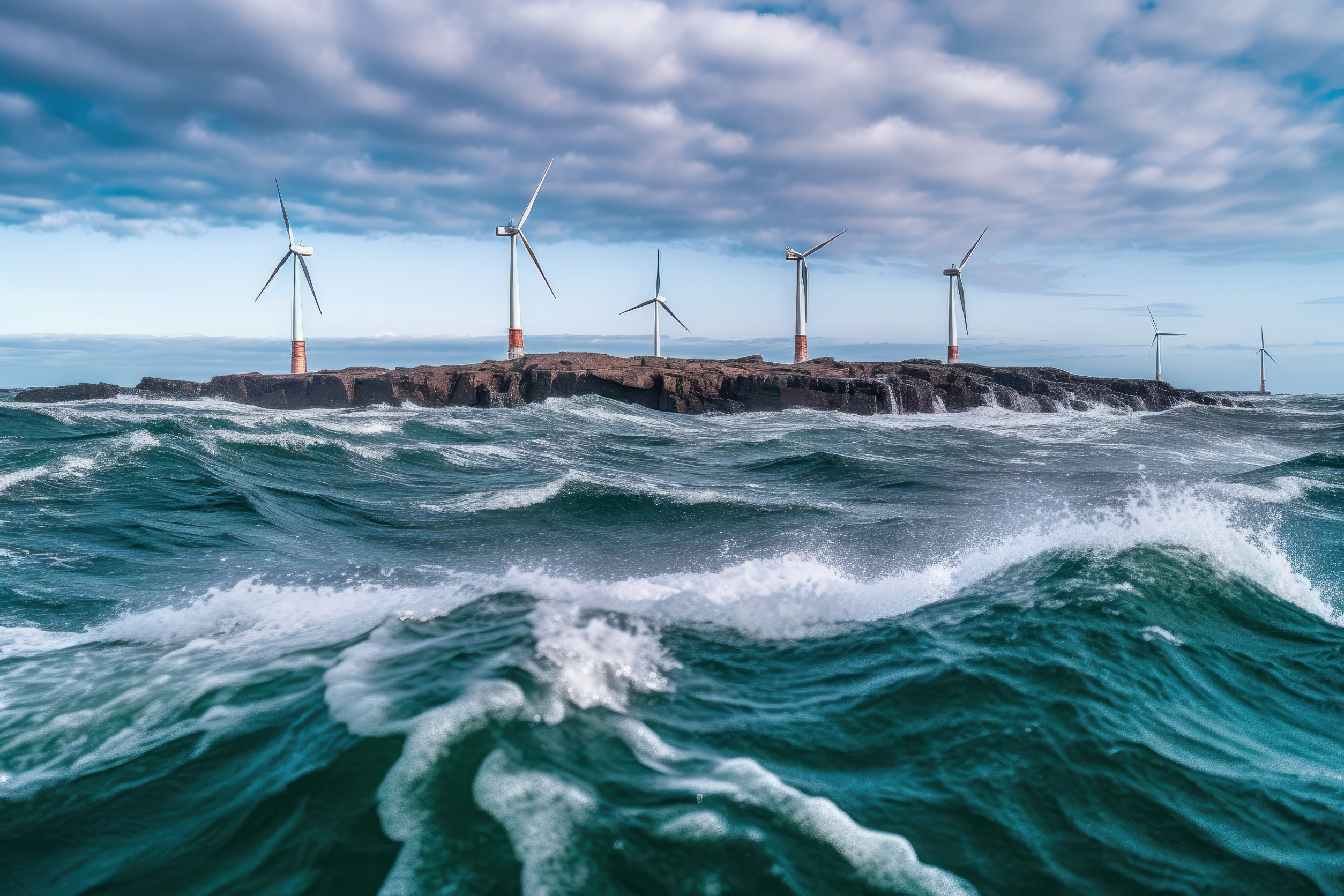
Building offshore wind can permanently deafen porpoises, but OK now with Bubble Walls?

January 4th, 2024 By Joanne Nova @ CFACT 1 Comment

Now they tell us

Wind farms save the world, and absolutely do not hurt dolphins or whales but did you know the industry has developed bubble curtains to protect porpoises hearing from the things that never harm them (isn’t that nice of them)?  Bubble curtains are being “widely” used in Germany, Denmark and the Netherlands.

The BBC is happy to report it now there are good results from a study, but apparently they weren’t too enthused in 2013 about telling us how pile -driving during construction can permanently destroy hearing in marine mammals. Indeed, ocean noise is such a problem the pile-driving teams use acoustic deterrents — loud noises designed to scare marine life away before they get started on the industrial noise. But even the “safety warning” may itself be dangerous.

So that’s alright then, windfarm construction used to kill porpoises, and the BBC kept that a secret, but now that we’ve solved it, it’s news we can use, right?

“Like a giant jacuzzi.”

As huge offshore wind farms spread across Europe’s North and Baltic seas, efforts grow to buffer the impact on wildlife.

Over the past decade, a curious invention has spread across Europe’s northern seas. It’s called a big bubble curtain, it works a bit like a giant jacuzzi, and it helps protect porpoises from the massive underwater noise caused by wind farm construction.

The original pile-driving in that study was actually done around 2009. If intrepid investigators from the BBC cared about marine life for real and investigated, they could possibly have reported it 14 years ago and before another 4,000 wind turbines were hammered in to the sea floor. Do dolphins matter or don’t they?

It appears the BBC only mentioned underwater noise pollution once before in 2018,  and the one reference to a windfarm was buried in a list of other industrial sources of noise. There were no headlines “Windfarm construction kills porpoises”. If coal miners used pile-drivers and was killing dolphins, the BBC would headline it and then repeat it until children at school were signing songs about it.

But those wind farmers are the nicest guys designing these jucuzzis just for porpoises:

A very large, perforated hose is laid on the seabed, encircling the wind turbine site. Air is pumped through, and bubbles rise from the holes to the surface of the water, forming a noise-buffering veil.
The quirky gadget, also known as a big bubble veil, was pioneered in Germany to help protect the endangered harbour porpoise, the only cetacean species living in its North Sea and Baltic Sea. The bubble curtain was designed around the porpoise’s specific needs and traits, lowering wind farm construction noise to a threshold deemed safe for the species, based on scientific research. Its proven muffling effect may also benefit other marine mammals that are vulnerable to noise, such as seals.
But the mid-air bird slicing will continue.
 
How many porpoises were deafened and left to die wandering the ocean blindly before the bubblers began?
 
The BBC propaganda team doesn’t think to ask when they started using the bubble walls:
 
The bubble curtain is now widely used by northern European countries racing to build more offshore wind farms as part of their efforts to curb CO2 emissions and fight global warming. Countries including the Netherlands, Germany, Denmark and Belgium have pledged to turn the North Sea into “the world’s largest green power plant“, aiming to jointly increase their offshore wind capacity there to 300GW by 2050.
 
In the North Sea, the number of wind turbines has risen from only 80 in 2002, to more than 4,000 today – and many more are planned as part of the green energy revolution. Spinning in fierce, fast sea winds, offshore turbines can produce more energy than those on land. On average, an onshore wind turbine generates around 2.5 to 3 megawatts (MW), …

It only took the BBC ten years to mention the Dähne study of 2013:

At close range, pile-driving noise can cause temporary hearing loss or even permanent deafness in harbour porpoises, leaving them disoriented and unable to survive. There can also be indirect damage. A 2013 study of pile-driving during the first offshore wind farm built in the German North Sea found that the noise prompted harbour porpoises to flee the area, swimming more than 20km (12 miles) away. Harbour porpoises need to eat and hunt almost constantly to meet their energy needs. Fleeing over long distances can disrupt that vital activity and make them vulnerable to starvationSeals may be similarly affected.

Harbour Porpoises have been having a hard time in the Baltic Sea. At least one mammal experts suggests they are dying awfully young:

Siebert points out that while porpoises can generally live for more than 20 years, in the Baltic Sea the average life span for females is just under four years, and in the North Sea, just under six years. “The animals in our waters die far too early,” she says.

Where is Greenpeace when a porpoise needs them?

REFERENCE

Michael Dähne et at (2013) Effects of pile-driving on harbour porpoises (Phocoena phocoena) at the first offshore wind farm in Germany, Environmental Research Letters, Volume 8, Number 2, DOI 10.1088/1748-9326/8/2/025002

This article originally appeared at JoNova

Monday, November 27, 2023

Offshore wind energy is sinking like a stone

By Reggie Rucker November 21st, 2023 91 Comments @ CFACT

With respect to energy policy, President Biden has been nothing but consistent. From day one, he set out to end fossil fuel use in America and replace it with wind and solar power — even if green energy drives up costs and fails to deliver reliable electricity when needed.

One of his flagship initiatives is to construct 30,000 megawatts of offshore wind energy by 2030. That’s 2,500 800-foot-tall 12-megawatt turbines. Sounds impressive. It’s not.

Even blanketing the East Coast with such monstrosities would barely meet New York state’s electricity demand on a hot summer day. It would provide a scant half of the Empire State’s needs once it goes all-electric and perhaps one-third of its needs if the turbines also have to charge batteries to prevent blackouts whenever the wind stops blowing.

Multiply that situation for every state in the country, and the massive, impossible scale of this government-mandated foolishness becomes clear. Worse, many more obstacles loom — most of which the wind industry, politicians, climate activists, and the news media rarely mention.

The media have reported that Orsted, Siemens, and other wind power companies have been pulling out of projects in New York, New Jersey, Connecticut, and elsewhere. They blame financial hardship, high interest rates, tight material and equipment supply chains, consequent rising costs, and insufficient taxpayer subsidies (which are already in the billions of dollars). But they hide the rest of the story.

Most people have become accustomed to the reliability and affordable prices that coal, natural gas, nuclear, and hydroelectric power provide. They’re not really hip to power interruptions, blackouts, 30-cent-per-kilowatt-hour electricity, or hidden costs that jack up their electric and natural gas bills. While they may give a wink and a nod to the Regional Greenhouse Gas Initiative, Green New Deal, or solar and offshore wind, that support melts away if costs begin to rise.

A recent poll of 1,000 voters conducted by MWR Strategies found that the median answer to the question “How much would you personally be willing to pay each year to address global warming?” was just $20, with 37% of respondents answering “zero” and 44% of respondents answering less than $10.

Not one demonstration project has shown that a purely renewable energy system (wind and solar), plus sufficient nonfossil fuel backup (batteries or pumped storage) to ensure electricity on windless/sunless days, can actually power an all-electric society. They haven’t even shown it for a village, much less an entire nation, not even for a week, much less a year.

To date, virtually none of the most vocal proponents of offshore wind (or onshore wind, solar panels, and an all-electric economy) has ever addressed these vital questions:

• How many offshore wind turbines would be required to generate the electricity we need today?

• How many would be needed if we move to an all-electric economy and add electric vehicles to the mix?

• How many enormous battery modules would be needed to provide electricity for a day, week, or month when the wind isn’t blowing?

• How often would offshore turbine generators have to be replaced due to salt spray, storms, normal use, and aging?

• How many miles of new undersea cables and onshore transmission lines would be needed? How many acres of wilderness and farmland would be hacked up for placing solar farms?

• What impacts would construction and operational activities have on whales, porpoises, and other wildlife, much of which is endangered?

• How much would we have to upgrade our home, neighborhood, city, state, and national electrical lines and grids to handle all this extra electricity, prevent blackouts, and avoid hacker-inflicted disruptions?

• How much slave and child labor would be involved in getting the materials to produce wind energy and battery backup?

• What would we do with the worn-out, broken, and obsolete 300-foot-long wind turbine blades — and other wind and battery components that cannot be recycled?

• How much will our taxes and electric bills go up to pay for it?

Every citizen should become better informed — and start asking inconvenient, impertinent questions like these at every opportunity. They should demand the truth, the whole truth, and nothing but the truth from utility regulators and elected leaders.

This accident originally appeared in The Washington Times

Offshore Wind cannot be justified

By David Wojick, PhD, November 22nd, 2023 27 Comments @ CFACT

Paul Driessen and I just finished a study on the impact of offshore wind developments on CO2 emissions, since emission reduction is their primary justification. Turns out global emissions from mining, processing, manufacturing and transportation offset any reductions from power production.

The full study report is published by CFACT’s NetZero Reality Coalition:

How Offshore Wind Drives Up Global Carbon Emissions

David Wojick, PhD, Paul Driessen, JD

Click here with other important studies and articles.

Here is the Executive Summary

Offshore wind facilities are enormously expensive and environmentally destructive. The primary purported justification for constructing them is to reduce carbon” (carbon dioxide or CO2) emissions and save the planet from catastrophic climate change.” However, this justification is not just built on a false premise; adding offshore wind to a state’s energy mix will most likely increase global CO2 emissions. That means the net emission benefits are hugely negative, as are other net environmental and economic effects.

This study finds that carbon dioxide reductions from local (state and national, as opposed to global) wind power generation are greatly overstated. For starters, any CO2 decrease will be small at best, largely because the intermittency of necessary wind speeds forces backup gas-fired power emissions to increase when the wind isn’t blowing. (Sufficient backup electricity from battery modules is also hugely expensive, heavily reliant on raw materials that are in short supply, and likely a decade or more away.)

The net result is that adding offshore wind to the existing coal, gas and nuclear and/or hydroelectric power system, though modestly lowering emissions at first glance, does little to reduce local power emissions overall because of the gas (or coal) backup generation now needed to maintain a stable grid.

But the story gets worse.

Often overlooked are the other factors associated with wind energy that actually drive up emissions. For example, supply chain emissions from constructing offshore wind facilities to replace existing generation facilities will be very large. Supply chain emissions include those arising from all the steps required to create an offshore wind facility: mining and processing the necessary metals and minerals, manufacturing components, constructing turbines and substations on site, and operating, maintaining, replacing, and ultimately decommissioning and landfilling worn out, damaged and obsolete equipment. They also include the myriad transportation steps along the way, via ship or truck.

These supply chain emissions are global and add to the global atmosphere. Thus, the net result of combining small local CO2 reductions with large increases in emissions via the supply chain is not a reduction in global atmospheric CO2, but an overall increase of atmospheric CO2.

In short, the emission reduction” justification touted by proponents of building offshore wind facilities is simplistic and false.

Finally, another justification for building wind farms is that they benefit local job creation. This too is by-in-large false. One reason is that such jobs are subsidized by local electric power ratepayers that will likely see their electricity prices soar, leading to layoffs in many businesses and the closing of businesses and entire industries – making the net benefit minimal, zero or even negative. Even worse, much of the ratepayer and taxpayer money behind offshore wind facilities will go overseas, because that is where the supply chain exists. In short, the jobs created by wind energy should be viewed as costs, not benefits.

Moreover, few local jobs will be created directly by offshore wind energy facilities, because building them is a simple assembly project, not a construction project. This is because the parts being assembled are primarily manufactured and fabricated overseas. These include the towers, turbines, blades, connecting cables, substations and transformers. Adding insult to injury, assembling offshore turbines is typically done by highly specialized ships primarily provided by foreign nations.

Local or US jobs are likely to be relatively few and even low-paying installation, maintenance, repair, decommissioning and recycling/landfilling jobs. Factory jobs manufacturing offshore wind turbine components will likely disappear, because US factories will no longer have reliable, affordable power in a wind-solar-battery-backup-gas-turbine economy; will be faced with hiring highly paid American workers; and thus will not be able to compete with Asian and other foreign competitors.

Also on the local level, once the actual overseas emission increases and local reductions are known, it is possible to calculate a cost per ton of carbon dioxide reduction. This number is likely to be very large, certainly in the thousands of dollars per ton and possibly much more. Moreover, supply chain costs will almost assuredly grow because critical raw material shortages are predicted as demand increases.

This study is only and initial examination of the complex issues surrounding the alleged justification for massive offshore wind development. For illustrative purposes, we have used a few simple examples, such as New Jersey’s 11,000-MW offshore wind target and emissions created along the supply chain for installing mostly monopile turbines.

However, our findings are more general in scope and application. In brief, for all offshore wind installations:

  • A. Local power system emission reductions will be small.
  • B. Supply chain emissions will be large.
  • C. Global emissions will therefore increase, not decrease.

Conclusion 1: There are no carbon dioxide emission reduction benefits, and thus no manmade climate change amelioration justifications for offshore wind development.

Our secondary findings explain in greater detail why this is so.

  • A. Any local jobs created will be exorbitantly costly when US wage scales, clean energy” subsidies and ratepayer increases are factored in, and thus are likely to be relatively few and low-paying.
  • B. Many existing local jobs will disappear, as electricity costs replace fossil fuel costs and rise steadily – resulting in layoffs in many economic sectors and reduced spending by cash-strapped families.
  • C. Supply chain costs are bound to go up due to rising US and global demand for and looming shortages of essential metals and minerals.

Conclusion 2: Offshore wind projects and infrastructure are tremendously expensive, will provide pricey intermittent electricity, and thus will destroy numerous American jobs while supporting few long-term jobs that offer similar wages.

Conclusion 3: Offshore wind projects and infrastructure inflict numerous other costs that thus far have not been factored into any cost-benefit analyses for the industry.

Conclusion 4: The net carbon” (carbon dioxide) reduction effects of offshore wind development are thus hugely negative and cannot justify further investments in this industry.