Search This Blog

De Omnibus Dubitandum - Lux Veritas

Showing posts with label David Wojick. Show all posts

Thursday, March 7, 2024

CFACT blasts offshore wind multiple-site assessment as ridiculous

By March 6th, 2024  @ CFACT 45 Comments

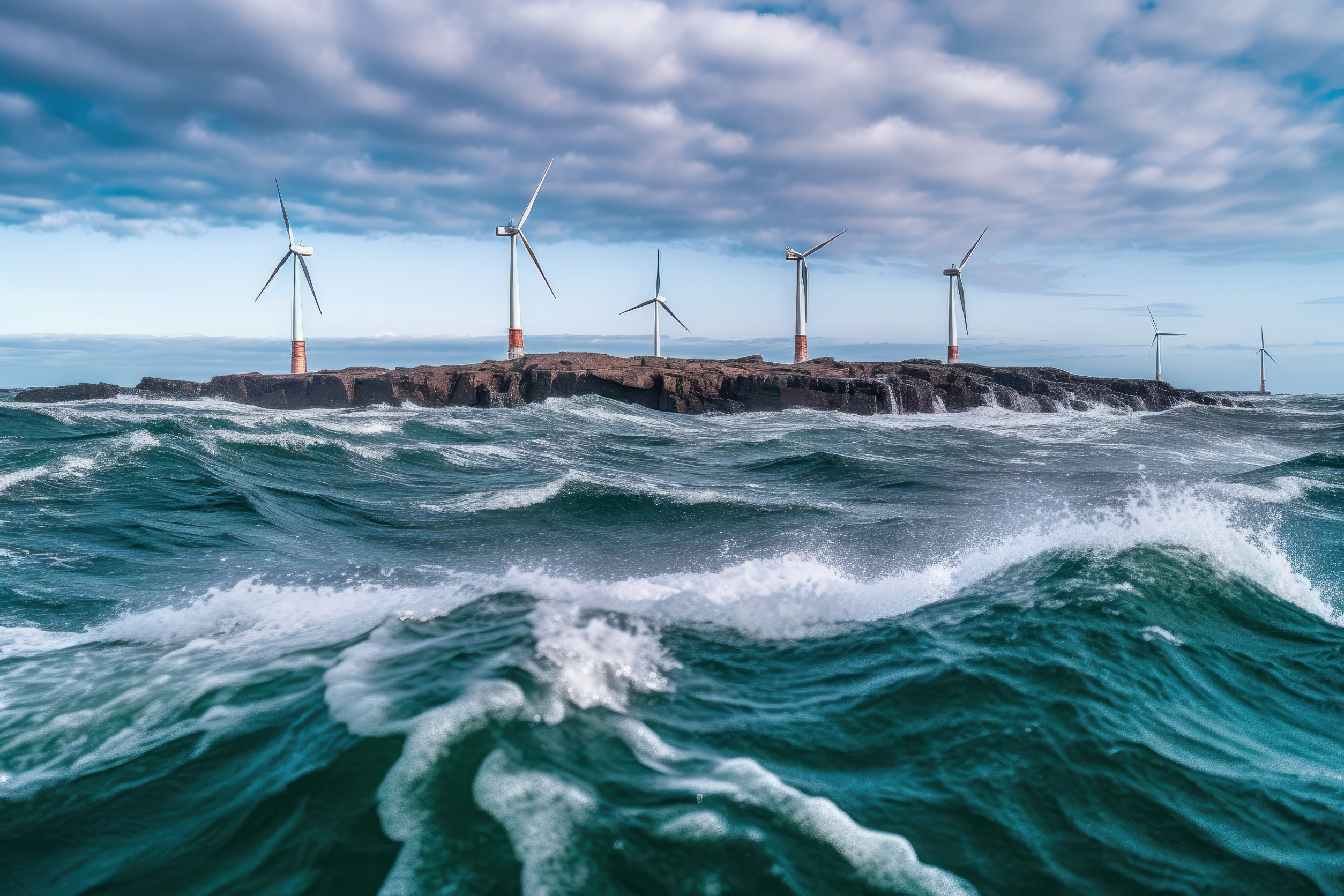
CFACT has long called for an environmental assessment of the combined impact of the clusters of huge offshore wind facilities being pushed by the Feds. Each facility is being separately assessed even when they share a boundary.

In many cases, it is clear that the adverse impacts will overlap and compound the harm to marine life. An obvious example is the incredibly loud and potentially harmful noise of pile driving. This noise carries over fifty miles, so if two sites are pile driving within a few miles of each other, the noise has to be much worse when the impacts combine.

The Federal Bureau of Ocean Energy Management is supposed to do environmental assessment of offshore wind (even though their mandate is to get it built). They finally produced a combined assessment for six facilities off of New York and New Jersey. It is grandly called a Programmatic Environmental Impact Assessment (PEIS) of the New York Bight.

CFACT’s official comments on this assessment are pretty clear: it is junk. Here are some telling excerpts:

“Most of the 800 or so pages are nothing more than an academic discussion of the general environment, the sorts of impacts that might or might not occur, and what might or might not be done about them. There is basically nothing about this specific combination of projects.”

“In short, the academic acoustic case considered in the PEIS tells us absolutely nothing about the potentially huge noise impact of the six projects supposedly being assessed. There is literally no environmental impact assessment here. This vacuum seems to hold for pretty much the entire PEIS, with no real assessment of the six projects. There is certainly nothing of substance on noise.”

“As environmental impact statements go, this one is ridiculous.”

A number of important adverse impacts are not even considered, especially the lifetime operational impacts that go on for decades.

First, there is the combined operational noise of these six big facilities, some of which are actually contiguous. In addition to the endless turbine noise, there is the noise from the fleet of boats servicing these turbines.

Then there is the massive plume of reduced energy air created by the energy-sucking turbines. There is a large scientific literature on the potentially damaging effects of this plume on ocean life, especially reduced productivity in the food chain.

There is also the threat of a deleterious plume of suspended sediments created by air and water turbulence at each turbine tower. This smothering plume also reduces productivity.

I discuss these so-called wake effects in this article.

So the PEIS only looks at construction and basically tells us nothing about the adverse impacts of that. Ridiculous is right.

Note that NOAA shares the blame for this travesty of assessment. They are the experts on the adverse impact of noise on the marine life that they are supposed to protect. For example, the combined adverse effects of all these wind facilities the Feds are rushing into being could exterminate the North Atlantic Right Whale and other endangered critters.

Make no mistake, there is here a clear violation of the National Environmental Protection Act, the Endangered Species Act, the Marine Mammal Protection Act, and no doubt other laws. Something must be done.

Read CFACT’s official submission here

Wednesday, November 29, 2023

UN COP 28 is Not a Democracy

November 29th, 2023|1 Comment By David Wojick @ CFACT

Reading the breathless Green coverage of the soon-to-be COP 28, the UN conference on climate change (CFACT is on the way!), I noticed a fundamental fallacy occurring endlessly. The analysts seem to assume that decision-making is democratic, such that what you need to pass a rule is a majority vote along the lines of Congress or Parliament.

The reality is extremely different. Every member Country has veto power. This dramatically changes what is possible. The analysts consistently miss this, especially by talking about possibilities that are, in fact, impossible.

A good example is a recent Washington Post article discussing the possibility that COP 28 will adopt a decision calling for the phasing out of not just coal but all fossil fuel use. They correctly report that some countries are all for this while others are strongly against it.

The presently crazy Biden U.S. is for it despite being the world’s biggest per capita user of fossil fuels. Russia is sanely against it as fossil fuel exports are their primary revenue source.

It is then consistently reported as a maybe yes, maybe no situation, like Congress debating a controversial Bill. The obvious reality is that absent a miracle, this measure has no chance whatsoever. It is, as the saying goes, dead on arrival.

An even better example is the ridiculous proposal from France and, again the U.S. that the member countries all agree to, somehow, stop the private financing of coal-fired power plants. Given that China and a number of big developing countries are betting their electrical future on coal this is clearly nothing more than political posturing. Even a miracle could not save this nonsense. But it is dutifully reported and analyzed as a real possibility. At least it is here in America and likely in France, too.

Wishful COP 28 thinking is not news nor analysis, but it fills the pages. The reality is that none of these big-ticket issues that we read so much about have the slightest chance of happening.

The one big issue where something might actually happen is loss and damage. But it will be small, hyped as huge.

Recall that at COP 27, there was reported to be a great advance, creating a Loss and Damage Fund. This is where the developed countries will pay the developing ones something toward their supposedly climate-caused losses and damages: crop losses and food damages, for example.

In reality, all that was created is a name, an idea if you like. A Committee was established to give, or at least propose, form and substance to this nebulous idea. That has not happened because the issues are overwhelming. After all, every county gets bad weather. The U.S. has said it will donate millions of dollars while developing countries are talking trillions.

However, this loss and damage concept is so vague that there is room for moving forward without being so specific or dangerous, that we start getting vetos.

For example, they might agree on where this little fund will be established. This is presently controversial but probably not a deal breaker because the developing countries want to see money moving.

Or they might all agree that the first, small funds go to the Least Developed Countries or maybe to the poorest Small Island States. This is a feel-good first step that makes the fund real. It carefully avoids the issue of who gets how much of them trillions.

This is how COP diplomacy works. Find little steps that everyone is willing to allow while pushing the big issues down the road. Then, report these small steps as big breakthroughs. Of course, there is truly serious green stuff going on, but that is at the national level. COPs are just a carnival.

So, as you watch yet another COP play out, keep in mind that the grand schemes endlessly reported and analyzed at great length are going nowhere fast. Full of sound and fury, signifying nothing. Or as they say in Texas, all hat, no cattle.

Be amused, not angry.

Stay tuned to CFACT for jovial coverage of the COP 28 circus.

Monday, November 27, 2023

Offshore Wind cannot be justified

By David Wojick, PhD, November 22nd, 2023 27 Comments @ CFACT

Paul Driessen and I just finished a study on the impact of offshore wind developments on CO2 emissions, since emission reduction is their primary justification. Turns out global emissions from mining, processing, manufacturing and transportation offset any reductions from power production.

The full study report is published by CFACT’s NetZero Reality Coalition:

How Offshore Wind Drives Up Global Carbon Emissions

David Wojick, PhD, Paul Driessen, JD

Click here with other important studies and articles.

Here is the Executive Summary

Offshore wind facilities are enormously expensive and environmentally destructive. The primary purported justification for constructing them is to reduce carbon” (carbon dioxide or CO2) emissions and save the planet from catastrophic climate change.” However, this justification is not just built on a false premise; adding offshore wind to a state’s energy mix will most likely increase global CO2 emissions. That means the net emission benefits are hugely negative, as are other net environmental and economic effects.

This study finds that carbon dioxide reductions from local (state and national, as opposed to global) wind power generation are greatly overstated. For starters, any CO2 decrease will be small at best, largely because the intermittency of necessary wind speeds forces backup gas-fired power emissions to increase when the wind isn’t blowing. (Sufficient backup electricity from battery modules is also hugely expensive, heavily reliant on raw materials that are in short supply, and likely a decade or more away.)

The net result is that adding offshore wind to the existing coal, gas and nuclear and/or hydroelectric power system, though modestly lowering emissions at first glance, does little to reduce local power emissions overall because of the gas (or coal) backup generation now needed to maintain a stable grid.

But the story gets worse.

Often overlooked are the other factors associated with wind energy that actually drive up emissions. For example, supply chain emissions from constructing offshore wind facilities to replace existing generation facilities will be very large. Supply chain emissions include those arising from all the steps required to create an offshore wind facility: mining and processing the necessary metals and minerals, manufacturing components, constructing turbines and substations on site, and operating, maintaining, replacing, and ultimately decommissioning and landfilling worn out, damaged and obsolete equipment. They also include the myriad transportation steps along the way, via ship or truck.

These supply chain emissions are global and add to the global atmosphere. Thus, the net result of combining small local CO2 reductions with large increases in emissions via the supply chain is not a reduction in global atmospheric CO2, but an overall increase of atmospheric CO2.

In short, the emission reduction” justification touted by proponents of building offshore wind facilities is simplistic and false.

Finally, another justification for building wind farms is that they benefit local job creation. This too is by-in-large false. One reason is that such jobs are subsidized by local electric power ratepayers that will likely see their electricity prices soar, leading to layoffs in many businesses and the closing of businesses and entire industries – making the net benefit minimal, zero or even negative. Even worse, much of the ratepayer and taxpayer money behind offshore wind facilities will go overseas, because that is where the supply chain exists. In short, the jobs created by wind energy should be viewed as costs, not benefits.

Moreover, few local jobs will be created directly by offshore wind energy facilities, because building them is a simple assembly project, not a construction project. This is because the parts being assembled are primarily manufactured and fabricated overseas. These include the towers, turbines, blades, connecting cables, substations and transformers. Adding insult to injury, assembling offshore turbines is typically done by highly specialized ships primarily provided by foreign nations.

Local or US jobs are likely to be relatively few and even low-paying installation, maintenance, repair, decommissioning and recycling/landfilling jobs. Factory jobs manufacturing offshore wind turbine components will likely disappear, because US factories will no longer have reliable, affordable power in a wind-solar-battery-backup-gas-turbine economy; will be faced with hiring highly paid American workers; and thus will not be able to compete with Asian and other foreign competitors.

Also on the local level, once the actual overseas emission increases and local reductions are known, it is possible to calculate a cost per ton of carbon dioxide reduction. This number is likely to be very large, certainly in the thousands of dollars per ton and possibly much more. Moreover, supply chain costs will almost assuredly grow because critical raw material shortages are predicted as demand increases.

This study is only and initial examination of the complex issues surrounding the alleged justification for massive offshore wind development. For illustrative purposes, we have used a few simple examples, such as New Jersey’s 11,000-MW offshore wind target and emissions created along the supply chain for installing mostly monopile turbines.

However, our findings are more general in scope and application. In brief, for all offshore wind installations:

  • A. Local power system emission reductions will be small.
  • B. Supply chain emissions will be large.
  • C. Global emissions will therefore increase, not decrease.

Conclusion 1: There are no carbon dioxide emission reduction benefits, and thus no manmade climate change amelioration justifications for offshore wind development.

Our secondary findings explain in greater detail why this is so.

  • A. Any local jobs created will be exorbitantly costly when US wage scales, clean energy” subsidies and ratepayer increases are factored in, and thus are likely to be relatively few and low-paying.
  • B. Many existing local jobs will disappear, as electricity costs replace fossil fuel costs and rise steadily – resulting in layoffs in many economic sectors and reduced spending by cash-strapped families.
  • C. Supply chain costs are bound to go up due to rising US and global demand for and looming shortages of essential metals and minerals.

Conclusion 2: Offshore wind projects and infrastructure are tremendously expensive, will provide pricey intermittent electricity, and thus will destroy numerous American jobs while supporting few long-term jobs that offer similar wages.

Conclusion 3: Offshore wind projects and infrastructure inflict numerous other costs that thus far have not been factored into any cost-benefit analyses for the industry.

Conclusion 4: The net carbon” (carbon dioxide) reduction effects of offshore wind development are thus hugely negative and cannot justify further investments in this industry.
Friday, September 29, 2023

Offshore wind is systematically violating the Marine Mammal Protection Act

By September 28th, 2023, 37 Comments @ CFACT

New evidence says that offshore wind sonar surveys may have committed hundreds of thousands of violations of the MMPA, each potentially subject to tens of thousands of dollars in fines. The potential penalty total is in the billions. Moreover these incredible violations appear to be deliberate.

These astonishingly bad findings flow from research by the Save the Right Whales Coalition (SRWC). It is a bit technical but here is a simple summary.

First some legal background. We are talking about the activity of sonar blasting doing something called “incidental harassment”. In the MMPA harassment means doing bad things to a marine mammal. These can range from causing adverse behavioral changes to outright injury, such as in this case causing deafness. Incidental means the harassment is due to some activity that is not directed at the mammal, in this case the many sonar surveys done in conjunction with offshore wind development.

One of the fundamental rules in the MMPA is that incidental harassment is illegal unless it has been specifically authorized by NOAA. The extreme noise from offshore wind sonar surveys does a lot of incidental harassment so NOAA has issued an Incidental Harassment Authorization (IHA) for each one. Since sonar blasting geared up in 2016 NOAA has issued over 40 IHAs with more pending.

Each IHA lists the number of authorized harassments by species of affected mammal. How this is done is very important here. In simple terms it is like this. NOAA has established noise level thresholds, above which there is harassment. Given the loudness of the sonar the size of the ocean area where harassment will occur is then determined. Then the number of critters of each affected species that will be in that area, hence harassed, is estimated. That number of harassments is then authorized so the survey can proceed.

These IHA numbers are big. It is not unusual for 5,000 to 10,000 harassments to be authorized in a single IHA. Most of these are typically dolphins and seals, with dozens of whales as well. All the IHAs, effective, expired and pending, are listed here: https://www.fisheries.noaa.gov/national/marine-mammal-protection/incidental-take-authorizations-other-energy-activities-renewable

These MMPA authorized harassments are an issue because they can cause deadly behavior, such as driving the critter into heavy ship traffic to be struck. But that is not our topic here as we now have something potentially far worse to consider.

Save Right Whales Coalition (SRWC) blows the whistle

SRWC noticed that the recent IHA calculations were using sonar noise levels that were much lower than those specified by the equipment manufacturer. So they did what NOAA should have been doing from the beginning; they measured the noise from a sonar in action doing a survey. They found that the noise level was comparable to the manufacturer’s specs, hence much louder than what the IHA assumed.

Here is how SRWC co-founder Lisa Linowes explained it to me (somewhat technically):

“Thirteen of the 13 IHAs now active for OSW sonar activity show all of the applications were approved based on a sonar level with a source sound level of 211 dB,pk and 203 dB,rms. Had the developers used the correct sound levels using manufacturer’s data of 226 dB,pk and 219 dB,rms (per NOAA’s own guidance), NOAA’s spreadsheet for determining Level B threshold for impulsive sound levels would be 890 meters from the survey boat. But instead, the quieter sonar value submitted to NOAA placed the threshold distance at just 141 meters and that’s what NOAA approved. Using the same calculation for impact area that the developers used but applying the 890 meter radius results in an area that is significantly larger.”

For more see https://saverightwhales.org/

If the local population scales with area, which seems likely, then the number of harassments will be about 6.3 times higher than authorized. That is 890 divided by 141. For simplicity call it 6 times higher.

Thus the number of unauthorized harassments will be roughly 5 times higher than the number authorized. All of these unauthorized harassments are illegal violations of the MMPA. The number of violations is huge. Note that these low-ball numbers come from the offshore developer not NOAA. The harassment calculations are in the developer’s application.

We know where these low-ball numbers come from. NOAA’s IHA guidance says that if the manufacturer’s data is not available then the applicant can use a proxy number from a 2016 technical publication. Despite the manufacturer’s specs being readily available, all the applicants used some of the lowest proxy numbers. Why NOAA approved this substitution is not known.

Staggering potential penalties for illegal harassment

The potential penalties for unauthorized harassment are sizable. Here is NOAA’s summary:

“If prosecuted, violators of the MMPA could face:

  • Civil penalties up to $34,457.
  • Up to 1 year in prison, plus criminal fines.
  • Forfeiture of the vessel involved, including penalties for that vessel up to $25,000.”

See Frequent Questions: Feeding or Harassing Marine Mammals in the Wild

I have seen reports that to date NOAA has authorized over 400,000 offshore wind sonar harassments. If all of these use the low-ball loudness and given our 5 times ratio this implies an incredible 2 million unauthorized harassments or more. At $34,457 per harassment the civil penalties alone work out to just under 69 billion dollars! Not to mention the jail time and criminal fines.

This astonishing 69 billion dollars in potential penalties shows the staggering scale of this issue of unauthorized harassment by offshore wind sonar.

Clearly a thorough investigation is called for. In the meantime this illegal harassment must cease. Active IHAs should be suspended and no more issued until this issue is resolved.

Author


Tuesday, September 26, 2023

Desperate governors beg for offshore wind cost relief

By September 25th, 2023 102 Comments  @ CFACT

Six Atlantic shore Governors are begging the Feds to bail them out of a huge looming offshore wind cost overrun. They sent Biden a joint letter asking for a list of relief measures ranging from tax breaks to revenue sharing.

The outcome is far from clear but my guess is the largess is unlikely to appear, especially given the ongoing federal budget battles. Maybe later. However most of the requests also likely require major regulatory changes, which could take years. They might even take legislation which could be never.

But the need is urgent as the offshore developers are demanding immediate power price increases of around 50% lest they leave for better opportunities elsewhere. They can do this because offshore wind is a global boom. Even mid-income developing countries like Indonesia are talking big offshore numbers.

Ironically, it is this boom that is driving some of the sticker-shocking price increases. There is even a shortage of highly specialized crane ships to erect these huge towers. The supply chain is a seller’s market, at least on paper. Rising interest rates are another big driver.

The letter is pretty vague, but there are basically. three kinds of federal relief requested. These are tax credits, revenue sharing, and streamlined permitting. I am sure there is lots of lobbying going on by the developers, as well as the Governors. Unfortunately, it is all secret so the specific issues are well hidden, making the following brief analysis somewhat speculative.  The letter is here:

There look to be two tax credit issues. The first, which the IRS might actually be able to do something about, involves the definition of the renewables energy project that gets the investment tax credits. At present, probably only the generating assembly counts. This likely includes the tower and monopile foundation as well as the turbine generator and enormous blades.

But it may not include the extensive undersea connector cabling, the massive offshore substations, the huge export cabling, and the costly onshore transmission upgrades. These system components make up a sizable fraction of the project cost.

The second issue is the bonus tax credits awarded under the so-called Inflation Reduction Act. This is a 10% credit bump that developers get if they meet certain domestic content specs. Offshore wind already gets a big break under IRA because their content requirement is just half that of all other renewable projects.

As near as I can tell, they want the presently measly requirement to be even less. This is likely because most of the components come from overseas. America has very little specialized offshore component production capability since we have never built any here. Building this kind of industrial capacity will take a long time.

However, since the specific domestic component requirements are in the law, the IRS may have very little leeway, and what they have should require rulemaking. How this works out will be very interesting to watch. It might take legislation, which is uncertain, to say the least.

On revenue sharing, the States want a piece of the billions of dollars developers are paying the Feds in offshore site lease payments. Single sites have paid over a billion. Some sites are at least partially within State waters, but most are not.

Here the question is why taxpayers in, say, Wyoming should, in effect, pay to lower electricity bills in New Jersey? The agency in charge of offshore leasing is the Bureau of Ocean Energy Management (BOEM) in the Interior Dept. They are gung ho for offshore wind, so might not mind sharing revenue if it keeps the project coming.

I have no idea what the legalities are here except they are likely to be complex. BOEM has been doing offshore oil and gas leasing in the Gulf for a long time, so there should be a big body of law to deal with.

Who gets how much is an interesting question, especially for projects set to sell juice to several States. Plus, the States expect to sell some to other States. Given that many of the power purchase contracts at issue are with utilities, not States, maybe they should get the money.

For that matter, if this revenue sharing happened, the Gulf states might want a piece of the oil and gas action. None of this is simple, for sure. (Aside: maybe the Feds should collect royalties on the harvested wind power, like the 18.75% they get on offshore oil production.)

As for speeding up permitting, that is already a hot topic in Congress, but there is no consensus on what it even means, much less how to do it. I think BOEM is already going as fast as it can, ignoring many issues in the process, such as whale deaths. And, of course, the Biden Executive Branch cannot speed up the Judiciary, where a lot of the project delay lies in litigation.

In short, this seemingly simple letter is pointed at some really hairy issues. The talks are going on in secret, and I have yet to see any detailed analysis of the potential policies and ramifications thereof. If the fate of Atlantic offshore wind really depends on taking these hairy steps, then we are in “Nobody knows land” for sure. This cannot be good from the investment point of view so more stocks may drop.

Stay tuned to CFACT to see how this wacky offshore drama plays out. It might be awhile.

Author

  David Wojick 

,  Ph.D. is an independent analyst working at the intersection of science, technology and policy. For origins see.  For over 100 prior articles for CFACT. Available for confidential research and consulting.


Tuesday, September 19, 2023

A tale of two whale protection groups

By September 18th, 2023 28 Comments @ CFACT 

 There are two groups specializing in trying to protect the severely endangered North Atlantic Right Whale, of which only about 340 critters remain alive, fewer every month, it seems. One is new and small, while the other is old and big.

The small group says that offshore wind development is killing whales, which I, too, believe, but NOAA denies. The big group, which includes NOAA and some of their funded researchers, is now up to thinking about the possibility that offshore wind might actually affect the whales. This dramatic difference is worth exploring a bit.

The small group is the Save Right Whales Coalition (SRWC). The really big group, founded in 1986, is the North Atlantic Right Whale Consortium (NARWC). The members of NARWC are a wealthy lot indeed.

The small Coalition is focused on wind, saying, “We are an alliance of grassroots environmental and community organizations, scientists, and conservationists working to protect the critically endangered North Atlantic right whale and other marine life from the industrialization of our ocean habitat through large-scale offshore wind energy development.”

The big Consortium says its mission is to “Eliminate human-caused mortality to right whales in critical habitats and migration corridors”. But their focus is on the old threats of fishing gear entanglement and ship strikes, never mentioning that both can be caused by the new and ongoing whale harassment noise from wind development.

Mind you, the big Consortium is now at least thinking about offshore wind. Their upcoming annual meeting has a session on it. Here are the presentations:

Session 2: Offshore Wind Interactions and Mitigation

  • Upcalling behavior and patterns in North Atlantic right whales, implications for wind energy development
  • Recommendations for real-time passive acoustic monitoring near offshore wind energy development activities to help mitigate risks to North Atlantic right whales
  • From wind to whales: Potential hydrodynamic impacts of offshore wind on Nantucket Shoals region ecosystems
  • Exploring overlap between NARW and ocean features: An autonomous-based oceanographic and ecological baseline
  • BOEM-NOAA North Atlantic right whale and offshore wind strategy

Not exactly ‘save the whales from death’ stuff. Note that two of the five talks are by NOAA people, and the rest are their well-funded researchers. Regarding the so-called strategy in the last talk, I wrote about that. There is no strategy.

In dramatic contrast, the Save Right Whales Coalition recently sent a letter of deep concern to NOAA Administrator Richard Spinrad. The Coalition has been doing its own research on harmful sonar noise, with disturbing results. Here is the beginning of their letter:

“Dear Dr. Spinrad: We are writing to alert your attention to urgent and credible information involving offshore sonar activity occurring within wind lease areas in the Atlantic. Specifically, our data show that the sonar is producing Level B harassment noise levels at distances that exceed those set by NOAA Fisheries (NMFS). Consequently, the protective distances adopted in NMFS issued Incidental Harassment Authorizations (IHAs) for offshore wind sonar work are not protective at all. Rather, marine mammals are likely getting much closer to the sonar than should be allowed. We believe this is a major factor behind the recent spate of whale deaths in the Atlantic Ocean since December 1, 2022 and the ongoing Unusual Mortality Events (UMEs) dating back to 2017-18. The only mitigation for noise is distance. The shortened Level B the IHAs have, in effect, rendered any expected mitigations useless.”

A 5-page summary of these disturbing findings follows.

This is by no means the first time NOAA has been given technical information regarding the threat of excessive noise from offshore wind development. Such noise can easily cause deadly behavior by whales, including ship strikes, entanglements, and reproductive decline.

We shall see how NOAA responds to this serious letter of concern from the Save Right Whales Coalition. Their ongoing research is also of great interest to us, especially since the rich North Atlantic Right Whale Consortium seems to be doing little or nothing about offshore wind.

Author

 David Wojick

, Ph.D. is an independent analyst working at the intersection of science, technology and policy. For origins see here.  For over 100 prior articles for CFACT see here. Available for confidential research and consulting.  View all posts


Thursday, September 14, 2023

Giant utility rejects net zero power, big fight follows

September 13th, 2023 72 Comments @ CFACT

Dominion Energy, Virginia’s big electric utility, is telling the State it does not foresee complying with the 2045 net zero power target in the Virginia Clean Economy Act (VCEA). The preferred option in Dominion’s latest Integrated Resources Plan (IRP) retires no fossil-fueled power generators, other than the few old ones that are already in the process of retirement. In fact, it adds a lot more fossil juice.

Up front in the IRP, Dominion puts it this way: “Due to an increasing load forecast, and the need for dispatchable generation, the Alternative Plans show additional natural gas-fired resources and preserve existing carbon-emitting units beyond statutory retirement deadlines established in the VCEA. The law explicitly authorizes the Company to petition the SCC for relief from these requirements on the basis that the unit retirements would threaten the reliability or security of electric service to customers.”

So, in effect, this is a notice to Virginia’s utility regulator, the State Corporation Commission (SCC), that Dominion is prepared to petition for permission to not comply with the net zero power generation mandate in the VCEA.

In fact, this IRP may constitute such a petition. The anti-fossil forces apparently think so because they have petitioned the SCC to reject the IRP because it includes more gas-fired generation. In response, the SCC has initiated a formal legal proceeding to consider this request. A number of green groups have joined the proceeding; there has been a hearing, public comments have been taken, etc. The whole rulemaking deal.

The impetus for this unexpected bout of rationality from Dominion is, as the quote says, an increased load forecast. Specifically, the SCC requires Dominion to use the load forecast from the regional grid operator, which is PJM. They issued a whopping new forecast that is roughly double their earlier ones going back years.

So Dominion is saying they don’t think we can service this enormous new load and comply with the VCEA net zero mandate. They specifically propose not to retire most of their fossil fleet, plus adding almost 3,000 MW of gas-fired generation over the next 15 years. No wonder the anti-fossils are apoplectic.

Unfortunately, they also add a ridiculous amount of renewables. This is about 11,000 Megawatts (MW) of solar and 3,000 MW of mostly offshore wind, on top of the 2,600 MW of offshore already in process. With their usual smoke and mirrors, there is virtually no storage to make this intermittent junk reliable despite costing tens of billions of dollars. If the gas-fired power does that, why not just use it instead of the renewables? Plus, offshore wind is hell on whales. But I digress.

Dominion has 7 million customers in 16 States, so its Virginia no net zero action has much wider implications. Beyond that, it could be a national precedent, so other utilities, States, and interest groups should be watching closely.

What the SCC decides could be very important. Ironically, in a ridiculous sense, the SCC does not exist at this time. Due to a political stalemate, there is only one Commissioner, out of the called-for three, and it takes a quorum of two to issue a formal order. It looks like the most that can happen is that an administrative law judge can render an opinion on the anti-fossil petition.

The SCC legal mess is beyond my knowledge or understanding. Rejecting an IRP seems odd to begin with. Then, too, the VCEA seems to allow what Dominion is describing specifically. Nor is it at all clear that an IRP is a petition when the matter is just presented as an option. Perhaps it is a petition to be allowed to suggest it. The whole fight strikes me as an absurd confusion, but alarmism is like that. Maybe that is the message. Anti-fossil alarmism is an absurd confusion.

This confused action should be fun to watch. Stay tuned to CFACT as the no net zero drama unfolds.

Author
  • David Wojick

    David Wojick, Ph.D. is an independent analyst working at the intersection of science, technology and policy. For origins see http://www.stemed.info/engineer_tackles_confusion.html For over 100 prior articles for CFACT see http://www.cfact.org/author/david-wojick-ph-d/ Available for confidential research and consulting.

Wednesday, July 12, 2023

The whale killing study the Feds are afraid to do

By   July 11th, 2023 32 Comments @ CFACT

The Feds have admitted that offshore wind development can cause the death of whales and other marine mammals, but they refuse actually to assess that threat for any wind facilities. So I here outline what such a study should look like. This sort of study is what they are afraid to do because it would give numbers to the deaths that are likely to occur, species by species.

First off, here is the Feds’ own description of some of the known deadly threats. In this case, the offshore wind activity is driving the monster piles that support the turbine towers, but there are others. The Feds say this in the Draft Environmental Impact Statement for the proposed Empire Wind project off of New York and New Jersey:

It is possible that pile driving could displace animals into areas with lower habitat quality or higher risk of vessel collision or fisheries interaction. Multiple construction activities within the same calendar year could potentially affect migration, foraging, calving, and individual fitness. The magnitude of impacts would depend upon the locations, duration, and timing of concurrent construction. Such impacts could be long term, of high intensity, and of high exposure level. Generally, the more frequently an individuals normal behaviors are disrupted or the longer the duration of the disruption, the greater the potential for biologically significant consequences to individual fitness. The potential for biologically significant effects is expected to increase with the number of pile-driving events to which an individual is exposed.Empire Wind DEIS v.1, Page 3.15-14, PDF page 372

The federal agencies, in this case, are the Bureau of Ocean Energy Management (BOEM) and NOAA Fisheries (NFMS), who jointly prepare the DEIS. Other agencies also have responsibilities for marine mammals.

My focus here is displacement leading to a higher risk of vessel collision or fisheries interaction, as mentioned in the first DEIS sentence above. This is the obvious case where a whale or other critter is driven by excessive noise into a high-traffic ship lane and killed or into a net, tangled, and drowned. Many proposed wind facilities are located where this is a reasonably likely occurrence.

It is important that the first step in my study design is already being done in great detail. What I describe is a straightforward extension of the present method. For every wind project activity that produces excessive underwater noise, NMFS estimates the number of critters, by species, that will experience unsafe noise levels.

They call this experience of unsafe noise a harassment. For some projects, the number of predicted harassments is hundreds for whales and thousands for smaller protected mammals like dolphins and seals.

How the number of harassments is estimated is pretty technical, but the basic idea is simple enough. First, figure how the excessive noise will be distributed in the ocean. Then given the estimated population density of critters within that noise distribution, calculate the number of animals hit with excessive noise.

As the quote above makes clear, harassment can cause deadly behavior. The Feds do not address this issue, which is simply the likely death rate of harassment. So here is an outline of how it could be done.

Step 1: Harassment

Get or estimate data on critter densities and unsafe noise distributions, both over time. Estimate the number and distribution of likely harassment. This a already being done.

Step 2: Avoidance due to harassment

Given critter density and noise distribution, both over time, derive critter density changes due to noise. The animals will likely flee the unsafe noises and move to adjacent areas, increasing the population density of these.

Step 3: Threat densities

Get or estimate threat densities and distributions over time. Threat densities include things like ship traffic numbers, perhaps by vessel type and speed, net locations, etc. Detailed ship traffic data is available for some sites.

Step 4: Death increases

Derive increases in deadly threat exposure due to avoidance. An increased critter density in a high-threat area implies an increased likelihood of mortality.

Step 5: Refinement

Factor in adverse effects accompanying avoidance, such as deafness, panic, etc.

That is the study outline. If they can estimate harassment numbers by species, they can readily go on to estimate the deadly consequences of harassment using the same density-based methods. This can also be done for migration, foraging, and the other obvious impacts listed in the DEIS quote above.

The research question is simple: What is the mortality rate of harassment for a given offshore wind project?

The Feds must answer that mortality rate question before a project’s environmental impact assessment is complete. They should also assess multiple projects, as discussed in the DEIS quote above.

Author

David Wojick

David Wojick, Ph.D. is an independent analyst working at the intersection of science, technology and policy. For origins see http://www.stemed.info/engineer_tackles_confusion.html For over 100 prior articles for CFACT see http://www.cfact.org/author/david-wojick-ph-d/ Available for confidential research and consulting.

Thursday, June 1, 2023

Offshore wind may not reduce CO2 emissions

By May 31st, 2023 58 Comments  @ CFACT

There is a common assumption that offshore wind electricity generation greatly reduces CO2 emissions. In fact this is the primary justification for the horrendous cost and adverse impact of these offshore megaprojects.

As with many green assumptions, this may well be false. First, given the way power generation actually works the reduction in fossil fuel emissions may not be all that great. In fact offshore wind could actually increase fossil fuel emissions. This is explained below.

Let’s take New Jersey as an example because they aspire to be the leader in offshore wind development. Their stated goal is a whopping 11,000 MW of offshore generating capacity, at a cost of something like $100 billion. If reducing CO2 emissions is the justification for this incredible cost, there had better be a lot of reduction. Turns out there may be very little, which makes the project very expensive, or even an increase which would make it worse than worthless.

On the generation side there are several factors to consider. To begin with New Jersey already shut down its 2,000 MW of coal fired power so those potential emission reductions are gone. Even worse half of their present generation is nuclear, which has no CO2 emissions. So if wind replaces some nuclear output there is no reduction.

The remaining half of the generation is gas fired and here things get interesting, as well as complex.

Keep in mind that the gas fired system is designed to generate when people need electricity. Wind on the other hand generates when the wind blows. It generates most when the wind blows hard, less when it blows less, and none when it blows low. Roughly speaking output increases linearly from no power at 10 mph to full power at 30 mph.

These are sustained wind speeds, not gusts, so 30 mph is rare. On the other hand less than 10 mph is relatively common, with no power produced, sometimes for days at a time. In between what happens is that the wind and power output go up and down, up and down. A 20% change in output in an hour is common.

These irregular wind oscillations will have a profound impact on gas power emissions. This is because there are two very different kinds of gas fired power plant. These are called, respectively, the simple cycle and the combined cycle plant.

A simple cycle plant is a generator driven by a combustion turbine. This turbine is like a jet engine running on natural gas. These plants are relatively inefficient, with an efficiency of 30 to 38% depending on how old they are

Combined cycle uses a combustion turbine too, but it then uses the extremely hot exhaust to boil water that in turn runs a steam turbine generator, so there are two different generators run in combination, hence the name. Combined cycle plants are much more efficient than simple cycle at around 60%.

Simple cycle plants feature quick start so they are used mostly for meeting peak needs when power usage spikes. For this reason they are often called peakers. Peak need is unlikely to coincide with strong wind, especially heat waves and cold snaps which are often marked by very low to no wind. Both weather extremes are often caused by stagnant high pressure systems.

Thus it is unlikely that offshore wind will do much to reduce the peaker emissions. The coal emissions are gone, nuclear has no emissions and the peaker emissions mostly remain, so this just leaves the combined cycle emissions for possible reduction.

Here the constant variability of wind creates a huge obstacle to emission reduction. The problem is that the huge amount of water in the combined cycle boiler takes a long time to heat up, and once heated the combustion turbine must run flat out to keep it boiling.

This is not a rapid response technology, in fact it is designed to run more or less steadily. It cannot ramp up and down in time to match the wind’s rapidly ramping down and up.

There are two ways the combined cycle system can be run in order to supply the erratic need created by the oscillating output of the wind generators. Unfortunately both are highly inefficient, meaning a lot more gas must be burned per unit of electricity produced, which creates a lot more emissions.

One way is to keep the steam pressure up during the time the wind output is high, which means burning a lot of gas with little or no generation. The other way is to shut down the steam system and just run as a simple cycle combustion turbine. This burns a lot more gas than was the prior-to-wind case when the combined cycle unit ran relatively steadily.

In short adding a lot of intermittent offshore wind to the generation mix radically degrades the efficiency of the gas fired generation. The result is that CO2 emissions are not likely to be greatly reduced and can even increase.

What actually happens is a research question I have not seen studied. A lot depends on the specifics of the intermittency, which likely vary from year to year and place to place.

The point is that if the primary justification for building enormously expensive offshore wind megaprojects is to reduce CO2 emissions then there may be no justification.

Author

  • David Wojick

    David Wojick, Ph.D. is an independent analyst working at the intersection of science, technology and policy. For origins see http://www.stemed.info/engineer_tackles_confusion.html For over 100 prior articles for CFACT see Available for confidential research and consulting.

Tuesday, April 25, 2023

NOAA proposes hammering 208% of vanishing Right Whales

By April 24th, 2023 8 Comments 

https://www.cfact.org/wp-content/uploads/2020/03/humpback-whales-spout-out-slow-but-steady-recovery-2.jpg
Okay it is a trick headline because they can only hammer 100% of the severely endangered North Atlantic Right Whale population. The point is that NOAA is proposing, for offshore wind development, to authorize a horrific 706 cases of physical harassment of Right Whales, whose dwindling population is down to just 340 magnificent critters.

The average whale will get hammered roughly twice. The Right Whales migrate along the coast twice a year. Migration requires repeatedly running a gauntlet of dangerous offshore wind projects. Most likely some whales will be hit many times.

The harassment numbers for each proposed project are listed below. There are eight full scale construction projects and six blasting sonar site survey efforts. Many are off of New Jersey.

Harassment in this case means subjecting a whale to unsafe levels of very loud noise.

For construction this especially means driving the incredibly large monopiles. A single giant pile, up to 300 feet long, holds a turbine tower and 3 blade assembly that can be over 1,000 feet tall. Driving noise can be heard under water 50 miles away.

The construction numbers vary dramatically, making me skeptical of the low numbers. For example two projects exceed 200 harassments each, while Dominion Energy’s huge Virginia project predicts just 26 hits. Given the entire Right Whale population migrates off Virginia, I find this very low number highly unlikely.

Here are the project by project harassment numbers. Officially each harassment is called a “take”.

Eight OSW construction Take Authorization applications pending

Park City Wind, LLC Construction of the New England Wind Offshore Wind Farm Project off of Massachusetts

Right Whale take: 228

SouthCoast Wind, LLC Construction of the SouthCoast Wind Offshore Wind Project

(Mayflower Wind renamed, off of Rhode Island and New York)

Right Whale take: 216

Revolution Wind, LLC Construction of the Revolution Wind Energy Facility off of Rhode Island

Right Whale take: 62

Dominion Energy Virginia Construction of the Coastal Virginia Offshore Wind Commercial Project off of Virginia

Right Whale take: 26

Sunrise Wind, LLC Construction and Operation of the Sunrise Wind Offshore Wind Farm, off New York

Right Whale take: 35

Ocean Wind, LCC Construction of the Ocean Wind 1 Wind Energy Facility off New Jersey

Right Whale take: 14

Atlantic Shores Offshore Wind, LLC Construction of the Atlantic Shores Offshore Wind Energy Projects (off New Jersey)

Right Whale take: 33

Empire Offshore Wind, LLC Construction of the Empire Wind Project (EW1 and EW2) off of New York

Right Whale take: 29

Total construction Right Whale take: 643

Assuming a population of 340, the total take is 189% of the population for proposed construction take authorizations.

Six OSW site characterization Take Authorization applications pending

Community Offshore Wind, LLC Marine Site Characterization Surveys off New Jersey and New York

Right Whale take: 24

Attentive Energy, LLC Marine Site Characterization Surveys off New Jersey and New York

Right Whale take: 12

Atlantic Shores Offshore Wind, LLC’s Site Characterization Surveys off New Jersey and New York

Right Whale take: 3

SouthCoast Wind Energy, LLC’s Marine Site Characterization Surveys off Massachusetts and Rhode Island

Right Whale take: 6

TerraSond Limited Marine Site Characterization Surveys in the Carolina Long Bay Call Area

Right Whale take: 3

TerraSond Limited Marine Site Characterization Surveys in the New York Bight and Central Atlantic Call Area

Right Whale take: 15

Total site characterization take: 63

Total proposed Right Whale take: 706

Assuming a population of 340 this proposed Take Authorization is a horrific 208% of the dwindling Right Whale population.   For detailed information on each proposed activity that requires a Take Authorization.

NOAA systematically ignores the threat that all this harassment poses to the whales, even though they are well aware of it. In fact I pointed it out to them 6 months ago.  Read the take numbers and weep for the whales.

Author

  • David Wojick

    David Wojick, Ph.D. is an independent analyst working at the intersection of science, technology and policy. For origins see http://www.stemed.info/engineer_tackles_confusion.html For over 100 prior articles for CFACT see http://www.cfact.org/author/david-wojick-ph-d/ Available for confidential research and consulting.

Monday, February 6, 2023

Feds push ignorance defense for whale killing by offshore wind development

By |January 30th, 2023|Energy|211 Comments @ CFACT


The Bureau of Ocean Energy Management and the NOAA Fisheries agency have both put out what amount to “arguments from ignorance” claiming that offshore wind development has nothing to do with the recent whale deaths. “We know nothing about it so it must not be happening” is a ridiculous defense to the charge of offshore wind development causing the death of a lot of whales. But this is exactly what the Feds are now saying.

NOAA Fisheries is a scientific agency and their version is more scientific, which is important because this is really a scientific issue. Let us look at their arguments. They have a fairly long FAQ page on wind and whales here: https://www.fisheries.noaa.gov/new-england-mid-atlantic/marine-life-distress/frequent-questions-offshore-wind-and-whales

Here is their core argument: “At this point, there is no evidence to support speculation that noise resulting from wind development-related site characterization surveys could potentially cause mortality of whales. There are no specific links between recent large whale mortalities and currently ongoing surveys for offshore wind development.”

These two sentences present different aspects of the argument. Let’s take the second sentence first.

The concept of “specific links” is pretty vague. It has a narrow meaning that BOEM has asserted, namely sonar blasting killing whales on the spot. There is indeed no evidence that this has ever happened. This is not like land based wind, where you can count the dead eagles on the ground around the tower.

Instead, likely causes of death are indirect and death may occur relatively far away in space and time. These causes range from injury, such as bleeding and deafness, to fleeing or avoidance or other behavioral changes.

But ask this question about possible injury: “How many whales have been examined for injury after being sonar blasted?” The answer is none, because there is no way to examine wild whales for bleeding or deafness. Thus the fact that we know of no instances of injury in no way means there are no such injuries. Injury might actually be common.

There are however some very specific links between mortality and sonar survey blasting in the broader sense. First of all, the East Coast humpback whale mortality rate roughly tripled beginning in 2016, which is just when offshore wind surveying really geared up. I discuss this in my article here: https://www.cfact.org/2023/01/23/evidence-says-offshore-wind-development-is-killing-lots-of-whales/.

The recent humpback deaths look to be part of this long term trend. The NOAA FAQ suggests that this huge 2016 jump in mortality might be due to a big increase in humpback numbers. This conjecture is falsified by the fact that the dramatic die-off of the severely endangered North Atlantic Right Whales (NARW) also started in 2016.

Given no other apparent cause, the ongoing sonar blasting surveys are the likely link between offshore wind development and ongoing elevated whale mortality. Thus sentence two is false. There is a likely link.

Sentence one says there is no evidence that survey noise could potentially cause mortality. It is amusing that this claim is falsified by NOAA’s own activity. Since 2016 they have issued over 40 authorizations for survey noise to harass large numbers of whales. One authorization I looked at permitted harassment of over 100 right whales, whose entire population is estimated at just 340 critters.

Harassment is defined as potentially inducing a change in behavior and these changes can potentially cause mortality. Thus NOAA Fisheries has emphatically certified the potential for survey noise to cause mortality.

I first pointed out a simple case last year in an article titled “How to kill whales with offshore wind”. See https://www.cfact.org/2022/09/27/how-to-kill-whales-with-offshore-wind/ (which I sent to a lot of people at NOAH Fisheries).

The article is about operational noise but site survey noise is just as bad, perhaps much worse. The wind site described is in a low traffic area, as most likely are, with heavy coastal traffic passing nearby. To avoid the horrendous noise, the migrating whales are forced to go around the site, which puts them right into heavy traffic.

The potential for increased deaths is obvious, making sentence one deeply false.

In fact there seems to be a huge gap in the science being done at NOAH Fisheries. On one hand they do a lot on underwater acoustics, that is noise, in order to do these Harassment Authorizations.

As I understand it they first estimate the size and location of the area where the noise level will be above the safe level. Then they use a density model to estimate the number of critters that will be adversely affected and the authorization number is derived from that. This is in effect a forecast of the potential, forced behavior changes.

On the other hand they also do a lot of what is called “population dynamics”. This means looking at what it takes to sustain or grow a given critter population, be it whales, other marine mammals, various monitored fish species, or even sea turtles.

For example they recently lowered the allowed human kill rate for NARW from 0.9 kills per year to 0.7, reflecting the steadily declining population. This means we can safely cause the deaths of no more than 7 whales every 10 years. Killing 2 whales every 3 years also meets this standard as the average is 0.67 whales a year. NOAA estimates we are presently killing well over 2 NARW per year.

What NOAA Fisheries does not seem to be doing is looking at the potential adverse impact of the authorized wind site harassments on the monitored populations, especially whales. Instead they now seem to be claiming that there are no such potential impacts, which is clearly false.

It is precisely this kind of adverse population impact that needs to be assessed before any more Harassment Authorizations are issued by NOAH Fisheries.

What harassment driven behavior changes are to be expected? How might they lead to deaths, such as by injury, infection, ship collision or fishing gear entanglements, etc? In some cases, especially the NARW’s shrinking population, adverse impacts on fertility might also be important.

The basic scientific question is very simple: “What is the potential death rate from proposed authorized harassment?” Authorizing harassment of whales and other protected animals should be suspended until this question is answered.

Author