Search This Blog

De Omnibus Dubitandum - Lux Veritas

Showing posts with label Right Whales. Show all posts

Friday, September 29, 2023

BOEM’S Right Whale coverup and deception

BOEM pretends it knows the noise impairment levels for Right Whales but hides its own admitted lack of knowledge on the issue and also obscures its ongoing research that will not be completed for several years.

By September 27th, 2023 33 Comments @ CFACT

The Biden Administration is rushing headlong to start the massive construction of offshore wind power projects off the East Coast. The wind industry calls these installations “farms”.

In no way, shape, or form do they resemble bucolic farms?

They are massive, noisy, complicated, metal, concrete, and fiberglass factories consisting of thousands of steel towers, all taller than the Washington Monument, topped by fiberglass blades longer than a football field, and surrounded by tons of rock required to prevent ocean scouring.

Even if one subscribes to the absurd theory that carbon dioxide controls the climate, these factories will, when considering the energy and materials required to construct them, result in zero reduction of CO2 in the atmosphere and have zero impact on world climate.

Repeat: zero reduction of CO2 in the atmosphere and zero impact on climate.

But vendors believe there could be a lot of money to be made in this business, and the wind industry has been effective in sprinkling seed money into the coffers of politicians and so-called environmental groups to support the legislation necessary to pay for this boondoggle – money which will ultimately be derived from hapless electricity consumers who want nothing more than cheap, reliable electricity to power their daily lives, and who will find out too late in the game that offshore wind will be neither cheap, reliable, or environmentally friendly.

Fortunately, several citizen groups have been formed that are vigorously opposing this massive industrialization of the ocean. The two leading organizations are Save Right Whales Coalition, led by Lisa Linowes: https://saverightwhales.org/, and Save Long Beach Island, led by Dr. Robert Stern https://www.savelbi.org. In addition, Michael Shellenberger has produced a terrific documentary, Thrown to the Wind, which provides an eye-opening view into the real world of noise produced by so-called survey ships. Save LBI has also initiated litigation in New Jersey federal court seeking to revoke the permits issued by BOEM authorizing this preconstruction activity.

Officially listed as an endangered species by all State and federal governments, the Right Whale falls under the protection of both the Marine Mammal Protection Act and the Endangered Species Act. These statutes require wind energy companies to obtain an “incidental take” permit for the Right Whales and other protected marine mammals while engaged in pre-construction site assessment work, which consists of sonar blasting the ocean floor to determine the placement of the wind turbines.

Last year, BOEM issued a dozen “take” permits to different wind developers who spent the winter months sonar blasting off the East Coast.

Between December 2022 and May of this year, 60 large whales, including one Right Whale, washed up dead on the beaches of NY, NJ, and VA. BOEM put together a “hastily called ” news conference to counter the outcry from the public over this outbreak of dead whales.

BOEM seemed absolutely sure there was no connection between the dead whales and sonar blasting: “At this point, there is no scientific evidence”, BOEM claimed in carefully worded lawyer jargon, ” that noise resulting from offshore wind site characterization surveys could potentially cause mortality of whales”. It concluded, ” There are no known links between recent large whale mortalities and ongoing offshore wind surveys”.

But what BOEM did not mention, or even reference, was the fact that it has funded a program currently underway that is designed precisely to answer the question of the extent to which sonar noise adversely impacts Baleen whales. Nor did BOEM mention that it had virtually no knowledge of the impact of sonar noise on large whales when it authorized the IHAs that permitted sonar mapping off the East Coast.

The program, termed “Auditory Weighting Function for Low Frequency Whales,” consists of three studies that examine the underwater noise abilities of the minke and humpback whales as proxies for Right Whales and other Baleen whales.

The program, begun in 2021, contains some startling admissions. First, BOEM is very clear in admitting that it does not know how sonar noise impacts “low frequency” whales. “The hearing abilities of ‘low frequency’ whales”, it explained, “remain one of the ‘major unknowns’ as the regulatory community has tried to deal with the effects of noise on marine mammals.” It added, “This information is imperative for BOEM to assess the potential effects of noise-producing actions (from both oil and gas and renewable energy) on these species, many of which are highly threatened”. It further conceded, ” the data need is national information on just one species of baleen whale which will significantly advance the current understanding (which is almost nonexistent) ……”.

Second, it acknowledged that “we are required to know this information for analyses under the Marine Mammal Protection Act and the Endangered Species Act.” It further explains that ” the lack of meaningful, validated data for LF whales has made it extremely challenging for NMFS and others to derive meaningful regulatory ‘not to exceed thresholds’ for noise sources, as required under the MMPA and ESA”.

The program envisions a set of three studies funded not just by BOEM but also by the US Navy, NOAA, and the Marine Mammal Commission.

This means that the program, when completed, will provide guidance for the entire government concerning acceptable noise levels for both oil and gas and offshore wind development.

So why hasn’t BOEM acknowledged that it does not know noise impairment levels for large whales, and why hasn’t it revealed the existence of this program, which will produce the information it is “required to know” under the MMPA and ESA?

The reason is obvious. The studies are being conducted right now and have not yet been completed. The final report and conclusions of the studies are not scheduled for completion until June 2025, almost two years from now.

BOEM is obviously hiding the existence of these critical studies. BOEM does not yet know the impact of sonar signals on Baleen whales, it is very clear that under the Marine Mammal Protection Act BOEM is required to rely on ” the best scientific information available” in crafting underwater noise regulations. In its rush to authorize offshore wind construction before the elections in November 2024, BOEM is relying on guesswork and outdated guesswork, at that. The Federal Code of Regulations makes it very clear that BOEM cannot hide behind the excuse that this critical information is not available when it knows full well that the data will be derived from ongoing studies that are organized and funded by BOEM itself.

At a minimum, this set of facts would support a temporary injunction prohibiting BOEM from issuing further IHAs until the studies have been completed and the data has been incorporated into definitive regulations. Any final Environmental Impact Statement issued by the EPA that fails to incorporate the data to be derived from these latest studies will be de facto misleading and de jure unlawful.

When BOEM claims that “there is no evidence” linking the recent outbreak of whale deaths due to sonar testing, it is engaging in obvious and easily provable deception. This is a classic case of gaslighting. BOEM cannot sweep its “knowledge gap” concerning Right Whale noise impairment under the rug and expect the courts to approve any further offshore wind development.

Author

  • Collister Johnson

    Johnson has spent the last four decades working in the public and private sectors in Virginia, primarily in the fields of project finance and maritime transportation. He began his career in public service as Chairman of the Board of the Virginia Port Authority. He was appointed by President George W. Bush, and confirmed by the Senate, as a member of the Overseas Private Investment Corporation, and most recently, as Administrator of the St. Lawrence Seaway Development Corporation. In that capacity, he became knowledgeable in the field of climate and its impact on the Great Lakes. He currently serves on CFACT's Board of Advisors. Johnson holds a B.A. degree from Yale University, and a J.D. from the University of Virginia.

Tuesday, September 19, 2023

A tale of two whale protection groups

By September 18th, 2023 28 Comments @ CFACT 

 There are two groups specializing in trying to protect the severely endangered North Atlantic Right Whale, of which only about 340 critters remain alive, fewer every month, it seems. One is new and small, while the other is old and big.

The small group says that offshore wind development is killing whales, which I, too, believe, but NOAA denies. The big group, which includes NOAA and some of their funded researchers, is now up to thinking about the possibility that offshore wind might actually affect the whales. This dramatic difference is worth exploring a bit.

The small group is the Save Right Whales Coalition (SRWC). The really big group, founded in 1986, is the North Atlantic Right Whale Consortium (NARWC). The members of NARWC are a wealthy lot indeed.

The small Coalition is focused on wind, saying, “We are an alliance of grassroots environmental and community organizations, scientists, and conservationists working to protect the critically endangered North Atlantic right whale and other marine life from the industrialization of our ocean habitat through large-scale offshore wind energy development.”

The big Consortium says its mission is to “Eliminate human-caused mortality to right whales in critical habitats and migration corridors”. But their focus is on the old threats of fishing gear entanglement and ship strikes, never mentioning that both can be caused by the new and ongoing whale harassment noise from wind development.

Mind you, the big Consortium is now at least thinking about offshore wind. Their upcoming annual meeting has a session on it. Here are the presentations:

Session 2: Offshore Wind Interactions and Mitigation

  • Upcalling behavior and patterns in North Atlantic right whales, implications for wind energy development
  • Recommendations for real-time passive acoustic monitoring near offshore wind energy development activities to help mitigate risks to North Atlantic right whales
  • From wind to whales: Potential hydrodynamic impacts of offshore wind on Nantucket Shoals region ecosystems
  • Exploring overlap between NARW and ocean features: An autonomous-based oceanographic and ecological baseline
  • BOEM-NOAA North Atlantic right whale and offshore wind strategy

Not exactly ‘save the whales from death’ stuff. Note that two of the five talks are by NOAA people, and the rest are their well-funded researchers. Regarding the so-called strategy in the last talk, I wrote about that. There is no strategy.

In dramatic contrast, the Save Right Whales Coalition recently sent a letter of deep concern to NOAA Administrator Richard Spinrad. The Coalition has been doing its own research on harmful sonar noise, with disturbing results. Here is the beginning of their letter:

“Dear Dr. Spinrad: We are writing to alert your attention to urgent and credible information involving offshore sonar activity occurring within wind lease areas in the Atlantic. Specifically, our data show that the sonar is producing Level B harassment noise levels at distances that exceed those set by NOAA Fisheries (NMFS). Consequently, the protective distances adopted in NMFS issued Incidental Harassment Authorizations (IHAs) for offshore wind sonar work are not protective at all. Rather, marine mammals are likely getting much closer to the sonar than should be allowed. We believe this is a major factor behind the recent spate of whale deaths in the Atlantic Ocean since December 1, 2022 and the ongoing Unusual Mortality Events (UMEs) dating back to 2017-18. The only mitigation for noise is distance. The shortened Level B the IHAs have, in effect, rendered any expected mitigations useless.”

A 5-page summary of these disturbing findings follows.

This is by no means the first time NOAA has been given technical information regarding the threat of excessive noise from offshore wind development. Such noise can easily cause deadly behavior by whales, including ship strikes, entanglements, and reproductive decline.

We shall see how NOAA responds to this serious letter of concern from the Save Right Whales Coalition. Their ongoing research is also of great interest to us, especially since the rich North Atlantic Right Whale Consortium seems to be doing little or nothing about offshore wind.

Author

 David Wojick

, Ph.D. is an independent analyst working at the intersection of science, technology and policy. For origins see here.  For over 100 prior articles for CFACT see here. Available for confidential research and consulting.  View all posts


Thursday, July 27, 2023

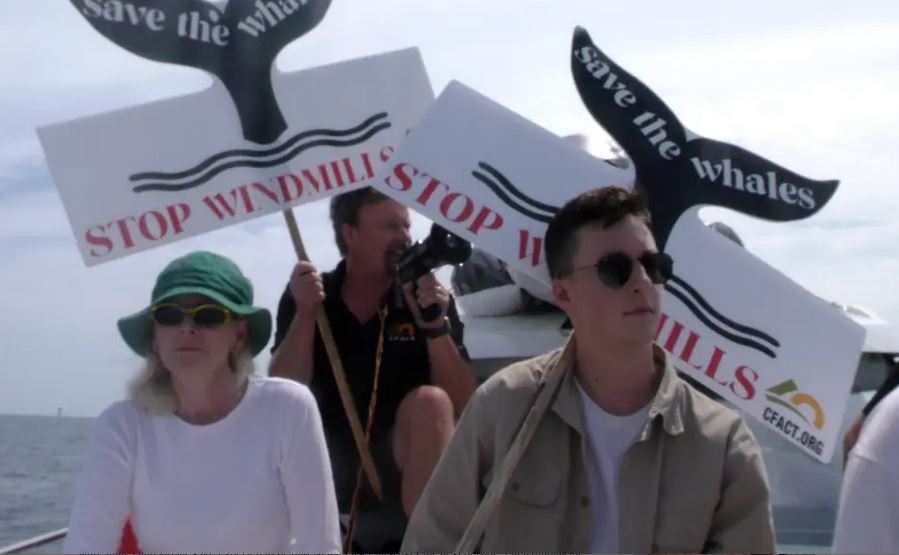
“Save the whales” CFACT boats protest offshore wind construction

By July 25th, 2023 171 Comments @ CFACT

CFACT and local fishermen took to the seas to protest construction of massive offshore wind farms off America’s East Coast.


The New York Post proclaimed that, “the winds of change are blowing.”

From The Post:

The coalition, organized by the Committee for a Constructive Tomorrow, sent out three boats to South Fork Wind Farm, roughly 20 miles from both Martha’s Vineyard and Montauk, NY, holding signs that read “STOP WINDMILLS SAVE WHALES” while shouting through a bullhorn at machinery operators to halt construction.

“Since offshore wind operations began in 2016, there is a disturbing number of whales washing up dead on beaches along the Eastern shores, and it is shocking to see how quickly utilities are willing to rush to construct them,” the group’s president, Craig Rucker, told The Post in a statement. “Their motto is almost like, ‘Damn the Whales, full steam ahead.’”

“In addition, these wind farms could wreak havoc on fishermen and their industry by disrupting the ecosystem from which they derive their livelihood,” he said. “We’re calling attention to all this by going on-site to the location of these destructive monstrosities and urging the operators to cease and desist in their reckless mission to deface our Eastern shores.”

The Biden Administration’s rush to spend billions on offshore wind is a colossal mistake.

Federal regulators are blowing right past their watchdog roles without fully understanding the threat wind platforms pose to endangered whales and other precious marine life.  They are blind to the unusual sight of whale carcasses washing up on our beaches.

Massive offshore wind construction is industrializing our unspoiled coast, to the detriment of marine life, fishermen, boaters and all who treasure our oceans.

To top it all off, these monstrosities are short-lived and generate mountains of waste that cannot be recycled.  Their footprint is massively dirty.  In addition, Europe has already proven that wind turbines are a TERRIBLE way to generate electricity!  Wind power is intermittent and inefficient.  When the wind does blow, the capacity to store any power they produce does not exist.

CFACT calls on federal regulators to halt offshore wind construction and fully evaluate the harm offshore wind can cause to whales, marine life, people and our power grid.

Author

Thursday, July 20, 2023

Could Federal courts roll back climate regulatory overreach?

By July 18th, 2023 72 Comments @ CFACT

The US Court of Appeals for the District of Columbia has recently decided two cases which indicate that federal district courts are prepared to roll back the relentless onslaught of regulatory overreach advanced by the Biden Administration.

For years, meaningful judicial oversight of the regulatory deep state bureaucracy has been stymied by a legal doctrine known as “Chevron Deference”, named after the 1984 Supreme Court case,

Chevron v. National Resources Defense Council, which held that courts should defer to bureaucratic “expertise” when deciding cases where the underlying law and facts are ambiguous.

In American Public Gas Association v. US Department of Energy, decided July 7, 2023, the District Court specifically rejected Chevron Deference in a case involving DOE’s regulation of the commercial gas boiler market, and ruled that the DOE failed to provide “clear and convincing” evidentiary support for a rule that would have upended that market in the name of energy efficiency.

Similarly, in Maine Lobstermen’s Association v. National Marine Fisheries Service, decided June 16, 2023, the same court specifically declined to adopt “aggressive Chevron deference” and ruled that NMFS misapplied the Endangered Species Act when it passed a rule which would have effectively shuttered the lobster fishing industry in the name of saving the endangered North Atlantic Right Whale.

Both decisions required the Court to dig deep into the weeds of the market mechanics underlying two private sector markets – lobster fishing and commercial gas boiler manufacturing – in order to conclude that the bureaucrats of DOE and NMFS did not interpret facts properly in applying the underlying law. The intricacies and details of these markets are not commonly known and required detailed investigation. In the case of gas boilers, the Court was not afraid to devote pages of its opinion to the intricacies of “Monte Carlo simulation and the probability distributions” of DOE’s market demand models. Similarly, in the lobstermen case, the Court took pains to research the history of the Right Whale as a species and undertake a detailed investigation into its relationship to the NMFS rule regarding lobster fishing equipment, which would purportedly reduce Right Whale deaths.

This rejection of Chevron Deference will be critically important in upcoming cases where the plaintiffs will be seeking to have the courts employ the Endangered Species Act to halt offshore wind development. The ESA requires the government to “ensure” that the leasing of offshore federal waters is “not likely to jeopardize the continued existence” of a protected species – in this case the critically endangered North Atlantic Right Whale.

The huge Virginia offshore wind project is a case in point. In the Draft Environmental Impact Statement for that project, NOAA has admitted that “it is not possible to predict with certainty the potential long term behavioral effects on marine mammals of the project-related pile-driving or other activities [vessel movements, vessel noise, high resolution geophysical surveys, geotechnical drilling, dredging activity, and operational noise]”. “The exact level and extent of impacts on the North Atlantic Right Whale is impossible to predict with certainty”. In other words, the answer of NMFS to the question of whether the Virginia offshore wind project will jeopardize the continued existence of the Right Whale as a species is:

We don’t know.

Based on the Lobstermen’s >and American Public Gas Association cases, that defense, while forthright and accurate, would be met by the DC Circuit (and other federal courts which follow its lead) with a resounding rejection. The “we don’t know” defense not only fails to meet the “clear and convincing” standard, it doesn’t come close to meeting the “not likely” to jeopardize standard.

So from a legal standpoint, a case brought in the DC circuit by a plaintiff against NMFS, based on the ESA, challenging the Virginia (or other East Coast) wind projects would have these two powerful precedents to rely on, and the government would be burdened with an admission that it lacks critical facts to support any decision approving the project.

There is ample room for hope that the federal courts will at least slow down, if not halt, the insane rush to destabilize the US electricity grid in the name of resolving “climate change”.

Author  

Collister Johnson 

  Johnson has spent the last four decades working in the public and private sectors in Virginia, primarily in the fields of project finance and maritime transportation. He began his career in public service as Chairman of the Board of the Virginia Port Authority. He was appointed by President George W. Bush, and confirmed by the Senate, as a member of the Overseas Private Investment Corporation, and most recently, as Administrator of the St. Lawrence Seaway Development Corporation. In that capacity, he became knowledgeable in the field of climate and its impact on the Great Lakes. He currently serves on CFACT's Board of Advisors. Johnson holds a B.A. degree from Yale University, and a J.D. from the University of Virginia.

Thursday, June 1, 2023

Is Dominion’s offshore wind project ‘arbitrary and capricious’? NOAA says YES!

By |May 27th, 2023|32 Comments @ CFACT

Recently, the National Oceanic and Atmospheric Administration (NOAA) has been issuing a raft of “Incidental Harassment Authorizations” (IHA) to offshore wind developers. The IHAs allow the developers to “harass” marine mammals – including critically endangered Right Whales – as long as the activity is “incidental” to some form of offshore wind development approved by the authorities.

When the Marine Mammal Protection Act (MMPA) was passed by Congress the lawmakers had in mind ‘incidental’ activities such as marine research work. Wind developers, however, have been applying for these permits as part of their “preconstruction” work – primarily sonar mapping of the ocean floor to plot the placement of connector cables and wind towers. Over the last two years, 16 of these IHA’s were approved by NOAA for developers of wind generation projects up and down the East Coast. Each of them allowed “incidental” activity only for a period of one year.

Just as critics of these IHAs feared, after these permits were authorized and preconstruction activity began, dozens of dead whales and dolphins started washing up on beaches from New York to Virginia. This prompted NOAA to issue a “Notice of Unusual Mortality Event”, which didn’t suspend the sonar mapping but did indicate that NOAA finally recognized, in the famous words of Apollo 11, “Houston, we have a problem”.

Now comes the granddaddy IHA application of them all:  A request by Dominion Energy for an IHA lasting five years.  Why?  Because it is seeking permission to harass marine mammals in conjunction with its effort to build a massive, 176 turbine, offshore wind project located 27 miles off the coast of Tidewater Virginia.  If approved, it would be the largest offshore wind project in the world.

To obtain this IHA, Dominion had to “open the kimono” about its project. That is, for the first time it had to describe exactly what this so-called incidental activity might actually involve.

And it is an eye-opener.

A total of 107 different ships, some as large as 538′, would ply the waters of Virginia for five years, taking thousands of trips to and from the project and the port of Hampton Roads, thus increasing substantially the probability of ship strike fatalities, the leading cause of anthropogenic marine mammal deaths.

Whales and dolphins beware: The sonar mapping would continue non-stop, often conducted “daily”. The wind tower construction and cable dredging would take place for 6 months out of the year. In toto, it amounts to a gargantuan industrialization of the hitherto open ocean waters – a monster factory (not a “farm”) larger than Yellowstone Park that would stand in the salty, corrosive waters of the Atlantic for 20 to 30 years. Then, at the end of its useful life, it will have to be torn down – “decommissioned” – with most of the remains dumped in landfills, because the bulk of the hardware cannot be recycled.

This proposed project raises an important question: What will happen to the marine environment after this factory is installed? True environmentalists especially want to know what will happen to endangered species, such as the Right Whale, only about 350 of which still exist and whose migration path lies directly within the boundaries of the project.

NOAA states on at least three separate occasions in the IHA that “no serious injury or mortality of whales is anticipated or proposed from authorization” of the project. This is a strange way to describe their conclusion of “no impact”. Not that “there will be no human caused mortality”, nor that “there will be negligible human caused mortality”. Rather, just that human caused mortality is “not expected”.

Upon further examination it appears Dominion may have opened its kimono a little too far.

Every endangered species on the Federal endangered species list is given a designation by the National Marine Fisheries Service (NMFS –  a subsidiary of NOAA) called the Potential Biological Removal rate (PBR). The PBR is defined by the MMPA as “the maximum number of individuals, not including natural mortality, that may be removed from a marine mammal stock while allowing that stock to reach its optimum sustainable population”.

NMFS has declared the PBR for the Right Whale to be 0.7. This means, in NOAA’s own words, that “the population cannot sustain on average over the course of a year the death or serious injury of a single individual due to human causes”.

That’s right. This massive industrialization of the Right Whale environment can not cause even one Right Whale death per year over a period of 5 years.

And here comes the stunner. Dominion recognizes the determination by NMFS that the annual human caused mortality rate for the Right Whale caused by the project is eight point one. This means that in NOAA’s own opinion there will be eight human caused dead Right Whales caused by the project every year, even though the allowable amount is zero.

The courts have found this kind of circumstance to be prima facie evidence that the regulation is “arbitrary, capricious, and an abuse of discretion”. That is, there is a fatal, internal inconsistency in this regulation which predicts one outcome (8 human caused deaths) while simultaneously mandating an outcome that is completely contrary (zero human caused deaths).

Dominion tries to save this obviously illegal result by adding language which states that the eight point one human-caused mortalities may be “from all sources combined” ( e.g. commercial fisheries, ship strikes, etc). But no amount of tortured rationale can save NOAA from its own interpretation that the project will result in human caused deaths of the Right Whale. (e.g., whale deaths caused by commercial fishing, if any, have nothing to do with the Dominion project.)

Oops. Dominion just let the cat out of the bag, and the evidence is right there in their IHA application. This project should be and will be struck down by the courts, not only because of the admitted Right Whale deaths, but also because of a host of other procedural and substantive errors committed by NOAA and BOEM while they attempt to bulldoze this project and all the other offshore wind developments through the regulatory system.

It will be good riddance. Whale-killing factories were outlawed a long time ago. This one should be too.

This article originally appeared at Real Clear Energy

Author

  • Collister Johnson

    Johnson has spent the last four decades working in the public and private sectors in Virginia, primarily in the fields of project finance and maritime transportation. He began his career in public service as Chairman of the Board of the Virginia Port Authority. He was appointed by President George W. Bush, and confirmed by the Senate, as a member of the Overseas Private Investment Corporation, and most recently, as Administrator of the St. Lawrence Seaway Development Corporation. In that capacity, he became knowledgeable in the field of climate and its impact on the Great Lakes. He currently serves on CFACT's Board of Advisors. Johnson holds a B.A. degree from Yale University, and a J.D. from the University of Virginia.

Tuesday, April 25, 2023

Save the Whales?

April 23, 2023 by John Hinderaker 

We are living in the era of stupid energy projects, but offshore wind must be the worst. If there is a dumber way to generate electricity, I don’t know what it might be. The environmental impacts are obvious, which is why well-connected liberals like the Kennedys nix offshore wind projects near where they live. And one can only wonder what will happen as more offshore wind turbines are erected off............... To Read More...

NOAA proposes hammering 208% of vanishing Right Whales

By April 24th, 2023 8 Comments 

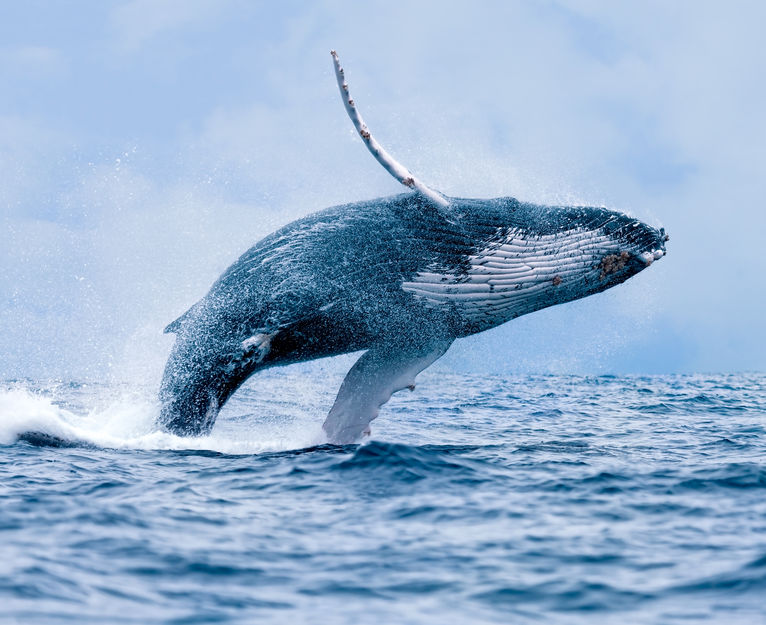
https://www.cfact.org/wp-content/uploads/2020/03/humpback-whales-spout-out-slow-but-steady-recovery-2.jpg
Okay it is a trick headline because they can only hammer 100% of the severely endangered North Atlantic Right Whale population. The point is that NOAA is proposing, for offshore wind development, to authorize a horrific 706 cases of physical harassment of Right Whales, whose dwindling population is down to just 340 magnificent critters.

The average whale will get hammered roughly twice. The Right Whales migrate along the coast twice a year. Migration requires repeatedly running a gauntlet of dangerous offshore wind projects. Most likely some whales will be hit many times.

The harassment numbers for each proposed project are listed below. There are eight full scale construction projects and six blasting sonar site survey efforts. Many are off of New Jersey.

Harassment in this case means subjecting a whale to unsafe levels of very loud noise.

For construction this especially means driving the incredibly large monopiles. A single giant pile, up to 300 feet long, holds a turbine tower and 3 blade assembly that can be over 1,000 feet tall. Driving noise can be heard under water 50 miles away.

The construction numbers vary dramatically, making me skeptical of the low numbers. For example two projects exceed 200 harassments each, while Dominion Energy’s huge Virginia project predicts just 26 hits. Given the entire Right Whale population migrates off Virginia, I find this very low number highly unlikely.

Here are the project by project harassment numbers. Officially each harassment is called a “take”.

Eight OSW construction Take Authorization applications pending

Park City Wind, LLC Construction of the New England Wind Offshore Wind Farm Project off of Massachusetts

Right Whale take: 228

SouthCoast Wind, LLC Construction of the SouthCoast Wind Offshore Wind Project

(Mayflower Wind renamed, off of Rhode Island and New York)

Right Whale take: 216

Revolution Wind, LLC Construction of the Revolution Wind Energy Facility off of Rhode Island

Right Whale take: 62

Dominion Energy Virginia Construction of the Coastal Virginia Offshore Wind Commercial Project off of Virginia

Right Whale take: 26

Sunrise Wind, LLC Construction and Operation of the Sunrise Wind Offshore Wind Farm, off New York

Right Whale take: 35

Ocean Wind, LCC Construction of the Ocean Wind 1 Wind Energy Facility off New Jersey

Right Whale take: 14

Atlantic Shores Offshore Wind, LLC Construction of the Atlantic Shores Offshore Wind Energy Projects (off New Jersey)

Right Whale take: 33

Empire Offshore Wind, LLC Construction of the Empire Wind Project (EW1 and EW2) off of New York

Right Whale take: 29

Total construction Right Whale take: 643

Assuming a population of 340, the total take is 189% of the population for proposed construction take authorizations.

Six OSW site characterization Take Authorization applications pending

Community Offshore Wind, LLC Marine Site Characterization Surveys off New Jersey and New York

Right Whale take: 24

Attentive Energy, LLC Marine Site Characterization Surveys off New Jersey and New York

Right Whale take: 12

Atlantic Shores Offshore Wind, LLC’s Site Characterization Surveys off New Jersey and New York

Right Whale take: 3

SouthCoast Wind Energy, LLC’s Marine Site Characterization Surveys off Massachusetts and Rhode Island

Right Whale take: 6

TerraSond Limited Marine Site Characterization Surveys in the Carolina Long Bay Call Area

Right Whale take: 3

TerraSond Limited Marine Site Characterization Surveys in the New York Bight and Central Atlantic Call Area

Right Whale take: 15

Total site characterization take: 63

Total proposed Right Whale take: 706

Assuming a population of 340 this proposed Take Authorization is a horrific 208% of the dwindling Right Whale population.   For detailed information on each proposed activity that requires a Take Authorization.

NOAA systematically ignores the threat that all this harassment poses to the whales, even though they are well aware of it. In fact I pointed it out to them 6 months ago.  Read the take numbers and weep for the whales.

Author

  • David Wojick

    David Wojick, Ph.D. is an independent analyst working at the intersection of science, technology and policy. For origins see http://www.stemed.info/engineer_tackles_confusion.html For over 100 prior articles for CFACT see http://www.cfact.org/author/david-wojick-ph-d/ Available for confidential research and consulting.