Daniel Greenfield
January 17, 2021
@ Sultan Knish Blog
Two companies, Google and Apple, each control about half of the
smartphone market. So when the two companies made a move against Parler,
the conservative social media alternative, it effectively erased its
app from existence. Joining the party was a third member of the FAANG
Big Tech consortium, Amazon, which deplatformed Parler from Amazon Web
Services.
AWS controls a third of the cloud marketplace. Microsoft and Google are in 2nd and 3rd place.
Blocking
an app doesn’t permanently kill a social networking service, though it
places it at a structural disadvantage, but Apple and Google can flag
sites as unsafe through their browsers.
Google’s Chrome commands
45% of the browser market in America while Apple’s Safari has a little
under 40%. While browser flags can be currently bypassed, it would add a
further structural disadvantage that would make people less likely to
use the service, and there’s nothing stopping Apple and Google from
permanently blocking access to any conservative site.
There are
other browsers, but Google and Apple could kick any browser off their
app stores that doesn’t comply with a blocklist of ‘unsafe’ sites,
further narrowing the potential browser options.
With desktops
and laptops, Microsoft and Apple can block access to sites at the
operating system level by using their built-in antivirus software. That
can also be turned off. For now.
Google controls over 80% of
search traffic. Facebook controls some 80% of social media. Being
delisted and deplatformed by them can be all but fatal to any site
trying to attract new users.
Some conservatives take refuge in
the illusion of alternatives from smaller companies, but in the
oligarchy, smaller companies usually directly or indirectly rely on
services from Big Tech.
DuckDuckGo, for example, serves up
searches from Microsoft’s Bing. Many smaller alternative companies are
likewise dependent on Big Tech players. The small companies
conservatives take refuge in are still reliant on the infrastructure of
the big players and can be easily pressured into joining their boycotts
or have their own services cut off by the Big Tech oligarchy.
There
are workarounds for all of these, but when visiting a conservative site
turns into the equivalent of going to a speakeasy, that eliminates much
of the potential user base.
Sites can also be crushed at the domain level, banishing them to the dark web.
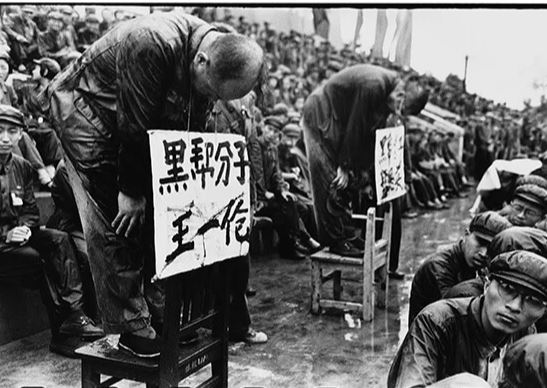
If
conservatives distributing information becomes as onerous as Chinese
political dissidents bypassing the Great Firewall, what will be left of
the conservative movement online?
It will take more manufactured
emergencies to unlock some of these options, but there should be little
doubt that they will be. The Democrats and their media allies invented
the threat of “disinformation” out of thin air and still can’t properly
explain what it means. But they successfully used it to engage in a
massive online purge of their political opponents.
A violent
clash or a random shooting by an unstable man will unlock another
censorship tier. But it could just as easily be another conservative
politician winning when he’s supposed to lose.
Direct
deplatforming is only the crudest tool. Pressure campaigns have targeted
advertising and payment options for conservative sites. Google, again,
controls 37% of the digital ad market. Payment options at the top are
controlled by the same old team of players. That’s what happened
when the David Horowitz Freedom Center was cut off by Visa and Mastercard.
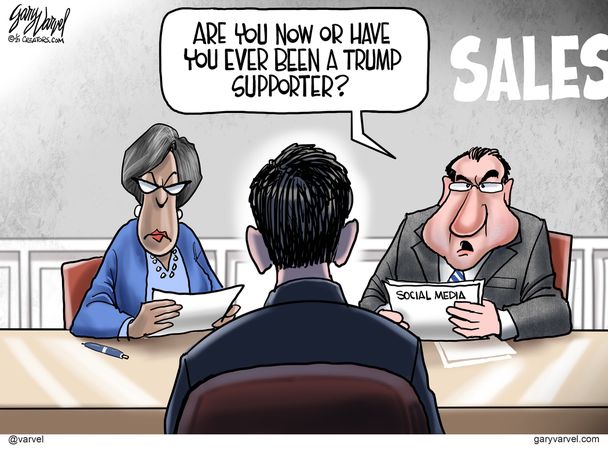
The ‘killer app’ though won’t be direct internet censorship, but corporate cancel culture.
Instead
of Facebook deleting your post, you will be fired from your job for
posting it. If you own a small business, larger suppliers and companies
will no longer work with you. If you belong to a trade association,
you’ll be ousted. If your business requires a license, you will lose it.
This isn’t a paranoid fantasy. It’s happening right now.
In November,
I wrote about how the National
Association of Realtors had modified its regulations to allow members
to be forced out of the business over their social media posts.
"Doesn’t
this mean that if I post my opinion online and someone doesn’t agree
with it, that I can lose my membership and be forced out of the
business?" the NAR FAQ asks.
That’s not an isolated policy.
Similar moves are underway in various trade associations which would
treat politically incorrect views as a violation of professional
obligations. Cancel culture isn’t a new phenomenon, but this is the
industrialization of cancel culture which takes it from an isolated
phenomenon to a collective system of enforcement like China’s social
credit score.
This includes monitoring social media profiles and
flagging employees, renters, or businesses with conservative views as a
potential risk.
Yelp has already implemented a similar program for some eateries. It’s not alone.
Big
Tech censorship is a symptom of a much bigger problem which is the
criminalization of conservative views within the corporate world. The
FAANG bloc has led the way, but big business has been slowly tilting
leftward. The giant multinationals are the worst offenders, at least
when it comes to public virtue signaling, and they control a great deal
of the economy.
Conservatives never asked companies to adopt
their political views. Leftists made it mandatory and organized pressure
campaigns from the outside and the inside to make it happen.
That’s why they won. It’s why conservatives are losing.
Leftists
took over academia and cultural industries by organizing networks
inside and then imposing their own leadership and institutional
ideologies that made their views mandatory and left no room for dissent,
while conservatives failed to organize a common front against them..
Naming major conservative musicians and movie stars was easy. Now name one. Under 40.
The
same takeover is happening at a slower pace inside the corporate world,
backed by diversity quotas and social responsibility statements. I
wrote about this at length in my Freedom Center pamphlet,
Thought Control, Inc, and internet censorship is a symptom of that threat.
The whole threat will erase conservatives from the internet and from public life.
Can
conservatives influence, campaign, and win elections under these
conditions? The endgame here is eliminating conservatives as a
meaningful political force in America.
That’s the scale of the
threat. Conservatives have spent too long ignoring it. And even now they
underestimate the sheer scale of the strategy to erase them from the
marketplace of ideas.
But Big Tech isn’t as powerful as it seems. It’s vulnerable and it’s worried.
That’s
why Big Tech waited until it was confident that the Senate would be in
the hands of the Democrats before it made its big move against Trump.
That’s weakness, not strength.
Forcing out President Trump was a
priority for Big Tech, not only for political, but economic reasons. The
Trump administration was the first to aggressively go after Google and
Facebook on antitrust grounds. It’s no coincidence that Google is a
Biden Inaugural Committee donor.
President Trump was the first
GOP president to stop being a cheap corporate date. Republicans, even
some in the MAGA class, are happy to trade favorable legislation for
contributions with economic interests, from Big Tech to the media, that
hate conservatives.
Democrats trade legislation for contributions, but they also demand political allegiance.
When
corporations hire Democrat operatives, they get lobbyists for their
business interests who still push leftist political agendas, but when
corporations hire Republicans, all they get is lobbyists who ignore the
fact that the interests they represent are bad for conservatives.
The
Left understood that corporate policy is national policy. Its members
adopted conservative boycotts of companies behaving immorally just when
conservatives decided to abandon them. Leftists chose brands based on
their politics, while conservatives had no idea what the politics of
their cable company or breakfast cereal were. That’s why corporate
politics turned leftist.
Democrat elected officials help
companies who share their views and hurt those who don’t. Republicans
help companies who give them money even while they’re crushing
conservatives.
And if that doesn’t change, there will be fewer Republicans and a lot fewer conservatives.
The
only way it’s going to change is if conservatives stop paying attention
to what their elected officials are saying and start paying attention
to what they’re doing on behalf of lobbyists.
The battle for the
corporation, unlike academia and the media, isn’t a lost cause. But it
actually needs to be fought. And one of the best tools for that fight is
duplicating the Left’s infrastructure for monitoring the interactions
between politicians and corporate interests, and demanding that the
politicians represent conservatives, not just their campaign war chests,
with corporations.
Conservatives view the corporate landscape as
an amorphous free market while leftists see friendly and unfriendly
companies. After generations of this, the market has become a lot more
leftist and a lot less free. Conservatives need a better response to
this crisis than to roll out the old claims about their commitment to a
free system which failed in academia and the media.
Instead,
conservatives may need to start viewing corporations in the same way,
using political power to pressure companies into adopting conservative
positions, funding conservative priorities, and protecting the civil
rights of conservatives, while crippling the business interests of
companies that serve as the major funders of leftist agendas and deny
conservative civil rights.
Imagine if Republican legislators
actually used government contracts, copyright law, and regulatory
oversight to extract meaningful cultural concessions, instead of just
campaign contributions, from AT&T, Disney, and Facebook: just to
name a few examples.
If you want to imagine a country where
conservatives aren’t just fighting a rear-guard action against an
ascendant radical movement that is taking over everything, that’s the
place to start.
This may strike some free market fundamentalists as anathema, but a better word is survival.
There
is nothing free about a market controlled by a Big Tech oligarchy, a
handful of multinationals and giant chains, and corporate fronts for
Chinese business interests.
The only way to ‘free’ the market is to make it more open by demolishing the oligarchy.
Facebook
and Twitter censorship may be what conservatives see immediately, but
the big picture is the erasure of conservatism as a movement from
America.
It didn’t have to happen. It still doesn’t.
Conservatives
have lost their grip on many key institutions, but they still have a
foothold on political power. The question is whether they’re willing to
use it before they lose that too.
Daniel
Greenfield, a Shillman Journalism Fellow at the Freedom Center, is an
investigative journalist and writer focusing on the radical Left and
Islamic terrorism.
Tags:
Big Tech,
cancel culture,
censorship,
recent

About Daniel Greenfield
Daniel Greenfield is a journalist investigating Islamic terrorism and
the Left. He is a Shillman Journalism Fellow at the David Horowitz
Freedom Center
 By Rich Kozlovich