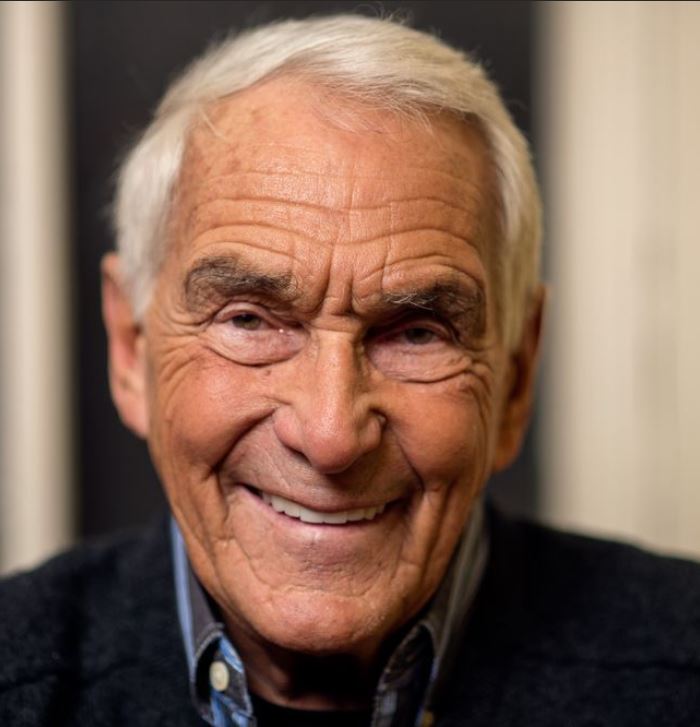
New studies undercut the ‘scientifically empty’ warming narrative, says astrophysicist and aerospace engineer.
By Alex Newman Oct 11, 2023
New studies undercut the ‘scientifically empty’ warming narrative, says astrophysicist and aerospace engineer.
By Alex Newman Oct 11, 2023
By Dr. Jay Lehr May 23rd, 2022 | Science | 23 Comments @ CFACT Part One, Part two
EPA regulations rely on environmental epidemiological literature, without applying rigorous tests for reproducibility, and without considering the environmental epidemiology discipline’s general refusal to take account of the need for Multiple Testing and Multiple Modeling. Such rigorous tests are needed not least because earlier generations of environmental epidemiologists have already identified the low hanging fruit.
These include massive statistical correlations between risk factors and health outcomes such as the connection between smoking and lung cancer. Modern environmental epidemiologists habitually seek out small but significant risk factors and health outcome associations. These practices render their research susceptible to false positives as real results. They risk mistaking an improperly controlled co-variable for a positive association.
Environmental epidemiologists are aware of these difficulties, but regardless have made their discipline into exercises in applied statistics. They do little to control for bias, p-hacking and other well known statistical errors. The intellectual leaders of their discipline have positively counseled against taking measures to avoid these pitfalls. But environmental epidemiologists, and the bureaucrats who depend on their work to support regulations, proceed as a field with unwarranted self-confidence. They have an insufficient sense of the need for humble awareness of how much statistics remains an exercise in measuring uncertainty rather than establishing certainty. Their results, do not possess an adequate scientific foundation. Their so-called “facts” are built on Shifting Sands, not on the solid rock of transparent, and critically reviewed scientific inquiry.
A NAS study showed how one particular set of statistical techniques simply counting and p-value plots, can provide a severe test for environmental epidemiology. Meta analyses must be used to detect p-hacking and other frailties in the underlying scholarly literature. We have used these techniques to demonstrate that meta-analyses associating PM 2.5 and other air quality components with mortality, heart attacks and asthma attacks fail this severe test.
The NAS study also demonstrates negligence on the part of both environmental epidemiologists and the EPA. The discipline of environmental epidemiology has failed to adopt a simple statistical procedure to test their research. The EPA failed to require that research justifying regulation be subjected to such a test. These persistent failures undercut confidence in their professional capacities as researchers and as regulators.
Both environmental epidemiology as a discipline, including journals , foundations and tenure committees and the EPA must adopt a range of reforms to improve the necessary reproducibility of their research. However, NAS directs its recommendations to the EPA and more broadly to federal regulatory and granting agencies.
They have reluctantly come to the conclusion that scientists will not change their practices unless the federal government credibly warns them it will withhold government grant dollars until they adopt stringent reproducibility reforms. NAS has also come to the conclusion that federal regulators will not adopt stringent new tests of science underlying regulation unless they are explicitly required to do so.
The National Association of Scholars recommend the following eleven actions be taken by the EPA in order to bring their methodologies up to the level of Best Available Science which is mandated in The Information Quality Act of 2019.
1- The EPA should adopt resampling methods as part of its standard battery of tests applied to environmental epidemiology research.
2- The EPA should rely for regulation exclusively on meta-analyses that use tests to take account of endemic questionable research procedures, p-hacking and HARKing.
3- The EPA should redo its assessment of base studies more broadly to take account of endemic questionable research procedures, p-hacking and HARKing.
4- The EPA should require preregistration and registered reports of all research that informs regulation.
5- The EPA should also require public access to all research data used to justify regulation.
6- The EPA should consider the more radical reform of funding data set building, and data set analysis separately.
7- The EPA should place greater weight on reproduced research.
8- The EPA should constrain the use of “weight of evidence” to take account of the irreproducibility crisis.
9- The EPA should report the proportion of positive results to negative results in the research it funds.
10- The EPA should not rely on research claims of other organizations until these organizations adopt sound statistical practices.
11- The EPA should increase funding to investigate direct causal biological links between substances and health outcomes.
NAS has used the phrase “irreproducible crisis” throughout this essay, and they note that distinguished meta-researchers prefer to regard the current state of affairs as a challenge rather than a crisis.
You do not need to believe it to be a crisis. These current scientific practices are simply not the best available science. We should use the best scientific practices simply because they are the best scientific practices. Mediocrity ought not be acceptable.
If this is the first article you have read in this series please go back to the past two weeks at cfact.org to read the even more extensive parts 1 and 2 or click on my name at the beginning of this article and all my previous article titles will pop up on a list. Click on any title and the full article will appear.
There is no doubt that all CFACT readers question many EPA regulations. After you read this series of articles extracted from the National Association of Scholars booklet, SHIFTING SANDS, you will question even more.
Note: Portions of this essay were excerpted from the book Shifting Sands with permission of the National Association of Scholars (NAS) and its authors Peter Wood, Stanley Young, Warren Kindzierski, and David Randall.
Dr. Jay Lehr
CFACT Senior Science Analyst Jay Lehr has authored more than 1,000 magazine and journal articles and 36 books. Jay’s new book A Hitchhikers Journey Through Climate Change written with Teri Ciccone is now available on Kindle and Amazon.
Clayton Cobb 21 February
The Centers for Disease Control (CDC @CDCgov) and the New York City Department of Health and Mental Hygiene (NYC Health @NYCHealthy) are misleading us about the risk of being unvaccinated against SARS-CoV-2 (CoV2).
They are doing this through two basic errors. First, they appear to be using outdated population estimates that grossly undercount the actual number of unvaccinated persons in the United States. This leads to artificially inflated estimates of COVID-19 case rates among the ever-shrinking unvaccinated population.
Second,
they appear to be counting every person for whom they cannot verify vaccination status as an “unvaccinated person.”
In many cases, it appears that it is taking health agencies weeks, if
not months, to properly match COVID-19 hospitalizations with vaccination
status, and we have no assurance that it is ever done properly at all.
This has led to some jurisdictions quietly publishing significant
corrections to their data weeks after initial publication — and after
the media and public health officials have already run with the
erroneous numbers. This is leading to both overstatement of the COVID-19
case rate for unvaccinated persons and understatement of the same rate
for vaccinated persons...........To Read More...........
March 21, 2021 By Peter Barry Chowka
Last year at this time, Dr. Anthony Fauci, the director of the National Institute of Allergy and Infectious Diseases as the NIH, was riding high. Pundits from both left and right – including the opinion hosts on Fox News – as well as President Trump and most of the public were constantly singing his praises. Fauci managed to hold onto his extremely high approval numbers though the fall, even after President Trump began to distance himself from the head of his White House Coronavirus Task Force last summer.
< Three days ago, pollster Frank Luntz presented the conclusions of his focus group of Trump voters who weighed in on Fauci and the Covid-19 vaccines in a segment on Special Report with Bret Baier. (Video here: https://video.foxnews.com/v/6241782070001#sp=show-clips.) The title of the article about the segment at Yahoo dot com tells the story:
Dr. Anthony Fauci takes credibility hit among Republicans
The focus group members’ soundbites that Luntz showed – on Fauci and the vaccines – were all negative – presumably representative of all 19 Republicans in the focus
Some examples, from six different focus group participants:
..........To Read More.....
Andrew Porterfield | March 19, 2021
Once upon a time, way back in 1990, a German company modified the genetics of a bacterium so it could efficiently ferment plant waste, turning the material into ethanol. There was, the story goes, just one problem: the bacteria, Klebsiella planticola, “almost killed the world with booze,” according to an article on Cracked.
Earth Island Journal took a less sarcastic tack, quoting retired genetics professor and now environmental activist David Suzuki:
Geneticist David Suzuki understands that what took place was truly ominous. “The genetically engineered Klebsiella,” he says, “could have ended all plant life on this continent. The implications of this single case are nothing short of terrifying.”
This story has become an occasionally arising myth, with articles that appear every few years bolstering anti-GMO activists’ views that anything transgenic or otherwise modified is at least bad for your health, bad for the environment, or perhaps fatal.............
So, what did happen? Scientists and engineers have been spending decades looking at new ways to handle plant waste, which can become rich material for soil amendments, or can be fermented into other chemicals, including ethanol, and turned into biofuels. In fact, the Klebsiella planticola bacterium (which is now called Raoultella planticola after scientists re-examined the members of Klebsiella), has been studied for its ability to create ethanol from decaying plant material.As the story goes, a German company received U.S. Environmental Protection Agency permission to conduct field trials on the amended bacterium, called SDF20, which had a plasmid (a short loop of DNA) inserted into its genome. This plasmid contained a gene for an enzyme, pyruvate decarboxylase that allowed SDF20 to ferment plant waste to ethanol................
But problems with her and Holmes’ story began. In a rebuttal to Ingham’s testimony, Christian Walter, with Forest Research Institute in Rotorua, New Zealand, Michael Berridge, of the Malaghan Institute of Medical Research in Wellington, and David Tribe, of the University of Melbourne, Australia, wrote that:
Dr. Jay Lehr
Thinking that some special new battery is going to maintain as much power as the absent sun, has been and will be an impossibility for the foreseeable future. The mandatory back up fossil fuel must stand by running near full out and emitting carbon dioxide and producing no electricity until the sun cannot fill the bill and it must step in. The excess cost for the excess backup power will show up in the electric bills of the residents of Las Vegas as sure as night shall follow day.So there we have it. Investors collect the subsidies, while rate and taxpayers get fleeced. CO2 emissions don’t budge (if that’s your thing) while vast natural lands are turned into solar wastelands.
There's a top-level oceanographer and meteorologist who is prepared to cry "Nonsense!"on the "global warming crisis" evident to climate modellers but not in the real world. He's as well or better qualified than the modellers he criticises — the ones whose Year 2100 forebodings of 4degC warming have set the world to spending $US1.5 trillion a year to combat CO2 emissions.
The iconoclast is Dr. Mototaka Nakamura. In June he put out a small book in Japanese on "the sorry state of climate science". It's titled Confessions of a climate scientist: the global warming hypothesis is an unproven hypothesis, and he is very much qualified to take a stand. From 1990 to 2014 he worked on cloud dynamics and forces mixing atmospheric and ocean flows on medium to planetary scales. His bases were MIT (for a Doctor of Science in meteorology), Georgia Institute of Technology, Goddard Space Flight Centre, Jet Propulsion Laboratory, Duke and Hawaii Universities and the Japan Agency for Marine-Earth Science and Technology. He's published about 20 climate papers on fluid dynamics. [i]
Today's vast panoply of "global warming science" is like an upside down pyramid built on the work of a few score of serious climate modellers. They claim to have demonstrated human-derived CO2 emissions as the cause of recent global warming and project that warming forward. Every orthodox climate researcher takes such output from the modellers' black boxes as a given.Dr. Nakamura has just made his work available to the English-speaking world:............ To Read More....