After over $5 billion in foreign aid, Haiti is worse off than ever.
By Daniel Greenfield @ Sultan Knish Blog
Since
the 2010 earthquake, the United States has provided over $5 billion in
aid to Haiti. That doesn’t include Biden’s latest batch of $133 million
after gangs took over much of the country.
The
$100 million in security assistance announced by Biden is on top of the
$312 million that we already provided to fund, train and arm Haiti’s
police forces over the last decade and a half.
And with over $400
million in backing, Haiti’s police still can’t compete with gang
members. But many of the gang members were once the police officers whom
we helped to train.
Jimmy
“Barbeque” Cherizier, the leader of the G9 gang which controls the
streets and is the most powerful man in Haiti, was a former police
officer who had been accused of playing a role in the murder, rape and
arsons that burned 400 homes and killed 70 people.
The massacre
was perpetrated by former President Jovenel Moïse’s government and by
its Ministry of the Interior, which controls the police. The killers,
wearing Haitian police uniforms “removed victims, including children,
from their homes to be executed and then dragged them into the streets
where their bodies were burned, dismembered, and fed to animals.”
The targets were supporters of former ousted President Jean-Bertrand Aristide.
Since
2020, the Haitian police force has fired around 3,000 members for
abandoning their posts and the Biden administration convinced the UN to
deploy an international police force. But Kenya, which had agreed to
lead the force and send 1,000 of its people, decided to pull out.
That means the United States will be expected to do it. And it won’t be the first time.
The
Clinton administration sent in the Marines to put former Jean-Bertrand
Aristide in power in Operation Uphold Democracy. Once the Marines left,
Aristide, lacking a functional military, turned to the Cannibal Army, a
local gang, to stay in power, which went wrong once the ‘Cannibals’
turned on him and joined with elements of the police to oust him from
office.
Aristide blamed the whole thing on the United States instead of his own pet ‘cannibals’.
Rep.
Barbara Lee claimed that the Bush administration had overthrown a “true
democracy” while Rep. Maxine Waters charged that the whole thing had
been an American conspiracy. Leftists to this day insist that Haiti
would have been fine if it wasn’t for George W. Bush.
The Bush
administration sent Marines to keep order after Aristide’s overthrow
when rival Haitian gangs, both pro and anti-Aristide, roamed the streets
of Port-Au-Prince killing each other.
The UN sent in a
peacekeeping mission that operated in one form or another for the next
15 years through street battles, a cholera outbreak (blamed on the UN
peacekeepers), sexual abuse (also blamed on the peacekeepers) and
earthquakes including one which leveled the local UN base and killed the
Assistant-Secretary-General of UN Peacekeeping Operations.
To
whatever extent Haiti’s police had ever been functional, Aristide’s
effort to hold power by replacing the police leadership (which opposed
him and launched periodic attacks on the country) and relying on armed
gangs for support made Port-au-Prince into a war zone.
By the
time Bill Clinton rushed in to exploit the 2010 earthquake, the
situation was already hopeless. Haiti could be nothing else except a war
zone and a fundraising tool for aid groups. It’s a permanent disaster
area of the kind that keeps NGOs and UN officials in business for life.
Haiti’s
now former prime minister has spent the last year demanding that the
peacekeepers or somebody, including Kenya, come back and secure Haiti.
Since nobody else wants to, the odds are that it will eventually turn out to be us.
There’s
plenty of blame to go around for everyone from Bill Clinton to South
Africa’s ANC Klepto-Communist regime which lectured about colonialism
while treating Haiti like a colony, but the ultimate responsibility for
Haiti’s current condition lies with the Haitians.
Haiti has been
an independent country for over two centuries and the earthquake that
has been blamed for all of its problems happened a long time ago.
Haiti’s problem is that it doesn’t have a functional government or
society. After over $5 billion in foreign aid, it’s no better off now.
Port-au-Prince
is overrun with gangs because there’s a thin line between the police
and gangs, because there’s no such thing as a legitimate government or a
functional society. And no matter how many troops we send or how much
foreign aid we provide, there won’t be.
After Afghanistan and
Iraq, we should have learned the lesson that these are not things that
arise from thin air or can be bought with a foreign aid package.
Countries are not naturally occurring phenomena, UN recognition, a flag
and a spot on a map don’t make a nation.
Failed states are not
nations. And that’s true of not only Haiti, but much of the UN. The UN
membership is littered with failed states that have functional
dictatorships. Haiti can’t even manage that. Its armed gangs, official
police and ex-police militias are a Praetorian guard that is always on
the verge of seizing power or deciding who the president is with some
street riots.
The various sides in Haiti’s permanent civil war,
which includes a leftist movement linked to Aristide and gangs like G9
all claim that they want to build a better and more just Haiti.
Mostly they steal, kill, seize power and kill some more before they’re overthrown.
Is
this our problem? Failed states produce fleeing migrants and serve as
platforms for enemy nations. China had formerly dispatched its Ministry
of Public Security (MPS) thugs to try and keep order in Haiti (with no
result, since they lacked the infrastructure of a social credit system,
gulags and swift executions that allow them to peace at home) and has
been sniffing around.
But it’s not a problem that we can solve or should keep trying to solve.
We
are not going to fix Haiti. No amount of money is going to do it. And
international efforts to “professionalize” Haiti’s police force go back
to at least the 90s and the UN Civilian Police Mission in Haiti. Despite
all of that, Haiti’s police force functions like an armed gang. And
last year, the police union was asking for armored helicopters, drones
and more firepower.
Sending in the troops is not going to fix the
situation. Haiti hasn’t been invaded. There’s no foreign enemy to
“liberate” the Haitians from. It’s a classic warlord situation and even
if we were to keep thousands of troops there for a decade, trying to
suppress the gangs, things would almost certainly go right back to where
they were the moment the troops got back on the boat.
We can rebuild countries, but we can’t rebuild societies. Only the Haitians can do that.
Some
failed states bounce back. There was a time when China was overrun by
warlords and bandits, and was considered a failed state. And the same
was true of Russia. But Haiti is less likely to have a happy or even a
more structured unhappy ending because it’s not a country.
The best thing we can do for Haiti is put its future in the hands of its own people.
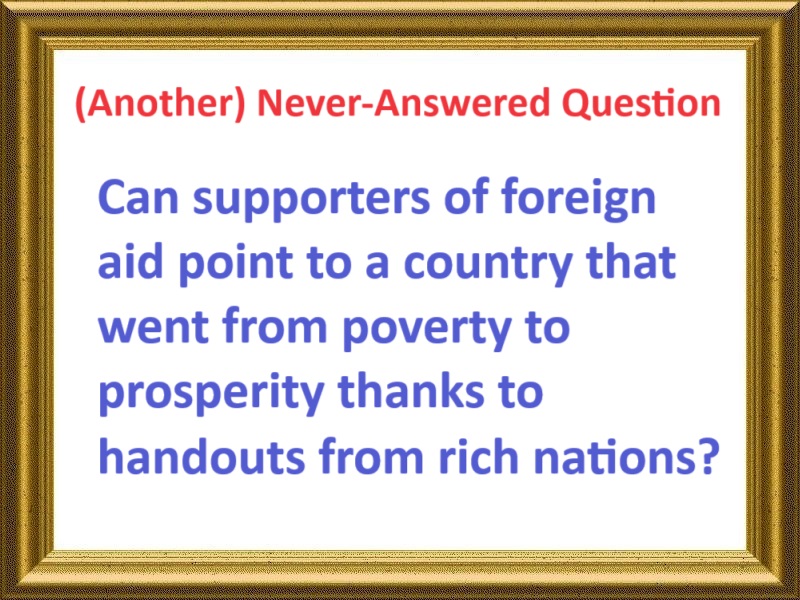
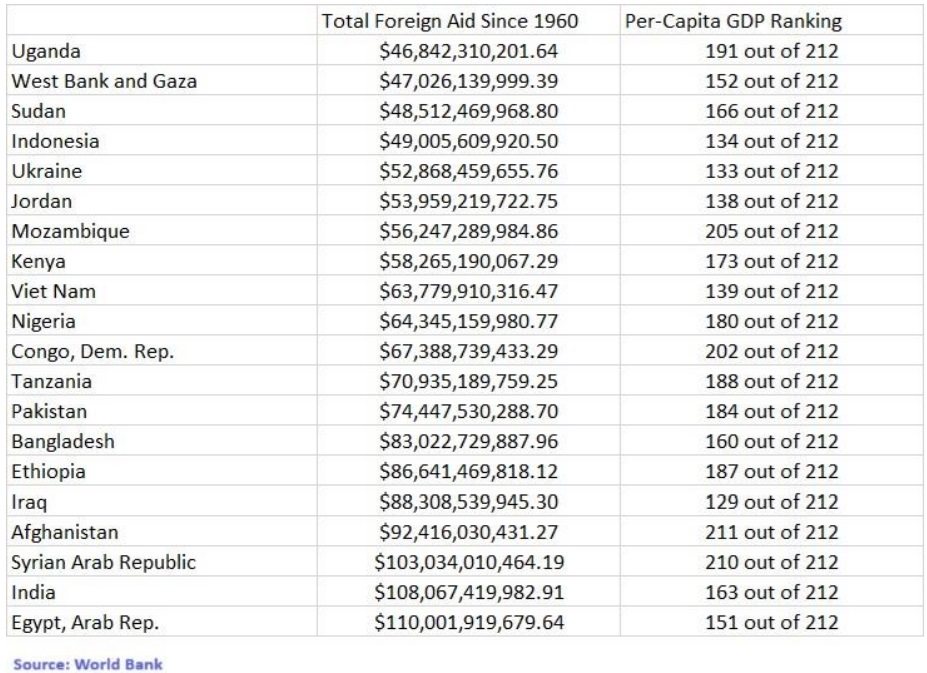
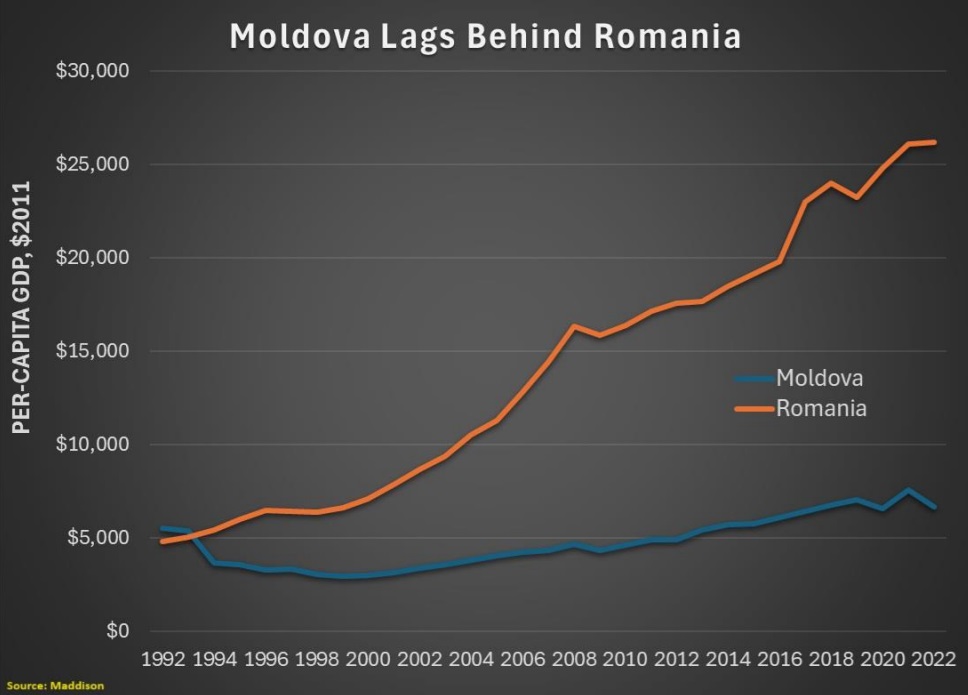
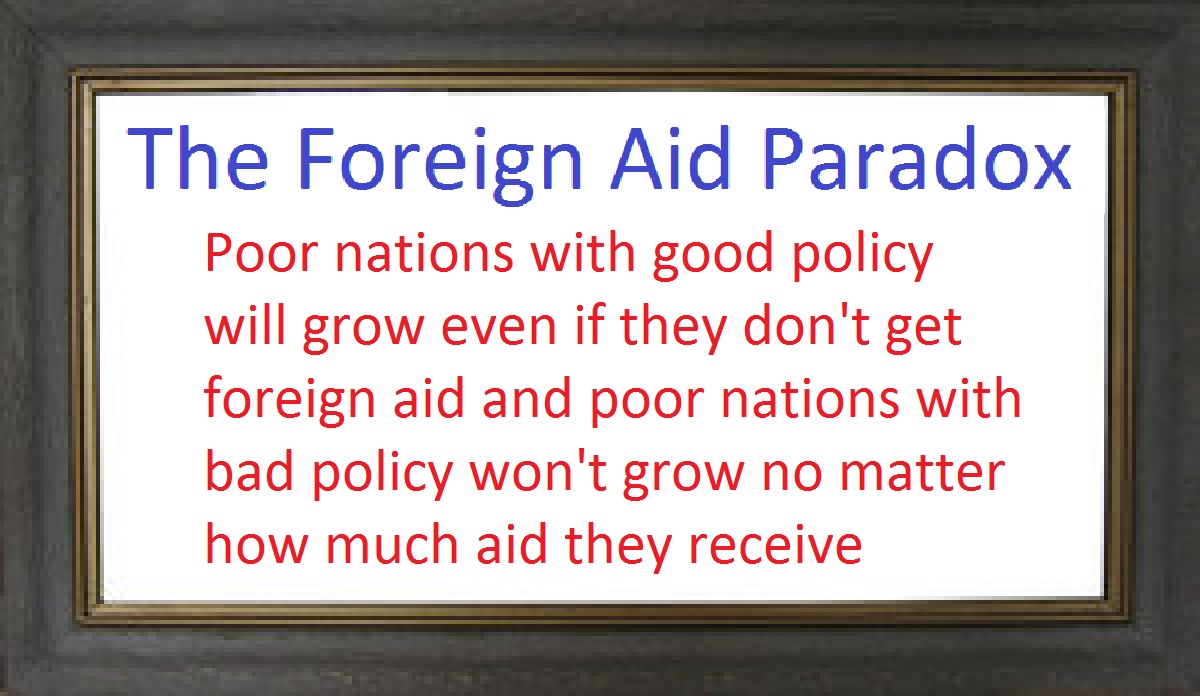
Foreign
aid can help countries that have experienced a temporary setback, but
Haiti is not suffering from temporary problems, and the only thing
foreign aid does is prop up a crisis.
America should stay out of Haiti and let its own people decide their future. Maybe the Haitians can save themselves.
We certainly can’t.
Daniel Greenfield is a Shillman Journalism Fellow at the David Horowitz Freedom Center. This article previously appeared at the Center's
Front Page Magazine.
Click
here to subscribe to my articles. And
click here to support my work with a donation.
Thank you for reading.