Search This Blog

De Omnibus Dubitandum - Lux Veritas

Showing posts with label Government Takings. Show all posts

Thursday, July 20, 2023

Fifth Amendment takings case erupts over new Rhode Island beach law

By | July 18th, 2023 | 20 Comments @ CFACT

 Opponents of a new shoreline-access law in Rhode Island that allows the public to enter parts of private beachfront property are taking the state to federal court, arguing the statute violates homeowners’ constitutionally protected property rights.

“While public beach access may be important to state legislators and officials, they may not simply redefine private shorelines as a ‘public beach’ by the stroke of a pen, consistent with the Takings Clause of the Fifth Amendments,” the lawsuit argues.

Until the new law was enacted this summer, Rhode Island had relied on common law, rooted in a 1980s court case, to determine the boundary between a public beach and private property. That boundary was the mean high-water line, an admittedly imperfect definition because the mean high-water line could be underwater at times, such as when high tides coincided with a full moon. The new law says the public has beach access “up to 10 feet inland from the seaweed line.”

“Suddenly and Dramatically Alters Rhode Island’s Common Law”

Spearheading the lawsuit against the state is the newly formed Rhode Island Association of Coastal Taxpayers (RIACT), some of whose members own beachfront homes. By establishing a different boundary, the new law “suddenly and dramatically alters Rhode Island’s common law related to beach property boundaries, with the effect of extending the public beach into traditionally private areas,” the RIACT lawsuit alleges, the Providence Journal (July 7) reported.

“For many RIACT members, the act’s creation of a public beach 10 feet inland from the seaweed line allows the public to access and occupy their private, residential ‘backyard’ areas and opens their residential life to the constant presence of strangers, destroying privacy and raising safety concerns,” the lawsuit says.

The lawsuit adds: “RIACT beachfront property owners purchased their residentially developed coastal property with the understanding, right, and expectation of using their property for private, exclusive use, including for private family beach gatherings.”

For its part, the state plans to fight the lawsuit. Attorney General Peter Neronha (D), who is named as a defendant in the lawsuit, along with the Department of Environmental Management and the Coastal Resources Management Council, signaled on Twitter that he was prepared the fight the lawsuit, the Providence Journal reported.

“The attorney general is grateful that the General Assembly recognized Rhode Islanders’ constitutional rights to shoreline access and further codified that right into state law,” spokesman Brian Hodge said. “We are still reviewing today’s filed lawsuit, but the office stands ready to defend the law.”

PLF Enters the Fray

The state will have its hands full. In addition to local attorney Daniel J. Pocaccint of Adler Pollock & Sheehan P.C., RIACT will be represented by the California-based Pacific Legal Foundation (PLF). PLF is fresh from a high-profile victory before the U.S. Supreme Court in Sackett v. EPA, in which an Idaho couple – after 16 years of court battles – thwarted EPA’s efforts to keep them from building their dream house near Priest Lake in northern Idaho.

EPA had claimed that the couple’s bone-dry property was a wetland and subject to federal regulation. Not only did the Supreme Court slap down EPA’s overreach. It limited EPA’s regulatory authority to wetlands with a “continuous surface connection” to a navigable water of the United States. In the world of takings cases, PLF is a force to be reckoned with.
Author

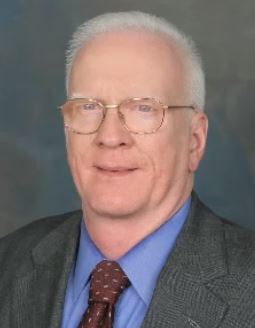
  • Bonner Cohen, Ph. D.

    Bonner R. Cohen, Ph. D., is a senior policy analyst with CFACT, where he focuses on natural resources, energy, property rights, and geopolitical developments. Articles by Dr. Cohen have appeared in The Wall Street Journal, Forbes, Investor’s Busines Daily, The New York Post, The Washington Examiner, The Washington Times, The Hill, The Epoch Times, The Philadelphia Inquirer, The Atlanta Journal-Constitution, The Miami Herald, and dozens of other newspapers around the country. He has been interviewed on Fox News, Fox Business Network, CNN, NBC News, NPR, BBC, BBC Worldwide Television, N24 (German-language news network), and scores of radio stations in the U.S. and Canada. He has testified before the U.S. Senate Energy and Natural Resources Committee, the U.S. Senate Environment and Public Works Committee, the U.S. House Judiciary Committee, and the U.S. House Natural Resources Committee. Dr. Cohen has addressed conferences in the United States, United Kingdom, Germany, and Bangladesh. He has a B.A. from the University of Georgia and a Ph. D. – summa cum laude – from the University of Munich.

Sunday, April 10, 2022

Eighth Circuit Rules Eviction Moratoria are Likely to be Takings Requiring Compensation Under the Fifth Amendment

The court based its decision on the US Supreme Court's 2021 decision in Cedar Point Nursery v. Hassid.

April 9, 2022

On April 5, in Heights Apartments v. Walz, a unanimous panel of the US Court of Appeals for the Eighth Circuit ruled that a Minnesota state eviction moratorium (enacted for the purpose of mitigating the Covid pandemic) likely qualifies as a taking of private property requiring compensation under the Takings Clause of the Fifth Amendment. They based their ruling in large part on the Supreme Court's June 2021 decision in Cedar Point Nursery v. Hassid, which held that temporary physical occupations of property qualify as "per se" takings, that automatically require compensation. Before Cedar Point, conventional wisdom assumed that most temporary physical occupations are subject to the complicated Penn Central balancing test, under which the government usually prevails.

Here is the key passage from the Eighth Circuit ruling:.........To Read More....


Tuesday, November 27, 2018

When 'reasonable' burdens aren't

Thursday, March 8, 2018

Farm freedom heroine


For year’s, CFACT has aided Martha’s fight for her, and every rural citizen’s, “right to farm” undisturbed by meddling big government, big Green pressure groups.

Martha Boneta dreamed of having a farm in Virginia’s lush countryside.  Green busybodies turned her dream into a nightmare.

Fauquier County officials threatened her with $5,000-per-day fines for such heinous transgressions as selling vegetables, hosting a birthday party for 10-year-old girls and carving pumpkins.

Martha’s story caught the attention of the nation.  A grassroots effort sprang up and inspired bi-partisan legislation, the “Boneta Bill,” which solidified Virginia’s status as a right-to-farm state. Martha fought back and won.

CFACT proudly provided policy research and raised public awareness.  I had the chance to speak out for Martha on numerous occasions, along with CFACT senior policy analyst Bonner Cohen who’s been at Martha’s side throughout.

Thousands of CFACT’s friends joined the fight by signing petitions, speaking out and joining public demonstrations (thank you).

CRTV put out a nicely made video highlighting Martha’s path to victory.  Bonner appears in it.
Martha fought tenaciously for her right to farm in freedom and thereby struck a blow for all of us.

She’s our kind of heroine.


About the Author: Craig Rucker
 Craig Rucker is the executive director and co-founder of CFACT.
 

Tuesday, February 27, 2018

California Has Many Natural Advantages, but How Long Can It Survive Big Government?

February 26, 2018 by Dan Mitchell @ International Liberty

(Editor's Note:  I recommend taking a look at the video later in this article.  It's not only eye opening, it's frightening.  RK)
 
In 2016, here’s some of what I wrote about the economic outlook in Illinois.
There’s a somewhat famous quote from Adam Smith (“there is a great deal of ruin in a nation“) about the ability of a country to survive and withstand lots of bad public policy. I’ve tried to get across the same point by explaining that you don’t need perfect policy, or even good policy. A nation can enjoy a bit of growth so long as policy is merely adequate. Just give the private sector some “breathing room,” I’ve argued.
I subsequently pointed out that politicians in Illinois were doing their best to suffocate the private sector, and also warned that a tax hike would push the state even closer to a day of reckoning.
Let’s apply this same analysis to California.

So here are some excerpts from a column I wrote about the Golden State in 2016

Something doesn’t add up. People like me have been explaining that California is an example of policies to avoid. Depending on my mood, I’ll refer to the state as the France, Italy, or Greece of the United States. But folks on the left are making the opposite argument. … statists…do have a semi-accurate point. There are some statistics showing that California has out-performed many other states over the past couple of years. … California may have enjoyed some decent growth in recent years as it got a bit of a bounce from its deep recession, but it appears that the benefits of that growth have mostly gone to the Hollywood crowd and the Silicon Valley folks. I guess this is the left-wing version of “trickle down” economics.
So what’s happened in California since I wrote that article?
Well, lots of California-type policies.
And where does that leave the state? Is California heading in the wrong direction faster or slower than Illinois?

Victor Davis Hanson’s column in Investor’s Business Daily has a grim assessment. He explains that California residents pay a lot for lousy government.
Some 62% of state roads have been rated poor or mediocre. There were more predictions of huge cost overruns and yearly losses on high-speed rail — before the first mile of track has been laid. One-third of Bay Area residents were polled as hoping to leave the area soon. Such pessimism is daily fare, and for good reason. The basket of California state taxes — sales, income and gasoline — rates among the highest in the U.S. Yet California roads and K-12 education rank near the bottom. …One in three American welfare recipients resides in California. Almost a quarter of the state population lives below or near the poverty line. Yet the state’s gas and electricity prices are among the nation’s highest. One in four state residents was not born in the U.S. Current state-funded pension programs are not sustainable. California depends on a tiny elite class for about half of its income tax revenue. Yet many of these wealthy taxpayers are fleeing the 40-million-person state, angry over paying 12% of their income for lousy public services.
In effect, statist policies have created two states, one for the rich and the other for the poor.
…two antithetical Californias. One is an elite, out-of-touch caste along the fashionable Pacific Ocean corridor that runs the state and has the money to escape the real-life consequences of its own unworkable agendas. The other is a huge underclass in central, rural and foothill California that cannot flee to the coast and suffers the bulk of the fallout from Byzantine state regulations, poor schools and the failure to assimilate recent immigrants from some of the poorest areas in the world. The result is Connecticut and Alabama combined in one state.
Jonah Goldberg is not quite as pessimistic. He opines that the state has certain natural advantages that help it survive bad policy.
California attracts an enormous number of rich people who think it’s worth the high taxes, awful traffic, and even the threat of tectonic annihilation to live there — for reasons that literally have nothing to do with the state’s liberal policies. Indeed, most of the Californians I know live there despite those policies, not because of them. No offense to South Dakota, but if it adopted the California model of heavy regulation, high taxes, and politically correct social engineering, there’d be a caravan of refugees heading to states such as Wyoming and Minnesota. …Wealthy liberal Californians can be quite smug about how they can afford their strict land-use policies, draconian environmental regulations, and high taxes. And wealthy Californians can afford them — but poor Californians are paying the price.
Regarding the state’s outlook, I’m probably in the middle. Goldberg is right that California is a wonderful place to live, at least if you have plenty of money. But Hanson is right about the deteriorating quality of life for the non-rich.

Which may explain why a lot of ordinary people are packing up and leaving.

A columnist from the northern part of the state writes about the exodus of the middle class.
The number of people packing up and moving out of the Bay Area just hit its highest level in more than a decade. …Operators of a San Jose U-Haul business say one of their biggest problems is getting its rental moving vans back because so many are on a one-way ticket out of town. …Nationwide, the cities with the highest inflows, according to Redfin are Phoenix, Las Vegas, Atlanta, and Nashville.
And a columnist from the southern part of the state also is concerned about the middle-class exodus.
All around you, young and old alike are saying goodbye to California. …2016 census figures showed an uptick in the number of people who fled…the state altogether. …Las Vegas is one of the most popular destinations for those who leave California. It’s close, it’s a job center, and the cost of living is much cheaper, with plenty of brand-new houses going for between $200,000 and $300,000. …”There’s no corporate income tax, no personal income tax…and the regulatory environment is much easier to work with,” said Peterson. …Nevada’s gain, our loss.
What could immediately cripple state finances, though, is out-migration by the state’s sliver of rich taxpayers. Especially now that there’s a limit on how much the federal tax system subsidizes California’s profligacy.

Here are some worrisome numbers, as reported by the Sacramento Bee.
Will high taxes lead the state’s wealthiest residents to flee the Golden State for the comparable tax havens of Florida, Nevada and Texas? Republicans reliably raise that alarm when Democrats advocate for tax increases, like the 2012 and 2016 ballot initiatives that levied a new income tax on very high-earning residents. But now, with the federal tax bill cutting off deductions that benefited well-off Californians, the state’s Democrats suddenly are singing the GOP song about a potential millionaire exodus. …Democratic state lawmakers are worried because California relies so heavily on the income taxes it collects from high earners to fund government services. The state’s wealthiest 1 percent, for instance, pay 48 percent of its income tax, and the departure of just a few families could lead to a noticeable hit to state general fund revenue. …Among high-income brackets, about 38 percent of Californians who earn more than $877,560 – the top 1 percent – would see a tax hike. About 25 percent of Californians earning between $130,820 and $304,630, also would see a tax increase… “The new tax law is kind of like icing on the cake for some who were thinking about moving out of the state,” said Fiona Ma, a Democrat on the tax-collecting Board of Equalization who is running for state treasurer. …Joseph Vranich, who leads an Orange County business that advises people on where to locate their businesses, called the tax law “one more nail in the coffin” that would cause small- and middle-size entrepreneurs to leave California.
Politicians and tax collectors get resentful when the sheep move away so they no longer can be fleeced.

This powerful video from Reason should be widely shared. Thankfully it has a (mostly) happy ending.


One of the reasons the state has awful tax policy is that interest groups have stranglehold on the political system. And that leads to ever-higher levels of spending.

Writing for Forbes, for example, Josh Archambault examines the surge of Medicaid spending in the state.
Over the past ten years, Medicaid spending in California has almost tripled, growing from $37 billion per year to a whopping $103 billion per year—including both state and federal funding. And things have only accelerated since the state expanded Medicaid to a new group of able-bodied adults. …nearly 4 million able-bodied adults are now collecting Medicaid, which was once considered a last-resort safety net for poor children, seniors, and individuals with disabilities. …California initially predicted that its ObamaCare expansion would cost roughly $11.6 billion in the first three fiscal years of the program. The actual cost during that time? An astounding $43.7 billion. …Though California represents only 12 percent of the total U.S. population, it receives more than 30 percent of all Medicaid expansion spending.
And the Orange County Register recently opined about the ever-escalating expenses for a gilded class of state bureaucrats.
California’s annual state payroll grew by 6 percent in 2017, an increase of $1 billion and twice the rate of growth of the previous year. …Employee compensation is one of the largest components of the General Fund budget. In 2015-16, salaries and benefits accounted for about 12 percent of expenditures from the General Fund, a total of over $13 billion. …pay increases drive up pension costs. …The administration estimated that the annual cost to the state for the pay raises would be $2 billion by 2020-21, but the LAO said that didn’t take into account the higher overtime costs that would result from higher base pay, or the extra pension costs from that overtime. …if an economic downturn caused state revenues to decline, taxpayers would still have to pay the high and rising salaries for the full length of the contract.
The last sentence is key. I’ve previously pointed out that California has a very unstable boom-bust fiscal cycle. The state looks like it’s in good shape right now, but it’s going to blow up when the next recession hits.

Let’s close by acknowledging that poor residents also pay a harsh price.

Kerry Jackson’s article in National Review is rather depressing.
California — not Mississippi, New Mexico, or West Virginia — has the highest poverty rate in the United States. According to the Census Bureau’s Supplemental Poverty Measure — which accounts for the cost of housing, food, utilities, and clothing, and which includes non-cash government assistance as a form of income — nearly one out of four Californians is poor. …the question arises as to why California has so many poor people… It’s not as if California policymakers have neglected to wage war on poverty. Sacramento and local governments have spent massive amounts in the cause, for decades now. Myriad state and municipal benefit programs overlap with one another; in some cases, individuals with incomes 200 percent above the poverty line receive benefits, according to the California Policy Center. California state and local governments spent nearly $958 billion from 1992 through 2015 on public welfare programs.
That’s probably a partial answer to the question. There’s a lot of poverty in the state because politicians subsidize idleness. In effect, poor people get trapped.

The author agrees.
…welfare reform passed California by, leaving a dependency trap in place. Immigrants are falling into it: Fifty-five percent of immigrant families in the state get some kind of means-tested benefits… Self-interest in the social-services community may be at work here. If California’s poverty rate should ever be substantially reduced by getting the typical welfare client back into the work force, many bureaucrats could lose their jobs. …With 883,000 full-time-equivalent state and local employees in 2014, according to Governing, California has an enormous bureaucracy — a unionized, public-sector work force that exercises tremendous power through voting and lobbying. Many work in social services. …With a permanent majority in the state senate and the assembly, a prolonged dominance in the executive branch, and a weak opposition, California Democrats have long been free to indulge blue-state ideology.
And one consequences of California’s anti-market ideology is that poor people are falling further and further behind.

P.S. If Golden State leftists really do convince their neighbors to secede, I suspect the country would benefit and the state would suffer.

P.P.S. And if California actually chooses to move forward with secession, the good news is that we already have a template (albeit satirical) for a national divorce in the United States.

P.P.P.S. Closing with some California-specific humor, this Chuck Asay cartoon speculates on how future archaeologists will view the state. This Michael Ramirez cartoon looks at the impact of the state’s class-warfare tax policy. And this joke about Texas, California, and a coyote is among my most-viewed blog posts.

Friday, February 2, 2018

Florida Keys “takings” property rights case before Supreme Court

January 30, 2018, by Bonner Cohen, Ph. D. @ CFACT

Editor's Note:  I wish to thank the Executive Vice President of CFACT, Craig Rucker, for graciously giving me permission  to republish CFACT's articles on P&D, and thanks to my friend Paul Driessen for approaching Mr. Rucker for me. RK

After 20 years of litigation, the children of a Korean War veteran and his wife are hoping to realize the dream of their late parents and build a home in the Florida Keys, thereby undoing a government “taking” of the family’s property.

You will get a better view of where
Bamboo Key is by going to this map
In the 1970s, Gordon and Molly Beyer purchased an undeveloped, nine-acre island in Monroe County, Florida, known as Bamboo Key. Gordon had served in the Marine Corps all over the world and, after his retirement, was U.S. Ambassador to Uganda under Presidents Carter and Reagan. After decades of service to their country, the couple was looking forward to building their retirement home in the Keys.
It was not to be.

When they bought the island, the zoning rules in place permitted their plans. However, Monroe County later designated the island a bird preserve, or “rookery,” and prohibited anything from being built on it. The Beyers were told they could use their property only as a camp site, and they were given a form of “transferrable development right” (TDR), called “rate-of-growth points,” that county officials told them they could sell on the open market in the Keys.

Worthless Transferable Development Rights

County officials could easily afford to give the Beyers TDRs, because they knew that these “points” have absolutely no value in the Keys, where it is difficult to build anywhere in light of environmental restrictions and development already in place. Stuck with worthless TDRs, the couple sued the county for taking their property without just compensation.

When the City of Marathon incorporated in 1999, Bamboo Key fell within the new jurisdiction. City officials, however, kept in place the county’s land-use restrictions on Bamboo Island , leaving the Beyers, and later their heirs, little choice but to sue the city.

By a 2-1 vote, Florida’s Third District Court ruled against the family, and the state’s Supreme Court refused to hear an appeal. The appellate court held that the government did not unconstitutionally take their property, because the “points” could, in theory, be sold to pay for a home elsewhere in the Florida Keys. Besides, the court added, the family still retained “primitive camping rights.”

“For the Birds”

Judge Frank Shepherd, who dissented from the full Third District’s decision not to hear the case en banc, labeled the ruling “for the birds,” because the Beyers are being unlawfully forced “to suffer significant economic injuries.”

Two decades after their parents originally filed suit, the Beyer family is still seeking justice. They have enlisted the support of the Pacific Legal Foundation (PLF), which has taken the case all the way to the U.S. Supreme Court. An initial hearing was held before the High Court in mid-January, and PLF expects to present oral arguments later this year.

Governments – federal, state, and local – have shown remarkable creativity in conjuring up excuses to deprive people of their property rights. They figure that property owners – completely outgunned and easy to roll over – will eventually throw in the towel and do as they are told. But it’s people like the Beyers, whose determination to fight back passed from one generation to the next, who show us how the high and the mighty can be brought low by people who want nothing more than to build a home.