My primary criticism of the Organization for Economic
Cooperation and Development is that the Paris-based international
bureaucracy is trying to become some sort of global tax enforcer for left-wing policy.
Indeed, I founded the Center for Freedom and Prosperity in 2000
precisely because the OECD started its “harmful tax competition”
project, which threatened low-tax jurisdictions with financial protectionism if they didn’t agree to help Europe’s welfare states enforce their anti-growth tax laws.
For the past 10 years, I’ve been fighting the OECD’s campaign to impose corporate tax harmonization and increase tax burdens on business (which, of course, means higher tax burdens on workers, consumers, and shareholders).
But there’s another activity of the OECD that also deserves
attention. My secondary criticism of the bureaucracy is that it urges
bad policy on a country-by-country basis.
Today, I’m going to criticize the bureaucrats for pushing bad policy on Chile.
I’ll start with the observation that Chile currently has a left-wing president, so it hardly needs any help doing dumb things.
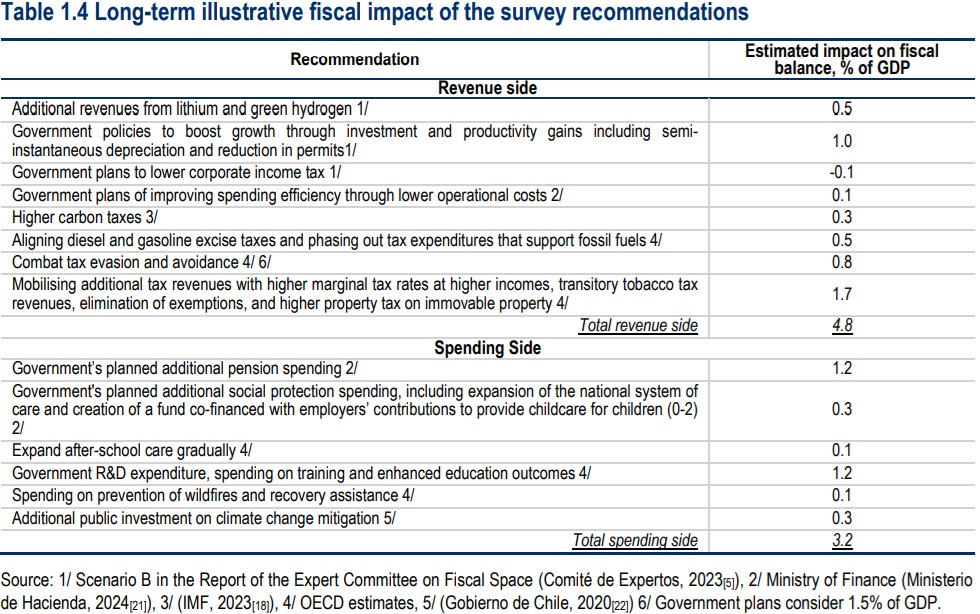
Yet the OECD just published its Economic Survey
of Chile and explicitly recommends higher taxes to fund bigger
government. They don’t even hide this statist agenda. It’s explicitly
summarized in Table 1.4 of the report.
Here’s some of what was written.
Tax revenues of close to 21% of GDP are insufficient to
meet spending needs and future fiscal pressures due to necessary
spending in the green and digital transitions, to deal with more
frequent and severe climate risks, and higher spending from population
ageing. A comprehensive tax reform can increase fiscal space. Such
reform should consider raising more revenue from personal income taxes,
…higher immovable property taxes, and environmental and tobacco ones,
even if transitory, while gradually lowering regressive income tax
deductions and exemptions.
You may be wondering about the Chile’s fiscal situation. Has
government been starved of resources? Has spending already been cut to
the bone? Are the OECD’s recommendations a way of compensating for
excessive frugality in the past.
Hardly.
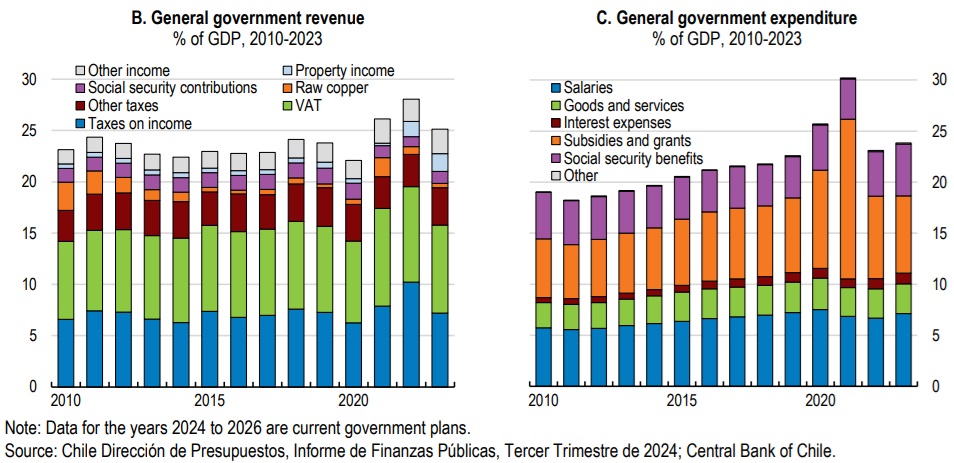
Here are two more charts from the report. As you can see from the one
of the right, the spending burden in Chile has already been on an
upward trajectory.
At the risk of stating the obvious, I’ll point out that the public sector in Chile already is way too big and exceeds the gr0wth-maximizing size of government.
Yet the current socialist government wants to make it bigger and the OECD is aiding and abetting that mistake.
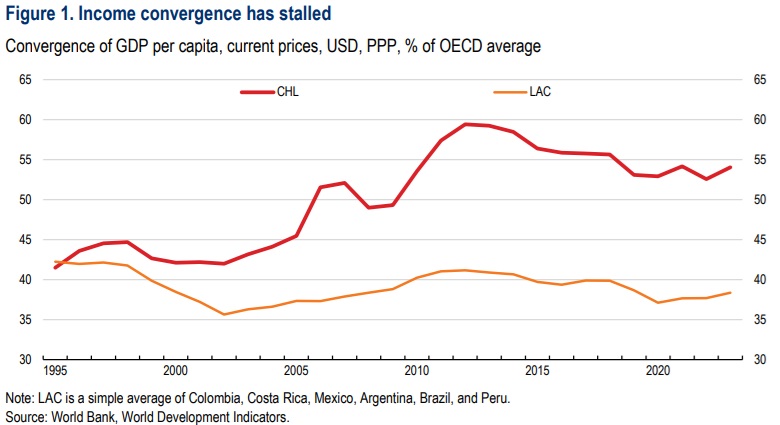
I’ll close with one final chart from the report. It shows that Chile
was doing a decent job of converging with the developed world but that
progress ground to a halt about 10 years ago and now there’s
backsliding.
For what it’s worth, I don’t think any of this is a coincidence.
There was a great period
of pro-market reform in Chile in the late 1970s and early 1980s,
followed by a couple of decades that can be described as status quo.
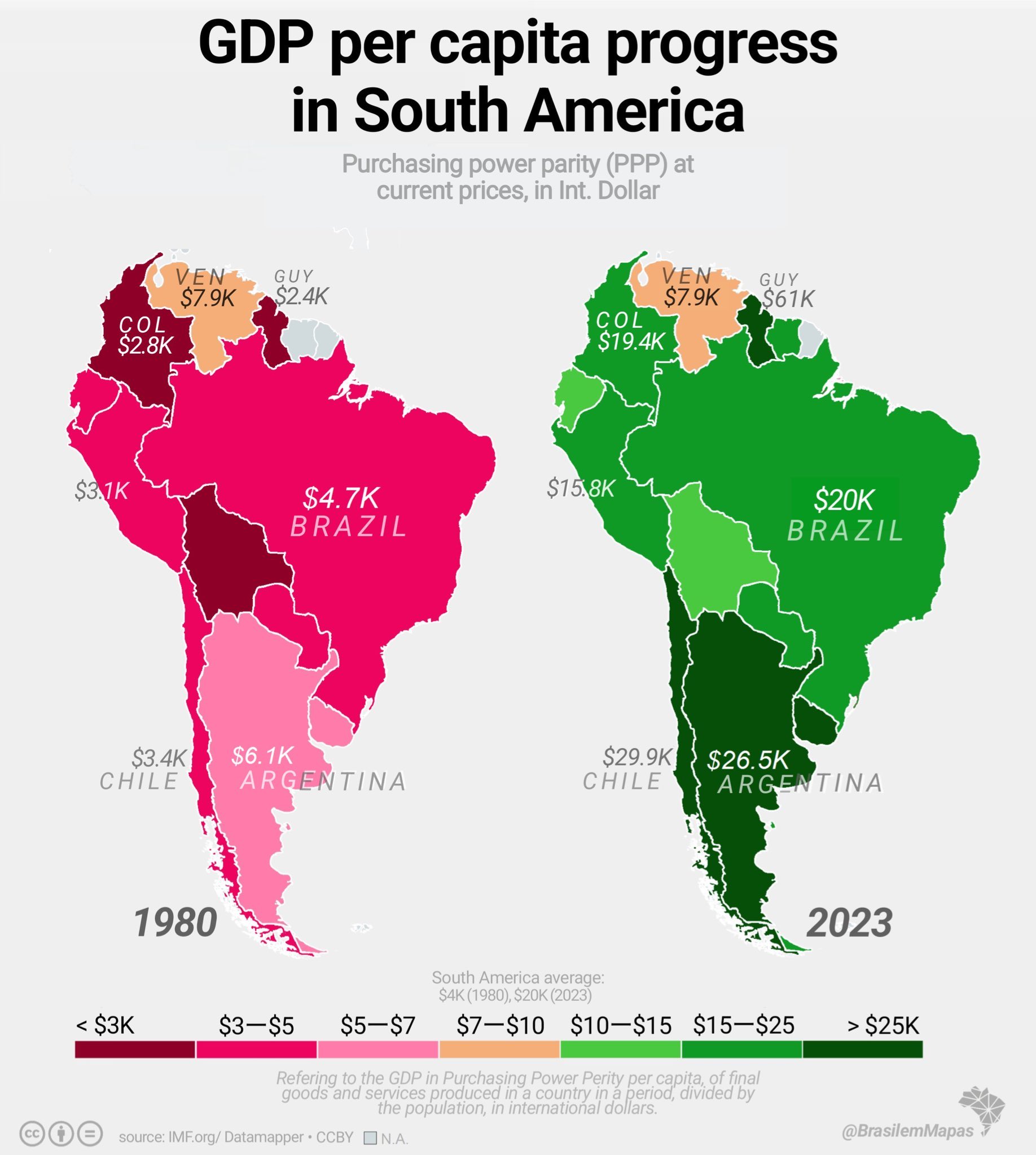
Today, let’s compare and contrast what has happened to these two countries.
Here are two maps of South America showing per-capita economic
output. Amazingly, Venezuela was more than twice as rich as Chile in
1980 but now Chile is more than three times as rich as Venezuela.
At this point, I normally would pontificate about the meaning of these two maps.
But there’s no need for me to write anything because the person who shared them on Twitter (X) nailed the obvious takeaway.
Game, set, and match. Economic liberty trounces statism.
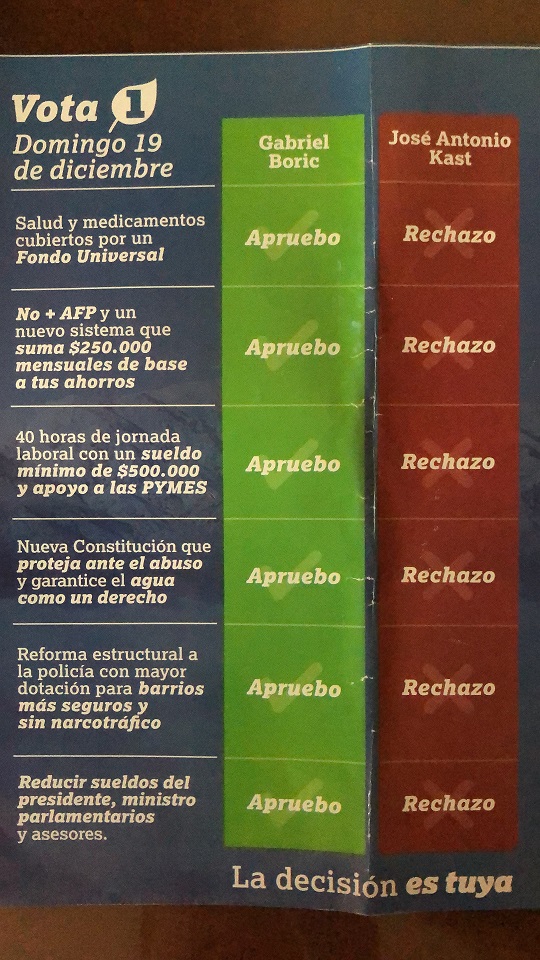
There was one attractive proposal. He’s proposing to cut the pay of
politicians. But that will yield trivial savings if it happens and the
odds of it actually happening are laughably small.
Also, he says he wants to fight crime, which is good (in theory).
His worst idea, though, is not on this flyer. If you go to his website, you’ll find this passage in his economic plan (as translated by Google): “The tax reform will collect on the order of 8% of GDP under the regime.”
He is not overly specific on how he will collect so much additional money, but the website mentions higher income taxes, green taxes, and the imposition of a wealth tax.
All of which sounds like a recipe to drive entrepreneurs and investors (and/or their money) out of the country.
To understand the radical nature of his plan, tax revenues in Chile
currently grab about 21 percent of the country’s economic output
according to the OECD – so Boric is advocating a 38-percent increase.
By comparison, Biden’s tax plan in the U.S. is awful, but he’s “only” proposing a 4-percent increase in the tax burden (about 1 percent of GDP).
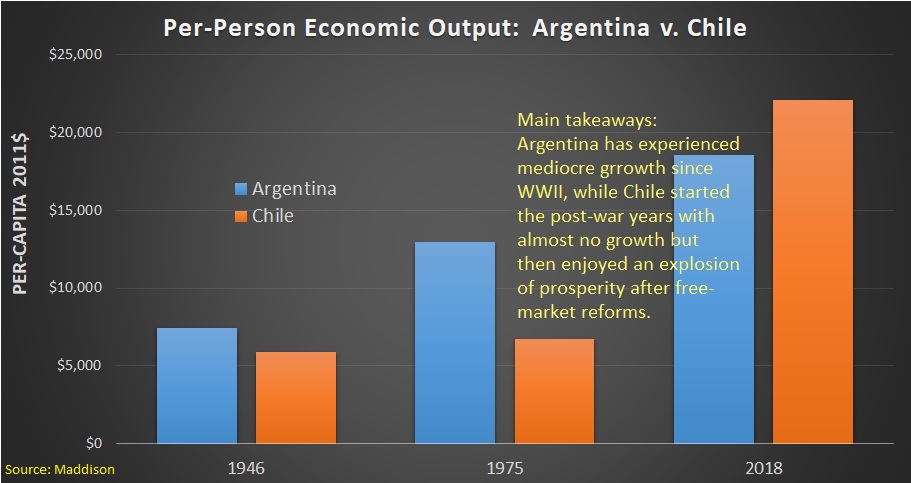
P.S. Since Ross and I were comparing Argentina and Chile, here’s a chart I put together using the Maddison database.
P.S. Given that Chile’s free-market reforms have been especially beneficial to poor people (see here, here, here, and here), I wonder if they understand how Boric’s election would threaten their upward mobility.
Bettina Horst of Libertad Y Desarrollo gave me her analysis.
As an economist and Executive Director of the nation’s pro-market
think tank, Ms. Horst understands that Chile’s system has helped workers
by giving them real ownership of real assets.
Chile’s
private retirement accounts have enabled workers to build nest eggs,
and the system has also provided a valuable source of capital for the
nation’s economy.
So why would Chile’s voters consider a candidate like Boric, who wants to wreck that system?
We’ll find out Sunday night after the votes are counted, but a Boric victory would indicate that Chile’s workers decided to trust the free-lunch promises of a politician.
In a column earlier this year for the Wall Street Journal, another Chilean weighed in on this issue.
Axel Kaiser of the Atlas Research Network wrote that the left has a (long-standing) ideological agenda.
In 1981 Chile became the first country to privatize
social security, ending the pay-as-you-go system that had been in place
since 1924 and had collapsed. Now Chile’s left wants to resurrect it.
…Last year a group of senators even introduced a bill to
nationalize the pension funds, as Argentina did in 2008. An
expropriation of workers’ savings looks increasingly likely, as the
radical left dominates Chile’s recently elected constitutional
convention. “The destruction of the AFP system is under way,” a far-left
lawmaker recently said. …The attack on the AFP system is all about
ideology and power. …Its destruction has long been a goal of the radical
left. With the AFP out of the picture, politicians will recover the
power they once had over retirees.
That’s Mr. Kaiser’s political analysis.
His column also includes some analysis of the economic benefits of the private system.
The state-run pension system was plagued by corruption
and rent-seeking… Pension privatization reversed this perverse dynamic.
Instead of taxing active workers to pay pensioners through the
bureaucracy, the new system, created by former Labor Minister José
Piñera, established that 10% of the employee’s salary is transferred
automatically to an account under his name at one of the Administradoras
de Fondos de Pensiones, or AFP. These private pension funds compete to
attract workers and invest their pensions for a fee. …By subsequently
relying on workers’ own savings to fund their pensions instead of taxing
younger workers, privatization of social security ended dependency
across generations. …Average pensions are also 41% higher in the AFP
system than in the old one, according to the Libertad y Desarrollo
research center, even as workers contribute a smaller fraction of their
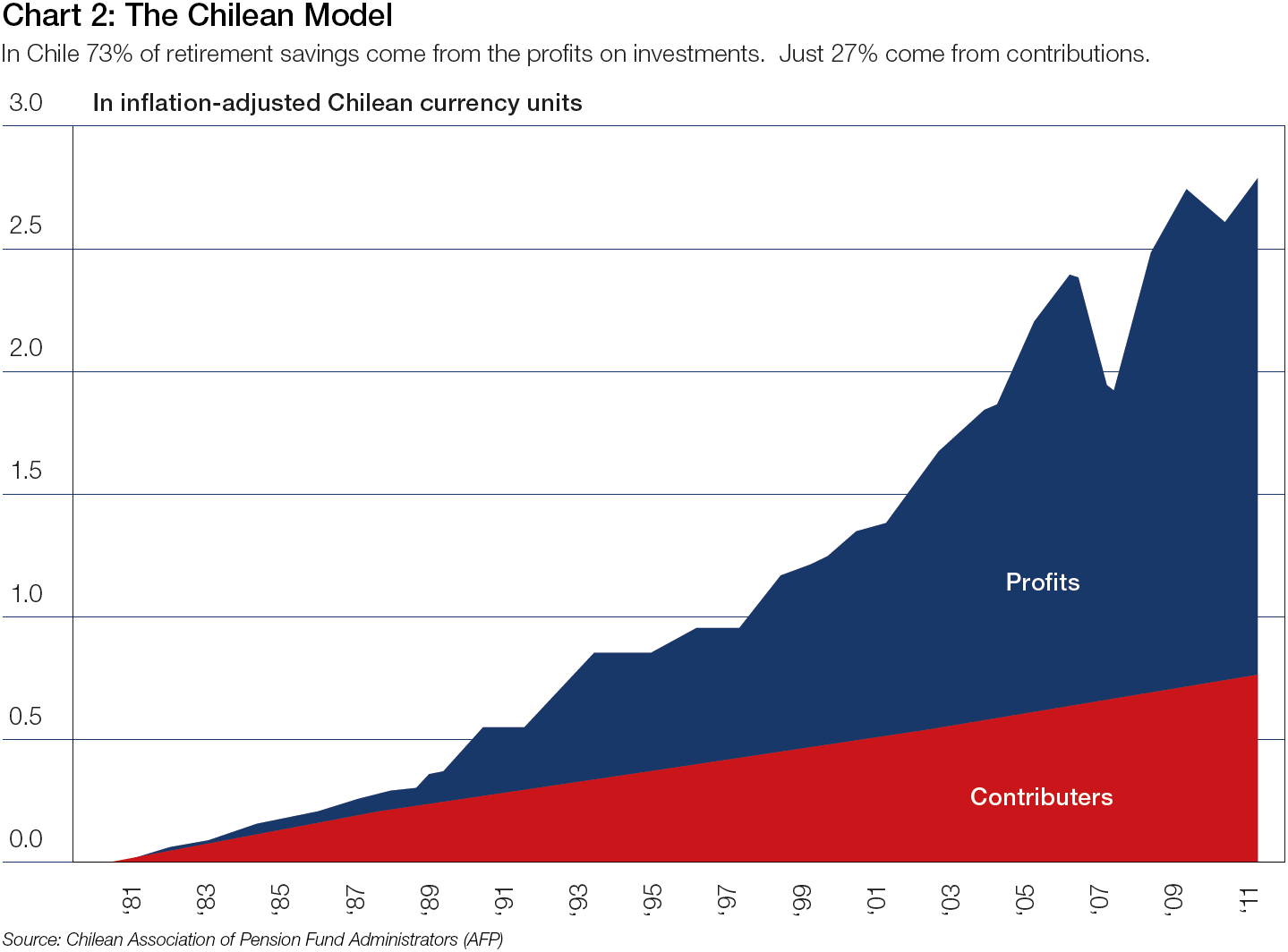
salaries. Between 1981 and 2019, the savings accumulated in workers’
accounts at the AFP reached $218 billion, or around three-quarters of
GDP. About 70% of these funds weren’t contributions made by workers but
profits generated for them by AFP investments. This accumulation of
capital contributed an extra 0.5% of GDP a year to economic growth
between 1981 and 2001.
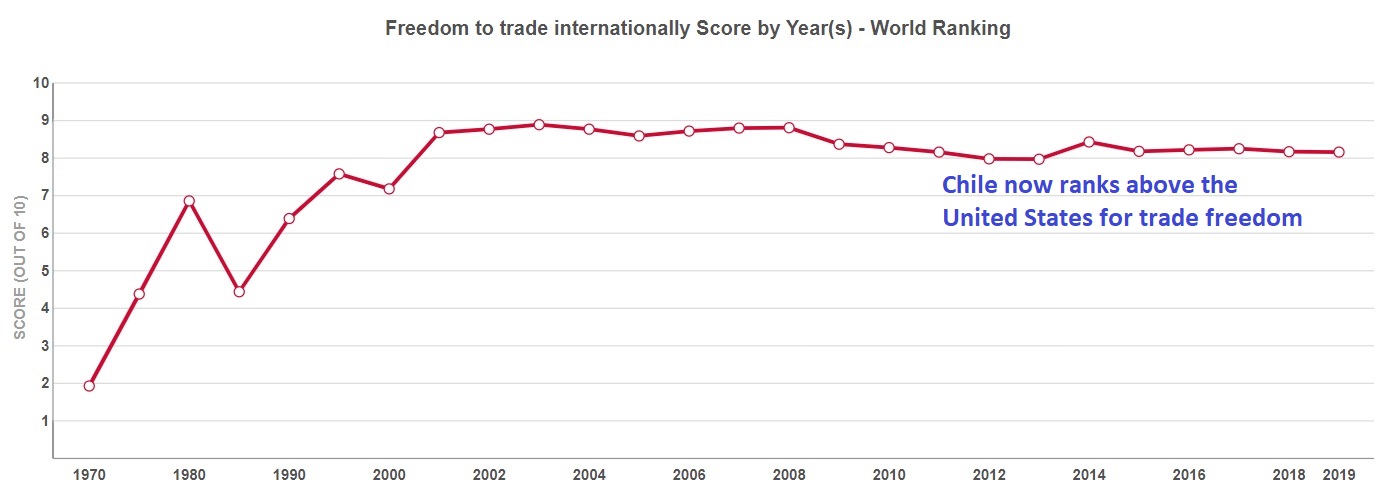
I’m always happy to sing the praises of free trade and condemn protectionism, but let’s keep the focus on today’s election in Chile and why it matters.
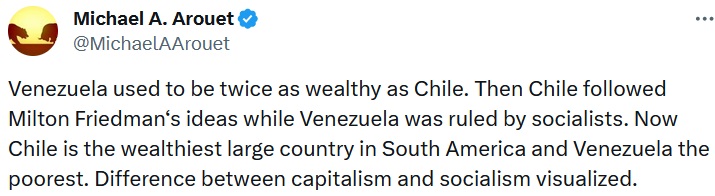
That’s why this tweet tells you everything you need to know.
Notice how Chile began to prosper after it began to shift to free markets around 1980 and notice how Venezuela began to fall after it shifted to statism starting around 2000.
Chile and Venezuela. Two countries with very
different economic trajectories in recent decades. This animation shows
per capita income from 1970 to 2017. Source: https://t.co/XzW3Xhtig4pic.twitter.com/EWGhMIAMKB
Notwithstanding all this evidence, Boric is favored to win today’s
election. Which would be a vote for national economic suicide – perhaps
akin to the British people voting for the pro-nationalization Labour
Party after World War II (described in this video, for those interested).
I hope I’m wrong, both about the results of the election and the potential changes to economic policy if Boric prevails.
P.S. If you’ve enjoyed my Chilean election coverage, I did the same thing a couple of years ago in the United Kingdom (see here, here, here, here, and here).
He definitely seems to be another “leftist savior,” as described in this video.
At best, Chile has elected someone as bad as Kirchner in Argentina.
The worst-case scenario is that Boric will be an utter disaster, like Chavez or Maduro from Venezuela.
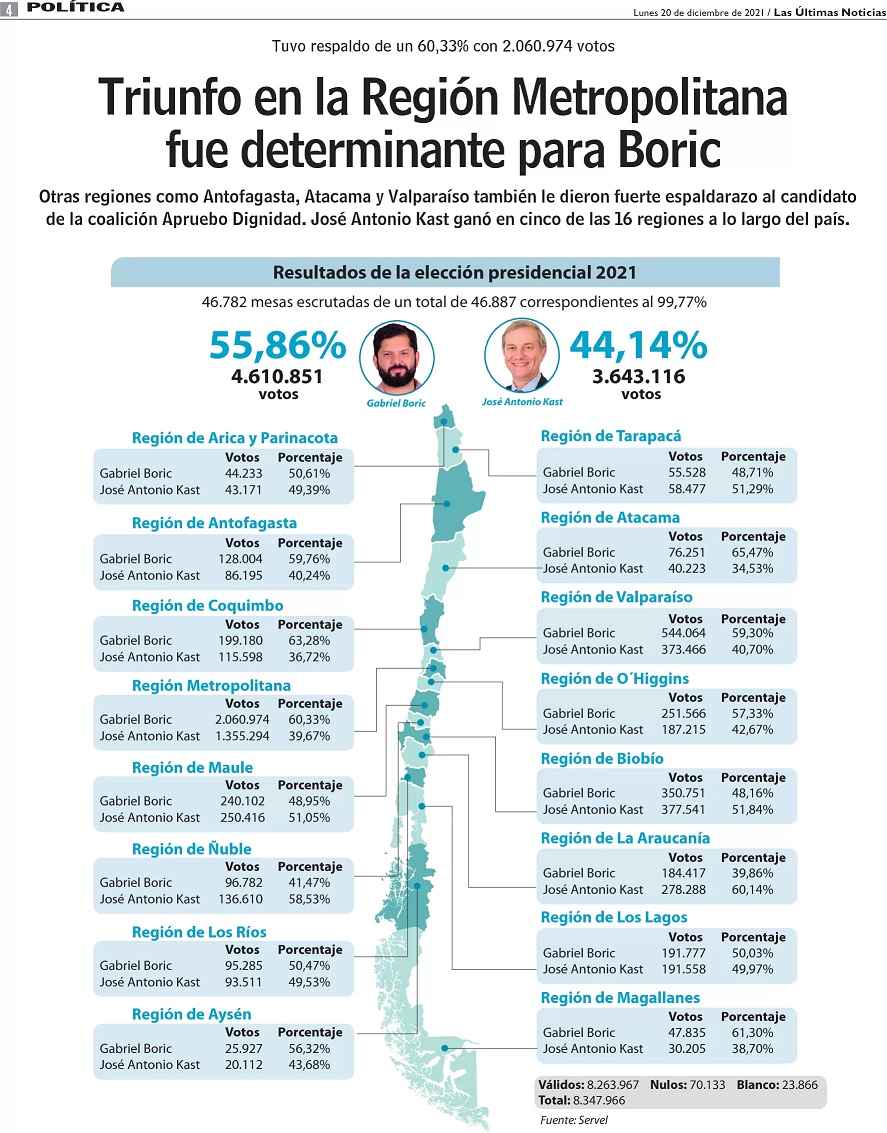
If you want more details about the election results, Las Últimas Noticias put together this helpful graphic.
I had predicted a 54-46 Boric victory, but these results are even worse.
But what’s really depressing is that Latin America – and the world – is going to lose a role model.
Chile was already declining
because of the soft leftism of two recent presidents, Michelle Bachelet
and Sebastián Piñera, and it seems almost certain that this
degeneration will accelerate as Boric pushes a hard-left agenda.
I’m especially worried about damage to the nation’s system of personal retirement accounts.
I’ll close with a personal observation that people sometimes challenge me to point out successful libertarian nations.
I have traditionally responded by stating that there’s no such thing as a pure libertarian country, but that we have some great success stories if we focus on comparative policy.
Sadly, I can’t really use Hong Kong
as an example any more, and now it looks like I’ll have to drop Chile
off my list. So my fingers are crossed that nothing bad happens to Switzerland, Estonia, New Zealand, or Singapore!
There are certain topics that seem to be slam-dunk wins for those who favor free markets and limited government, and one reason I make this assertion is that folks on the left don’t even bother to make counter-arguments.
Here are just a few examples:
Nobody on the left ever tries to produce an alternative explanation for the IRS data showing that rich people paid a lot more tax after Ronald Reagan lowered the top income tax rate from 70 percent to 28 percent.
Nobody on the left ever tries to produce an alternative explanation for the success of Switzerland’s spending cap.
Prior to today, I also would have included this example:
Nobody on the left ever tries to produce an alternative explanation for Chile’s amazing jump from poverty to prosperity after the country shifted to pro-market policies such as private social security.
But now I can no longer include Chile’s economic renaissance because I
finally found someone who concocted an alternative explanation.
As part of a column in today’s Washington Post about Chile’s upcoming presidential election, Anthony Faiola made this claim about that nation’s economic performance.
After Pinochet’s ruthless rule came to an end in 1990,
the newly democratic nation witnessed a historic period of economic
growth.
Gross domestic product growth between 1990 and 2018 averaged 4.7
percent annually, well above the Latin American average. Over that same
period, democratic governments increased social spending. Extreme
poverty (below $1.5 per day) was virtually wiped out.
But now let’s consider whether this alternative explanation is accurate.
Mr.
Faiola wants readers to believe that the positive developments in Chile
(“historic period of growth” and “extreme poverty…was virtually wiped
out”) occurred after 1990.
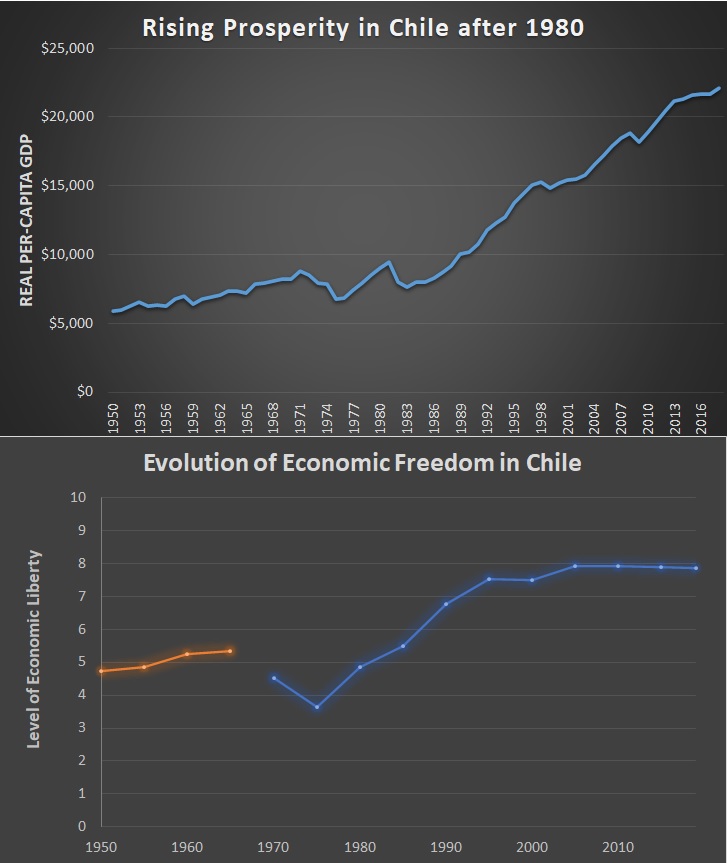
As shown by these two charts, it’s far more likely that the dramatic
rise in per-capita economic performance around 1980 is the result of a
big increase in economic liberty (as measured by Economic Freedom of the World) that also was occurring around that time.
One should always be careful about interpreting numbers. For
instance, national economic data at a given moment in time will be
affected when there are periods of global recession, such as the early
1980s and 2008.
Which is why it is important to look at longer periods of time. And when looking at decades of data for Chile, the big jump in prosperity clearly began after the economy was liberalized, not after Pinochet ceded power in 1990.
We’ll close with some bad news and good news.
The bad news, as captured by the bottom-half of the stacked charts
abvoe, is that there hasn’t been much pro-market reform in recent
decades.
But the good news is that Chile hasn’t deteriorated. The nation has endured some left-leaning governments, but economic freedom has remained high by world standards. Which means the economy continues to grow.
P.S. I’ll add some worrisome news. The left in Chile wants a new constitution that would give politicians more power over the economy. If that effort is successful, I fear the country will suffer Argentinian–styledecline.
P.P.S. I suppose Mr. Faiola deserves some credit for cleverness. Some leftists have tried to argue
Chile is a failed “neoliberal experiment.” Given the nation’s superior
performance, that’s obviously an absurd strategy. So Faiola came up with
a new hypothesis that acknowledges the growth, but tries to convince
readers that it’s all the result of things that happened after 1990.
He’s wildly wrong, but at least he tried.
P.P.P.S. I have a three-part series (here, here, and here) on how low-income people have been big winners as a result of Chile’s shift to free enterprise.
P.P.P.P.S. Here’s a column on Milton Friedman’s indirect contribution to Chilean prosperity.
Back in the 1970s, the nation of Chile embarked on one of the boldest
sets of free market economic reforms in history. The government called
in the Chicago Boys, as they were called, led by Milton Friedman and
other University of Chicago free market economists.
They were given a free hand to redesign the Chilean economic system
with property rights, a low flat tax, privatization of the Social
Security system and industry deregulation. In 1991, Friedman wrote that
Chile now "has all three things: political freedom, human freedom and
economic freedom. Chile will continue to be an interesting experiment to
watch to see whether it can keep all three."
For four decades, the experiment worked better than anyone could have
imagined. According to a study by economist Axel Kaiser for the Cato
Institute:
"Between 1975 and 2015 per capita income in Chile quadrupled
to $23,000, the highest rate in Latin America. As a result, from the
early 1980s to 2014 poverty fell from 45 percent to 8 percent."
Chile
became one of the wealthiest nations in South America. And it happened
in three decades, an eye blink of history. The Marxists and intellectual class of Latin America always hated the
free market reforms. They disparaged the Chicago Boys as "fascists."
They spent decades attacking the policies (with the stooges in the
American media echoing their protests), even as Chile became the jewel
of South America. The Marxists invented a narrative of "inequality":
"The rich were
getting richer, and the poor were getting poorer, and capitalism is
evil."
They infiltrated all of Chile's cultural institutions: the media, the
schools, the universities, the Catholic Church, the arts, the unions
and even the corporate boardrooms. They spread their poisonous creed of
collectivism to the populace.
Is any of this sounding familiar to our situation today?
Eventually, the leftists pulled off a political coup. In 2013, the
left won the Chilean presidency. The free market reforms were
systematically replaced with "spread the wealth" platitudes. In October
2020, voters approved a rewrite of the constitution, and now property
rights and the rule of law are in danger. Chile is now in economic free fall. The poor are getting crushed. The
rich are pulling their money out of the country. They have arrived at
"equality":
Nearly everyone is suffering.
Meanwhile, back in America, we have an economic transformation of our
own going on. The Biden administration promises to help the middle
class by handing out trillions of dollars of free money to citizens and
paying people more money for not working than working. We will borrow
trillions of dollars and pray that the Chinese continue to buy up our
bonds and that our currency holds up.
Many of our constitutional protections and congressional rules of
behavior, such as the filibuster, which protects the rights of the
minority, may be headed to the shredder. The election laws are getting
rewritten to benefit, significantly, the party now in power – the
Democrats. The House has passed a bill requiring millions of
working-class people to join unions and pay dues. The left is saying,
don't worry, this compulsion is going to help the working class. Sure.
A sock-it-to-the-rich tax increase is coming that will make the
productive class and the job creators pay their "fair share" with tax
rates of 50%, 60% and 70%.
Will this story have a happy ending?
The answer to that question might be contained in the frightening
example of what happened in Chile. It is what our children and college
students should be learning in the classrooms – fat chance. The left
runs our schools now, too.
I met yesterday with Jose Pinera, the former minister who created Chile’s incredibly successful system of personal retirement accounts (he’s also one of the people Gary Johnson should have mentioned when he was asked to identify an admirable foreign leader).
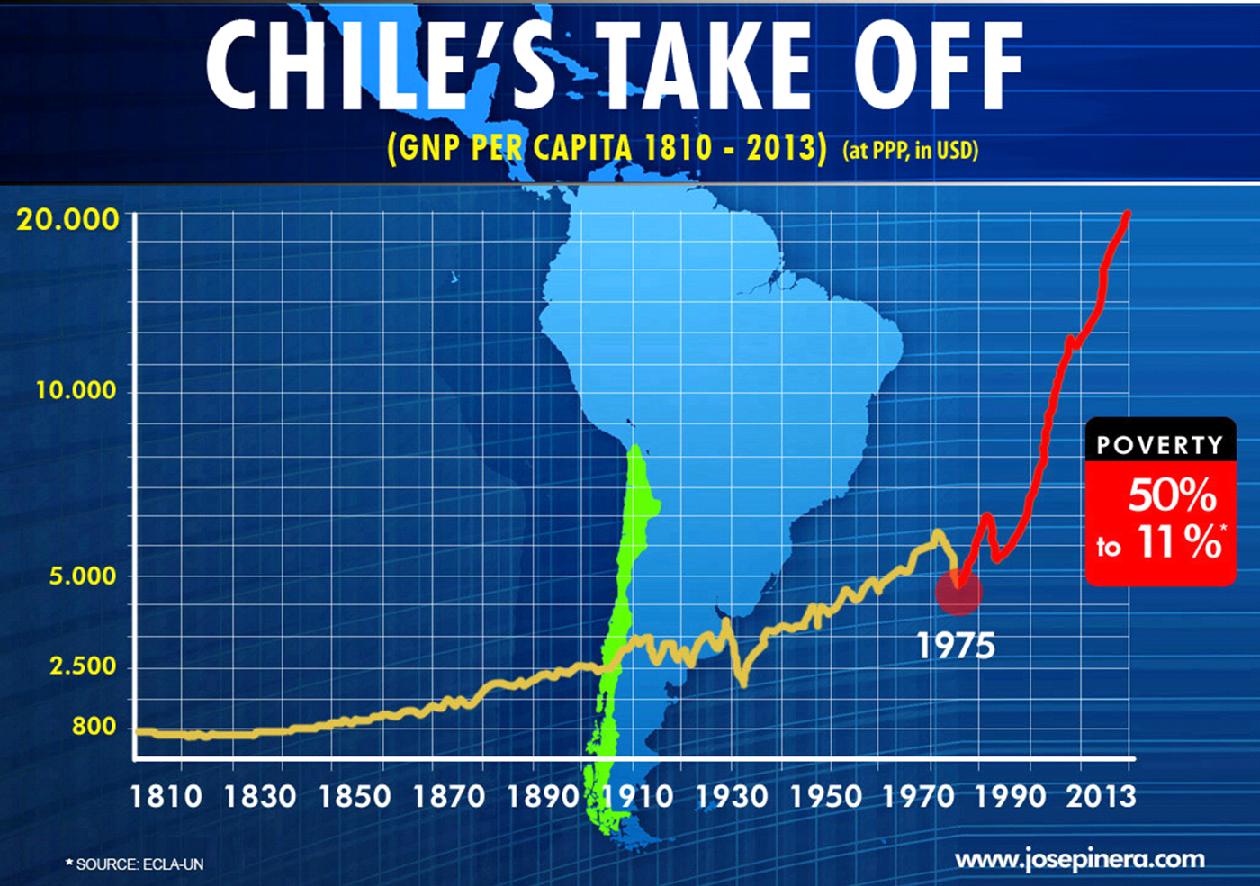
Back in 2013, I shared some of Jose’s data showing how the economy took off after Chile enacted pro-market reforms.
I was especially impressed by the stunning reduction in the poverty rate, which had dropped from 50 percent to 11 percent (it’s now down to 7.8 percent).
In other words, capitalism has been great news for poor Chileans. Simply stated, when given more freedom and opportunity, most of them escape poverty.
Interestingly, Reuters reports that even the IMF recognizes Chile’s superior performance.
The International Monetary Fund (IMF) hailed Chile’s strengthening economy in a report published on Friday while encouraging President Sebastian Pinera to push forward with promised structural reforms. In a statement following its annual consultation with Chile, the IMF praised Pinera’s proposed reform drive… Conservative billionaire Pinera took office in March with a strong mandate to make changes to the country’s pension system and labor laws and simplify the tax code. …The bank praised his early efforts, which it said were aimed at “re-invigorating investment and economic growth.”
Hmmm…, makes me wonder if the IMF (given its dismal track record) actually understands why Chile has become so prosperous.
Though the World Bank has praised the country’s pro-market reforms, so international bureaucracies sometimes stumble on the right answer.
But let’s not get distracted. Today, I want to share further evidence about how pro-market reforms produce big benefits for the less fortunate.
Here’s a chart from an article in the latest edition Economia y Sociedad. The article is in Spanish, but a translation of the relevant passage tells us that, “in Chile, the income of the poorest 20% of the population has risen at a rate (8.2% per year) that is 50% higher than that to which the income of the richest 20% has risen ( 5.3% per year).”
In other words, a rising tide lifts all boats (just as in the U.S.), but the bottom quintile is enjoying the biggest increases.
Sounds like great news. And it is great news. But some people put on blinders.
My left-leaning friends loudly assure me that they are motivated by a desire to help poor people. Yet if that’s true, why aren’t they falling over themselves to praise Chile? Why are they instead susceptible to waxing rhapsodic about the hellhole of Venezuela or bending over backwards to defend Cuba’s miserable regime?
The bottom line is that Chile became the Latin Tiger thanks to economic liberty. That’s great news for the country, but especially good for the less fortunate.
I’m in Vienna, Austria, for the annual European Resource Bank meeting. I had the pleasure last night of listening to Jose Pinera speak about economic reform in Chile, particularly the system of personal retirement accounts. He shared a chart that conclusively shows why good economic policy makes a difference.
Wow. Look at how much faster the economy has grown since the communists were ousted in 1975 and replaced by a pro-market government.* And the poverty rate has plummeted from 50 percent to 11 percent! Simply stated, economic reform has been hugely beneficial to poor and middle-class people in Chile. Something to remember as we try to rein in the welfare state in America.
Let’s look at some more data. A couple of years ago, I shared this chart showing how Chile had out-paced Argentina and Venezuela. In other words, Chile’s performance is ultra-impressive, whether examined in isolation or in comparison with other nations in the region. The reason for all this success is that Chile didn’t just reform its pension system. As you can see from this Economic Freedom of the World data, Chile has made improvements in virtually all areas of public policy.
*The Pinochet government that took power in the 1970s may have been pro-economic liberty, but it also was authoritarian. Fortunately, Chile made a successful and peaceful transition to democracy in the late 1980s and has generally continued on a pro-free market path.