Search This Blog

De Omnibus Dubitandum - Lux Veritas

Showing posts with label Pharmaceuticals. Show all posts

Sunday, May 5, 2024

The Antibiotic Conundrum

By Rich Kozlovich 

I originally published this article on March 23, 2016 defending pharmaceuticals and vaccines, and have done so for many years.  I've also condemned these false vaccines for covid. They're not vaccines, they're genetic manipulating chemical compounds that do not immunize, nor do they prevent transmission, which before this massively fraudulent scientific fraud was the criteria for something to be called a vaccine.   

There's a lot of evidence these compounds actually make the recipients more susceptible to covid varieties, and are causing disastrous health consequences to humanity that will continue for decades.   That presents what may confuse my readers, and seem to present a conundrum for someone like me, so I thought republishing this with some a explanation might be useful. 

The IBTimes reported:

"23,000 people die yearly from antibiotic-resistant bacteria in the U.S. and more than 2 million fall ill, according to the Centers for Disease Control. But as many as 10 million people a year could die from antibiotic-resistant bacteria worldwide by 2050 if new treatments are not discovered"

David Shlaes posted an article entitled, We Can’t Just Subsidize Back to Antibiotics Leadership, saying:

"Recently I went back to the book I wrote back in 2010 — “Antibiotics: The Perfect Storm.” In that book I had a table showing the number of large pharmaceutical companies ($10B in revenues) pursuing antibiotic R and D and those who were not.  I then updated that table as it stands today......."Guess what! The names have shifted, but the numbers are the same."

The truth of the matter is once a corporation disbands it's antibiotic research team it can take years to rebuild it, even if they've committed to that task 100%.  These teams don't come into existence by advertising in the jobs wanted classified section of the newspaper.  And we need to get this.  If there's no money in this endeavor - there's no research - period. 

It takes billions of dollars and even decades of research to bring pharmaceuticals to market, and that means money has to be acquired, it has to be repaid, and even more money has to be acquired for further research for the next generation of pharmaceuticals.  And the people who invested in this research want a good return on their investment.  Otherwise no investment will be made, and no products will be developed.  Getting that kind of return and future investment dollars can only be done by selling these products at high prices initially. 

I was invited to the world premier of 3Billion and Counting a number of years ago in New York City, and met a number of people involved in public health in the third world, and this subject of the cost of antibiotics in the third world came up.  I said the same thing there I'm saying now. 

"If there's no money, there's no product!"

Is that fair?  Is it right only the rich nations can afford those products?  Is it right that many will die because they can't afford available expensive lifesaving pharmaceuticals?   
 
If you're a humane person the answer must be no!  But if you're a rational person, the answer must be yes.  
 
But no matter how humane we may be, we must face reality.  We don't live in a perfect world, which means we can only hope for the most acceptable imperfection.  And this is it!   At some point all these products will go out of patent and will become part of the public domain.  Once that happens untold millions of lives will be saved.  Lives that otherwise would have been lost if these products had never been developed. 

These products only make it to the market because they're profitable!  It's naturally disturbing that many may die before these products go out of patent and can become inexpensively produced and sold all over the world, but we have to ask; how many would continue to die if these products were never developed at all? 

Life isn't fair.  It's just life!

Sunday, March 15, 2020

Chinese Media Says Country Could Withhold Medication from U.S.

Ellie Bufkin Mar 13, 2020

The United States could be at the mercy of Communist China when it comes to receiving drugs and raw materials needed to fight the Wuhan Virus, according to the state media of Communist China.

Xinhua, the state-run media agency, reported that the United States' reliance on China for pharmaceutical exports gave the communist nation the ability to send the U.S. "into the mighty sea" of the Wuhan virus. In the same article, China was lauded for its own handling of the novel virus.
Chinese health officials have claimed that while more than 80,000 people had been infected by the virus which originated in Wuhan, more than 60,000 have recovered. They reported that just over 3,100 people died because of infection, mostly people of advanced age or with underlying conditions.

Sen. Marco Rubio (R-FL) confirmed that the United States was too reliant on products made in China to produce drugs that could help fight the burgeoning pandemic within the U.S. Speaking to Fox News, Rubio said of China's threat, "It's a tremendous amount of leverage." The senator indicated that should they make good on their promise to withhold exports, the consequences could be devastating for the U.S.

Though the United States is a leader in research of medical treatments for novel illnesses, materials and manufacturing needed for new medications can only be sourced from China at the moment. Currently, China produces between 80-90% of antibiotics used in the U.S.

Further, Rubio said that the United States being in a position of need made it challenging to use a firm hand with the communist nation as they normally would in trade and export disputes. "They can threaten to cut us off from our pharmaceutical supplies, they could trigger a domestic problem here that would make it difficult for us to confront them."........ To Read More....

Saturday, August 3, 2019

Bernie Sanders, Don't Call Scientists in Pharmaceutical Industry 'Crooks'

By Alex Berezow — July 31, 2019

I've decided not to watch any of the presidential debates because I just can't take it. If a politician isn't saying something stupid, he or she is saying something insulting. Oftentimes, it's both.
Take Senator Bernie Sanders, for instance. Last night, he decided to call the hard-working scientists in the pharmaceutical industry a bunch of crooks. That's right, the same people who produce antibiotics, vaccines, HIV antiretrovirals, chemotherapies, and countless other lifesaving drugs are criminals. Why? Mr. Sanders said:
"I took 15 people with diabetes from Detroit a few miles into Canada, and we bought insulin for one-tenth the price being charged by the crooks who run the pharmaceutical industry in America today."
Yes, drug prices in the United States are very high. The reasons have less to do with ethics or criminality and more to do with our convoluted R&D and healthcare systems.

Why Are Drug Prices So High in the United States?

Before explaining why drug prices are so high, let's first acknowledge that there are some "crooks" in the pharmaceutical industry. Martin Shkreli comes to mind. That little dweeb jacked up the price of an HIV drug (Daraprim) from $13.50 per pill to $750. Why? Because he could. The company that manufactured the drug, Turing Pharmaceuticals, basically had no competition, so Shkreli could charge whatever he wanted.

It's worth pointing out that Daraprim is no longer protected by a patent and can be made generically. But if only one company manufactures it, they have a monopoly, even if other companies are allowed to make it. That is why encouraging the development of more generic drug manufacturers (as well as speeding up the approval process for generic drugs) is one key to lowering drug prices.

But crooks like Shkreli are the exceptions that give Big Pharma a bad name. High drug prices are due to some combination of the following:

(1) The exorbitant cost of R&D. Developing a drug can cost billions of dollars and take 10 or more years. Clinical trials (in which drugs are tested in humans) are particularly expensive. If a drug makes it to market, the company that developed it needs to recoup these costs. If the drug fails during clinical trials and does not make it to market, the company needs to make up for those losses by increasing the prices of other successful drugs.

(2) Insurance. If your company takes you out for dinner, do you care how much you spend on your meal? Probably not. Somebody else is paying for it. The same goes for drug prices (and healthcare as a whole). Because insurance companies often pay the bulk of our costs for us, we are not incentivized to seek out or demand lower prices.

(3) Patents. The protection of intellectual property is crucial to innovation. (An interview I conducted with Patrick Kilbride of the U.S. Chamber of Commerce goes into further detail.) R&D is simply unsustainable if a company spends billions of dollars developing a drug only to have another company steal all that knowledge. Patents allow a company to profit -- for a limited time -- from the extreme risk they took. The question is how to balance intellectual property protection with society's interest in low drug prices. That may involve preventing companies from gaming patents, as Dr. Josh Bloom explained in this article about Nexium.

(4) Desire to maximize revenues. Even if a drug is protected by a patent, a drug company can't set the price too high, otherwise few people would buy it. So a company charges as much as they think the market can tolerate. An article by Senior Fellow of Medicinal Chemistry Dr. Christopher Gerry explains further.

(5) Medicare can't negotiate prices with drug companies. By law, the Department of Health and Human Services is not allowed to negotiate drug prices for Medicare patients. Currently, there are efforts to change that.

(6) Other countries can negotiate drug prices, so they freeload off the United States. Canadians, for instance, are a bunch of freeloaders. Who says so? Some Canadians themselves admit it. This op-ed in Canada's Financial Post refers to its drug policy as "parasiti[c]." But it's not just Canadians. Japan and Western Europe are also freeloading off the U.S.

Bernie Sanders, Don't Call Scientists in Pharmaceutical Industry 'Crooks'
The problem of high drug prices is multifaceted and complex. Referring to the pharmaceutical industry as "crooks" might be good for some cheap applause, but it is insulting and demoralizing to the thousands of scientists who work for it. Bernie Sanders should apologize.
 
Tags: 
drug prices

Please Help Fund Our Work
If you follow our work, you know that we here at ACSH go after the fraudsters, the hucksters and the snake-oil peddlers. And when we're not debunking their misleading or dangerous junk science, we're always aiming to give you the most accurate and dependable health news. But we can only continue to do that with support from our readers and friends who value what we do. So if you can please donate. Thank you.

Tuesday, July 16, 2019

Government Regulations: The Princess and Pea

The “Preserve Access to Affordable Generics and Biosimilars Act” will do nothing of the kind.

by  July 15, 2019

In “The Princess and the Pea,” an old queen proves that a midnight traveler is a true princess by hiding a pea under an almost unbelievable number of mattresses and down bedclothes. Because she is indeed a real princess, she feels the pea and the prince marries her. It is an awful story, one I don’t suggest telling your kids — unless you change the old queen to the old bureaucrat, the prince to the politician, the visiting princess to an entrepreneur, and the ending to a riot from the entrepreneurs after they figure out the pea was put there on purpose.

Then, although it is still an unpleasant tale, it will at least teach your kids a lesson about the way government works. They manufacture a problem, and then they create a regulation to “solve” the problem. When the market reacts negatively, they attempt to make things better by creating even more laws — and entrepreneurs, no matter how close or far away from the manufactured crisis, are affected by the regulation.

We see this in issues ranging from immigration to imports. We see it in wage laws and retirement laws. Most recently, the government has been focusing on technology and pharmaceuticals. Their regulations are doing a pretty good job at making it hard for businesses to build, innovate, and move forward..........To Read More....


Saturday, March 16, 2019

Congress, Not the Free Market, Raised Drug Prices

By Chuck Muth | March 15, 2019

Ronald Reagan Reagan once said, “the nine most terrifying words in the English language are, ‘I'm from the government and I'm here to help.’”

But the stuff of real nightmares is when it's Sen. Ron Wyden's (D-OR) voice announcing the words, full of scorn, arrogance, and unearned authority.

Wyden could easily fill in as an Ayn Rand villain, except critics would have savaged her for including such an unrealistically loathsome caricature.

The far-left Oregon Democrat was in his element at a recent Senate Finance Committee hearing, heaping scorn on people who run businesses employing thousands of Americans from his perch as a lifelong politician who's accomplished exactly nothing except leaving us all a little less free.........To Read More...

Tuesday, January 2, 2018

Sublocade: A New Injectable For Addiction Treatment

By Michael D. Shaw December 25, 2017 @ Health News Digest
 
If you are looking for a topic—other than the endless political battles in the wake of Trump’s election—that has stayed in the news, you need search no further than the matter of opioid addiction. As such, the recent FDA approval of an injectable form of the established drug (buprenorphine) has definitely captured the attention of the addiction treatment community.
 
This new brand is Sublocade, and it is recommended for patients stabilized on a steady, maintenance dose of buprenorphine for seven days. Dr. Indra Cidambi, addiction expert and medical director at Center for Network Therapy weighs in:
 
“Sublocade offers important benefits not currently provided by the sublingual form of buprenorphine. Medication is steadily released into the bloodstream, which helps patients to be compliant with the regimen, and diversion is a non-issue. It could truly help individuals seeking longer-term maintenance treatment for Opiate Use Disorder. However, prescribers should be careful to introduce Sublocade after patients have completed the early stage of treatment (three phases) where therapy, to effect lifestyle changes needed to maintain long-term sobriety, is a major component. Co-abuse of other drugs while on this medication and DEA regulations are also issues.”
 
At Dr. Cidambi’s clinic, the early stage of treatment consists of detoxification (the most acute phase), followed by partial care and intensive outpatient programs—lasting a total of 3-4 months.
 
In the clinical trials, the overall safety profile for Sublocade was consistent with the known safety profile of transmucosal buprenorphine, except for injection site reactions, which were reported in 16.5% of patients. The most common adverse reactions (≥ 5% of patients) included constipation, nausea, vomiting, abnormal liver enzymes levels, headache, sedation, and somnolence.
 
It is noted that Sublocade is a Schedule III controlled substance and should only be administered by a healthcare provider in conjunction with a complete treatment program that includes counseling and psychosocial support. Moreover, the prescribing information includes a boxed warning (aka “black box warning”):
** Serious harm or death could result if administered intravenously. 
** Sublocade is only available through a restricted program called the Sublocade Risk Evaluation and Mitigation Strategy. Healthcare settings and pharmacies that order and dispense Sublocade must be certified in this program and comply with the REMS requirements.
I spoke with a leading addiction medicine practitioner, based in the Southwest, who is also enthusiastic about Sublocade, and he hopes that its adoption will take some of the luster away from Vivitrol, another injectable used in the treatment of opioid addiction. Vivitrol has long been favored by many in the criminal justice community since it is an antagonist that blocks opioid molecules from attaching to opioid receptors. Thus, it is not an opioid partial agonist like buprenorphine. Its marketing is heavily directed to non-medical criminal justice targets.
 
As such, Vivitrol can be touted as “non-addictive.” On the other hand, there is very limited clinical data on its efficacy. Unlike conventional buprenorphine, Vivitrol first requires detox, which can cause its own set of issues. And, as a proprietary drug, it is more expensive than conventional buprenorphine.
 
The aforementioned Southwest-based physician has a philosophy—thankfully becoming more popular with younger doctors—whereby generic meds are favored over essentially equivalent proprietary formulations. In other words, if you’re going to dispense a proprietary med, you’d better have a powerfully good reason. Perhaps Sublocade will meet this criterion.


Tuesday, November 14, 2017

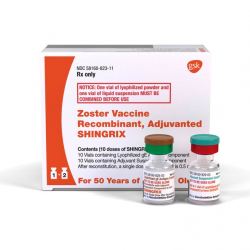
New Shingles Vaccine to Get CDC's Recommendation, Days After Getting FDA Approval

By Erik Lief — October 24, 2017  

Shingrix, GlaxoSmithKline's
 new Shingles vaccine
Just three business days after receiving the stamp of approval from federal regulators, a more effective shingles vaccine will receive the attention of the Centers for Disease Control on Wednesday, when a vote is expected about recommending its use to the general public.
 
The CDC's Advisory Committee on Immunization Practices will discuss how to add Shingrix, which was approved late Friday by the Food and Drug Administration, to its Adult Immunization Schedule. The vaccine will find its place among other recommended vaccines and shots, with this particular medicine slated for adults 50 and older, according to its maker GlaxoSmithKline. The CDC, however, says the vaccine is best suited for adults 60 and older because its potency can weaken over time.

Wednesday's committee meeting also spotlights the schedule itself, providing an opportunity to raise it especially given that many middle-aged adults are likely unaware even of its existence. So here it is, and here's the link to the CDC's website if you'd like more detail on each of the vaccines listed on the left.........To Read More....

Sunday, September 24, 2017

Why Sudafed Is Behind The Counter: A Meth Chemistry Lesson

By Josh Bloom — September 14, 2017

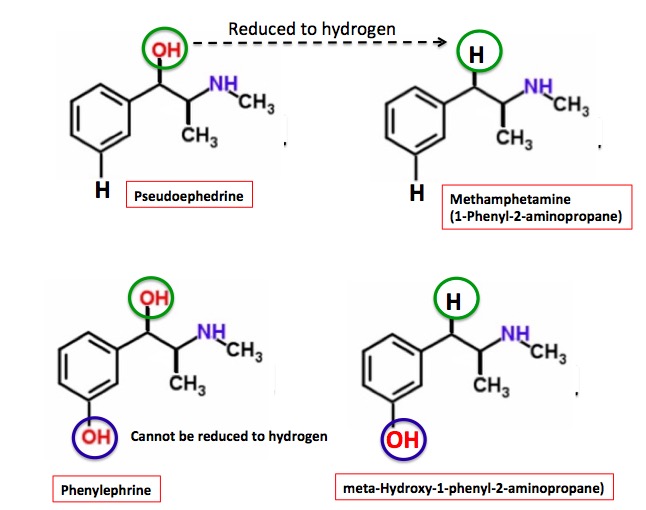
The drug phobia that now has us firmly in its grip, you know, the "let's restrict everything" mentality, didn't start with Vicodin, Valium, or Ritalin. It began with Sudafed, which contains the drug pseudoephedrine. If you've watched Breaking Bad you know very well that pseudoephedrine can be chemically modified to produce methamphetamine, aka crystal meth, which is why Sudafed was taken off pharmacy shelves in 2006 (1). To get the decongestant you now have to sniff out the pharmacist counter and hand over your driver's license.

The Act was intended to put a dent in the illegal production of methamphetamine, which was heavily abused at that time, especially in poorer areas of the US. Sudafed was replaced by another decongestant Sudafed PE, which cannot be converted to methamphetamine, but doesn't work as well. Before we take a look at the chemistry that explains this, here is a detailed pharmacological comparison of the two drugs:

 
Here's the chemistry:


In the first reaction (above), a simple chemical transformation of a hydroxyl (OH) group (green circle) into a hydrogen atom—a process called reduction—is all that is needed to convert (relatively) harmless pseudoephedrine into methamphetamine, which is anything but harmless. There are a number of chemical reagents that can be used for this transformation. Walter White used phosphorous and iodine, a method that no organic chemist in a real lab (and in his right mind) would use. It's messy and dangerous, but it works well enough.

The second reaction (below) is quite different. Phenylephrine contains two different hydroxyl (OH) groups, as shown in the blue and green circles. But the hydroxyl group in the blue circle (called a phenolic group) is chemically unreactive. So if you react phenylephrine with phosphorous and iodine it only the OH in the green circle is affected. The product of this reaction is 3-(2-aminopropyl)phenol, (aka gepefrin), which is a mediocre blood pressure drug sold in Europe. It won't make you high.
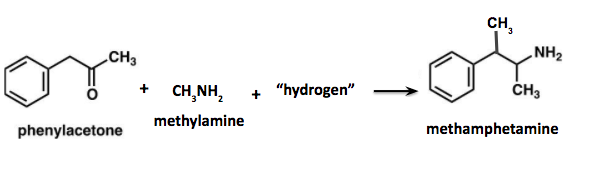
So, did removing Sudafed from the shelves of pharmacies accomplish anything except increase sales of Kleenex? Not much, since we organic chemists are a nothing if not creative. In the absence of pseudoephedrine, all that was needed was another method, and Walter White found one, which is far superior to the first. It is called a reductive amination, and, unlike the phosphorous iodine mess, it is clean and very easy. Here is the reaction:​​​​​​
The "P2P" synthesis of meth. A piece of chemical cake.

The problem is that it requires different starting materials, phenylacetone (aka, phenyl-2-propanone, P2P) and methylamine, a gas that smells like ammonia and is sold as a water solution in glass bottles or 55-gallon drums. Methylamine is the chemical in the large drum that they stole from the chemical warehouse. Chemists don't need to steal it. It is a very common reagent, and a bottle or two can be found in most organic chemistry labs. When we order it we get on a list somewhere. P2P is also easy for chemists in a lab to come by. We just order it. There is nothing stopping any organic chemist from making meth and waltzing out of the building with a kilo of it. It would take about an hour to synthesize. The problem is what to do next. How do you get rid of it? A DuPont chemist named Michael Hovey tried something similar in 1985. It did not end well. See: Breaking Really Bad, 25 Years Before Walter White.

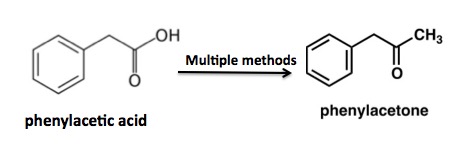
A minor problem that "modern" meth makers had to overcome was the difficulty in obtaining phenylacetone (P2P) if you were not in a research lab. So, chemists went back one step made it from something else, another chemical called phenylacetic acid, which is used in the perfume industry, and can be bought in huge quantities.


So, the government took Sudafed off the shelves, meth synthesis became even more efficient, and people sneeze more. SOSDD.
Lessons learned:
  • Chemists are smarter than government agencies
  • So are wombats
  • When government cracks down on something in the futile "war on drugs," something else will pop up that will be even worse.
  • If you don't believe this, ask the thousands of families of the fentanyl overdose victims how well cracking down on Vicodin worked from them. 
A little quiz (those who read the Breaking Bad article from above need not apply):

Why was Walter's meth blue? Good luck with this one.

Note:

(1) The Combat Methamphetamine Epidemic Act of 2005, which was incorporated into the Patriot Act was signed by President Bush in 2006.

Tuesday, September 19, 2017

Is Tylenol 'By Far the Most Dangerous Drug Ever Made?'

By Josh Bloom — September 11, 2017 @ The American Council on Science and Health

If you own Johnson and Johnson stock you probably have enough problems on your hands. The company keeps getting hammered by lawsuits alleging that talc in baby powder has given women cancer (1). So you sure don't need me smacking down Tylenol, which had worldwide sales of almost $2 billion in 2016.

But, don't blame me. This is not my quote. It's part of a written interview I did back in July with Aric Hausknecht, M.D, "Pain In The Time Of Opioid Denial: An Interview With Aric Hausknecht, M.D."
"Tylenol Is By Far The Most Dangerous Drug Ever Made"
Aric Hausknecht, M.D. July 30, 2017 

Why would Dr. Hausknecht, a New York neurologist and pain management specialist, say this? Taken out of context, such a sweeping statement may seem to be hyperbolic. The most dangerous drug ever made? I asked him to elaborate. He did:
"Each year a substantial number of Americans experience intentional and unintentional Tylenol (acetaminophen) associated overdoses that can result in serious morbidity and mortality. Analysis of national databases show that acetaminophen-associated overdoses account for about 50,000 emergency room visits and 25,000 hospitalizations yearly. Acetaminophen is the nation's leading cause of acute liver failure, according to data from an ongoing study funded by the National Institutes for Health. Analysis of national mortality files shows about 450 deaths occur each year from acetaminophen-associated overdoses; 100 of these are unintentional."
Therapeutic Index - A cornerstone of pharmacology

When evaluating drug toxicity, a critical parameter is called the therapeutic index (TI). The TI is the ratio of the toxic dose to the effective dose. Obviously, the higher the TI the better, since the greater the separation of the therapeutic and toxic doses, the less likely an overdose. Here are some examples of low TI drugs:
  • Lithium (bipolar disorder)
  • Warfarin (blood thinner)
  • Theophylline (asthma)
  • Digoxin (various heart conditions)
And some examples of high TI drugs:
  • Benadryl (diphenhydramine, antihistamine, sleep aid)
  • Valium (sedative, hypnotic) (2) 
  • Neurontin (gabapentin, restless leg syndrome, multiple off-label neurological indications)
Tylenol (acetaminophen) an analgesic (pain reliever) gets a free pass in the minds of many people because it doesn't come with the liabilities of the NSAIDs, such as aspirin and ibuprofen - bleeding, heartburn, kidney toxicity. ulcers, and salicylate allergy. The absence of gastrointestinal toxicity is responsible for the widespread perception that Tylenol is safer. In some ways it is, but in others, it is not. It may leave your stomach alone, but not your liver.

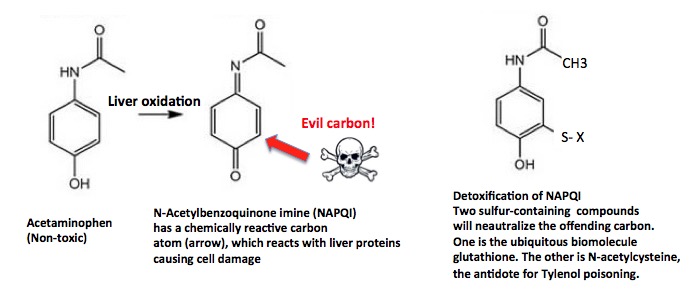
Dr. Hausknecht's statistics may seem puzzling. How can there be 50,000 emergency room visits and 25,000 hospitalizations, yet only 450 deaths per year?  This is because, when treated in time, irreversible liver damage from an acute overdose of acetaminophen can be prevented. There is an antidote called N-acetylcysteine. But the danger of the drug is not only from acute doses. Both acute and chronic use of acetaminophen can lead to permanent liver damage, not because acetaminophen itself is toxic, but because the liver converts it into something that is (Figure 1), sealing its own fate in the process. (Apologies for the biochemistry.)

Figure 1: Metabolic activation and detoxification of acetaminophen. Oxidation by liver enzymes forms N-acetylbenzoquinoneimine, a chemically reactive, toxic molecule. The carbon atom (red arrow) irreversibly "attacks" various proteins in the liver. The antidote, N-acetylcysteine sops up (deactivates) the benzoquinone imine, but only if given in time. It does not reverse liver damage. 

So, what is the therapeutic index for Tylenol? You may be rather surprised. Before 2011 the maximum daily dose of acetaminophen recommenced by the FDA was 4,000 mg. It is now 3,000 mg. The estimated lethal dose of the drug is 10 grams in one day, which is not terribly different from the maximum daily dose. The TI is thus about 3, which is pretty bad, especially compared to other drugs which are perceived as far more dangerous:

References:
a) http://www.acutetox.eu/pdf_human_short/1-Acetaminophen%20revised.pdf
b) https://medlineplus.gov/ency/article/002542.htm
c) https://www.fda.gov/ohrms/dockets/dailys/03/Aug03/082903/03p-0398-cp0000...att-6-vol1.pdf
d) https://www.ncbi.nlm.nih.gov/pubmed/357765
** Therapeutic index (TI) is an approximate, but indicative measure of the likelihood of a toxic or lethal overdose. It is not a measure of absolute toxicity, rather, the safety margin between therapeutic and toxic or lethal doses.
Approximate therapeutic indexes for some common drugs. The higher the TI, the lower probability of an overdose. 

Rather interesting that the CDC, which has inserted itself firmly up your doctor's anus for writing scripts for Valium or hydrocodone, is only too happy to recommend that pain patients take a drug that is more likely to cause an overdose than either of them.
"Several nonopioid pharmacologic therapies (including acetaminophen, NSAIDs, and selected antidepressants and anticonvulsants) are effective for chronic pain. In particular, acetaminophen and NSAIDs can be useful for arthritis and low back pain..."
CDC Guideline for Prescribing Opioids for Chronic Pain — United States, 2016
Next: "So, Tylenol isn't that safe, but at least it works, right?"

NOTES:

(1) It would seem that evidence of harm is totally irrelevant in the courtroom. It is far from clear that talc is harmful. But it is even further from clear that there is *any* proof that Eva Echeverria, a victim of ovarian cancer who used baby powder her whole life, contracted the disease from the powder. Lawyers 1, Science 0.

(2) It is very difficult to die from a Valium overdose in the absence of alcohol, opioids or other central nervous system depressants. (See: "Can Valium Kill You?"). In two case studies, people survived overdoses of 500 and 2,000 mg (50 and 400 five milligram pills, respectively). But, 50 regular strength Tylenol pills (16.25 g) is approximately twice the estimated lethal dose. Yes, a single dose of 500 Valium pills is less dangerous than 50 Tylenol pills.

Discovered: 4th Major Mechanism for Antibiotic Resistance to Spread

By Alex Berezow — September 8, 2017

Unlike animals, bacteria can readily share genetic information with other bacteria, even those of entirely different species. Because of this, one clever microbiologist likened bacteria to smartphones and genes to apps. When bacteria share "apps" that encode antibiotic resistance, it poses trouble for humanity.

As individual bacterial strains are exposed to antibiotics, natural selection favors the survival of those that have mutated to become resistant. That hard-earned resistance can then be given to other bacteria. Microbiologists have long known of three major mechanisms by which this occurs: Transformation, transduction, and conjugation.

Transformation occurs when a bacterium dies and sheds its DNA into the environment. Some bacteria are capable of snatching it up and incorporating it into their own DNA. This process was discovered nearly 90 years ago when harmless bacteria were mixed with dead, but lethal, bacteria and injected into mice. The mice died. It was eventually ascertained that the harmless, living bacteria took up the DNA from the dead, lethal bacteria and were transformed into lethal, mouse-killing microbes.......To Read More.....


Tuesday, September 12, 2017

Combining Pain, Cold, Cough, And Sleep Meds - Great For Drug Companies, But Unethical

By Josh Bloom — September 6, 2017 @ The American Council on Science and Health

  If you've spent any amount of time in the cough and cold section of your pharmacy, you may soon end up in the headache aisle. This is because the over-the-counter cough, cold, and allergy aisle is a daunting place, even for those of us who are familiar with all of the common medicines that are used in these products. There are so many combinations of products for so many different sets of symptoms that if you don't need reading glasses when you enter the pharmacy, you probably will by the time you leave.

This is not only intentional but also harmful, and, in my opinion, unethical. It is little but a sleight-of-hand used by drug companies to sell more of the same old drugs, but in different combinations, to people who don't need the combinations and can actually be harmed by them.

If you are trying to figure out what to take for a cough (1) you may go stark raving mad. Why? Because companies are making slightly concoctions of old, commonly used drugs in different combinations and doses, supposedly to treat different sets of symptoms. So if you go to the store for a simple cough syrup it's difficult to do so without wanting to sit down in the aisle and weep. And it's all unnecessary. Just look at Robitussin. It's a cough syrup. Pretty simple.  At least it used to be.

Robitussin madness. Photo: Ramsey Pediatrics
Do we really need 11 different types of Robitussin? We sure don't, since the 11 are no more than different combinations (and doses) of the same four drugs:
  • Guaifenesin - loosens mucus
  • Dextromethorphan - cough suppressant
  • Pseudoephedrine - relieves nasal congestion
  • Chlorpheniramine - antihistamine
Couldn't this be done in, say, three or four bottles? Yes, it could. But this is about marketing, not medicine.

Aside from whatever emotional distress you may experience from having to decide which of these stupid cough syrups to buy there's not much harm here. On the other hand, this is not always the case:

Combination sleep aids plus analgesics. Should these be sold at all? 

While the downside of selling redundant combinations of drugs in cough syrups is minimal, this is not the case with pain medications. It is pharmacological insanity to combine analgesics with other types of drugs, yet I know many people who swear by them, especially Tylenol PM, as sleep aids.

They have been suckered by the drug companies into buying something they don't need and probably shouldn't take.

When I ask them "Do you have pain, insomnia, or both?" The answer is almost always "insomnia." Then, I ask "Then why are you taking the Tylenol?" No good answer. Because there is no good answer, other than both drugs are stuffed into the same pill. People have been using Benadryl (diphenhydramine) as a sleep aid for decades. Yet now, many people take this instead:


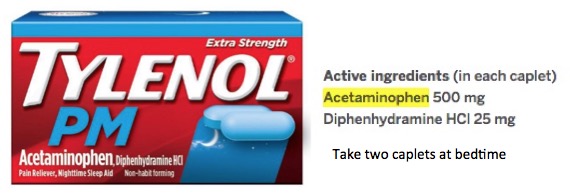
Tylenol, PM combines Benadryl with a full dose of acetaminophen. Why?

I believe that the practice of selling medicines that are a combination of analgesics and sleep aids is unethical and should be banned. These combination pills usually provide no benefit to consumers (2) but carry the possibility of real harm. If you merely want to go to sleep, down a couple of Benadryl. Why take 1,000 mg of acetaminophen along with the Benadryl if you don't need it?

Acetaminophen is not harmless (3). Nor are ibuprofen (Advil) or naproxen (Aleve). None of these drugs should be taken when they are not needed.

The FDA is fully aware that acetaminophen is not a benign drug. In 2011, the agency required that the maximum daily recommended dose of the drug be lowered from 4,000 mg to 3,000 mg. And around that time, the agency took a similar action with prescription drugs. Restrictions were placed on opioid pills, such as Vicodin and Percocet, which are combinations of hydrocodone and oxycodone, respectively and acetaminophen. Before 2011 you could buy Vicodin or Percocet which contained as much as 750 mg of acetaminophen in one pill. Since then, the maximum dose of acetaminophen in any single opioid pill has been lowered to 325 mg. The FDA did not make these changes arbitrarily. It was done to prevent unintentional acetaminophen poisoning.

If you have a headache, take something for the pain. If you want to sleep, take a sleep aid. If you need both. take both. But in the absence of pain, it is just plain nuts to take the combination. Why take a full dose of a pain drug, each of which carries its own risk, when it's not needed? (4). The benefit is zero and the risk is real.

Drug companies do a lot of good. I know this - I used to work for one. But the practice of combining drugs to encourage people to take medicines that they do not need is unethical marketing and benefits only the company, not the patient. Drug companies don't look so good here.

Notes:

(1) There is real doubt whether kids should take cough or cold medicines at all. See the 2104 FDA report: Most Young Children With a Cough or Cold Don't Need Medicines
(2) How many people who have insomnia also have pain? Not many, but if they do, they can just as easily take Benadryl and Tylenol separately should they need it. Most people do not.
(3) Next: A look at the toxicity and efficacy of Tylenol. You may be surprised.
(4) If you're sitting in your office in the middle of the day and don't have a headache, would you reach for a Tylenol or Advil bottle? Think about it. 

Sunday, September 10, 2017

Overcoming FDA Bureaucracy and Saving Lives with Expanded “Right to Try”

September 9, 2017 by Dan Mitchell
I’m lucky. When I think of how government regulation impacts my life, my list contains minor nuisances such as inferior light bulbs, substandard toiletssecond-rate dishwashers, weak-flow showerheads, and inadequate washing machines.

For my friend Matt Kibbe, by contrast, red tape could have been deadly. Literally.

Watch this powerful video and listen to him explain how he survived cancer. That’s the good part. The bad part is that he likely would have died if he got cancer during the 12 years it took before the Food and Drug Administration finally approved a life-saving drug.


Matt’s takeaway is that terminally ill patients should have the “right to try” drugs that aren’t approved by the FDA.

I wrote about this issue last year and shared two other videos on the topic. Today, I want to approach the issue from another direction by pointing out that “right to try” laws shouldn’t be controversial because tens of millions of patients already take drugs for purposes that aren’t approved by the FDA.
The only catch is that they can do this only with drugs that have been approved for some other purpose.

This is not a recent revelation. Daniel Klein wrote about this issue 17 years ago for the Foundation for Economic Education.
Once a drug is approved for any use, it may be used in any way doctors and users see fit. Approved drugs are often found to have other benefits, and doctors learn to prescribe those drugs for such “off-label” uses. Although off-label uses have absolutely no standing with or approval by the FDA, they are perfectly legal. Do patients and doctors shrink in fear from uses not certified by the FDA? Absolutely not! Off-label prescribing is pervasive and vital to the health of millions of Americans. As economist Alexander Tabarrok says, “most hospital patients are given drugs which are not FDA-approved for the prescribed use.” Off-label prescriptions are especially common for AIDS, cancer, and pediatric patients, but are standard practice throughout medicine. Doctors learn of off-label uses from extensive medical research, testing, newsletters, conferences, seminars, Internet sources, and trusted colleagues. Scientists and doctors, working through professional associations and organizations, make official determinations of “best practice” and certify off-label uses in standard reference compendia such as AMA Drug Evaluations, American Hospital Formulary Service Drug Information, and US Pharmacopoeia Drug Information—all without FDA meddling or restriction.
Think about what this means. Countless Americans are taking medications and benefiting from those drugs, yet the FDA bureaucracy has never given its stamp of approval.
Which raises an interesting issue.
No one would be foolish enough to suggest that the FDA prohibit off-label prescribing. But…there is a logical inconsistency in allowing off-label prescribing and requiring proof of efficacy for the drug’s initial use. Logical consistency would require that one either oppose off-label uses and favor initial proof of efficacy, or favor off-label prescribing and oppose initial proof-of-efficacy.
By the way, just in case you think an old FEE article somehow isn’t enough proof, check out some of the research that is cited on the Wikipedia page for off-label use as of this morning.
Off-label use is very common. …Up to one-fifth of all drugs are prescribed off-label and amongst psychiatric drugs, off-label use rises to 31%. …A 2009 study found that 62% of U.S. pediatric office visits from 2001-2004 included off-label prescribing, with younger children having a higher chance of receiving off-label prescriptions. Specialist physicians also prescribed off-label more frequently than general pediatricians. …Some drugs are used more frequently off-label than for their original, approved indications. A 1991 study by the U.S. General Accounting Office found that one-third of all drug administrations to cancer patients were off-label, and more than half of cancer patients received at least one drug for an off-label indication. A 1997 survey of 200 cancer physicians by the American Enterprise Institute and the American Cancer Society found that 60% of them prescribed drugs off-label.
The bottom line is that we have rampant and pervasive drug use that is outside the FDA’s control. Yet that isn’t leading to horrible consequences. Or even bad consequences.

Instead, it’s teaching us that risk-averse bureaucrats are putting millions of lives at risk by delaying the approval of new drugs. Not just at risk. Don’t forget the research I cited last year estimating that deadly impact of FDA regulation.

I’ll close by noting that the FDA also does other bone-headed things. I’ve previously written about the bureaucracy’s war against unpasteurized milk (including military-style raids on dairies!). I suppose I also should mention that FDA red tape is responsible for the fact that Americans have a much more limited selection of condoms than Europeans.

P.S. While the regulatory burden in the United States is stifling and there are some really inane examples of silly rules such as the ones cited above, as well as the FDA’s war on vaping, I think Greece and Japan win the record if you want to identify the most absurd specific examples of red tape.

P.P.S. Here’s what would happen if Noah tried to comply with today’s level of red tape when building an ark. And here’s some clever anti-libertarian humor about deregulated breakfast cereal.

Thursday, July 27, 2017

Tampering With Tamiflu

By Michael D. Shaw

Tamiflu (Oseltamivir phosphate) is an antiviral indicated for the treatment of influenza. The drug was approved by the US FDA in 1999; and was approved by the European Medicines Agency in 2002. As of 2014, the drug had generated sales in excess of $18 billion. Based on various flu scares, the US stockpiled 65 million treatments at a cost of $1.3 billion. Other nations followed suit, so that by 2009, 96 countries possessed enough Osteltamivir for 350 million people.

In 2010, the drug was added to the World Health Organization’s Model List of Essential Medicines, on its so-called “core” list. As WHO puts it: “The core list presents a list of minimum medicine needs for a basic healthcare system, listing the most efficacious, safe, and cost-effective medicines for priority conditions.”

One can only assume that this relative fast-tracking of a drug to the WHO list—not to mention its fanatical acceptance by public health authorities—must have been based on an avalanche of clinical data. But, as would be revealed in a series of articles published in the BMJ, this “avalanche” consisted of exactly three published clinical trials. It turns out that there were many more unpublished trials, and these did not paint such a rosy picture.

As a result, Oseltamivir has been downgraded in the WHO list of essential medicines from a “core” drug to one that is “complementary”—a category encompassing drugs that are deemed less cost-effective. The sad tale behind all this is summarized in a BMJ editorial (published 12 July 2017) entitled “WHO downgrades status of oseltamivir.” This article itself is the culmination of BMJ’s heroic efforts to elucidate the matter.

Indeed, unpacking clinical data for Oseltamivir has been a challenge. In 2009, the highly respected Cochrane Collaboration published a review of neuraminidase inhibitors, including Tamiflu, and the results were hardly awe-inspiring. Some time later, the same researchers would learn of several unpublished trials.

The BMJ led the way in getting Roche to release all the unpublished trials, resulting in the April 2014 article entitled “Multisystem failure: the story of anti-influenza drugs.” Among other things, this work confirms that the drugs have modest benefits, that need to be better weighed against possible harms. It is also less than kind toward most of the agencies involved in the expensive rush to acquire massive stockpiles of them, to the great benefit of the manufacturers.

The July 2017 editorial offers three important take-away lessons:

Firstly, it is vital that all trials be published, and that individual patient data be made available for independent re-analysis. Efforts are under way and deserve our support.

Secondly, money spent stockpiling drugs that are minimally effective is money not spent on other public health priorities. Because diverting these funds causes direct harm to the public, we must demand better evidence to inform these decisions.

Thirdly, belief in the efficacy of Oseltamivir may have led to less research to find truly effective drugs for influenza, again harming the public.

The editorial was written by epidemiologist Mark H. Ebell who also notes that “Withholding these data was a serious breach of research ethics by Roche: suppressing information obtained from patients enrolled in trials of a then experimental drug, who thought that they were contributing to the medical knowledge base.”

Monday, July 17, 2017

Versed: The Second Coolest Drug out There

By Josh Bloom — July 11, 2017 @ The American Council on Science and Health

Warning: chemistry lesson inside. Chemophobes, naturopaths, and the art history majors at NRDC may leave now. OK. Now, let's get started.

Versed may very well be the second coolest drug out there. It might have even had a shot at being #1, but we chemists (like wine connoisseurs) can be pretty snooty too. According to my highly refined (and snooty) palate, the prize for the coolest drug goes to propofol - hands down (See: Your Next Colonoscopy May Be More Fun Than Golf).

But one should not dismiss the awesomeness of Versed (generic name midazolam) simple because propofol eats its lunch. It's still pretty great stuff. Once that bad boy hits your blood - life is good and you simply won't care about whatever misfortune you may be facing at the moment.

Just like I didn't when I was given Versed during my recent ocular procedure (which could be described in culinary terms as "filet of eyeball") (1). It is truly impossible to worry about anything once you get a nice jolt of the stuff, as depicted in Figure 1
.
Figure 1: Some fool under the influence of Versed getting eye surgery. 

Versed may be a wonderful sedative (a drug that treats anxiety) and hypnotic (a drug that induces sleep), but it is NOT a general anesthetic (induces unconsciousness)—something that the idiots in an Oklahoma prison learned at the expense of a convicted murderer, who they were trying to execute with the wrong drugs. Except their pharmacology wasn't quite up to snuff. Lethal injection involves 1) Induction of unconsciousness, 2) administration of a drug to stop breathing, and finally 3) potassium chloride to stop the heart.

What they (really) should have known is that Versed can't do #1 well enough, as evidenced by the prisoner writhing and screaming for 43 minutes before the other drugs finally killed him (See: Chemistry, Politics, And The Death Penalty). Propofol would have done the job but was unavailable because drug makers have stopped selling it to prisons as a protest against capital punishment.

The chemistry of Versed is both interesting and unusual. Most small molecule drugs (2) are single entities containing one medicine that does (hopefully) what it's supposed to do. There are some exceptions to this (see note 3). Following administration, almost all small molecule drugs are chemically altered (metabolized), mostly by the liver, and converted to inactive compounds (4) which are then excreted. Once this conversion happens, the molecule doesn't get put back together again (5), but Versed does just that. Versed is a Jekyll/Hyde drug— it has two personalities only one of which is good (6).


Versed's ability to come back together is due to a reversible opening of the benzodiazepine ring (blue circle). The closed (shown on the left) and open (shown on the right) forms of Versed are in equilibrium, depending on pH. The two forms are interchangeable formed by the loss (red) or addition of water (green) of water to the molecule. The open form is much more water soluble because of the presence of the polar primary amine group (green circle), and this makes it easier to dissolve the drug in water at about pH 4, where a significant portion is in the open form (7). The red hatched bond breaks to give the open form. The green arrow shows the same two atoms that will react to give the closed form.

For those of you I have not put into a coma, there is some chance that this article was anxiety producing because it was a little heavy on the chemistry. Fortunately, there is an answer:
 
Sleep tight!

Notes:

(1) OK, this may be somewhat melodramatic. It was a (yawn) lens implant. Was it unpleasant? Damned if I know...
(2) Small molecule drugs are usually of low molecule weight and given as pills or capsules. Biologics - large, complex biomolecules, such as vaccines, antibodies, and proteins, must be given by injection, since they cannot withstand the digestive processes in the stomach, and would not be absorbed. Biologics, which are harder to manufacture, are almost always much more expensive than pills.
(3) There are a variety of (mostly older) drugs that have multiple components. One such example is the HRT drug Premarin. It contains about a dozen similar estrogenic hormones.
(4) Drug metabolites may be the active species, in which case, the drug is called a pro-drug. One such example is the antidepressant Effexor. It is converted by the liver be oxidative demethylation to Prestiq - the active species. In other cases, especially opioids, metabolites may have a lesser potency to the parent drug but still bind well enough to block the pain response.
(5) Other members of the benzodiazepine class of drugs undergo a similar ring opening-closure, but not as readily.
(6) Some papers have shown that both the open and closed forms of Versed have some sedative properties. I don't buy it.
(7) At or above pH 5, most of the drug is in the closed (less soluble) form.

Monday, June 5, 2017

Shaw's Eco-Logic by Mike Shaw

Have mercy...on those infected with MRSA
This HND piece covers yet another outbreak of methicillin-resistant Staphylococcus aureus aka MRSA. What makes this one plain awful is that it occurred in a neonatal intensive care unit, and would not have even been reported publicly, but for "leak" from a hospital employee to a state official.  You'll love the excuse they used when confronted by the media. My friend, infection control guru Lawrence Muscarella, weighs in on this, and while polite, he minces no words.  Read the complete article. 

Friday, May 26, 2017

Does parasitic worm spit contain the key to healing?

Sean Rossman 

Researchers claim a molecule found in the spit of a parasitic worm can bolster the healing process for diabetics, the elderly and smokers with lingering wounds. A team of scientists from the Australian Institute of Tropical Health and Medicine discovered the molecule granulin, found in the saliva of a parasitic liver fluke in Southeast Asia, can "supercharge" healing. They hope more testing will produce an advanced healing cream for patients. The team came across the molecule and its power while attempting to create a vaccine for a liver cancer caused by the worm. The molecule, researchers said, is "one of a family of protein growth factors involved with cell proliferation." .......To Read More.....

Thursday, May 11, 2017

How's That Canadian Drug Thing Working Out?

By Josh Bloom — May 2, 2017 @ The American Council on Science and Health

About two decades ago, "common wisdom" dictated that the way to control drug prices in the US was to import the same drugs from Canada for a fraction of the price. The only problem with this strategy was... everything (1):

1) Most of the time, it is illegal.

2) You never know what you're getting. For example, although Canadian pharmacies "require" a prescription, some of them employ a "rent-a doc," who will ask you a few questions online, and then OK the prescription.(See Figure 1)

3) Canada has one-tenth the population of the US. If we imported every single drug from the entire country, it would make little difference in drug prices here.

4) There are serious questions about the quality of the re-imported drugs. For example:

Following is a recent press release from the Justice Department's, Western District of Pennsylvania, which announced the filing of criminal charges against Quantum Solutions, SRL (Canada), and three pharmacies in Western Pennsylvania that could reasonably be called "ethically challenged." It ain't pretty.
"Three Canadian residents and their company have been charged by Information in Pittsburgh with conspiring to distribute wholesale quantities of misbranded prescription drugs made for the foreign market and money laundering, Acting United States Attorney Soo C. Song announced today."
Source: "Anatomy of a Fake Canadian Online Pharmacy." PharmacyChecker Blog
And, some details from the release include:
  • "Quantum Solutions, SRL (hereafter, Quantum), [is] a company registered in Barbados with offices in the Vancouver, British Columbia area. Quantum purchased prescription drugs made for foreign markets and sold wholesale quantities to three pharmacists in Western Pennsylvania."
  • "Quantum purchased the drugs from suppliers located in Turkey, Great Britain and other countries... [and] arranged for these misbranded drugs to be sent to a re-shipper in the United Kingdom."
  • "The UK re-shipper was instructed to unpack the drugs, repack them in several small packages, put misleading labeling and shipping documentation on them ...in order to create the appearance to U.S. Customs and Border Protection that the drugs were health care products for the personal use ..."
  • "Wholesale quantities of these misbranded drugs intended for use in foreign markets were purchased by three pharmacists in Western Pennsylvania. The wire transfers, checks and credit card payments from the pharmacists traveled from Western Pennsylvania to Canada and Barbados. None of the re-shippers were licensed in the United States to conduct this business. None of the prescription drugs met FDA approval because they were made and labeled for use outside of the United States. The information against Quantum seeks forfeiture of $4,235,000."
  • "None of the prescription drugs met FDA approval because they were made and labeled for use outside of the United States."
Well, that doesn't sound so marvelous, does it? But the actual indictment is far worse.
But let's assume that you still want to take your chances to save some money. How do know which place to trust. It's slim picking. When you take a look at Canadian pharmacies that sell products in the US, some are OK, but most are not. The table below will at least give you a fighting chance should you decide to go North for your meds.

Figure 1: How to spot phony Canadian pharmacies. Source: Pharmacy Check Blog. (3)
Even knowing this, it's not so easy. There a far more bad eggs than good ones up there (emphasis mine):
Of the more than 8,300 online pharmacies reviewed in July 2011 by the National Association of Boards of Pharmacy (NABP), which accredits online drugstores in addition to representing state pharmacy boards across the U.S., just over 3 percent appear to be sound. It considers the rest to be “rogue” operations.
Source: Consumer Reports, 2011.

The FDA agrees:
"In recent years, however, FDA has seen growing evidence of efforts by increasingly well-organized counterfeiters, backed by increasingly sophisticated technologies and criminal operations, intent on profiting from drug counterfeiting at the expense of American patients."
Some particularly egregious examples of fraud, which resulted in harm to patients include:
  • Samples of the life-saving drug cancer drug Avastin didn't even contain the drug
  • Rat poison has been found in imported drugs. (Source: Interpol)
  • Chemicals synthesized in China can be combined with fillers in India and then packaged in Mexico before arriving at a pharmacy in Canada. Source: Newsweek
Of course, there are the dissenters— those who are convinced that this is no more than propaganda that is being put out there by the pharmaceutical industry.

"It is evident that Canadian prescription medications are safe based on the actions of the very government that won’t legalize them." (huh???)

Source: "Why the FDA is against Canadian imports — separating myth from reality" -  eDrugSearch

"In other words, the research doesn’t suggest that Canada’s drug supply is particularly problematic.
Source: Julia Belluz, writing in Vox

"For almost 15 years big drug companies have vigorously lobbied Congress and the federal government to stop Americans from buying foreign medicines. As part of that lobbying, they have made it seem as if all medications purchased from Canada and other international sources are the same as those that come from websites that sell counterfeit drugs."

Gabrial Levitt (Vice president of PharmacyChecker.com) writing in the New York Times.
I guess they are all entitled to their opinion. Which may very well change if they end up with a vial of phony Avastin.

Note:

(1) If you're going to comment that I'm a shill for the pharmaceutical industry because I wrote this, save your breath. Not only does this display an appalling lack of originality, but it's also dead wrong, and I will just make you look stupid.

(2) It would be really nice if the Ottawa Senators stopped beating up on the Rangers.

(3) Thanks for Stephen Barrett of Quackwatch  for pointing out that I had not made it obvious that Pharmacy Check Blog is the place to go to separate the good eggs from the bad.


Saturday, May 6, 2017

The Next Plague: Leishmaniasis - World's Second Greatest Parasitic Killer, After Malaria

By Steve Schow — April 27, 2017 @ The American Council on Science and Health

Parasitic infections remain among the great neglected scourges in the world. These diseases include malaria, Leishmaniasis, African sleeping sickness, Chagas disease, giardia, pneumocystis carinii, toxoplasmosis, cryptosporidium and Entamoeba histolytica.  Malaria is a massive global health problem. Each year 450 million people are infected with the parasite P. falciparum and another 390 million people are infected with P. vivax leading to one million malaria-caused deaths per year. Humans are the main host reservoir for malaria, which is transmitted by the female Anopheles mosquito vector.

Leishmaniasis, which is transmitted by a sandfly bite, causes 500,000 cases of visceral disease and 1.5 million cases of cutaneous disease annually with 50,000 annual deaths. Annually, Entamoeba histolytica is estimated to cause 50 million cases of amoebic dysentery and 100,000 deaths, many of whom are children and infants. Pneumocystis carinii and toxoplasmosis can be a death sentence for immunocompromised patients, while giardia and cryptosporidium can contaminate drinking water and swimming holes. Toxoplasmosis, acquired while handling that beautiful little kitten during pregnancy, can lead to catastrophic consequences for the baby, including psychomotor and mental retardation.

The drugs required to treat many of these bugs were developed during the first half of the 20th Century to prevent these exotic illnesses in troops engaged in expeditionary military misadventures in the parasite hot zones. By the 80s, most pharmaceutical companies had shuttered their anti-parasitic drug research.  Consequently, many of the drugs used today were discovered over a half century ago and display awful side effect profiles, very unattractive dosing regimens and are now having issues with drug resistance. Even the newer agents suffer from these deficiencies.

Most of the work targeting parasites focuses on malaria because of the magnitude of the problem. The work is slow because of the lack of resources and the higher demands placed on the safety and drug administration features desired by regulatory authorities and patients today. Obnoxious but effective drugs are no longer acceptable even for these diseases. Pharmaceutical companies show little interest in inventing drugs for these diseases, because there is no money in any of them. They could never recoup their investment, plus there are many more lucrative diseases towards which to direct their limited pools of R&D funds.

So, this begs the question: Need we worry about these global problem bugs becoming pandemics knocking at our door? Well, as noted above, malaria was the 4th leading cause of death in the US in 1850, and it is certainly possible that this problem could return. In the 1980s, suddenly and without warning, several of these parasites became very significant, life-threatening, opportunistic infections in immunosuppressed AIDS populations.

The pneumonia causing parasite, Pneumocystis carinii, was perhaps the most notorious and visible of the devastating and deadly of opportunistic infections killing AIDS patients prior to the arrival of the anti-HIV drugs. It took a couple of decades of HIV drug R&D by the pharmaceutical industry for those anti-HIV drugs to materialize and halt this deadly problem. Most unfortunately, a lot of HIV patients died while waiting for those lifesaving drugs. For now, we are frozen in time with respect to anti-parasitic treatment advances.

All the while we are brewing up drug and even multi-drug resistant strains of parasites, which are especially prevalent in malaria today. Now and in the foreseeable future, only immunosuppressed patients, global travelers and refugees from the great parasite hot zones in the tropics are in jeopardy here. These parasites already sustain vast plagues in the tropics with deadly consequences for millions. Adding a few of us to the mix will not make matters any worse. However, if you are unlucky enough to contract one of these bugs, you will not be a happy camper. If the parasite doesn’t kill you, the treatment may make you wish it had. 


The $2 Billion Bomb: Rewards for New Antibiotics

By Josh Bloom — April 27, 2017 @ The American Council on Science and Health

When legislators and policymakers try to do just about anything to encourage innovation—especially in drug research—it rarely works. This is because, for the most part, they have absolutely no idea what it takes to discover a drug. None.

So, it should be of no surprise that H.R. 1776: Improving Access To Affordable Prescription Drugs Act, recently introduced by Rep. Jan Schakowsky (D-IL) is a big mess. The bill is supposed to control drug prices, while at the same time, offering a cash prize for any individual or company that brings to market a new antibiotic that has certain properties. 

If anyone knows about what it takes to discover and develop new antibiotics, it is Council advisor Dr. David Shlaes, a world-renowned expert in the field. Dave is decidedly unhappy with H.R. 1776. Here are a few of his comments:
  • "It is great that someone in Congress wants to address the market failure for antibiotics with a government funded pull incentive. We’ve all been waiting for this news for a long time. But – it looks like we’ll have to keep on waiting.  This bill is so full of poison pills that my only hope is that it never passes as is."
  • "The prize is to be doled out by the Director of NIH. Although the NIH has a small number of antibiotic experts in its ranks, it has been pretty much the opposite of an antibiotic R&D powerhouse for decades." 
  • "The company has to set a “reasonable price” for the product (whatever that means) and must at the same time give up exclusivity.  How does that work? Obviously, if you no longer control the patent on the product and you are immediately beset by generics, there is no motivation to spend money on marketing or anything else." 
  • " In addition, any marketing materials must be submitted to NIH, CDC and FDA before release That guarantees a delay of 10 years." 
  • "It is very disturbing, frustrating and demoralizing (but not surprising) to see such an important idea, pull incentives to stimulate antibiotic research and development, receive such a bludgeoning at the hands of the political party that should know better."
To really understand the deficiencies of this legislation, you can read Dave's entire blog piece on the subject here. Highly recommended.

My Take - I think this idea that govenment bureaucrats are clueless is an important point to ponder since it appears to me the validity of this is substantiated by  so many other failures promoted by government at taxpayer expense.   Demanding to control the price of antibiotics and offering prize money for developing new antibiotics makes two things abundantly clear.  This bill was forged in the furnace of a logical fallacy - and you can't fix stupid!

Monday, July 30, 2012

There is No "Book of Fair"!

By Rich Kozlovich

I came across a great article today by John Elder entitled, New protein could rival antibiotics. He writes:

“AUSTRALIAN scientists have made a breakthrough in finding a powerful alternative to antibiotics - at a time when the World Health Organisation is predicting a bleak future in which bug-killing drugs are so ineffective that ''a child's scratched knee or a strep throat could kill again''.  The threat of the world returning to a pre-antibiotic era has been fretted about for at least a decade because of microbes becoming increasingly resistant to drugs.  But Monash University researchers, in collaboration with Rockefeller University and the University of Maryland, have published a paper revealing the structure and workings of PlyC - a flying saucer-shaped protein that kills bacteria that cause infections from sore throats to pneumonia and streptococcal toxic shock syndrome.   PlyC is a viral protein, known as a bacteriophage lysin, that specifically infects and kills bacteria. James Whisstock, Ashley Buckle and Sheena McGowan from the School of Biomedical Sciences have spent the past six years deciphering PlyC's atomic structure - a crucial step in developing the protein into a drug therapy.”

I predict that if this actually becomes a workable solution that is marketable; the “Anti’s” will start wailing that “you can’t patent proteins!” This is the same claim that they make about genes; ‘you can’t patent genes’’!  Products that have been patented to increase food production and to save lives in medicine costing billions to produce. Do they really expect people to spend that kind of money and not have an assured return?

Let’s take a look at their actions on genetically modified foods.  Alan Caruba wrote an article entitled, Genetically Modified Foods: Ending Famine Forever

Throughout Europe, the effort is on to ban the import of GM foods. Here in the United States, legislation requiring that GM products be labeled has been introduced in Congress. Some major corporations have already caved into the Greenpeace demands that they not purchase GM crops in the manufacture of their food products. In Lansing, Michigan, a visiting associate professor had her office set on fire by radical environmentalists on New Year's Eve because she is engaged in research to increase food production and making food more nutritious.

Do you see a pattern here? The only people that want to insure that Famine remains one of the Four Horsemen of the Apocalypse are the Greens.”

I have thought a great deal about this over the years and I have concluded that the reason they do this isn’t because of unfairness issues. That is an intellectual and emotional distraction from the real issue.  I believe they present these arguments to confuse the minds of the uninformed to create an issue between ‘big business’ and their unfair treatment of the ‘little guy’ in order to prevent good things for humanity.  I know on the surface this seems strange, but look back as see their views on many advances that have made mankind safer from diseases.  They believe that the only way to save the Earth is for humanity to cease to exist.  Here are some quotes from another article by Alan entitled, Genocidal Green Quotes.

“We have wished, we eco-freaks, for a disaster or for a social change to come and bomb us into Stone Age, where we might live like Indians in our valley, with our localism, our appropriate technology, our gardens, our homemade religion—guilt-free at last!” – Steward Brand, writing in the Earth Catalog.

“Phasing out the human race will solve every problem on earth, social and environmental.” - Dave Forman, founder of Earth First

“I suspect that eradicating smallpox was wrong. It played an important part in balancing ecosystems.” - John Davis, editor of the Earth First Journal

“The extinction of the human species may not only be inevitable but a good thing….This is not to say that the rise of human civilization is insignificant, but there is no way of showing that it will be much help to the world in the long run.” - An editorial in The Economist.

Although I will agree that it seems right that no company can patent anything they didn’t invent, especially since genes and proteins are naturally occurring.  The reality is that if there is no patent protection there will be no product.  If there is no product there will no solution to the problems they are spending billion to solve, albeit for profit.  But that isn’t a bad thing, and it isn’t necessarily greed, it is ‘enlightened self interest’, the greatest force for advancement and innovation in the world.   And I don’t particularly care how much money the people who work on these thing make. 

A couple of years ago I attended a world premiere of a film dealing with DDT and had the opportunity to talk to a number of people involved in the prevention of malaria from other areas of the world.  The conversation turned to antibiotics and medical drugs in general and their costs.  I said that I understood their concerns, but if there is no profit there would be no drugs.  I also said I understood that the poorer nations would have trouble providing their citizens these drugs because of the cost.  However, I pointed out that eventually these products would go out of patent and become part of the public domain and they would then be available much more cheaply. 

Is it "fair" that some would continue to suffer because of costs? No! 

But would it be fair if all humanity suffered unendingly because the products were never produced? 

Let’s get this.  Fair cannot be defined and there is no divinely inspired “Book of Fair” to define it for us.  The end result is that as fallible human beings we are often left with picking the answer that is seemingly the most fair to the most people....and it will be done for profit or it won't happen.  

So often people demand perfection, but perfection is a beautiful fantasy!  In the real world the best we can hope for is the most acceptable imperfection.  And this is it!

Please view this page on Bacteriophage therapy.   

###