Phillip W. Magness – December 11, 2021 @ America Institute for Economic Research
When Nikole Hannah-Jones published the 1619 Project in August 2019,
it initially came under an unfair line of attack from historians who
took issue with aspects of its discussion of Abraham Lincoln.
Hannah-Jones had correctly identified Lincoln as a supporter of black
colonization – a common 19th century “solution” to slavery
that involved coupling emancipation with the resettlement of the
freedmen abroad in locations such as Liberia or Central America.
Lincoln’s speeches and writings contain dozens of unambiguous
endorsements of colonization, which he intended to subsidize through the
US government, albeit on a voluntary basis for the freedmen colonists.
Though misguided in its aims, Lincoln’s brand of colonization was also
motivated by his antislavery beliefs and specifically the notion that
resettlement abroad would permit African-Americans an opportunity to
enjoy the rights and freedoms that were denied to them in the United
States. Nonetheless, Lincoln’s colonizationism has long been a sore spot
for Lincoln scholars due to the complexities it introduces to the
“Great Emancipator” political iconography. Several generations of
historians have put their pens to work seeking a way to give Honest Abe
an out where colonization is concerned. Most contend that Lincoln
abandoned the scheme mid-presidency, reading an active repudiation into
his public silence on the measure in the final year of the Civil War.
Others even put forth the theory that Lincoln only advocated
colonization as a political ruse – a “lullaby” to coax public opinion
closer to the Emancipation Proclamation.
Reality is much more straightforward. In addition to being a sincere
antislavery man, Lincoln was also a sincere colonizationist who meant
what he said when he espoused this position. A substantial body of my own work on the Civil War era investigates this exact question, conclusively showing that Lincoln continued to pursue colonization
schemes through diplomatic channels well beyond the Emancipation
Proclamation, and likely into the last months of his presidency. When
Nikole Hannah-Jones made similar claims in 2019, she was drawing
directly on my work as a historian of that subject.
In fact, Hannah-Jones stated as much in a series of now-deleted
comments as some of the other historian-critics questioned her claims
about Lincoln and colonization.
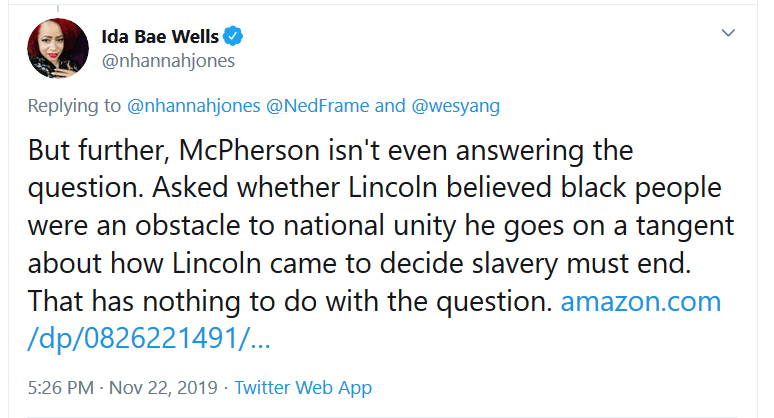
On November 22, 2019 she tweeted out a link to my co-authored 2011 book on the subject, Colonization After Emancipation: Lincoln and the Movement for Black Resettlement.
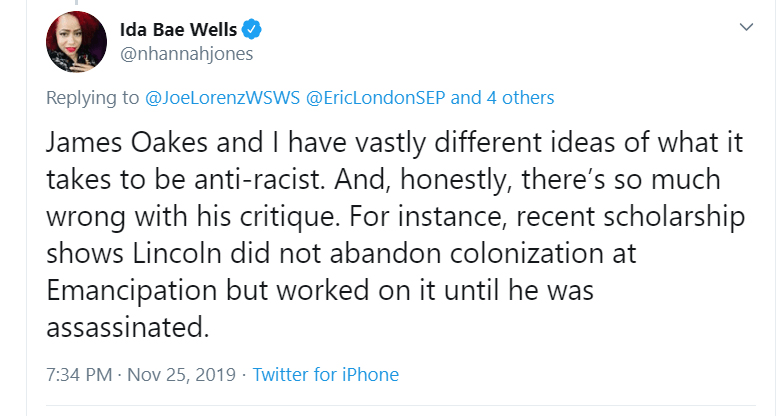
Three days later, Hannah-Jones wrote, “For instance, recent
scholarship shows Lincoln did not abandon colonization at Emancipation
but worked on it until he was assassinated.” In another comment, she
criticized historian James McPherson’s “dated scholarship on Lincoln
ending his efforts to colonize black people at Emancipation” (McPherson
is one of the main proponents of the above-mentioned “lullaby” thesis).
Quite the contrary, Hannah-Jones continued, “recent scholarship shows
[Lincoln] continued these efforts until his death.”
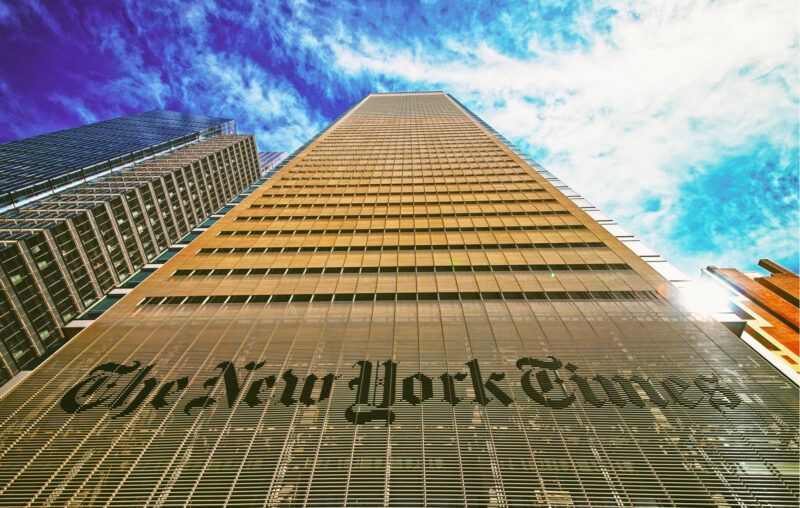
In both cases, the “recent scholarship” that she referred to was my own work, which I summarized in a series of articles in 2012 and 2013 for Hannah-Jones’s own employer, the New York Times.
There were certain interpretive differences between my work and the
1619 Project on this point – for example, Hannah-Jones understated the
extent to which antislavery motives shaped Lincoln’s support for the
measure, which he saw as a pathway to wean the country away from the
brutal plantation system. But the historical evidence of Lincoln’s deep
connections to colonization was clear, and at least on that point the
1619 Project got it right.
That is, until Hannah-Jones realized that the historian she was
citing was also an outspoken critic of other aspects of the 1619
Project.
“What are the credentials, exactly of Phil Magness?” Hannah-Jones
fumed in another now-deleted comment after she realized that I had
offered a less-than-favorable assessment of her project’s other
historical claims, and particularly its error-riddled essay on the
economics of slavery by Matthew Desmond. Her fury intensified in January
2020 after Alex Lichtenstein published a lengthy defense of the 1619 Project against his historian critics, attempting to invoke his authority as the editor of the American Historical Review
to arbitrate the disputes over its claims about slavery in the
Revolutionary through Civil War eras. At the time I pointed out that
Lichtenstein – a 20th century historian – was not an expert
in the antebellum United States, and was thus not qualified to assume
the role of historical judge and jury on specialist claims about that
era. Hannah-Jones snapped back, “Lol. You aren’t a specialist in that
era either yet that didn’t stop you.”
Setting aside the fact that only a few weeks prior Hannah-Jones
herself had been explicitly touting my work on Lincoln’s colonization
projects to justify her own claims in the 1619 Project, I’ll simply note
that I’ve authored over two dozen scholarly works on slavery and the
Civil War era. This includes my aforementioned book, the chapter on colonization in the Essential Civil War Curriculum, as well as multiple peer-reviewed articles on slavery in the U.S. and broader Atlantic world.
Hannah-Jones, by contrast, has no known original scholarship to her
name of any kind on slavery or this period of American history.
At first, I chalked this bizarre exchange up to Hannah-Jones’s
increasingly unprofessional approach to defending the 1619 Project.
Instead of responding to substantive and factual critiques of her work,
Hannah-Jones began directing personal abuse and insults at her critics.
When James McPherson offered his own less-than-flattering take on
Hannah-Jones’s work in November 2019, she responded dismissively: “Who
considers him preeminent? I don’t.” McPherson is a Pulitzer
Prize-winning historian of the Civil War, and author of what is widely
considered the standard single-volume treatment of the subject, Battle Cry of Freedom.
In December 2019, McPherson joined distinguished scholars Gordon Wood,
Sean Wilentz, Victoria Bynum, and James Oakes in questioning
Hannah-Jones’s attempts to recast the American Revolution as a fight to
preserve slavery. Rather than answer them, she dismissed the group as a
whole by labeling them “white historians.”
Hannah-Jones saved her most brazenly abusive attacks though for
African-American critics of the 1619 Project, such as Columbia
University professor John McWhorter and journalist Coleman Hughes. When
McWhorter, Hughes, and other African-American scholars launched a
competitor 1776 Project in February 2020 through the Robert Woodson Center, Hannah-Jones lashed out on Twitter by posting photos of herself making derogatory gestures
at her black interlocutors. Although she later deleted the tweets at
the apparent request of her employer, Hannah-Jones made Hughes in
particular a focus of her continued verbal abuse. “That Ivy League
education certainly didn’t do you any favors,” she wrote in another
comment to Hughes in August 2020. “Next time screenshot me and don’t
quote text me because I’d rather not read your drivel. I tried to find
something to quote tweet in that profoundly mediocre 1776 Project essay
you wrote, but alas, nothing was worthy.”
It comes with little surprise, then, that my own experiences with
Hannah-Jones followed a similar course after she realized that I was the
author of the works on black colonization that she had previously been
citing. Rather than engage with the evidence surrounding the disputed
claims of her work, Hannah-Jones’s first impulse is to insult, attack,
and dismiss the critic as “unqualified” to evaluate her work. Only
historians that she cherry-picks to affirm her preconceived position,
such as the University of South Carolina’s Woody Holton, are permitted
under her credential-touting games.
Except in the case of Lincoln and colonization, Hannah-Jones even
went so far as to modify her previous historical claims in order to
avoid having to cite and credit a 1619 Project critic. As a result, I
have the unusual distinction of having fallen from Hannah-Jones’ grace
after she previously invoked my scholarship to support her work back in
2019. When an extended version of the 1619 Project came out in book form
in November 2021, Hannah-Jones had not only excised substantial
portions of her previous arguments about Lincoln – she cast about and
found a new source to justify her revised interpretation on Lincoln.
The 1619 Project book now states only that Lincoln supported
“colonization schemes as late as 1862,” and further implies that Lincoln
abandoned the program after he issued the Emancipation Proclamation on
January 1, 1863. Hannah-Jones’s new source for this revised claim
appeared in footnote 38 of her essay: a 2016 popular press book entitled
Stamped From the Beginning by Critical Race Theory activist Ibram X. Kendi.
Hannah-Jones’s new version of Lincoln’s colonization initiative is
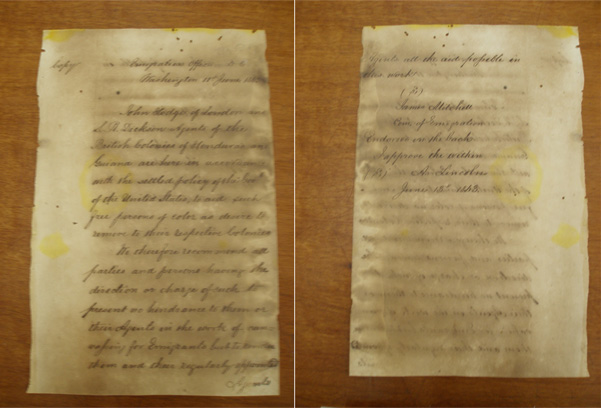
unambiguously wrong as a matter of history. One of the many discoveries I
made while researching this subject was a colonization agreement that
Lincoln signed on June 15, 1863 with the colonial government of British
Honduras, or modern-day Belize. This document resides in the National Archives of Belize where I discovered it in 2011, and was previously unknown to any historian.
But as a broader matter of principle, Hannah-Jones’s behavior
illustrates the absence of basic scholarly integrity from her approach
to writing history. Rather than following the evidence where it leads,
Hannah-Jones picks and chooses bits and pieces of her arguments from a
secondary literature based on whether it conforms to her preconceived
political narrative. She approaches citations as a tool by which she can
reward other scholars who affirm that narrative. And if a
previously-cited scholar runs afoul of Hannah-Jones, she is perfectly
willing to alter the “history” presented in the 1619 Project in ways
that excise the offending work and replace it with a completely
different narrative – provided that its author flatters Hannah-Jones’s
own personal politics and ambitions in the process.

Phillip W. Magness is Senior Research
Faculty and Interim Research and Education Director at the American
Institute for Economic Research. He holds a PhD and MPP from George
Mason University’s School of Public Policy, and a BA from the University
of St. Thomas (Houston).
Prior to joining AIER, Dr. Magness spent over a decade teaching
public policy, economics, and international trade at institutions
including American University, George Mason University, and Berry
College.
Magness’s work encompasses the economic history of the United States
and Atlantic world, with specializations in the economic dimensions of
slavery and racial discrimination, the history of taxation, and
measurements of economic inequality over time. He also maintains active
research interest in higher education policy and the history of economic
thought. In addition to his scholarship, Magness’s popular writings
have appeared in numerous venues including the Wall Street Journal, the
New York Times, Newsweek, Politico, Reason, National Review, and the
Chronicle of Higher Education.
Books by Phillip W. Magness
 By Mychal Massie, 3/21/23




 January 10, 2022 Mychal Massie

 By
By