Definition leads to clarity, clarity leads to understanding, understanding leads to good decision making.
By Rich Kozlovich
Prologue: In years gone by before I started Paradigms and Demographics I published a weekly e-newsletter called Green Notes that was sent out to people all over the nation who were involved in the pest control industry, and then others asked to be on the list, even some from England, Canada, and one from Germany.
In 2007 I decided to go with this blog instead. However, in most
of my old Green Notes newsletters I had a section called, “Quotes of the Week”. So, a number of years go as I was going through all of the quotes I couldn’t help thinking how insightful some of them were. Then.... all of a sudden ..... I had a SHAZAM moment. I thought why not create a readable article out of nothing but these quotes even if they have to be paraphrased?
Well, those "SHAZAM" moments can turn into a lot of darn work. I said then:
"I am going to have to watch those SHAZAM moments! I keep forgetting that I have a job that interferes with my life; if I had known how much work this was going to turn out to be I wouldn’t have undertaken this task in the first place".
But I'm now retired and I came across this once again, and I like it, and as I re-read this I thought it's more profound now that it was then. Besides, all the work has already been done, and it seems a shame to
waste it, so, once again, here it is, and I think it's an excellent history lesson to for our time. I originally published this in 2011.
For me, pragmatism is not enough, nor is that fashionable word consensus. To me consensus seems to be the process of abandoning all beliefs, principles, values and policies in search of something in which no one believes, but to which no one objects—the process of avoiding the very issues that have to be solved, merely because you cannot get agreement on the way ahead.
What great cause would have been fought and won under the banner "I stand for consensus"? Everyone carries a part of society on his shoulders; no one is relieved of his share of responsibility by others. And no one can find a safe way out for himself if society is sweeping towards destruction. Therefore everyone, in his own interests, must thrust himself vigorously into the intellectual battle. None can stand aside with unconcern; the interests of everyone hang on the result. Whether he chooses or not, every man is drawn into the great historical struggle, the decisive battle into which our epoch has plunged us.
Opposing this new authoritarian collectivist green offensive is "The Battle of Our Times”. For me, the laws of physics are not subject to change by virtue of a public consensus or declarations of highly placed politicians and government science bureaucrats. We're under attack by a lot of alarmists. We must learn and remember that the whole aim of practical politics is to keep the populace alarmed (and hence clamorous to be led to safety) by menacing it with an endless series of hobgoblins, all of them imaginary.
The study of history is a powerful antidote to contemporary arrogance. It is humbling to discover how many of our glib assumptions, which seem to us novel and plausible, have been tested before, not once but many times and in innumerable guises; and discovered to be, at great human cost, wholly false. I have said more than once that history never repeats itself: what happens is that people keep forgetting it. Show me someone who does not read books and I will show you someone lost in the fog of propaganda, manipulation, and the lies that pass for the news of the day. Books can tell you who you are, what you believe, and why. They always leave you changed in some fashion.
Fortunate is the person who can look back at his or her life and say, "I would do it all again, and in the same way.” Most of us mortals have made mistakes, sometimes too many to count. Some mistakes have to do with career; some have to do with money; some have to do with other poor decisions and poor choices – of course reconsidered with the benefit of hindsight.
But the ones that cause the most regret and the most pain have to do with our treatment of other people – especially those who have loved and trusted us. We finally discover the value and worth of what we once had and failed to appreciate. Let all who are here remember that we are on the stage of history, and that whatever our station may be, and whatever part we have to play, great or small, our conduct is liable to be scrutinized, not only by history, but by our own descendants.
The object in life is not to be on the side of the majority, but to escape finding oneself in the ranks of the insane. Losing liberty over a theoretical threat is the main concern here (no one has ever been killed by manmade global warming. because there is no way to distinguish manmade warming from natural).
We have all been lied to by a shameless confederation of scientists, their professional publications, their formal organizations, and politicians seeking to use this big scare to advance their careers and agendas. The problem for all of them is that the real science does not support green views and never did. Real scientists (branded as dissenters, skeptics, and deniers) held true to the principles of science, knowing that it would eventually end this vast and terrible hoax.
We keep hearing outrageous statements from the greenies claiming that modern living is killing us and they repeat things they know are false over and over again. The Bolsheviks discovered that truth does not matter so long as there is reiteration. The greenies have no difficulty whatever in countering a fact by a lie which, if repeated often enough and loudly enough, becomes accepted by the people. It ain’t what you don't know that gets you into trouble. It's the things you know for sure that just ain't so. Think about the things that have improved our lives the most over the past century – medical advances, the transportation revolution, huge increases in consumer goods, dramatic improvements in housing, the computer revolution.
The people who created these things – the doers – are not popular heroes. Society’s heroes are the activist talkers who complain about the doers. Almost no one knows who Norman Borlaug was, and yet he may have saved a billion lives from starvation and prevented malnutrition on a massive scale worldwide. Most everyone knows who Rachel Carson was and it can be reasonably claimed that she is responsible for the unnecessary deaths of tens of millions and the illness of billions since the ban on DDT.
In 1900, the world supported 56 billion human life years, notes climatologist John Christy: 1.6 billion people times a 35-year average life span. Today it supports429 billion life years: that's 6.5 billion (2011 figures) people times a 66-year average life span – and they live far better than anyone in history. Then ask yourself….do I really want to abandon what we have to live in squalor and dystopia? Because that is the alternative!
Greenies don't like tidal power, it might upset the fish you know! And coal, nuclear and hydroelectric are positively EVIL! Windmills are no good because they kill birds and bats and tidal power is also a no no. These are all things they supported and then they turned against, just like bio-fuels. There's just no such thing as a happy Greenie. What is the alternative? What will make the greenies happy? We all commit suicide.
Make no mistake: Living green is really about someone else micro-regulating you -- downsizing your dreams and plugging each one of us into a brand new social order for which we never bargained. Journalists have generally given up on seeking to understand science, but instead look for the next scientist who will say something strange so that they have a “story”.
Credibility has to be earned, and once it’s squandered may never be recovered, and with the internet we have discovered that the media squandered any credibility they had many years ago.
Let’s just take Global Warming scares promoted by the media. Newspapers should think about the damage they are doing to many persons, particularly young kids, by spreading the exaggerated views of a human impact on climate. As far as I can see the IPCC 'Global Temperature' is wrong. Temperature is fluctuating but it is still most places cooler than in the 1930s and 1940s. It will take about 800 years before the water level has increased by one meter".
Changes in solar irradiation have been the dominant causes of changes in climate. Volcanic eruptions can have caused some cooling events and greenhouse gases may have contributed to the increase in temperature over the last decades. However, the influence of solar variability has been the major forcing factor and will probably also remain so in the future. Every totalitarian regime needs its defining myth. With the Nazis, it was the “Aryan” fantasy of racial purity. With the USSR, it was the dictatorship of the proletariat. With secularized, semi-pagan Western societies in historic decline, it is global warming.
Environmentalists-even mainstream environmentalists, are less concerned about any crisis posed by global warming than they are eager to command human behavior and restrict economic activity. Their true plans and ambitions? Stop economic development and return mankind centuries back. They are interested in their businesses and their profits made with the help of politicians. Take away the grant money and they will go away.
Why are economic conditions chaotic? The reason is simple. Americans no longer possess the freedom to produce the goods and services required to maintain their former standard of living. Taxation – both direct and indirect through currency inflation – runaway government regulation and government-sponsored-and-encouraged litigation have reduced the productivity of Americans below that required to maintain their way of life. This tyranny – this economic slavery – has been produced entirely by the federal and state governments of the United States.
Science has traditionally been held in high esteem. That clearly is no longer the case. What has changed? The Holy Grail for most scientists is not truth but research grants. And the global warming scare has produced a huge downpour of money for research. Any mystery why so many scientists claim some belief in global warming? In science, refuting an accepted belief is celebrated as an advance in knowledge; in religion it is condemned as heresy, yet those who dared question the “consensus science” of the warmers were declared, skeptics and deniers such as the holocaust deniers. In short…they were called heretics.
What is the mission of the environmentalists? To spread their truth, no matter how many lies it takes. Green activists will always be outraged about something. What outrages them on any given day will depend on the emotions they are feeling on any given day. This is where I really have a problem with modern-day environmentalism; it confuses opinion with what we know to be true, and disguises what are really political agendas with environmental rhetoric. Those who talk about climate change are the same ones who occupy the tenth circle of Hell for in the eyes of many Americans: Politicians, the Media, Scientists, Educators, Hippies, and Showbiz types, making it a moral imperative to be against whatever it is they’re for.
The environmental movement I helped found has lost its objectivity, morality and humanity. The pain and suffering it is inflicting on families in developing countries must no longer be tolerated. Eco-Imperialism is the first book I’ve seen that tells the truth and lays it on the line. It’s a must-read for anyone who cares about people, progress and our planet.” – Patrick Moore, Greenpeace co-founder
It’s bad enough that politicians and scientists have been drinking the Kool-Aid, what is truly amazing is how many corporate types have been imbibing and buying into these anti-business Corporate Social Responsibility scenarios. When the corporate Neville Chamberlains ultimately forfeit their salaries, bonuses and their jobs thanks to their spineless leadership and the anti-capitalism cabal that now inhabits wine and cheese bars in the District of Columbia, I hope to be around to ask this simple question: “So, how’s that hope and change working out for you ?
Climate change is not a scientific problem that found political support; this is about eco-activists and politicians who found a scientific issue they feel can leverage them into power and control. The environment is a great way to advance a political agenda that favors central planning and an intrusive government. What better way to control someone’s property than to subordinate one’s private property rights to environmental concerns.
If the congressional, administration. and activist conspirators behind this massive deceit were in the private sector – peddling bogus drugs, rather than bogus science – they’d quickly become convicts. Instead of jail time, though, they’ll probably get bonus checks. It is time to clean out the climate cesspool, and bring integrity, transparency and accountability back to science, law and public policy.
There is one good thing about the lunatic "global warming" catechism now taught our youth in the mandatory government youth propaganda camps: When they are finally forced to admit that the globe has been cooling again, not warming, for the past decade, yet proceed to demand precisely the same remedies for "global cooling" (which they will cleverly dub "climate change") as they did for "global warming" -- that is to say higher electric bills, more government controls, taxes sufficient to cripple our industrial economy and generally lower our standard of living in keeping with the world socialist doctrine that America and particularly the "capitalist rich" must be "punished" and "made to sacrifice" in penitence for our former prosperity -- there is finally a decent chance they'll simply be laughed out of town .
Recently I was foolish enough to try to reason with an environmentalist. But it became obvious that he had his mind made up and didn't want to hear any evidence to the contrary. The Pope is more likely to have read Karl Marx than an environmentalist is to have read even a single book that criticized environmentalism. The EPA's muddled machinations should not come as a surprise, because the agency long has been a haven for scientifically insupportable policies perpetrated by anti-technology ideologues in career and appointed positions, pouring out a lava flow of scientifically dubious regulations.
It has a sordid history of incompetence, duplicity, and pandering to the most extreme factions of the environmental movement, all of which appears to be accelerating. The environmental movement has become so radical as to be an easily identified hazard to American life, and the EPA is not on my list of favorite agencies. There is no dealing with the greenies. They will never be satisfied and as for those who wish to define green and adopt it as a business model and make the green movement partners of some sort; let me help you. Green is a mixture of blue and yellow. That is the only factual definition of green that will stand the test of time. After that; any other definition is a corruption of a perfectly nice color.
Remember, when you dance with the Devil you won’t call the tune, you won’t choose the dance, you won’t lead, you can’t change partners and you may not be allowed to leave the dance floor.
Quotes by:Alan Caruba, Arthur Robinson, Bob Parks, Dan Miller Dr. Jay Lehr, Dr. Roy Spenser. Dr. Wibjorn Karlen, Gerard Jackson, H. L. Mencken, Henry Miller, Gilbert Ross, James A. Peden, James Lewis, Jon Ray, Larry, Ludwig von Mises, Larry Elder, Margaret Thatcher, Mark Twain, Nancy Brown, Nick Nichols, Patrick Moore, Paul Driessen, Paul Johnson, Peter Mullen, Rich Kozlovich, Roman Emperor Marcus Aurelius, Stephen Murgatroyd, Steve Milloy, Thomas Sowell, Vaclav Klaus, Vin Suprynowicz, Viv Forbes, Winston Churchill
It is a tiresome drone we hear it all the time—the consensus of world scientists agree, we are causing a climate emergency and we must do everything possible to stop it! But it is a stupid statement that means nothing. Most scientists are not expert in the causes of climate change—people like biologists, particle physicists, material scientists, you name it—so most of their opinions don’t really matter.
And even if there were convincing evidence that the vast majority of scientists who do research the causes of climate change thought that there is a man-made climate emergency (there isn’t), they are not really in a position to recommend how society should respond to such an issue. That would be a problem to be addressed by a range of experts in such fields as economics, health sciences, civil and energy engineering, emergency management, demographics, public policy development and perhaps even social
psychology and political science.
The 50 to 1 project explored the costs of stopping climate change versus adapting to it, as and if it's required. They concluded that it's 50 times more expensive to try to STOP climate change than it is to simply ADAPT to it (as and if required). Climatedepot.com executive Director Marc Morano sums up the situation:
“Would
you buy an insurance policy on your home that cost more than the house is worth
and would pay out nothing if your house burned down. That’s the snake oil
they’re selling us.”
OK, so are there at least surveys that show
that there is a consensus of scientists who study the causes of climate change who
support the notion that we are causing a climate emergency? If there is, it could
provide a foundation on which other experts could recommend how to respond.
NASA have a special page dedicated to revealing the supposed
consensus about problematic
climate change. But, despite citing numerous scientific organizations and
surveys, it doesn’t really address the question. Here are some of the
organizational statements they cite.
Statement on Climate Change from 18
Scientific Associations:
"Observations
throughout the world make it clear that climate change is occurring, and
rigorous scientific research demonstrates that the greenhouse gases emitted by
human activities are the primary driver." (2009)
Well, of course climate change is
happening. The only constant about climate is change. It changes all the time.
If it didn’t, we would still be stuck in the last glacial period when the
Laurentide Ice Sheet covered most of Canada and reached as far south as
present-day Illinois, Ohio, and New York. Thank God there is climate change.
If it were true that “the greenhouse gases
emitted by human activities are the primary driver,” it still wouldn’t make any
difference since the primary driver of a small change, namely a 1.1-degree
Celsius warming since 1880, is unimportant from a policy perspective.
American Association for the Advancement of
Science (AAAS):
"Based
on well-established evidence, about 97% of climate scientists have concluded
that human-caused climate change is happening." (2014)
Well, duh, of course it is happening.
Witness the urban heat island effect where it is warmer in cities than in the
countryside. But, unless “human-caused climate change” is a serious problem,
there are no policy implications of the AAAS statement.
American Chemical Society:
"The
Earth’s climate is changing in response to increasing concentrations of
greenhouse gases (GHGs) and particulate matter in the atmosphere, largely as
the result of human activities." (2016-2019)”
Again, so what? (for the reasons discussed
above).
American Geophysical Union (AGU):
"Based
on extensive scientific evidence, it is extremely likely that human activities,
especially emissions of greenhouse gases, are the dominant cause of the
observed warming since the mid-20th century. There is no alterative
explanation supported by convincing evidence." (2019)
Even if that were true (it isn’t), warming
since the mid-20th century is very small, so again, there are no
policy implications of this statement.
American Medical Association: I won’t even quote them since medical
doctors have no expertise in climate change causes. Regardless, their assertion
is akin to the others above.
American Meteorological Society:
"Research
has found a human influence on the climate of the past several decades ... The
IPCC (2013), USGCRP (2017), and USGCRP (2018) indicate that it is extremely
likely that human influence has been the dominant cause of the observed warming
since the mid-twentieth century." (2019)”
Again, so what?
American Physical Society:
"Earth's
changing climate is a critical issue and poses the risk of significant
environmental, social and economic disruptions around the globe. While natural
sources of climate variability are significant, multiple lines of evidence
indicate that human influences have had an increasingly dominant effect on
global climate warming observed since the mid-twentieth century." (2015)
That is a little better in that at least they
are speaking about problematic climate change, but the statement is really self
evident. Of course, “changing climate is a critical issue and poses the risk of
significant environmental, social and economic disruptions.” That has always
been the case—witness how the Viking settlements in Greenland were wiped out by
the return of cold conditions in the 14th century. Or the Ancestral
Puebloans who were forced to abandon their settlements when the American
Southwest faced a series of droughts between 1275 and 1300 CE.
The list of societies that failed because
they didn’t adapt successfully to climate change is extensive: The Akkadian
Empire of 4,200 years ago collapsed due to a prolonged drought which led to
widespread famine. The Mayan Civilization’s cities declined around 900 CE when
they faced severe droughts. The Khmer Empire in Southeast Asia also declined
when they suffered from unpredictable monsoons and prolonged droughts between
the 13th and 15th centuries.
The message of history is simple “adapt to
climate change or die!”
And the messages NASA boosts from the
Geological Society of America, the Joint Statement of International Academies,
the U.S. National Academy of Sciences, the UN Intergovernmental Panel on
Climate Change and the U.S. Global Change Research Program are all essentially
the same: human activities are the main cause of recent climate change. While
many scientists who research the causes of climate change disagree (which will
be the subject of part 2 in this series), so what?
In the final analysis, the reliance on
consensus to determine what is real in science is simply a logical fallacy
anyways. A show of hands, even from experts in the field, does not decide the
validity of scientific hypotheses.
The award-winning American author and filmmaker Dr. Michael
Crichton put it well in his January 17, 2003 lecture presented at the California Institute of
Technology:
“I
regard consensus science as an extremely pernicious development that ought to
be stopped cold in its tracks. Historically, the claim of consensus has been
the first refuge of scoundrels; it is a way to avoid debate by claiming that
the matter is already settled.
“Let’s
be clear: the work of science has nothing whatever to do with consensus.
Consensus is the business of politics. Science, on the contrary, requires only
one investigator who happens to be right, which means that he or she has
results that are verifiable by reference to the real world… The greatest
scientists in history are great precisely because they broke with the
consensus.
“If it’s consensus, it isn’t science. If it’s science, it isn’t consensus. Period.”
Dr. Christopher Essex, Emeritus Professor
of Mathematics and Emeritus Professor of Physics at the University of Western
Ontario in London, Ontario sums
up how we should
approach climate change:
“Stop
being afraid. I think that is the single most important thing. Stop being
afraid and start thinking.”
If polar bears are in such grave danger
due to man-made, or any other kind of, climate change, then why are there five
times as many bears now as there were in the mid-20th century? And
why didn’t the bears go extinct during the Holocene Optimum 8,000 - 5,000 years
ago when studies have indicated that summer temperatures in parts of the Arctic
were 2–3°C warmer than now?
Climate activists clearly regard a thinking
and questioning public a Pandora’s Box they must keep the lid firmly on. Which
is precisely why we must not be intimidated by spurious claims of consensus. Think
for ourselves and rip the lid off the box by asking the questions that reveal
the climate change scare for what it really is—an unscientific hoax that is
impoverishing the world for no benefit.
The climate change movement has managed to closely associate themselves with the left of the
political spectrum, producing a huge boost for their campaigns. After all, the majority of mainstream media are left of center and so this results in climate alarmists having a massive unpaid communications arm supporting their crusade.
But most “progressives” fail to realize that following climate catastrophists’ agenda results in outcomes that violate causes leftists hold dear, or at least want us to believe they hold dear. This would include support for social justice and environmental protection, issues I dealt with in parts one and two of this three-part series (“To Win the Climate Debate, We Must Use The Same Tools That Were Used To Defeat Science and Common Sense,” Jan 14 and “Catch the left violating their own “book of rules” in the climate debate,” Jan 19). And, by pointing this out to them in front of public forums, we are employing Saul Alinsky’s rule #4 from “Rules for Radicals – A Practical Primer for Realistic Radicals,” which is as follows:
“Make opponents live up to their own book of rules. You can kill them with this because no one can possibly obey all of their own rules.”
Two other ideas the left have historically championed and would be loath to admit they no longer support are:
Rejection of absolutism (truth) and authority (consensus)
Tolerance of alternative lifestyles & opinions
Demonstrating, very publicly, that following the climate alarmist agenda works against both of these ideals would also be an effective application of Alinsky’s rule #4. It will also help sway well-intentioned leftists, at least those who are not also climate change fanatics, to distance themselves from the climate scare.
Historically, liberals have tended to reject absolute authority and often ridiculed conservatives for being inflexible about morals, politics and even science. For example, Albert Einstein’s theory of relativity was supported by the German left, while those on the right opposed it, believing it threatened their cultural worldview (which, ultimately, it did). In fact, the assertion that science discovers truths about nature, not merely opinions based on empirical evidence that is always subject to interpretation, led to the ‘science wars’ of the late 20th century. In that conflict the intellectual left were the skeptics of the idea that we could have absolute knowledge in science. To learn more about this, watch the superb course “Science Wars: What Scientists Know and How They Know It” by Dr. Steven L. Goldman, the Andrew W. Mellon Distinguished Professor in the Humanities at Lehigh University in Chicago.
But this expected approach—relativism and skepticism from liberals and absolutism from conservatives—has been turned upside down in the climate debate. While right-wingers call for open debate about the causes of climate change, the left generally consider such discussion intolerable and behave as if we know the future of climate decades in advance, a position that is indefensible, scientifically and philosophically.
So, climate campaigners try to shut down debate about the causes of climate change, regarding it as a Pandora’s Box they desperately want to keep firmly shut. Why else would they steadfastly refuse invitations from climate realist scientists to engage in public debates? If the public regularly heard about the vast uncertainty in climate change science, arguably the most complex science ever tackled, their patience for the $1.27 trillion USD devoted in 2022/2023 to climate finance would quickly evaporate. So, instead, most of the left ignore the thousands of well-qualified experts who do not support the scare (for example, see World Climate Declaration There is no climate emergency) and enthusiastically support the confident, but nonsensical, climate change forecasts of people like United Nations Secretary General António Guterres and former vice-president Al Gore with his “Inconvenient Truth.” We must regularly call them on this, pointing out that it violates one of the left’s fundamental axioms.
So, we need to bring up forcefully in public sessions, the fact that unquestioning acceptance of ‘truth’ in science—in the sense of fulfilling Plato’s definition that truth is universal, necessary and certain, characteristics impossible in science—has impeded human progress throughout history. For example, when the Greco-Egyptian writer Claudius Ptolemy proposed his Earth-centered system, he did not say it was physical astronomy, a true description of how the universe actually worked. He promoted it as mathematical astronomy, a model that worked well for astronomical observations, astrology and creating calendars.
It was the ultra-conservative Catholic Church that, relying on a literal interpretation of the Bible, specifically Joshua 10:12-14, promoted the Ptolemaic system as truth to be questioned at one’s peril. Here is that Biblical passage:
“Then Joshua spoke to the Lord in the day when the Lord delivered up the Amorites before the children of Israel, and he said in the sight of Israel: Sun, stand still over Gibeon; and Moon, in the Valley of Aijalon. So the sun stood still, and the moon stopped, till the people had revenge upon their enemies. Is this not written in the book of Jasher? So the sun stood still in the midst of heaven, and did not hastened to go down for about a whole day. And there has been no day like that, before it or after it, that the Lord heeded a voice of a man; for the Lord fought for Israel.”
It is important to understand that Joshua’s army had marched all night the 20 miles from Gilgal to Gibeon to do battle with their enemies, the five strong kings who had pooled their resources to fight the Israelites. Joshua’s army had prevailed in the battle and his enemies were in retreat. But Joshua did not want them to be able to get back to their fortified cities to regroup. More daylight was needed for Joshua’s troops to finish them off. To prevent their return, he asked God to lengthen the day (see painting below).
There are many interesting interpretations of this Biblical passage, some of which can be read here, but, it was clear that the Church wanted the public to believe that it was the Sun that moved, not the Earth about the Sun. According to many writers, this was why Nicolaus Copernicus, a Canon in the Church, waited until he was on his death bed before he allowed his revolutionary book showing the Sun to be the centre of the universe to be published, even though the text was completed 30 years earlier. To read more about this, including an alternative theory about why the book was so delayed, see here.
This is also why Galileo ran into so much trouble when he claimed that the Church was wrong and that Copernicanism was the truth, a position that Galileo could not really know with certainty either (to be fair, it should be noted that the Church was already dealing with the unrest of the Protestant Reformation and the Thirty Years' War, so maintaining doctrinal control was crucial for them. Galileo's opposition to the Church's geocentric teachings was viewed as a threat to their authority and theological doctrines, an understandable position, given the times).
Similarly, the assumed truth of Isaac Newton’s laws of motion and law of universal gravitation eventually acted to slow the advancement of science until Einstein showed them to be incomplete. We need to remind leftists, at least those who are not climate extremists, that when authorities preach truth about science, progress stops. They should welcome, not condemn, questioning of the status quo. Science advances through fearless investigation, not frightened acquiescence to fashionable thinking, let alone the smearing of intellectual opponents as “deniers.”
I did this a few years ago in a Government of Ontario public meeting ostensibly set up to identify obstacles to progress on “climate action.” After several members of the public were roundly booed and harassed for voicing doubt about the science being relied on by the government, I went to the microphone and said:
“We have just seen a demonstration of what I think is the greatest obstacle to progress on this file—it is the intolerance of alternative points of view about this highly complex science. We should welcome and discuss skeptical inquiries, not try to silence them!”
The reaction? Dead silence. You could hear a pin drop. The government representative had nothing to say and the audience recognized that the activists had violated what is supposed to be a fundamental tenant of progressivism, namely keeping an open mind to different perspectives.
And, of course, the reliance on consensus to determine what is truth in science is simply a “bandwagon logical fallacy” when we base the validity of our argument on how many people believe it. A show of hands does not decide the validity of scientific hypotheses. When Albert Einstein was told about a book titled Hundert Autoren gegen Einstein (A Hundred Authors Against Einstein), published in 1931, he replied, “Why 100? If I were wrong, one would have been enough.”
The award-winning American author and filmmaker Dr. Michael Crichton also put it well in his January 17, 2003 lecture, “Aliens Cause Global Warming,” presented at California Institute of Technology:
“I regard consensus science as an extremely pernicious development that ought to be stopped cold in its tracks. Historically, the claim of consensus has been the first refuge of scoundrels; it is a way to avoid debate by claiming that the matter is already settled."
“Whenever you hear the consensus of scientists agrees on something or other, reach for your wallet, because you’re being had. Let’s be clear: the work of science has nothing whatever to do with consensus. Consensus is the business of politics. Science, on the contrary, requires only one investigator who happens to be right, which means that he or she has results that are verifiable by reference to the real world."
“In science consensus is irrelevant. What is relevant is reproducible results. The greatest scientists in history are great precisely because they broke with the consensus.
“There is no such thing as consensus science. If it’s consensus, it isn’t science. If it’s science, it isn’t consensus. Period.”
The left took over many of our institutions by effectively applying Saul Alinsky’s rules. It’s about time conservatives read his
Rules for Radicals – A Practical Primer for
Realistic Radicals", available for free on the web, and then got out and raised Cain at public events. Our children will never forgive us if we do not.
Today has been a good day for the incipient unraveling of a couple of major categories of the fake “consensus” orthodox science that have plagued us for the past few years.
One such category is transgenderism, where activists seek the provision of “gender affirming care” to any young person claiming to suffer from “gender dysphoria.” This morning the Supreme Court heard oral argument in a case called United States v. Skrmetti, where the Court is asked to rule that Tennessee’s ban on puberty blockers and hormone therapy for teens claiming to be “transgender” violates their constitutional rights. A second such category is the Coronavirus pandemic, including its origins and what policies were appropriate to address it. On that subject, also today, the House Select Subcommittee on the Coronavirus Pandemic issued its rather damning Report titled “The Lessons Learned and a Path Forward.”
The subjects of teenagers claiming to be “transgender,” and of the origins and appropriate policy responses to the Coronavirus pandemic, have been two areas where loud claques of activists, claiming the mantle of “science,” have worked overtime to impose their agendas and to silence critics, by force if necessary. Of course, they have sought the support of a friendly government; and, needless to say, the Biden Administration has been all in on the wrong side of both of these subjects. The Biden-led government has, among many other things, provided vast funding to the agencies promulgating the orthodox positions, issued regulations to hamstring any opposition, used its megaphone to characterize dissenters as crazy or “fringe,” organized a censorship complex to silence critics, and taken the side of the orthodoxy in various court cases.
But as luck would have it, none of this is working. The fundamental problem is that the “consensus” orthodox science lacks evidentiary support. It would be a safe bet in just about any case to wager that consensus orthodox science is wrong. Science that doesn’t take account of all available evidence and of reasonable criticisms has almost no chance of being right. Someday, perhaps those lessons will be learned in the biggest arena of all for consensus orthodox science, that of energy and “climate change.”
In 2023 Tennessee banned various gender treatments for minors, including puberty blockers and hormone therapy. A group of Tennessee teens challenged the ban (one of them is only 12 years old). The District Court initially granted a preliminary injunction for the plaintiffs, preventing enforcement of Tennessee’s ban pending trial on the merits; but the Sixth Circuit Court of Appeals reversed the preliminary injunction in a 2-1 ruling. Despite the pre-discovery state of the case, the Biden Administration sought Supreme Court review.
An op-ed in the Wall Sreet Journal on Monday by a guy named Steve Marshall outlines the government’s position and the problems with it. (Marshall is Attorney General of Alabama, and involved in a parallel case.) As Marshall outlines the situation, the government’s position is that the case is ripe for consideration pre-discovery because the relevant “facts” are already known. The linchpin of those “facts” is that the treatments in question are “medically necessary,” which we allegedly know because the relevant professional organization, the World Professional Association for Transgender Health (WPATH) has issued Standards of Care so stating.
They [the government’s lawyers] rely on the so-called Standards of Care from the World Professional Association for Transgender Health, or WPATH, to assure the justices that “overwhelming evidence establishes” the wisdom of medically “transitioning” minors diagnosed with “gender dysphoria”—stress caused by the feeling of being the wrong sex—through hormones and surgery.
But in the Alabama case, Marshall has had discovery, which has enabled him to put together a demonstration that the WPATH Standards were based on the intentional ignoring of adverse evidence. The WPATH advocates ignored adverse evidence in order to engineer their Standards to be a more effective litigation weapon for their position. Excerpt:
One way to make the guidelines a more effective litigation weapon was by not looking for evidence. Some authors of the WPATH standards reported that they avoided conducting systematic evidence reviews of the safety and efficacy of transition treatments because of “concerns, echoed by the social justice lawyers we spoke with,” that “evidence-based review reveals little or no evidence and puts us in an untenable position in terms of affecting policy or winning lawsuits.” In other words, to get courts to defer to “evidence-based” guidelines, WPATH obscured the lack of evidence supporting them.
As time passes, the evidence is accumulating of the harmful and permanent effects of what is called “gender affirming care” on the minors on which it is practiced. Because of the procedural status of the case, only a limited amount of such evidence is getting presented to the Supreme Court. But see, for example, this amicus brief from something called Partners for Ethical Care, which collects some evidence from Europe.
Reports from today’s argument indicate that the Supreme Court is likely to affirm and send the case back to the trial court for further proceedings. In that forum, there is likely to be considerable discovery about the true state of the evidence.
Coronavirus origins and responses
The House Select Committee Report is very lengthy, and has no useful introduction or executive summary. However, it is chock full of information eviscerating the fake consensus science that has been the hallmark of the pandemic and response since the outset. A few key examples follow:
Origin of the virus:
(From page 1) Four years after the onset of the worst pandemic in 100 years, the weight of the evidence increasingly supports the lab leak hypothesis. Since the Select Subcommittee commenced its work in February 2023, more and more senior intelligence officials, politicians, science editors, and scientists increasingly have endorsed the hypothesis that COVID-191 emerged as the result of a laboratory or research related accident.
And a particularly critical piece of evidence:
Mr. Wade astutely noted that “SARS2 possesses a furin cleavage site, found in none of the other 871 known members of its viral family, so it cannot have gained such a site through the ordinary evolutionary swaps of genetic material within a family.”
Six foot social distancing rule — there was a complete lack of evidence to support it:
(From page 198-99) FINDING: There Was No Quantitative Scientific Support for Six Feet of Social Distancing. Six feet of social distancing was a phrase and rule known by every single American during the pandemic. Amazingly, social distancing guidance was not revised until August 2022. Even though it was CDC guidance and not a mandate, it was forcefully implemented by state and local governments and caused lots of strife amongst Americans.766 Social distancing requirements were largely responsible for closing businesses, heightening a sense in loss of community, and were part of the reasoning schools could not reopen for so long.
Masking — again, there was never any scientific basis to support it:
(From page 204) Ultimately, a systematic review carried out by Cochrane Collaboration—one of the most highly regarded methodologies in evidence-based healthcare—found that the pooled randomized control trials they analyzed “did not show a clear reduction in respiratory viral infection with the use of medical/surgical masks” and that “[t]here were no clear differences between the use of medical/surgical masks compared with N95/P2 respirators in healthcare workers when used in routine care to reduce respiratory viral infection.”782 These results appear to directly contradict public health agencies’ and local governments’ support for broadly requiring masking throughout much of the pandemic.
There is lots and lots of useful information here on everything from government misinformation, to the vaccines, to natural immunity, and much more — essentially all of it unfavorable to the bureaucratic response and to consensus orthodox science. Will they ever learn? Unlikely. That’s why empowered bureaucrats are such a negative force.
The Camerimage festival this year was marred due to 'sexist' opinions of the festival's director Marek Żydowicz in an op-ed for Cinematography World
about female directors and cinematographers. Żydowicz received intense
backlash from many in the film industry and tried to extinguish the fire
with not just one but two apologies but the outraged mob thought his sexism was too severe for forgiveness. The British Society of Cinematographers replied to Żydowicz
that they were "disheartened and angered by your profoundly
misogynistic comments and aggressive tone, which we view as symptomatic
of a deep-rooted prejudice.".........The festival jury didn't withdraw but "committed to being part of any gender representation debate."
He goes on to list the prominent filmmakers who pulled out in outrage. Okay, so, what was said by festival's director Marek
Żydowicz that was so outrageous so many pulled out?
One of the most significant changes is the growing recognition of
female cinematographers and directors. This evolution is crucial as it
rectifies the obvious injustice present in societal development.
However, it also raises a question: Can the pursuit of change exclude
what is good? Can we sacrifice works and artists with outstanding
artistic achievements solely to make room for mediocre film production?”
That's it? That's all it took to set them off? Maybe instead of apologizing he should have offered them ice cream, cookies, and a safe room to cry out their little eyes.
If the best filmmakers are all men, then they'll demand at least, the very least, one woman must be on that list. But when you give in to insanity it never ends. How about this. There must be one black, or one homosexual woman, or one homosexual man, or one Asian, or one, Hispanic, or one atheist, or one communist, or...well... you get the idea. This kind of insanity is a metastasizing cancer infecting all the cells in the body until the body dies. And DEI is killing every institution it infects.
So, what does this mean in reality? It means someone who excelled must be sacrificed to accommodate these leftist fanatics, but it won't be the most prominent or most successful filmmakers, because that may impact future employment. So they have to choose struggling up and coming filmmakers in order to accommodate a less qualified woman. What if that up and coming filmmaker was the very best of them all? Well, too bad, he'll be sacrificed anyway.
What hypocrisy!
Are
we approaching the day when people will understand there can be no
apologizing for telling the truth? You can never apologize enough to satisfy them. Your punishment must be permanent as a a warning to all others to never deviate, even the slightest. Consensus to the the sacred tenets of leftist insanity is absolute. Or else!
Well, how's this? Truth isn't sexist, and it isn't
racist, it's just the truth, and prominent people who tell the truth
must have the courage to stand for up for what's true, regardless of the
personal consequences. Once that happens there's an automatic
separation of the sheep from the goats, and sides are taken, and battles enjoined, but truth and time are on the
same side, and as Ben Franklin said, "Truth will very patiently wait for
us".
I can already hear it...."Oh yeah, what's truth?" So, here's the irrefutable definition:
Truth
is the sublime convergence of history and reality. Everything we're
told has a historical context and foundation. Everything we're told
should bear some resemblance to what we see going on in reality. If
what's presented to us fails in either category, it's wrong. All that's
left to do is develop the intellectual response to explain why it's
wrong.
Standing against the tide telling the world, "You're
all wrong and I'm prepared to tell you why", isn't for the faint of heart. Diversity,
Equity, and Inclusion is irrational! It's leftist philosophy without
form, acceptance without accomplishment, and incompetence without
consequence, and it's long overdue for the cancer of DEI to be cured with with the only cure possible. An injection of MEI, Meritocracy, Excellence, and Intelligence. It just takes guts.
“Consensus: “The process of abandoning all
beliefs, principles, values, and policies in search of something in
which no one believes, but to which no one objects; the process of
avoiding the very issues that have to be solved, merely because you
cannot get agreement on the way ahead. What great cause would have been
fought and won under the banner: ‘I stand for consensus?” - Margaret Thatcher
This article is based thoughts of my own, and a series of quotes from others I've acquired over the years. But, not all of this is mine alone. So, with that understanding, enjoy!
In our modern world pragmatism and consensus are the in fashion promoting all sorts of clabber, especially about this pandemic fraud, and the mandates that went along with it. Let's understand, consensus isn't science, it's politics! To embrace consensus is a process of abandonment. One must abandon the values, principles beliefs you hold dear and embrace those things you disagree with but society refuses to fight against them. A condition that prevent real solutions.
We all bear a level of responsibility for maintaining societies good. That means wading in on issues to prevent disaster. People will always be people, such as acting in their own best interests, but unfortunately entirely too many people are complacent and acquiescent afraid to vigorously engage what's going on intellectually. Whether we choose to or not, every human being is impacted by the decisive battles going on in our lives.
In the movie Lord of the Rings Frodo says to Gandalf: I
wish it need not have happened in my time. Gandalf responds: “So
do I, and so do all who live to see such times.
But that is not for them to decide. All we have to decide is what
to do with the time that is given us.”
We're now facing an unending thrust toward authoritarian collectivism, and it's being led by the very government that's stood against that for almost 250 years has been the beacon of freedom for the world. The United States. We're facing an organized effort to keep Americans in a state of panic in order to get Americans to willingly acquiesce our rights and accede power to politicians and government bureaucrats who will then "lead" us to safety. This is an unending assault on our senses and intelligence, of scare mongering and hobgoblin imagery, with just enough reality to convince the misinformed and uninformed, but it's not reality.
Unfortunately the misinformed and the uninformed numbers are massive, at that point our goal "is not to be on the side of the majority, but to escape finding oneself in the ranks of the insane."
The study of history is a powerful antidote to contemporary arrogance.
It is humbling to discover how many of our glib assumptions, which seem
to us novel and plausible, have been tested before. Not just once but many
times and in innumerable guises; and discovered to be, at great human
cost, wholly false. I have said more than once that history never
repeats itself: what happens is that people keep forgetting it . Show me
someone who doesn't read books and I will show you someone lost in the
fog of propaganda, manipulation, and the lies that pass for the news of
the day. Books can tell you who you are, what you believe, and why.
They always leave you changed in some fashion.
Fortunate, or delusional, is the person who can look back at his or her life and say, "I
would do it all again, the same way.” Most of us mortals have made
mistakes, sometimes too many to count. Some mistakes have to do with
career. Some have to do with money. Some have to do with other poor
decisions and poor choices – reconsidered, of course, with the benefit
of hindsight. But the ones that cause the most regret and the most pain
have to do with the treatment of other people – especially those who
loved and trusted us.
We finally discover the value and worth of what we
once had and failed to appreciate. Let all living understand we're on the stage of history, and no matter whatever our station may be, or whatever part we play, great or small, our conduct will be scrutinized, not only by history, but by our friends, associates, acquaintances, and our own descendants .
The object in life is not to be on the side of the majority, but to
escape finding oneself in the ranks of the insane . Losing liberty over a
theoretical threat is the main concern here (no one has ever been
killed by manmade global warming, because there is no way to distinguish
manmade warming, if such a thing exists, from natural, which we know....absolutely know is cyclical.
We have all been lied to by a shameless
confederation of scientists, their professional publications, their
formal organizations, and politicians seeking to use this big scare of "climate change" to
advance their careers and agendas. The problem for all of them is that
the real science doesn't support anthropogenic global warming and never did. Real
scientists, branded dissenters, skeptics, and deniers, held true to the
principles of science, knowing that it would eventually end this vast
and terrible hoax. Time and truth are on the same side, but it takes guts, endurance, and fortitude to be right, and stand for right.
We keep hearing outrageous statements from the greenies claiming that
modern living is killing us and they repeat things they know are false
over and over again. The Bolsheviks discovered truth does not
matter so long as the lie is repeated often enough. The greenies understand that, and have no difficulty
whatsoever in countering a fact with lies repeated often enough
and loudly enough, until it becomes accepted by the people .
We live in a world where the 'doers" are the enemies, and the talkers who complain unendingly are the heroes.
Greenies don't like tidal power, it might upset the fish. Coal, nuclear and hydroelectric are positively evil, windmills kill bats and birds, and tidal power might upset the whales. There's just no such thing as a happy
Greenie . What is the alternative? What will make the greenies happy?
Make no mistake, living green is really about eliminating between four and five billion people.
Journalists have generally given up on seeking to understand science,
but instead look for the next scientist who will say something strange
so that they have a “story” . Credibility has to be earned, and once
it’s squandered may never be recovered , and with the internet we have
discovered that the media squandered any credibility they had many years
ago.
Let’s just take Global Warming scares promoted by the media. Newspapers
should think about the damage they are doing to many persons,
particularly young kids, by spreading the exaggerated views of a human
impact on climate. As far as I can see the IPCC 'Global Temperature' is
wrong. Temperature is fluctuating but it is still most places cooler
than in the 1930s and 1940s.
It will take about 800 years before the water level has increased by one
meter" Changes in solar irradiation have been the dominant causes of
changes in climate. Volcanic eruptions can have caused some cooling
events and greenhouse gases may have contributed to the increase in
temperature over the last decades. However, the influence of solar
variability has been the major forcing factor and will probably also
remain so in the future .
Every totalitarian regime needs its defining myth. With the Nazis, it
was the “Aryan” fantasy of racial purity. With the USSR, it was the
dictatorship of the proletariat. With secularized, semi-pagan Western
societies in historic decline, it is global warming .
Environmentalists-even mainstream environmentalists are less concerned
about any crisis posed by global warming than they are eager to command
human behavior and restrict economic activity. Their true plans and
ambitions: to stop economic development and return mankind centuries
back. They are interested in their businesses and their profits made
with the help of politicians” . Take away the grant money and they will
go away.
Why are economic conditions chaotic? The reason is simple. Americans no
longer possess the freedom to produce the goods and services required to
maintain their former standard of living. Taxation – both direct and
indirect through currency inflation – runaway government regulation and
government-sponsored-and-encouraged litigation have reduced the
productivity of Americans below that required to maintain their way of
life. This tyranny – this economic slavery – has been produced entirely
by the federal and state governments of the United States .
Science has traditionally been held in high esteem. That clearly is no
longer the case. What has changed? The Holy Grail for most scientists is
not truth but research grants. And the global warming scare has
produced a huge downpour of money for research. Any mystery why so many
scientists claim some belief in global warming? In science, refuting an
accepted belief is celebrated as an advance in knowledge; in religion it
is condemned as heresy , yet those who dared question the “consensus
science” of the warmers were declared, skeptics and deniers such as the
holocaust deniers. In short…they were called heretics.
What is the mission of the environmentalists? To spread the truth! No
matter how many lies it takes. Green activists will always be outraged
about something. What outrages them on any given day will depend on the
emotions they are feeling on any given day . This is where I really have
a problem with modern-day environmentalism; it confuses opinion with
what we know to be true, and disguises what are really political agendas
with environmental rhetoric . Those who talk about climate change are
the same ones who occupy the tenth circle of Hell for many Americans:
Politicians, the Media, Scientists, Educators, Hippies, and Showbiz
types. So it’s a moral imperative to be against what they’re for .
“The environmental movement I helped found has lost its objectivity,
morality and humanity. The pain and suffering it is inflicting on
families in developing countries must no longer be tolerated.
Eco-Imperialism is the first book I’ve seen that tells the truth and
lays it on the line. It’s a must-read for anyone who cares about people,
progress and our planet.” – Patrick Moore, Greenpeace co-founder
It’s bad enough that politicians and scientists have been drinking the
Kool-Aid, what is truly amazing is how many corporate types have been
imbibing and buying into these anti-business Corporate Social
Responsibility scenarios. When the corporate Neville Chamberlains
ultimately forfeit their salaries, bonuses and their jobs thanks to
their spineless leadership and the anti-capitalism cabal that now
inhabits wine and cheese bars in the District of Columbia, I hope to be
around to ask this simple question: “So, how'd all that hope and change
work out for you?"
Climate change is not a scientific problem that found political support;
this is about eco-activists and politicians who found a scientific
issue they feel can leverage them into power and control. The
environment is a great way to advance a political agenda that favors
central planning and an intrusive government. What better way to control
someone’s property than to subordinate one’s private property rights to
environmental concerns . If the congressional, administration and
activist conspirators behind this massive deceit were in the private
sector – peddling bogus drugs, rather than bogus science – they’d
quickly become convicts. Instead of jail time, though, they’ll probably
get bonus checks . It is time to clean out the climate cesspool, and
bring integrity, transparency and accountability back to science, law
and public policy .
There is one good thing about the lunatic "global warming" catechism now
taught our youth in the mandatory government youth propaganda camps :
When they are finally forced to admit that the globe has been cooling
again, not warming, for the past decade, yet proceed to demand precisely
the same remedies for "global cooling" (which they will cleverly dub
"climate change") as they did for "global warming" -- that is to say
higher electric bills, more government controls, taxes sufficient to
cripple our industrial economy and generally lower our standard of
living in keeping with the world socialist doctrine that America and
particularly the "capitalist rich" must be "punished" and "made to
sacrifice" in penitence for our former prosperity -- there is finally a
decent chance they'll simply be laughed out of town .
Thomas Sowell once said:
Recently I was foolish enough to try to reason with an environmentalist.
But it became obvious that he had his mind made up and didn't want to
hear any evidence to the contrary. The Pope is more likely to have read
Karl Marx than an environmentalist is to have read even a single book
that criticized environmentalism.
The EPA's muddled machinations should not come as a surprise, because
the agency long has been a haven for scientifically insupportable
policies perpetrated by anti-technology ideologues in career and
appointed positions. It has a sordid history of incompetence, duplicity,
and pandering to the most extreme factions of the environmental
movement, all of which appears to be accelerating . The environmental
movement has become so radical as to be an easily identified hazard to
American life, and the EPA is not on my list of favorite agencies .
There is no dealing with the greenies. They will never be satisfied and
as for those who wish to define green and adopt it as a business model
and make the green movement partners of some sort; let me help you!
Green is a mixture of blue and yellow. That is the only factual
definition of green that will stand the test of time. After that; any
other definition is a corruption of a perfectly nice color.
Remember,
when you dance with the Devil you won’t call the tune, you won’t choose
the dance, you won’t lead, you can’t change partners and you may not be
allowed to leave the dance.
The
reputation of academic publishing depends upon peer review – the
practice by which other experts vet submissions to scholarly journals. A
properly functioning peer review process flags potential problems
before they appear in print. An anonymous referee might notice
complications to a thesis that an author failed to account for,
prompting another round of revisions to improve the piece. If an author
misrepresents evidence for a claim, an anonymous referee might alert the
journal editor to the problem. Usually, the author will be asked to
address the issue in a revision. If the problem is severe or
intentional, the piece might be rejected outright.
But what happens when academic peer review breaks down? What if an
anonymous referee flags serious problems in an article such as
misrepresented evidence or basic errors of fact, but the journal’s
editor chooses to run the piece anyway? What happens when the same
problems are then noticed by other scholars after the article appears in
print? Surely a formal correction of some sort would be in order.
Factual corrections used to be a regular practice of most scholarly
journals, whether in the form of a short comment or a longer
point/counterpoint exchange over the disputed claim. In the
hyper-politicized state of academia today, a growing number of scholarly
venues no longer see a need to attend to basic standards of factual
accuracy in their pages. Factual errors – even egregious ones such as
misrepresented evidence and manipulated quotations – are now apparently
allowed to stand unchallenged, provided that the error aligns with a
politically fashionable viewpoint. This was my own experience after a
frustrating year and a half long effort to seek basic factual
corrections to an unambiguous error in an article in a journal published
by Cambridge University Press.
The saga started in 2019 when Wellesley College historian Quinn
Slobodian published a pair of articles in scholarly journals, containing
an explosive charge against Ludwig von Mises. Writing for the journal Cultural Politics,
Slobodian alleged that “race theory has an ambiguous place in Mises’s
work,” which in turn has allowed modern day racists to claim inspiration
from the free-market economist. Slobodian repeated and elaborated upon
the charge in an article for Contemporary European History(CEH),
stating that “libertarians who scour [Mises’s] writings to validate
their divergent positions on migration can claim fairly to find
confirmation of both sides of the argument.” One side of the story, he
continued, derived from Mises “the realist, who saw race as a
quasi-permanent category of global social organization. Despite his
liberal principles the Habsburg polyglot never became the radical
anti-racist.”
While Slobodian acknowledged in both articles that Mises adhered to a
broad liberal philosophy that clashed with the racist and imperialist
ideologies of his day, his argument held that Mises’s works contained a
“parenthetical opening to the possibility of race theory” – a reference
to pseudoscientific concepts that purport to link race and intelligence.
That posited “parenthetical opening,” in turn, allegedly establishes
Mises as a historical progenitor of later defenses of race theory and
imperialism.
In his subsequent writings,
Slobodian extends this argument into modern politics by crediting Mises
and so-called “neoliberals” in general for inspiring the
anti-immigration and race theory arguments that are found in the works
of economist Hans-Hermann Hoppe, which in turn attained popularity among
various Alt-Right and Trumpian political movements in the 2010s. By
implication, Mises and “neoliberalism” may be deemed blameworthy for
allegedly inspiring these causes.
A Thesis Built on Textual Misrepresentation
When I first encountered Slobodian’s thesis after reading drafts of his CEH article in late 2018, something seemed amiss. Mises had devoted substantial energy in his 1927 book Liberalism to attacking the then-popular field of eugenics. His later works such as 1944’s Omnipotent Government
contained a philosophical broadside against Nazism, singling out the
errors and evils of Nazi racial theory in particular. How, exactly, had
Slobodian discerned a parenthetical opening in Mises’s works for the
very concepts and positions that Mises condemned?
It did not take long to find an answer to that question. In both
articles, Slobodian displayed a habit of misrepresenting excerpted
passages from Mises’s works by either omitting directly pertinent
context from surrounding passages or, in some instances, directly
removing content from the quotes themselves to change their meaning. In
each case, the edits made Mises’s words appear sympathetic, or at least
open to, to a variety of racist and imperialist beliefs, when in fact he
was condemning them. I flagged several of these passages in my notes
when reading. In the months that followed their publication, other scholars began to notice the same patterns in Slobodian’s depictions of Mises as well as his use of quotations.
I’ll summarize a few of the more egregious examples as an illustration. In his CEH article, Slobodian writes:
“When necessary, the opening of
world markets had to be achieved through violence. Though ‘one can think
only with shudders and anger of the fearful mass murders that prepared
the basis for many of the colonial settlements flourishing today’,
[Mises] wrote in a book published the year after the First World War,
the net gain made it worthwhile; in the end, ‘all other pages of world history were also written in blood’.
Violence in the project of expanding the space of foreign investment,
wage labour and commercial exchange was not only acceptable, it was
necessary.”
Compare that same passage to Mises’s original text from his 1919 book Nation, State, and Economy. The quoted portion is underlined, but in Slobodian’s account the entire second half of the sentence is omitted:
“It is true that those colonies
were not taken with smooth talk, and one can think only with shudders
and anger of the fearful mass murders that prepared the basis for many
of the colonial settlements flourishing today. But all other pages of world history were also written in blood,
and nothing is more stupid than efforts to justify today’s imperialism,
with all of its brutalities, by reference to atrocities of generations
long since gone.”
In another example from Slobodian’s CEH article, he excerpts a descriptive passage from Mises’s 1944 book Omnipotent Government to once again ascribe him with a certain degree of toleration for racist beliefs:
“While [Mises]
distanced himself from people who opposed non-white immigration in
defence of ‘Western civilization,’ he conceded that:
“[W]e must
not close our eyes to the fact that such views meet with the consent of
the vast majority. It would be useless to deny that there exists a
repugnance to abandoning the geographical segregation of various races.
Even men who are fair in their appraisal of the qualities and cultural
achievements of the colored races and severely object to any
discrimination against those members of these races who are already
living in the midst of white populations, are opposed to a mass
immigration of colored people. There
are few white men who would not shudder at the picture of many millions
of black or yellow people living in their own countries.”
By the 1940s Mises partially legitimised closed borders for non-white migrants as a near permanent feature of the world order.”
Slobodian repeats this charge in the second article for Cultural Politics, citing both Mises and his own article in CEH:
“And yet, in his 1944 work, Mises
conceded the difficulties of racial integration, writing in a phrase,
often cited by latter-day Mises Institute Austrians, about immigration
barriers that “there are few
white men who would not shudder at the picture of many millions of black
or yellow people living in their own countries (1944: 107; Slobodian 2019)”
The problem with his claim may be clearly seen by turning to Mises’s
original passage. Once again, Slobodian deleted portions of the text
that disconfirmed his thesis. Rather than leaving an ambiguous opening
for racism, Mises was actually describing the racist position first and
then condemning it in no uncertain terms:
“We must not close our eyes to the
fact that such views meet with the consent of the vast majority. It
would be useless to deny that there exists a repugnance to abandoning
the geographical segregation of various races. Even men who are fair in
their appraisal of the qualities and cultural achievements of the
colored races and severely object to any discrimination against those
members of these races who are already living in the midst of white
populations are opposed to a mass immigration of colored people. There
are few white men who would not shudder at the picture of many millions
of black or yellow people living in their own countries. The
elaboration of a system making for harmonious coexistence and peaceful
economic and political coöperation among the various races is a task to
be accomplished by coming generations. But mankind will certainly fail
to solve this problem if it does not entirely discard etatism. Let us
not forget that the actual menace to our civilization does not originate
from a conflict between the white and colored races but from conflicts
among the various peoples of Europe and of European ancestry.”
Note that the omitted passage immediately after the underlined
section directly contradicts Slobodian’s claim that “Mises partially
legitimised closed borders for non-white migrants as a near permanent
feature of the world order.” Far from extending near permanent
legitimacy to the racist positions he described, Mises explicitly called
on the next generation to solve the problem of racism and pointed out
that, contrary to the race theorists’ recurring predictions of a
civilizational war between people of different skin colors, the present
war – World War II – originated from a white European state invading
other white European states.
As an added bonus, Slobodian’s claim that the passage was “often
cited by latter-day Mises Institute Austrians” to justify immigration
restrictions is itself without evidence. The passage appears nowhere on the Mises Institute website, save for a PDF of the original book.
Another egregious example of quote-editing may be found in Slobodian’s Cultural Politics
article, although it is more difficult to detect since it involves his
own English-language misrepresentations of an untranslated
German-language book by Mises from 1940. I present a textual comparison
of the passages side-by-side for consideration.
As may be seen from Slobodian’s depiction, he attempts to portray
Mises as making only a narrowly qualified objection to eugenic theory
based on its “misuse” by the Nazis. Such “misuse,” Slobodian claims, did
“not discredit it permanently” in Mises’s eyes. To reach this
conclusion, however, Slobodian engaged in substantial edits to Mises’s
text by rearranging the ordering of entire passages to make them fit his
thesis. Slobodian once again edited out text that disconfirmed his
claims, including a passage where Mises states that attempts to validate
eugenic theory had “failed because it is easy to prove that every
division of people into types of Verstehen thwarts the organization by
ethnicity. Never, however, has one dared to assign the types of
Verstehen to innate physical characteristics.”
(As a curious aside, Slobodian also appears to be unaware of Mises’s use of Verstehen, a Weberian sociological concept, and instead translates it literally as the German word for “understanding”)
In another example from the CEH article, Slobodian writes:
“Yet Mises proved incapable of
extending a similar cosmopolitan attitude to populations of colour. Even
as he argued emphatically that ‘there are today no pure stocks within
the class or race of white-skinned people’, he did so by pointing out
the difference with black populations. ‘Negroes and whites differ in
racial – i.e., bodily – features’, he wrote, ‘but it is impossible to
tell a Jewish German from a non-Jewish one by any racial
characteristic’. Mises’s rejection of anti-Semitism was premised on an
affirmation of white–black race difference.”
Slobodian’s strong insinuation here is that while Mises opposed white
discrimination against other white people, most notably seen in
anti-Semitism from the Nazi era, he drew a line of distinction between
this form of persecution and racism against black people. To make this
point, Slobodian presents several excerpted passages from Mises as if
they were sequential claims, even asserting that Mises’s objection to
anti-Semitism “was premised on” differentiating that form of
discrimination from white-against-black discrimination.
Turning to the original text of Mises’s Ominipotent Government,
however, we quickly find that Slobodian essentially manufactures this
claimed link by excerpting and combining quotations from distinct
passages.
The first quotation comes from a passage where Mises is dissecting
and rebutting the Nazi racial arguments that were used to justify the
persecution of Jewish people (including Mises himself, who was chased
out of Austria on account of being Jewish). Mises’s purpose in doing so
was to illustrate the falsehood of the Nazis’ own claim to come from
“pure” Aryan stock, whereas Jewish and other white Europeans were said
to be of “impure” stock
“For more than a hundred years
anthropologists have studied the bodily features of various races. The
undisputed outcome of these scientific investigations is that the
peoples of white skin, Europeans and non-European descendants of
emigrated European ancestors, represent a mixture of various bodily
characteristics. Men have tried to explain this fact as the result of
intermarriage between the members of pure primitive stocks. Whatever the
truth of this, it is certain that there are today no pure stocks within
the class or race of white-skinned people.
Further efforts have
been made to coordinate certain bodily features—racial
characteristics—with certain mental and moral characteristics. All these
endeavors have also failed.
Finally people have tried,
especially in Germany, to discover the physical characteristics of an
alleged Jewish or Semitic race as distinguished from the characteristics
of European non-Jews. These quests, too, have failed completely.”
Although Slobodian presents it as an adjacent sentence in his
excerpt, the second passage comes from several paragraphs later in
Mises’s text where he turns to the question of how Nazi racial ideology
differed from other forms of discrimination. One distinguishing factor
of the Nazis was their attempt to impose discrimination on the grounds
of establishing a genealogical link to Judaism.
“The Nazis have chosen a different
way. They say, it is true, that they want to discriminate not against
people professing the Jewish religion but against people belonging to
the Jewish race. Yet they define the members of the Jewish race as
people professing the Jewish religion or descended from people
professing the Jewish religion. The characteristic legal feature of the
Jewish race is, in the so-called racial legislation of Nuremberg, the
membership of the individual concerned or of his ancestors in the
religious community of Judaism.”
Mises then turns to the second excerpted passage as a point of
contrast for how discriminatory institutions operate. He uses the
example of the Jim Crow era in the United States, where discrimination
was based primarily on appearances and skin color:
“If Americans want to discriminate
against Negroes, they do not go to the archives in order to study the
racial affiliation of the people concerned; they search the individual’s
body for traces of Negro descent. Negroes and whites differ in
racial—i.e., bodily—features; but it is impossible to tell a Jewish
German from a non-Jewish one by any racial characteristic.”
Contrary to Slobodian’s insinuation, there is no evidence that Mises
condones discrimination against African-Americans. Quite the opposite –
he condemns discrimination itself. Neither does his objection to
anti-Semitism depend upon “an affirmation of white–black race
difference,” as Slobodian claims. Rather, he is simply analyzing how the
Nazi racial laws turned to characteristics other than skin color as a
means of affecting their persecution of Jewish people, focusing instead
upon tracing the genealogies of their victims. As Mises pointed out in
the very next paragraph though, “The Nazis have claimed that they were
fighting the decisive war between the Nordic master race and the human
underdogs,” yet the very existence of such a “master race” was itself a
myth that the Nazis selectively invoked to rationalize their persecution
of Jewish people and other disliked groups.
As with the German-language example in the Cultural Politics article, this depiction from the CEH
article relies on taking liberties with Mises’s quotes to rearrange
their order in a way that appears to support Slobodian’s preconceived
thesis.
These examples only represent some of the most egregious textual
edits in Slobodian’s articles. They are nonetheless sufficient to
illustrate a recurring pattern of misrepresentation, as opposed to
accidental sloppiness. In each case, Slobodian takes a passage from
Mises’s works and removes text so as to completely invert the meaning of
the passage. He then presents the edited text as a quasi-endorsement of
the very same things – racism, imperialism, eugenics – that Mises was
condemning in the unedited original.
An Attempted Correction
After first noticing some of the aforementioned textual
misrepresentations in Slobodian’s article, I attempted to bring them
directly to his attention and ask for a clarification or correction.
This occurred in late 2018 after Slobodian hinted at the Alt-Right
thesis on his Twitter feed. Whereas Slobodian identified Mises as a
source for Hoppe’s anti-immigration positions and with it the Alt-Right,
I suggested an alternative explanation for their intellectual origins.
Contrary to Slobodian’s insinuations, Hoppe did not appear to draw
any of his immigration claims out of Mises’s texts and certainly not the
passages that Slobodian misquoted. In fact, Hoppe identifies Mises as
an expositor of the “classical” economic argument for open immigration –
and then promptly rejects the same as an antiquated view from an
earlier time. As Hoppe writes in a 2001 text, “The problem with the
above argument is that it suffers from two interrelated shortcomings
which invalidate its unconditional pro-immigration conclusion and/or
which render the argument applicable only to a highly unrealistic-long
bygone-situation in human history.”
My alternative thesis, which I outlined to Slobodian in December
2018, called attention to Hoppe’s use of discursive philosophical
reasoning to build up a theory of property rights absolutism,
which he then used in turn to justify state action to exclude
immigrants from a country. As I noted at the time, the intellectual
genesis of Hoppe’s discursive approach did not come from Mises, but
rather out of Hoppe’s own academic training under the German
philosophers Juergen Habermas and Karl-Otto Apel. This realization may
seem strange at first as Habermas and Apel are generally associated with
Frankfurt School critical theory and the political far-left, whereas
Hoppe comes from the far right. Yet Hoppe wrote his dissertation
directly under Habermas, and at least in the earliest iterations of his
arguments, specifically claimed to be adapting their discursive analysis
in a rightward direction. No less a source than Murray Rothbard would
write in 1990 that “Hoppe is a libertarian extension” of “the
Habermas-Apel doctrine.”
Slobodian was naturally skeptical of my counter-thesis, and
maintained at the time that he had correctly represented Mises’s texts.
He nonetheless offered an interesting concession by inviting me to write
a rebuttal that explored the idea and laid out the evidence against his
soon-to-be-printed article in CEH.
Shortly thereafter I began working on a draft article that traced the
influence of Habermas and Apel on the Austrian economic debates of the
1980s, identifying their influence on Hoppe’s later work. In doing so, I
engaged Slobodian’s pair of articles where he proposed Mises as the
alternative origin. Naturally, this afforded an opportunity to explore
Slobodian’s misuse of Mises’s text, calling attention to several
examples of edited and misrepresented quotations in both articles. I
finished a working draft of this article in the fall of 2019 and
presented an early version of it at an economics conference. After incorporating feedback on the draft article, I submitted it to Contemporary European History for consideration on January 8, 2020.
The choice of this venue seemed obvious. Slobodian’s CEH article
had appeared in print a few months earlier, and my piece corrected
several clear textual misrepresentations in Slobodian’s work while also
presenting an alternative thesis for the events that he described. While
no journal is obliged to accept every submission it receives, debates
of this sort are the essence of scholarly exchange – particularly when
they involve a contested thesis that recently appeared in print in the
same journal.
What happened next took me by surprise.
Instead of considering my piece or responding to the revelations of
misrepresented Mises quotations in Slobodian’s article, the editor of CEH sent
me an extremely prejudicial desk rejection in a matter of days. My
article, she claimed, had “barely any primary source base or
methodology” even though it brought several previously unknown sources
to light, such as the aforementioned Rothbard material. Slobodian’s
article, by contrast, had no clear methodology and relied almost
entirely on quotations from secondary sources such as Mises’s published
books, which he then misrepresented. Furthermore, the editor objected
that I had uploaded an earlier working draft
of the paper for the aforementioned conference presentation – an
entirely common and accepted academic practice – and claimed that this
draft meant that my article had already been “published” in another
journal (by this same standard, almost any scholar who presented at an
online academic conference in 2020-21 due to Covid would be disqualified
from submitting those papers to scholarly journals on account of simply
sharing a draft for the other online participants to read).
Since my paper involved not only a competing thesis to a paper published in CEH a few months prior, but substantive factual corrections to the misrepresented quotations in that paper, I sent the editors of CEH the following inquiry on January 25, 2020:
Dear Editors,
Thank you for
your response below. While I am disappointed by your decision, I
understand that differences of focus and method carry limitations for a
venue such as yours.
Since my argument does contain specific factual corrections to claims made in a recently published article in Contemporary European History,
I am writing out of curiosity to ask what an appropriate corrective for
the readers of your venue (e.g. letter, comment, or note) might entail.
Sincerely,
Phil Magness
It was my hope at the time that, even if they declined to run a
lengthy response to Slobodian’s argument, the journal would at least
recognize the factual errors arising from his misrepresented Mises
quotations and permit a shorter correction or note acknowledging the
dispute over his claims.
I received a short reply from one of CEH’s editors, Victoria
Harris, on January 31, 2020, stating “Thanks for this. I sent your
first email on to the editor responsible for your piece.” I never
received another response, despite sending multiple follow-up inquiries
(After over a year of deflection, CEH’s editors eventually claimed that their unresponsiveness to email was caused by Covid-19).
The problems with Slobodian’s articles persisted as other scholars – relying on his account – began repeating and amplifying his allegations against Mises. Building upon the misrepresented quotations, one academic accused Mises of mounting a “racialized attack” on democracy. Another claimed
that Slobodian had shown that “many right-wing European founding
fathers” – her categorization of Mises and the Austrian school –
“basically had the same core beliefs as the Alt-Right supporters.”
Allegations of racism against Mises were clearly beginning to snowball,
including extending the charge beyond Slobodian’s original insinuations.
At the same time however, other scholars with backgrounds in the
history of economic thought began to notice the same problems with
Slobodian’s textual misrepresentations, including the passages I
documented above. David Gordon posted one such list
in early March 2021, comparing Slobodian’s article with Mises’s texts
and finding clear evidence of edits that altered the meaning of the
original passages. With this list of examples in hand and having never
received a response from CEH, I wrote the journal again on
March 15, 2021 to inquire about an appropriate correction to Slobodian’s
article. I received the following answer from the journal on March 24:
Dear Dr Magness,
Our
publication process involves a rigorous peer-review system of multiple
reviewers for each piece, a process which ensures the high-quality of
our research articles. Scholarship, of course, evolves, and
interpretations differ. This is why we host roundtables to discuss
different viewpoints on broad topics (the Spanish Civil War, most
recently).
However, in this specific case, we are confident about the academic rigour of Slobodian’s piece.
We hope you and yours are keeping well in these difficult times.
All Best,
Contemporary European History
The response not only failed to address any of the factual problems
with Slobodian’s misrepresented quotations, it also unintentionally
revealed a new and unforeseen twist to our now year-long exchange.
As I learned shortly thereafter, the problems I pointed out about the Mises quotation edits were not unknown to the editors of CEH
at the time I brought them to their attention. These issues had, in
fact, been flagged over a year prior during the original peer review of
Slobodian’s submission to the journal. Despite being aware of the
problematic quotations and claims, the editors of CEH decided
to accept Slobodian’s article as-is and published it without addressing
their own referee’s stated concerns over the same quotation issues.
In doing so, the editors of CEH overruled an explicit recommendation to reject Slobodian’s article over its misrepresentation of Mises’s texts.
Ignoring Peer Review
When Quinn Slobodian first submitted his article “Perfect Capitalism, Imperfect Humans” to Contemporary European History,
it contained a very different thesis than the final published version.
While his approach in the original draft exhibited a generally
adversarial stance toward Mises’s economics, echoing his 2018 book Globalists,
it did not charge Mises with harboring a qualified tolerance for racism
and imperialism. Instead, it advanced a comparatively temperate thesis:
Mises’s writings in the interwar era revealed his attempts to navigate
the tumultuous political realities of a post-Hapsburg central Europe as
they chafed with his philosophical commitments to open-borders
liberalism. Slobodian argued that Mises looked back to the prewar
Austro-Hungarian Empire as an institutional framework for a liberal
political order in matters of immigration. His interwar writings
maintained that normative liberal preference, but found it increasingly
intruded upon by post-World War I restrictions on movement and –
eventually – the rise of illiberal totalitarian regimes on the European
continent in the prelude to World War II.
During the first round of peer review – as I learned from an inquiry with CEH’s publisher
Cambridge University Press – Slobodian’s original article was sent to
four referees. Two referees recommended minor revisions to the piece, a
third recommended major revisions, and a fourth recommended rejection
(albeit on the grounds that the reviewer had mistaken it for a
repetition of Slobodian’s book Globalists, not realizing it was
the same author due to blind review). The journal’s editors accordingly
instructed Slobodian to revise-and-resubmit his article, attending to
the three referees who suggested revisions.
By all appearances, Slobodian then used the revise-and-resubmit
opportunity to make substantial changes to his article and thesis. Most
of the misrepresented Mises quotations were added to the article during
this time. Its argument was reworked to include the new contention that
Mises shifted to an ambiguous position on racism, imperialism, and
related matters during and after World War II. He worked this new thesis
into the article’s conclusion, even charging that Mises’s rejection of
Nazi Anti-semitism “was premised on an affirmation of white–black race
difference” as if to imply that the economist would not extend similar
objections to anti-black racism.
The editors of CEH then sent Slobodian’s substantially
revised article to two of the original four referees. At some point
during this second round, the basic mechanisms of peer review collapsed.
One of the referees recommended accepting the revised paper as-is. But
the other referee noticed the substantial additions to the article,
including its new and altered thesis. When investigating those
additions, the same referee observed the aforementioned pattern of
misrepresented quotations.
I quote directly from the Round #2 referee report, which flagged Slobodian’s changes and alerted the editors of CEH to a substantial problem with the revised submission:
“Having read the revised article
and then reread the original version, I am not sure what happened here.
It seems that the author has changed his mind on the fundamental meaning
of Mises’ work, which he now expresses in the introduction and
conclusion, while much of the body of the article is left intact. This
leads to an underdeveloped, but very serious accusation that Mises is a
racist, as well as a stretched attempt to make a link with contemporary
political developments. This makes the article substantially weaker than
it originally was, and makes one unsure about the central claim of the
article.”
At some point during the revise-and-resubmit process, Slobodian had
decided to take an initially impartial and scholarly argument and turn
it “openly political.” As the referee warned the editors, “[T]he article
is now weaker than in the original version, and based on dubious
historical scholarship: quoting out of context, partial reading of the
relevant material, and ascribing views to others that they did not
hold.”
The referee specifically called attention to an “out-of-context quote from Mises’ Omnipotent Government”
and alerted the editors to the surrounding passages, which stated
Mises’s objections to the racial dimensions of fascism. Anticipating my
own later criticisms of the published article, the referee also pointed
out that Slobodian was conflating Mises’s descriptions of his
adversaries’ positions (i.e. the Nazis) with his own personal stance,
and omitting adjacent paragraphs where Mises clearly laid out his own
opposite position. The report continues:
“In the book ‘Omnipotent
Government’ this passage comes after a paragraph that presents the views
of his opponents, with which he clearly disagrees, for he sees
political-economy causes where other’s see racial causes. But even from
this passage itself it is perfectly clear that he is making an argument
about political feasibility at that time (1944!), not a principled
argument. And Mises goes on to conclude that the wars of the past years
were not at all between races, but instead were conflicts within Europe
and Asia, caused by ‘etatism’. Yet the author feels confident enough to
conclude that Mises: “By the 1940s, Mises partially legitimized closed
borders for non-white migrants as a near permanent feature of the world
order.”. No, that is what others sought to do, and what Mises sought to
overcome, given the political reality of his time.”
In the concluding remarks, the referee “strongly suggest[ed] that the
article is not published in its revised form” and urged the author and
editors to attend to the problematic quotations. The referee then
recommended the rejection of the revised piece.
A Failure of Editorial Integrity
For reasons that are still not entirely clear, the editors of CEH
declined to act upon the Round #2 referee’s warnings. They proceeded to
accept the revised article as-is. They do not appear to have even asked
Slobodian to respond to the allegation that he misused Mises’s work.
To complicate matters even further, Slobodian himself was named as a new co-editor of CEH
in the Spring of 2020 – shortly after the start of my own exchanges
with the journal, asking them to investigate and permit a response to
the problematic quotations. Despite the obvious conflict of interest
that this situation now presented, the journal remained unresponsive and
ultimately refused to take any further action on the matter. Spanning
the course of a year of back and forth, every single one of my attempts
to bring specific instances of misrepresented passages to their
attention were either brushed aside with a generic form letter or
ignored entirely.
When I contacted Cambridge University Press’s publishing ethics
committee about this irregular process and outcome, I received little
more than a formulaic response. The committee declined to act, or to
even receive the evidence that I offered to provide them. After
unspecified consultation with the editors of CEH, they simply
stated that they “view these allegations as rooted in scholarly
disagreement rather than in problems of research integrity.” After I
registered my concerns about the lack of transparency in the process,
they simply responded that the editors of CEH “reached an
informed decision that the article had met the standards and criteria of
CEH and there was no need for further revision.” When pressed on the
specific matter of quotation-editing, the committee and/or editors
responded that the “quotations chosen do not seem to have been distorted
in the article, and the reading of Mises remains a matter of
interpretation.”
When reading that conclusion, it helps to once again revisit an
example that was brought to their attention. Here is what Mises wrote in
1944:
“But all other pages of world history were also written in blood,
and nothing is more stupid than efforts to justify today’s imperialism,
with all of its brutalities, by reference to atrocities of generations
long since gone.”
And here is how Slobodian depicted that same passage:
“[Mises] wrote in a book published the year after the First World War, the net gain made it worthwhile; in the end, ‘all other pages of world history were also written in blood’.
Violence in the project of expanding the space of foreign investment,
wage labour and commercial exchange was not only acceptable, it was
necessary.”
Apparently, deleting the second half of a sentence, then quoting the
first half to assign a viewpoint to Mises that is exactly opposite of
the one that he actually took is a simple “matter of interpretation” in
the eyes of this “scholarly” journal and its affiliated university
press.
But even their attempt to pass off the controversy as an interpretive dispute amounts to little more than a farce of a process.
As my own experience with the journal revealed, CEH’s
editors have made it abundantly clear over the last year that they are
only willing to promote one of those “interpretations” – the position
staked out in Slobodian’s article. Those same editors were entirely
uninterested in a differing “interpretation,” whether it was presented
in an original article arguing a different thesis or a shorter comment
focusing upon the problems with the way Slobodian manipulated the
aforementioned quotations. Nor did it matter that the differing
“interpretation” had a stronger factual basis in Mises’s original texts,
hence the objection to Slobodian’s quotation-editing. All efforts to
challenge the claims of Slobodian’s article through appropriate
scholarly channels were either refused or ignored by the journal’s editors. Indeed, CEH’s editors
even bypassed the clear recommendations of their own referee when the
same problems were independently flagged during the original peer review
process.
The result is a curious situation in which multiple documented
misrepresentations of Mises’s positions and even words are being
presented by CEH as factually true and accurate. The
misrepresentations show clear signs of a pattern, as opposed to careless
errors, and were brought to the attention of the journal’s editors by
independent parties at multiple points during and after the acceptance
of Slobodian’s article. Rather than afford even a fair hearing for the
complaints, the editors have adopted the position of shutting it out of
the journal entirely.
If these are the practices that Cambridge University Press is willing to tolerate from journals such as Contemporary European History, we may safely conclude that their“rigourous
peer-review system” is not so rigorous after all. Quite the opposite,
they appear to have chosen to protect the academic reputation of one of
their own editors at the expense of factual accuracy, editorial
transparency, and the integrity of the journal itself.
Phillip W. Magness is Senior Reseach
Faculty and Interim Research and Education Director at the American
Institute for Economic Research. He holds a PhD and MPP from George
Mason University’s School of Public Policy, and a BA from the University
of St. Thomas (Houston).
Prior to joining AIER, Dr. Magness spent over a decade teaching
public policy, economics, and international trade at institutions
including American University, George Mason University, and Berry
College.
Magness’s work encompasses the economic history of the United States
and Atlantic world, with specializations in the economic dimensions of
slavery and racial discrimination, the history of taxation, and
measurements of economic inequality over time. He also maintains active
research interest in higher education policy and the history of economic
thought. In addition to his scholarship, Magness’s popular writings
have appeared in numerous venues including the Wall Street Journal, the
New York Times, Newsweek, Politico, Reason, National Review, and the
Chronicle of Higher Education.


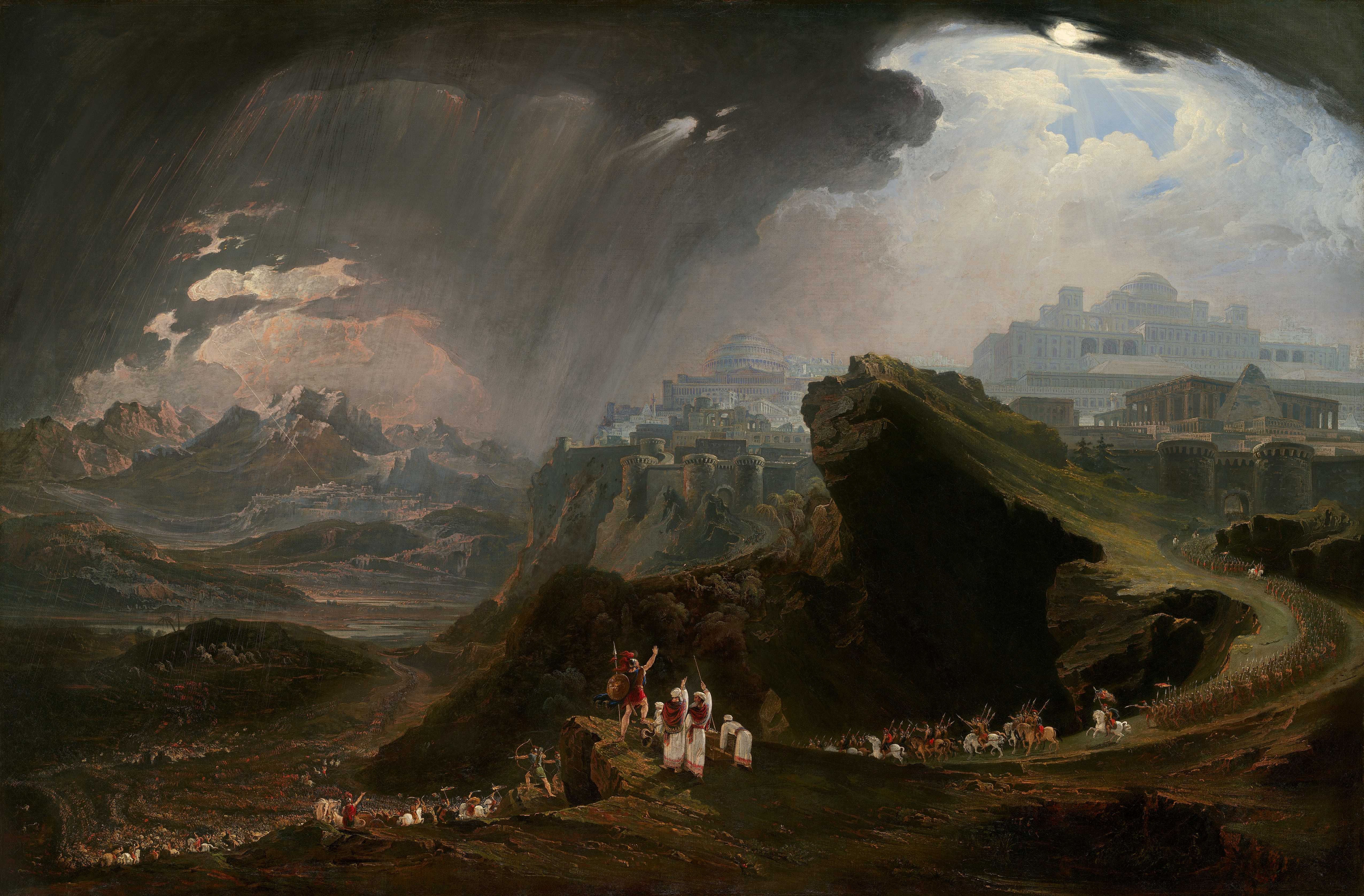


Are we approaching the day when people will understand there can be no apologizing for telling the truth? You can never apologize enough to satisfy them. Your punishment must be permanent as a a warning to all others to never deviate, even the slightest. Consensus to the the sacred tenets of leftist insanity is absolute. Or else!
Well, how's this? Truth isn't sexist, and it isn't racist, it's just the truth, and prominent people who tell the truth must have the courage to stand for up for what's true, regardless of the personal consequences. Once that happens there's an automatic separation of the sheep from the goats, and sides are taken, and battles enjoined, but truth and time are on the same side, and as Ben Franklin said, "Truth will very patiently wait for us".
I can already hear it...."Oh yeah, what's truth?" So, here's the irrefutable definition: