We are all epidemiologists now. But we have lost
an appreciation for the personal, intimate knowledge acquired from our
own experiences. Our decisions are increasingly guided by expert
recommendations and scientific data, with less reliance on local
conditions and individual experience.
We now know what a coronavirus is and how it spreads. We have all tracked changes in prevalence and mortality rates,
or, perhaps, we have become inured to them. And we know the length of a
coronavirus (measured in nanometers) and whether that paisley bandana
allows the virus to pass through. And then there’s the average age of
people who die from Covid-19, as well as the statistical likelihood of
death given a relevant comorbidity.
In our efforts to learn more about Covid-19 and limit its
transmission, however, we ignore local knowledge. This is the kind of
knowledge where we make plans to obtain a goal and continually,
marginally adjust those plans. Only individuals can access this
knowledge, e.g., whether you prefer apples to oranges, your normal
activities and behaviors, what your goals are for the day and your life
aspirations; who your close friends and family are, where you can buy a
cheaper lunch, which café has nicer chairs, etc.
Both scientific and local knowledge influence the choices we make
every day—even choices related to health and how we spread infectious
diseases.
Scientific and Local Knowledge Complement Each Other
Scientific and local knowledge are useful in many ways but
particularly because they can identify causal mechanisms that enable
individuals to improve some aspect of their life. Whether it is
scientific or local knowledge, individuals strive to acquire relevant
knowledge — where individuals define what is and what is not relevant —
to better pursue their plans.
Dan Klein
makes a related point that when individuals make decisions they
actively seek relevant information: “In small simple social settings
including the family, club, church, or shop, the decision maker is
usually the one most motivated to ensure that her decisions will have
the results intended, and consequently she is most motivated either to
know herself what course of action will best serve her intentions or to
search out and appoint an agent with such knowledge.” The discerning,
choosing individual is the key part here.
Imagine that we wanted to lessen anxiety and depression, and you
learned that drinking moderate amounts of alcohol might be an
appropriate scientific prescription.
With just that knowledge however, it is unclear how any one person will
subsequently act. Should we start subsidizing alcohol consumption? That
would probably lead to some unpalatable and unintended consequences.
As an individual, however, you might start logging more hours at your
local brewery if you really liked their new raspberry wheat beer.
Alternatively, beer might be harder to find in places with fewer bars,
so you might try to find substitutes. Of course, you might not even like
beer so you might try your hand at bourbon. The context of your
situation, your plans, and your knowledge influences what is
appropriate. For example, you will have a tougher time getting bourbon
if you live in a state that maintains a monopoly over the sale of
alcohol. For people who live under state-run alcohol monopolies, they
might resort to enlisting friends in other, more economically liberal
states to do some shopping.
Still, there is a complementarity between scientific and local
knowledge. The science about moderate alcohol consumption is of limited
use in some cases; at the same time, science informs a person’s decision
so they can pursue their goals as they see fit.
Joel Mokyr and Rebecca Stein (here and here) show a part of this logic in their work on the changing norms of hygiene and mortality rates during the latter part of the 19th
century. As the germ theory of disease developed, people began to
understand more and more about infectious diseases and germs and, more
importantly, how their own choices influenced health. How individuals
went about making use of that scientific knowledge depended on their own
circumstances. Many people, women in particular, began to clean more;
others improved the quality of baby food; others improved their diet.
All of these choices helped to improve private and public health
outcomes in the late 19th and early 20th centuries, but they were
choices informed by local and scientific knowledge.
Covid-19 and Knowledge
The complementarity between scientific and local knowledge even matters for our private and public responses to Covid-19.
Scientists, epidemiologists, and public health scholars often produce
important work identifying causal mechanisms regarding the spread of
infectious diseases, especially under predetermined conditions. That
scientific knowledge is necessarily of limited use, however, when
individuals alter those predetermined conditions and especially when
individuals make choices based on their local knowledge.
For example, suppose you live with someone who is immunocompromised.
In this situation it would make sense for you to skip the gym, limit
grocery visits, etc., because you recognize the risk contracting
Covid-19 would have on your roommate’s health. On the other hand, if you
are a healthy young person who lives alone, it would make less sense for you to drastically alter your lifestyle in order to avoid a virus.
That people have plans and make choices based on expected costs and
benefits as they perceive them are extremely undervalued notions, but
they are essential to understand why and how people respond to changing
circumstances and to changing prevalence and mortality rates. Allison Schrager and Jessica Hullman
recognize the importance of individual choices when they advocate for
improvements in how prevalence and mortality data are presented. To the
extent such data convey objective measures of risk, they should be intelligible measures of risk.
Furthermore, Charles Kenny
argues that people engage in various kinds of preventative behavior in
response to Covid-19, among other diseases. Such responses occur because
it is human nature to choose and to alter behavior in response to
incentives — even when prevalence and mortality rates change — not
necessarily because government officials say so. Importantly, how people
alter their behaviors in response to infectious diseases depends on
local knowledge.
Jenin Younes
also recognizes how local knowledge influences behavior:
“…epidemiologists are no better equipped to weigh the competing values
that inform how one chooses to live during the coronavirus era than
individuals are to make their own choices.” And so does Roger Koppl:
“The knowledge we need in normal times and crisis times alike is
distributed. It’s out there in thee and me and in all our habits
practices and experience. It is not a set of instructions and doctrines
coming from on high. It arises of its own from our many decentralized
interactions.”
Such approaches to knowledge ultimately suggest caution about what we imagine science alone can help us achieve.
Going Forward with Science and Local Knowledge
Will sweeping restaurant and school closures save lives? Are
country-wide mask mandates effective? Do large gatherings of people
cause super spreader events? The science and evidence is still developing (here, here, here).
Regarding super spreader events, for example, we can easily observe
these mass gatherings, imagine how diseases could spread, and then
empirically assess the magnitude of such events (here and here), but we should also imagine how people might alter their preventative behaviors given local knowledge.
The kind of information people acquire in their myriad interactions
with others is often undervalued as a means of preventative behavior. As
helpful as science is for understanding causal mechanisms — and it is —
it should not be the only source of knowledge that informs your
behavior, let alone policy.

David Waugh joined AIER in 2020 on
the editorial team and is a graduate of Hampden-Sydney College where he
received a BA in Economics.
While at Hampden-Sydney, he was a Senior Fellow with the Center for
the Study of Political Economy and worked in the Economics department as
a teaching assistant.
David previously held internships with the James G. Martin Center for Academic Renewal and Seven Cedars Financial.
Get notified of new articles from David Waugh and AIER.
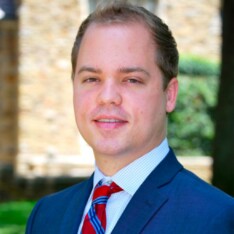
Byron
Carson is an Assistant Professor of Economics and Business at
Hampden-Sydney College, in Hampden-Sydney, Virginia. He teaches courses
on introductory economics, money and banking, development economics,
health economics, and urban economics.
Byron earned a Ph.D. in Economics in
2017 from George Mason University and a B.A. in Economics from Rhodes
College in 2011. His research interests include economic epidemiology,
public choice, and Austrian economics.
Get notified of new articles from Byron B. Carson, III and AIER.



 Print
Print