Search This Blog

De Omnibus Dubitandum - Lux Veritas

Showing posts with label Plastic. Show all posts

Monday, October 28, 2024

Exxon Knew! First Warming and Climate, Now Plastics

By Paul Driessen Oct 27, 2024

“Exxon Knew!” The battle cry has inflamed and inspired climate activists for decades. Since the 1970s, they allege, Exxon Knew that human-caused climate change is “real” – but lied about it, claimed there wasn’t a “crisis,” and kept marketing its “planet-killing” fuels and petrochemical feed stocks. 

Now activists say Exxon Knew for years that very little plastic waste is actually recycled. The oil giant is deceiving regulators and consumers with claims that all plastics are recyclable and its “advanced recycling” processes keep enormous amounts of plastics out of landfills. 

ExxonMobil “campaign of deception” demands a lawsuit, says California Attorney General Rob Bonta. “Exxon Knew” that 95% of plastics in recycling bins are incinerated, get tossed onto roadways, or end up in landfills and oceans. 

“Exxon knew” it was peddling lies when it promoted recycling as a “cure-all for plastic waste” – because eradicating all plastic use and disposal is impossible and many plastics can’t be recycled. 

This is Mr. Bonta’s latest attack on fossil fuels. He wants a jury trial, to help ensure big lawfare payouts. But he’s ignoring inconvenient realities and engaging in rampant deceptions of his own. 

Plastics are ubiquitous: from eyeglass frames and lenses, to television, computer and cell phone housings, wind turbine blades and nacelles, solar panel frames, medical equipment, devices and garments, car and airplane interiors, backpacks, skis, football helmets, shoes, grocery bags and infinitely more. Plastic packaging preserves and protects products that involve long, expensive, resource-intensive processes to grow or manufacture; it helps keep foods from spoiling or becoming bacteria-infested. 

Plastics are cheap to produce, can be molded into infinite shapes and sizes, are corrosion-resistant, and don’t break easily (imagine shampoo and body wash in glass bottles). They’re lighter than glass and even paper alternatives, meaning more can be packed on trucks and transported using less fuel. In many cases, there are no viable alternatives. 

Plastics are essential for our living standards, safety and modern world. 

But what happens when they break, wear out or get tossed? For years they were thrown out with other trash. But environmentalists, politicians and consumers increasingly demanded that cans, glass and other throwaways be recycled. For many of us, recycling became a habit. 

Recycling turns low-value plastic garbage into valuable materials: window frames, boards for siding decks and fences, pipes to replace copper tubing that thieves steal, toys and toothbrushes, plates and utensils, diapers and clothing, carpeting and lawn furniture, soccer fields, bottles, cabinets, and  more. 

Neither ExxonMobil nor any other company promoted recycling as a magic solution or cure-all. It’s more expensive than virgin plastic, especially when transportation and sorting costs are factored in. Smaller items can clog sorting screens. Colored plastics have fewer recycling options than clear or white ones. 

Most important, many types of plastics have little post-use demand or simply cannot be recycled. Others are integrated with electrical circuitry (motherboards and keyboards) or with paper or metal (laminates for food containers), making it impossible to separate and recycle them. 

Thermoplastics can be heated, melted and reshaped or re-extruded into new products. These are the familiar #1 (PET) soda and water bottles, #2 (HDPE) milk and detergent containers, many #4 (LDPE) grocery bags and squeezable bottles, and some #5 (PP) yogurt and butter containers. 

Thermoset plastics contain polymers that form irreversible chemical bonds that make strong products that cannot be remelted: vulcanized rubber for tires, Bakelite kitchenware, jewelry and circuit boards, epoxy resins, Duroplast car bodies and toilet seats, polyurethane cushions, insulation and windshields, et cetera. 

Styrofoam cups and egg cartons cannot be recycled without (rare) specialized equipment and processes. 

Moreover, even thermoplastics can be recycled only 2-3 times, before their polymer chains get shortened to the point where quality and durability become so low that the products are unusable. 

(Newspaper, magazines, copying paper and Kraft paper bags have the same degradation problem: 6-7 trips to the recycler, and the cellulose fibers are too shortened, damaged and degraded to be reused. Steel, aluminum and glass, by contrast, can generally be recycled endless times.) 

All these complexities explain why only a small fraction of plastics are recycled. ExxonMobil recycling 60,000,00-80,000,000 pounds of plastics per year may seem minuscule, compared to 73,000,000 tons of annual US plastic waste. However, it’s equivalent to 430-570 offshore wind turbine blades (350 feet long; 140,000 pounds apiece) that only end up in Grand-Canyonesque landfills. 

Plus, plastic wastes can also be converted into diesel, aviation and gasoline fuels, and even electricity. 

An excellent solution is to turn plastics and most other garbage into electricity for our increasingly power-hungry society – especially as AI and data centers proliferate, and politicians mandate that we convert our gas stoves, ovens, furnaces and water heaters to electric models. 

A municipal waste-to-energy (WTE) / resource recovery facility operated by Reworld/Covanta performs these wondrous conversions just a few miles from my home. Enormous quantities of normally landfilled, nonrecyclable home, business, industrial, government and agricultural waste are dumped into a receiving area, sorted for unacceptable materials (eg, rocks), mixed thoroughly and emptied into the combustion chamber, where everything is burned with natural gas at 2000 degrees F, until it’s totally combusted. 

Process heat is converted to steam, to drive turbines that generate 80 megawatts of electricity, enough for about 52,000 homes. Since 1990, the plant’s electricity has replaced the equivalent of some 2,000,000 barrels of crude oil each year. Dust and odor are contained within the facility; water from the wastes is recovered, treated and used as coolant; and air and water pollutants are kept well below EPA standards. 

Even plastic-and-metal e-wastes (computers, monitors, keyboards, printers, and AI and data center machines) and “clean, green” energy equipment like solar panels can be “recycled” this way. 

Enough iron, steel, aluminum, copper and other metals are recovered from the resultant ash to build 20,000 automobiles annually. The process also melts and recovers glass – and even recovers metals from e-wastes, light bulb bases, paper clips, staples, and metal bottoms from cardboard juice containers. 

By the time the entire process is over, only nontoxic ash is left – about 5% of the original bulk mass of trash – and it gets used in cement and other applications or sent to landfills. 

It reminds me of the old stockyard claim: The only part of the pig that isn’t used is the squeal. 

So I have a couple questions for Mr. Bonta. 

* Which plastics and vital plastic products do you intend to eradicate? What will doctors, pharmacists, optometrists, computer and cell phone users do without them? What will replace them? 

* Recognizing that California has closed most of its nuclear, coal and gas power plants; that its net-zero, all-electricity mandates will soon double the state’s electricity needs; and that the state already imports one third of its electricity from neighboring states – why aren’t you suing to fast-track WTE plants? 

It’s time to recognize that “progressive” policies, mandates and lawsuits have enormous costs that hammer consumers – while politicians feed citizens a steady diet of lies. 

Paul Driessen is senior policy analyst for the Committee For A Constructive Tomorrow (www.CFACT.org) and author of books and articles on energy, environment, climate and human rights issues.

Tuesday, November 30, 2021

If You Read It In The Mainstream Media, It's Wrong -- Plastics Edition


By now you must have noticed how many of the big news stories that have political significance to the left, and are hyped for months or years (or even decades) on end throughout the mainstream media, turn out to be false. Donald Trump colluded with the Russians to hack and steal the 2016 election. Kyle Rittenhouse is a white supremacist vigilante who went to Kenosha to make trouble. There is no such thing as Critical Race Theory taught in K-12 schools. “Climate change” is an existential crisis that can be easily solved at little cost by building wind turbines and solar panels. Saturated fat in your diet is bad for you. Feel free to add your own ten or a hundred examples to this list.

One that I had paid little attention to up to now was the narrative about the evils of plastics — that they cause terrible pollution problems, that they have accumulated in vast amounts in the oceans, that they kill sea creatures by the millions, that they accumulate forever and never degrade, and so forth. While I haven’t been paying attention, this narrative, like so many others, has swept to universal acceptance in progressive precincts, which of course includes my own New York City.

It was a couple of years ago, as this anti-plastics narrative gained traction, that plastic straws first began to disappear from New York City restaurants, generally replaced by paper straws that are much less pleasant to drink from. And the campaign against plastic convenience items has only accelerated. A ban on single-use plastic bags in grocery stores was enacted to take effect in March 2020. That ban got delayed by litigation, but the state prevailed, and enforcement has gradually kicked in over the intervening period. Today, if you go to a grocery store, the formerly standard plastic carry-home bags are gone. You will need to pay to get a paper grocery bag, or alternatively pay even more for a “reusable” bag made of some kind of textile. The disappearance of plastic straws in restaurants has been gradual, but according to this article in the Daily News, an actual ban took effect just a couple of weeks ago on November 1 of this year.

So clearly, there must be something really horrible about these plastic bags and straws, and probably everything else made of plastic. At this point it’s one of those things that everybody just knows.

I thought it was time to learn something about the issue, and therefore when the Competitive Enterprise Institute invited me to an online presentation today on the subject, I signed up. The main presenter was a guy named Chris DeArmitt. DeArmitt calls himself a “plastics materials scientist,” and he has made a detailed study of the relative environmental impacts of plastic versus other alternative materials for applications including bags and straws, as well as other things such as textiles and cars. DeArmitt also has a recent book by the title “The Plastics Paradox,” and a website called plasticsparadox.com.

And of course it turns out that plastic bags and straws (as well as many other items made of plastic for many different applications) have minimal environmental impacts, and most importantly, have far lower environmental impacts than any reasonably available alternatives for the applications in question. DeArmitt points out that there is a formal method of analysis of environmental impacts called “life cycle assessment,” or LCA, that takes account of all of the environmental impacts of use of a given material for a given application at all stages of the process, from extraction through disposal. And there are dozens upon dozens of environmental LCA studies of plastics versus other materials, among which there will be multiple studies for any application you can think of.

So consider the situation as to plastic bags. DeArmitt:

Lifecycle assessments (LCA) are the only internationally accepted method for comparing the environmental impact of materials and products. They are used by governments, companies and environmental groups, including GreenPeace and are independently audited. The LCA method takes into account all the energy, materials, water, emissions and so on associated with the manufacture and disposal of a product. No tool is perfect, but LCA is by far the best, most widely-accepted way to see what is really green.

DeArmitt found some 24 LCA studies considering the subject of environmental impacts of plastic bags versus alternatives. The results:

LCA analyses are done by government agencies in the US, Canada, UK, Australia and Denmark. They all agree that the single-use polyethylene bags we use today have much lower environmental impact than potential replacements such as bioplastics, paper, unbleached paper, cotton or organic cotton. . . . To replace plastic bags with paper bags requires 2.7x more energy, 1.6x more carbon dioxide emissions and 17x more water usage. It has also been estimated that replacing the plastic bags in the EU would require cutting down an astonishing 2.2 million more trees per year and require 60 000 Olympic swimming pools more water.

Here are some conclusions from the above:

I was surprised to find that our traditional PE and PP bags are far greener than the alternatives that are being thrust upon us. That means that the bans being implemented are actually harming our environment. . . . I was also deeply disappointed with the so-called environmental groups. I had assumed that they had done their homework and given us good advice. After all, they collect millions in donations and have had decades to find the best path forward. How is it that with all that funding they did not find ten minutes to type “LCA plastic bag” into Google? Why are they advocating bans that harm our planet? It makes me seriously question their competence and motives.

DeArmitt has generated enormous amounts of information that can keep you busy learning about the environmental benefits of plastics for as long as you have time available. As examples, plastic beverage bottles are far lighter than glass, leading to large saving in energy consumption for transportation. And similarly, plastic components in cars and trucks are also far lighter than the alternatives, leading to much less energy consumption in use of the vehicles.

The big mystery of the campaign against plastics is the seeming religious zeal of the big environmental groups and of the mainstream media in the efforts to get rid of them. Could it really just be that they are too lazy to “find ten minutes to type ‘LCA plastic bag’ into Google,” and if they did that they would promptly come around to rationality? Unfortunately, I think that DeArmitt is deceiving himself there. When a religious or quasi-religious cause is in play, the human mind quickly becomes impervious to rational thought and appeals to evidence. That’s the essence of progressivism. I don’t expect the return of plastic bags or straws any time soon.

Wednesday, August 8, 2018

You'll Need To Re-Use That Cotton Shopping Bag 7,100 Times For It To Make Environmental Sense

By Hank Campbell — August 6, 2018

Companies left and right are banning plastic straws because ocean critters are important - with no evidence getting rid of plastic straws is really helping marine critters at all. While I shake my head at that, I am not surprised. The free market has spoken, companies respond to what consumers think they want. When activists and endocrine disruption magicians claimed BPA might be doing... something... the science community knew that if a chemical binds to estrogen 1/20,000th as well as actual estrogen, it is not doing anything, it is just a harmless trace chemical, but I was not surprised ConAgra took it out of their cans. The public were told they wanted that. The market responded and the cost was passed along to consumers.

I was also not surprised that environmentalists did not suddenly rush to buy Manwich without BPA lining in the cans, and the company laid off 1,500 people due to its higher costs and flat revenue.

Do you want a paper straw that won't work or a permanent one that will never be cleaned? The movement may be temporary. We may see a migration back to straws after the hype dies down, just like we saw a migration back to butter after food lawyers like Center for Science in the Public Interest could no longer hide that trans fats were not healthier because they came from plants. Even the U.S. Congress has undone flawed policies, like their boondoggle with corn-based utensils instead of plastic from 2007-2011. (1)

Before straws this year, there was a war on plastic bags, brought about by, you guessed it, environmental press releases and carefully staged photos of garbage. Now poor people have to pay for bags, a regressive tax, unless they can foot the upfront cost for buying bags. But how often do people really wash their bags? Ever? Well, rarely, a study found. Even the most casual cleaner knows you don't want meat drippings on your counter promoting illness the next time you make food, but most won't think about it in bags. And if you keep them in your trunk the bacteria could increase 10X.

But it's for Gaia.

Except it isn't. A recent study found that a cotton bag will need to be reused 7,100 times (2) for it to make sense from a Life Cycle Assessment environmental impact perspective. 7,100 times means that if you go grocery shopping once per week (and you shouldn't go more often because that's bad for the environment too) you will have to use that bag for 136 years.

As Dr. Trevor Thornton, Lecturer in the School of Life and Environmental Sciences at Deakin University phrased it, "Our assumptions about what is environmentally friendly don’t always stand up to scrutiny."

Which means we should scrutinize first, and waste money on alternatives later.
NOTES:

(1) In Science Left Behind (with Dr. Alex Berezow, before either of us were at the American Council on Science and Health) I wrote about the Congressional cafeteria replacing plastic utensils with compostable, corn-based environmentally terrific alternatives after Democrats gained control of the House in January, 2007. Environmentalists cheered. The Congressional buildings were miserable. The utensils broke and melted easily. Congressional accountants were baffled. The cost was incredibly high, and the utensils had to be shipped on giant, emissions-belching trucks to Virginia to be composted. When the House switched hands again in 2011, the outgoing head of the committee recommended to his replacement that they switch back and Rep. Lundgren of California did. Minority Leader Rep. Nancy Pelosi then claimed Republicans were giving people cancer with styrofoam and killing the environment with plastic.

(2) "Organic" cotton is even worse for the environment due to older production requirements in order to use the label.


Monday, August 6, 2018

Virtue Signaling, Plastic Straws, and Political Humor

August 4, 2018 by Dan Mitchell
Since I focus on public finance, I think California is crazy because of punitive taxes and reckless spending policies.  But I can understand why other people think California is crazy, period.  This is a state, after all, where politicians come up with bizarre ideas such as regulating babysitting and banning Happy Meals.

Not to mention banning other things as well.

So you won’t be surprised to learn that the Golden State is leading the way in attacking the horrible scourge of plastic straws.
Plastic straws are quickly becoming a takeout taboo. Starbucks has vowed to get its iconic green sippers completely off store shelves by 2020, while Seattle banned all plastic utensils, including straws, from bars and businesses city-wide earlier this month. San Francisco quickly followed suit this week and passed an ordinance that, once approved, will ban plastic straws beginning in July of 2019… It may seem as though the quarter-of-an-inch diameter drinking straw is the least of our worries. But environmentalists say the fight’s got to start somewhere. “We look at straws as one of the gateway issues to help people start thinking about the global plastic pollution problem,” Plastic Pollution Coalition CEO Dianna Cohen told Business Insider.
If I’m willing to claim earmarks are the gateway drug for big spending, then I can’t complain when other people come up with imaginative claims about other types of “gateways.”

In any event, there is a legitimate reason to be concerned about plastic.
Some straws drift out to sea, becoming just one more piece of the 79 thousand-ton colossal floating iceberg of trash called the Great Pacific Garbage Patch. Scientists who’ve studied the patch, a trash heap wider than two whole Texases that bobs somewhere between Hawaii and California, have discovered it’s essentially a watery pit of litter and illegal dumps that’s trapped in the ocean currents, and it is basically all plastic. …The anti-straw movement may have first picked up steam because…Texas A&M graduate student Christine Figgener…noticed something encrusted in the nose of one of the male turtles. …The team soon figured out it was actually a “plastic straw stuck in his nose,” and removed it, hoping the extraction might help give him some more breathing time on Earth.
But the people on the left side of the country are not actually solving this problem.

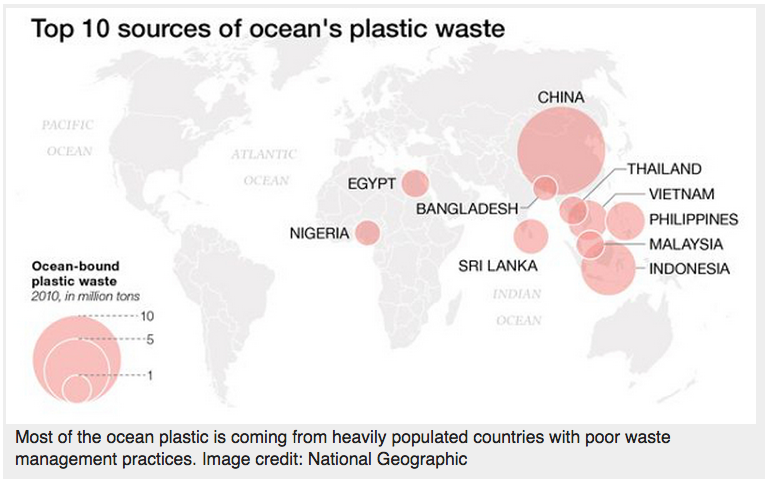
Plastic pollution is basically a problem caused by developing countries.


So the politicians in Seattle and San Francisco are making the Nanny State more intrusive without achieving anything.

A classic case of virtue signaling.

But look at the bright side. It’s already generated some great political satire.
Starting with this little girl.


I imagine the plastic straw will be a gateway for operating an unlicensed lemonade stand!

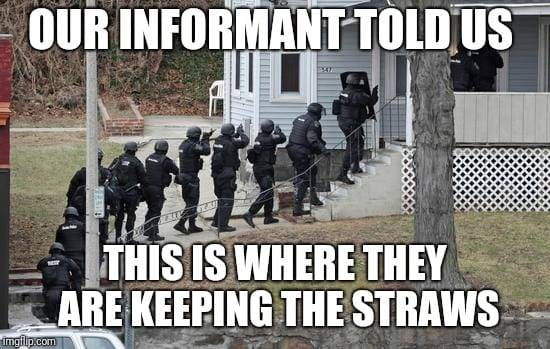
And if SWAT teams run out of harmless pot smokers to harass, they now have new target to justify their budgets. (Editor's Note: Libertarians are opposed to laws against illegal drugs. It's impossible to classify Libertarians as liberal or conservative since they're playing both sides of the ping pong table.  They remind me of Everett Dirksen who was "fiscally conservative and socially liberal", which I find counterintuitive.  RK)

 
And the gun grabbers will appreciate the importance of dealing with high-capacity straw dispensers.


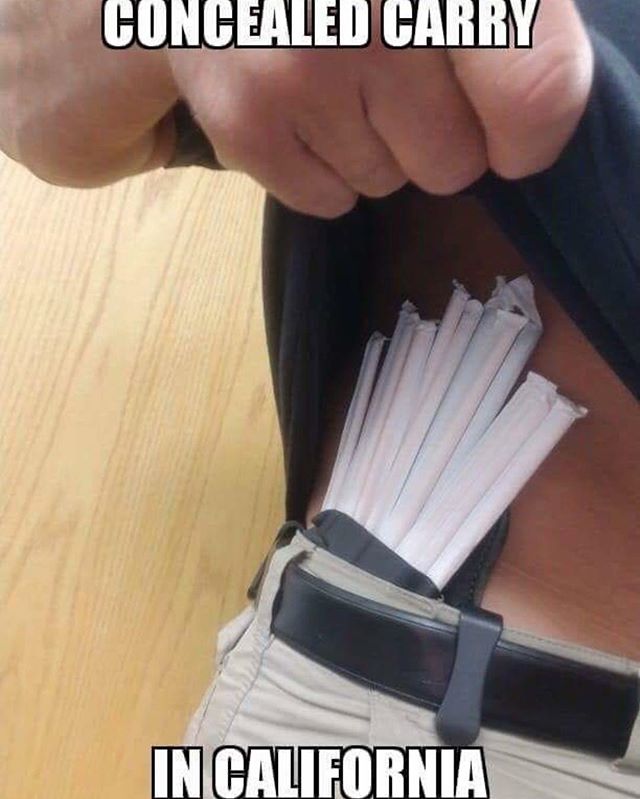
Though it’s unclear how the left will deal with the danger of concealed straws.


Especially since some of those straw nuts will become dealers.


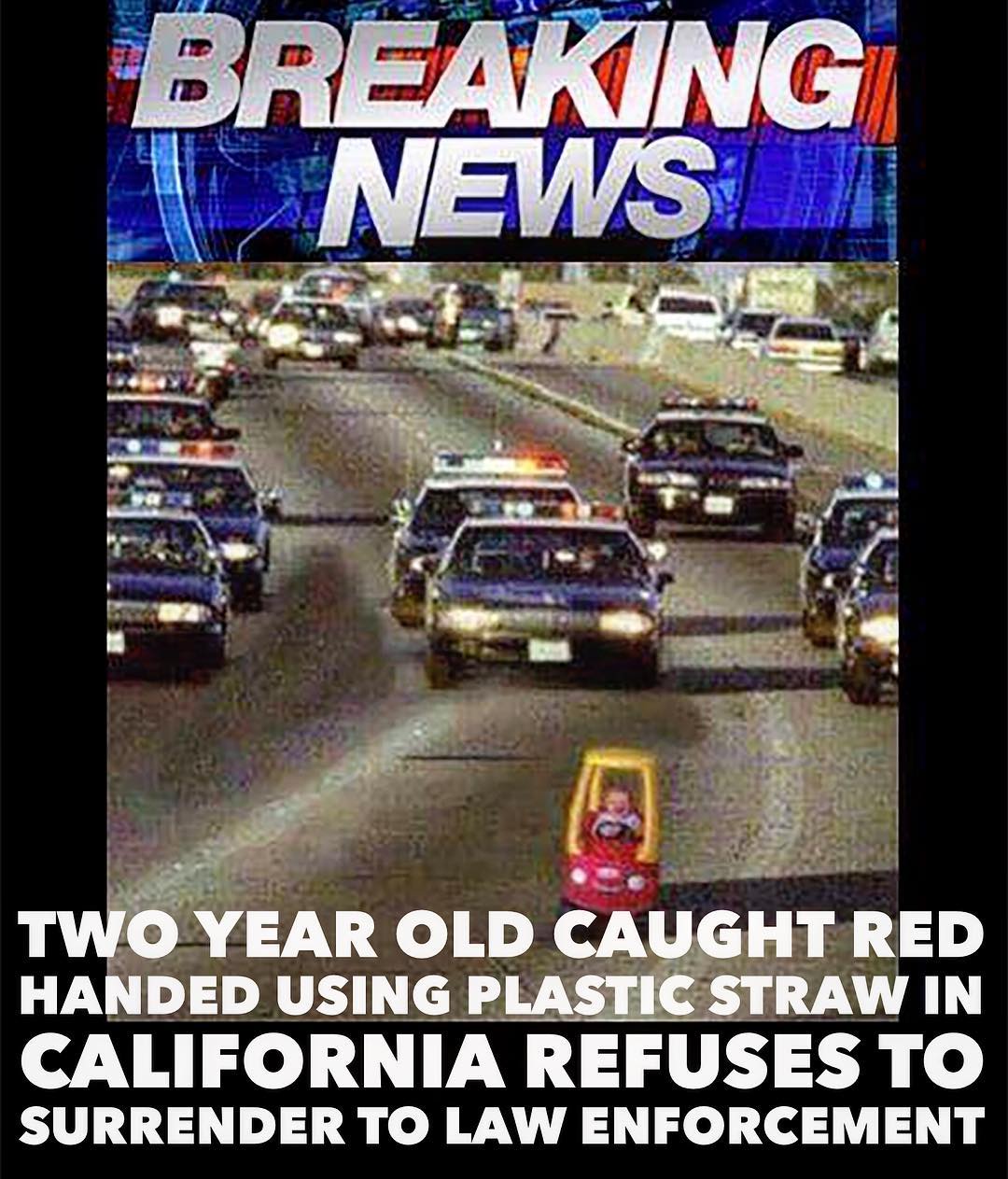
I’ve saved the best for last. For those old enough to remember OJ Simpson and the white Bronco, this image of a renegade toddler will bring back memories.


Remember, if you outlaw straws, only outlaws will have straws.

Next thing you know, they’ll try to outlaw tanks.

It’s a slippery slope!

Friday, May 11, 2018

Now they’re waging war on plastics!

Earth Day Network’s misguided anti-plastic campaign is a sign of more nonsense to come

Tom Harris

Earth Day Network (EDN) chose End Plastic Pollution” as their theme for this year’s April 22 Earth Day. It is just the tip of the anti-plastic activism that now consumes environmental extremists. A Google search  on “Plastic Pollution Coalition” (a group claiming to represent “more than 500 member organizations” dedicated to “working toward a world free of plastic pollution and its toxic impacts”) yields almost 90,000 hits, including a video actor Jeff Bridges made for the campaign.

Even the United Nations has joined in, making “Beat Plastic Pollution” the theme of its June 5 World Environment Day, “a global platform for public outreach that is widely celebrated in over 100 countries.”

But demanding heavy-handed action on the comparatively minor problems that plastics present makes no sense. To help the public assess these attacks against this miracle material, let’s consider what leading environmental thinkers have to say about issues EDN raised on Earth Day, beginning with its use of the term “Plastic Pollution.”

Canadian ecologist and Greenpeace cofounder Dr. Patrick Moore stresses that plastic is not toxic. “It’s litter, not pollution. Many people find it unsightly, and the solution is to educate people not to discard it into the environment and to organize, as is done on highways, to have it removed.”

EDN also says plastics are “poisoning and injuring marine life.” As Moore notes, “Plastic does not ‘poison’ anything. It’s non-toxic. Do they think our credit cards, made with PVC plastic, are ‘toxic’?” Of course, plastics can release toxins when burned, but not when they are simply littered into the general environment. So burning should be done under careful emission control standards.

“The main reason birds and fish eat bits of plastic is to get the food that is growing on them,” Moore adds. “But they’re both quite capable of passing bones and other fairly large objects through their digestive systems.” Plastics are no exception.

Paul Driessen, senior policy analyst for the Committee For A Constructive Tomorrow and author of books and articles on energy and environmental policy, points out that “some animals do ingest plastics or get caught in plastic loops and nets. But the notion that marine life (and people) are being poisoned by chemicals in plastics has no scientific basis.”

EDN next complained about “the ubiquitous presence of plastics in our food.” Moore responded, “This is complete nonsense. If a bit of plastic gets in our food it is passed right through the digestive system.”

“Plastic wraps and containers help preserve food and keep bacteria out,” Driessen emphasized. “Which is worse? Barely detectable trace amounts of chemicals in our bodies, or serious bacterial outbreaks?”


“The debunking of hormone disruptor researchers and their claims has been definitive and devastating,” Dunn notes. “JunkScience.com director Steve Milloy also has been prolific in his criticisms of hormone disruptor junk science,” as this excellent article explains.

Bizarrely and unbelievably, EDN proclaimed plastic as “threatening our planet’s survival.” Reminiscent of how Comedian George Carlin poked fun at the plastics scare, Driessen dismisses this hyperbole. “Earth has survived huge meteor strikes, massive ice ages, Devonian and other mass extinctions, and other planetary calamities. Now plastics have usurped dangerous manmade climate change’s role as the threat to planetary survival!?”

EDN promotes “a global effort to eliminate primarily single-use plastics.” Steve Goreham, executive director of the Climate Science Coalition of America and author of “Outside the Green Box – Rethinking Sustainable Development,” responds: “Single use plastics are a boon for humanity. Packaging food in plastics instead of animal skins, wood, metal, glass and paper brings major sanitation, convenience and health benefits, as well as lower cost. The solution is biodegradable plastics for single-use products, not elimination of plastic.”

In keeping with their climate alarmism, EDN said they want “alternatives to fossil fuel-based materials.” Driessen replies: “It is absurd to suggest that non-oil and gas sources would make plastics better – or that it could be done without turning nearly the entire planet into a massive biofuel farm to provide energy and plastics. The impacts on water supplies, croplands and wildlife habitat lands would be devastating.”

As retired NASA-JSC engineer Alex Pope explains, “fossil fuels and fossil fuel products have made life better for billions of people on this Earth…. This better life is due to energy from fossil fuels and to fossil fuel products, especially plastic products.… The war against fossil fuels and fossil fuel products is all the same war. I think they know they are losing many parts of the war against using fossil fuels for energy,” so now they are cranking up the war against vital fossil fuel products that enhance and safeguard lives.

EDN wants “100% recycling of plastics.” Goreham brushed this idea aside. “100% recycling of plastics is not an economically sound policy. Either landfilling, incinerating, composting or recycling plastics is best, based on cost and applicability.  Today’s landfills are environmentally friendly in modern nations.”

EDN wants people to “reduce, refuse, reuse, recycle and remove plastics.” Driessen says “this will work in some places and cultures. But where people have no food, sanitation, clean water, jobs, electricity or real hope for the future, do you really think they will worry incessantly about plastics?”

The first Earth Day was held on 22 April 1970 in response to the legitimate concerns of millions of people that reducing air, land and water pollution needed to happen more quickly. The movement grew, until today Earth Day Network president Kathleen Rogers estimates that “more than 1 billion people in 192 countries now take part in what is the largest civic-focused day of action in the world.”

This should surprise no one. All sensible people are environmentalists. We want to enjoy clean air, land and water, and we like to think future generations will live in an even better environment. These were the original Earth Day objectives, and I am happy to have presented at Earth Day events in the early 1990s.

However, as Henry Miller and Jeff Stier observe in a Fox News article, “In recent years, Earth Day has devolved into an occasion for professional environmental activists and alarmists to warn of apocalypse, dish up anti-technology dirt, and proselytize. Passion and zeal now trump science, and provability takes a back seat to plausibility.” That is sending science and rational thinking backward hundreds of years.

All this demonstrates the wisdom of Environmental Protection Agency Administrator Scott Pruitt’s proposed rule to require that data underlying scientific studies used to justify federal environment and energy policies be open to public inspection and criticism. This means actual evidence, full independent peer review, and data, methodologies, computer codes and algorithms will no longer be kept secret.

Sterling Burnett, senior fellow for environment and energy policy at The Heartland Institute, calls Pruitt’s proposal “one small step for regulatory reform, one giant leap for scientific integrity and political transparency.” EDN and its allied groups should have to prove plastics are dangerous pollutants, before governments take any actions against them.

Meanwhile, Goreham reminds us how important plastics are to health and safety in modern societies. “They are a miracle material. We fabricate food containers, boat pad­dles, shoes, heart valves, pipes, toys, protective helmets and smart phones from plastic.”

Even EDN and some other anti-plastics groups seem to recognize that plastics are indispensable for numerous applications, since they also call for manufacturing these products. They just want them made from manmade hydrocarbons (biofuels, et cetera), instead of from the oil and natural gas that Mother Nature created and left beneath Earth’s surface for humanity to use to improve our lives in countless ways.

Hopefully, applying Pruitt’s new rule, and ignoring the groundless claims of extreme eco-activists, will ensure that plastics are with us for a long time to come.

Tom Harris is executive director of the Ottawa, Ontario-based International Climate Science Coalition.