Search This Blog

De Omnibus Dubitandum - Lux Veritas

Showing posts with label Economic Costs. Show all posts

Tuesday, January 7, 2025

The True Cost of Wind Energy — Updated

John Droz jr. Jan 06, 2025 @ Critically Thinking About Select Societal Issues 

When I wrote the original version of this last year, some attentive readers said that although my list of ten costs were spot-on, I should have added more. My original list was intended to be a summary, not all inclusive. That said I believe that several of their suggested additions are not trivial, so I am reposting this commentary which now has fifteen typically ignored costs of industrial wind energy…

Periodically I get asked: What is the TRUE cost of industrial wind energy?  It seems like that should be a relatively straightforward answer, but it is anything but.  To appreciate what is going on, we need to understand the Big Picture regarding wind energy. (FYI, the same applies to solar.) The system is setup to grease the skids for wind energy developers — not ratepayers. When it comes to wind energy, we are dealing with 21st century snake oil salespeople. They have a sophisticated multi-part strategy to profit at the public’s expense…

Their FIRST major strategy is to sell politicians on the bogus concept that our electrical Grid should be inclusive — i.e., include ALL electrical energy sources (whether they are good or bad. An all of the above policy makes no technical or economic or environmental sense. (For a discussion of this, see here.) My alternative motto is that our electrical grid should include all of the sensible.

Their SECOND major strategy is to sell politicians on the false belief that we need enormous amounts of industrial wind energy to “save the planet from pending climate catastrophe.” Ignoring the accuracy of the Climate Change fear-mongering aspect, the reality is that there has never been a genuine scientific study that has concluded that wind energy saves a consequential amount of CO2! In fact, there have been multiple scientific studies that have concluded that wind energy can make Climate Change WORSE! (See here for some examples.)

Their THIRD major strategy is to sell politicians and the public on the illusion that industrial wind energy is inexpensive — so we should do it anyway (irrespective of points #1 and #2 above). So what is the true cost of industrial wind energy?

Why this is not a simple question to answer is because wind promoters are VERY well aware that industrial wind energy is MUCH more expensive than our other conventional sources of electricity (fossil fuels, nuclear and hydro). So to get politicians and the public onboard, they have gone to EXTREME lengths to obfuscate wind energy’s REAL cost.

Here are fifteen sample examples of wind energy costs that are NOT acknowledged by wind promoters, so are NOT factored into any of their “cost of wind energy” claims:

 1. Production Tax Credit (PTC)

How much is this? This objective report says: “While the original justification for the PTC was to boost a nascent industry, the PTC continues to subsidize a mature industry to the expected tune of nearly $24 billion from 2016-2020 according to the Joint Committee on Taxation. And that estimate will almost certainly be too low…”

2. Other Federal Handouts

A good example is the $100 million for wind energy in the 2022 “Infrastructure” bill. As it spells out in a separate legislative document, this taxpayer money is for such nonsense as “To support the integration of wind energy technologies with the electric grid and other energy technologies and systems” and “To support the domestic wind industry, workforce, and supply chain.” Billions of federal dollars are hidden in wind related costs (e.g., see here). This expert concludes that: “New Treasury Department numbers show that soaring federal handouts for wind & solar dwarf all other energy-related provisions in the tax code and will cost taxpayers $421 billion by 2034.

3.  Time Value of Money for Federal Largess

It’s bad enough that the federal government awards tens of billions to inferior but politically favored energy sources. However, the federal government does not have this money sitting in a bank account. Instead these tens of billions of dollars are mostly borrowed, so we also pay substantial interest costs on this foolishness. Yet another part of this absurdity is that communist China has loaned us almost a Trillion dollars of this — so they are directly profiting from this insanity. Now see this major red flag!

4. Transmission Cost

A Nuclear power facility (for example), will have: a) one transmission line, and b) the distance will be relatively short, as it will almost always be located fairly near a population center. On the other hand, a very rough equivalent of wind energy will have: a) many transmission lines, and b) will be located a considerable distance from population centers. The transmission cost difference is substantial — but none of it is attributed to the root cause: industrial wind energy.

5. Auxiliary Power Cost

The Electric Grid needs to have Supply and Demand balanced in a fraction of a second. Since wind energy is 100% unpredictable — and frequently goes to zero — 100% auxiliary power is necessary. For a variety of technical and economic reasons, the most appropriate auxiliary source is almost always gas. However, as with the preceding items, the cost and operation of whatever auxiliary source is used, is almost never attributed to the reason for it: wind energy.

6. Dutch Auction Cost

This is a bit complicated, but once you understand it you will almost certainly say: this makes no sense whatsoever! That’s because it doesn’t.

A quickie summary is: let’s say that a Grid estimates that it needs 900 MWH next Tuesday. Five sources each bid to supply 200 MWH of it: Wind @ 1¢/KWH; Coal @ 2¢/KWH; Hydro @ 3¢/KWH; Nuclear @ 4¢/KWH; and Gas @ 6¢/KWH. The Grid takes the price of the highest accepted source (Gas), and then PAYS ALL THE SUPPLIERS THAT PRICE! Here is a good pictorial example of what happens.

What that means is that (in this case) wind gets 6¢/KWH (along with everyone else). But the wind people advertise that they are low cost (1¢/KWH) even though they got paid 6¢/KWH — and even though they knew that 1¢/KWH would never be the price they were paid (based on how the auction works). Dishonest.

7. No Penalty for Noncompliance

Let’s say that Nuclear is unable to supply all their 200 MWH of electricity next Tuesday, as they had committed to (in #5). In this case the Grid manager heavily fines Nuclear, because the Grid manager now has to buy electricity on the spot market, which is quite expensive — so the fine is fair to ratepayers.

Let’s say that Wind is unable to supply all their 200 MWH of electricity next Tuesday, as they had committed to (also in #5). In this case the Grid manager does NOT fine wind, even though the Grid manager now has to buy electricity on the spot market, which is quite expensive. This is an ENORMOUS concession to wind developers, which is NOT fair to ratepayers. Further (like everything above), this extra Grid expense is NOT attributed to Wind — even though they caused it!

8. Payments for Non-Usage

As if these Grid breaks aren’t enough, when the wind developers see the handouts that they are readily given, this green lights them to ask for more! Contrary to our traditional electricity sources, wind energy is not predictable — which is the excuse used for paying for underperformance of a bid. But, stunningly, in most cases wind energy also gets paid for over-performance as well! In other words, if they produce 100MWH that is not needed, in many cases they get paid to dump that (e.g., see here)! Of course, those payments are not attributable to wind energy’s cost.

9. Direct Host Community Costs

There are numerous environmental costs to wind host communities — e.g., health costs to nearby residents (e.g., from infrasound), reduction of the values of nearby homes, etc., etc. There are multiple other costs that are spelled out here. No surprise, but none of these substantial costs are attributed to wind energy.

10. Indirect Host Community Cost

There are several of these costs, like farmers reducing or stopping their crop production (after they sign a lease to host turbines). This means that they: lay off help, do not buy seed, fertilizer and equipment, do not provide food to the community, etc… Adverse military consequences (e.g., interfering with radar, etc.)… Trees are taken down (which are CO2 absorbers). Etc. None of these are factored into wind energy’s cost.

11.  The High Cost of the Wind Supply Chain

Some major turbine components are extraordinarily problematic from several perspectives. Rare Earth materials are a fine example. (Note: some 2 to 4 thousand pounds of Rare Earths are in every turbine!) The environmental and health cost of Rare Earths is staggering — but much of that is happening in China. Even though wind promoters say that climate impacts anywhere in the world are important to address, none of them are publicly objecting to this wind energy cost.

12. De-Industrialization

Nowhere on earth can it be demonstrated that wind and solar grid imposters reduce electricity costs. Any country that pursues these fantasies is pursuing impoverishment because industry (and the economic benefits they create), will likely eventually leave for countries with cheaper, more reliable energy sources.

13. Utility Conflict Exposed

The bribes (aka subsidies) doled out to wind and solar exposes a significant conflict of interest for power providers: are they acting in the best interest of shareholders or customers? For example, since utilities are often guaranteed a return on their "capital base" they are perversely incentivized to install a huge capital base of unreliables to increase their profits — even though that increases costs and reduces reliability to their customers. So where is their primary allegiance?

14. Loss of Serenity

Serenity's legal definition is that environmental quality which provides the greatest sense of wellbeing. Industrial wind turbines are anathema to the serenity of pastoral communities. Just as with other key values in life (like happiness, contentment, peacefulness, etc.) there is no way to put a sufficient dollar value on this huge loss.

15.  Loss of Community

This frequently results when the wind industry uses citizen money to bribe local officials and select landowners in order to create an us vs. them conflict. Other nearby property owners then sign a so-called Good Neighbor Agreement by which they agree not to complain about the numerous liabilities of the industrial wind project. For an annual pittance of a bribe, these "good neighbors" cooperate in the torture of nearby non-participating residents afflicted with adverse health effects, property devaluation, etc.

The Bottom Line

This is a somewhat complicated, technical subject, so the above is a layperson’s summary. The takeaway is that — despite what the lobbyists are pitching to the non-critically thinking public — the real cost of wind energy is 3± times the cost of nuclear and other conventional sources of electricity. Solar is higher than that!


Here is other information from this scientist that you might find interesting:

I am now offering incentives for you to sign up new subscribers!

I also consider reader submissions on Critical Thinking on my topics of interest.

Check out the Archives of this Critical Thinking substack.

WiseEnergy.orgdiscusses the Science (or lack thereof) behind our energy options.

C19Science.infocovers the lack of genuine Science behind our COVID-19 policies.

Election-Integrity.infomultiple major reports on the election integrity issue.

Media Balance Newsletter: a free, twice-a-month newsletter that covers what the mainstream media does not do, on issues from COVID to climate, elections to education, renewables to religion, etc. Here are the Newsletter’s 2024 Archives. Please send me an email to get your free copy. When emailing me, please make sure to include your full name and the state where you live. (Of course, you can cancel the Media Balance Newsletter at any time - but why would you?

Leave a comment

Share

Thanks for reading Critically Thinking About Select Societal Issues! Please pass a link to this article on to other associates who might benefit. They can subscribe for FREE to receive new posts (typically about once a week).

Thursday, March 21, 2024

Government Intervention and Relative Prices

February 24, 2024 by Dan Mitchell @ International Liberty 

Editor's Note: This was lost in my draft file, and while it's a bit old, that doesn't change the facts. RK

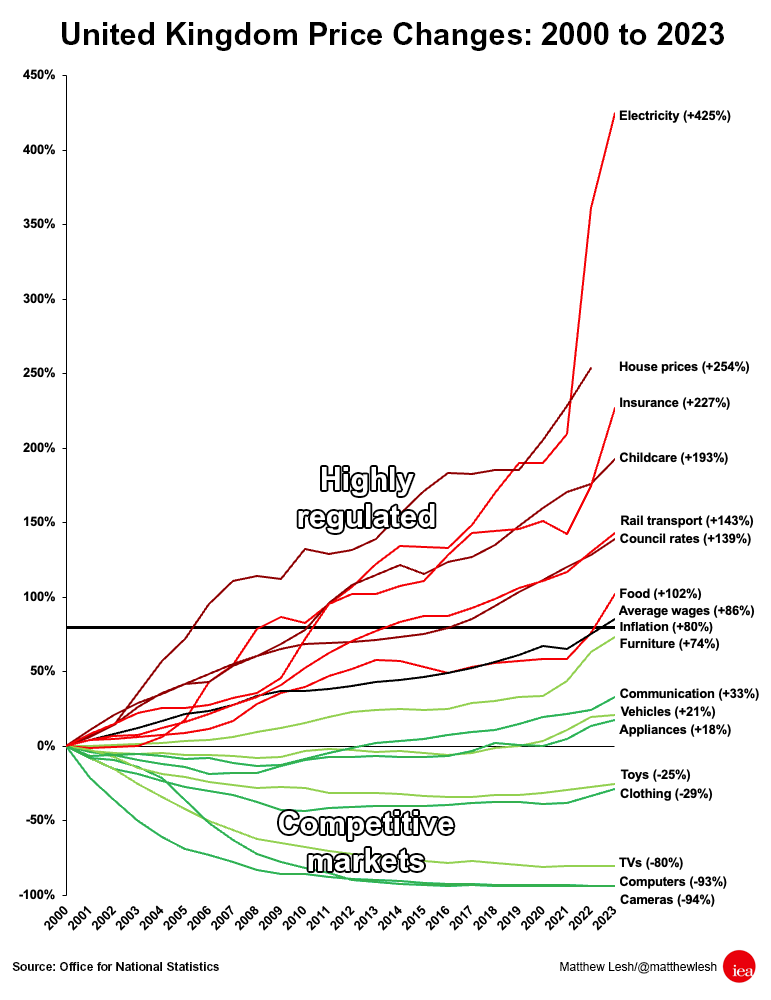
I periodically share Mark Perry’s famous “Chart of the Century” to show that government intervention is a recipe for rising relative prices.*

Since economic principles don’t change when you cross national borders, one might expect to see similar patterns in other countries.

And we do. Here’s a chart from Matthew Lesh of the Institute for Economic Affairs in London. As you can see, overall inflation in the United Kingdom since 2000 has been 80 percent.

But prices have risen much faster in the sectors with lots of government intervention.

And prices have fallen, or risen at a slower-than-average pace, in the sectors where market forces dominate.

Here’s some of what he wrote to accompany the chart.


Prices have risen significantly faster than wages in the United Kingdom over recent years. The result has been a falling quality of life and significant hardship for tens of millions of households. Real household disposable incomes are now expected to be 3.5% lower in 2024-25 than their pre-pandemic levels… A useful starting point is considering which products have, and which have not, risen in price over recent years. …There have also been significant price increases in services and costs the government more directly controls, such as rail transport (+143%) – where the government sets around half the fares and heavily controls the sector – and council rates (+139%). …The products that have gone up most rapidly in cost include electricity (+425%), housing (+254%), and childcare (193%). Notably, these are sectors that have extensive state intervention through regulation and subsidies. …governments can and should change their approach to regulation. Cutting red tape in areas such as housing, energy, and financial services could reduce business costs and increase supply, resulting in lower costs for consumers.

This is spot on. As Ronald Reagan said more than 43 years ago, government is the problem.

And more government simply makes a bad situation even worse.

* Bad monetary policy is the recipe for overall increases in prices.

Wednesday, February 14, 2024

Would More Government Intervention Make Flying Better or Worse?

February 12, 2024 by Dan Mitchell @ International Liberty

There are plenty of problems, but this image reminds me that there are not necessarily government solutions.


Indeed, it is quite likely that government created the problems in the first place and that additional government intervention will simply make bad situations even worse.

For instance, I’m a frequent flyer, mostly for work but sometimes for more important reasons. So I’m very interested in three things:

  1. Cheap flights
  2. Convenient flights
  3. Comfortable flights

But I’m very skeptical about the ability of government to deliver those goals. Let’s see what two columnists for the Washington Post recently wrote on this topic.

We’ll start with some excerpts from an article by Bina Venkataraman.


…flying is broken. …Little about the experience of modern flying is acceptable. …That’s where Ganesh Sitaraman, a professor at Vanderbilt University Law School…comes in. I cornered him on a recent evening while he was visiting D.C. to ask whether he really thinks there’s a way to end our misery — one that doesn’t just involve paying higher prices. His answer: …Ask more of the country’s airlines.

The U.S. airline industry, Sitaraman points out, …is not being required by policymakers to deliver adequate service to the American public. …airlines should be forced to have consistent fares based on distances traveled, not based on when you book your ticket…

Sitaraman also advocates disallowing any one airline from dominating a hub such as Dallas, Chicago or Atlanta… airlines should be required to return to the practice of honoring passengers’ tickets from other carriers’ flights when a cancellation or missed connection occurs… I largely agree…that air travel should be treated more as a public utility. …the FAA or Congress could set a minimum size for legroom in economy-class travel.

The big takeaway is that she thinks the market produces bad results and that politicians and bureaucrats would do a better job.

For a different perspective, here are some excerpts from Megan McArdle’s column about airlines.


Every argument about airline customer policy is essentially the same one: “I should be entitled to cheaper and more pleasant flights, and airlines should charge someone else more or make their flight less pleasant to give me what I deserve.”

…Politicians are an exception, however. When they weigh in, the argument they’re making is “vote for me.” …Parents understandably…want a guarantee that their kids can sit with them. Unfortunately, the only way to offer such a guarantee would be to toss people without children out of seats they chose in advance, perhaps even paid for… Some might say…passengers shouldn’t have to pay to choose their seats.

Fair enough — as long as you understand that the people who pay more for specific seats subsidize the folks who don’t. Stop the practice and the cost of the cheapest tickets will rise. …folks who instinctively feel that the ability to choose your seat or check a bag ought to be included with the price.

But if airlines bundled all those things into one standard fare, that fare would be considerably higher than the budget fares the complainers are currently buying. …There is no way to make everyone, or even most people, better off. There is only the Hobbesian scramble for the inherently scarce resources that can be crammed into an aluminum tube flying 35,000 feet above the ground.

Megan also points out that airlines are one of the nation’s least-profitable industries, so it’s absurd to accuse them of successfully pillaging customers.

As explained above, they are simply trying to please consumers, who seem to value low prices over everything else.


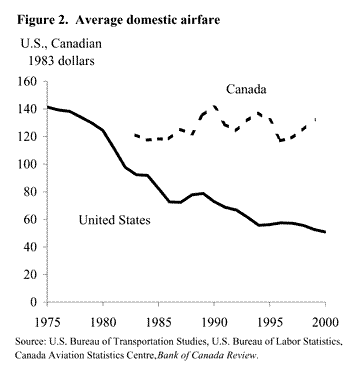
The good news is that they are getting low prices thanks to airline deregulation enacted during the Carter Administration.

The bad news is that prices will go back up if Ms. Venkataraman and her allies succeed in pushing through more government control.

The bottom line is that there’s no such thing as a free lunch. There are only tradeoffs. That’s true when looking at the airline market, just like it’s true when looking at everything from the labor market to the nicotine market.

P.S. Ordinary consumers value low prices over conveniences. The main reason is that ordinary consumers are paying out of their own pockets. The people who complain the loudest about airlines are usually the people (such as politicians and journalists) who fly with other people (such as taxpayers and employers) paying for the tickets. For what it’s worth, I’m actually similar to politicians and journalists in that my flight costs rarely come out of my own pocket. But I nonetheless oppose government intervention because I’m not as dumb as Bernie Sanders.

Thursday, June 8, 2023

The Fiscal Burden of Illegal Immigration on United States Taxpayers | 2023 Cost Study

 March 8, 2023 


FAIR's fiscal cost study

Report by FAIR Research | March 2023

The following is a summary of our cost study findings. To access our full report, including state-specific information, click here


Key Highlights

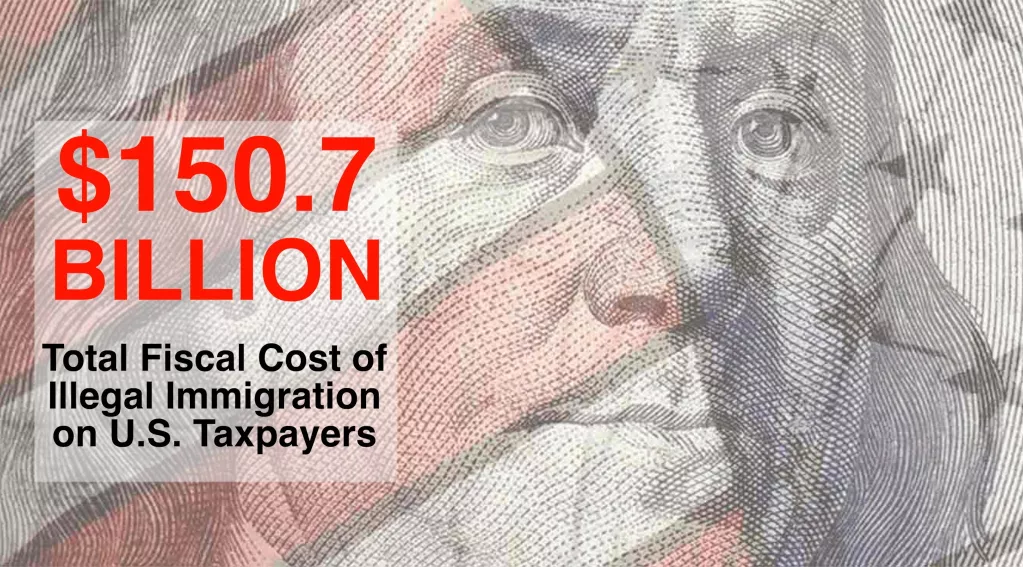
  • At the start of 2023, the net cost of illegal immigration for the United States – at the federal, state, and local levels – was at least $150.7 billion.

  • FAIR arrived at this number by subtracting the tax revenue paid by illegal aliens – just under $32 billion – from the gross negative economic impact of illegal immigration, $182 billion.

  • In 2017, the estimated net cost of illegal migration was approximately $116 billion. In just 5 years, the cost to Americans has increased by nearly $35 billion.

  • Illegal immigration costs each American taxpayer $1,156 per year ($957 after factoring in taxes paid by illegal aliens).

  • Each illegal alien or U.S.-born child of illegal aliens costs the U.S. $8,776 annually.

  • Evidence shows that tax payments by illegal aliens cover only around a sixth of the costs they create at all levels in this country.

  • A large percentage of illegal aliens who work in the underground economy frequently avoid paying any income tax at all.

  • Many illegal aliens actually receive a net cash profit through refundable tax credit programs.

Introduction

This cost study report is currently the only comprehensive examination of the financial impact of illegal immigration in the United States. Every day, hundreds of millions of dollars in American taxpayer money are spent on costs directly associated with illegal immigration. Only a small fraction of these costs is ever recouped from taxes paid by illegal aliens, with the rest falling on the shoulders of American citizens and legal immigrants.

Our aim in this report is to show the American people the fiscal burden of illegal immigration at every level and across nearly all aspects of life. These costs range from emergency medical care to in-state tuition; from incarcerating illegal aliens in local jails to federal budgets that pay out billions in welfare every year. Because there are so many different ways that money is spent on illegal aliens at both the state and local levels, the information in our report is otherwise hard to find (or even intentionally hidden). This report supersedes FAIR’s 2017 cost study and highlights massive increases in spending related to illegal immigration that were implemented while American citizens deal with an uncertain economy............The Fiscal Burden of Illegal Immigration on United States Taxpayers | 2023 Cost Study


Tuesday, May 9, 2023

Net Zero grid batteries alone would bankrupt America

Senate Budget Committee Chairman Sheldon Whitehouse (D-RI) cites “the climate crisis” at almost every opportunity. President Biden calls it a greater threat than nuclear war. They and their allies champion “carbon-free” electricity generation by 2035 and nearly fossil-fuel-free energy by 2050. Achieving “net zero” carbon dioxide emissions will be painless, they assure us. Costs will be so low you’ll need a magnifying glass to see them. Governments merely have to enact mandates, provide subsidies, and the transformation to “clean” energy will just happen. Almost like in a fairy tale.

Here in the real world, however, we would need literally millions of weather-dependent wind turbines, billions of equally unreliable solar panels, millions of half-ton battery modules for vehicles, billions more modules to back up intermittent electricity generation, millions of transformers, and tens of thousands of miles of new transmission lines.  All these technologies must be manufactured from metals, minerals, and petroleum extracted from the Earth, via mining on scales unprecedented in human history.

The dollar costs alone -- just for a U.S. transformation -- are almost incomprehensible........To Read More....

Wednesday, August 24, 2022

The Completely Fraudulent "Levelized Cost Of Electricity"

August 18, 2022 @ Manhattan Contrarian 

My last post on Tuesday reported on the Soho Forum climate change debate that had taken place the previous day. Debater Andrew Dessler, arguing in favor of rapid reductions in human greenhouse gas emissions by the method of vastly increasing electricity production from wind and solar generators, had heavily relied on the assertion that wind and solar are now the cheapest ways to generate electricity. An important slide in his presentation showed comparative costs of generation from various sources, with wind and solar clearly shown as least expensive. At the bottom of the slide, the acronym “LCOE” was legible.

LCOE stands for Levelized Cost of Electricity. I first encountered this term a couple of years ago, and thought that I should get on top of it to understand its significance. It took me about a half hour to figure out that this metric was completely inapplicable and invalid for purposes of comparing the costs of using dispatchable versus non-dispatchable generators as the predominant sources to power an electrical grid that works. The reasons are not complicated, but do take some minutes of thought if the matter has not previously been explained to you. In Tuesday’s post, I asked as to Dessler’s reliance on this LCOE metric:

[I]s he aware of this [inapplicability of LCOE] and therefore intentionally trying to deceive the audience? Or, alternatively, is he innumerate, and does not understand how this works quantitatively?

Some commenters on the post were quite harsh in their judgments of Dessler. They argued for the inference of intentional deception, on the basis that no one claiming expertise in this field could really be so obtuse as to think LCOE was a valid metric for the purpose for which Dessler was using it.

So today I thought to look at how others go about comparing the costs of generation of electricity from wind and solar versus dispatchable sources like fossil fuels or nuclear. I can’t say that I was surprised to learn that LCOE is everywhere as the metric of choice for the comparison. Moreover, it is almost impossible to find any discussion of why LCOE is completely misleading when comparing the cost of a grid powered predominantly by dispatchable sources to the cost of a grid powered predominantly by intermittent wind and solar sources backed up by storage.

Consider, for example, the International Renewable Energy Agency, going by the acronym IRENA. IRENA is a UN offshoot, launched in 2009 and based in Abu Dhabi, that currently has 168 member countries including all the big ones. IRENA’s mission is to advocate for and promote “renewables” as the way to go for the world’s energy system. Surely, with all the big countries (and most of the small ones) backing its efforts, IRENA’s utterances can be relied upon as definitive.

IRENA puts out annual reports on the costs of renewable power generation. The latest one, titled “Renewable Power Generation Costs in 2021,” just came out in July. Here is the press release, dated July 13, 2022. Excerpt from the press release:

New IRENA report shows almost two-thirds of renewable power added in 2021 had lower costs than the cheapest coal-fired options in G20 countries. . . . IRENA’s new report confirms the critical role that cost-competitive renewables play in addressing today’s energy and climate emergencies by accelerating the transition in line with the 1.5°C warming limit and the Paris Agreement goals. . . . “Renewables are by far the cheapest form of power today,” Francesco La Camera, Director-General of IRENA said. “2022 is a stark example of just how economically viable new renewable power generation has become.”

Amid the excited claims that renewables are “by far the cheapest” sources of power, the term LCOE does not appear anywhere in the press release. To find that that is the metric being used to make these “by far the cheapest” claims, you need to go to the main Report. Excerpt:

The global weighted average levelised cost of electricity (LCOE) of new utility-scale solar PV projects commissioned in 2021 fell by 13% year-on-year, from USD 0.055/kWh to USD 0.048/kWh. . . . The global weighted average LCOE of new onshore wind projects added in 2021 fell by 15%, year-on-year, from USD 0.039/kilowatt hour (kWh) in 2020 to USD 0.033/kWh.

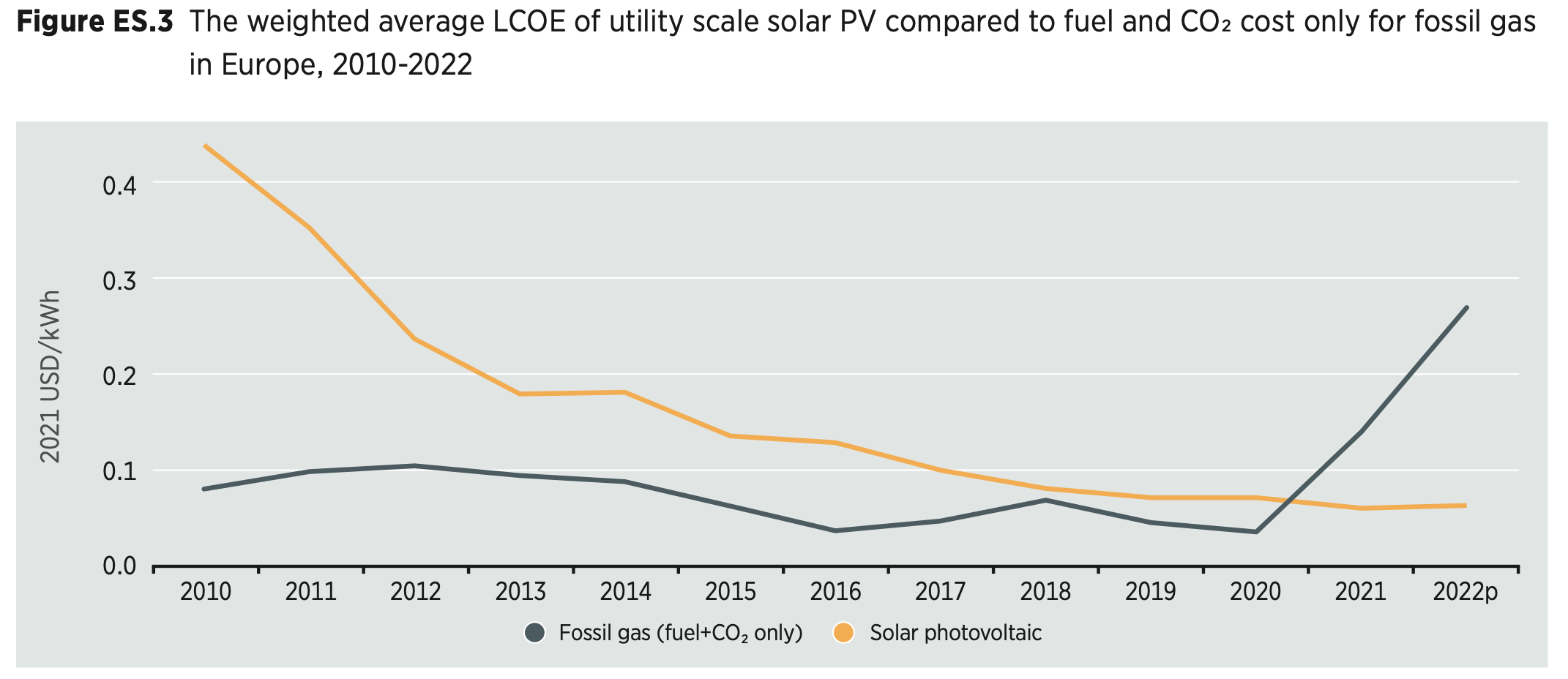
Here is the featured chart, showing that costs of power from solar PV cells have now fallen well below the costs of power from natural gas:

You can see right there that here in 2022 power from natural gas is at least three times as expensive as power from solar PV cells. But the title of the chart gives away that the metric for comparison is LCOE.

Look around for others making cost comparisons of ways to produce electricity, and you will find more and more of same. From Bloomberg, June 30, 2022, “Renewable Power Costs Rise, Just Not as Much as Fossil Fuels”:

The costs for renewable plants plunged for a decade as production of solar and wind equipment surged and technologies improved, but the supply-chain chaos triggered by the pandemic ended those steady declines last year, according to BNEF’s biannual survey of the levelized cost of energy. . . . New onshore wind now costs about $46 per megawatt-hour, while large-scale solar plants cost $45 per megawatt-hour. In comparison, new coal-fired plants cost $74 per MWh, while gas plants are $81 per MWh.

From the Guardian, June 23, 2021 (citing last year’s report from IRENA — also based on LCOE):

Almost two-thirds of wind and solar projects built globally last year will be able to generate cheaper electricity than even the world’s cheapest new coal plants, according to a report from the International Renewable Energy Agency (Irena). . . . Francesco La Camera, Irena’s director general, said . . . ““Today renewables are the cheapest source of power.”

So it’s not just Dessler. Some big international agency of “experts” adopts LCOE for making these cost comparisons, and everybody just nods along without ever putting in the 30 or so minutes of critical thinking that would be needed to figure out that this is completely wrong.

To reiterate points previously made, the LCOE metric assumes that wind and solar generators are essentially the same kind of thing as dispatchable fossil fuel-powered generation plants. Just build about the same amount of nameplate capacity, and everything will work out just fine. But in fact a predominantly wind/solar system requires vastly more infrastructure to make a fully-functioning reliable grid: some combination of a 4x or 5x overbuild of generators, vastly more transmission lines, and 20 or 30 days of battery storage. 

 These elements could easily multiply the cost of electricity to the consumer by a factor of 5 or 10 or more. Nobody knows, because there is no functioning demonstration project from which reasonably precise costs can be extrapolated. And frankly, there never will be such a demonstration project, because the costs are so enormous that it can never be done. Meanwhile, everyone just nods along as if LCOE comparisons are meaningful.