Search This Blog

De Omnibus Dubitandum - Lux Veritas

Showing posts with label Ibram X. Kendi. Show all posts

Thursday, November 2, 2023

Boston’s Iconic Faneuil Hall Targeted for Slave Owner Roots

If you think there’s a money grab behind this, you might be right.

By Nov 1, 2023 Articles, Good Reads, Opinion, Politics @ Liberty Nation News

The activists who seem to make a comfortable living rummaging through American history in search of material to fuel racial divisiveness are closing in on another scalp. Boston’s famed Faneuil Hall is in the crosshairs, and the main instigators behind the campaign to rename the beloved marketplace that served as a key meeting spot for patriots during the American Revolution openly declare that financial reparations are the end goal.
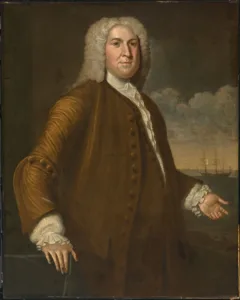
GettyImages-1320404671 Peter Faneuil

Peter Faneuil (Photo by Heritage Art/Heritage Images via Getty Images)

“The Boston City Council passed a resolution [on Oct. 25] asking the city to rename Faneuil Hall, the tourist destination and namesake for wealthy 1700s slave trader Peter Faneuil,” progressive establishment newspaper The Boston Globe reported. The measure passed overwhelmingly, by a 10-3 count.

“The move is largely symbolic and is not binding,” the paper noted. “The city’s Public Facilities Commission, appointed by the mayor, has the authority to rename city-owned buildings. But several city councilors said the resolution’s passage pushes forward a citywide conversation around the role symbols play in telling Boston’s broader history.”

There’s Gold in Them Thar White Guilt Hills

The usual leftist language that dominates these one-sided “conversations” is front and center yet again. But there is something else afoot, as is also usually the case: the grasping for cold hard cash. And why not? There’s big bucks to be made decrying “systemic racism” in Boston.

As Liberty Nation documented, the notoriously woke city just one month earlier was reeling over the collapse of a “racial expert’s” lavishly funded institutional venture. “Boston University’s Center for Antiracist Research has laid off an undisclosed number of staff members, just over three years after its promising launch to reshape the national discourse on racial and ethnic disparities,” The Globe reported Sept. 15. “The layoffs come as the center, led by renowned author and antiracist scholar Ibram X. Kendi, shifts to a ‘fellowship model,’ according to a university spokesman.”

It is now apparent that there was little substance behind the ill-defined “promise.” Boston University’s independent student newspaper, The Daily Free Press, reports the center received “at least $43 million in grants and gifts” for “what sources say has been an underwhelming output of research.” The money is gone, with nothing to show for it.

“It’s pretty hard for me to imagine they blew through $30 million in two years,” BU political science associate professor Spencer Piston told The Daily Free Press. “There’s been a lack of transparency about how much money comes in and how it’s spent from the beginning, which comports with a larger culture of secrecy.”

Faneuil Hall Is ‘Main Target’

Did Boston progressives learn a thing from this extremely expensive folly? Just a few weeks later, the racialists were back, demanding Faneuil Hall be sacrificed in the name of social justice. Oh, but there’s more to it than that.

“A group called the New Democracy Coalition has been pushing to rename Faneuil Hall over the last five years because of Faneuil’s enslavement of and trading of human beings, and this past May the group delivered a petition with more than 3,000 signatures to City Council President Ed Flynn stating their demand. Some members staged sit-ins outside Mayor Michelle Wu’s office, a protest that led to arrests,” The Globe reported on Sept. 29.

GettyImages-1244087867 Faneuil Hall

(Photo By Nancy Lane/MediaNews Group/Boston Herald via Getty Images)

“If we do not have the public conversations around how to better deal with the issue of anti-black racism, we’re going to continue to endure it,” the group’s founder, Kevin C. Peterson, is quoted as saying.

Peterson is the driving force behind the years-long sustained attack on Faneuil Hall. He is looking for a lot more than talk. And he’s not hiding the fact. “Our work on changing the name of Faneuil Hall is grounded in our corporate quest for racial repair,” New Democracy Coalition states on its website.

A June 2022 article published by an overtly supportive NPR is jarringly upfront about the money aims. Once again, performative theater by the Boston City Council was involved.

“Boston has just become the first major city to offer a formal apology for its role in trans-Atlantic slavery,” NPR reported. “Coming nearly four centuries after slavery began here, a city council resolution that passed unanimously [on June 15] condemns the unique ‘dastardliness’ of slavery, and its legacy of ‘systemic white supremacy and racism’ that’s reflected in ongoing racial inequities in housing, education, income and more.”

The bravery of the city council is simply stunning. Hold on to your wallet, you know what’s coming next:

“Councilor Tania Fernandes Anderson, who proposed the apology resolution, calls it ‘an opening salvo.’ She said the city must first acknowledge how ‘great personal and institutional wealth in Boston was built on the backs of enslaved Africans who reaped none of the economic benefits from their labor,’ before the city can ‘begin discussions about what it means to truly undo the harm.’”

Are we misconstruing these words? Peterson clarified.

“Peterson, who helped push Boston’s formal apology, says he hopes it will not only ‘open the door’ for a serious conversation about reparations, but also that the explicit admission of responsibility will compel it,” NPR continued. “He’s also hoping to see prompt action on the part of the resolution that pledges to remove ‘prominent anti-black symbols in Boston.’”

“Faneuil Hall is the main target,” Peterson stressed. “We said from the beginning that changing the name of Faneuil Hall was explicitly related to a reparations movement in Boston,” he exclaimed in a Medium.com article posted by the New Democracy Coalition. “There is no divisibility between the claims we made in 2017 about the Faneuil Hall name change and the cause of reparations in Boston for African Americans.”

So there you have it. Peterson’s long and melodramatic campaign to erase Faneuil Hall from US history is inextricably tied to a larger effort to extract a massive financial layout from Americans today for actions that date back 240 years and more.

Unsurprisingly, Peterson is associated with Kendi’s BU boondoggle. He’s listed on the center’s website as a “graduate affiliate.” “Areas of expertise: Policy, Race and Ethnicity” his Antiracist Research Center bio reads.

It seems one person at least learned a thing or two there after all.

 
Read More From Joe Schaeffer

Saturday, October 14, 2023

Money scandal involving race-hustler Ibram Kendi just took a wild “BLM” turn…

Revolver News

 The controversy surrounding race hustler and grifter Ibram Kendi keeps taking intriguing turns. A few weeks ago, news emerged that Kendi’s race-baiting non-profit was facing financial troubles, with a significant amount of funds unaccounted for. Currently, an investigation is underway regarding the substantial sum of missing money, totaling millions of dollars, in fact and Kendi is at the center of it all..........To Read More....


Tuesday, October 3, 2023

Kendi’s Troubles Threaten the Whole ‘Antiracist’ Biz

October 3, 2023 By Jack Cashill

As blue-collar philosopher Eric Hoffer reportedly observed some years back, “Every great cause begins as a movement, becomes a business, and eventually degenerates into a racket.” Ibram X. Kendi’s brand of antiracism skipped the first two phases. It was conceived as a racket.  Like most rackets, Kendi’s depended for its success on finding suckers to support it. Kendi found his at Boston University. In a perverse effort to atone for imagined sins, the BU administration funded a Kendi brainchild, the Center for Antiracist Research. Hysteria over the death of George Floyd inspired the center, but hysteria alone cannot sustain it.

“After suddenly laying off over half his employees last week and with his center producing almost nothing since its founding, Mr. Kendi is now facing an investigation and harsh criticism from numerous colleagues complaining of financial mismanagement, dysfunctional leadership, and failure to honor obligations attached to its millions in grant money.”

No surprises here. Kendi is just one racial bunco artist out of many. Doing research for my new book, Untenable: The True Story of White Ethnic Flight from America’s Cities, I reviewed the work of four of the leading lights in this movement, specifically on the subject of white flight.........To Read More...


Wednesday, July 21, 2021

How "equity" ideology plunged South Africa into inequality and chaos

By Rian Mala July 19, 2021

Van Wyksdorp, South Africa - As South Africa erupted into chaos, my thoughts turned to the United States  a great country brought low by the same toxic and demented racial politics that set afire my homeland last week. As I write, shell-shocked South Africans are trying to muster a response to an orgy of arson and looting. Cargo vessels are being turned away from some of our largest harbors, because it's too dangerous to unload them. Hundreds of thousands face hunger thanks to the destruction of warehouses and disruption of food-supply chains. Tens of thousands of jobs and small businesses have been destroyed; the property damage is incalculable. 

Former President Jacob Zuma's refusal to be held accountable for corruption triggered this mayhem. Rather than face the prospect of imprisonment and disgrace, he seems to have attempted a preemptive coup against his successor. But this is just part of the picture. The overarching truth is that an idea pushed South Africa to the brink. You guys know this idea, because it animates the sermons of critical race theorists trying to force you to take the knee and atone for your supposed sins. I am going to call it the Beautiful Idea, because it is beautiful in a way, but also dangerous.

The Beautiful Idea holds that all humans are born with identical gifts and should turn out to be clones of one another in a just society. Conversely, any situation in which disparity survives is in itself proof of injustice. This is the line promoted by CRT pundit Ibram X. Kendi, who blames all racial disparities on racist policies. 

South Africa violence continues to spiral, causing food and fuel shortages But what policies is he talking about? Kendi is reluctant to be drawn on this score, and with good reason: He can̢۪t name the policies, because they don̢۪t exist anymore. In your country, all discriminatory laws have been repealed, all forms of overt racism outlawed and replaced by laws that enforce preferential black access to jobs, housing and college admissions.

So Kendi must insist that an invisible miasma of "systemic racism" infects white people and propels them to act in ways so subtly racist that most of them aren't even aware they're sick until it is pointed out to them by diversity consultants...........To Read More....


Saturday, July 17, 2021

Ibram X. Kendi’s Parents Worked to Give Him a Good Life. He Called Them Racists.

July 11, 2021 @ Sultan Knish Blog

Ibram X. Kendi, the critical race theory prophet of his own twisted brand of antiracism, has become mandatory reading material at colleges, corporations, and in the military.

How to Be an Antiracist topped the New York Times bestseller list. Any of the progressive housewives, Fortune 500 executives, and assorted people being forced to page through the book would learn by the second chapter how Kendi’s middle-class black parents were racist.

“Both of my parents emerged from poor families, one from Northern urban projects, one from Southern rural fields. Both framed their rise from poverty into the middle class in the 1980s as a climb up the ladder of education and hard work. As they climbed, they were inundated with racist talking points about black people refusing to climb, the ones who were irresponsibly strung out on heroin or crack, who enjoyed stealing and being criminally dependent on the hard-earned money of climbing Americans like them,” Kendi writes. “My parents, along with many others in the new Black middle class, consumed these ideas.”

What makes these ideas racist? Believing that you can get ahead through hard work is whiteness talking. And expecting good habits to lead to good outcomes is racist because it ignores the systemic racism that makes success impossible for black people. Kendi’s parents, Larry and Carol Rogers, an accountant and business analyst, not only bought into the middle class dream, but they worked hard, and they succeeded at giving him a comfortable childhood.

"My parents... fed me the mantra that education and hard work would uplift me, just as it had uplifted them," Kendi agonizingly recalls. And if nothing else, he partially disproved them, becoming enormously successful on the back of education, but a worthless one in identity politics, and on denying the value of hard work.

"My parents—even from within their racial consciousness—were susceptible to the racist idea that it was laziness that kept black people down," he recalls.

Kendi’s problem is laziness, but it’s a particularly white kind of laziness. How to Be an Antiracist, like most critical race theory texts, leans heavily on the personal narrative of his particularly uninteresting life. Kendi manufactures victimhood out of thin air, when his father waves to him on the basketball court, he suggests that might have gotten him lynched or killed by the police.

His grandmother dies after a struggle with Alzheimer’s. "A disease more prevalent among African Americans," Kendi notes. "There may be no more consequential white privilege than life itself." Black people have a 3.5 percent higher prevalence of Alzheimer’s than white people for a disease that is the fifth most common cause of death among American senior citizens.

When your claim to oppression is your grandmother’s Alzheimer’s, you’re low on material.

But Kendi’s story is a familiar one to generations of white and then minority immigrants where the first generation labors hard to succeed, and then sends its kids to college only to have them come back as radicals who complain that their parents sold out by abandoning their dreams.

The old boomer paradigm that fed sixties white radicalism has kicked in among minority millennials of the upper middle class with a vengeance. The new black nationalist surge on college campuses largely owes its growth to privileged black men and women like Kendi, whose parents took the corporate route, while the kids rebelled and went into Black Studies.

“I always wonder what would have been if my parents had not let their reasonable fears stop them from pursuing their dreams,” Kendi whines. “Instead, Ma settled for a corporate career in healthcare technology. Dad settled for an accounting career. They entered the American middle class”.

Kendi’s racialism is reducible to that cliched radicalism of a son embarrassed by his insufficiently woke parents. It’s about as white as anything. And so is Kendi’s career which has taken him from condemning corporations to producing diversity content for corporations. Like most professional radicals, he wants to overthrow the system by becoming the system.

How to Be an Antiracist’s rants against “assimilationism” echo seventies black nationalism through modern personal identity politics that demands we acknowledge everyone’s identity. Whether it’s white people who insist that they’re Koreans, men who claim to be women, or corporate drones who insist they’re radicals, everyone wants to be who they aren’t.

Kendi’s fake African identity is a familiar brand of identity politics, but born out of the same shallow narcissism of a comfortable generation that seeks meaning in fake identities. A middle class kid named Henry Rogers is reborn as a black nationalist named Kendi. But the fake new identity doesn’t make him more authentic, but less so. The only way to assert a fake identity is for the man in the mask to go on a rampage against his authentic roots and his old past self.

If Obama’s racial memoirs were at least aspirational, Kendi’s is anti-aspirational.

Black people, whether it’s Kendi’s own parents, or black leaders from W.E. DuBois to Eleanor Holmes Norton are guilty of racism for urging achievement. Asking anyone, especially a member of a minority group, to work harder is racist. Suggesting that black people have problems that are caused by anything other than systemic racism is assimilationist.

And yet Kendi’s entire worldview, despite its trappings of sham Africanism, is white.

It’s not some imaginary whiteness, but that of academic identity politics which is absurdly white. Kendi’s parents may have been black, despite some distant white ancestor whom he makes much of, but his entire value system is derived from white political correctness.

He arrived at college "as a racist, sexist homophobe", Kendi writes. The fault was, as usual, his middle class parents. "Dad’s sexist ideas demanded he lead and Ma’s sexist ideas submitted. She would call him the head of the household. He would accept the calling." Horror of horrors.

Kendi’s parents “demonized” single mothers, along with drug dealers and criminals. He blames Reagan and internalized whiteness, but the black opposition to crime preceded Reagan and was a matter of basic self-interest that united the NAACP, the Nation of Islam, and everything in between. It took white people to redefine drug dealers as victims of white oppression.

The cult of the criminal in black activist circles is not a reflection of any organic movement within the black community, but the imposition of a white Marxist perspective. The collapse of support for police defunding in the black community in every poll shows just how alien it is. It’s every bit as alien as Kendi’s hostility to black masculinity which is equally white and assimilationist.

How to Be an Antiracist is meant to be part memoir, but Kendi doesn’t have much of a story to tell. That’s surprisingly commonplace among critical race theory memorists whose lack of interesting personal content, beginning with Ta-Nehisi Coates’ Between the World and Me, has only made their works more successful. If Obama’s memoirs offered elements of the exotic, the black middle class activist against whiteness succeeds because his story is familiarly white.

We have come a long way from Eldridge Cleaver’s Soul on Ice or Alex Haley’s dubious Malcolm X biography. Today’s black nationalist is a suburban college kid nurtured by a middle class two-parent family who denounces the suburbs, the middle class, and families like his as racist.

But the familiar problem, which Kendi only loosely describes in his chapter on dueling consciousness, and which is better embodied by the title of Black-ish, is that the generation of middle class black parents who kept their children safe from crime (Kendi’s father put up a basketball court in their backyard because he was worried about his son getting shot) succeeded all too well. Like too many generations of Irish, Italian, Jewish, Latino, and Asian parents, they raised radical woke snowflakes who are good for little except complaining.

Assimilationism has done its job all too well. The trouble is that the engines of assimilationism, universities, mass culture, and the upper middle class are assimilating the new generation out of America rather than into it, breeding dissatisfaction and nurturing radicalism as their identity.

Revolutions are made by the prosperous, not the dispossessed. Lenin, a member of a noble family, warred on the nobility. Castro, the son of a plantation owner, fought the plantations. Mao, the son of a landlord, oversaw the mass murder of landlords. The Left makes children into the enemies of the values of their parents. And How to Be an Antiracist is really a very old story about the resentments of middle class children who never really learned how hard life can be.

Ibram X. Kendi calls everything he doesn’t like racist. “Racist and antiracist are not fixed identities. We can be racist one minute and an antiracist the next,” he argues. Racism, like most identity politics tropes, is everywhere and nowhere. It’s an identity politics weapon that is an attack on identity while claiming to be a defense against attacks on identity.

Mostly racism consists of the common sense approaches of his parents to dealing with a dangerous world while antiracism consists of his clueless disregard for how life really works.

Kendi complains about the “constant fearmongering about Black drug dealers, robbers, killers,” of his parents, but young black men are far more likely to be killed by the former than by the police whom he and the Black Lives Matter movement fearmonger endlessly about.

His parents made a difficult journey that he does not understand and has no concept of how difficult it would be to recreate in his own privileged circumstances. That’s the same perch which countless of his white leftist peers occupy. It’s no wonder that he’s so popular with them.

How to Be an Antiracist doesn’t convey a racial crisis, but the crisis of an American upper middle class which has lost touch with its own roots and whose children have become an enemy of its aspirational values. That, more than anything else, is leading the country into the kind of shopworn Marxism that Kendi and other radicals peddle as narcissistic identity politics.

Defining everyone, including his parents, as racists, interpreting and reinterpreting the world through academic lenses, is the hobby of privileged people who don’t have real problems.

Ibram X. Kendi may not have real problems, but the rest of the country isn’t so privileged.

And Kendi has become another of the problems undermining the black community, destroying the middle class life his parents worked so hard to achieve, and tearing apart America.

Daniel Greenfield is a Shillman Journalism Fellow at the David Horowitz Freedom Center. This article previously appeared at the Center's Front Page Magazine.

Click here to subscribe to my articles. 

Thank you for reading.

Tags: , ,
Author Image

About Daniel Greenfield
Daniel Greenfield is a journalist investigating Islamic terrorism and the Left. He is a Shillman Journalism Fellow at the David Horowitz Freedom Center