Search This Blog

De Omnibus Dubitandum - Lux Veritas

Showing posts with label Corporate Tax. Show all posts

Tuesday, November 2, 2021

The Global Tax Cartel Is a Victory for Politicians over Workers

November 1, 2021 by Dan Mitchell @ International Liberty 

When President Biden first proposed a global minimum tax on companies, I immediately warned that creating a corporate tax cartel would be very bad news for workers, consumers, and shareholders.
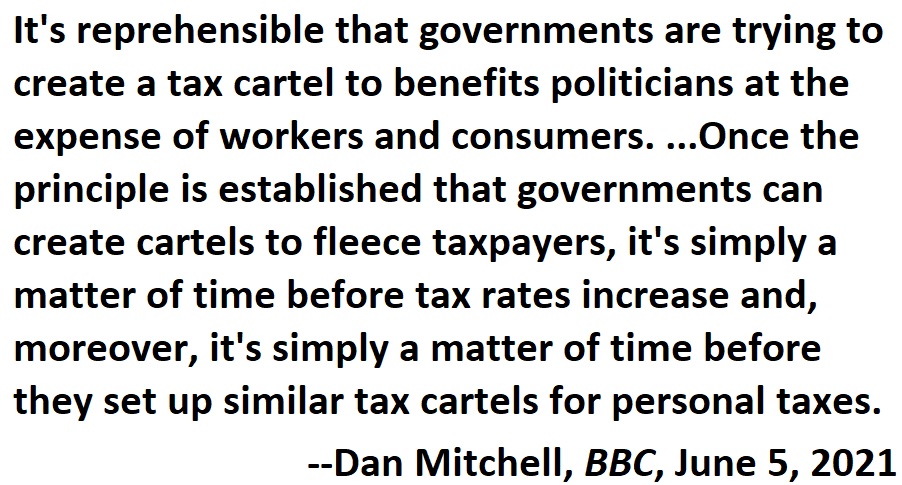
 

I also warned a BBC audience that proponents would use the agreement as a stepping stone for other statist initiatives to increase the power of politicians.

Simply stated, I’ve been ringing the alarm bells that a tax cartel will lead to ever-higher corporate tax rates. And it will serve as a model for other forms of harmonization.

Well, now that Ireland has capitulated and governments formally adopted the scheme, this is my “I told you so” column.

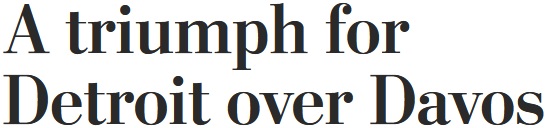
In a column for the Washington Post, Larry Summers, a former top adviser for Bill Clinton and Barack Obama, celebrates the creation of a global tax cartel.

His column has a laughably inaccurate title, but he starts with some accurate observations about the importance of the agreement.

This agreement is arguably the most significant international economic pact of the 21st century so far. It is built around a profoundly important principle: Countries should cooperate to raise corporate taxation, not compete to reduce it. …It also demonstrates the power of ideas to shape economic policy, as tax scholars have for years been pondering the conundrums of taxing global companies.

I also think the agreement is important, albeit in a very bad way.

And it does show the power of ideas, albeit very bad ideas (though politicians instinctively want more money and power and merely rely on left-leaning academics and policy wonks for after-the-fact rationalizations of statism).

As you might expect, Summers veers from reality to fantasy when discussing the implications of the new tax cartel.

Countries have come together to make sure that the global economy can create widely shared prosperity, rather than lower tax burdens for those at the top. By providing a more durable and robust revenue base, the new minimum tax will help pay for the sorts of public investments that are fundamental to economic success in all countries.

For all intents and purposes, he’s embracing the absurd notion that more growth will materialize if politicians impose higher tax rates and use the money to expand the burden of government.


Proponents of this view conveniently never offer any evidence.

Why? Because there isn’t any.

The scholarly research shows the opposite is true. Free markets and small government are the recipe for growth and prosperity.

I’ll now shift back to a part of the column that is unfortunately accurate.

It is also a template for much more that needs to be done to tackle the adverse side effects of our modern, global capitalism.

What’s accurate about that sentence isn’t the jibe about “adverse side effects” of capitalism (unless, of course, he thinks mass prosperity is a bad thing).
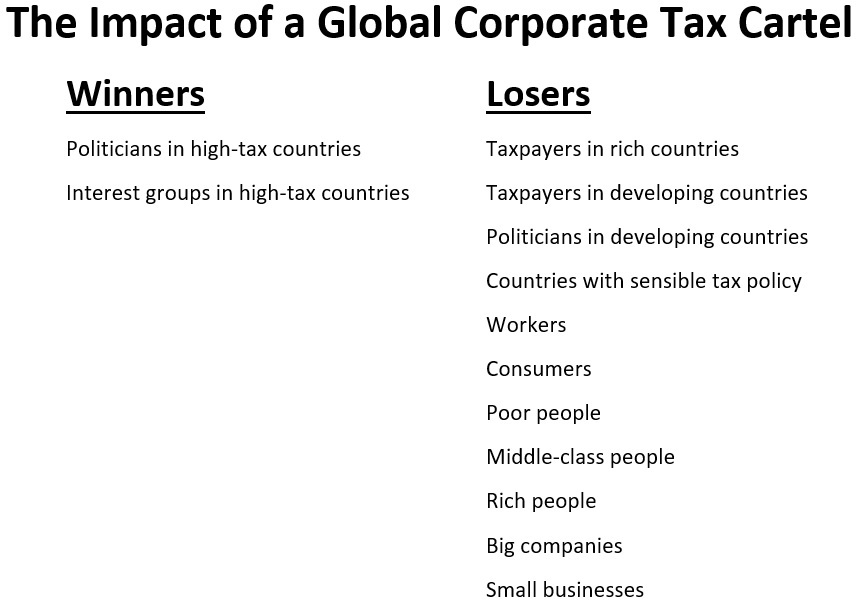
 

But he’s right about the statists using the global tax cartel as “a template” for further schemes to empower politicians and their cronies.

Summers mentions issues such as public health (I guess he wants to reward the World Health Organization’s corruption and incompetence).

Since I’m a public-finance economist, I’m more worried about cartels that will be created for personal income tax, capital gains tax, dividend tax, wealth tax, etc.

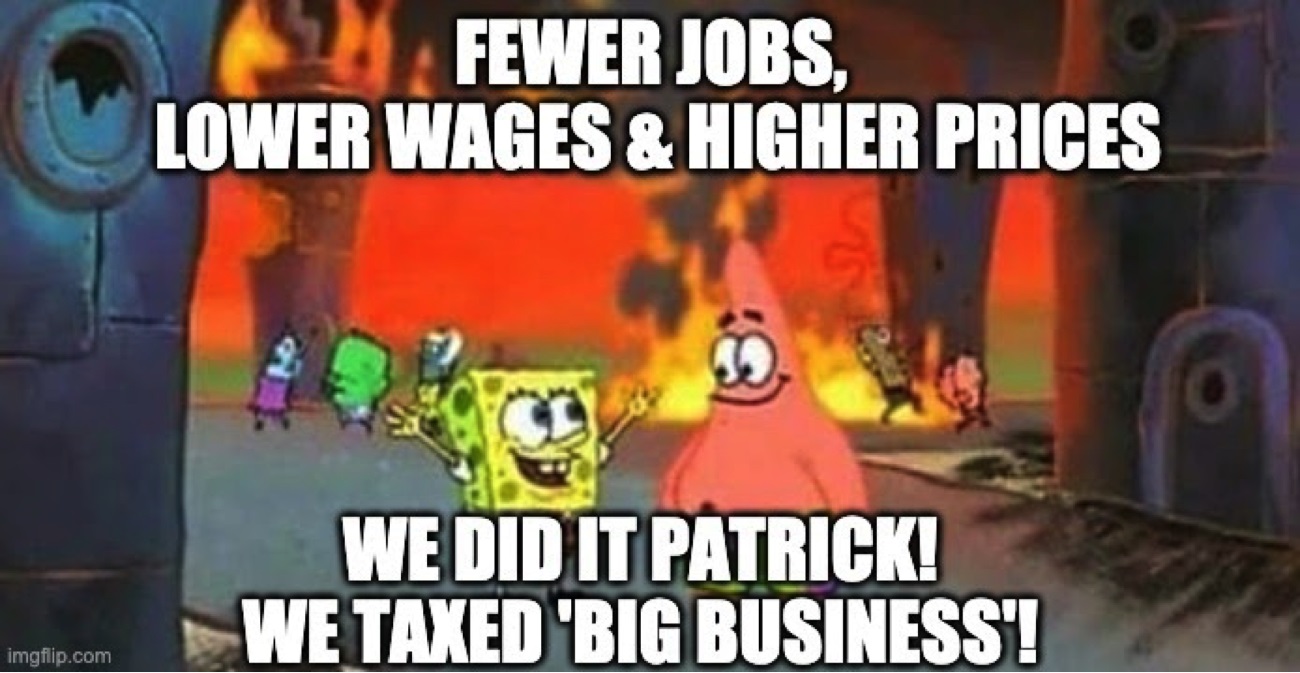
P.S. The corporate tax cartel will lead to higher tax rates, but OECD and IMF data (and U.S. data) show that this doesn’t necessarily mean higher revenue.

Tuesday, May 25, 2021

Biden’s Tax Plan Contains a Poison Pill for American Firms that Compete in Global Markets

May 24, 2021 by Dan Mitchell @ International Liberty 

As explained here, here, here, and here, I don’t like Biden’s class-warfare tax policy.

 https://freedomandprosperity.org/wp-content/uploads/2021/03/unnamed-2.jpg

I’m especially concerned about his approach to business taxation.

  1. He wants to penalize American-based companies with the highest corporate tax rate among all developed nations.
  2. He wants to export that bad policy to the rest of the world with a “global minimum tax” – sort of an OPEC for politicians.
  3. He wants to handicap American multinational companies with taxes that don’t apply to foreign-based firms.

Regarding the third point, I wrote a column on that topic for the Orange County Register.

Here’s how I described Biden’s proposal.


Biden has proposed several tax increases that specifically target American firms that compete in world markets. Most notably, the Administration has proposed to double the tax rate on “global intangible low-tax income” (GILTI) from 10.5 percent to 21 percent. Translated from tax jargon to English, this is largely a tax on the income American firms earn overseas from intellectual property, most notably patents and royalties. Keep in mind, by the way, that this income already is subject to tax in the nations where it is earned. Most other nations do not handicap their companies with similar policies, so this means that American firms will face a big competitive disadvantage – especially when fighting for business in low-tax jurisdictions such as Hong Kong, Ireland, Singapore, Switzerland, and most of Eastern Europe.

And here are some additional reasons why it is very bad news.

…let’s simply look at the bottom-line impact of what Biden is proposing. The Tax Foundation estimates that, “The proposal would impose a 9.4 percent average surtax on the foreign activities of U.S. multinationals above and beyond the taxes levied by foreign governments” and “put U.S. multinationals at a competitive disadvantage relative to foreign corporations.” …a stagging $1.2 trillion tax increase on these companies. …This is not just bad for the competitiveness of American-based companies, it is also bad policy. Good fiscal systems, such as the flat tax, are based on “territorial taxation,” which is the common-sense notion that countries only tax economic activity inside their borders. …Many other nations follow this approach, which is why they will reap big benefits if Biden’s plan to hamstring American companies is approved. The key thing to understand is that the folks in Washington have the power to raise taxes on American companies competing abroad, but they don’t have the ability to raise taxes on the foreign companies in those overseas markets.

The Wall Street Journal‘s editorial page has been sounding the alarm on this issue as well.

Here are some excerpts from an editorial back in April.


…the tax on global intangible low-tax income, known as Gilti, which was created by the 2017 tax reform. …Gilti was flawed from the start…but Mr. Biden would make it worse in every respect. …The 2017 tax law set the statutory Gilti rate at…10.5%. Mr. Biden would increase that to 21%… the effective rate companies actually pay is higher. This is because Gilti embedded double taxation in the tax code. …Gilti allows a credit of only 80% of foreign taxes, with no carry-forwards or carry-backs. …Raising the statutory rate to 21% increases that effective rate to 26.25%. This new Biden effective minimum tax would be higher than the statutory tax rates in most countries even in Western Europe… The Biden plan would further increase the effective Gilti rate by expanding the tax base on which it’s paid. …A third Biden whammy would require companies to calculate tax bills on a country-by-country basis. …Requiring companies to calculate taxable profits and tax credits individually for every country in which a company operates will create a mountain of compliance costs for business and work for the Internal Revenue Service. …The Biden Administration and its progressive political masters have decided they don’t care about the global competitiveness of American companies.

Let’s close with some international comparisons.

According to the most-recent International Tax Competitiveness Index, the United States ranks #21 out of 35 nations, which is a mediocre score.

But the United States had been scoring near the bottom, year after year, before the Trump tax reform bumped America up to #21. So there was some progress.

If the Biden plan is approved, however, it is a near-certainly that the U.S. will be once again mired at the bottom. And this bad policy will lead to unfortunate results for American workers and American competitiveness.

Monday, May 17, 2021

Setting the Table for Covid-X

Peter C. Earle Peter C. Earle  – May 15, 2021


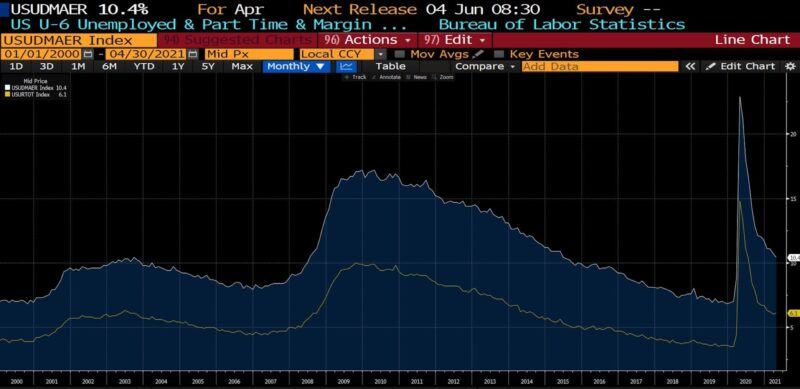
The May 11 jobs report took many economic data watchers by surprise. Predictions of over one million new jobs in April 2020 were dashed, with only 266,000 created and the unemployment rate ticking up from 6.0 percent to 6.1 percent. It’s a bit difficult to understand why the incredible shortfall was surprising to many economists: Prices are rising, and for several months there have been widespread reports of labor shortages. Individuals respond to incentives, and the likely outcome of paying people more not to work than they earn working seems straightforward. 

AIER Sound Money Project Director and Florida Atlantic University professor Will Luther predicted as much, and laid it out clearly in April 2020, 13 months ago. Since federal unemployment bonuses are guaranteed through September, one can expect the economic drag of underemployment to continue into the summer. Teachers unions have successfully lobbied to keep many school districts closed until the fall, also preventing many parents from returning to work through the end of the 2020-2021 school year at a minimum. 

At the same time as work is being discouraged by government programs, the so-called infrastructure plan is rolling forward, bringing with it a wide swath of new taxes thanks to its $2 trillion price tag. The most recent version of the Biden tax plan seeks to target under 1 percent of all taxpayers: single filers earning (adjusted gross income) more than $452,000 per year and married couples earning more than $509,000 per year. 

If it seems odd that the recent explosion in calls for inclusivity in every community and group in society somehow passed over a tiny sliver of Americans, it isn’t. Envy is now among the primary marketing tools for public policy buy-in. Americans, for three generations, have been blithely unaware of the wellsprings of prosperity.

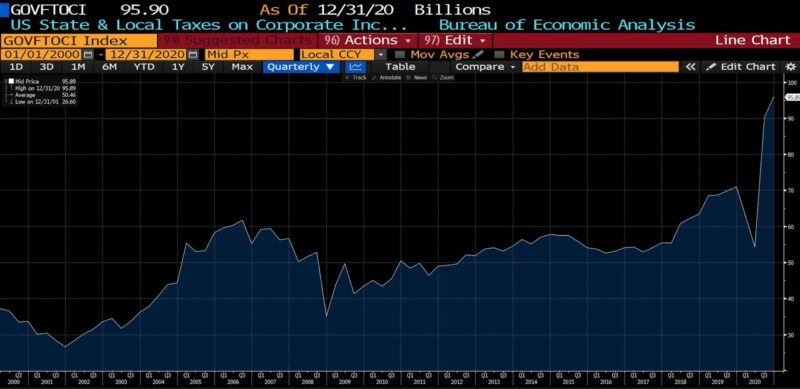
But worse still are plans to increase corporate tax rates to levels exceeding those of some nations with notoriously anti-business policy histories. At Biden’s proposed rate of 28 percent, the U.S. would have higher corporate tax rates than China (25 percent), Italy (24 percent), and Greece (24 percent). France is planning to cut its corporate tax rates down to 25.8 percent, which will undercut the new U.S. rate. 

In 2019, 99.4 percent of all C corporations had 500 or fewer employees: they will be hit by the Biden tax increase. (For the innumerate: employees numbering two hundred fifty, one hundred, seventeen, ten, two, and one are all less than 500.) Further, many of the owners of small companies set up with the subchapter S election––as pass-through entities––will be hit by higher income taxes. 

BEA: US state and local taxes on corporate income (SAAR, 2000 – present)

tate and local corporate taxes
(Source: Bloomberg Finance, LP) 

It’s not that taxes merely deprive firms of the means to expand by reducing their capacity to create more jobs and invest in additional capital. Increases in government takings create distortions in the economy: to minimize or altogether avoid the impact of higher taxes, owners of firms alter their business models or operations. Entrepreneurs and established business managers will relocate, shift production, reduce headcount, and engage various other means to maximize revenue and reduce the rake. A global minimum tax on wealth, such as the one currently under discussion between U.S. Treasury Secretary Janet Yellen and other world leaders, will leave fewer places for producers to flee to. 

It’s worth mentioning that the programs being proposed are, although undoubtedly what the Biden administration wants, an opening bid. There will be some horse trading. And reliably, Republicans won’t fight the increases in government spending, new and higher taxes, or increased U.S. debt so much as they will ensure that their constituencies receive some portion of the spoils. Higher prices, fewer market-created jobs; higher taxes, less private, commercial investment. More dependence, more redistribution, muted incentives, and worst of all, more policy precedence. Records are, after all, made to be broken––or at least invite attempts to do so. 

BLS: U3 (yellow) and U6 (white) measures of labor force participation (2000 – present)

U3 and U6 Unemployment
(Source: Bloomberg Finance, LP) 

The more that individuals and firms are stripmined, with the fruit of their creativity and labor reallocated according to political whims, the less resilience families, communities, and the nation as a whole will have in the face of unanticipated adversity. Taxes blunt the forces of creative destruction, leaving great ideas to struggle for realization and ossifying commercial vibrance.  

Albert Einstein once said––paraphrased––that he couldn’t predict how World War III would be fought, but World War IV would be probably fought with sticks and stones. Covid-19 struck in a period with employment at record levels, GDP growing rapidly, and recently lowered taxes. The opportunistic, inexpedient policy responses to the Covid-19 pandemic ensure that when the next nasty bug––let’s call it “Covid-X”––or some other calamity reaches our shores, an economically weaker, poorer US will be waiting for it.

Peter C. Earle

Peter C. Earle

Peter C. Earle is an economist and writer who joined AIER in 2018 and prior to that spent over 20 years as a trader and analyst in global financial markets on Wall Street.

His research focuses on financial markets, monetary issues, and economic history. He has been quoted in the Wall Street Journal, Reuters, NPR, and in numerous other publications.

Pete holds an MA in Applied Economics from American University, an MBA (Finance), and a BS in Engineering from the United States Military Academy at West Point. Follow him on Twitter.