Search This Blog

De Omnibus Dubitandum - Lux Veritas

Showing posts with label Risk. Show all posts

Friday, June 6, 2025

Biden's Autopen or Obama's Phony Social Security Number

Which did the most damage to our country? 

Former President Joe Biden’s use of an autopen was perfectly legal if he first approved of what was then signed. If he did not, that is a felony.

But he would not have been the First Felon. Barack Obama gets the gold medal for that. He started using a phony Connecticut Social Security Number issued to a resident in 1977. Obama was in high school in Hawaii then and could only have a Hawaiian number beginning with 575 or 576, not the 042 number. He started using it in his mid-20s. It even appears on his 2009 tax filing.
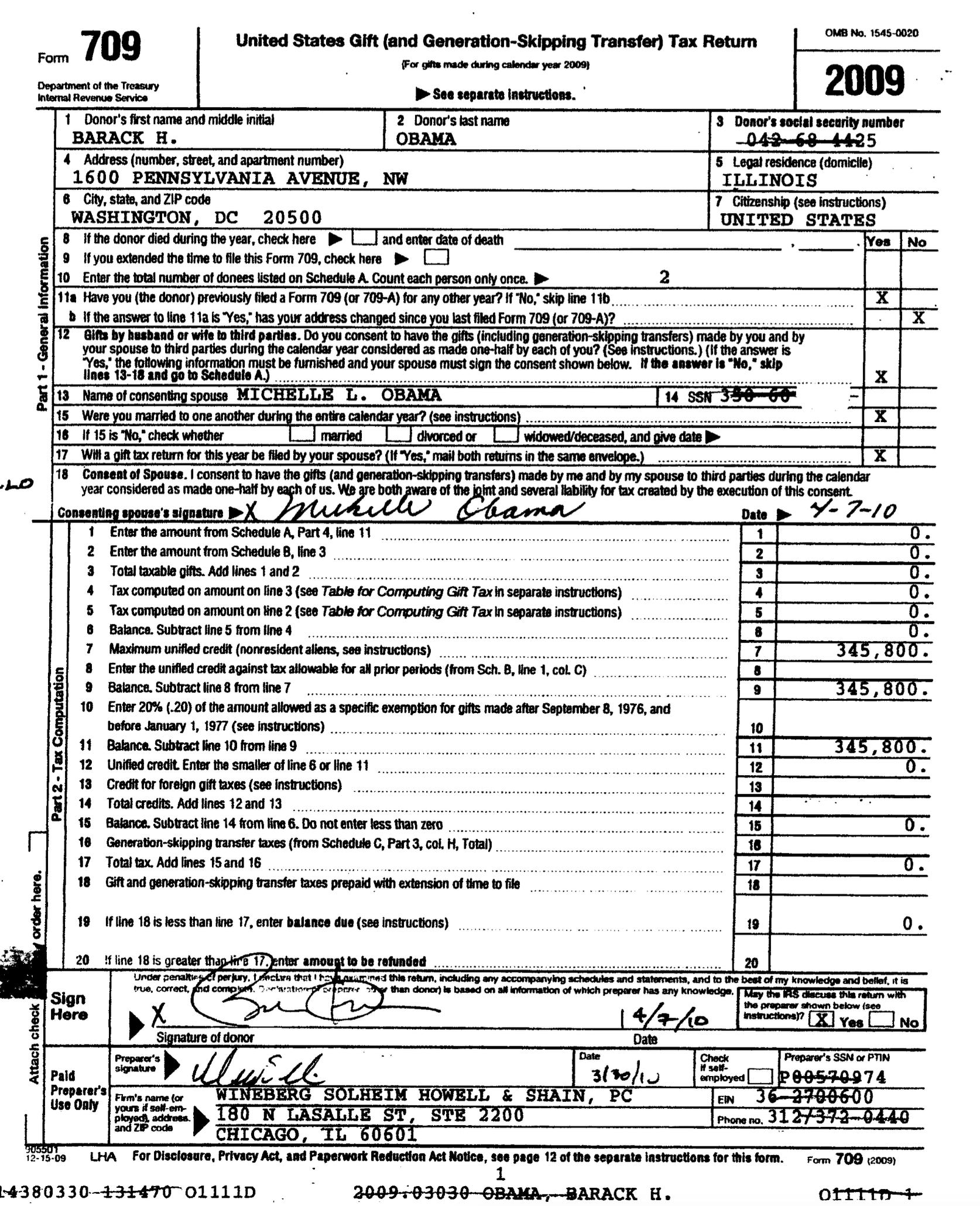
It is a violation of 18 U.S.C. § 1028A, making it a felony and him a fraud. Any documents he signed are illegal. How many laws did he sign that are still in effect that negatively affect our lives? No one has chased the lawbreaker down yet, but the day will come. His star power is gone, and people will not line up to protect him or anyone else who helped him pull off the fraud.

Miranda Devine: “Barack Obama has lost his mojo and ruined his brand.

“In a CNN poll last month (March 2025), Obama received only 4% support from Democrats who were asked which leader best represents the party, lagging behind Alexandria Ocasio-Cortez, Kamala Harris and Bernie Sanders. Ouch.

“According to a new book, Fight: Inside the Wildest Battle for the White House, No Drama Obama, who likes to stay above the fray, ultimately outsourced the ‘wet work’ to movie star George Clooney (and his NYT op-ed piece) and party godmother Nancy Pelosi, who didn’t like her fellow San Franciscan Harris, either.”

Everyone denies it, but Michelle Obama was slated to be the candidate. In a brilliant move, someone got Biden to send out a second posting after the first one announcing he would not be the candidate. Within a half hour, he was endorsing Kamala Harris.

That set Obama into a panic with: The Democratic Party "will be navigating uncharted waters in the days ahead," but (said) he has "extraordinary confidence that the leaders of our party will be able to create a process from which an outstanding nominee emerges." He, of course, meant Michelle. And it didn’t work.

If Michelle were the candidate, the cheating vote-counting machines would have worked overtime, and she would have beaten Biden’s alleged 2020 numbers. Instead, the Obama marriage is a sinking ship. They will never divorce, though, because they won’t share anything. Narcissistic greed does that. I would recommend, however, that if either climbs into bed at night and feels plastic under their sheet, they get back up.

Who would not want to be married to this charmer?

The Obamas had a $70 million net worth in 2024, most of which came from their book deals. Writers don’t make much money, about $5 a book. I doubt if they sold 12 million books. Assuming they were even printed, I suspect they are sitting in a DNC-owned warehouse. I always thought that writing books could be a great money-laundering scheme.

Why does it still matter about Obama and his SSN? As mentioned earlier, there are still laws in effect, but also think about the $1.7 billion in mixed currencies he gave to Iran in cash the next time you are struggling to pay your bills.

What about the $7 billion stimulus plan? I never saw an audit of that money. In 2013, Obama pledged $7 billion to upgrade power in Africa. He spent money like a Brokeback Mountain cowboy in a gay bar.

He is still earning money from his former office, although he no longer has significance. He and the Mrs. are costing us a fortune for Secret Service details, and that’s for life. What is more pathetic than watching him walk into a fancy restaurant with nothing but his detail?

Obama has aged dramatically in just nine years. He’d better stop his bad habits.

The Obamas partied like it was 1999. Nothing but Wagyu beef and $150 bottles of wine for the “beautiful people,” like Clooney. It was going to be another great eight years starting in 2025. But Joe screwed it up for them.

Biden spent $1.5 billion a day for 79 days after the election, until the inauguration of President Donald Trump. So where’d it all go? He won’t remember.

AP News published the report from special counsel Robert Hur in March 2024 after interviewing him for five hours over two days.

“The report described the 81-year-old Democrat’s memory as ‘hazy,’ ‘fuzzy,’ ‘faulty,’ ‘poor,’ and having ‘significant limitations.’ It noted that Biden could not recall defining milestones in his own life such as when his son Beau died or when he served as vice president.

“My memory is fine,” Biden responded Thursday night from the White House, where he grew visibly angry as he denied forgetting when his son died. Beau Biden died of brain cancer in 2015 at the age of 46.

“Yet even as Biden defended himself, he committed another gaffe while discussing the Israel-Hamas War and mistakenly referred to Egypt’s leader Abdel Fattah El-Sissi as ‘the president of Mexico.’”

Biden didn’t just have an attack of dementia on those days in March, despite all the lies the media spewed. He was like that for years.

Newsmax printed: “A senior official in Trump's Justice Department told staff Monday he has been directed to investigate whether Biden was competent and whether others had taken advantage of him through the use of an autopen when he granted clemency to members of his family and death row inmates at the end of his term.

“The investigation would also look into documents that were signed by autopen, those who directed the use of that device, and any efforts to ‘purposefully shield’ the public from information about Biden's physical and mental health.

"‘In recent months, it has become increasingly apparent that former President Biden's aides abused the power of Presidential signatures through the use of an autopen to conceal Biden's cognitive decline,’ the memo said. ‘There are serious doubts as to the decision making process and even the degree of Biden's awareness of ... actions being taken in his name."

As this article began: Former President Joe Biden’s use of an autopen was perfectly legal if he first approved of what was then signed. If he did not, that is a felony.

And that’s the end of that story—for now.

https://m.media-amazon.com/images/I/61Tg652gkjL._SL1500_.jpg

Susan Daniels is a private investigator and the author of The Rubbish Hauler’s Wife versus Barack Obama: A True Story which is available on Amazon.com.

Politics like we have never seen.  Recommend Susan’s Newsletter to your friends. 


Tuesday, September 1, 2020

It seems that the Wuhan virus’s risks have been grossly exaggerated

August 31, 2020 By Andrea Widburg

Without the Wuhan virus, the Democrats have no meaningful opposition to Trump. Not only have the Democrats weaponized the Wuhan virus to destroy the economies under their aegis, but they’ve also repeatedly claimed that Trump killed 161,000 Americans. However, new CDC data shows that, of those Americans who died in the past seven months, only 6% died from the virus alone. The other 94% had serious comorbidities that (sadly) put them at a higher risk of death from anything that came along – and certainly from having sick people funneled into their nursing homes............ To Read More

My Take - This appeared in a Townhall.com article:
"The Centers for Disease Control and Prevention (CDC) website disclosed the shockingly small number of people who died from only the Wuhan coronavirus, with no other cause of death mentioned. Hold on to your hat because here it is: out of the 161,392 deaths in the CDC data, just six percent, about 9,700 deaths, were attributed to the coronavirus alone. According to the CDC, the other 94 percent had an average of 2.6 additional conditions or causes of deaths, such as heart disease, diabetes, and sepsis."

Monday, April 8, 2019

EPA’s Chemical Risk Assessments Rely on Flawed Science, Study Finds

March 26, 2019 By Linnea Lueken

A new study concludes the U.S. Environmental Protection Agency’s Integrated Risk Information System (IRIS), a program assessing the toxicity of chemicals and any risk from exposure to them, often produces assessments based on flawed research.

The U.S. Environmental Protection Agency’s (EPA) Integrated Risk Information System (IRIS), a program assessing the toxicity of chemicals and any risk from exposure to them, often produces assessments based on sloppy or flawed research, a new study concludes...........“EPA risk assessments, by and large, focus on preventing worst-case scenarios—even absurd ones—and ignore more plausible scenarios, while ignoring more serious risks created by the EPA’s own regulations,”
 
EPA identifies four steps necessary for an accurate risk assessment.............
Proponents tout IRIS as the most comprehensive, accurate chemical risk assessment, but it is not, says Logomasini.
 
“IRIS’s supporters say it sets the ‘gold standard’ for risk assessment, when the opposite is true,” Logomasini told Environment & Climate News. “The program has failed to develop rational, useful risk assessments, opting to select absurd risk values that create unwarranted public health scares, harming the public.”.............EPA uses toxicology poorly to make people believe substances they may be exposed to are more dangerous than they really are, says Dr. John Dale Dunn, an emergency physician, researcher, and policy advisor to The Heartland Institute, which publishes Environment & Climate News..................To Read More....

Monday, February 18, 2019

CEI Report Calls for Elimination of EPA's Flawed Integrated Risk Information System

February 12, 2019

A new report released today by the Competitive Enterprise Institute (CEI) shows EPA’s Integrated Risk Information System (IRIS) has significant problems with methodology, relies on sloppy research and has been criticized for a lack of transparency. The report, authored by CEI senior fellow Angela Logomasini and titled “EPA’s Flawed IRIS Program is Not the Gold Standard,” calls for IRIS to be shut down and its functions shifted into program offices at EPA.

Logomasini points out that information produced by IRIS does not undergo a full risk assessment, it only performs two of the EPA-identified four steps, and has made numerous controversial assessments with little basis in reality. One particularly controversial episode, addressed in the paper, is a faulty risk assessment of formaldehyde that drew a rebuke from the National Academies of Sciences (NAS)...........To Read More....

Friday, July 28, 2017

Risk-based or Hazard-based Regulation

on


Originally published on 27 August 2015 – Re-posted for the Risk School series
This is a three-part blog. In part one I look at the irrationality of hazard-based regulation. In the next blog, I will identify the type of person who promotes it – someone I will call the “contrapreneur”. Finally, their success will be explained as only possible in a vision-less world where expediency is the political virtue.
Today, no doubt, most of us have managed the following risks:
  • Controlling the exposure to injury from falling down stairs by using the hand-rail or taking care
  • Reducing exposure to obesity and other health risks by limiting calorie intake
  • Avoiding exposure to a car accident by stopping at a red light
Risk-management is ubiquitous. From the moment we get up to after we fall asleep, we are managing our exposure to hazards with every decision we take. The formula is very simple:

Risk = Hazard X Exposure..........To Read More....


Tuesday, December 20, 2016

How Can Pesticides Be Safe?

Dr. Steve Savage Tuesday, December 13, 2016

Many people may find it difficult to imagine how a pesticide could ever be safe. To understand how that is possible, it is helpful to make the comparison with something more familiar: electricity. It is hard to envision modern life without electricity. As much as we enjoy and need this source of energy, it involves some hazards. Electricity can, and sometimes does, cause injury or death. 

Yet overall, we think of using electricity as a reasonably safe aspect of our lives. Safety can’t be precisely defined. What we perceive as safe is something where the benefits more than offset the minimal risks. We can enjoy electricity’s benefits with little risk through two main strategies: 1) using low-hazard forms of electricity and 2) keeping ourselves from being exposed to hazardous forms of electricity......To Read More......


How Can Pesticides Be Safe?
Many people may find it difficult to imagine how a pesticide could ever be safe. To understand how that is possible, it is helpful to make the comparison with something more familiar: electricity.
It is hard to envision modern life without electricity. As much as we enjoy and need this source of energy, it involves some hazards. Electricity can, and sometimes does, cause injury or death.  Yet overall, we think of using electricity as a reasonably safe aspect of our lives.
Safety can’t be precisely defined. What we perceive as safe is something where the benefits more than offset the minimal risks. We can enjoy electricity’s benefits with little risk through two main strategies: 1) using low-hazard forms of electricity and 2) keeping ourselves from being exposed to hazardous forms of electricity.
the-safe-use-of-electricity
The Low-Hazard Approach
Increasingly, we power the devices central to our lifestyles with forms of electricity that are practically non-hazardous. The prime examples would be our cell phones, Bluetooth devices, or portable music players that run on low-voltage, direct current electricity which is nearly incapable of causing us harm.  That same, low-hazard approach plays an important role in pesticide safety.
In the middle of the last century, a number of the early pesticides in use were chemicals that were quite toxic to mammals, and thus to humans. The U.S. began to seriously address the issue with the establishment of the U.S. Environmental Protection Agency (EPA) in 1970. Soon, the truly dangerous pesticides were removed from the market or their use was greatly restricted.
Since then, billions of dollars have been spent on the discovery, testing and regulatory review of new, far less toxic pesticide options. In the charts below, I’ve examined the toxicity of crop protection materials that have been used through looking at historical U.S. Department of Agriculture (USDA) data on Washington State apples and California pesticide reporting data from all crops in 2013. In these charts, the toxicity is based on feeding studies with rats or mice, which is used as an indicator of potential toxicity to humans. Other measures of toxicity have similar trends.
oral-toxicity
The EPA has four toxicity categories to classify the acute hazards of pesticide products. For use in apple orchards, the data show that pesticides from EPA Category I, Highly Toxic, were never more than 10% of the total pesticides used, and that their use has steadily declined. These would be pesticides as toxic as the nicotine that is sold for e-cigarettes. Only 0.2% of the pesticides applied to California crops in 2013 were in this category.
oral-toxicity2

EPA Category II, Moderately Toxic, includes materials with toxicity in the same range as the capsaicin in hot peppers or the caffeine in coffee – familiar and even sought-after natural chemicals in our diets. That category represents very limited use on apples today, and only 18% of what growers applied in California apple orchards in 2013.
The pesticide use category that has grown is termed Slightly Toxic (EPA Category III). Toxicity for crop protection materials in this category is in the same range as the citric acid in a lemon or the vanillin in a vanilla bean.
The largest category of pesticides applied to apples and other crops today is Practically Non-Toxic for mammalian consumption (EPA Category IV). Comparing this to our use of electricity, we can see that low hazard is a major strategy through which we minimize pesticide risk.
To understand how something that is designed to kill or otherwise control a pest could be non-hazardous, consider the example of chocolate which has a flavor ingredient that we humans love but which can be toxic to our pet dogs. Chemicals can have different effects on different species. Scientists use the terms specificity and mode of action to describe how chemicals have their specific effects. With modern pesticides, the mode of action is normally the inhibition of some specific enzyme that is important to the viability of the pest. If the enzyme is inhibited by the pesticide, the pest might stop eating, stop growing and/or die.
That enzyme often isn’t one that even exists in humans and other animals ourselves or in other groups of organisms unlike the pest. A modern insecticide usually only affects enzymes that are found in insects or even a few kinds of insects. A modern herbicide might only inhibit an enzyme that is needed for the growth of plants. A modern fungicide inhibits an enzyme in a pathway of enzymes that is found in certain fungi. While all of these products should still be handled with a reasonable degree of caution, they are, like the electricity that powers our cell phones, low hazard and thus low risk. We can feel safe about their use.
Limiting Exposure Risk When There Is a Hazard
We still need the more hazardous forms of electricity (such as the 120 volt alternating current) for needs like lighting, heat, air conditioning etc. To minimize risk, we’ve developed safe guards such as systems of insulated wiring, childproof plugs, circuit breakers and GFCI outlets to keep us from being exposed to that hazard. Where we need 220 volt service, we have even more ways to avoid exposure. To be connected to the grid we need the extremely hazardous, high-voltage electricity coming to us from wherever it is generated. The high-power transmission lines are designed to make it unlikely that anyone will be exposed to that extremely hazardous form of electricity.
Some pesticides that we need to manage certain pests represent a possible hazard to mammals, like humans, or sometimes to other non-target organisms like birds, fish amphibians or aquatic invertebrates. The safe use of these pesticides is all about limiting exposure. For all pesticides used in agriculture, anyone who is directly involved in the mixing or application of the chemical must follow specific requirements regarding protective clothing and equipment. For low-hazard materials, that might just be gloves, closed shoes and a dust mask. For something that could be a significant human hazard, those restrictions would include a respirator and a protective whole-body TYVEC™ suit.
Restrictions can also dictate how soon after an application anyone can re-enter a treated field (re-entry interval or REI). For low-hazard pesticides, that time period can be a few hours or less. For more hazardous pesticides, the REI can be a number of days. For pesticides that are hazardous to fish or other aquatic organisms, restrictions mandate how close applicators can apply them to waterways. Similarly, for pesticides that are hazardous to bees or other pollinators, restrictions control when applicators can apply them relative to bloom times and/or times of the day when bees and other pollinators are working.
For all pesticides, the EPA conducts an extensive risk assessment and uses that information to set up a detailed set of restrictions designed to prevent the existence of any residues of concern to consumers by the time the crop is harvested. The details of this system are discussed in another post titled, Do I Need to be Concerned about Pesticide Residues on and in My Food?
The moral of this story: just like electricity, pesticides can be used in a way that meets our need for clean, productive farming while giving us a comfortable and functional level of safety.

Saturday, May 19, 2012

Understanding Risk

By Rich Kozlovich

Recently I spoke against an anti-pesticide ordinance at the April Cuyahoga County Council meeting in Cleveland, Ohio. The basis for this ordinance was that pesticides were “toxic” and “carcinogenic”. None of that is an explanation for understanding whether they represent an inappropriate ‘risk’ or not, and since those are both trigger words the ordinance was based on scare mongering. One of the council members claimed that they had the studies to show the health risks caused by pesticides. Baloney! If this was true then the EPA would be required by law to remove those products from the market place; and we need to understand that the EPA is not a pesticide friendly organization, but there are even limits to the kind of junk science they can heap on society. However, I do think it is important for everyone to know how risk evaluations are properly done, or in this case an explanation of how they are done improperly.

Statistics aren't science and cannot alone prove the existence or absence of risk. One of the problems with using statistics to determine risk is 'data dredging'. If you drag up enough data you can come up with any explanation that suits the particular issue you are trying to promote. “Statistics are being looked to more and more as explanations for answers to medical problems from people with expertise in mathematical manipulation and information technology, rather than from people with an understanding of disease and its causes." “Statics can’t prove cause and effect associations because they don’t provide biological explanations. Without such explanations, statistical associations are hollow numbers.” Biological explanations, not mere possibilities or conjecture, are a necessary component of determining the existence of risk.

Epidemiology alone isn't science because epidemiology is statistics and alone cannot prove the existence or absence of risk. Mice aren't little people. The results of tests on laboratory animals do not necessarily pertain to humans. Mice aren't little rats either. Very often reactions to a substance that occur in mice do not occur in rats and vice versa. The American Council on Science and Health petitioned the EPA to stop declaring substances ‘carcinogenic’ on rodent testing alone because that violated the principles outlined in the Information Quality Act. “Finally….EPA replied with a dodge, claiming that their Risk Assessment Guidelines are not statements of scientific fact -- and thus not covered by the IQA -- but merely statements of EPA policy.” One would think that policy would be based on science, so if it isn't we must ask; just what is this policy based on? So if the EPA can't find a reason to remove these products from the market place we can be assured some local council has nothing to offer that could ever begin to look like 'valid science'.

Exposure isn't toxicity. Just because someone is exposed to a substance or condition doesn't necessarily mean that they've been exposed to a harmful level. I often read that articles that deal with bio-monitoring to see just how many synthetic chemicals we have in bodies. That number has consistently been over 200. We are also living longer and healthier lives. Does that mean that having more synthetic chemicals in our bodies increases our life span and quality of health? The dose makes the poison. All substances are poisons in sufficient amount. Below that amount, exposures are not harmful. At some point the molecular load of any substance will be so small that cells will not respond to it. This is called the threshold principle.

There is always a safe exposure to a substance or condition.

Sources:

  1. Junk Science Judo, by Steve Milloy
  2. We Should Expect More from the EPA
  3. Toxic Substances Control Act (TSCA) Amendment Signed
  4. Ecological Sanity, by Claus and Bolander