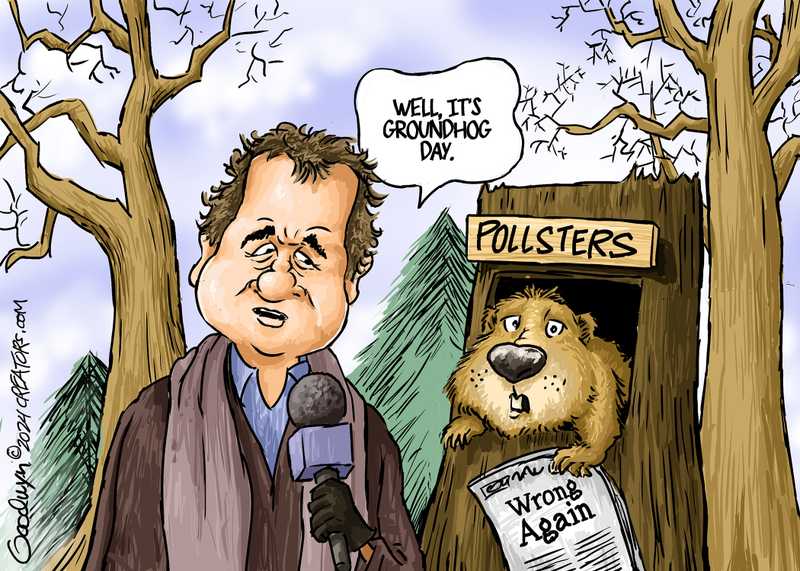
Eight years ago, it was all but unthinkable that Donald Trump could
count on any significant support from two constituencies traditionally
hostile to Republicans and crucial to Democrats. After his trip down
that golden escalator, he delivered remarks about illegal immigrants
that were widely viewed as insulting. They would be replayed over and
over, destined to live in infamy. Most observers believed that he had
permanently repelled minority voters and that the minimal support
Republican presidential candidates had received over the years from
Latino and black voters would shrink even further to almost undetectable
levels.
In his victorious first run for the White House in 2016,
Trump’s minority support was indeed shallow with only 6% of blacks and
28% of Latinos pulling the lever for the bombastic billionaire,
according to the reputable
Pew Research Center. In 2020,
despite falling short in his bid for re-election, Trump improved his
standing on the margins by about one-third, attracting 8% support from
blacks and 36% from Latinos. But in 2024, multiple surveys are
suggesting levels of minority support for the 45th president that have
not only risen substantially, but threaten to actually realign the
electorate.
While conservatives engaging in wishful thinking had speculated over
the years that Trump could make serious inroads with minority voters,
their wishes now seem to be coming true. Even writers at Washington’s
most famous liberal newspaper have been forced to report that something
substantial or even game-changing could well be in the works. In their
story with the teaser “Trump polls better than ever with Black, Hispanic
voters” they admit that “[b]oth numbers — and especially that for Black
voters — could set modern-day records for a Republican in a
presidential election.”
The numbers they reference are perhaps surprising with regard to
Spanish-speaking voters, but downright shocking when it comes to African
Americans: 42% of Latinos and 20% of blacks plan to vote for the 45th
president. Rewinding to the day in 2015 when he first entered the
political stage, who would have imagined this? How is this even
possible? Is it only because of their rank disappointment over the
failures of a president, Joe Biden, who for most of his career enjoyed
high levels of popularity among black voters?
Any way you cut it, this is a hair-on-fire crisis for Kamala Harris
and Democrats across the land, with that same DC newspaper admitting the
possibility – or even likelihood – that “we are headed for a sizable
realignment in how non-White voters cast their ballots.”
Minority Voters: Want vs Need
Trump does not need to attract a majority of black and Hispanic
voters, so he can pick his spots in micro-targeting certain issues and
areas that appear promising. He would be overjoyed to attract the
growing slice of minority votes most polls are finding these days, as it
would almost certainly grant him the title of 47th president.

But Harris must
secure the traditionally overwhelming support Democrats have always
been able to count on from minorities, or it’s all over for her.
Consider that in 2016, Hillary Clinton lost to Trump despite massive
minority support. In 2020, Biden’s numbers were down a bit but still
more than acceptable among blacks and Hispanics, and he eked out a
victory that would have gone to Trump with the reversal of fewer than
50,000 votes in three swing states. With such support plummeting first
for Biden and now for Harris, unless the many polls on this subject are
wrong or these voters return to the fold at the last minute, the vice
president has an existential
crisis on her hands. She has brought in the heaviest of hitters to try
and repair this fissure, but he may have only made matters worse.
A famous TV ad from the 1980’s for an anti-perspirant advised: “Never
let them see you sweat.” And yet, the Harris campaign is openly and
profusely sweating about these two crucial constituencies – particularly
black men – that most people assumed she would have all wrapped up by
now. It seemed that Joe Biden’s problems attracting a sufficient
percentage of black men should have disappeared when a woman of color
was selected to take over the top spot. Apparently not. After a massive
ad campaign targeting black men failed to move the needle, the campaign
brought in former president Barack Obama to make a case that the vice
president has been unwilling or unable to make for herself.
Obama’s speech in Pittsburgh last week was some piece of work. He
lectured, prodded, and shamed black men for not automatically coming to
the aid of their fellow person of color, and accused them of sexism:
“The women in our lives have been getting our backs this
entire time … When we get in trouble, and the system isn’t working for
us, they’re the ones out there marching and protesting. And now, you’re
thinking about sitting out or supporting somebody who has a history of
denigrating you because you think that’s a sign of strength because
that’s what being a man is? Putting women down? That’s not acceptable.”
Even reliable liberals seemed appalled at Obama shaming his fellow black men. Nia-Malika Henderson, columnist for Bloomberg and one-time senior political reporter for CNN, was blunt:
“Don’t be sexist. Vote for Kamala Harris. That’s one heck
of a bumper sticker message … Obama has frequently singled out Black
people for reprimanding … Harris supporters were out post-speech doing
damage control … … Jesse Jackson, who, more than anyone, paved the way
for the Obama presidency, famously said that Obama talked down to black
people … Black men don’t need to be torn down. They don’t need to be
condescended to. They don’t need to be scolded. What they need is a
president who sees them, hears them and makes their lives better — just
like every other American.”
The Collapse of Identity Politics
This ongoing crisis is a textbook example of the problem with
left-wing identity politics. After a while, voters become fully aware
that they are being prodded to vote for a candidate because of the color
of her skin rather than the content of her character. Demanding loyalty
to their race is downright insulting. Joe Biden got away with such
patronizing when he said in 2020, “If you have a problem figuring out
whether you’re for me or Trump, then you ain’t black.” Trump, on the
other hand, made a simple appeal to downtrodden black voters wary of
more broken promises from drive-by Democrats: “What the hell have you
got to lose?” Perhaps these voters are now starting to buy that
argument.
Ditch the Diatribe – Try This!
Would Donald Trump demand that all white voters support him because
they are also Caucasian? Imagine the reaction if he said that. For all
the explosively controversial remarks he has survived since entering the
political realm, he would almost certainly
lose the election with such a statement. And yet, Obama has done
exactly that. Essentially, he is lashing out at voters who, like
everyone else, can hardly afford groceries, gas, or home heating as they
fall further into debt since Joe Biden became president, while the
neediest among them are being shoved aside for the sake of millions of
illegal immigrants who stormed the country once Biden opened the border.
There is scant evidence that this type of tactic is effective. Obama
and Trump are alike in one respect. They are both larger-than-life
figures whose appeal does not translate to substandard candidates they
endorse. While Obama was instantly electric in his appeal to both black
and white voters and scored two decisive victories, Harris dropped out
of her 2020 campaign before the first vote was even cast. This brings to
mind the massive rally in Philadelphia with Obama and seemingly every
important Democrat and left-leaning celebrity on the night before the
2016 election. It didn’t work, in large part because the candidate could
not close the deal by herself. The contrast between Obama and Clinton
just reminded people of how weak a candidate Clinton was. Voters,
especially those who are undecided, prefer a candidate who asks for
their vote herself. If she doesn’t, it signals a lack of capacity to
persuade, a crucial skill for any prospective president.
If this election does turn out the way Republicans hope, one can
imagine a casual conversation sometime in the future about minority
voters, and someone mentioning the second term of Donald Trump. And one
could envision a response along the lines of, “Oh yeah, 2024 – wasn’t
that the year when black and Latino voters finally refused to continue
their blind loyalty to the Democratic Party?”