By Michael J. Hurd @ Dr. Hurd.com
Burn Your Masks (And Vax Cards) Now -December 1, 2023 - WHO warns of new COVID variant "pandemic." They actually
think Trump may win. Burn your masks now. OF COURSE there will be
another scamdemic. OF... read more
By Michael J. Hurd @ Dr. Hurd.com
Burn Your Masks (And Vax Cards) Now -December 1, 2023 - WHO warns of new COVID variant "pandemic." They actually
think Trump may win. Burn your masks now. OF COURSE there will be
another scamdemic. OF... read more
'No biodefense research is purely defensive - to do the work, you're automatically engaged in the creation of biological weapons.'
Last week, the CEOs of American Airlines and Southwest Airlines told Congress that they do not think mask requirements make much sense on airplanes, where the air filtration systems are superior to what is typically found in an intensive care unit.
"I think the case is very strong that masks don't add much, if anything, in the air cabin environment," said Gary Kelly, CEO of Southwest. "It is very safe and very high quality compared to any other indoor setting."
Unwilling to let anyone undermine the case for keeping a government mandate in place, White House coronavirus advisor Anthony Fauci threw cold water on the idea.
"You have to be wearing a mask on a plane," he said bluntly on television Sunday.
When ABC News' Jon Karl asked Fauci specifically if he thought we would ever reach the point where we did not need to wear masks on planes, he responded: "I don't think so. I think when you're dealing with a closed space, even though the filtration is good, that you want to go that extra step when you have people—you know, you get a flight from Washington to San Francisco, it's well over a five-hour flight. Even though you have a good filtration system, I still believe that masks are a prudent thing to do, and we should be doing it." ............To Read More.....
 Antony Davies
– December 28, 2021 @ American Institute for Economic Research
Antony Davies
– December 28, 2021 @ American Institute for Economic Research

It is not yet clear whether history will remember the 2020s more for an outbreak of a deadly virus, or for an outbreak of mass psychosis. No doubt, both were at play, the former because the virus was novel and deadly, the latter because we had no idea how much so. In March of 2020, the World Health Organization estimated Covid’s case fatality rate to be over 3 percent. Some outlets reported case fatality rates above 10 percent. By comparison, the case fatality rate for the common flu is a mere fraction of a percent.
But the early information ranged from sketchy to biased. In the early days, the number of Covid tests was limited, so physicians only tested those who were sick enough to show up at hospitals. This skewed the early data toward showing Covid as being deadlier than it actually was. With no randomized testing, the actual lethality was impossible to know.
This bias interacted with the media and politicians’ incentives to create a perfect storm of incentives. The media had an incentive to repeat the worst fatality projections and to play down the bias behind the projections because bad news attracts viewers, and viewers attract advertising dollars. Heavy media coverage of the worst Covid projections alarmed voters, and that forced politicians to respond. But the politicians’ incentives were skewed toward a heavy-handed response.
There were two ways politicians could have been caught making mistakes. Politicians might not have imposed lockdowns when lockdowns were needed. If they erred in this way, the error would have become quickly and clearly evidenced in body counts. Angry voters would have looked for someone to blame, and the politicians would have been the clear choice. Conversely, politicians might have imposed lockdowns when lockdowns were not needed. If they erred in this way, the error would have remained mostly hidden. Unemployment and business closures would skyrocket, but politicians could point to the millions of hypothetical deaths that “would have occurred” were it not for the lockdowns.
By late 2020, it became clear that early case fatality rates were overstated, but it was too late for politicians to change course. A feedback loop had ensued wherein the media sold advertising by spotlighting the Covid danger. This made people fearful, and the people pushed politicians to act. Politicians acted and then hid the potential error of unnecessary lockdowns by emphasizing the danger of Covid. This gave the media more material to spotlight and more advertising to sell. Social media then jumped into the fray by anointing itself the arbiter of what was and wasn’t “misinformation.” But social media was as motivated as the mainstream media to attract eyeballs and sell advertising, and so anything that contradicted the official line on Covid was deemed “misinformation.”
The result was mass psychosis in which people’s behaviors toward the real threat of Covid became inconsistent with their behaviors toward other real threats. And what was the real threat of Covid?
While most countries imposed lockdowns, Sweden resisted. The Swedish government recommended social distancing and banned gatherings of more than 50 people, but it did not require businesses to close. Because of differences in population mobility, density, size, and the environment, a comparison of Sweden to the United States isn’t possible. What is possible is a comparison of Sweden to Sweden. The Imperial College of London (ICL) produced the early forecasts of Covid deaths. These were the forecasts on which politicians based their policy decisions. Applying the ICL forecast model to Sweden, Swedish epidemiologists predicted that, by July 1 2020, Sweden would have suffered 96,000 deaths if it had done nothing, and 81,600 deaths with the few policies that it did employ. In fact, by July 1, Sweden had suffered only 5,500 deaths.
The ICL model overestimated Sweden’s Covid deaths by a factor of nearly fifteen.
Early ICL forecasts indicated that, unchecked, Covid would kill 40 million worldwide in 2020, and that the number could be cut in half by social distancing and isolating the elderly. According to the World Health Organization, worldwide Covid deaths for 2020 totaled 1.8 million.
The ICL model overestimated world Covid deaths by a factor of ten.
For 2020, the same ICL forecasting model also predicted that, if the countries did nothing in response to Covid, up to 2.2 million people in the US and another 550,000 in the UK would directly die from Covid.
Suppose that ICL predictions of US and UK Covid deaths were overstated only by a factor of three. Then, in the absence of lockdowns and mandatory masks, the United States could have expected around 730,000 Covid deaths and the UK 180,000 in 2020. How many people actually died? In 2020, the number of direct deaths due to Covid were approximately 360,000 in the US and 77,000 in the UK. Thus, even assuming that the ICL model had a significantly smaller bias than it demonstrated elsewhere, the lockdowns appear to have only saved around 370,000 lives in the US and 103,000 in the UK.
To further skew these estimates, the ICL model assumes nonpharmaceutical interventions only. The widespread availability in the US of a vaccine, beginning in mid-2020, further reduces the number of lives the lockdowns saved. In short, however many lives the lockdowns did save, they were far fewer than what the ICL models predicted they would save.
As with all things, lockdowns do not come without tradeoffs. Some people died of cancer, kidney disease, and other non-Covid causes because they were afraid to go to hospitals out of fear of contracting Covid. In Canada, cancer screening was suspended so that hospital resources could be devoted to Covid care. Early estimates show up to a 10 percent increase in cancer deaths as a consequence. In the US in the early days of Covid, there was a 30 percent decline in the number of people seeking initial treatment for kidney disease.
At the start of the pandemic, calls to suicide hotlines spiked across the country, as did instances of domestic violence. The Centers for Disease Control estimates that the total number of deaths in the US was 450,000 larger than it should have been in 2020. That 360,000 of those were directly due to Covid means that the remaining 90,000 were due to Covid only indirectly or due to the lockdowns themselves.
In addition to the lockdowns costing lives, we expended unprecedented resources maintaining them. These came initially in the form of unemployment and business closures, and later in the form of supply chain problems and inflation and higher taxes to pay for massive stimulus spending. In late 2020, economists estimated that, provided it ended by the fall of 2021, the pandemic will cost the United States around $16 trillion over the next decade. That’s around $40 million for every life saved.
But how many more lives might we have saved had we done something different with those resources? Around 660,000 people die each year of heart disease in the US. The National Institutes of Health spends around $5 billion each year researching cures for cardiovascular diseases. Americans spend another $330 billion each year for hospitalization, home health care, medication, and lost productivity associated with cardiovascular diseases.
Suppose that, over the next decade, it turns out that the 2020-21 lockdown saved a total of 1.1 million US lives (including people who may have contracted Covid in 2020-21 but died over the subsequent decade from lingering complications). This is three times the 370,000 the lockdown appears to have saved in 2020 alone. We will have spent $16 trillion in direct costs and lost productivity to save those 1.1 million people. But, over the same decade, 6.6 million people will have died of cardiovascular diseases. To save them, we will have spent $3.3 trillion. We are dedicating one-fifth the resources to fighting a disease that kills six times the number of people. That makes no sense.
Of course, Covid and cardiovascular diseases are very different in that heart disease isn’t contagious. And yet, that criticism cuts both ways: because heart disease isn’t contagious, we can’t develop a herd immunity, and so heart disease will remain with us for generations whereas Covid will not.
None of this is to say that we shouldn’t have taken measures to halt Covid’s spread. It is to say that there is something markedly broken about a public policy response that spends five times the resources on a threat that is one-sixth as deadly as the single most deadly thing that kills Americans.
We got here because politicians’ survival incentive is to do whatever it takes to secure our votes, and the media’s profit incentive is to say whatever it takes to bring us back looking for more. As Omicron looms, and as surely as Pi, Rho, and Sigma will follow, voters should meet their fears with reason, view the media with a skeptical eye, and demand that politicians discuss tradeoffs openly and honestly.
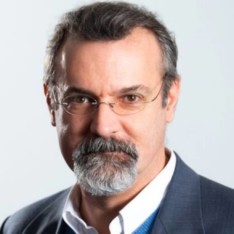
Antony Davies is the Milton Friedman Distinguished Fellow at the Foundation for Economic Education, and associate professor of economics at Duquesne University.
He has authored Principles of Microeconomics (Cognella), Understanding Statistics (Cato Institute), and Cooperation and Coercion (ISI Books). He has written hundreds of op-eds appearing in, among others, the Wall Street Journal, Los Angeles Times, USA Today, New York Post, Washington Post, New York Daily News, Newsday, US News, and the Houston Chronicle.
He also co-hosts the weekly podcast Words & Numbers. Davies was Chief Financial Officer at Parabon Computation, and founded several technology companies.
