Search This Blog

De Omnibus Dubitandum - Lux Veritas

Showing posts with label Jack Nicastro. Show all posts

Monday, March 22, 2021

The 2020 Recession: Blame Lockdowns, Not the Virus

Jack NicastroJack Nicastro  Ethan Yang Ethan Yang  – March 20, 2021 @ American Institute for Economic Research

here. AIER Senior Fellow Robert Hughes notes,

“Real gross domestic product plunged at a historic 32.9 percent annualized rate in the second quarter, down sharply from a severe -5.0 percent pace of decline in the first quarter. Over the past four quarters, real gross domestic product is down 9.5 percent, the worst year-over-year on record… On a nominal basis, gross domestic product tumbled 34.3 percent in the second quarter, putting the change from a year ago at -9.0 percent.”

In short, lockdowns have generated the harshest economic contraction in American history and even across the world. A research article in the American Association for the Advancement of Science notes,

“The data paint a consistent picture: The economic shock and attendant disruptions to livelihoods during the early stages of pandemic appear to be large across a range of populations in Africa, Asia, and Latin America. The scale of the disruption may even exceed the effects that economists have documented in other recent global crises, including the 1997 Asian Financial Crisis, the 2008 Great Recession, and the Ebola outbreak of 2014.”

However, the article, like many research pieces detailing economic damage during the age of Covid-19, makes a disclaimer that,

“We emphasize that our data do not speak to the economic consequences of imposing or relaxing specific lockdown policies.”

The International Monetary Fund was less equivocal in its predictions of global economic devastation in an article following its publication of the World Economic Outlook, April 2020: The Great Lockdown, entitled, “The Great Lockdown: Worst Economic Downturn Since the Great Depression:”

“Under the assumption that the pandemic and required containment peaks in the second quarter for most countries in the world, and recedes in the second half of this year, in the April World Economic Outlook we project global growth in 2020 to fall to -3 percent. This is a downgrade of 6.3 percentage points from January 2020, a major revision over a very short period. This makes the Great Lockdown the worst recession since the Great Depression, and far worse than the Global Financial Crisis.” (Emphasis our own)

The IMF’s most recent World Economic Outlook (January, 2021) reveals that their April, 2020 prediction was hopeful compared to the actual global contraction of 3.5% – a whole half of a percentage point worse than their April prediction – and the “severe collapse in 2020 that has had acute adverse impacts on women, youth, the poor, the informally employed, and those who work in contact-intensive sectors.”

Although it is generally true that we cannot make precise judgments on the effects of specific lockdown policies, odd disclaimers like these appear frequently throughout academic and public discourse. They often attempt to suggest that the economic damage caused by lockdowns could be caused by Covid-19 itself as people voluntarily stay home as the virus wrecks havoc. Some economists at prestigious institutions like the University of Chicago even suggested that the idea that people would commit suicide in reaction to lockdowns is a “pet theory.” Such comments suggest a strange and economically ludicrous idea that forcefully shutting down society will not have a devastating impact, especially when Covid-19 has been confirmed to be a relatively mild disease that is mostly dangerous to the elderly and immunocompromised. 

According to an essay produced by Dr. Donald Henderson, most famous for leading the eradication of smallpox, lockdown policies such as business closures and stay at home orders have no precedent in the history of public health, nor should they be considered as effective policies. 

Since the beginning of the pandemic up to the present day, politicians, journalists, and economists have bemoaned the impact of the “coronavirus” on employment, productivity, and the economy writ large. For ten of the most egregious examples of this evasive rhetoric, read Jeffrey Tucker’s article, “The Entrenchment of Lockdown Denialism.” Attributing the negative economic reality to the “pandemic” fails to recognize the causal agent of this downturn in employment and production: lockdown policies.

Humankind has been confronted with health emergencies in the past that posed an even greater threat to life, but were not met with the degree of state intervention or economic cataclysm we’re experiencing today. Nationally, there is evidence of covariance between economic performance, as revealed by unemployment figures, and strictness of lockdown policies in a state-by-state comparison. Internationally, there is a similar variation between countries with stringent social distancing and business closure policies and those with less restrictive policies. One cannot simply curse “the pandemic” for causing economic suffering; one must scrutinize the policies that are directly responsible for it. 

A Historic Comparison 

The 1918 Influenza pandemic, also known as the Spanish Flu, was not merely an especially virulent virus, but a particularly deadly one as well. According to a 1957 report by the National Bureau of Economic Research, “Annual Estimates of Unemployment in the United States, 1900-1954,” the Spanish Flu claimed an approximate 

“40 million lives worldwide over 18 months: 675,000 of those deaths occurred in the United States.” 

While these numbers are ghastly in absolute terms, a May 2020 report by NBER, “Social and Economic Impacts of the 1918 Influenza Epidemic,” discusses the relative significance of these figures: 

“An estimated 40 million people, or 2.1 percent of the global population, died in the Great Influenza Pandemic of 1918–20. If a similar pandemic occurred today, it would result in 150 million deaths worldwide… The flu killed 550,000 in the United States, or 0.5 percent of the population.”

As of March 18, 2021, the World Health Organization reports a total of over 120 million confirmed cases of Covid-19 and over 2.6 million deaths attributed to the disease. The WHO figure must be taken with a grain of salt (or several) considering the different testing and reporting standards of countries across the world. Still, considering the population-adjusted death toll of the Spanish Flu is two whole orders of magnitude greater than the lives lost to Covid-19, it would be absolutely fair to describe the Spanish Flu as considerably more severe than the coronavirus in terms of the threat it posed to public health.

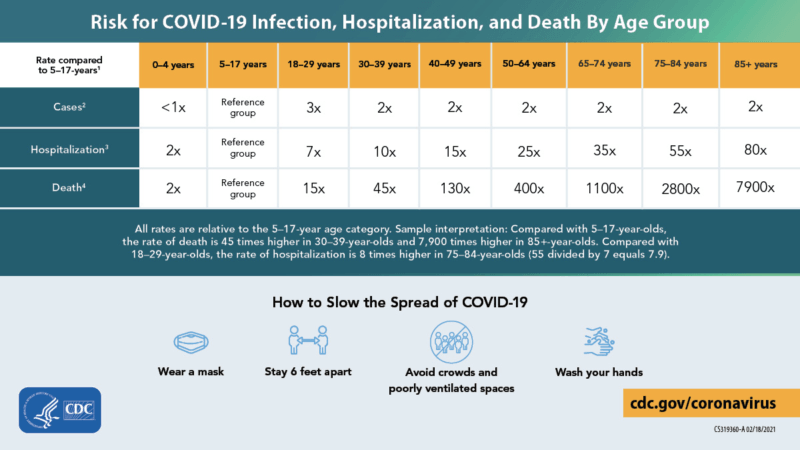
Aside from the absolute difference in mortality between Spanish Flu and coronavirus, an important consideration for the following economic comparison is who is succumbing to the two diseases. As has been known since early on in the pandemic, the coronavirus poses a much greater risk of mortality in elderly populations (65 years old and older) compared to the 5-17 year old control group.

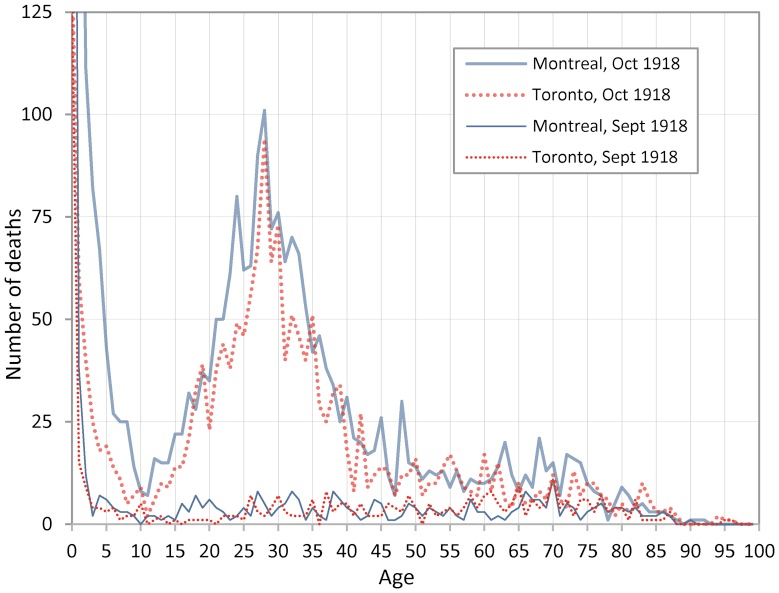
In contrast, the Spanish Flu had “unusually higher mortality rates in individuals aged 18-40,” as reported by the NBER in their 1957 report. Correspondingly, John M. Barry, historian and author of The Great Influenza, estimated in the Washington Post that,

“[i]n 1918, roughly half of those who died were men and women in their 20s and 30s. People were getting sick and dying in the prime of their lives. As many as 8 to 10 percent of all young adults then living may have been killed by the virus.”

Researchers from Canada, the U.K., and the U.S. confirmed such an assertion in 2013 with their report, “Age-Specific Mortality During the 1918 Influenza Pandemic: Unravelling the Mystery of High Young Adult Mortality:”

Still, despite the catastrophic death toll of the Spanish Flu being disproportionately born by the working-age population, the National Bureau of Economic Research calculated that the 1918 influenza precipitated only a “a 1.5 percent decline in GDP and a 2.1 percent drop in consumption.” That’s significantly less than the 2020’s decrease in real gross domestic product of 9.5 percent

This unpredictable data raises an obvious question: what explains the severity of America’s current economic crisis given our much better performance during the Spanish Flu? The NBER researchers proffer, albeit trepidatiously and vaguely, the following explanation: 

“… some of the mitigation efforts that are currently underway, particularly those affecting commerce and travel, are likely to amplify the virus’s impact on economic activity.” (Italics our own) 

National comparisons between states with similar per capita rates of Covid-19 cases and deaths, but significantly disparate rates of unemployment and lockdown stringency scores substantiate this assertion.

In 2008 the St. Louis Federal Reserve produced a warning that another Spanish Flu-style pandemic would have dire economic consequences, but such a prediction was likely made without factoring in the possibility of lockdowns. They write

“However, for a pandemic as severe as the 1918 influenza, estimates of its overall economic impact range from a 4.25 to a 5.5 percent annual decline in GDP—an effect large enough to trigger a significant recession.”

To reiterate, Covid-19 is by no means as deadly as the Spanish Flu by any stretch of the imagination. The economic contraction was 9.5% not 5.5%. 

A National Comparison: Stringency, Unemployment, Covid-19 Deaths

Across the U.S. various state governments have taken different measures in response to the coronavirus pandemic. States such as New York, California, and Massachusetts issued wide-ranging executive orders shuttering businesses, mandating social distancing, and mask-wearing early on in the pandemic, whereas states like South Dakota, Utah, and Florida have largely abstained from imposing top-down controls on their citizens. The difference in these states’ restrictive measures is reflected in their stringency scores as of January 2021, calculated by the University of Oxford: 69.91 (NY), 63.43 (CA), 69.44 (MA), 9.26 (South Dakota), 35.19 (Utah), 33.8 (Florida).

In her recent piece, “The Florida Versus California Shutdown,” Amelia Janaskie details the demographic similarities between the two states and explains the stark difference in the governors’ Covid-19 responses and the resulting discrepancy in economic performance between the two states. Janaskie documents that Florida has kept in-person K-12 schooling open throughout the pandemic, has enforced no mandatory travel quarantine, and imposed no statewide capacity restrictions on restaurants. On the other hand, she underscores that California has adopted all of these aforementioned policies to a particularly severe and protracted degree. 

Consequently, Florida has a stringency score of 33.8 whereas California has one of 58.8. Despite their starkly juxtaposed responses, California and Florida have similar Covid cases and deaths per 100,000 population: 119 vs. 135 and 8,621 vs. 8,370, respectively. Despite Florida having a significantly higher at-risk, elderly (65+ years old) population than California, 16.5% vs. 14.8%, California actually experienced more nursing home deaths per 100 residents than Florida: 2 vs. 1.

The major difference between Florida and California? Unemployment: Florida’s rate is 6.1% while California’s is a whopping 9%. 

Thomas Hogan explains how this trend manifests across the U.S. in his piece, “Only Ending Lockdowns Can Stimulate the Economy.” He details that, as of January 2021, ten states achieved record low unemployment rates as low as 4%, the likes of which have been seen at a national level only five times since the Great Depression. Conversely, Hogan notes that six states and Washington, D.C. have historically high unemployment rates greater than 8%, which have only been experienced at the national level three times since the Great Depression. Of the ten states with historically low unemployment, nine are in the bottom half of the Oxford COVID-19 Government Response Tracker (CGRT) whereas, of the seven regions with historically high unemployment, five are in the top half of the index. 

As discussed by Vincent Geloso in his piece, “Spanish Flu Was Awful But We Moved On Anyway,” these findings confirm the conclusion of an analysis published in the European Journal of Political Economy 

“that studied 212 economic crises in 175 countries between 1993 and 2010 [and] found that it is the countries with institutions that are the most open to competition and entrepreneurial activity that experience the least severe recessions, as well as the quickest recoveries.”

From this we can draw a confident conclusion that it is restrictive lockdown policies and not simply fear of Covid-19 that has caused the economic and social damage seen to this current day.

An International Comparison

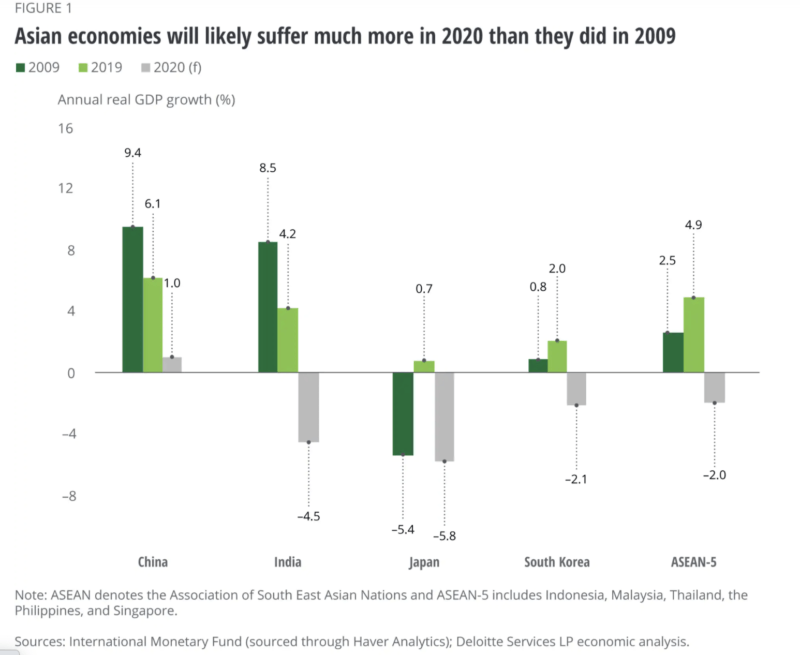
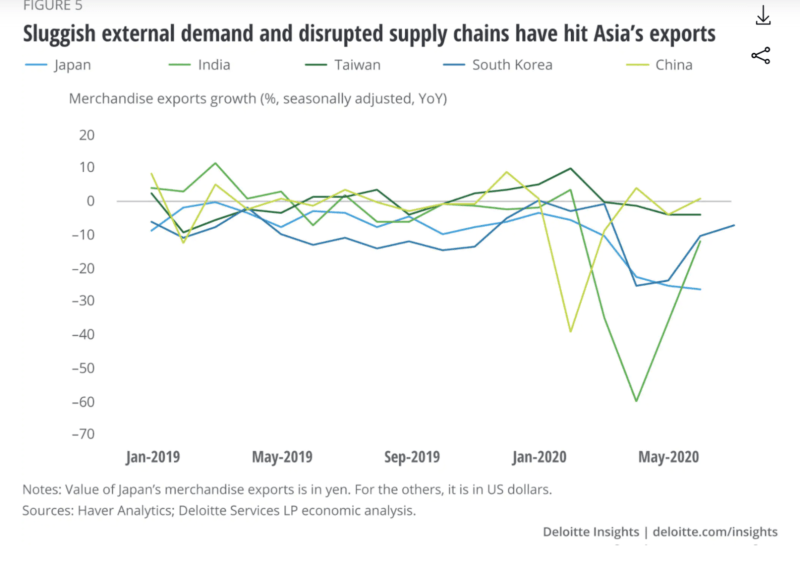
Across the world we see the effects of lockdowns, even for countries that were less strict than America and Europe. Asia is a prime example of how lockdowns worldwide helped bring down society across the board. Most Asian countries from Japan to India rank relatively low for deaths per capita compared to North America and Europe. Furthermore, lockdown policies were relatively light-handed and diverse in Asia with Taiwan never declaring a lockdown, Japan using a pseudo-lockdown, and India going into full lockdown. Still, whatever restrictions existed took their toll on their respective economies and those economic shocks were worsened by lockdowns in other countries as international trade and travel ground to a halt. The following data is provided by Deloitte, which shows that the economic damage in Asia even exceeded the 2008 Financial Crisis.

Although fear of Covid-19 may explain some of the economic contraction, it is clear that harsh lockdown policies that prevent society from functioning properly while also exacerbating fear of the virus have caused the strong downturn. This is further demonstrated by the effects of lockdowns in other countries which have subsequent effects on Asian tourism and exports. Those are 2 vital components of the Asian economy. Akrur Barua writes for Deloitte when he notes,

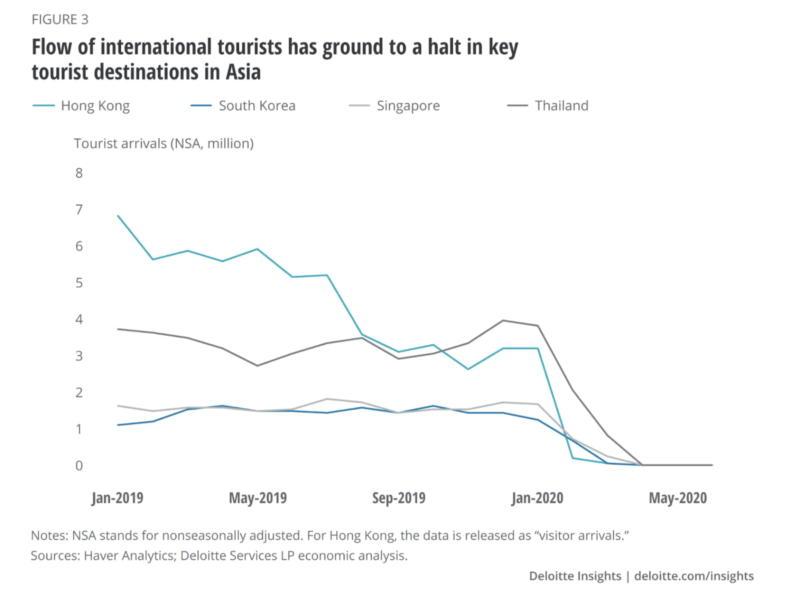
“For economies in South Asia and Southeast Asia that have large tourism sectors, the pandemic and continuing restrictions on travel have meant that tourism incomes have dried up. In Thailand, international tourist arrivals dropped 42.8% in February, 76.4% in March, and then fell to zero in April and May…Smaller and less-diversified economies, such as the Maldives and even Sri Lanka, seem set for a bigger impact on growth…

Passenger movements at Changi Airport, Singapore, fell by 99.5% in April and May. Other air travel hubs like Hong Kong and Kuala Lumpur, Malaysia, show similar declines in passenger traffic. According to the International Air Transport Association, passenger traffic for Asia-Pacific airlines is forecasted to fall 53.8% in 2020, thereby leading to a 27.5% fall in revenues.”

Provided below is a graph detailing the severe drop in tourism in key areas.

Furthermore, Asia’s export sector has been devastated by lack of demand as economies across the world are shuttered and global supply chains are undone. 

All of these countries rely heavily on external demand for manufactured goods, whether it be garments from India or semiconductors from Taiwan. Lockdowns not just in Asia but across the world have artificially closed off supply lines and suppressed consumer demand, which has clearly culminated in a devastating hit to the Asian export sector. 

In poorer countries like Nepal and Bangladesh, lockdowns have caused spikes in food insecurity following the harvest period which is when such rates are historically lower.

Covid-19 lockdowns have created the largest economic contraction in recent history. Greater than the 2008 Financial Crisis, Swine Flu, and, in the context of the U.S., over six times worse than the economic impact of the 1918 Spanish Flu (a contraction of 9.5% in real GDP compared to 1.5%). Unlike a financial crisis which occurs when the economy is unhealthy and in need of a correction, Covid-19 emerged during a time of global prosperity. It is clear that the independent variable in question is the forced and unprecedented shutdown of society by government force. 

Key Takeaways 

The Covid-19 pandemic has brought about the greatest economic contraction in modern recorded history not just in the United States but across the world, even greater than the financial crises following the Great Depression. Disease outbreaks certainly lead to declines in economic activity but never at this scale.

To suggest that Covid, not the unprecedented halting of societal activity with the force of government is responsible, would be the height of ignorance. Lockdowns as they have been applied in 2020 have never been implemented in the history of public health and now we have seen why. The data is clear. Lockdowns have caused an unprecedented level of economic damage that has far exceeded any event in modern history be it another pandemic or a financial crisis. That is because unlike any other challenge in history, governments across the world forcefully stopped society from reacting and recovering. It should be uncontroversial and frankly, intellectually honest, to say that it was lockdowns that caused the misery that we were forced to endure, not Covid-19.

Jack Nicastro

Jack Nicastro

Jack Nicastro is a Research Intern at the American Institute for Economic Research. He is currently pursuing his Bachelor’s degree in Economics and Mathematics at Dartmouth College.

Jack is Director of Programming for the Dartmouth Libertarians, a writer and content-creator for the Dartmouth Political Times, a Co-Chair of the American Enterprise Institute Executive Council at Dartmouth, Assistant to the Program Director of Dartmouth’s Political Economy Project and a horseback rider on the dressage team.

Jack enjoys playing bass guitar in his free time.

Get notified of new articles from Jack Nicastro and AIER.

Ethan Yang

Ethan Yang

Ethan joined AIER in 2020 as an Editorial Assistant and is a graduate of Trinity College. He received a BA in Political Science alongside a minor in Legal Studies and Formal Organizations.

He currently serves as Local Coordinator at Students for Liberty and the Director of the Mark Twain Center for the Study of Human Freedom at Trinity College.

Prior to joining AIER, he interned at organizations such as the American Legislative Exchange Council, the Connecticut State Senate, and the Cause of Action Institute.

Ethan is currently based in Washington D.C.

Get notified of new articles from Ethan Yang and AIER.

Essential and Non-Essential: Never Again

Jack Nicastro Jack Nicastro  – March 19, 2021 @ American Institute for Economic Research

 https://www.aier.org/wp-content/uploads/2021/03/1950sworkers-800x508.jpg

What makes somebody “essential?” Governmental and societal responses to Covid-19 have revolved around classifying certain types of human behavior and individuals themselves as “essential” or “nonessential.” But what is the meaning of this distinction? 

Essential to whom? Essential to what end? Who has the ability to discern and decide for all of us what is and what isn’t essential? Is such a descriptor even applicable to individuals and their pursuits? Whatever the definition of this nebulous word, governments and communities across the world have employed the term to create a caste system of worthy and unworthy individuals.

We might define seeing our friends and family members as “essential.” On the other hand, a public health official might simply define “essential” as those activities which are necessary for the members of society to continue maintaining homeostasis, i.e. not dying. To this end, any action that isn’t taken to forward the collective end if survival is not only “nonessential,” but is deemed to be at odds with the greater good and impermissible. 

Rush, “2112”, and the Valorization of the Pursuit of Happiness

In 1976, long before the governments’ medieval, illiberal lockdowns, a Canadian rock and roll band released a 20 minute, 33 second ode to musicians, artists, and all pursuers of beauty, self-actualization, and happiness. The song, written by Neil Peart, the primary lyricist and world-renowned drummer of Rush, bears the enigmatic title of “2112.”

Set in that year, the song describes a dystopian future in which society and everyone within it are micromanaged by a council of elders, known as the “Priests of Syrinx.” Sciencemag explains that, “[t]he melodious call of many birds comes from a mysterious organ buried deep within their chests: a one-of-a-kind voice box called a syrinx.” Ironically, and unfortunately for the protagonist of the song, the Priests of Syrinx are decidedly against the making of music.

One of the earliest verses of “2112” is the Priests of Syrinx incanting their collectivist philosophy and emphasizing that its legitimacy is not up for debate: “Work together/Common sons/Never need to wonder/How or why.” It would seem that many Americans have taken the Priests’ words to heart and are acquiescing wholesale to the edicts of governors and public health officials. 

In contrast, those public health experts and concerned citizens who do call into question the morality of forced business closures and hard lockdown and social-distancing policies are straw-manned as science-deniers, selfish evil-doers, or both.  

Instead, they are encouraged to accept the models devised by the computational simulations of epidemiological experts like Neil Ferguson – never mind that Ferguson’s doomsday predictions were called into question by AIER early on in the pandemic and have since been proven false by reality. Eerily, the Priests of Syrinx also appeal to the supposed infallibility of their “great computers/[that] fill the hallowed halls.” 

CNN recently published a disturbing piece unironically entitled, “Even with hope on the horizon in this pandemic, what’s the point of ever leaving home again?” Again, the sentiment that an individual can be content while stripped of his freedom bears a striking similarity to the paternalistic rhetoric of the authoritarian Priests of Syrinx who claim that: “All the gifts of life/Are held within our walls.” 

Much like the explicitly stated policy objectives of the Biden administration, the Priests of Syrinx revel in the equity and egalitarianism of their planned society: “Look around this world we made/Equality/Our stock in trade/Come and join the Brotherhood/Of Man.” In both the Biden regime and the society of The Foundation, it is not the pursuit of one’s own happiness which is emphasized, but sacrificing for the country or “the Brotherhood of Man,” respectively.

One’s own life and enjoyment thereof is not deemed as a legitimate justification for one’s own existence; this is “nonessential” and explicitly unethical and vaguely immoral to altruists, egalitarians, and collectivists. What’s “essential,” ethical, and moral is living for one’s neighbor and relentlessly pursuing a Rawlsian policy of doing whatever benefits the worst off the most: the maximin principle

Later on in the song, the protagonist, a nameless citizen of The Foundation, discovers a “strange device” that the listener quickly identifies as a guitar. The citizen is excited to “share this new wonder” with his compatriots so that “the people will all see its light” and “make their own music,” meaning pursue their own happiness and refine their ability as musicians. Believing in the benevolence of his governmental masters, the citizen ends by singing “The Priests praise my name on this night.” The citizen then presents the Priests the guitar and implores them to, 

“Hear what it can do/There’s something here as strong as life/I know that it will reach you.” 

To the horror of the protagonist and presumably the listener, the priests admit that they were already aware of its existence and rejected the guitar, music, and individuals’ enjoyment thereof as a meaningless distraction: 

 “Yes, we know/It’s nothing new/It’s just a waste of time/We have no need for ancient ways/Our world is doing fine/Another toy/That helped destroy/The elder race of man/Forget about your silly whim/It doesn’t fit the plan (Italics my own)

If this doesn’t call to mind images of government officials and public health officials describing human connection, merrymaking, socializing, partying, family gatherings, sports tournaments, music concerts, etc. as unnecessary, dangerous, and in violation of their plans to “stop the spread,” then feel free to stop reading now. But for those with whom the preceding quote gives an abundance of pause, I implore you to continue. 

In an almost explicit reference to Rawls’ Theory of Justice as Fairness, the priests of Syrinx ask the bard how his guitar-playing materially helps those worse off than him: 

“Don’t annoy us further/We have our work to do./Just think about the average/What use have they for you?”

This line of question is completely cogent from the perspective of a Rawlsian mini-maxer who believes one cannot morally pursue their own happiness while there are others who need his help. This moral logic has played out since last March and is evidenced by Fauci, state health officials, and various governors declaring family gatherings, socializing, other forms of communal interaction and in-person work as “nonessential.” The obvious question to such a statement, as posited in the beginning of this essay, would and must be, “Nonessential to whom?” 

The logical conclusion of this moral philosophy is that virtually every activity that humans engage in is immoral when it isn’t directly related to providing for the subsistence of others or otherwise helping the relatively worse off. 

Under such a paradigm, everyone must lead a lifestyle of absolute asceticism and altruism to be considered moral. This is absurd prima facie and only becomes more incoherent the more it is scrutinized; how can living, working, and sacrificing for somebody be meaningful if that person’s own life and enjoyment thereof is not meaningful in and of itself? It cannot. 

No, the individual and his pursuit of happiness is the end in and of himself and needs no further justification. A man cannot be “nonessential” because he is essential to himself; the quality of “essential” is not imparted extrinsically from a higher power, but exists inherently within every man who values his life and his enjoyment of it. 

The Consequence of Society’s Adoption of the Concept of the Essential Worker

Following the priests’ destruction of his guitar along with their denial of his personal pursuit of beauty, fulfillment, and happiness, the protagonist of “2112” seeks to escape the brutalist reality confronting him by escaping into an altered state of consciousness:

“I wandered home through silent streets/And fell into a fitful sleep/Escape to realms beyond the night/Dream – can’t you show me the light.”

As young Americans struggle to derive happiness from their present circumstances, given the isolation and atomization produced, ironically, by policies designed to promote public health, their mental health has suffered dearly. As reported by FAIRHealth:

“For the age group 13-18, in April 2020, claim lines for generalized anxiety disorder increased 93.6 percent as a percentage of all medical claim lines over April 2019, while major depressive disorder claim lines increased 83.9 percent and adjustment disorder claim lines 89.7 percent.” 

Normal coping mechanisms and support systems stolen from young people by government fiat and societal paranoia; many have been forced to stay at home instead of attending school, seeing their friends, partaking in communal activities, and doing all those “nonessential” things that make life worth living. Unsurprisingly, rates of substance abuse and overdoses have increased as young people engage in self-destructive forms of escapism to even temporarily depart the depressing world that they have been thrust into:

“For the age group 13-18, claim lines for overdoses increased 94.91 percent as a percentage of all medical claim lines in March 2020 and 119.31 percent in April 2020 over the same months the year before. Claim lines for substance use disorders also increased as a percentage of all medical claim lines in March (64.64 percent) and April (62.69 percent) 2020 as compared to their corresponding months in 2019.”

Upon having his guitar destroyed along with his sole outlet of happiness and beauty, the protagonist of “2112” kills himself:

“I don’t think I can carry on/This cold and empty life/My spirits are low, in the depths of despair/my lifeblood/Spills over…”

Again, the consequences of isolating people, robbing them of their purpose by government fiat, and stripping them of what makes them happy has resulted in an increase in not just drug abuse, but drug overdose deaths, as reported by the CDC

“Over 81,000 drug overdose deaths occurred in the United States in the 12 months ending in May 2020, the highest number of overdose deaths ever recorded in a 12-month period, according to recent provisional data from the Centers for Disease Control and Prevention (CDC). While overdose deaths were already increasing in the months preceding the 2019 novel coronavirus disease (COVID-19) pandemic, the latest numbers suggest an acceleration of overdose deaths during the pandemic.“

Data from FAIRHealth reveals that intentional-self-harm among young people has also increased from 2019 to 2020:

”Claim lines for intentional self-harm as a percentage of all medical claim lines in the 13-18 age group increased 90.71 percent in March 2020 compared to March 2019. The increase was even larger when comparing April 2020 to April 2019, nearly doubling (99.83 percent). Comparing August 2019 to August 2020 in the Northeast, for the age group 13-18, there was a 333.93 percent increase in intentional self-harm claim lines as a percentage of all medical claim lines, a rate higher than that in any other region in any month studied for that age group.”

You Are Essential

People’s communities, jobs, hobbies, and everyday lives are essential to their survival and flourishing. It is unethical and immoral for central planners and public health officials to attempt to control the spread of a virus – however deadly it may be to certain demographics – at the expense of individuals’ natural rights, physical health, mental health, and metaphysical well-being: that elusive, invaluable thing called “happiness.”

All people are essential in, of, and for themselves; they need no justification from technocrats, bureaucrats, elected officials, or any other person or collective. The conviction that man’s life need no higher justification than his own happiness was articulated concisely and artfully in Anthem by Ayn Rand, whose “genius” Rush credits on the inside cover of “2112” for its inspiration:

“For I know what happiness is possible to me on earth. And my happiness needs no higher aim to vindicate it. My happiness is not the means to any end. It is the end. It is its own goal. It is its own purpose. Neither am I the means to any end others may wish to accomplish. I am not a tool for their use. I am not a servant of their needs. I am not a bandage for their wounds. I am not a sacrifice on their altars. I am a man. This miracle of me is mine to own and keep, and mine to guard, and mine to use, and mine to kneel before!… I owe nothing to my brothers, nor do I gather debts from them. I ask none to live for me, nor do I live for any others. I covet no man’s soul, nor is my soul theirs to covet.”

Jack Nicastro

Jack Nicastro

Jack Nicastro is a Research Intern at the American Institute for Economic Research. He is currently pursuing his Bachelor’s degree in Economics and Mathematics at Dartmouth College.

Jack is Director of Programming for the Dartmouth Libertarians, a writer and content-creator for the Dartmouth Political Times, a Co-Chair of the American Enterprise Institute Executive Council at Dartmouth, Assistant to the Program Director of Dartmouth’s Political Economy Project and a horseback rider on the dressage team.

Jack enjoys playing bass guitar in his free time.

Get notified of new articles from Jack Nicastro and AIER.


Sunday, March 7, 2021

The Right to Work and Occupational Licensing

Jack Nicastro Jack Nicastro   Amelia Janaskie Amelia Janaskie Ethan Yang Ethan Yang  – March 4, 2021

https://www.aier.org/wp-content/uploads/2021/03/salon-800x508.jpg

Covid-19 and the lockdowns that followed should have been a rude wake-up call that we are losing our appreciation for the power of economic freedom. Our government deciding who can and cannot work was a blatant attack on economic and personal freedom at the most intimate level. This contempt for the right to earn a living, however, has been a growing issue well before Covid-19. Our government has been deciding who can and cannot work for decades through the advent of occupational licenses, which legally bar individuals from offering a professional service without first passing through artificially-imposed barriers to entry. The public interest law firm Institute for Justice writes,

“All Americans deserve the opportunity to earn an honest living. Yet occupational licenses, which are essentially permission slips from the government, routinely stand in the way of honest enterprise. Without these licenses, workers can face stiff fines or even risk jail time.”

A person is not truly free if they are unable to provide a professional service to another consenting individual, provided they are not harming others. However, occupational licenses are a direct prohibition on an individual’s right to perform a service for a living. This is also a very recent innovation as the Reason Foundation reports,

“The percentage of the workforce that must obtain a license to work has grown from about 4.5 percent during the 1950s to over 20 percent today.”

The astronomical growth of the occupational licensing regime doesn’t just cover high knowledge professions like medicine and law, but virtually everything imaginable from hedge trimming to hair cutting. Reason writes,

“More than 1,000 occupations are currently regulated by the states. Children even need the government’s permission to run makeshift lemonade stands during their summer vacations.”

The growth of such a regime has come at the cost of people’s ability to make a living with their unique talents. That is because often, such laws are made to protect incumbent businesses from competition by legally requiring new entrants to the market to pass a series of requirements that are costly both in time and money. The Institute for Justice writes,

“The requirements for licensure, though, can be an enormous burden and often force entrepreneurs to waste their valuable time and money to become licensed. Additionally, these burdens too often have no connection at all to public health or safety. Instead, they are imposed simply to protect established businesses from economic competition.”

It is one thing to require doctors to attend medical school, it’s another thing to mandate that hairdressers and florists pass hundreds of hours of formal training before they can legally solicit a client. Reason highlights an example of how outrageous and malicious licensure laws are when they tell the story of a talented florist struggling to obtain a license in Louisiana:

“The licensing exam emphasizes such subjective criteria as whether flowers have been “picked properly,” arrangements have the “proper focal point,” or flowers are “spaced correctly.” No wonder the passage rate is less than 50 percent. So despite her proven talent, Shamille has been forced to forego floral work and find a job elsewhere.”

Such licensure laws not only crush the ability of individuals to make a living, but also hurt the community as a whole to the benefit of well-connected interests and their friends in the government. A report from the Brookings Institution explains that, although licenses are advertised to increase public safety and service quality,

“[b]y limiting access to many occupations, licensing imposes substantial costs: consumers pay higher prices, economic opportunity is reduced for unlicensed workers, and even those who successfully obtain licenses must pay upfront costs and face limited geographic mobility. In addition, licensing often prescribes and constrains the ways in which work is structured, limiting innovation and economic growth.”

The claim that these economic costs are justified by improved quality and safety is a dubious one at best. In fact, Reason documents multiple studies finding that increased regulation of professions in the 1970s and 1980s most often produced no change in quality and is almost always coupled by an increase in the price of the service provided. 

A Closer Look

Aside from these disturbing anecdotes, there are ways to easily quantify the cost that occupational licensing imposes on those seeking them. For the purposes of our analysis, we will be investigating how many hours, days, weeks, months, or years certain licenses require – opportunity cost – as well as the upfront price of taking the required examination or application fee – accounting cost. 

To set the stage, occupational licensing is an aspect of law which is handled on a state-by-state basis. As the Brookings Institute explains

“Typically, licenses are required by state governments…The U.S. licensure system takes a variety of forms throughout the country, but typically a state regulatory board… will process license applications, handle renewals, and oversee compliance with licensing rules, among other activities.”

Below is a graph compiled on the number of occupational licenses on a state-by-state basis, ranked in ascending order, with data from CareerOneStop, sponsored by the U.S. Department of Labor. 

As the most populous as well as the fourth most licensed state in the country, we have chosen to inspect the opportunity and accounting costs of licensing in California. Two sets of jobs are provided: one set of low-skilled occupations; the other of high-skilled ones. In the low-skilled set, we highlight the licensing costs faced by manicurists, electrologists, estheticians, barbers, and cosmetologists. In the high-skilled set, we include lawyers, registered nurses, optometrists, physicians, and psychologists

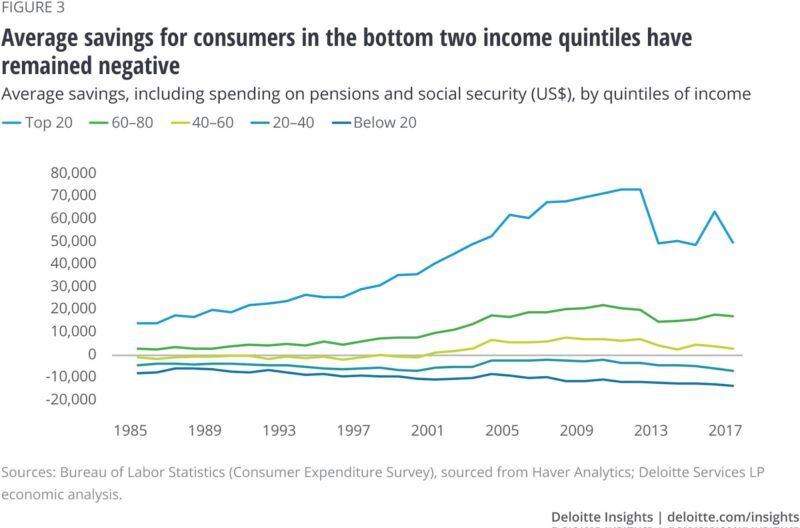
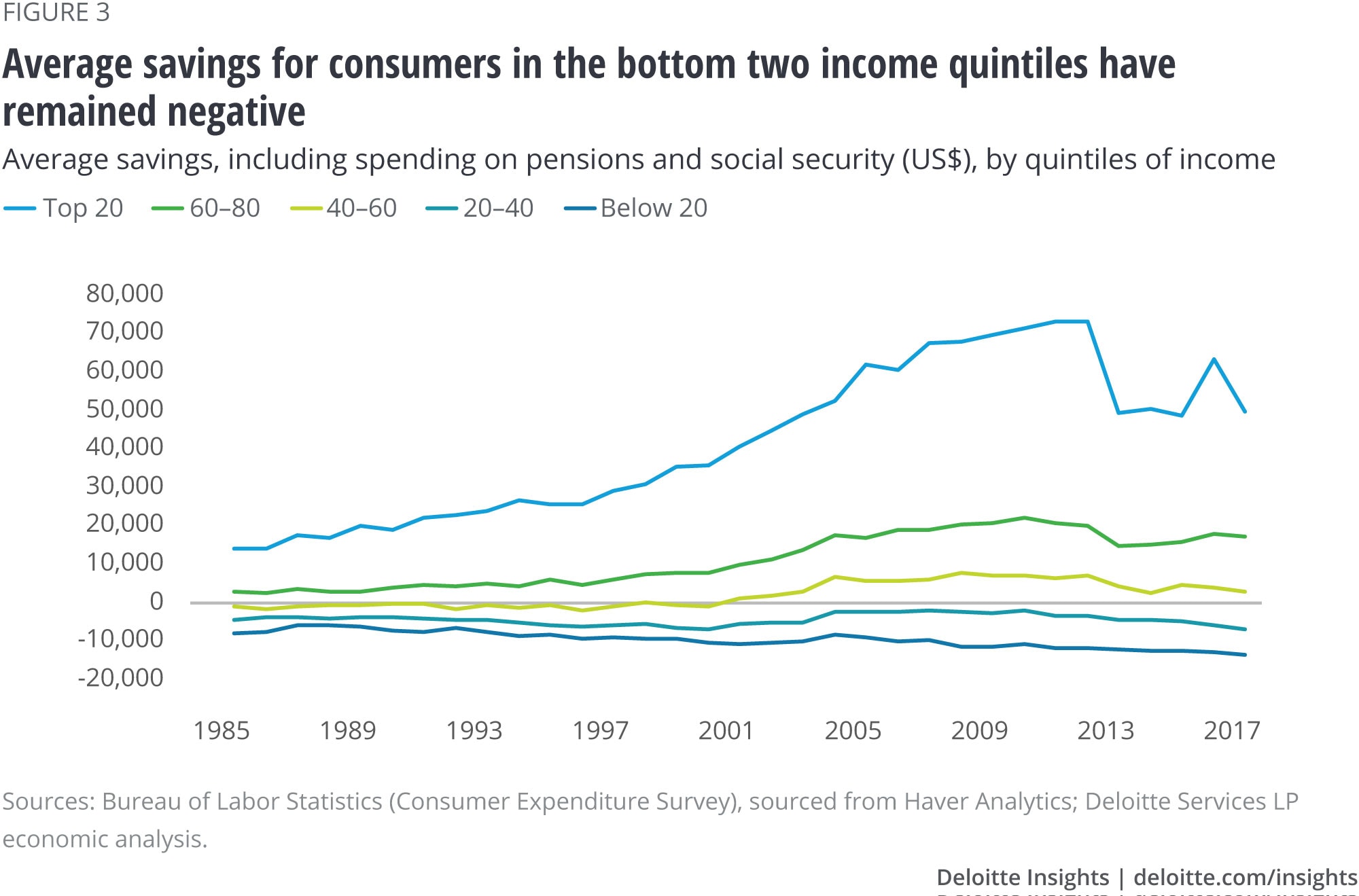
All along the spectrum of licensed professions, from high-skilled to low-skilled, the investment of time and money in obtaining legal permission to work is dizzying to consider. Even for manicurists, the low-skilled occupation with the lowest barriers to entry, one must accumulate 400 hours – the equivalent to 10 weeks of standard 9-5PM workdays – of unpaid apprenticeship and invest $110 before being able to legally bill for their services. While 10 weeks of unpaid labor might not seem like that big of a deal to a college student, for those in the bottom two quintiles of wage earners, i.e. most of those applying for a manicurist’s license, not working for 10 weeks and having to pay $110 can be financially impossible. According to Deloitte and research compiled by the Bureau of Labor Statistics, the bottom two quintiles of consumers in 2017 had negative savings, making unpaid labor and paying over one hundred dollars well nigh impossible. 

Considering that this is the grim reality faced by those aspiring manicurists, the hurdles and hoops other beauticians must jump through to get their licenses only gets more difficult. Given these data, it is not surprising that a Reason Foundation study found that

 “Licensing decreases the rate of job growth by an average of 20 percent.” The same study also found that the “cost of licensing regulations is estimated at between $34.8 billion and $41.7 billion per year,” meaning that the deadweight loss of complying with regulations is roughly equivalent to Armenia’s 2020 GDP of $40,788, as estimated by the International Monetary Fund

While many intuit the blatant, undisguised regulation capture in the beauty fields, others believe that, while regulations may be unjustifiable in fields that do not involve life or death decision-making, they must be applied to high-risk fields. Whether consciously or not, most of us buy into the idea that to exist in a world where unlicensed physicians are commonplace would be uncertain, chaotic, and even dangerous. Provided this pervasive attitude, the subsequent graph detailing the time and financial investment required to become a trained medical professional or lawyer will be less shocking, prima facie, than the lower-skilled occupations.

The cost does not include an undergraduate and graduate education which could reach into six-figure levels when considered. For these high-skilled occupations, the investment of time is measured in years rather than hundreds of hours, and the cost of test-taking and licensing fees measures easily above the $125 of the sample low-skilled jobs, climbing well into the thousands. While extensive training, vetting, and ratings of professionals in these high stakes fields are crucial to consumer protection – certainly much more so than with the low-skilled jobs listed – the imposition of attending an undergraduate program before proceeding to graduate school to study the skills relevant to the vocation is artificial, expensive, and unnecessary. 

Mandatory Licenses Do Not Improve Safety 

According to an article by the The Regulatory Review, a publication associated with the University of Pennsylvania, an Obama Administration report found that although there may be reason to believe that licenses may improve safety in specific professions,

“[a]ccording to the federal report, however, studies on licensing requirements have found that licensing does not actually improve public health and safety. In its survey of twelve studies, the report identified only two that found that stricter licensing requirements increased the quality of services.”

The report also found that state licensing regimes reduce labor mobility and could become problematic as the prevalence of telework increases. Furthermore, these licensing regimes disproportionately exclude certain populations from the workforce such as those convicted of felonies, who would be well-served by meaningful employment, and even immigrants who possess certification from their country of origin but not from their state of residence. 

Medical professionals, for example, are generally only licensed to practice in a given state, even after their years and years of rigorous training, and must jump through more hoops to practice elsewhere. Such restrictions on work only serve to preserve the market power of well-connected businesses via the coercive arm of the state. The illegitimacy of such licensing laws was revealed when former Vice President Mike Pence issued a regulation in the early days of the pandemic on March 18th, permitting all medical professionals to practice anywhere in the United States in light of limited medical workers and the threat of the coronavirus: 

“With regard to medical personnel, at the President’s direction, HHS is issuing a regulation today that will allow all doctors and medical professionals to practice across state lines to meet the needs of hospitals that may arise in adjoining areas.”

Like many regulations that were lifted for emergency reasons during the age of Covid-19, restrictions on the ability of doctors to practice medicine across state lines without a license for each state was found to be unnecessary. When push comes to shove, it turns out a doctor can perform just as well in Connecticut as New York without extra certification. Go figure. 

Society Can Do Without Mandatory Licenses 

It is clear that many professions have not seen any noticeable increase in quality due to the advent of licenses and that such restrictions function primarily to reduce competition for established actors. Trimming hedges and styling hair for compensation without the prescribed training and certifications should not be an illegal act. The only people who benefit from this are the incumbent businesses that are protected from competition and disruptive innovation. Even highly sophisticated professions like law and medicine would be better off if such legal barriers were removed. 

American legal scholar and attorney, Tim Sandefur, explains in his book The Right to Earn a Living that one of the biggest quality assurances is competition. The reason why you won’t encounter an unqualified professional at hospitals and law firms is due mostly to their motivation to provide excellent service rather than legal barriers set by the government. Take a look at any large law firm. They predominantly employ graduates exclusively from the top law schools. Not only that, but they typically hire those with the highest GPAs and strong extracurricular leadership positions. Passing the bar is the least of the requirements to work at such firms. Competition and innovation from both employees and employers is what raises standards, not mandatory licenses and state intervention.

Quality certifications are good to have but they shouldn’t be mandatory, especially if the cost of obtaining them is prohibitively expensive. Continuing with the example of the bar exam, passing is legally required to obtain a license to practice law. Although it is surely a good quality assurance test, it shouldn’t be illegal for someone to voluntarily solicit services from someone who hasn’t passed the bar. Skills come in all forms and perhaps some people can’t translate their legal talents into a test like the bar exam. Some people simply can’t afford a fully certified lawyer and they should have every right to solicit services from someone who isn’t. 

Furthermore, what constitutes the practice of law or other sophisticated professions is often nebulous on purpose to keep out competition of all sorts. Supreme Court Justice Neil Gorsuch writes in his book A Republic If You Can Keep It, that

“[i]n recent years, lawyers have used these rules to combat competition from outsiders seeking to provide routine but arguably “legal” services at low or no cost to consumers.”

He cites cases involving innovative firms like Quicken Family Lawyer and Legal Zoom which were both sued in Texas and South Carolina, respectively. Their crime was providing what can be interpreted as a legal service. That service was selling software that helped draft documents like wills and contracts. Such a service is clearly beneficial to society, especially to those who can’t afford a lawyer to accomplish these necessary but relatively simple tasks. 

Furthemore, the cost of going to law school is skyrocketing, much of which can be attributed to legal accreditation requirements. Justice Gorsuch notes that since the 1980s the cost of a private law degree has increased over 150% and a public degree over 420%, adjusted for inflation. Harvard Law School’s estimated cost of attendance is just shy of $100,000, $65,000 of that being for annual tuition, with three years being the average time it takes to receive a JD. That cost is relatively consistent among most elite law schools. Justice Gorsuch notes that the average tuition for an ABA accredited law school in the state of California is not much better at around $44,170 a year. 

Again, not only are legally mandated certifications to work inflating the costs of important services, but they often keep it that way with little improvements to public safety. The legal profession is a clear example of a sector that certainly needs qualified workers. However, it is clear that mandatory requirements to even practice law in any form, whether it be complex corporate litigation or showing a family how to write a will, are not necessary. In fact they are clearly barriers to entry to the benefit of entrenched economic interests, at the expense of society. 

You can apply the same level of analysis to any other complex profession such as medicine or accounting. All mandatory licenses do is take the power to offer and seek a service from the people to place it in the hands of the few. Even if someone is supposedly unqualified to offer a service, it is the right of the consumer to take that risk as it is likely they have no better option. If necessary, fraud and harm caused by incompetent or competent professionals can be punished via the criminal code. 

Key Takeaways 

Occupational licensing is one of those topics that may not seem like a big deal to the average person at first glance. Of course professionals should be qualified for their jobs and of course certifications provide a great way to ensure quality. The problem comes when the power to decide who can and who cannot work is given to a coercive authority. In the marketplace, bad actors are naturally corrected by competition and public scrutiny. This is especially true in our age of instant communication and crowd-sourced reviewing platforms such as Yelp. However, under our current occupational licensing regime, honest and hard working people are kept from offering a service to society by an arbitrary system that protects established businesses from competition. Such laws are built more so on fearmongering than a true concern for public safety. Furthermore, such a system artificially suppresses those who have the skills but lack the resources to fulfill the expensive and demanding licensure requirements set by the state.

While the number of occupational licenses increases, we have seen little increase in public safety as a direct result and a massive increase in prices. There is nothing more Un-American and Anti-Capitalist than a system that ordains some with the right to earn a living and bars others from that same essential right. Rather than cultivating an environment where everyone can safely contribute, occupational licenses have made the economy a pay-to-play scheme that only serves well-connected interests.

Jack Nicastro

Jack Nicastro

Jack Nicastro is a Research Intern at the American Institute for Economic Research. He is currently pursuing his Bachelor’s degree in Economics and Mathematics at Dartmouth College.

Jack is Director of Programming for the Dartmouth Libertarians, a writer and content-creator for the Dartmouth Political Times, a Co-Chair of the American Enterprise Institute Executive Council at Dartmouth, Assistant to the Program Director of Dartmouth’s Political Economy Project and a horseback rider on the dressage team.

Jack enjoys playing bass guitar in his free time.

Get notified of new articles from Jack Nicastro and AIER.

Amelia Janaskie

Amelia Janaskie

Amelia Janaskie is a Research Associate at the American Institute for Economic Research.

She graduated from the College of Charleston Honors College in May 2020 with a B.S. in Economics and a minor in English.

During her time in college, she was a member of the Market Process Scholars with the Center for Public Choice and Market Process.

Get notified of new articles from Amelia Janaskie and AIER.

Ethan Yang

Ethan Yang

Ethan joined AIER in 2020 as an Editorial Assistant and is a graduate of Trinity College. He received a BA in Political Science alongside a minor in Legal Studies and Formal Organizations.

He currently serves as Local Coordinator at Students for Liberty and the Director of the Mark Twain Center for the Study of Human Freedom at Trinity College.

Prior to joining AIER, he interned at organizations such as the American Legislative Exchange Council, the Connecticut State Senate, and the Cause of Action Institute.

Ethan is currently based in Washington D.C.
Get notified of new articles from Ethan Yang and AIER.