Search This Blog

De Omnibus Dubitandum - Lux Veritas

Showing posts with label Pandemics. Show all posts

Wednesday, September 1, 2021

Book Review: American Contagions: Epidemics and the Law from Smallpox to COVID-19

Byron Carson Byron B. Carson, III  – August 29, 2021 @ American Institute for Economic Research 

John Fabian Witt highlights many cases where the American legal system influences the scope of public health rules in our ever-present fight against infectious diseases. Despite the number of cases discussed, which is a testament to Witt’s mastery of the subject, there are numerous shortcomings that make the book underwhelming as an analysis of the interaction between legal institutions and public health. As an introductory text on the history of such topics, however, the book is on a more solid footing.

Witt’s goal is to show that the American legal system influences public health for better or worse. That is, formal public health rules—and the court rulings that support or undercut those rules—alter the myriad interactions people take part in to improve their health, such as compulsory smallpox vaccinations. On some level this argument is novel and interesting; how formal legal rules influence expectations about which behaviors are acceptable is important and can have relevant private and public health implications. 

The well-known Jacobson v. Massachusetts (1905) is one case that legitimately enshrines local, state, and federal governments with the power to provide public health above our desire for civil liberties. Since that ruling, American courts have consistently ruled in favor of the pursuit of public health over civil liberties as long as public health officials follow appropriate procedure, e.g., the application of a public health rule like quarantine for all, not some, potentially infected persons. Witt nicely explains the benefit of these rulings and provides historical and modern examples where public health rules were overturned or stymied for their failure to follow procedure.

Witt does not, however, develop this foundation into a clear argument that might direct us towards altering the complex links between public health and our court system. One of the main pieces for such an analysis is a clear definition of what a case is; of all the histories and interactions Witt mentions, what are they representative of? Witt organizes each chapter thematically, but it is too imprecise to draw connections, general principles of law and public health, or a sustained in-depth argument. Some of the histories focus on legal cases that uphold public health rules, but some do not. 

Some of the legal cases discussed highlight the vagaries of the American court system; some highlight the importance of precedence. Some prioritize civil liberties, but some do not. Readers are rarely left with a clear argument from Witt regarding how we should understand the history, let alone policy recommendations. A more developed argument could have provided some explanation for contrasting cases and policy implications. Similarly, a nod to what improvements might look like would be helpful.

Relatedly, there is no framework to better understand the influence courts have on public health practices and rules. There is little explanation as to why some courts are loath to infringe upon civil liberties, while others are not; and there is little discussion on the conditions under which a court decision might or might not be appropriate given a stated hierarchy of normative values. The Jacobson v. Massachusetts case is telling. Pastor Henning Jacobson refused to take the Smallpox vaccine in 1903, for which he was fined; eventually the Supreme Court upheld the fine. 

Witt points to the nuanced decision of Justice John Marshall Harlan, namely that a different set of circumstances would have led to a different ruling. For example, the state’s vaccination efforts could have been deemed unconstitutional if the court had found evidence that the administration of the vaccine was arbitrary or oppressive. Jacobson made that argument, which the court heard, but Witt only speculates as to why the court decided against its own advice. Beyond that case, the implications for public health are unclear. Given the logic and ruling of Jacobson v. Massachusetts and related legal cases, how does the legal system create expectations for what is appropriate behavior, let alone proper public health rules? Is our court system an efficacious means of establishing and supporting such expectations? The primary goal of the text—to show connections between our institutions of public health and law—leads to these questions, but Witt does not wade into such complexities.

Another example where a framework would have improved the argument comes from our recent experiences with Covid-19. Responding to the perceived political nature of the Wisconsin state supreme court’s decision to overturn “Order 28”—the May 2020 emergency Covid-19 provisions that prohibited all nonessential travel, closed businesses, and barred private gatherings outside of a single family—Witt (p. 116) states:

The law of public health has always been political because disputes over the basic rights of individuals and the power of the state (in moments of public health emergency or otherwise) pose questions about the values by which we order our communities. Such disputes require resolution of basic questions. How much risk ought we to take? How valuable is human life, and what is the proper weight given to economic life and wealth? How ought we to distribute the costs of public health? Resolving such grave questions, whether in legislatures, statehouses, or courthouses, inevitably involves political judgment.

That people have differing values and that those values clash with other values is an underappreciated point, and Witt is correct to point this out. Witt asks these apt questions, questions that should foster meaningful discussions and potential policy improvements, without offering a way to answer them.

One of the more interesting discussions Witt initiates, but fails to extend, is on the clash between our public health goals, our concerns for civil liberty, and the role public health experts play in attenuating that clash. Many people and judges are aware of the common defense of public health, i.e., we cede some rights—temporarily during a crisis—so we can have greater opportunities after the crisis. Witt invokes this common understanding and explains some cases where public health rules were appropriate and some cases where the same rules were inappropriate, which prompted legal action. He then states,

Considerations about what courts are good at—and what they’re not—have led courts to be cautious in articulating ideas about the core values of the law in the domain of public health. Courts are ill-trained to make hard judgments about the course of an infectious disease … Public health experts, not courts, have often had the best answers to these questions. Nonetheless, judges must still apply the law and keep the experts within it. American courts have historically resolved this tension by sending some difficult issues back to elected officials and back to public health experts for a second judgment (p. 81).

There is much to discuss, but the chapter soon ends with more questions than answers. One salient way to develop the argument would be to consider when and where public health scholars and administrators have expertise that is directly relevant to the legal issues of a case. Do they always have the “best” answers to public health problems; this is not clear. For example, if many of the primary and secondary causes of public health problems are related to poverty—as Witt suggests throughout the book and as the centuries-old literature on social epidemiology suggests (Kaori Honjo. 2004. “Social Epidemiology: Definition, History, and Research Examples.” 

Environmental Health and Preventive Medicine 9(5): 193-199)—economists and other social scientists might have better answers to alleviate the conditions of poverty than public health scholars. Perhaps a better way to phrase this is that public health scholars are not alone in their expertise, so it is not clear why public health scholars are prioritized in our legal system. 

Aside from giving numerous insights into the causes of poverty, the economic way of thinking also lends itself to understanding how people might respond to perceived emergencies related to the spread of infectious diseases, which might have direct implications on the benefits of public health rules and their legality. See, for example, Tomas Philipson and Richard Posner’s Private Choices and Public Health: The AIDS Epidemic in an Economic Perspective (Cambridge, MA: Harvard University Press, 1993) and Byron Carson’s “Automatons or Individuals? Voluntary Responses to COVID-19 Related Epidemic Externalities” (The Independent Review, 2021, 25(4): 551–567) for explicit economic approaches to understanding how individuals respond to the HIV/AIDS and COVID-19 epidemics, respectively.

The role public health as a science plays in developing public health law, as well as the role public health practitioners play, should also be discussed. For example, public health emergencies are rarely defined with clarity sufficient to aid the plans of individuals, i.e., to plan for and around one’s civil liberties being violated. That is, what does a crisis look like so I might know when I can expect to have my civil rights violated? These are difficult questions as genuine crises are inherently uncertain, but our courts and public health rules might benefit from explicit definitions and principles that clarify a normative weighting or hierarchy of rights—as Witt suggests—and when other principles take precedence like during a crisis. Such discussions would improve our expectations of how other people respond to genuine crises and, for our own planning, an understanding of which actions are permissible and/or expected.

The expertise of public health officials might be overstated given the incentives and biases they face and the relevant alternatives to expertise. In Expert Failure, Roger Koppl (New York: Cambridge University Press, 2018) explores how supposed experts might be prone to mistakes, which can lead to adverse consequences. Witt mentions some of these concerns, e.g., the CDC and their poor handling of Covid-19 testing during the first months of the pandemic, but he seems to ignore such concerns when experts are used in a courtroom. A discussion on when and where public health experts face incentives to pursue private instead of public goals seems relevant.

Finally, public health experts and settled science might not be a necessary nor sufficient guide for public health law. This is especially true once we account for the role beliefs play in our understanding of cause and effect and in disease transmission. During the early 1900s, for example, people lived in areas where firms engaged in activities that fostered mosquito breeding habitats, which potentially increased malaria prevalence rates (see, for example, Polly Price, Polly. 2010. “Federalization of the Mosquito: Structural Innovation in the New Deal Administrative State.” Emory Law Journal 60(2): 325-376). Local residents—armed with local knowledge—complained and sued; they argued they would not have acquired malaria otherwise. 

The judges who heard these early cases—armed with “current” theories of disease and, perhaps, expert opinion—ruled in favor of the firms because the residents could not convincingly demonstrate the link between the actions of the firm and their malarial infection. Public health experts would not have been a relevant arbiter in such cases given the different models of transmission within public health science. Of course, our beliefs about malaria developed after the discoveries made by Ronald Ross and others in the late 1890s on the scientific connection between mosquitoes and malaria (despite local knowledge, suspicions, and myths about mosquitoes throughout the centuries in and out of the United States). As those beliefs changed and as Ross’s insights became more commonly accepted, the value of public health expertise waned on this margin. 

Throughout the first three decades of the 1900s, judges began to issue more and more rulings and fines against the firms in these cases because they believed their actions were the cause of malarial infections. These beliefs changed so much that firms began to implement mosquito control programs and monitored the health of local populations because they expected adverse decisions from the court. In these cases, beliefs were more relevant than public health expertise.

What should courts do in these kinds of cases and how should they make the tradeoff between pursuing public health and protecting civil liberties during public health emergencies? These are pressing questions with unclear answers; John Witt’s book is a nice place to start discussion.

Reprinted from the Independent Institute

Byron B. Carson, III
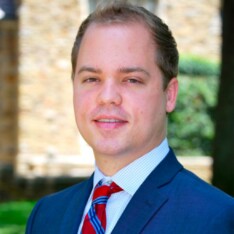
Byron Carson

Byron Carson is an Assistant Professor of Economics and Business at Hampden-Sydney College, in Hampden-Sydney, Virginia. He teaches courses on introductory economics, money and banking, development economics, health economics, and urban economics.

Byron earned a Ph.D. in Economics in 2017 from George Mason University and a B.A. in Economics from Rhodes College in 2011. His research interests include economic epidemiology, public choice, and Austrian economics.

Get notified of new articles from Byron B. Carson, III and AIER. 

Tuesday, August 10, 2021

Want to Prepare for the Next Pandemic? Read These Five Books on Expertise

Art Carden Art Carden  – August 8, 2021 @ American Institute for Economic Research

The rest of 2021 is shaping up to be a sequel to a movie that never should have been made in the first place: from the people who brought you Pandemic 2020 comes the smash hit sequel Pandemic 2021: Delta Variant. New CDC masking “guidelines” make me wonder about further restrictions, all from “the experts” who are following “the science.” There are limits to what “the experts” can know and what “the science” can teach us: they can estimate probabilities arising from different courses of action, but they cannot tell us exactly what to do. An expert can say “This model predicts that with 90% of people wearing masks all the time and maintaining ‘social distancing,’ Covid transmission falls by 90%.” The expert cannot say “Therefore, the government should mandate masking and distancing” with smuggling in a bunch of auxiliary assumptions about what society’s goals should be, who should choose, whose preferences matter, and which tradeoffs are morally significant. I know myself, my family, and my friends pretty well, and I think we’re pretty well-equipped to make choices that balance our physical, mental, emotional, and spiritual health while accounting for our duties as good neighbors.

Here’s a nice illustration from Strange Planet that I’ve used on economics quizzes. One being says to another who is salting his food, “Why sprinkle minerals before ingesting?” The second says, “I enjoy sprinkled minerals.” The first says, “But this could decrease your final revolution count.” The first says, “Perhaps I prefer fewer revolutions and more minerals.” The principle: trade-offs are everywhere. The first being is free to disapprove, and his expertise might be informative. It is not, however, decisive.

It seems reasonable that before we cede important social decisions to experts, we should consider the very real possibility that the articulated and centralized wisdom of experts isn’t that much better than the unarticulated and decentralized wisdom of the masses reflected in prices and social conventions. Here are five recommendations for books you should have on your nightstand if you want to learn more.

  1. Roger Koppl, Expert Failure. Koppl has done a lot of very important work on ordered hierarchies of expertise in general and the institutional limitations of forensic science in particular. Expert Failure is an explanation of the institutions and organizations in the “market” for expertise and shows how the financial, reputational, and epistemic incentives induce (wait for it) Expert Failure. If nothing else, we should remember that experts respond to incentives, too, and if you understand why a student puts a lot of time and effort into studying for an exam that’s worth 30% of the grade and little time and effort into a homework assignment that’s worth 0.1% of the grade, then you have a pretty good idea of how replacing the dispersed knowledge of the many with the articulated knowledge of the few can go sideways.
  1. Philip Tetlock, Expert Political Judgment: How Good Is It? How Can We Know? This book created quite a splash when Tetlock explained that expert political judgment really isn’t that good. Princeton University Press’s website describes the book’s takeaway point succinctly: “Classifying thinking styles using Isaiah Berlin’s prototypes fo the fox and the hedgehog, Tetlock contends that the fox–the thinker who knows many little things, draws from an eclectic array of traditions, and is better able to improvise in response to changing events–is more successful in predicting the future than the hedgehog, who knows one big thing, toils devotedly within one tradition, and imposes formulaic solutions on ill-defined problems.” That last descriptor is really important when we are evaluating pandemic response. What are mandates, lockdowns, price controls, and barriers to innovation but “formulaic solutions?”
  1. Philip Tetlock and Dan Gardner, Superforecasting: The Art and Science of Prediction. Bryan Caplan has described himself as a “fundamentalist Tetlockian” in light of Tetlock’s two books on this list. Tetlock and Gardner look at what it takes to predict well, and they buttress Tetlock’s conclusion from Expert Political Judgment: hedgehogs who gather a lot of different bits of evidence from a bunch of different places, use it to inform their estimates of different probabilities, and then assess how well they are doing. While Tetlock focuses on the best of the best, it’s another useful exploration of the importance of relying on decentralized knowledge.
  1. F.A. Hayek, The Counter-Revolution of Science: Studies on the Abuse of Reason. Hayek’s analysis of “the abuse and decline of reason” was one of his important intellectual projects. Beginning with his 1937 paper “Economics and Knowledge” and going through his 1945 paper “The Use of Knowledge in Society” and his 1948 collection Individualism and Economic Order, Hayek explored how there is a lot more to “social knowledge” than what can properly be called “scientific.” The expert planner can know a lot of very important things, but as Hayek emphasizes over and over again, knowledge about “the particular circumstances of time and place” does not confront the planner as data. In the face of repeated appeals to expertise and science–both of which, again, inform even when they cannot decide–Hayek’s lessons are indispensable. 
  1. Thomas Sowell, Knowledge and Decisions. I recently listened to the audiobook of Knowledge and Decisions twice. It’s a masterpiece that extends Hayek’s analysis and that shows, once again, how a lot of essential social knowledge is not “scientific” in the strictest sense. Throughout the book, Sowell emphasizes the importance of incentives and suggests that we should be wary of people who wish to control others but who don’t suffer serious losses when they are wrong. Sowell’s emphasis on tradeoffs and decentralized, non-”scientific” knowledge is a crucial contribution to how we should understand experts’ role in public policy.

By all means, we should listen to the experts and consider the science. They are undoubtedly informative, but once again, their opinions and conclusions are not decisive. The argument for decentralized rather than centralized pandemic responses is not simply a matter of rights and obligations, though these are important. When we turn experts into masters rather than advisers, we throw away a lot of important knowledge. Experts definitely have their place, but we have to remember that they respond to incentives (just like everybody else) and have their own epistemic limitations (just like everybody else). If you find yourself with a lot of extra time on your hands in this second year of “two weeks to flatten the infection curve,” it might be a good idea to read up on when experts get it right, when they get it wrong, and why “trust the experts” and “follow the science” aren’t as simple as they might appear at first.

Art Carden

Art Carden

Art Carden is a Senior Fellow at the American Institute for Economic Research. He is also an Associate Professor of Economics at Samford University in Birmingham, Alabama and a Research Fellow at the Independent Institute.

Get notified of new articles from Art Carden and AIER.


Friday, October 2, 2020

Pandemic Prophecy Not on the Rosy Side

 •  Monday September 21, 2020 @ Independent Institute

Actress Jennifer Garner (13 Going on 30) recently asked Dr. Anthony Fauci, “When are we going to be able to sit in a theater and watch our favorite performers up on stage again?” Dr. Fauci, a member of the White House Coronavirus Task Force, replied, “I think it’s going to be a combination of a vaccine that has been around for almost a year and good public-health measures,” adding that a vaccine was unlikely by November. This was hardly the doctor’s only venture into prophecy. 

“Dr. Fauci said we’re entering a ‘pandemic age.’ What does that mean?” runs the headline on a September 2 Mic.com report by Joseph Lamour. Fauci’s prediction is based on Emerging Infectious Diseases: Threats to Human Health and Global Stability, which he co-authored with Dr. David Morens. 

According the authors, the coronavirus might be only the first of a series of worldwide diseases and “the phenomenon is similar to the exponential growth of climate change.” Fauci and Morens, Lamour explains, “point to deforestation, urban crowding, and wet markets for wild game, which have been wreaking havoc for a century and contribute to environmental degradation around the world.” The pandemic thus converges neatly with climate change dogma.

Dr. Morens, a medical doctor, is senior scientific advisor to Dr. Fauci, director of the National Institute of Allergy and Infectious Diseases. The NIAID boss also boasts three deputy directors, two staff assistants, an associate director, and a medical officer, among others. Dr. Fauci has headed NIAID since 1984, five years before the birth of Green New Deal promoter Alexandria Ocasio-Cortez. 

With new coronavirus cases declining, Dr. Fauci warns, “Don’t ever, ever underestimate the potential of the pandemic. And don’t try and look at the rosy side of things.” This is the man who recommended the lockdown of an entire economy, which he called “inconvenient.” Workers who lost their jobs should know that prophecy is not science. If workers sought term limits for federal bureaucrats it would be hard to blame them.


Sunday, August 9, 2020

The Other Pandemic

August 10, 2020 By Michael D. Shaw @ HealthNewsDigest

(Certain material contained herein is adapted from Michael J. Goldberg, MD.) In this article, we will need to be precise with our definitions, for reasons that will become clear. Stedman’s Medical Dictionary defines “pandemic” only as an adjective: “Denoting a disease affecting or attacking the population of an extensive region, country, continent, global; extensively epidemic.” Referring to the Oxford English Dictionary, we find: “A pandemic is a widespread epidemic that may affect entire continents or even the world.”

The pandemic on everyone’s mind these days, of course, is the scourge of COVID-19. However, Goldberg argues that there is another pandemic occurring that could involve perhaps 20-30 percent of Americans. This missed pandemic consists of a variety of unrecognized, untreated viral and immune connected issues that he refers to as Neuro-Immune Dysfunction Syndrome, or NIDS. Some of these issues are more popularly referred to as Autism, Pervasive Developmental Disorder (PDD), ADD or ADHD, and Chronic Fatigue Syndrome (CFS/CFIDS). Many classic autoimmune diseases may have a treatable NIDS component.

The term “autism” was first used in 1911 by Swiss psychiatrist Eugen Bleuler, who presumably invoked the Greek autos, meaning “self.” Bleuler was describing the behavior of many schizophrenics, withdrawing into their own inner world. But it was the brilliant Dr. Leo Kanner, founder of child psychiatry, later assisted by Dr. Leon Eisenberg, who would produce the definitive works on this disease.

In a 1956 paper entitled “Early Infantile Autism 1943–1955,” Kanner and Eisenberg distilled the former’s five diagnostic criteria down to these two features, whereby the typical clinical picture would reliably present…

1.     A profound lack of affective contact
2.     Repetitive, ritualistic behavior, which must be of an elaborate kind

At the time, it was noted that this condition might be observed in one to two children per 10,000. Compare this today’s widely touted 1 in 54 figure. By any criterion, a condition affecting nearly two percent of our kids should be considered an epidemic—if not a pandemic. But, there is no such thing as an epidemic of a developmental disorder. Any epidemic or pandemic must have an underlying medical cause, which is almost always a pathogen.

Moreover, one of Kanner’s original criteria was “A fascination for objects, which are handled with skill in fine motor movements.” Thus, we have a big problem from the get-go. Contrary to Kanner’s precepts, most of today’s “autistic” kids are affectionate, and have lost gross or fine motor skills. Also, contrary to at least the spirit of Kanner’s work, today’s autism comprises an entire “spectrum” of symptoms and severity of symptoms, such that Bill Gates, Jerry Seinfeld, and Mark Zuckerberg have been put “on the spectrum” by some commentators.

Further complicating matters is that in a classic sense, a developmental disorder can be managed, but not cured. Yet, several studies including this one from 2013 as well as Goldberg’s own successes contradict this notion. What if today’s autism-like illness is not Kanner’s autism at all, but is rather a disease that partially mimics some of the symptoms? It is the contention of Goldberg and others that this “non-Kanner autism” is really a neuroimmune disease that can be treated medically.

Kanner must be spinning in his grave. A once-rare debilitating disorder has morphed into a “spectrum” encompassing mentally superior individuals, along with an occasional mockery of “neurotypicals.”

Looking for a pandemic? It is acknowledged in recent pediatric publications that 1 – 1.5% of newborns have Cytomegalovirus, but it is usually asymptomatic, and 1% of newborns have Human Herpesvirus 6 , but it too is mostly asymptomatic. As Goldberg points out, older physicians would not be quite so accepting of this. No healthy newborn should be born with a virus, and both viruses can cause serious diseases. Why are these viruses in newborns, and what can “asymptomatic” mean without follow-up for at least a couple of years in these patients?

The changing role of viruses and our failure to properly identify and treat viral infections—and those who are reactivated viral carriers—means we are presently in the midst of an overlooked medical pandemic. This includes medical disorders that could be treated, were they not passed off as either psychological problems or untreatable developmental disorders. Somehow, though, if the virus is SARS-CoV-2, there is no more urgent matter in the whole wide world.

We just can’t escape it: Everything in healthcare is a fad.

Friday, July 24, 2020

Forgetful Obama Denies Punting on Pandemics in New Biden Campaign Vid

'Can you imagine standing up when you were president and saying, "It’s not my responsibility"...'
  
By Assistant Editor

During his presidency, Barack Obama was able to claim such whoppers as “If you like your doctor, you can keep him.” In his post-presidency, the streak continued with his claim to a “scandal-free” administration............The 15-minute video, which was posted online Thursday, purported to show the pair first in-person meeting since the coronavirus outbreak began. It marked the desperate Biden campaign’s the latest effort to get the former president more involved as they try to rebuild Obama’s winning coalition while banking on amnesiac voters’ nostalgic recollections of the relatively stable Obama years.......... 

“Can you imagine standing up when you were president and saying, ‘It’s not my responsibility, I take no responsibility’?” Biden said, offering a line of attack similar to his recent campaign speeches when he asserted that Trump “quit” on the country and has “waved the white flag” in the pandemic.
“Those words didn’t come out of our mouths while we were in office,” Obama replied.

In fact, what the Obama administration was responsible for allowing the H1N1 virus, also known as the “swine flu,” to spread for months during his first term before he meaningfully addressed it.
As of July 22, data from the Centers for Disease Control and Prevention indicated that only 36 children below age 15 had died from COVID-related illness. Most—if not all—had pre-existing underlying conditions.

By contrast, roughly a thousand children died during the swine flu outbreak without any discussion of closing down schools.......... To Read More.....