Search This Blog

De Omnibus Dubitandum - Lux Veritas

Showing posts with label Genetics. Show all posts

Thursday, March 4, 2021

Genes, Brains, and Intelligence: What’s New?

 Emil O. W. Kirkegaard March 2, 2021

In the second half of the 20th century, Marxist intellectuals such as Stephen Jay Gould and Richard Lewontin stigmatized research into the study of intelligence, especially of individual and group differences. Although still a taboo topic, over the last few years there has been a constant stream of new research on genetics and intelligence, so much so that most people have a hard time keeping up. This is all the more impressive in light of the cultural revolution on college campuses and the revival of blank slate ideology by cultural elites.

One can attribute much of the progress of research on the genetics of intelligence to the decades-long work of Robert Plomin and Ian Deary. This power duo (both head prominent research labs) steered clear of ethnic and racial differences research, resolutely focusing on individual differences. The result was the establishment of increasingly large datasets, many of which include family members, especially twins (TEDS is an example). These have in turn produced a torrent of findings showing the powerful effects of genetics on human psychology and life outcomes ranging from educational attainment to marital stability ........... To Read More.....

Monday, December 14, 2020

Free will vs genetics: How much do our genes shape our actions?

| December 10, 2020

Many of us believe we are masters of own destiny, but new research is revealing the extent to which our behaviour is influenced by our genes.  It’s now possible to decipher our individual genetic code, the sequence of 3.2 billion DNA “letters” unique to each of us, that forms a blueprint for our brains and bodies.

This sequence reveals how much of our behaviour has a hefty biological predisposition, meaning we might be skewed towards developing a particular attribute or characteristic. Research has shown genes may predispose not only our height, eye colour or weight, but also our vulnerability to mental ill-health, longevity, intelligence and impulsivity. Such traits are, to varying degrees, written into our genes — sometimes thousands of genes working in concert.

Most of these genes instruct how our brain circuitry is laid down in the womb, and how it functions. We can now view a baby’s brain as it is built, even 20 weeks before birth. Circuitry changes exist in their brains that strongly correlate with genes that predispose for autism spectrum disorder and attention deficit-hyperactivity disorder (ADHD). They even predispose for conditions that might not emerge for decades: bipolar disorder, major depressive disorder and schizophrenia.

Increasingly we are faced with the prospect that predispositions to more complex behaviours are similarly wired into our brains. These include which religion we choose, how we form our political ideologies, and even how we create our friendship groups.............To Read More....

Friday, October 16, 2020

Fighting Racism Instead of Disease

The intrusion of critical race theory into medicine and public health threatens the well-being of all Americans—especially nonwhites. 

Connor Harris October 12, 2020

The Covid-19 pandemic in the West has disproportionately harmed racial minorities, especially those of African descent. According to a United Nations report from June, African-Americans in the United States had twice the death rate from Covid-19 as other races, as did black and South Asian ethnic groups in the U.K. Death rates among black minority groups in France and Brazil were also markedly elevated.

Many have taken it for granted that these differences stem from poverty and racism, which force nonwhites into crowded housing and jobs with high disease exposure. For Michelle Bachelet, the United Nations High Commissioner on Human Rights, Covid-19 “expose[d] what should have been obvious—that unequal access to healthcare, overcrowded housing and pervasive discrimination make our societies less stable, secure and prosperous.”

But a September 10 article in the Journal of the American Medical Association by three doctors at Mount Sinai Hospital in New York identified another possibility: racial differences in levels of TMPRRS2, a protein in cell membranes that many viruses, including coronaviruses, use to gain access to cells. The authors reported that in a sample of 305 patients at Mount Sinai, black patients had stronger expression of the gene that codes for TMPRRS2 in the tissue lining their nostrils than white, Asian, Hispanic, or mixed-race patients..........To Read More...

Tuesday, September 3, 2019

We can identify ‘bad’ genes. Why can’t we use CRISPR gene editing to get rid of them?

| August 30, 2019

If you want to remove an undesirable gene from a population, you have a couple theoretical options — one that most people might find unthinkable, and one that lies outside our current scientific abilities.

The first involves locating a group of people without a particular gene and designing breeding programs around them. It would mean mating people in ways that society would consider incestuous. And we’ve seen the difficulties that result from that in the past — marriages between close relatives were a notorious cause of hemophilia in European royal families, for example.

A much more desirable option would be to use CRISPR gene editing to essentially cut out the unwanted gene. There are, however, many challenges ahead for such a strategy. Chief among them is the need to find mutations that, by themselves, are linked to particular diseases or disorders. And then we need guarantees that CRISPR will edit the correct genes.

One candidate for the first hurdle was revealed in a study in Pakistan that identified a group of people living without the APOC3, as an important risk factor for heart disease, the number one killer of humans in developed countries. Since lacking the gene apparently entails no major drawbacks, it raises the prospect of using gene editing to knock out the same gene in other people.......To Read More....

Sunday, August 11, 2019

7 Wonders of the Biotech World

By Alex Berezow — July 16, 2019 @ American Council on Science and Health

Though only one of them still exists, the Seven Wonders of the Ancient World -- such as the Colossus of Rhodes and the Hanging Gardens of Babylon -- transcend space and time.

What makes these structures so awe-inspiring is the fact that they were built without cranes or any piece of equipment we associate as being essential to modern construction. We could say that, though these ancient cultures were of relatively limited means, they displayed great architectural ingenuity and engineering ability. Archaeologists still don't know how the Great Pyramid was built.

Today, biomedical scientists stand in a position not dissimilar to that of our ancient ancestors. A thousand years from now, we will be viewed as naïve and of limited means. Yet, it is quite possible that historians of science will look back at the 20th and 21st Centuries as the years in which great marvels were accomplished. If there is ever a list called The Seven Wonders of the Biotech World, this is what should be on it:

Sequencing of the Human Genome. When a "rough draft" of the human genome was published in 2000, many assumed that groundbreaking therapies were right around the corner. Well, things didn't work out like that. As it turned out, the genome was much more complicated than we thought, thanks to phenomena such as epigenetics and other mechanisms of regulation of gene expression. However, the human genome sequence is still the ultimate "Rosetta Stone" of biotechnology. Personalized medicine, DNA testing (for ancestry, forensics, and disease), and other technologies forever will rely upon it.

The Cloning of Dolly the Sheep. Wouldn't it be great if you had a twin? Scientists first made a "twin" sheep called Dolly by removing the nucleus of an udder cell and placing it inside an egg with its nucleus removed. This new cell was then implanted into a mother, and eventually, Dolly was born. This same technique, called somatic cell nuclear transfer (SCNT), has been used to clone cats, dogs, mice, and monkeys. We could probably do it in humans, but it would be incredibly unethical.

Mass Production of Insulin in Bacteria. Before biotechnology, diabetes patients received insulin extracted from pigs and cows. According to the National Museum of American History, "more than two tons of pig parts were needed to extract just eight ounces of purified insulin." But then scientists found a better way. They inserted the human gene for insulin into bacteria, and the genetically modified bacteria were then grown in gigantic fermenters where they produced insulin. To this day, that is how insulin is produced worldwide.

Genetic Manipulation of Plants. Around the time that Paul Ehrlich was telling us that we were all going to die of mass starvation, Nobel Prize-winning plant geneticist (and ACSH co-founder) Norman Borlaug was breeding better crops. He eventually created a high-yield, disease-resistant variety of wheat that is credited with saving millions (perhaps up to a billion) lives. Since then, with the aid of modern biotechnology, scientists have further increased yields by creating plants that are resistant to insects, herbicides, and drought.

Mind Reading and Thought Control. "Wait a second," you may be thinking. "Isn't mind reading and thought control just a sci-fi fantasy?" Not anymore. Technology already exists that can reconstruct an image based solely on brain signals generated by a person looking at something. We can use brain scanners to communicate with patients in a persistent vegetative state. And, for the rock-bottom price of $159.99, you can control a cockroach with your iPhone. (Cockroaches sold separately.)

Gene Therapy. Patients born with certain genetic diseases can now have them cured -- not just managed or treated, but actually cured. A rare immunogenetic disease made famous by the "Bubble Boy" that causes children to be severely immunocompromised can now be cured with gene therapy. Zolgensma, the most expensive drug in the history of the world (with a price tag of $2.125 million), cures spinal muscular atrophy. Scientists are currently working on a cure for sickle-cell anemia.

Regeneration of Human Organs. Using a patient's own stem cells, we can regenerate simple organs such as skin, tracheas (windpipes), and bladders. Notably, this technology precludes organ rejection. It is not yet possible to regenerate more complex organs, like the heart or liver.

That's the list. And now a prediction:

The Eighth Wonder of the Biotech World: Resurrection of Species. No, dinosaurs aren't coming back. But other species almost certainly will. Within our lifetime, it is extremely likely that we will resurrect extinct species, such as the woolly mammoth. Achieving this will require the same sort of technology that allowed the cloning of Dolly, as well as the ability to piece together fragmented DNA sequences (because DNA decays over time) into artificial chromosomes. Zoos of the future could be quite interesting.


Monday, July 29, 2019

What We Know, Don’t Know, and Don’t Want to Know about Crime

Thomas Jackson, American Renaissance, March 1996

Crime, by James Q. Wilson & Joan PetersiliaCrime, by James Q. Wilson & Joan Petersilia (eds.), ICS Press, 1995, 650 pp.

Ever since crime started rising sharply in the 1960s, it has been a subject of increasingly intensive study by criminologists. Crime, edited by two of the most highly-regarded authorities on the subject, James Q. Wilson of UCLA and Joan Petersilia of UC Irvine, is a collection of 20 scholarly essays by experts, summarizing the current academic understanding of street crime. Although the authors either ignore the implications of race or speak of it sotto voce, it is clear that criminologists are shedding some of the social science illusions from previous decades. Among their findings:
  • Criminals almost always share certain characteristics, both genetic and environmental.
  • Poverty and unemployment do not cause crime.
  • Rehabilitation does not work.
  • The only practical benefit of prison is that it keeps criminals from committing more crime.
  • Drug treatment, “crime prevention,” and alternatives to imprisonment do not work.
  • Early “intervention” to reform juvenile delinquents does not work.
What this boils down to is that certain people are going to commit crimes no matter what society does. Only middle age—not punishment—cures them.

The Criminal Personality

The personality of the typical criminal is already established by age two or three. He is aggressive, refractory, impulsive, unaffectionate, and difficult to rear. By contrast, a child with a sunny, winning disposition is very unlikely to become a criminal. As one of the authors explains, “antisocial personality almost never shows up in adulthood (barring brain injury or disease) without having been foreshadowed by antisocial behavior in childhood.”..........These are the chronic offenders who terrorize society; about six percent of the male population accounts for 50 percent of all arrests. These same proportions have been found in other countries...........To Read More....

Racial Differences in Intelligence, Personality, and Behavior

Richard Lynn, Race and the American Prospect, 2006

Racial differences in intelligence, personality, and behavior have been discussed since ancient times. In the second century A.D. the Greek physician Galen wrote that black Africans are less intelligent than Europeans. In the Middle Ages a number of number of Persian and Arabic writers took the same view, and in the thirteenth century the Persian geographer Nasir al-Din Tusi went to far as to assert that black Africans were less intelligent than apes.

The first to attempt to quantify race differences in intelligence was Sir Francis Galton in his Hereditary Genius (1869). He estimated the intelligence of several populations from the numbers of intelligent individuals as a proportion of the population. He concluded that the Greeks of the classical period were the most highly intelligent people that have ever appeared and that the lowland Scots were slightly more intelligent than the English.

He considered sub-Saharan Africans to be much less intelligent and the Australian Aborigines the least intel­ligent race. Galton did not make any estimate of the intelligence of the American Indians or Orientals. However, he considered the Chinese a highly intelligent people. In a letter published in The Times in 1873 he wrote that “The Chinaman is endowed with a remarkable aptitude for a high material civilization.

He is seen to the least advantage in his own country, where a temporary dark age still prevails, which has not sapped the genius of the race though it has stunted the development of each member of it by a rigid enforcement of an effete system of classical education which treats originality as a crime.” Galton’s estimates are quite close to those obtained in the twentieth and twenty-first centuries from intelligence tests...........To Read More...

Tuesday, July 16, 2019

The American Crime Factory

Thomas Jackson, American Renaissance, August 1996
 
The Antisocial Personalities, David Lykken, Lawrence Erlbaum Associates, 1995, 259 pp.

Why is there so much crime? To this simple question, liberalism has offered so many environmental explanations that are patently inadequate—poverty, racism, unemployment, etc.—that it is tempting to dismiss them all. Increasingly clear evidence for the heritability of criminality makes it easy to suspect that criminals are born more than they are made, and that little can be done about them.
David Lykken, author of The Antisocial Personalities, might have been inclined towards an overwhelmingly hereditarian view. He is a professor of psychology at the University of Minnesota and has worked closely with Thomas Bouchard on the famous series of studies of identical twins who were separated at birth and reared apart. The similarities between these twins were so striking that not even the popular press could ignore them. Genes seemed to trump environment every time........

Prof. Lykken explains that there is a small number of people who are likely to become criminals no matter how carefully they are reared. They suffer from a congenital personality disorder, and Prof. Lykken calls them psychopaths. There is a much larger group of people who, depending on how they are brought up, could become either criminals or productive citizens. Prof. Lykken calls the ones who go bad sociopaths, and their behavior is hard to distinguish from that of psychopaths...........To Read More....

My Take - Scary!  Sounds like Margret Sanger and Adolph Hitler and a eugenics program.  But what's even scarier,  he may be right.

Sunday, October 21, 2018

Cancer and genetics: Why smoking threatens more than just your lung

| | October 19, 2018

 Of all the people who die from cancer each year, more than 30 percent of them could have avoided the disease had they done one thing: quit smoking. And that’s not just cancers of the lungs and throat. Seventeen cancers are strongly linked to cigarette smoking including kidney, cervix and colon cancers. 
That percentage increases state by state depending on smoking prevalence according to a study in the Journal of the American Medical Association. In Kentucky, for example, 34 percent of cancer deaths in men and 29 percent in women can be attributed to whether or not a person smoked cigarettes. In Utah, where smoking is a relatively rare habit, those numbers were 16 and 11 percent, respectively.
Lung, throat, larynx cancers make sense. Those tissues come directly into contact with cigarette smoke and the cancer-causing chemicals it contains. A study published in Science showed that for each year a person smoked a pack a day there were 150 new genetic mutations in each of his or her lung cells. But how could smoking affect something as distant from the respiratory organs as the colon, bladder and pancreas? From the LA Times:........To Read More........

Friday, June 16, 2017

All Of A Sudden, It's Raining Genomes

By Julianna LeMieux — June 14, 2017

The sequence of an organism's genome, a staple in today's world of scientific experimentation, is as essential to scientific research as beakers. So, publishing over one thousand new bacterial genomes is like 'making it rain' to the microbiology research community.

An article entitled "1,003 reference genomes of bacterial and archaeal isolates expand coverage of the tree of life" was published this week in the journal Nature Biotechnology by an international research team led by the US Department of Energy's Joint Genome Institute. This release effectively doubles the number of currently available bacterial and archaeal genomes available to researchers currently.

This work is part of the Genomic Encyclopedia of Bacteria and Archaea Initiative (GEBA-I), which was founded by Jonathan Eisen, Ph.D. Eisen's website aims to "expand the reference genome catalog of broad phylogenetic and physiological diversity, to determine how this catalog facilitates the discovery of protein families and expands the diversity of known functions, and to ascertain whether these type-strain genomes improve the recruitment and phylogenetic assignment of existing metagenomic sequences."......To Read More.... 


Wednesday, November 2, 2016

CRISPR-Cas9 is hot but it’s not the only way to edit a genome

|

It has earned fleeting mentions in TV biothrillers, such as Orphan Black (BBC America) and The Last Ship (TNT), but now CRISPR genome editing is getting a sci-fi show of its own. Though actually an acronym for a biological term that most sci-fi fans will have no use to remember, “CRISPR” makes it a catchy title for the new bioterror thriller that actress-singer Jennifer Lopez is producing for NBC.

Imagine a TV series named ‘ELISA,’ ‘Northern blot,’ ‘PCR,’ or some other biological assay and you’ll realize how precisely nerdy this is, but it may be premature. The series is only in the developmental stages, after all. But the fact that a major network is considering naming a show after CRISPR is shows that it is generating a lot of buzz. Why? Researchers working with CRISPR are on the brink of acheiving a number of major breakthroughs in science and medicine......To Read More....

Monday, November 30, 2015

More on what lies behind the Left/Right divide

By Jon Jay Ray

Among psychologists, the most interesting answer to the above question is that given by John Hibbing.  He might be called the "rockstar" of the debate. He attracts attention because he goes down to the physiological and brain-science level for his evidence and conclusions.  He says that what you believe is a product of what you are.  He does not stress it but "what you are" is genetically determined.  So he is looking for inherited physiological differences between Leftists and conservatives.

And he has made some progress.  He has put people through a number of experimental tasks and found that the reactions he observes to the tasks  do indeed differ as between the two ideological groups.  He describes his findings as showing that "disgust sensitivity" is the key variable.  Conservatives are more easily disgusted.  Most generally, they have a "negativity bias", according to Hibbing.  And last year he put up a big paper summarizing the evidence for his view.  It is "Differences in negativity bias underlie variations in  political ideology"

I have long argued that Left/Right differences are largely inborn so my critique of Hibbing is not to contest his findings but to question the "spin" he puts on them.  You can find a pretty good summary of his experiments here and I think it is easy to see that what Hibbing calls "negativity bias" could just as well be described as caution -- and caution has long been said to be the essence of conservatism.  So Hibbing has confirmed some old wisdom rather than telling us anything new.

Hibbing's big article was published in an open review journal so critiques of it keep multiplying.  One such  critique that I have noted recently was "Not so simple: The multidimensional nature and diverse origins of political ideology" by Stanley Feldman and Leonie Huddy.  They make two points that I think are pretty right:

They say that "negativity bias" is characteristic of neurotics and that all the studies show that conservatives are not particularly neurotic.  I observed that in my research too.  So that is a bit of a stake in the heart for Hibbing.  His "spin" on his results has undone him.  If he had simply described conservatives as cautious, that criticism could not so easily be levelled at him.

Their second point is that there is no single Left-Right dimension.  Economic conservatism and social conservatism are quite different. So Feldman & Huddy conclude that Hibbing's work is pretty useless because he has mixed up two different things.  And it is indeed true that those two types of attitudes are very distinct factorially.  I noted that in one of my papers long ago.

So they are right but I am prepared to defend Hibbing on that one.  Although there are  two  distinctly different types of conservative attitude,  they are not totally different.  As I found, they do correlate, albeit weakly.  And that is why the "big tent" of the GOP succeeds.  The two types of conservative do find some things in common, a respect for the individual, mainly.

And as we see in "Political Attitudes Vary with Physiological Traits", Hibbing uses the Wilson scale in his research, which is primarily a measure of social conservatism. And I have shown elsewhere that social conservatism is the big one for separating people.  Economic conservatism is arguably more important to our future but it doesn't get the blood boiling like social issues do: Abortion, homosexuality, religion, tradition etc.

So Hibbing may not be measuring overall conservatism but he is measuring social conservatism and that is the most central sort of conservatism.  So I would summarize his findings as showing that social conservatives are instinctively more cautious than others.  And I see no problem with that.

Hibbing uses "Negativity" rather than "caution" to describe conservatives because he wants to rubbish conservatives (though he says he does not).  "Negative" sounds a lot sadder than "cautious".  But in so doing he lands himself in trouble.  I have noted the Feldman & Huddy comment on that but there is in fact a bigger vat of boiling oil he falls into:

As is noted here, who are the "negative" people when it comes to global warming?  Warmists are almost entirely Leftists but it is they who are vastly negative about the climate and our future.  They predict imminent catastrophe -- while conservatives are mostly just amused by the scare. Conservatives say in  summary that: "global warming is not a crisis, the likely benefits of man-made global warming exceed the likely costs, and mankind is not the scourge on Earth that liberals make us out to be"

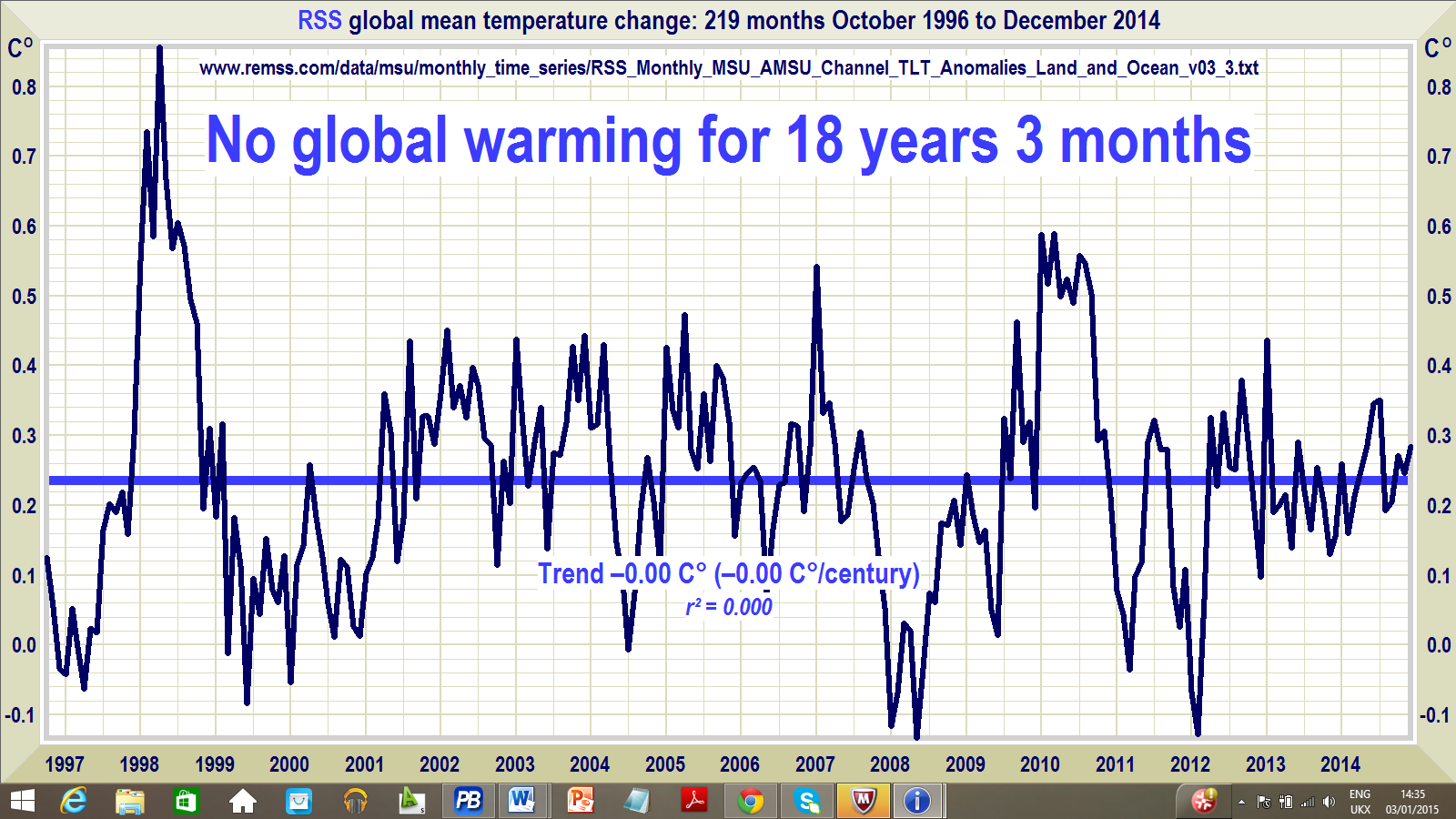
And again, referring to conservatives simply as cautious would not enable that criticism.  Warmists do say that they are the cautious ones but to swallow the arrant nonsense that is global warming would have to be a height of incautiousness.  Conservatives just look at the evidence and see that there is no need for caution in the matter.  Here's a graph of the amount of global warming we have had in the last 18 years  -- none:

So two cheers for Hibbing.  He has drawn attention to the biological basis of ideology but he should stop stretching the implications of his findings in a Leftist direction.  He just makes a fool of himself with that stretch.  He was pretty reasonable -- even humble -- in a 2012 paper.  He should try more of that.

Thursday, March 19, 2015

Researchers Shed Light on How Organisms Control Gene Expression

Scientists at York University in Toronto report that they discovered how living beings can keep gene expression in check. They believe their findings might help explain the uncontrolled gene expression found in many cancers. "Using yeast as a model organism, we studied the Tup1 protein, a negative regulator of gene expression," notes Emanuel Rosonina, Ph.D., a biology professor in the faculty of science, adding that "This protein binds to some genes and blocks their expression, helping to ensure genes that shouldn't be turned on remain inactive."

The current study, jointly conducted by York University and Columbia University researchers, suggests that small ubiquitin-like modifier (SUMO) modifies proteins bound to active genes, in order to prevent unfettered gene over-expression that can be harmful to the organism. "One of the ways SUMO does this is by promoting the binding of Tup1 to active genes, which then acts to reduce their expression to appropriate levels," explains Dr. Rosonina…..To Read More…..

Sunday, July 3, 2011

The American Council on Science and Health, 2011: Week 25

The presence of linked articles here are merely a way of showing what is going on, whether I agree or disagree with the positions presented. Rich Kozlovich

Points to Ponder

Our Dr. Bloom calls attention to America’s disappearing scientists
Writing in today's New York Post, ACSH's Dr. Josh Bloom points out a troubling trend that may be hindering America's ability to compete globally on the scientific front: science jobs are quickly vanishing in the U.S.

Supremes protect generic makers after dissing innovators
The Supreme Court handed down a decision yesterday that represents a significant victory for the pharmaceutical industry.

Activist Scaremongering

Unwarranted chemical fears leach into the delivery room
The precautionary principle has given birth to fears that infants delivered via Cesarean section or with the aid of forceps are at risk of phthalate and bisphenol A (BPA) "contamination."

More on the EWG’s dirty dealings on fruits and veggies
The Environmental Working Group's (EWG) most recent alarmist Dirty Dozen list is meant to scare folks about the trace levels of pesticides on fruits and vegetables - especially apples. Why? See Dr. Joe Schwarcz's smart riposte.

Dr. Nestle takes on the scaremongers of EWG
ACSH staffers were pleasantly surprised to find an op-ed in the Los Angeles Times underlining the scientific illiteracy and irresponsibility of the anti-pesticide scare tactics consistently used by the Environmental Working Group (EWG) in their semi-annual Dirty Dozen reports.

Cancer

CT scans may detect lung cancer early enough to help
A new study in the New England Journal of Medicine has found that screening for lung cancer with low-dose spiral computed tomography (CT) does reduce mortality; however, the screening method's high rate of false positives means that it should be used judiciously.

The FDA makes a very difficult (but correct) decision on Avastin
Should the cancer drug Avastin be approved as a treatment for metastatic breast cancer?

Finally we know for sure: sunscreens really do protect against melanoma
In case you're still wondering whether you really need to have someone rub sunscreen on your back at the beach, new evidence for the benefits of sun block have been published in the Journal of the American Medical Association.

Fears High price to pay for late-stage prostate cancer drugs?
In the past 15 months, the FDA has approved three new drugs for the treatment of late-stage prostate cancer. Two of them - Dendreon's Provenge and Johnson & Johnson's Zytiga - were shown in recent clinical trials to add between two and five months to median survival (about a year and a half after using docetaxel, the current standard of care approved in 2004) for men with late-stage cancer. Though some experts are hopeful that we are on the verge of a breakthrough in finding more effective

Breast cancer updates: Screening saves, and so does post-op radiation
On the breast cancer front, new studies are promoting the use of two well known preventive measures.

Diabetes

Disappointing relative benefits for intensive treatment of diabetes
In a recent study of over 3,000 type 2 diabetes patients diagnosed through screening, intensive multifaceted treatment led to a small but statistically significant reduction in risk factors, compared to a usual care treatment group.

For some diabetics, metformin might bring sweeter news
The findings of a study to be presented at Saturday's annual meeting of the American Diabetes Association in San Diego show that people aged 65 or older being treated with metformin for type-2 diabetes face a lower risk of heart problems or stroke compared to individuals taking sulfonylureas to control their blood sugar.

Can surgery cure diabetes? Maybe — for a while, at least.
In other weight loss news, one of the authors of a new study recommends that weight loss surgeries, such as gastric bypass and gastric banding, become front line type 2 diabetes treatments.

Obesity

LA Times replaces soda with potatoes, tongue in cheek
What's next, a tater tax? asks the Los Angeles Times, noting the trend toward "imposing taxes on the culinary villain du jour."

Possibly the worst dietary study ever conducted
Every now and then, a new study turns up warning consumers that diet soda is too good to be true...

News from all over on the obesity front
Ladies and gentleman, boys and girls: there are obesity updates for all.

AAP’s junk stance on fast food ads
Quick, run for cover: junk food ads are out to get your children and make them fat. Or at least that's what the American Academy of Pediatrics'(AAP) is now preaching.

Regulations

Made-up cosmetics concerns
The Safe Cosmetics Act, now in a 2011 edition, is back in Congress - and its claims about cosmetics ingredient safety are about as superficial as the products it's intended to regulate.

STD’S

ACSH’s Dr. Bloom looks at “How Far We’ve Come in the Battle Against AIDS”
In the June 24 issue of Medical Progress Today, ACSH's Dr. Josh Bloom considers how we will one day recognize May 2011 as "a remarkable turning point in the history of the struggle against AIDS."

Prescriptions better than love letters for STDs
Epidemiologically speaking, having your doctor write a prescription for your lover may be preferable to sending a love letter.

Tobacco

Brad Rodu counters prohibitionists’ attacks on smokeless tobacco
"Smokeless tobacco and e-cigarettes are being recognized as safer, satisfying cigarette substitutes by increasing numbers of American smokers," writes ACSH advisor and professor of medicine at the University of Louisville Brad Rodu.

Graphic cigarette labels. Is the FDA blowing smoke?
Writing in the Chicago Tribune, columnist Steve Chapman harshly criticizes the FDA's latest mandate requiring cigarette packs to prominently display graphic warning labels.

Tobacco companies contest cigarette plain packaging proposal in Australia
On the heels of the new graphic cigarette warning labels comes a proposed law in Australia that aims to institute plain packaging for all cigarette brands.

Vaccinations

Liz Szabo talks science, finally!
After publishing a consistent stream of fear-mongering, anti-chemical stories for USA Today, we'd like to finally applaud journalist Liz Szabo for her article yesterday on the importance of childhood vaccinations.

If there is a health scare today, the American Council on Science and Health will most likely have the answer by tomorrow; and for members it will appear in your e-mail. No effort on your part, except to read the answer. All that the ACSH is interested in are the facts and they are prepared to follow them wherever they lead. Who can ask for more?  Please Donate Now!

###

Friday, April 22, 2011

Observations From the Back Row: 4-22-11

...
“De Omnibus Dubitandum”

We live in a time when great efforts have been made, and continue to be made, to falsify the record of the past and to make history a tool of propaganda; when governments, religious movements, political parties, and sectional groups of every kind are busy rewriting history as they wish it to have been, as they would like their followers to believe that it was. - Islam Bernard Lewis', historian

Energy saving light bulbs 'contain cancer causing chemicals' Fears have been reignited about the safety of energy saving light bulbs after a group of scientists warned that they contain cancer causing chemicals. …..Their report advises that the bulbs should not be left on for extended periods, particularly near someone’s head, as they emit poisonous materials when switched on. The bulbs are already widely used in the UK following EU direction to phase out traditional incandescent lighting by the end of this year.

The Department for the Environment insists the bulbs are safe, despite the fact that they contain small amounts of mercury which would leak out if the glass was broken.

My Take – Whoa….Safe in spite of the “small amounts of mercury”. I thought there was “no safe level of mercury”. What we have here is another stupid greenie idea imposed on the public by a bunch of stupid bureaucrats given unbridled authority by a bunch of unprincipled politicians. So…..why isn’t the Precautionary Principle being applied here? In the E.U. the (PP) has become almost sacrosanct. Why no outrage from the greenies and their acolytes in government and the media? Viv Forbes really is right. The green movement really is “an unholy alliance of environmental scaremongers, funds-seeking academics, sensation-seeking media, vote-seeking politicians and profit-seeking vested interests.” Besides….the stupid really are dangerous.

Genetic breakthrough may stop spread of malaria The development is seen as a potential breakthrough in preventing the spread of one of the world's most dangerous diseases. Malaria kills up to a million people a year, mostly children living in Africa where the disease is endemic, and strikes down a further 500 million victims who fall seriously ill.

A decade ago, scientists created the first GM mosquitoes but their potential use in stemming the transmission of malaria has been stymied by the theoretical inability of the engineered insects to out-compete the non-GM mosquitoes living in the wild that actually harbour the blood parasite.

However, a new study has shown that it is possible for GM mosquitoes to rapidly pass on malaria-blocking genes to wild mosquitoes with the help of a second gene that spreads the GM trait within the sperm-producing cells of male mosquitoes.

The plan is to physically attach the synthetic gene, called the homing endonuclease gene, to an anti-malaria gene and insert the entire genetic construct into male GM mosquitoes released into the wild. The endonuclease gene should then ensure that nearly all the sperm cells produced by these GM males will carry the anti-malaria trait into the next generation of mosquitoes.

Malaria in numbers
• 500 million new cases of malaria are reported worldwide each year.
• 1 million deaths are caused by malaria each year, the majority in Africa.
• 57 countries are registered as 'malaria-endemic', with the disease posing a threat to human life.
• 200,000 people die of malaria each year in India.
• 2 million cases of malaria were reported in Pakistan after last October's floods.
• 1.3 per cent rate at which malariacan decrease gross domestic product in countries with high disease rates.
• 765 million people in sub-Saharan Africa are said to be at risk from malaria, according to the World Health Organisation.
My Take - First off…..if bed nets by themselves were so great this wouldn’t be happening. Secondly, if bed nets and pyrethroidal pesticides were so great together this would be happening. Thirdly, if this can really be done in the wild this will be a major blessing for humanity. The problem with all of these types of solutions is the delivery system. Can this take place in the wild? We can only hope.

Now…..what will the greenies do? They hate anything that is GM. If everything they stand for and promote is “for the children”, as they claim, they will wholeheartedly support this? If they do however, this will completely undermine all of their arguments about genetic modification. If they stand against this it will expose them for the irrational misanthropic people they really are. This will be interesting to watch.


Anti-pesticide activists exploit poor kids While it’s not surprising that children from the inner city and Latino farmworker communities might perform slightly less well than average American children on development tests, anti-pesticide activists can make it news if they can link that performance to pesticides. And so they have tried.

Environmental Health Perspectives published three studies today purporting to link prenatal exposure to organophosphate pesticides with substandard performance on development tests by the aforementioned groups of children.
I’m sure than the well-known anti-pesticide activist-researchers involved (Brenda Eskenazi, Frederica Perera and Mary Wolff) expect to overwhelm the media with their message by releasing all three studies at once, but here are the underlying fatal flaws common to all three studies:
• Even accepting the study results at face value for the sake of argument, the test score deficiencies are insignificant. There is no meaningful developmental difference between a child who scores a 100 on an IQ test vs. one who scores a 101.4.
• Childhood development is a complex, multifactorial phenomenon, which these researchers have magically reduced down to blood levels of pesticide metabolites. While most reasonable people would point to the children’s general plight in Lower Social-economia as the likely cause of whatever development issues they may have, Eskenazi, Perera and Wolff have conjured up a superficial statistical analyses to advance their personal financial and political agendas as well as the bureaucratic and political agenda of their funding agency, the anti-pesticide EPA.
• There is no known biological mechanism that explains how legal exposures to pesticides might lead to developmental problems.

My Take - This whole business of IQ is another one of those ethereal "findings" from these studies that are conclusions in search of data. The first time I came across this was during the Litulis Kilgore days. Kilgore was operating an illegal pest control business using methyl parathion (MP), one of the most toxic liquid pesticides developed for exclusive use in agriculture. In sunlight it would breakdown within 24 to 48 hours. It was never meant to be used in homes or businesses.

These people have been followed by the Center for Disease Control for years. What did they find? They “think” that MP “may” have caused an IQ problem. Why only a maybe? Because the findings weren’t consistent! It appeared to be true in one group and not in another. There is a reason for that. It isn’t true. IQ is a complicated and subjective thing and trying to pin this on pesticides is another article of faith by the green movement. It was only two months ago that they were claiming that piperonyl butoxide, a synergist mixed with pesticides also caused it.

We need to get this. These studies are all conclusions in search of data.


"The time has come," the Walrus said,
"To talk of many things:
Of shoes, and ships, and sealing wax -
Of cabbages and kings,
And why the sea is boiling hot,
And whether pigs have wings."

###

Friday, January 16, 2009

Green fanatics vs. genetic science

(I would like to thank Mr. Jackson for allowing me to reprint his article. RK)

Gerard Jackson, of BrookesNews.Com 

In Mary Shelley's chilling tale Dr Frankenstein creates a monster out of body parts, which, according to the Hollywood version, becomes a beastly killer completely out of control. Latching on to this vision green cultists malevolently labeled genetically modified food as "Frankenstein foods", conveniently ignoring the fact that we have been genetically altering our foodstuffs — including livestock — for thousands of years.

As expected, a number of green-sympathizing journalists joined this reactionary crusade, some of whom relied on Dr David Suzuki's Altered Genes. Reconstructing Nature: The Debate as a prime information. Although this book was published about ten years ago it seems that like Rachel Carson's grossly dishonest and very lethal Silent Spring Suzuki's book keeps being recycled by half-witted intellectuals.

The underlying theme of Altered Genes is so obvious, even when the author tries to conceal it, that the discerning reader can easily express it in a single sentence. A relentless hatred of capitalism! This tendentious work masquerades as a scholarly attempt to debate the dangers of genetic engineering. Unfortunately, of the many things missing from the book, debate and scholarly intentions are the most prominent.

Suzuki's introduction set a tone from which the book did not waver. Using the tactic of giving a dog a bad name to justify shooting it, he resorted to historical fiction in which genetics was blamed for the rise of eugenics that culminated in the horrific experiments of Josef Mengele. In fact, the origins of the Nazi euthanasia program and Mengele's experiments had their beginnings in the victory of positive law over the rule of law.

Euthanasia was rationalized in Permission to Destroy Life Unworthy of Life, a book published in 1920 and written by Karl Binding, a famous law professor, in collaboration with Dr Alfred Hoche. Even though the authors were social democrats their views were welcomed by Nazi ideologues. Nevertheless, it still took the destruction of the rule of law to make possible the despotic rule of the jackboot and its consequent horrors. Genetics played no role whatsoever in this atrocity, despite Suzuki's views.

The rest of the book is no better. Fourteen authors condemning markets and the wickedness of profiting from genetic engineering; warning us against the perils of "genetic pollution" and the menace of the unknown; railing against the alleged potential horrors of genetic engineering; the greed and dishonesty of multinationals, especially Monsanto; the injustice of intellectual property rights in genetically engineered organisms; the danger of allowing multinationals the right to patent and market their genetically altered products. (No wonder it reads like a political tract). Yet the authors failed to provide a shred of genuine credible evidence that warranted their dire predictions or justified what amounted to a ban on genetic engineering.

Regardless of the word debate in the title, debate was the last thing on the authors' minds. They made no genuine concessions to genetic engineering; they stressed only 'facts' and allegations that could be used to condemn the technology; alternative opinions are ignored and nightmare futures are a staple ingredient; multinationals are attacked along with science; much is made of the alleged social costs of genetic engineering while the benefits are treated as mere assertions.

Astonishing increases in agricultural productivity made possible by chemical and genetic engineering do not rate a mention along with their social benefits; ideological claptrap is passed off as informed opinion and scientists are denigrated as being part of some mysterious "bio-elite"; green organizations are paraded as acting in the public interest, though they are self-appointed and ideologically opposed to economic growth; public fears and concerns about genetic engineering that environmentalist organizations fuelled are used to justify political control of the technology.

Particularly irritating was their tactic of frequently quoting themselves or each other in support of their own arguments. A sure sign that there is little or no genuine scientific support for their views! What is particularly striking, however, is the book's complete lack of humanity, despite its humanitarian pretensions. People merely appear as background scenery for the authors' ideological setting.

There is no acknowledgement of the role Western science, technology and chemical companies have played in eliminating the threat of mass famine from the planet. The extent to which the Third World has benefited from technology transfers is completely ignored. But this attitude should not surprise us once we consider that the book's proposals would even see an end to the production of life-saving genetically engineered vaccines. The very fact that their proposals would literally amount to a death sentence for millions of people, just as the ban on DDT did, is enough to condemn them as a vicious bunch of misanthropic green.

The real Frankensteins are greens fanatics and their media mates who have tried to create a monster out of a life-saving technology so they can get it banned. What does this say about them? Plenty, is the answer.

Gerard Jackson is Brookesnews' economics editor