Search This Blog

De Omnibus Dubitandum - Lux Veritas

Showing posts with label Solar Panels. Show all posts

Wednesday, April 17, 2024

New York Shows Off Its Expertise In Central Planning: The Buffalo Billion

April 15, 2024 @ Manhattan Contrarian

Let’s face it: Central planning of the economy hasn’t worked out so well in many places where it has been tried (e.g., Soviet Union, Cuba, North Korea, etc.). But then, here in New York, we are so much smarter than the dolts who fell on their faces in those backwaters. With utter confidence in our genius, we have embarked upon the total centrally-directed transformation of the economy into “net zero” utopia, via the Climate Leadership and Community Protection Act of 2019.

But that project is barely getting under way. It will be a few years before we have enough feedback to judge it a success or failure.

Meanwhile, is there any other significant central planning initiative here in New York that has gotten far enough so that we can judge whether it is succeeding? Yes! — It’s the “Buffalo Billion,” a massive state-subsidized industrial development project in the long-declining Great Lakes port in far Western New York. Let’s get an update.

The summary is, it’s hard to believe how badly wrong this has gone.

The Buffalo Billion started off as a signature economic development plan of then-new-Governor Andrew Cuomo back in 2012. From the website of Empire State Development:

In extraordinary recognition of the region’s potential and bolstered by his confidence in the WNY Regional Economic Development Council’s (REDC) Strategic Plan, A Strategy for Prosperity, in January 2012, Governor Andrew Cuomo made a historic commitment to strategically invest one billion dollars in the Buffalo area economy (Buffalo Billion) to create new jobs and spur large-scale private investment and increased economic activity.

Note please that this was not just money to be wasted, but rather, according to ESD, was a commitment to “strategically invest,” within a “strategic framework,” and a “strategic plan,” and with a “Strategy for Prosperity.”

In the next step, the ultimate Svengali of the government-subsidized investment, Elon Musk, sniffed out a pile of loot ready for the skimming. Musk convinced the credulous New York functionaries to devote some $750 million of the available billion to just one facility — a brand new, (supposedly) state-of-the-art factory to make the trendiest of possible solar panels and solar roof tiles. The panels and tiles would be manufactured by the Musk-affiliated company SolarCity. The state then agreed to a highly unusual deal structure: Rather than invest in the company itself, or provide a loan guarantee, the state would just build and equip the factory at full taxpayer expense, and lease it essentially for free ($2 per year). 

The lessee would be a company called Silevo, which in turn leased the facility to SolarCity. In return for getting a free three-quarters-of-a-billion-dollar factory, Silevo made a number of commitments to the state, including promising to employ some 4900 people at the site, and to invest a further $5 billion of its own money. Note that these commitments were made by Silevo, a no- to low-asset company, and not by SolarCity or, for that matter, Tesla or Musk himself.

In June 2017 I had a post on the situation at that time. With the factory essentially completed and ready to go, and with the state’s money spent, in December 2016 Tesla and SolarCity had bailed on the deal. They executed a series of agreements with Panasonic for Panasonic to take over running the plant and manufacturing the panels. However, Panasonic did not take on the obligations of employing the 4900 people, nor of investing the additional $5 billion. Then-Governor Cuomo attempted to spin the situation as best he could:

[T]his agreement further cements Western New York’s position as a national leader in clean power technology and cutting-edge innovation.

Another way of looking at it was the way my June 2017 post concluded:

[W]here we are now is that the New York taxpayers are completely out $750 million, and we have a completely speculative upside that maybe Panasonic will hire some people or make some investment.

Well, it has now been almost seven more years since that post. And it turns out that the Buffalo Billion project is back in the news just in the past few months, with an article in the Buffalo News in February, and a further article in the Niagara Gazette just today.

The good news, I suppose, is that the factory is not just completely shuttered. It is actually operating as a Tesla facility. Here is a partial picture from the Buffalo News piece:

 
Tesla sells both commercial and residential panels, as well as a Solar Roof, composed of individual, power-generating shingles. Its panels reportedly are manufactured by a Korean firm. . . . Both module manufacturing and assembly of the Solar Roof once happened in Buffalo, but today all three products rely on solar modules made by other firms. Assembly of Solar Roof tiles still occurs in South Buffalo. . . . Tesla struggled to produce the Solar Roof at scale, eventually prompting Panasonic to move its 400 Buffalo jobs to Malaysia.

So, on the manufacturing side, what they do there is assemble this “Solar Roof” product out of components made abroad. And how many of these systems have they sold? From the Niagara Gazette:

As of last spring, only 3,000 Solar Roofs were installed, the energy trade group Wood Mackenzie found, far fewer than Tesla’s projections for the product.

Tesla disputed the numbers in the Wood Mackenzie report, but declined to provide any figures of its own. Assembling three thousand Solar Roof systems in seven years is not remotely going to support the cost of this huge building and its equipment, let alone any significant number of employees.

So the Buffalo News submitted a Freedom of Information request to New York to get the details on what Tesla is doing and how much it is costing the taxpayers. According to the Buffalo News, the number of people employed at the facility as of the end of 2023 was 1,808 — a far cry from the 4900 originally promised. And what do those people do? The single biggest piece consists of low-skill “data annotators” who support the programming for Tesla’s self-driving car initiative. From the Buffalo News:

[Tesla] has hired hundreds of people to work – 675, according to a company statement in February 2023 – on its autonomous driving programs for electric vehicles. Most of those positions are for data annotation work that only requires a high school diploma.

And the other big piece is production of electronic components for charging stations:

The company began making posts for its fourth-generation Superchargers in Buffalo over the past year. It also began making fully assembled prefabricated Supercharging units. . . .

The latter jobs are at least manufacturing jobs. But neither of those categories of production can make any use of the sophisticated manufacturing equipment that the taxpayers bought for the solar panel manufacturing effort. That’s several hundreds of millions of dollars completely down the drain.

The Buffalo News has the following summary of the finances of the facility from the taxpayer’s point of view:

[T]he latest report from the company, required by the state as part of its agreement to build and equip the factory and then lease it to Tesla at virtually no cost, indicates that Riverbend employment stood at 1,808 at the end of December. That works out to $525,400 in taxpayer subsidies for every job at the Buffalo plant.

$525,400 per job, most of which are clerical high-school-level jobs. No, ex-Governor Cuomo, this does not “cement New York’s position as a national leader in clean power technology and cutting edge innovation.”

And now for the icing on the cake. In today’s article at the Niagara Gazette, they report that Tesla is in the process of installing solar panels on the roof of the facility. The panels being installed are made in China:

Tesla has covered about one-third of the factory’s roof with panels manufactured by LONGi Green Energy Technology, a Chinese firm and one of the world’s largest manufacturers of solar modules. It plans to cover the rest by the end of the year.

It won’t even make these panels in this factory. And undoubtedly, Tesla is getting some huge new subsidy to install these panels, because otherwise they wouldn’t be doing it.

I can’t wait to see how our central planners do with the “net zero” energy transition.

Tuesday, March 5, 2024

Solar Panels Peddled as Farm-Friendly?

'Agrivoltaics’ are touted to rebuild soils and shade plants, but ask a farmer about that.

by | Mar 4, 2024 @ Liberty Nation News Tags: Articles, Climate Change, Good Reads, Opinion

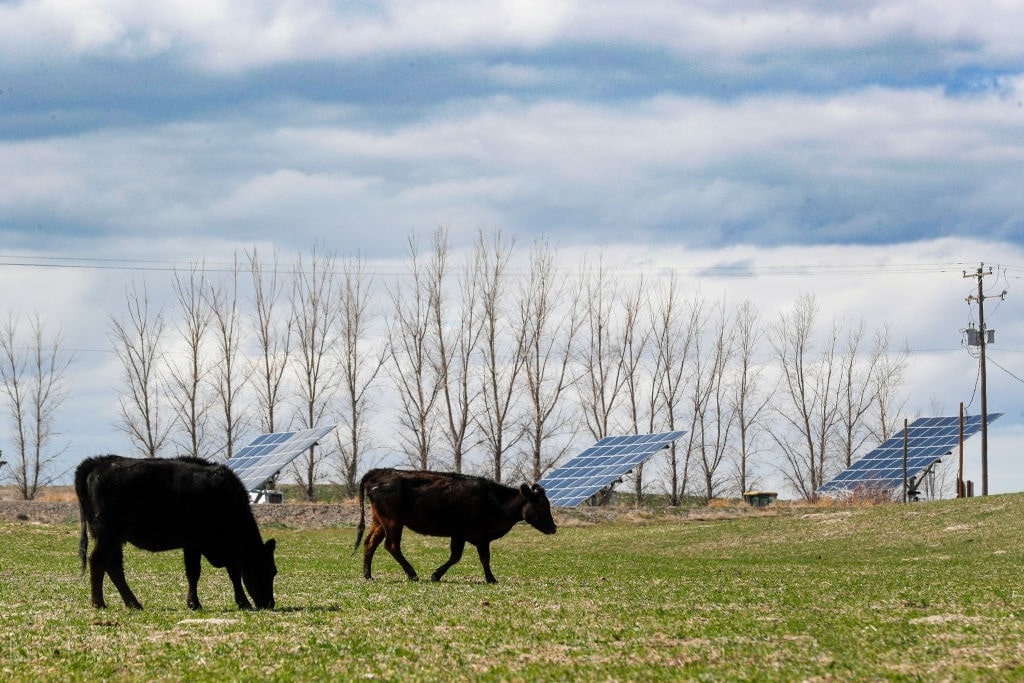
Recent studies claim ugly fields of solar panels, widely derided as destructive of local agricultural production and rural views, are beneficial to plants, pollinators, and soils. One ongoing Vermont experiment explored how “agrivoltaic” farming shares sunlight that falls between panels and crops; a Minnesota study concluded that these arrays restore bees and nurture polluted soils. Ironically, such efforts falsely advertise solar arrays as “high-tech processes to help with traditional farming practices.” Plants and bees have done okay for eons without silicon panel installations. The environmental liabilities of solar panels far outweigh their claimed benefits — and doubly so with regard to agriculture.


Solar power enthusiasts claim crops improve panel efficiency by keeping them cool, helping farmers repair soils and increase crop productivity. Two recent studies demonstrated the scheme to package polluting solar panels as soil-saving.

The Vermont Study

The Vermont study posited that siting solar panels with crops will “enhance crop yields by providing shade from excessive sunlight” as well as “contribute to soil improvement by preserving moisture and preventing erosion.” Vermont is an ironic locale for the study, as it is about the worst state in the nation for clear, sunny days. Solar panels generally don’t need cooling (and don’t collect much sun) in Vermont. Conversely, plants grown in chilly, wet Vermont mostly don’t need drought protection or shielding from “excessive sunlight.”

The project was designed specifically for the Green Mountain State for other reasons:

“The selection of Vermont for this specific initiative is intentional. Researchers at the University of Vermont have been advocating for saffron cultivation as a means to support specialty crop farmers, ensuring their sustainability and preserving cultivated land for future generations.”

Saffron is a high-priced crop, permitting profitability despite Vermont’s fifth-highest real estate tax burden in the nation, inflated electricity rates that regressively fund solar panels, and skyrocketing land prices due to excessive state regulatory restrictions (aggravated by subsidies to “sequester carbon” by reforesting fertile farmlands). Instead of addressing these direct impacts on farmers, the technocratic answer is to plant saffron.

Out-of-state companies have been carpetbagging in Vermont for a century, selling farmers land-destroying gadgets that do more harm than good to the environment. From soil-compacting tractors to toxic chemicals like atrazine, glyphosate, and neonicotinoids, corporate America is always there to “rescue” Vermont’s farmers. Synthetic fertilizers that pollute Vermont’s waterways were subsidized by the same federal government that now bankroll solar panels, and the University of Vermont plans saffron farming crossed with rows of solar panels to “preserve cultivated land for future generations.”

The Soil and Bee Study

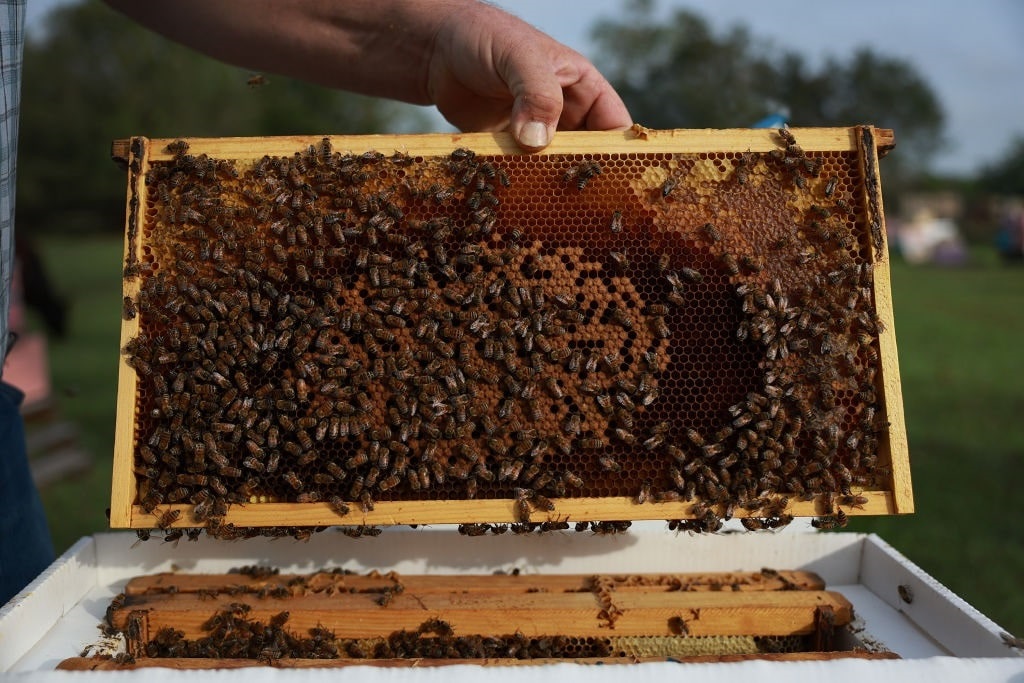
Another study by the US Department of Energy claimed that solar fields can become “breeding grounds for pollinators and native plants.” The research consisted of seeding the ground underneath solar panels with native plants and measuring the return of insects to the land “which had previously been fouled with herbicides and used for row crops.” It was discovered after five years that the populations of native bees had risen 20 times their initial levels, prompting the study’s leader to conclude, “This research highlights the relatively rapid insect community responses to habitat restoration at solar energy sites.” The purported conclusion was that such studies show “that solar farms … can generate clean energy while also supporting local wildlife.”

GettyImages-1449486634 bees

(Photo by Joe Raedle/Getty Images)

Similar studies of houses of prostitution and maximum security prisons will show that they, too, can restore lost bee populations if seeds are spread in their wake over previously abused agricultural lands. Only houses of prostitution and prisons do not pollute the planet on the scale that solar panel manufacturing does. Coal burned to form silicon for voltaic panel production doubtless emits bee-killing chemicals. Solar panel recycling and disposal present daunting environmental challenges. Solar farms do not generate clean energy, and they certainly do not restore bee populations. It was the spreading of seeds that restored bees, not unnatural plastic installations from China.

The Serial Farm Killers

High-tech promises of increased productivity by American corporations are what killed the family farm, tainted US food supplies with cancer-causing chemicals, wiped out bee populations, eroded vast amounts of soil, polluted and drained vital water resources, and sickened the soil microbiome of millions of acres of prime agricultural land. Now the same snake oil sales force has been recruited to create lipstick-on-a-pig “studies” that claim even more high-tech gizmos will profit the soil and farmer.

Do Vermont farmers need to grow saffron when the state cannot satisfy out-of-state demand for local grass-fed meats? The same cadre of experts who would rescue bees by installing vast arrays of solar panels tells us cows are bad and humans must switch to synthetic meats grown from GMO-cropped plants dependent on chemical fertilizers and herbicides, killing bees and microbiome to spare the world from cows. But cows rebuild soils and sequester carbon far more efficiently than any technology yet devised by human hand. God created solar panels called blades of grass that are not manufactured in China and dispose of themselves harmlessly.

Solar Panel Planetary Destruction

The mad craze to “save the world” through Earth-destroying renewables is accelerating planetary destruction. Solar panels will pollute more than they “save.” Farmers see this clearly – witness the revolts against climate change regulations in Europe.

To energize the world with “clean solar energy” would require an estimated 92.7 billion solar panels completely covering America’s 11 smallest states: that’s a lot of saffron! Then there are the toxic, currently non-recyclable batteries used in EVs but also necessary to store all that solar energy for the grid: Any impact on bees there, or will some seed-casting counter the lithium and nickel pollution?

At a time when Marie Antoinette CEOs advise Americans unable to afford hamburger to feed their children cornflakes for dinner,  it is unsurprising that disconnected venture capitalists and grant-winning researchers portray solar panels as soil-building and plant-nurturing. The latest renewable energy skullduggery is that vast field arrays of solar panels feed bees and build soil, while soil-feeding cows must be eradicated.

Try selling that pitch to a farmer.

 
Read More From John Klar

Monday, August 7, 2023

Solar Panels Produce Massive Emissions, Data Says

on

Journalist Michael Shellenberger has uncovered new data showing that solar energy is not as “clean” as the politicians pushing “green” policies claim.  “People say solar panels don’t produce carbon emissions, but they do,” Shellenberger at the beginning of a series of tweets. He cited a new study that found Chinese-made panels produce at least three times more emissions than claimed by the Intergovernmental Panel on Climate Change (IPCC).  In just over a week, Shellenberger’s first tweet alone received 7.5 million views and nearly 20,000 “likes.”

Shellenberger is a longtime environmentalist and the founder of Environmental Progress, which describes its mission as “achieving nature, peace and prosperity for all.” He also founded the popular Substack newsletter “Public.” In 2008, Time Magazine declared him a “Hero of the Environment” under the “leaders and visionaries” category.   The findings about solar energy come amid renewed calls for President Joe Biden to declare a “climate emergency,” which would effectively give the government powers similar to those exercised under the three-year COVID-19 national emergency.  ........To Read More..


Monday, March 20, 2023

Greens refuse to discuss recycling renewables and restoring mining locations to pristine condition

By |March 19th, 2023 46 Comments @ CFACT

The reality is that all the mineral products and metals needed to make wind turbines, solar panels, and EV batteries are mined and processed in places like Baotou, Inner Mongolia, Bolivia, and the Democratic Republic of Congo, mostly under Chinese control. Decommissioning and restoration of those mining landscapes back to their original pristine condition is not in the cards in developing countries. Recycling of worn-out turbine blades, solar panels, and EV batteries, in wealthy countries is also not in the cards.

The sites for the mining of materials required to build wind, solar, and EV batteries are under minimal to nonexistent labor, wage, environmental, reclamation, and worker health and safety regulations. The mere extraction of those exotic minerals presents social challenges, human rights abuses, and environmental degradations worldwide, but are of no significance to the wealthy countries benefiting from those “green” materials.

The climate cult COULD seek decommissioning and restoration standards in those developing countries down to the last dandelion, just like we have for decommissioned mines, oil, and nuclear sites in America, but the climate cult avoids the same in developing countries.

The life cycle for renewable electricity like wind and solar runs from design, procurement, and construction, through operations and maintenance, and repair, as well as the life ending decommissioning and disposal, but again, recycling and restoration of the landscaping back to its original pristine condition, is also not in the cards in the wealthy countries that are going green.

Since the blades and panels and EV batteries are very difficult to recycle, the waste stream created by them is a mounting problem. According to a 2017 study published in the scientific journal Waste Management, the world’s wind industry alone will be producing 43 million tons of blade waste annually by 2050.

Those worn out wind turbines will be the equivalent weight of 215,000 locomotives. The demand of the wealthy economies for more wind turbines are projected to cause 43 million tons of blade waste worldwide by 2050 with China possessing 40 percent of the waste, Europe 25 percent, the United States 16 percent, and the rest of the world 19 percent.

The size and weight of the blades vary, but the average length is around 120 feet, and they weigh around five tons. Some of the largest can be as long as a football field and weigh 20 tons.  Currently, there are no scalable, cost-effective technologies to recycle the blades, and most of them are going to landfills.

Those 1,000-pound EV batteries present similar challenges. With more than 40 percent of all EV’s in America being located in California, there are no EV-battery recycling plants in California, and only five up and running nationwide, according to CalEPA. That’s even though used lithium-ion batteries contain valuable minerals that otherwise must be mined from the earth, mostly from overseas operations in developing countries. The” throw away” society is alive and well in America.

With wealthy countries obsessed with a “green” society, it looks like decommissioning, recycling, and restoration of the mining landscapes in developing countries and renewable generating sites in developed countries back to their original pristine conditions is not in the cards for the foreseeable future.

The vast majority of these critical minerals and elements are mined abroad, and almost all the refining of them is done by China alone.

What’s more, China is the largest single provider of most of the critical minerals and rare earths used around the globe, and is almost the only refiner of such products. This means minerals and rare earth elements mined elsewhere, often with Chinese funding, are shipped to China for processing into usable materials. Much of the mining and refining of materials in China is produced by forced or slave labor, often of persecuted religious minorities, like Falun Gong followers and Uighurs.

The Biden administration declared October 4, 2022 that batteries from China may be tainted by child labor, yet the American government continues to enforce mandates, subsidies, and tax breaks to go green, that provides financial incentives for developing countries to continue their current practices of inflicting environmental degradation to their local landscapes, force labor atrocities upon their workforce.

Concerning China, the Biden administration acknowledged the problem of slave labor, having signed the Uighur Forced Labor Prevention Act in 2021.  Now, the Biden administration is leaning more on Africa to counter China’s control over U.S. energy.

Still, the reality of today’s globalized supply chain and America’s financial incentives that continuously encourage further exploitations of humanity and the environment makes it almost a certainty the massive green energy transition being pushed by the Biden administration will be built with minerals and parts produced using Chinese and/or African slave labor.

With insufficient intelligence on the ground in China or Africa to track forced-labor manufacturing, and less still the raw materials, wealthy countries will continue to exploit the folks with yellow, brown, and black skin in developing countries.

In economic terms, the wealthier countries climate hysteria is imposing severe negative externalities on developing countries. Ethically, the West’s climate obsession is immorally condemning present generations of impoverished peoples and nations to continued perjury and early deaths in the years ahead. Make no mistake, this ruse exists to further enrich people in developed countries while they simultaneously exploit those in developing countries.

Author

  • Ronald Stein

    Ronald Stein is an engineer, senior policy advisor on energy literacy for CFACT, and co-author of the Pulitzer Prize nominated book “Clean Energy Exploitations.”


Monday, February 6, 2023

Illinois town faces solar “high noon”

By |February 2nd, 2023|Energy|133 Comments @ CFACT

 Illinois town faces solar high noon

Will the 11,000 residents of Pontiac, Illinois truly benefit from the proposed construction of a commercial solar farm that would thrust the city into the ranks of a renewable energy producer?

This question will be uppermost on the minds of people attending a Feb. 13 hearing before the City of Pontiac Planning and Zoning Board. The project’s developer, Bundleflower Solar LLC, is seeking favorable treatment from the board that will help move the solar farm from the drawing board to completion.

The future of the project hinges on the board’s granting three requests from the developer. First, Bundleflower Solar requests that the initial term of the Special Use Permit it seeks, which requires commencement of construction within one year of issuance of said permit, be extended to 36 months with the possibility of further extension if “good cause” is shown. Second, the developer is seeking a variance from the Pontiac Zoning Ordinance that would reduce the ordinance’s 1500-foot setback requirement for solar farms near Illinois Route 23 to 100 feet from the highway. Finally, Bundleflower Solar wants the board to rezone the parcel on which the project would be located from a “B-3 Business and Wholesale District to an A-1 Agricultural District.”

In petitioning the city to reduce the setback requirement for the solar panels from 1500 feet to 100 feet from Illinois State Route 23, and for extending the start of construction after issuance of the Special Use Permit from one year to three years – or longer, Bundleflower Solar is revealing that its project is on shakier ground than many may have assumed.

The Realities of Intermittent Solar Power

As currently projected, the project will consist of as many as 5,538 photovoltaic (PV) solar panels occupying 29 acres of a 48-acre parcel of land. According to the developer, once in operation, the project will supply approximately 300 to 400 homes with electricity. But this is not electricity that will be available 24/7. The 5,500 or so solar panels will not supply power at night, they will not supply power during rainy or cloudy days, and they will not supply power when covered with snow during northern Illinois’s cold winters. Just as wind turbines produce no electricity when the wind doesn’t blow (or blows to hard), solar arrays generate no power when it’s dark. Some other – more reliable – source of electricity will have to pick up the slack, which raises the question: Why bother with solar arrays in the first place?

The answer lies in the incentives governments lavish on providers of renewable energy. Under Illinois’s “Climate and Equity Jobs Act’ (CEJA), Bundleflower Solar would be constructing what is known as a “community solar project,” which will allow residential and commercial customers to subscribe to the electricity the solar farm produces. CEJA also stipulates that a developer – in this case, Bundleflower Solar – will not be able to move forward with construction of the solar farm until it receives approval for its application for Renewable Energy Credits for the project, and until weather and ground conditions are favorable for the project.

It is doubtful that Bundleflower Solar would even pursue the project in Pontiac (or anyplace else) without the prospect of Energy Tax Credits under state law, as well as the federal subsidy for solar developers, known as the Investment Tax Credit (ITC).

Yet, despite its potential eligibility for generous state and federal subsidies, Bundleflower Solar still seeks an extension of its Special Use Permit to begin construction for 36 months or more. The company’s action strongly suggests that it fears the project may have difficulty getting off the ground. In fact, despite lavish tax credits and a favorable investment climate, construction of grid-scale solar and wind projects has plummeted across the U.S. Citing data from the Solar Energy Industries Association and the research firm Wood Mackenzie, the Wall Street Journal (Jan. 23) reported that new utility-scale solar installations fell 40 percent in 2022 compared with 2021. Reasons for the delays include supply-chain bottlenecks, long waits in connecting to the grid, and – increasingly – resistance by residents to having these land-intensive projects built in their communities.

Not a Good Deal for Pontiac

In the case of the proposed solar farm in Pontiac, the developer has made it clear in papers filed with the city that without a ten-fold reduction in the variance separating the solar panels from Route 23, the project will not go forward. At this point, it is not clear what the Pontiac Planning and Zoning Board and the city’s residents are getting themselves into. They are being asked to green light a project that may never be built, or will be built only after years of delays – all to produce electricity that will only be available on an intermittent basis, while the developer lines its pockets with taxpayer subsidies.

This article originally appeared at Real Clear Energy

Author

  • Bonner Cohen, Ph. D.

    Bonner R. Cohen, Ph. D., is a senior policy analyst with CFACT, where he focuses on natural resources, energy, property rights, and geopolitical developments. Articles by Dr. Cohen have appeared in The Wall Street Journal, Forbes, Investor’s Busines Daily, The New York Post, The Washington Examiner, The Washington Times, The Hill, The Epoch Times, The Philadelphia Inquirer, The Atlanta Journal-Constitution, The Miami Herald, and dozens of other newspapers around the country. He has been interviewed on Fox News, Fox Business Network, CNN, NBC News, NPR, BBC, BBC Worldwide Television, N24 (German-language news network), and scores of radio stations in the U.S. and Canada. He has testified before the U.S. Senate Energy and Natural Resources Committee, the U.S. Senate Environment and Public Works Committee, the U.S. House Judiciary Committee, and the U.S. House Natural Resources Committee. Dr. Cohen has addressed conferences in the United States, United Kingdom, Germany, and Bangladesh. He has a B.A. from the University of Georgia and a Ph. D. – summa cum laude – from the University of Munich.

Wednesday, October 26, 2022

Megatons Of Toxic Waste from Solar Panels: Ticking Time Bomb

| Sep 28, 2022 | @ America Out Loud

Most people seem to believe that wind and solar panels produce no waste and have no negative environmental impacts. This is entirely wrong, explains energy and environment expert Isaac Orr, Policy Fellow at the Center of The American Experiment.

He says everything humans do has an environmental impact, whether it be mining, using a coal-fired power plant, or even tourism. When it comes to energy and environmental policy, the real question to ask is not “will there be an impact?” but rather, “can the impacts be minimized?” and “do the benefits outweigh the costs?”

Because everything has an effect on the environment, everyone must understand the impacts of all energy sources so we can make the best possible energy decisions. Whether we recognize it or not, we are constantly making trade-offs in our lives.

A recent article in Grist warns of a looming onslaught of solar waste as solar panels in the United States begin to reach the end of their 25-year lifetimes. The article begins:

“Solar panels are an increasingly important source of renewable power that will play an essential role in fighting climate change. They are also complex pieces of technology that become big, bulky sheets of electronic waste at the end of their lives — and right now, most of the world doesn’t have a plan for dealing with that.”

While their role in fighting climate change is untrue but the rest is accurate.

Unlike other forms of electricity generation, like nuclear plants or coal plants, there doesn’t seem to be any foresight on how to deal with the waste that will be generated when solar panels and wind turbines reach the end of their short lifetimes. Remember, nuclear plants can run for 80 years, as can coal plants, with proper maintenance and upkeep, but even the best wind turbines and solar panels will last for just 25 years or less, creating staggering amounts of waste products.

The article continues:

“But we’ll need to develop one [a plan for dealing with the waste] soon, because the solar e-waste glut is coming. By 2050, the International Renewable Energy Agency projects that up to 78 million metric tons of solar panels will have reached the end of their life, and that the world will be generating about 6 million metric tons of new solar e-waste annually.”

This is an enormous amount of waste. For context, the amount of nuclear waste created from generating electricity in the United States for the last five decades is about 90,000 metric tons. During this time, nuclear power has provided nearly 20 percent of the nation’s electricity.

This means solar panels are expected to generate 866 times more waste in the next 30 years than nuclear power has generated in the last 50. And unlike nuclear waste, which is safely stored on site, nobody knows what will happen to these solar panels at the end of their useful lifetime because solar panels are not easily recycled. According to Grist:

“Standard electronics recycling methods don’t cut it for solar panels. Recovering the most valuable materials from one, including silver and silicon, requires bespoke recycling solutions. And if we fail to develop those solutions along with policies that support their widespread adoption, we already know what will happen.

“If we don’t mandate recycling, many of the modules will go to landfill,” said Arizona State University solar researcher Meng Tao, who recently authored a review paper on recycling silicon solar panels, which comprise 95 percent of the solar market.

“Solar panels are composed of photovoltaic (PV) cells that convert sunlight to electricity. When these panels enter landfills, valuable resources go to waste. And because solar panels contain toxic materials like lead that can leach out as they break down, landfilling also creates new environmental hazards.”

Not only are solar panels not required to be recycled, but their disposal can also lead to potential environmental problems. If broken panels in landfills can leach lead or other heavy metals, it stands to reason that other broken panels at solar arrays could potentially result in similar contamination. However, we won’t know if that happens because solar panels are not held to the same environmental standards as other projects.

Solar panels require no baseline water testing or soil sampling to measure metal levels in the soil before the panels are installed. These baseline tests will give us a “before” photo of the environment and allow us to determine if solar panels have damaged the environment during their useful lifetimes.

Solar panels are required to be recycled in the European Union, but, with the exception of Washington state, the U.S. has no solar recycling mandates whatsoever. Most of the time, solar panels go to landfills or are exported overseas for reuse in developing countries with weak environmental protections, according to Grist.

So few solar panels are recycled because they aren’t cost-effective. According to Grist:

“Tao and his colleagues estimate that a recycler taking apart a standard, 60-cell silicon panel can get about $3 for the recovered aluminum, copper, and glass. Meanwhile, Vanderhoof [Sam Vanderhoof, CEO of Recycler PV Solar] says that the cost of recycling that panel in the U.S. is anywhere between $12 and $25 — after transportation costs, which oftentimes equal the cost to recycle.’ At the same time, it typically costs less than a dollar to dump a solar panel in a solid waste landfill in states that allow it.

“We believe the big blind spot in the U.S. for recycling is that the cost far exceeds the revenue,” Meng said. “It’s on the order of a 10-to-1 ratio.”

There’s nothing wrong with putting solar panels in a properly designed landfill facility. Landfills are equipped with modern technology to protect groundwater and the environment. Putting the solar panels in one of these designated waste facilities is a much better alternative to sitting abandoned in farm fields after reaching the end of their useful lifetimes.

Unfortunately, most people still don’t understand that wind and solar require enormous amounts of metal. Much of this metal is mined in Third World countries with few protections for workers or the environment. Then, after the solar panel is no longer useful to Americans, they are shipped to developing countries for reuse or disposal. The potential contamination then becomes their problem, not ours.

If this is the “circular economy” that environmentalists talk about, then the circle is simply exploiting the environment in poor countries to get the metals needed to make solar panels and foisting the panels back on the developing world after we don’t want them anymore.

And these people have the gall to talk about “environmental justice.”


Avatar

Dr. Jay Lehr is a Senior Policy Analyst with the International Climate Science Coalition and former Science Director of The Heartland Institute. He is an internationally renowned scientist, author, and speaker who has testified before Congress on dozens of occasions on environmental issues and consulted with nearly every agency of the national government and many foreign countries. After graduating from Princeton University at the age of 20 with a degree in Geological Engineering, he received the nation’s first Ph.D. in Groundwater Hydrology from the University of Arizona. He later became executive director of the National Association of Groundwater Scientists and Engineers.

Tom Harris is Executive Director of the Ottawa, Canada-based International Climate Science Coalition, and a policy advisor to The Heartland Institute. He has 40 years experience as a mechanical engineer/project manager, science and technology communications professional, technical trainer, and S&T advisor to a former Opposition Senior Environment Critic in Canada’s Parliament.


Tuesday, July 26, 2022

The Great Green Conspiracy

Gil Gutknecht Gil Gutknecht Jul 25, 2022

A big attaboy to Senator Tom Cotton. He is among the first in Washington to begin sounding the alarms about something most Americans have never heard of. It’s the Environmental, Social and Governance system, or ESG for short. This is the spawn of radical environmentalists and woke Wall Street wolves. It is slowly eating away the foundations of our economic system. It’s a major reason that sky high energy prices won’t be going away for a long time. 

ESG is a rather subjective (political) rating system designed to measure a company’s commitment to a green future. A cabal of big money managers use it to deploy capital toward “good” companies and away from “bad” companies. The activists have turned fund managers and bankers into enforcers of their green agenda. So a wildcatter looking for funding to drill new wells in North Dakota or an energy company upgrading pipelines will find financing harder to get. A coal-fired power plant in Utah suddenly finds it nearly impossible to get insurance. 

It is a quiet conspiracy. It’s pernicious. It is a virulent strain of woke capitalism. Should it be illegal? Imagine if the big oil companies conspired similarly to limit production and keep prices high. That’s essentially what the practitioners of ESG are doing..........The Great Green Conspiracy


Tuesday, April 13, 2021

Solar Panels Are Starting to Die, Leaving Behind Toxic Trash

By 2050, the International Renewable Energy Agency projects that up to 78 million metric tons of solar panels will have reached the end of their life, and that the world will be generating about 6 million metric tons of new solar e-waste annually............To Read More....


Monday, August 31, 2020

Solar Panels Are Starting to Die, Leaving Behind Toxic Trash

Photovoltaic panels are a boon for clean energy but are tricky to recycle. As the oldest ones expire, get ready for a solar e-waste glut.
 
Aug 13, 2020

Solar panels are an increasingly important source of renewable power that will play an essential role in fighting climate change. They are also complex pieces of technology that become big, bulky sheets of electronic waste at the end of their lives—and right now, most of the world doesn’t have a plan for dealing with that.

But we’ll need to develop one soon, because the solar e-waste glut is coming. By 2050, the International Renewable Energy Agency projects that up to 78 million metric tons of solar panels will have reached the end of their life, and that the world will be generating about 6 million metric tons of new solar e-waste annually. While the latter number is a small fraction of the total e-waste humanity produces each year, standard electronics recycling methods don’t cut it for solar panels. Recovering the most valuable materials from one, including silver and silicon, requires bespoke recycling solutions. And if we fail to develop those solutions along with policies that support their widespread adoption, we already know what will happen...........To Read More....

My Take - Forget any clabber about any of this impacting climate change. None of these alternative energy schemes work to meet societies needs, first of all, and they are all amazingly unfriendly to the environment, and this is just one component as evidence of that.  As for anthropogenic climate change - that's a load of horsepucky, fraudulent science, propaganda, media hype, green scare mongering and political corruption.

Monday, October 14, 2019

The California blackouts and solar power

October 14, 2019

One valuable lesson has been learned from the California blackouts concerning the green’s much-vaunted solar power.   People with solar panels fitted to their homes have long acted under the impression that these granted them some immunity to blackouts. They now know better. Those who went to the heavy expense of purchasing and installing solar panels are in the same situation as their neighbors: no light, no heat, no power.

How does this make sense? If you’ve got a system that generates power all by itself, with no outside aid or assistance necessary, then it’s a sure thing that it’ll continue generating power even after the grid itself is shut down, right? Ah, but we’re dealing here with corporate policy. And when that enters the picture, then sense of any kind quickly departs the stage. It turns out that solar panels do not supply power to the homes they are attached to. Instead, they transmit power out into the grid itself.
A complex system of credits is employed to reimburse the homeowner.............. To Read More

My Take - I do love California.  Californians are just perfect example of what not to do they almost have a monopoly on being wrong.  I certainly hope they keep it up, because if we're ever confused about what to do about any given subject, we can just watch to see what California does and then just automatically do the opposite. 

Thank you California....keep it up!!!!!

Wednesday, September 25, 2019

More Buckets of Icy Cold Reality for Green New Dealers, Dems and UN on Climate Crisis

By Paul Driessen | September 24, 2019

Democrats, Green New Dealers and UN gabfest attendees need to get “woke” on eco-energy.

The full-court press is on for climate chaos disaster and renewable energy salvation. CNN recently hosted a seven-hour climate event for Democratic Party presidential aspirants. Every day brings more gloom-and-doom stories about absurd, often taxpayer-funded pseudo-scientific reports on yet another natural event or supposed calamity that alarmists insist is due to fossil fuels that provide 80 percent of U.S. and global energy.

MSNBC just hosted another two-day Democratic Party presidential candidates climate forum at Georgetown University – where I spoke at a contrarian program. Meanwhile, a big Climate March took place in New York City, while protesters tried to block Washington, DC streets. They were all kicking off the UN’s “Global Climate Week” in NYC, featuring a Youth Climate Summit and UN General Assembly event where world leaders will demand global action to supposedly stop the supposed climate crisis.

Their standard solution is biofuel, solar, wind and battery power. My recent article dumped buckets of icy cold reality on several of those claims. They obviously need to be doused with a few more icy buckets.

To reiterate: Wind and sunshine are free, renewable, sustainable and eco-friendly. However, the lands and raw materials required for technologies to harness this widely dispersed, intermittent, weather-dependent energy to benefit humanity absolutely are not. In fact, their environmental impacts are monumental.

The Democratic Party candidates and their supporters want to replace coal and gas backup power plants with batteries, to ensure we have (much more expensive) electricity even when intermittent, weather-dependent wind and sunshine refuse to cooperate with our need for 24/7/365 power for our electricity-based homes, schools, hospitals, factories, businesses, computers, social media and civilization.

So let’s suppose we blanket the United States with enough industrial-scale wind and solar facilities to replace the 3.9 billion megawatt-hours Americans used in 2018 – and we manufacture and install enough king-sized batteries to store sufficient electricity for seven straight windless or sunless days.

We would need something on the order of one billion 100-kilowatt-hour, 1,000-pound lithium and cobalt-based battery packs – similar to what Tesla uses in its electric vehicles. (This does not include the extra battery storage required to charge up the cars, trucks and buses we are supposed to replace with EVs.)

All these batteries would support the millions and millions of Green New Deal solar panels and wind turbines we would have to build and install. They would require prodigious amounts of iron, copper, rare earth metals, concrete and other raw materials. And every one of these batteries, turbines and panels would have to be replaced far more often than coal, gas, nuclear or hydroelectric power plants.
Indeed, what are we going to do with all those worn-out and broken-down turbines, panels and batteries?

The International Renewable Energy Agency has said disposing of just the worn out solar panels that the UN wants erected around the world by 2050, under the Paris Climate Treaty’s solar energy goals, could result in two times the tonnage of the United States’ total plastic waste in 2017!

So another icy cold reality is this: All this “free, renewable, sustainable, eco-friendly, ethical” energy would require the biggest expansion in mining the world has ever seen. But when was the last time any environmentalist or Democrat supported opening a single U.S. mine? They detest mining.

Which brings us to the dirtiest pseudo-renewable, pseudo-sustainable energy secret of all – the one these folks absolutely do not want to talk about: slave and child labor.

Because of rabid environmentalist opposition, the United States and Europe no longer permit much mining within their borders. They just import minerals – many of them from China and Russia. And the same groups that extol the virtues of wind, solar and battery power are equally opposed to Western mining companies extracting rare earth, lithium, cadmium, cobalt and other minerals almost anywhere on Planet Earth – even under rigorous Western labor, safety, environmental and reclamation rules.

That means those materials are mined and processed in places like Baotou, Inner Mongolia, and the Democratic Republic of Congo, mostly under Chinese control. They are dug out and processed by fathers, mothers and children – under horrific, unsafe, inhuman conditions that few of us can even imagine ... under almost nonexistent labor, wage, health, safety and pollution standards.

Those renewable energy, high-tech slaves get a few pennies or dollars a day – while risking cave-ins and being exposed constantly to filthy, toxic, perhaps radioactive mud, dust, water and air. The mining and industrial areas become vast toxic wastelands, where nothing grows, and no people or wildlife can live.

For cobalt alone – say UNICEF and Amnesty International – an estimated 40,000 Congolese children, as young as four years old, slave away in mines, from sunrise to sundown, six or even seven days a week. That’s today. Imagine how many will be needed to serve the ethical green energy utopia.

Green New Dealers demand sustainable, ethical, human rights-based coffee, sneakers, T-shirts, handbags and diamonds. Absolutely no child labor, sweat shop, or toxic, polluted workplace conditions allowed. But they have little or nothing to say about the Chinese, Russian and other companies that run the horrid operations that provide their wind turbines, solar panels, smart grids – and batteries for their cell phones, Teslas, laptops and backup electrical power.

I’ve never seen them make ethical wind turbines, solar panels and batteries an issue. I’ve never seen them protest outside a Chinese, Russian or Congolese embassy, or corporate headquarters in Beijing, Moscow or Kinshasa. They probably don’t want to get shot or sent to gulags.

And just a few weeks ago, California legislators voted down Assembly Bill 735. The bill simply said California would certify that “zero emission” electric vehicles sold in the state must be free of any materials or components that involve child labor. The issue is complicated, the legislators said. It would be too hard to enforce. It would imperil state climate goals. And besides, lots of other industries also use child labor ... they explained.

As Milton Friedman said, there is no such thing as a free lunch. Wind, solar, biofuel and battery power are not free, clean, green, renewable or sustainable. America must not let delusion, dishonesty and ideology drive public policies that will determine our future jobs, prosperity, living standards, freedoms and civilization.

What Green New Dealers are talking about has nothing to do with stopping dangerous manmade climate change – or with real sustainability, resource conservation or environmental protection. It has everything to do with increasingly socialist, largely taxpayer-financed activists, politicians, regulators and crony capitalists controlling people’s lives; dictating our energy use, economic growth, job opportunities and living standards; and getting richer, more powerful and more privileged in the process.

Meanwhile poor, minority and working class families – pay the price. And destitute families in hungry, impoverished, electricity-deprived nations pay the highest price. China, India, Indonesia and Africa are not about to give up their determined efforts to take their rightful, God-given places among Earth’s healthy and prosperous people. They are not going to stop using fossil fuels to reach their goals.

They are not going to let anyone – including the UN, EU, U.S. leftists and other eco-imperialists – tell them they can never enjoy those blessings, or that they will be allowed to improve their health and living standards only at the margins, only to levels achievable with wind, solar and cow dung power.

That’s why, even as the United States reduced its carbon dioxide emissions by 12 percent between 2000 and 2017 – India’s plant-fertilizing CO2 emissions soared by some 140 percent and China’s skyrocketed some 194 percent – further greening Planet Earth. In 2019 alone, China alone will add more coal-fired generating capacity than what all existing US coal-fired power plants generate.

While all these countries continue using more and more fossil fuels to improve their economies, health and living standards – why in heaven’s name would the United States want to join Green New Dealers and others in an environment-destroying ban-fossil-fuels economic suicide pact?

Paul Driessen is senior policy analyst for the Committee For A Constructive Tomorrow (www.CFACT.org) and author of books and articles on energy, climate, environmental and human rights issues.

Friday, March 15, 2019

What Would It Cost America to ‘Go Solar’?

By  March 14th, 2019

Proponents of renewable energy claim that wind and solar energy is now cheaper than fossil fuels. According to USA Today, “Renewables close in on fossil fuels, challenging on price.” A Forbes headline agrees: “Renewable Energy Will Be Consistently Cheaper Than Fossil Fuels.” The “expert” websites agree: “Renewable Electricity Levelized Cost Of Energy Already Cheaper,” asserts “energyinnovation.org.”
They’re all wrong. Renewable energy is getting cheaper every year, but it is a long way from competing with natural gas, coal, or even nuclear power, if nuclear power weren’t drowning in lawsuits and regulatory obstructions.........To Read More.....

Sunday, March 3, 2019

Giant solar has Virginia in uproar

By  | February 28th, 2019 | Energy | 53 Comments @ CFACT
 
What happens when – in the name of combating climate change – gigantic, industrial-sized renewable energy projects are thrust upon unsuspecting rural communities whose residents soon find out that these unsightly monstrosities destroy vegetation and wildlife, pollute rivers, streams and groundwater, and lead to higher electricity prices for families and businesses, as well as lower property values for nearby residents?
 
Local residents fight back, that’s what.

Spotsylvania County, Virginia lies about halfway between Washington, DC and Richmond. Although the county, located along the busy I-95 corridor, has seen its population grow fourfold since 1980, to about 135,000, its over 400 square miles are still home to picturesque woods, lakes, rivers, streams, Civil War battlefields, and productive farmland.

It is in this world that Utah-based Sustainable Power Group, also known as sPower, wants to construct the largest solar complex east of the Mississippi River and the fifth-largest solar facility in the nation. The other four mega-solar projects are located in the sparsely populated desert Southwest. How gargantuan will Spotsylvania’s facility be? SPower plans to install nearly 2 million solar panels on 3,500 acres of land, or about 5 ½ square miles. All told, the project will encompass 6,350 acres, with some 2,000 set aside for preservation.

How “Green” is the Project?

Thousands of acres of trees have already been cleared to make way for the solar arrays. Like industrial-size wind installations, solar arrays are both land-intensive and intermittent. The Spotsylvania project will require a source of backup energy when the sun doesn’t shine. But battery backup brings its own environmental problems. Batteries degrade over time, and the maintenance and eventual disposal of the thousands of batteries, all laden with toxic chemicals, needed to back up the project’s 1.8 million solar panels raises questions about how “green” the project really is.

Local residents, who have united to form Concerned Citizens of Spotsylvania, are worried about such things as erosion, water usage at the site, toxic materials in the solar panels and the backup batteries, the potential for fires, and how to handle decommission of equipment in the event the project is cancelled. These citizens turned activists, who do not want to see their communities sacrificed on the alter of someone else’s notion of “clean energy,” are pressing county officials to reject the project.

Serving Outside Interests

Little, if any, of the electricity generated at the complex would go to local residents; instead, purchasing the power would be the likes of Apple, Microsoft, Akamai, Etsy, and the University of Richmond. Deep-pocketed tech giants are not just interested in virtue-signaling their solemn commitment to “clean” energy. Many of them have electricity-hungry data centers in nearby Ashburn, Va., the nation’s leading location for data centers serving the Internet. That sPower’s Spotsylvania installation would wreak havoc on local communities and the environment is of little concern to well-connected out-of-state interests.

The 500-megawatt project was approved by Virginia’s State Corporation Commission last August but must still clear addition hurdles, including receiving special use permits from the Spotsylvania County Board of Supervisors. SPower hopes to have the facility up and running by mid-2020.
While sPower, the tech companies that would buy the electricity, and the facility’s supporters say the county will benefit from the giant solar power plant, others argue that county tax revenues will actually decline if the project goes forward. Real estate agents in the area are warning that property values could fall from 5 to 20%.

If the tech companies want power for their data centers, there is plenty available at affordable rates. Most electricity in Virginia now comes from natural gas, a baseline fuel source that is reliable, affordable, and not nearly as environmentally and aesthetically disruptive as the proposed solar project.


Monday, January 28, 2013

Subsidizing Stupid

by TOM MCLAUGHLIN January 25, 2013
I don't want to buy any windmills and I don't want to buy any solar panels. Most especially though - I don't want to pay for other people to buy them either. But my government is taking my money and giving it to them. I don't like that. I don't like it one bit. If hippie greenies are foolhardy enough to pay more for their heat and electricity because it's "green," they're free to do that. It would be none of my business as long as I didn't have to pay for their silliness.

I don't want to buy an electric car either - and I don't want to pay for other people to buy them. But again, my government is taking my money and giving it to people who manufacture those cars - and more of my money to still other people who buy them. I don't like that. It annoys me greatly.

There are lots of reasons why windmills don't cut it as a power source, but the biggest is this: calm days. Sometimes the wind doesn't blow. Sometimes it doesn't blow for several days running. Ergo, no electricity. Whatever activities require it are not possible until the wind blows again whenever that may be. Sailboats have the same trouble; that's why they're only used for recreation now….To Read More…..

Monday, October 15, 2012

Good news: Interior all set to fast-track solar projects on public lands

posted at 11:31 am on October 13, 2012 by Erika Johnsen
Well, that’s a relief! Even while the Obama administration continues to dither about finishing those environmental reviews on ostensible-but-still-elusive proof of groundwater contamination from fracking,; and continues to deny oil and gas companies access to America’s own wildly abundant resources; and owns over a third of the United States’ surface area which puts the land to less productive uses than private property owners and businesses could and more often than not engenders environmental degradation while costing American taxpayers a heap; at least we can take a small bit of comfort in knowing that the Department of Interior, in what I’m sure is their completely dispassionate and enlightened wisdom, has recently expended their bureaucratic energies on finalizing a program to quickly review-and-greenlight solar energy projects on public lands across the Western states. From The Hill:  To Read More……. 
My Take -  This should really be an interesting show.  Solar takes up enormous amounts of land.  The greenies hate it when there is any kind of development of "public" lands.  The animal people will scream that species are being endangered, and the....oh, well...you get the picture.  RK

Thursday, July 7, 2011

Observations From the Back Row: 7-7-11

Weed-Covered, Neglected Solar Park: 20 Acres, $11 Million, Only One And Half Years Old!
 
German solar skeptic website SOLARKRITIK.DE here provides the background on the rundown, weed-covered solar facility in former communist (and now “green”) East Germany.


It’s much worse than we thought. The story behind the above photo and the project itself appears here at the online Leipziger Volkszeitung newspaper. The facility is sprawled over an area of 20 acres. The Leipziger Volkszeitung newspaper wrote just before the facility went into operation:
‘The park is finally realized,’ beams mayor Carina Radon (CDU) nowadays, and praised the 7.5 million Euro investment. 36,300 modules will be installed in the weeks ahead. It will generate an annual amount of 2.7 million kilowatt-hours. The facility will produce a peak amount of 2722 kilowatts.
Wow! With that kind of performance, you’d think the facility would be well-maintained so that it could continue to generate cash – and so save the planet. Letting such investments go to hell is usually the last thing one does with a money making machine like that. The Leipziger Volkszeitung article writes:
“The solar park saves the environment an emission of 34,500 tons of CO2 and one expects it will be in operation 20 years.”

20 years? As the date of the article shows, the park was set up in December, 2009 – much less than two years ago. Now it is already overgrown with weeds and on the verge of being useless. Your subsidies at work, folks. The green economy - Germany’s job engine!

Shortchanged: House GOP proposes mere 18% cut in EPA budget  

Posted on July 6, 2011 by Steve Milloy

 It’s really shocking that the Tea Party-flavored, REPUBLICAN-controlled House is apparently OK with 82% of what the EPA does.  Below is the House Appropriations Committee’s summary of its proposed EPA FY 2012 appropriations bill:

Environmental Protection Agency (EPA) – The EPA has been funded at unparalleled high levels over the past several years, leading to wasteful and unnecessary spending within the agency, as well as contributing to the agency’s regulatory over-reach, which has a detrimental effect on American businesses and the recovering economy.

The EPA is funded at $7.1 billion in the legislation, which is $1.5 billion – or 18% – below last year’s level, and $1.8 billion – or 20% – below the President’s request. In total, this funding level is below the fiscal year 2006 level by $468 million. The bill also caps EPA’s personnel at the 2010 level (the lowest since 1992), and rescinds certain unobligated grant and contract funding. Some of the other EPA cuts include:

§ $967 million cut in the Clean Water and Drinking Water State Revolving Fund. These funds received $6 billion in the “stimulus” legislation, and this cut brings these accounts to the fiscal year 2008 level
§ $102 million cut in grants for state implementation of environmental programs
§ $46 million cut in requested funding to regulate greenhouse gases
§ $422 million cut in EPA operations/administration
§ $76 million cut in EPA regulatory programs
§ $49 million cut in the Great Lakes Restoration Initiative
§ $4 million cut in the Chesapeake Bay Restoration Initiative
§ $8 million cut in the Puget Sound Restoration Initiative
Section 431 of the bill also delays greenhouse gas regulation and prohibits greenhouse gas lawsuits for a mere one year period.
If Republicans can’t get a grip on the EPA now — amid the worst economic conditions in three generations — what will it take? If this is the GOP’s starting position for negotiations, what will the compromise be? Shudder…

Don’t forget to check out Steve Milloy’s related op-ed in today’s Washington Times: Last chance for GOP to stop EPA train wreck

“We are told…that our own representatives Congress will not exercise their powers oppressively; that we shall not enslave ourselves… Who has enslaved France, Spain, Germany, Turkey, and the other countries that groan under tyranny? They have been enslaved by the hands of their own people. If it be so in America, it will be only as it has been every where else.” - Patrick Henry

Finally.... I thought some of you might enjoy this, and I am sure that some may not, however I wish to introduce you to TexasFred.

Cowboy rules for Texas and the rest of the Wild West
Posted on July 5, 2011 by TexasFred

TexasFred has a way with words and a thought or two that he doesn't mind sharing. He describes himself as;
“ a highly opinionated and very Conservative blogger. If you ask for my opinion, I'll let you know exactly what's on my mind. I don't play the PC game, be very careful what you ask for, you might get more than you expect.”
TexasFred isn't boring! RK