No state in modern times has transitioned from a worker freedom state
to one that forces workers to join a union and pay dues to labor
bosses. All the momentum across the country in the last two decades has
been in the opposite direction: allowing workers the right to choose a
union -- or not.
That's why what happened last week in Lansing, Michigan, is such a
tragic setback for workers' rights and for the economic competitiveness
of the state where Henry Ford rolled off the assembly lines the iconic
Model T some 100 years ago.
Thanks to a corrupt deal between the
labor bosses, the Democratic state legislature and Gov. Gretchen
Whitmer, Michigan will no longer be a right-to-work state.
Is
Whitmer intentionally TRYING to lose jobs in Michigan? Amazing how short
the memories are in Lansing. Starting in the 1970s, Motown, which for
decades had been the very symbol of America's industrial might,
collapsed into the symbol of the American "Rust Belt." Closed-down
factories turned Flint and Dearborn into virtual ghost towns.
From
the 1970s to the early 2000s, Detroit crumbled into poverty. Whole
neighborhoods were bulldozed, drug dealers were seemingly at every
street corner, and homes were selling for less than $10,000 as the jobs
disappeared and so did the families.
It wasn't that auto jobs left
the country -- though some did. The real story was that the factories
relocated out of the forced-union states and the moving vans delivered
the jobs to South Carolina, Alabama, Texas and Tennessee. Why? Because
these were states with pro-business policies that didn't cede control
over to corrupt union brass.
Over the last three decades,
right-to-work states created twice the number of jobs as forced-union
states. According to Epoch Times reporter Kevin Stocklin, commenting on a
2022 Bureau of Labor Statistics report: During the COVID-19 pandemic,
"Right-to-work (RTW) states added 1.3 million jobs since the start of
the pandemic, while non-RTW states lost 1.1 million jobs."
That's one of many reasons why the booming South has taken over first
place in terms of industrial production from the rusting Midwest and
Northeast.
About a decade ago, Michigan realized it had to change
or die. Michigan joined 25 other states and became a right-to-work
state. Tens of thousands of workers said goodbye to the unions. Michigan
made a comeback and a mini-renaissance followed. It was like the
Michigan Wolverines winning the college football national championship.
But
throughout this period, the unions were unrelenting in their
opposition. They held protests in front of the capital, chanting, "Hey,
hey, ho, ho, right to work has got to go!" They spent tens of millions
of dollars to elect Democrats to get the law overturned.
Whitmer
and her cronies also resorted to a false advertising campaign that this
was all about "a restoration of workers' rights." Just the opposite.
Forced unionization degrades workers' rights because from now on in
Michigan, you must join the union, and you must pay dues to the
corrupt union bosses. The United Auto Workers union has been plagued
with financial fraud and massive pay packages to the union leaders. That
doesn't trickle down to the rank-and-file workers whose paychecks are
pilfered to pay for this largesse.
Right-to-work states do not
prohibit unions. There are union facilities throughout the South. Every
worker chooses for themselves whether to join or not. Many workers --
especially the hardest-working and most productive ones -- would rather
negotiate their own salaries, which in many cases are HIGHER than the
rigid union pay scale.
The unions have never answered a simple question: If the union label
is so beneficial to workers, how come you need to force them to join?
Many
businesses won't even consider locating a new factory or blue-collar
operation in a forced-union state. The auto jobs in America will now
accelerate their migration to the Southern states.
Gretchen
Whitmer is turning back the clock. Not to the glory days of Michigan,
but more probably to the era of the Rust Belt, with closed factory doors
and longer unemployment lines. So much for "Hail to the Victors."
Covid-19 and the lockdowns that followed should have been a rude
wake-up call that we are losing our appreciation for the power of
economic freedom. Our government deciding who can and cannot work was a
blatant attack on economic and personal freedom at the most intimate
level. This contempt for the right to earn a living, however, has been a
growing issue well before Covid-19. Our government has been deciding
who can and cannot work for decades through the advent of occupational licenses,
which legally bar individuals from offering a professional service
without first passing through artificially-imposed barriers to entry.
The public interest law firm Institute for Justice writes,
“All Americans deserve the
opportunity to earn an honest living. Yet occupational licenses, which
are essentially permission slips from the government, routinely stand in
the way of honest enterprise. Without these licenses, workers can face
stiff fines or even risk jail time.”
A person is not truly free if they are unable to provide a
professional service to another consenting individual, provided they are
not harming others. However, occupational licenses are a direct
prohibition on an individual’s right to perform a service for a living.
This is also a very recent innovation as the Reason Foundation reports,
“The percentage of the workforce
that must obtain a license to work has grown from about 4.5 percent
during the 1950s to over 20 percent today.”
The astronomical growth of the occupational licensing regime doesn’t
just cover high knowledge professions like medicine and law, but
virtually everything imaginable from hedge trimming to hair cutting.
Reason writes,
“More than 1,000 occupations are
currently regulated by the states. Children even need the government’s
permission to run makeshift lemonade stands during their summer
vacations.”
The growth of such a regime has come at the cost of people’s ability
to make a living with their unique talents. That is because often, such
laws are made to protect incumbent businesses from competition by
legally requiring new entrants to the market to pass a series of
requirements that are costly both in time and money. The Institute for
Justice writes,
“The requirements for licensure,
though, can be an enormous burden and often force entrepreneurs to waste
their valuable time and money to become licensed. Additionally, these
burdens too often have no connection at all to public health or safety.
Instead, they are imposed simply to protect established businesses from
economic competition.”
It is one thing to require doctors to attend medical school, it’s another thing to mandate that hairdressers
and florists pass hundreds of hours of formal training before they can
legally solicit a client. Reason highlights an example of how outrageous
and malicious licensure laws are when they tell the story of a talented
florist struggling to obtain a license in Louisiana:
“The licensing exam emphasizes
such subjective criteria as whether flowers have been “picked properly,”
arrangements have the “proper focal point,” or flowers are “spaced
correctly.” No wonder the passage rate is less than 50 percent. So
despite her proven talent, Shamille has been forced to forego floral
work and find a job elsewhere.”
Such licensure laws not only crush the ability of individuals to make
a living, but also hurt the community as a whole to the benefit of
well-connected interests and their friends in the government. A report
from the Brookings Institution explains that, although licenses are advertised to increase public safety and service quality,
“[b]y limiting access to many
occupations, licensing imposes substantial costs: consumers pay higher
prices, economic opportunity is reduced for unlicensed workers, and even
those who successfully obtain licenses must pay upfront costs and face
limited geographic mobility. In addition, licensing often prescribes and
constrains the ways in which work is structured, limiting innovation
and economic growth.”
The claim that these economic costs are justified by improved quality and safety is a dubious one at best. In fact, Reason documents
multiple studies finding that increased regulation of professions in
the 1970s and 1980s most often produced no change in quality and is
almost always coupled by an increase in the price of the service
provided.
A Closer Look
Aside from these disturbing anecdotes, there are ways to easily
quantify the cost that occupational licensing imposes on those seeking
them. For the purposes of our analysis, we will be investigating how
many hours, days, weeks, months, or years certain licenses
require – opportunity cost – as well as the upfront price of taking the
required examination or application fee – accounting cost.
To set the stage, occupational licensing is an aspect of law which is
handled on a state-by-state basis. As the Brookings Institute explains:
“Typically, licenses are required
by state governments…The U.S. licensure system takes a variety of forms
throughout the country, but typically a state regulatory board… will
process license applications, handle renewals, and oversee compliance
with licensing rules, among other activities.”
Below is a graph compiled on the number of occupational licenses on a state-by-state basis, ranked in ascending order, with data from CareerOneStop, sponsored by the U.S. Department of Labor.
As the most populous as well as the fourth most licensed state in the
country, we have chosen to inspect the opportunity and accounting costs
of licensing in California. Two sets of jobs are provided: one set of
low-skilled occupations; the other of high-skilled ones. In the
low-skilled set, we highlight the licensing costs faced by manicurists, electrologists, estheticians, barbers, and cosmetologists. In the high-skilled set, we include lawyers, registerednurses, optometrists, physicians, and psychologists.
All along the spectrum of licensed
professions, from high-skilled to low-skilled, the investment of time
and money in obtaining legal permission to work is dizzying to consider.
Even for manicurists, the low-skilled occupation with the lowest
barriers to entry, one must accumulate 400 hours – the equivalent to 10
weeks of standard 9-5PM workdays – of unpaid apprenticeship and invest
$110 before being able to legally bill for their services. While 10
weeks of unpaid labor might not seem like that big of a deal to a
college student, for those in the bottom two quintiles of wage earners,
i.e. most of those applying for a manicurist’s license, not working for
10 weeks and having to pay $110 can be financially impossible. According
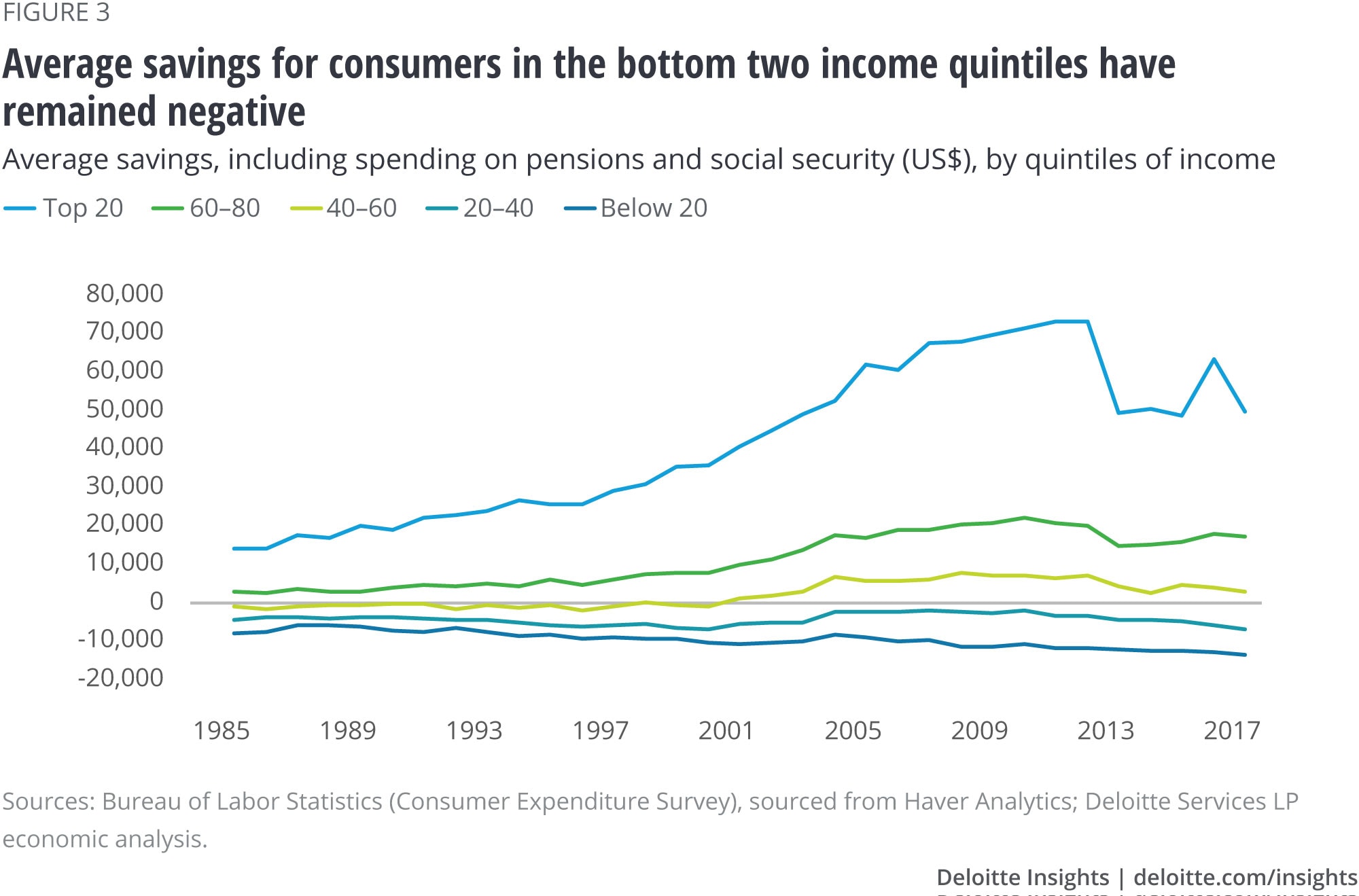
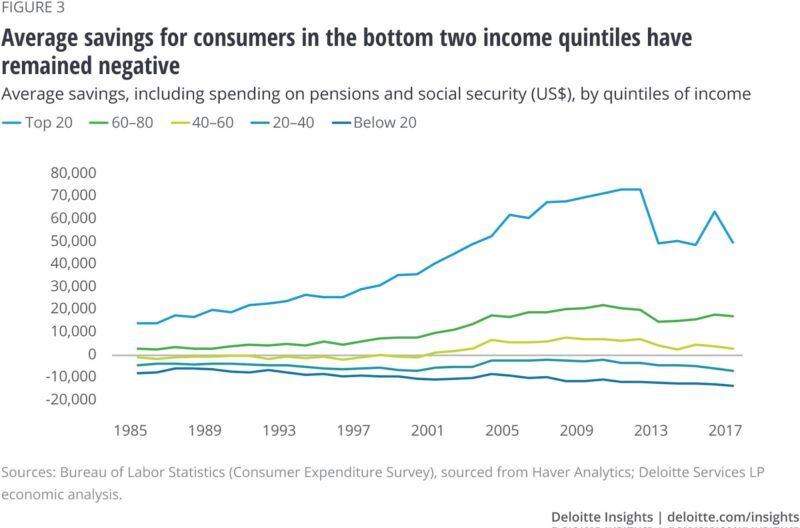
to Deloitte and research compiled by the Bureau of Labor Statistics, the bottom two quintiles of consumers in 2017 had negative savings, making unpaid labor and paying over one hundred dollars well nigh impossible.
Considering that this is the grim reality faced by those aspiring
manicurists, the hurdles and hoops other beauticians must jump through
to get their licenses only gets more difficult. Given these data, it is
not surprising that a Reason Foundation study found that
“Licensing decreases the rate of
job growth by an average of 20 percent.” The same study also found that
the “cost of licensing regulations is estimated at between $34.8 billion
and $41.7 billion per year,” meaning that the deadweight loss of
complying with regulations is roughly equivalent to Armenia’s 2020 GDP
of $40,788, as estimated by the International Monetary Fund.
While many intuit the blatant, undisguised regulation capture in the
beauty fields, others believe that, while regulations may be
unjustifiable in fields that do not involve life or death
decision-making, they must be applied to high-risk fields. Whether
consciously or not, most of us buy into the idea that to exist in a
world where unlicensed physicians are commonplace would be uncertain,
chaotic, and even dangerous. Provided this pervasive attitude, the
subsequent graph detailing the time and financial investment required to
become a trained medical professional or lawyer will be less shocking,
prima facie, than the lower-skilled occupations.
The cost does not include an
undergraduate and graduate education which could reach into six-figure
levels when considered. For these high-skilled occupations, the
investment of time is measured in years rather than hundreds of
hours, and the cost of test-taking and licensing fees measures easily
above the $125 of the sample low-skilled jobs, climbing well into the
thousands. While extensive training, vetting, and ratings of
professionals in these high stakes fields are crucial to consumer
protection – certainly much more so than with the low-skilled jobs
listed – the imposition of attending an undergraduate program before
proceeding to graduate school to study the skills relevant to the
vocation is artificial, expensive, and unnecessary.
Mandatory Licenses Do Not Improve Safety
According to an article by the The Regulatory Review,
a publication associated with the University of Pennsylvania, an Obama
Administration report found that although there may be reason to believe
that licenses may improve safety in specific professions,
“[a]ccording to the federal report, however, studies on licensing requirements have found
that licensing does not actually improve public health and safety. In
its survey of twelve studies, the report identified only two that found
that stricter licensing requirements increased the quality of services.”
The report also found that state licensing regimes reduce labor
mobility and could become problematic as the prevalence of telework
increases. Furthermore, these licensing regimes disproportionately
exclude certain populations from the workforce such as those convicted
of felonies, who would be well-served by meaningful employment, and even
immigrants who possess certification from their country of origin but
not from their state of residence.
Medical professionals, for example, are generally only licensed to
practice in a given state, even after their years and years of rigorous
training, and must jump through more hoops to practice elsewhere. Such
restrictions on work only serve to preserve the market power of
well-connected businesses via the coercive arm of the state. The
illegitimacy of such licensing laws was revealed when former Vice
President Mike Pence issued a regulation
in the early days of the pandemic on March 18th, permitting all medical
professionals to practice anywhere in the United States in light of
limited medical workers and the threat of the coronavirus:
“With regard to medical personnel,
at the President’s direction, HHS is issuing a regulation today that
will allow all doctors and medical professionals to practice across
state lines to meet the needs of hospitals that may arise in adjoining
areas.”
Like many regulations that were lifted for emergency reasons during
the age of Covid-19, restrictions on the ability of doctors to practice
medicine across state lines without a license for each state was found
to be unnecessary. When push comes to shove, it turns out a doctor can
perform just as well in Connecticut as New York without extra
certification. Go figure.
Society Can Do Without Mandatory Licenses
It is clear that many professions have not seen any noticeable
increase in quality due to the advent of licenses and that such
restrictions function primarily to reduce competition for established
actors. Trimming hedges and styling hair for compensation without the
prescribed training and certifications should not be an illegal act. The
only people who benefit from this are the incumbent businesses that are
protected from competition and disruptive innovation. Even highly
sophisticated professions like law and medicine would be better off if
such legal barriers were removed.
American legal scholar and attorney, Tim Sandefur, explains in his book The Right to Earn a Living
that one of the biggest quality assurances is competition. The reason
why you won’t encounter an unqualified professional at hospitals and law
firms is due mostly to their motivation to provide excellent service
rather than legal barriers set by the government. Take a look at any
large law firm. They predominantly employ graduates exclusively from the
top law schools. Not only that, but they typically hire those with the
highest GPAs and strong extracurricular leadership positions. Passing
the bar is the least of the requirements to work at such firms.
Competition and innovation from both employees and employers is what
raises standards, not mandatory licenses and state intervention.
Quality certifications are good to have but they shouldn’t be
mandatory, especially if the cost of obtaining them is prohibitively
expensive. Continuing with the example of the bar exam,
passing is legally required to obtain a license to practice law.
Although it is surely a good quality assurance test, it shouldn’t be
illegal for someone to voluntarily solicit services from someone who
hasn’t passed the bar. Skills come in all forms and perhaps some people
can’t translate their legal talents into a test like the bar exam. Some
people simply can’t afford a fully certified lawyer and they should have
every right to solicit services from someone who isn’t.
Furthermore, what constitutes the practice of law or other
sophisticated professions is often nebulous on purpose to keep out
competition of all sorts. Supreme Court Justice Neil Gorsuch writes in
his book A Republic If You Can Keep It, that
“[i]n recent years, lawyers have
used these rules to combat competition from outsiders seeking to provide
routine but arguably “legal” services at low or no cost to consumers.”
He cites cases involving innovative firms like Quicken Family Lawyer
and Legal Zoom which were both sued in Texas and South Carolina,
respectively. Their crime was providing what can be interpreted as a
legal service. That service was selling software that helped draft
documents like wills and contracts. Such a service is clearly beneficial
to society, especially to those who can’t afford a lawyer to accomplish
these necessary but relatively simple tasks.
Furthemore, the cost of going to law school is skyrocketing, much of
which can be attributed to legal accreditation requirements. Justice
Gorsuch notes that since the 1980s the cost of a private law degree has
increased over 150% and a public degree over 420%, adjusted for
inflation. Harvard Law School’s
estimated cost of attendance is just shy of $100,000, $65,000 of that
being for annual tuition, with three years being the average time it
takes to receive a JD. That cost is relatively consistent among most
elite law schools. Justice Gorsuch notes that the average tuition for an
ABA accredited law school in the state of California is not much better
at around $44,170 a year.
Again, not only are legally mandated certifications to work inflating
the costs of important services, but they often keep it that way with
little improvements to public safety. The legal profession is a clear
example of a sector that certainly needs qualified workers. However, it
is clear that mandatory requirements to even practice law in any form,
whether it be complex corporate litigation or showing a family how to
write a will, are not necessary. In fact they are clearly barriers to
entry to the benefit of entrenched economic interests, at the expense of
society.
You can apply the same level of analysis to any other complex
profession such as medicine or accounting. All mandatory licenses do is
take the power to offer and seek a service from the people to place it
in the hands of the few. Even if someone is supposedly unqualified to
offer a service, it is the right of the consumer to take that risk as it
is likely they have no better option. If necessary, fraud and harm
caused by incompetent or competent professionals can be punished via the
criminal code.
Key Takeaways
Occupational licensing is one of those topics that may not seem like a
big deal to the average person at first glance. Of course professionals
should be qualified for their jobs and of course certifications provide
a great way to ensure quality. The problem comes when the power to
decide who can and who cannot work is given to a coercive authority. In
the marketplace, bad actors are naturally corrected by competition and
public scrutiny. This is especially true in our age of instant
communication and crowd-sourced reviewing platforms such as Yelp.
However, under our current occupational licensing regime, honest and
hard working people are kept from offering a service to society by an
arbitrary system that protects established businesses from competition.
Such laws are built more so on fearmongering than a true concern for
public safety. Furthermore, such a system artificially suppresses those
who have the skills but lack the resources to fulfill the expensive and
demanding licensure requirements set by the state.
While the number of occupational licenses increases, we have seen
little increase in public safety as a direct result and a massive
increase in prices. There is nothing more Un-American and
Anti-Capitalist than a system that ordains some with the right to earn a
living and bars others from that same essential right. Rather than
cultivating an environment where everyone can safely contribute,
occupational licenses have made the economy a pay-to-play scheme that
only serves well-connected interests.
Jack Nicastro is a Research Intern
at the American Institute for Economic Research. He is currently
pursuing his Bachelor’s degree in Economics and Mathematics at Dartmouth
College.
Jack is Director of Programming for the Dartmouth Libertarians, a
writer and content-creator for the Dartmouth Political Times, a Co-Chair
of the American Enterprise Institute Executive Council at Dartmouth,
Assistant to the Program Director of Dartmouth’s Political Economy
Project and a horseback rider on the dressage team.
Jack enjoys playing bass guitar in his free time.
Get notified of new articles from Jack Nicastro and AIER.
Ethan joined AIER in 2020 as an
Editorial Assistant and is a graduate of Trinity College. He received a
BA in Political Science alongside a minor in Legal Studies and Formal
Organizations.
He currently serves as Local Coordinator at Students for Liberty and
the Director of the Mark Twain Center for the Study of Human Freedom at
Trinity College.
Prior to joining AIER, he interned at organizations such as the
American Legislative Exchange Council, the Connecticut State Senate, and
the Cause of Action Institute.
Ethan is currently based in Washington D.C.
Get notified of new articles from Ethan Yang and AIER.
Workers should have the right and freedom to decide for themselves whether to join a union. But a proposed bill, the “Protecting the Right to Organize Act of 2019” (H.R. 2472), would diminish that right if passed into law, warns a new Competitive Enterprise Institute report.
“Instead of balancing the interests of workers, employers and unions, the PRO Act promotes union priorities above all else,” explained Trey Kovacs, a CEI labor policy analyst.
“The legislation is a union ‘grab bag’ bill that undermines worker privacy, provides workers little time to educate themselves on unionization, and forces individuals to pay for union representation they do not want.
“Aimed at radically overhauling labor relations law, the PRO Act eliminates state right-to-work laws, discourages flexible work arrangements and franchising, and under certain circumstances takes away workers’ right to a secret-ballot election,” said Kovacs.
The report delves into the worst provisions of the PRO Act, which would:..........To Read More...
A recent tactic, “bargaining for the common good” very well may bury the unions in Janus v. AFSCME.
By Larry Sand February 6, 2018
In June 2016, right around the time the Friedrichs v CTA case wound up in a 4-4 stalemate, Rachel Cohen wrote a piece for The American Prospect called “Teacher Unions Are ‘Bargaining for the Common Good. ’” Prominently featured throughout the article are the Los Angeles teachers union and its president, Alex Caputo-Pearl, who claims that collective bargaining is “an important tool available to fight for equity and justice” and should go beyond issues like salaries and work rules. He envisions UTLA as a vehicle to push for collaborative policy alongside community organizations in bargaining for “the common good.”.........To Read More......
Workers should have the right to speak for themselves at their workplace and decide how to spend their hard earned wages. Yet, in around 20 states, the law provides government unions with the power to speak for and deduct money from public employees’ paychecks, whether or not these workers desire union representation.
A case before the Supreme Court could correct this injustice. In Janus v AFSCME, Council 31, the court will decide whether government workers may be forced to pay a union as a condition of employment. The plaintiff, Mark Janus, a child-support specialist in Illinois, is asking the Supreme Court to declare forced union dues a violation of his and millions of other public employees’ First Amendment rights.
In a recent report, I discuss reasons why the Supreme Court should rule in favor of Janus and how states can further workplace freedom for public employees in the event that forced union dues are abolished.
Vast Differences between Public and Private-Sector Unions.......To Read More...
If a person wants to go into business as a taxicab owner, what requirements should be imposed to protect the public? The prospective taxicab owner should show that he is honest and can operate a vehicle safely. His vehicle should pass a safety inspection, and he should have a liability insurance policy. Some cities require the purchase of an existing license, sometimes called a medallion. A medallion has cost as much as over $1 million, as in the case of New York City, and the cost has reached $700,000 in Boston and $360,000 in Chicago. There is no public protection interest served by forcing a person to go into debt to purchase a taxi medallion, but doing so does serve an interest......To Read More....
Are so-called
“right-to-work” laws the equivalent of slavery? That’s one argument Big Labor
is making to try to counter them. Their case is an absurd stretch, but
nevertheless worth looking at because it serves as a good primer on what these
laws actually do.Right-to-work laws
prohibit individual workers from being required to either join a union
or pay dues to one as a condition of employment. In other words, without
right-to-work laws, if you want a job at a unionized workplace, you have to
support its union.
The point is that the individual gets to decide whether
they want to join or not. Unions are perfectly legal in right-to-work states,
they just have to be exclusively voluntary organizations.The catch here is that most union contracts
with management guarantee that they are the "sole bargaining
representative" for employees. So when workers drop out, legally only the
union can represent them in matters with their employer.This is the crux of the union’s slavery
argument: Right-to-work laws put them in the position of having to provide
union services for free to nonmembers…… How do unions become the sole
bargaining representative in the first place? Because they demand it during
their contract negotiations with management. But nothing prevents unions from
negotiating “members-only” contracts in which they only represent people who
voluntarily join the union.…… So is it slavery if the unions push for contracts
that put them in this position should a state adopt a right-to-work law? The
obvious answer is no. They have only themselves to blame for this situation…..To Read More….
The earthquake that was Michigan’s right-to-work law has produced a number of interesting aftershocks, not least of which is the right-to-work rumbling in Pennsylvania where lawmakers (guided by Rep. Daryl Metcalf) have introduced legislation called “Pennsylvania Open Workforce Initiative,” aimed at ending compulsory unionism.The initiative actually consists of a number of bills, including:……. Metcalfe, a long-time and passionate advocate of right-to-work, acknowledges the economic benefits of such legislation. But more than that, he sees the issue as one of basic freedom:To Read More…..


 Print
Print