Search This Blog

De Omnibus Dubitandum - Lux Veritas

Showing posts with label Rent Control. Show all posts

Tuesday, November 5, 2024

The Five Most Important Ballot Initiatives of 2024

One of my traditions is that I highlight the most important ballot initiatives every year (see 2023, 2022, 2021, 2020, 2019, 2018, etc).
Unlike contests between flawed and deceptive politicians, these initiatives often provide clear-cut choices between more freedom and more statism.

That’s true in America and true in other nations.

For 2024, my pick for the most important referendum is Measure 118 in Oregon. As described by the Tax Foundation, it is a very harmful revenue grab.


The all-in Oregon state and local tax rate on large businesses could exceed 56 percent under a proposed ballot measure that purports to impose only a small tax increase on large businesses. …Under Measure 118, Oregon’s corporate income tax will contain a gross receipts-based minimum of 3.0 percent—which is like imposing a 42.9 percent corporate income tax if profits ran 7 percent! Add in the calculated equivalent rate of the existing gross receipts tax and you’re at 49.6.

Then, of course, there’s the federal income tax of 21 percent, and if in Portland, another 6.6 percent in other business income taxes. Suddenly, for a business with 7 percent profit margins, the all-in rate on net income for sales into Portland would be about 77.2 percent for large businesses (federal, state, and local combined).

To make matters worse, supporters want to use the money to create a universal handout. Here’s some of what’s been reported by (should be privatized) Oregon Public Broadcasting.


With its pledge to redistribute money…, the measure offers a simple pitch…slap a 3% tax on a business’s Oregon sales above $25 million, then divvy up the money raised among Oregon’s more than 4 million residents, no matter their age. …The measure could…send around $1,600 a year to every Oregonian beginning in 2026… At its most basic level, the measure would institute a form of universal basic income…

Proponents say that yearly checks will slash poverty for the state’s poorest residents, give children and seniors more stable footing, and infuse the economy with new spending. …“I see this as a massive redistribution of wealth…,” said Stacey Rutland, founder of the Portland-based nonprofit Income Movement, which advocates for basic income policies.

For those of us who don’t like the idea of a “massive redistribution of wealth,” let’s hope the normally left-wing voters of Oregon show a bit of common sense.

For the year’s second-most important ballot initiative, let’s travel up the Pacific coast.

In Washington, voters have a chance to repeal the state’s capital gains tax. Here are some excerpts from a local news report.


Initiative 2109 aims to repeal the state capital gains tax, which is imposed annually on the sale or exchange of long-term Washington capital assets. The state capital gains tax applies to an individual with an adjusted annual Washington capital gain above $250,000. …The money goes to measures like childcare subsidies for qualifying families, bonuses for childcare centers offering hard-to-cover hours, and school construction. The tax went to the state Supreme Court and was ruled constitutional. Most property owned by an individual for personal purposes is considered a “capital asset.” This includes houses, furniture, cars, stocks and bonds. Selling these items could result in a capital loss or a capital gain.

Now let’s shift to Illinois, where there is another effort to kill the state’s flat tax.

The good news is that’s it’s only an advisory referendum. The bad news is that it will encourage the pro-spending lobbies if voters say yes.

Here are some excerpts from a Wirepoints report.


Illinois’ Nov. 5 ballot will ask state residents..the next multi-billion-dollar tax hike proposal from Gov. J.B. Pritzker and the General Assembly’s Democratic supermajority. The $4.5 billion tax hike has been dubbed the millionaires tax because it proposes to hit Illinoisans that make a million dollars or more with an additional 3% surcharge on any amount they make above one million. To entice more Illinoisans to support the referendum, the proposal is sugar coated with legislators saying they’ll dedicate “funds to property tax relief.”

To be clear, it’s only an advisory referendum, meaning the result will be nonbinding. But Illinois politicians and the public sector unions, in particular the Chicago Teachers Union, are desperate for more money to fund their big, expensive budgets and contracts. They need this referendum to tell them whether the framing of a progressive tax hike sweetened with property tax “relief” will work as a proposed constitutional amendment in 2026. If it does, look for them to try again to end Illinois’ flat tax structure.

Now let’s head back to the Pacific coast.

California voters are being asked to decide whether to have more rent control. Here are some excerpts from a Reason column by


California voters will be asked for the third time in six years whether they want to give local governments a freer hand in adopting rent control. “The state may not limit the right of any city, county, or city and county to maintain, enact or expand residential rent control,” reads the succinct but potentially far-reaching text of Proposition 33. …

By repealing all existing state-level limits on rent control and forbidding the state Legislature from adopting future restrictions, Prop. 33 is…most radical. …there’s evidence that California’s rent control policies have reduced the supply of rental housing.

A landmark 2019 study on rent control in San Francisco found that the city’s rent stabilization ordinance encouraged landlords to convert rental units into owner-occupied condominiums (which could be sold at any price). …rent control cannot solve a housing affordability crisis caused by decades of underbuilding. Only significant liberalization of land use regulation will do that. …States like Texas that prohibit rent control in all its forms are doing a much better job of adding new housing supply to keep up with demand.

For our fifth ballot initiative, let’s travel to Kentucky where there’s an important referendum about school choice.

Here are some excerpts from House Speaker David Osborne’s supportive column in the Louisville Courier-Journal.


Amendment 2…would amend the Kentucky Constitution to allow lawmakers to debate meaningful alternatives to our current approach to education. …This proposal is not an attack on public education. …we can both offer additional opportunities to educate our students and support our public schools — but we can’t afford to leave another generation behind, trapped in a system that does not meet their needs. …some say we already have school choice and parents should just pay tuition.

In reality, it is only an option if parents can afford it. Otherwise, they are stuck in a system that cannot meet the needs of their child. Is it not the ultimate hypocrisy and elitism to say the single mother working two jobs in the West End of Louisville to pay for her child’s tutoring has a choice? …all seven neighboring states…have some form of school choice, and study after study shows that increasing choice helps students. …

Amendment 2 is…a declaration of war on the persistent acceptance of failure because it only impacts children marginalized by how much their parents make or where they live.

Let’s hope Kentucky voters choose what’s best for children rather than what’s best for the education bureaucracy.

I’ve picked five important ballot initiative to highlight, but if you want more contests to follow on election night, here are some other initiatives identified by the National Association of State Budget Officers.

We’ll start with another referendum on school choice.

Nebraska Referendum 435
Asks voters to approve or reject a bill that authorizes the state to implement a scholarship program for students attending private elementary or secondary schools.

California’s big spenders want to make it easier to expand government.

California Proposition 5
Lowers the vote threshold from 66.67 percent to 55 percent for local special taxes and bond measures to fund housing projects and public infrastructure.

South Dakota voters will decide whether welfare recipients have any obligation to be productive.

South Dakota Amendment F
Allows the state to impose a work requirement on individuals who are eligible to receive Medicaid and have not been diagnosed with a mental or physical disability.

California voters will choose whether marginally skilled workers should lose their jobs.

California Proposition 32
Increases the minimum wage to $18 per hour by 2026.

Last but not least, Arizonans will decide if major expansions of red tape need legislative approval.

Arizona Proposition 315
Prohibits a proposed rule from becoming effective if that rule is estimated to increase regulatory costs by more than $500,000 within five years after implementation, until the legislature enacts legislation drafting the proposed rule.

Since this is an election-related post, I’ll remind readers that I’m predicting Harris will win the electoral college by a 284-254 margin. That being said, taxpayers will lose regardless of which big spender prevails.


Monday, September 9, 2024

Rent Control: Learning from Argentina and the Netherlands

I periodically explain that the world is a laboratory, filled with experiments that teach (or should teach) that we get more prosperity with free markets and limited government.

Today, let’s look at the global laboratory and see what it teaches us about rent control.

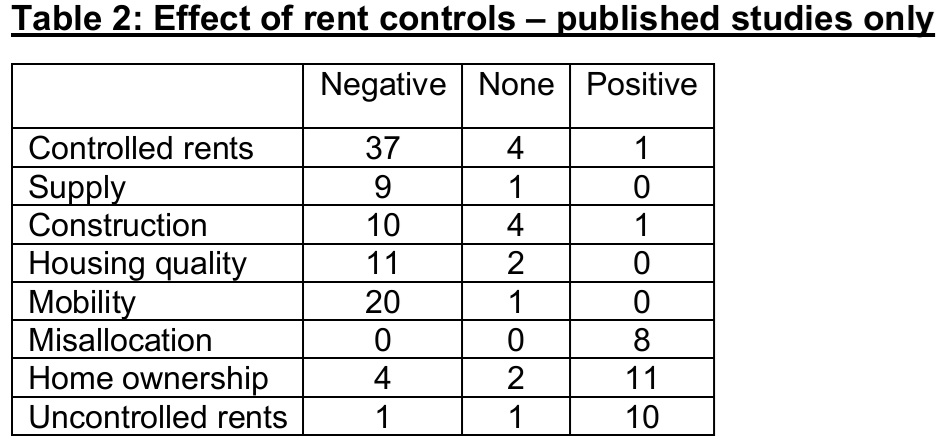
But before examining two case studies, I want to share this table from a recent study by the London-based Institute for Economic Affairs. The inescapable conclusion from peer-reviewed research is that rent control has very bad consequences.

Now let’s look at two new case studies.

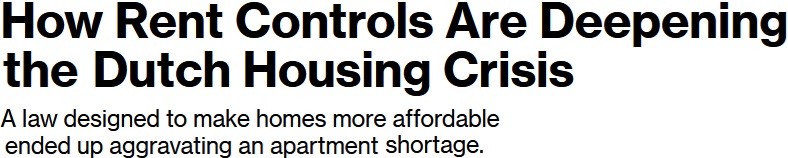
We’ll start in the Netherlands. In a report for Bloomberg, Cagan Koc and Sarah Jacob explain that the expansion of rent control by the Dutch government is having predictably negative effects.

Moraal is among the growing number of Dutch people struggling to find a rental property after a new law designed to make homes more affordable ended up aggravating a housing shortage. Aiming to protect low-income tenants, the government in July imposed rent controls on thousands of homes, introducing a system of rating properties based on factors such as condition, size and energy efficiency.

The Affordable Rent Act introduced rent controls on 300,000 units… The Netherlands has the highest proportion of rent-controlled homes in Europe… Before the new law came into effect, four-fifths of the country’s 3 million rental properties were subject to controls, and the law raised that to 96%, according to the housing ministry. …

To keep up with population growth, the Netherlands needs about 100,000 new dwellings a year, but over the past decade it’s built an average of two-thirds that many. …middle-income tenants will be hardest hit by the law, says Jasper de Groot, CEO of property listings website Pararius.

Now let’s go across the Atlantic Ocean and into the Southern Hemisphere to learn about what happened when the libertarian president of Argentina, Javier Milei, eliminated rent controls.

Once again, we got predictable results. But unlike the Netherlands, the results in Argentina were wonderfully positive.

Jesus Mesa explains in a column for Newsweek. Here are some excerpts.


Argentina’s recent repeal of rent control by libertarian President Javier Milei has led to a surge in housing supply, with the freedom to negotiate contracts, previously restricted, directly causing a drop in rental prices.

Milei, a self-described “anarcho-capitalist” known for his free-market approach, repealed the 2020 Rental Law, enacted by former leftist President Alberto Fernández, which had imposed restrictions on landlords and led to a significant decline in rental availability. …

The law, introduced in 2020, ended up distorting the real estate market and hurting both landlords and tenants. …by the end of last year, an estimated one in seven homes in Buenos Aires was sitting empty as landlords chose not to rent them out in Argentine pesos. …

But after the repeal, Buenos Aires saw a doubling of available rental units, and rental prices have stabilized. Under the new rules, landlords and tenants have more freedom to agree on lease terms. …Since Millei’s repeal of rent control laws took effect on December 29, the supply of rental housing in Buenos Aires has jumped by 195.23%, according to the Statistical Observatory of the Real Estate Market of the Real Estate College.

I don’t know whether to call this an IQ test or a reading comprehension test, but anyone who thinks the Netherlands approach is better gets a failing grade.

In which case I encourage them to read about the effect of rent control in New York, Berlin, San Francisco, Stockholm, and St. Paul.

And if those don’t convince you either, please don’t impose your ignorance on the rest of us by voting.

Tuesday, July 16, 2024

Biden’s Desperate Vote-Buying Proposal for Nationwide Rent Control

July 14, 2024 by Dan Mitchell @ International Liberty

I’m not a political pundit, but I’m guessing that yesterday’s despicable assassination attempt on Donald Trump increases the likelihood that he reclaims the White House.

That’s probably not good news for trade policy (though Biden has been just as bad), but it will be very good news for housing policy.


Not because of what Trump plans to do, but rather because it would eliminate the risk of Biden imposing nationwide rent control.

I’ve written previously on this issue, mostly to explain why it’s an insanely stupid idea. Indeed, when writing about rent control in the past, I’ve used words like “horrid” and “lunacy.” And let’s not forget “folly.”

It is the triumph of public choice over common sense and economic literacy.

Sadly, President Biden put personal ambition over the national interest a couple of days ago when he called for nationwide rent control

To put it mildly, the Committee to Unleash Prosperity was not impressed by the President’s vote-buying gambit.


Speaking of wacko ideas, the Biden administration is now touting national rent control. God help us. If there is ANY economic issue that virtually all economists agree on, it’s that rent control limits the availability of affordable housing, increases homelessness, and fails to help the poor.  No one bothered to tell the nutcases in this White House.

Here is what Joe said yesterday: “We’re going to make sure that rents are kept at 5% increase in corporate rents for apartments and the like. Homes are limited to 5%.” Assar Lindbeck, the late left-wing Swedish economist who for many years chaired the committee that awarded the Nobel Prize, famously said: “In many cases rent control appears to be the most efficient technique presently known to destroy a city–except for bombing.”

By the way, Biden isn’t the only politician considering this wretched policy.

The Wall Street Journal editorialized in April about a plan for statewide rent control in New York. Here are some excerpts.


You have to marvel at the enlightened economic thinking of New York politicians. Gov. Kathy Hochul and her Legislature are hashing out a deal as part of the state budget that would impose universal rent control… Democrats are now pushing so-called Good Cause Eviction standards that would establish a de facto cap on rent increases in what are now market-rate apartments.

They want to classify rent increases that exceed 3% or 1.5 times the consumer-price index, whichever is higher, as “unreasonable.” Landlords couldn’t evict tenants who refuse to pay more. …Extending rent control to market-rate apartments will…discourage new housing. Are Democrats in Albany trying to precipitate a local banking crisis by spurring massive write-downs on apartment buildings? Their plan could make New York housing uninvestable. …Every time you think Albany Democrats can’t do more economic damage, they come up with something worse.

What’s most disappointing about the actions of President Biden and Governor Hochul is that I’m sure their economic advisers have explained that rent control would be a disaster.


The negative effects of this approach are well known.

  • Deterioration of existing rental units.
  • Withdrawal of some rental units from the market.
  • A decline in building new rental units.

The bottom line is that rent control is a form of price control. And we have 40 centuries of evidence that price controls don’t work.

Monday, February 26, 2024

The Economic Illiteracy of Rent Control

February 25, 2024 by Dan Mitchell @ International Liberty

When writing about rent control in the past, I’ve used words like “horrid” and “lunacy.” And let’s not forget “folly.”

The policy is (as I wrote in 2019) the “triumph of vote counting over sound economics.” This short video provides a good summary.

By the way, the video isn’t saying anything controversial. At least among economists.

For instance, an overwhelming share of academic economists are Democrats.

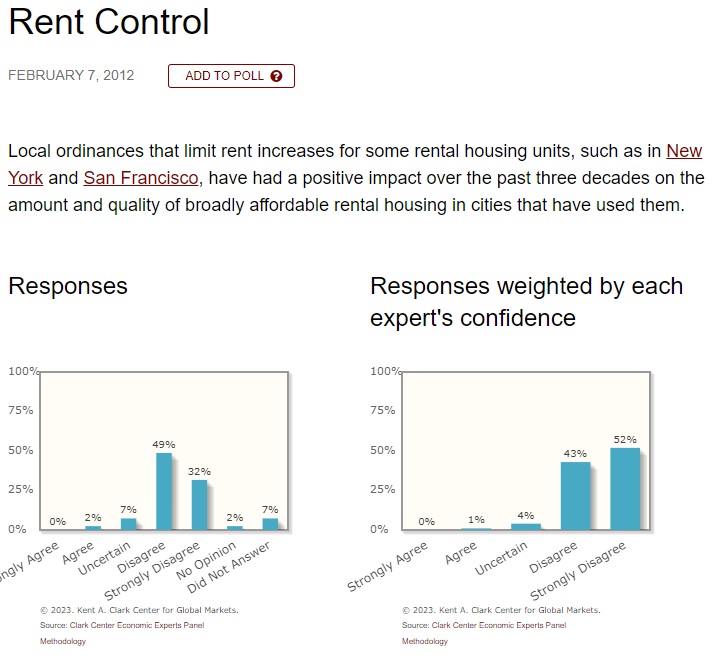
Yet there is near-unanimity in the profession that rent control is a failure. Here’s the data, courtesy of Professor Jeremy Horpedahl.

Yet politicians on the west coast don’t care about economic reality, as explained by David Chen in a report for the New York Times.


…thousands of Washington residents…have converged in recent weeks on Olympia, the state capital, to lobby legislators about one of the most closely watched housing bills in the country: A measure that would cap residential rent increases at 7 percent a year. Deemed a priority by the Democratic leaders who control the State Legislature, the bill has cleared the House of Representatives and is now in the Senate. If it is enacted, Washington would become the third state in the country to adopt statewide rent regulations, after Oregon and California… The state of Washington…would protect tenants throughout the state, including those in towns that may be unable or unwilling to take their own action.

Actually, such legislation would not “protect tenants.”

As always happens with price controls, shortages will appear.

But tenants don’t understand that economic reality and politicians are happy to ignore that reality.

Speaking of politicians who ignore reality, here are some excerpts from a Wall Street Journal editorial last year.


Democrats in Congress are now pressing the President to impose rent control nationwide…a pretext to nationalize local housing policy. Fifty Democrats in Congress…sent a letter urging Mr. Biden “to pursue all possible strategies to end corporate price gouging in the real estate sector and ensure that renters and people experiencing homelessness across this country are stably housed this winter.” …Democrats want the Federal Housing Finance Agency (FHFA), which supervises government-sponsored enterprises Fannie Mae and Freddie Mac, to establish “anti-price gouging protections” and “just cause eviction standards” in rental properties with government-backed mortgages. These are their euphemisms for rent control and eviction bans.

As you might expect, some of the most economically illiterate members of Congress signed the letter, including Bernie Sanders, Elizabeth Warren, Alexandria Ocasio-Cortez, and Ayanna Pressley.

Let’s close with some evidence from a recent rent-control mistake in Germany. Two German scholars, Pekka Sagner and Michael Voigtländer , investigated the impact of a rent freeze in Berlin.


The Berlin rent freeze was an unprecedented market intervention in the German housing market. We analyse how the rent cap part of the legislation which fixed rents at below market levels affected the supply side in the short term. We find rent decreases accompanied by decreases in supply five times as large. …We make use of a rich dataset of real estate advertisements and employ hedonic difference-in-difference and triple-difference estimation strategies.

Maybe it’s just me, but “decreases in supply five times as large” seems like a bad thing.

It’s almost as if Berlin politicians were a bunch of economic illiterates. Or, they knew the likely result but didn’t care because they were focused on short-term political benefits for themselves.

Wednesday, January 11, 2023

New York City Housing Follies, 2023 Edition

January 09, 2023 @ Manhattan Contrarian 

Mostly I write about energy policy; but another important topic for this blog is housing policy, particular as practiced here in my home town of New York. For reasons that might not be immediately obvious, these topics of energy and housing policy are closely related. Both involve ignorant politicians promising to supplant the imperfect freedom-based economic system and achieve utopia by using their coercive powers to order that it shall be so. Yet somehow, utopia continues to elude us, and the government mandates only make things worse. And no lessons are ever learned.

Today’s topic is the latest in New York housing policy, and its inevitable consequences. Currently, both houses of our State Legislature, as well as the Governorship, are in the hands of the progressive wing of the Democratic Party. We have a rent regulation regime that dates all the way back to World War II (with many modifications along the way), and a resulting situation that is universally described as a “housing shortage.” Available apartments are scarce and expensive. Small amounts of new housing are built annually, but largely for a small slice of the market at the very top.

To our reigning politicians, the solution is obvious: order that rents be restricted and that the housing that gets built be made “affordable” and allocated by government lotteries to income-restricted beneficiaries. How are these policies working out?

Consider first the restrictions on rent levels. From the 1970s to 90s, we had an extremely tight rent-regulation regime, where landlords had almost no ability to raise rents, even in times of high inflation and even on apartments that had been vacated. The number of new apartments built during this time was barely above zero. In the 90s, a Republican-controlled State Senate and a Republican Governor were able to achieve a number of significant loosenings of the restrictions, the most important of which were: (1) on vacancy, a landlord could raise the rent 20% as of right, (2) if a landlord did what were called “major capital improvements” on the apartment, he could increase the allowed rent to recover the amount invested over 15 years, and (3) if the allowed rent went above $2500 as a result of (1) and (2), then the apartment was removed from the control system entirely. All these regulations made for a very cumbersome system, but nevertheless led to the rate of new construction multiplying by around a factor of seven.

In the 2018 election, the progressive Democrats were able to re-take full control of the Legislature and the Governorship for the first time in decades. One of their first priorities (along with “climate” legislation) was to get rid of the 1990s rent regulation reforms, particularly items (1), (2) and (3) of the previous paragraph. In June 2019 they passed an act called the Housing Stability & Tenant Protection Act of 2019. The 20% vacancy allowance was eliminated. The “major capital improvement” recovery was restricted to a fraction of what it previously was, and with a cap of $15,000 for any apartment. The “luxury decontrol” provision was eliminated. That’ll show those evil landlords!

By the summer of 2022, some preliminary results were in. A local newspaper for the real estate industry called The Real Deal had a piece on July 5 with the headline “In housing-starved NYC, tens of thousands of affordable apartments sit empty.” Excerpt:

[Thousands] of rent-stabilized apartments . . . now sit unoccupied and unavailable in a city desperately in need of low-cost housing. . . . The Housing Stability and Tenant Protection Act, a sweeping rent reform passed by the state Legislature in 2019, dramatically limited landlords’ ability to increase rents on stabilized apartments. The measure ended the vacancy bonus that had allowed owners to raise rents 20 percent when stabilized units became unoccupied. It also reduced to $15,000 over 15 years the renovation costs that landlords can recover by hiking rents.

How many apartments now sit vacant as a result of these restrictions?

In April, CHIP [Community Housing Improvement Program, a landlord trade organization] launched a campaign to call attention to the city’s unrentable housing stock. The group estimated that 20,000 rent-stabilized apartments in the city were empty because renovations were not economically feasible. In May, the city’s Department of Housing Preservation and Development released a more staggering number: nearly 43,000 vacant but unavailable units.

To show how the incentives have been undermined, the Real Deal interviews a small landlord named David Eshaghoff:

Eshaghoff’s empty apartments — about a dozen of his 200-unit portfolio — need repairs. Collapsing ceilings, disintegrating plumbing and shoddy electrical work render them uninhabitable. But he said that because of New York’s [2019] rent law, there is no economic rationale to fix them — even if he could afford to.

But don’t worry — New York’s politicians think they have the answer to where the additional low-cost apartments are going to come from. They’re going to order them to be built.

On December 8 Mayor Adams announced what he called his “moonshot” program, with a “bold three-pronged strategy,” to get some 500,000 new apartments built. The program does include some useful items, like permitting reform, but nothing to get rid of the legislature’s destructive new rent restrictions, nor anything to rein in the ability of local politicians, particularly City Council members, to hold projects ransom for their own extortionate demands.

So consider this next piece from The Real Deal, with a date of January 5, headline “Pol who sank Harlem housing project rallies against truck lot on property.” It seems that a developer named Bruce Teitelbaum controls a largely-vacant property at 145th Street and Lenox Avenue — right on top of a major subway station. He proposed to build a two-tower project on the property, containing over 900 apartments. In accordance with official New York religion, he proposed to make half of the apartments “affordable,” aka subject to income and rent-level restrictions:

The developer had offered to set aside half of the proposed complex’s 917 apartments as affordable to win Richardson Jordan’s support for the project — a vital prerequisite under the City Council’s tradition of deferring to the local member on land-use issues in a given district.

But the local City Council member, Kristin Richardson Jordan, objected, demanding that 100% of the apartments be made “affordable”:

Richardson Jordan . . . argued that the units would not be sufficiently affordable for her constituents and said she would not budge unless 100 percent of the units were income-restricted.

Result: Teitelbaum has decided to make the site into a truck parking lot instead, which he can do as of right under existing zoning. The Real Deal quotes him as follows:

“[Richardson Jordan] explicitly said that she actually preferred us to develop the site for parking, storage or our other as-of-right permissible uses, unless we built 100 percent of the apartments for folks earning an average of about $40,000 or less which she knew was impossible,” Teitelbaum said in a statement, going on to accuse the Council member of “trying to create a false narrative to justify her failure.” “We never had another choice,” Teitelbaum added.

I wouldn’t count on seeing Adams’s 500,000 units of new housing any time soon.

Tuesday, June 21, 2022

The Horrid Consequences of Rent Control


As John Stossel discusses in this new video, few economic policies are as insanely foolish as rent control.

As you saw in the video, supporters of rent control tend to be the cranks and crazies, such as Bernie Sanders and Alexandria Ocasio-Cortez.


The vast majority of economists, by contrast, recognize that such policies undermine incentives to provide and maintain rental housing.

Who is going to invest in a new apartment complex, after all, if politicians impose laws that ensure it will be a money-losing project?

The video highlights what has recently happened in Minnesota.

I wrote about that mistake last year. Christian Britschgi of Reason also looked at what happened. Here are some excerpts from his column.


Another housing development in St. Paul, Minnesota, is on hold… The reason? St. Paul’s newly-passed rent control ordinance, which Alatus’ principals say is making their once-eager investors skittish about doing business in the city. …the policy has developed a rock bottom reputation among economists over the past few decades. They almost uniformly argued that capping rents deterred developers from building new homes, and discouraged landlords from taking care of the ones that already exist. The inevitable result is less, and less well-maintained, housing. …Rent control is always going to disincentivize housing construction.

I recommend reading the entire article, since it also discusses the pernicious impact of zoning laws.

Since we’re on the topic of rent control, here’s the abstract of a study published by the American Economic Review in 2019. Because the policy discourages construction of new units, Rebecca Diamond, Time McQuade, and Franklin Qian found rent control actually increases rents in the long run.


Using a 1994 law change, we exploit quasi-experimental variation in the assignment of rent control in San Francisco to study its impacts on tenants and landlords. Leveraging new data tracking individuals’ migration, we find rent control limits renters’ mobility by 20 percent and lowers displacement from San Francisco. Landlords treated by rent control reduce rental housing supplies by 15 percent by selling to owner-occupants and redeveloping buildings. Thus, while rent control prevents displacement of incumbent renters in the short run, the lost rental housing supply likely drove up market rents in the long run, ultimately undermining the goals of the law.

Rent control is bad for both landlords and renters.


But renters generally don’t understand the topic, which is why many of them support demagogic politicians pushing the policy.

The bottom line is that rent control is a form of price control. And we have centuries and centuries of evidence that such policies produce shortages and other forms of economic damage.


Tuesday, November 30, 2021

Rent Control Lunacy

November 14, 2021 by Dan Mitchell @ International Literacy  

There are some issues – such as class-warfare tax rates and the minimum wage – where intelligent people on the left will privately admit being wrong (or at least they will admit adverse consequences).

Another example is rent control.


Indeed, it’s so obvious that imposing price controls on housing will create shortages that some folks on the left even admit publicly that it’s a bad idea. Yet leftist politicians are drawn to the policy for the simple reason that renters outnumber landlords. Simply stated, they’re willing to impose considerable damage so long as they can grab a few extra votes.

Let’s look at some evidence about the folly of rent control, and we’ll start with a hot-off-the-presses column by Ryan Mills for National Review.


Democratic leaders in Minnesota’s capital city are scrambling for solutions after developers put several large projects on hold across St. Paul in the wake of last week’s election, when residents approved what may be the strictest rent-control policy in the country. …left-wing activists on the eastern bank of the Mississippi River succeeded in their effort to cap rent increases at 3 percent annually, including on new construction, a step most communities that have imposed rent-control policies have specifically avoided out of concern that it would discourage future investments. The St. Paul initiative passed last week with 53 percent support. …Large developers who spoke to the Minneapolis Star Tribune and the St. Paul Pioneer Press told reporters that they’re pausing their projects across the city, and they are “re-evaluating what – if any – future business we’ll be doing in St. Paul.” Lenders are pulling out of new projects, they say, worried about the impact of the new policy. …dozens of buildings…have had 2022 rehabilitation projects stopped.

Wow. Sounds like St. Paul wants to supplant Minneapolis as the worst-governed city in the state.  Speaking of poorly governed cities, Christian Britschgi of Reason wrote early last year about what’s happening with rent control in New York City.


When the New York legislature passed major changes to the state’s rent regulations in June 2019, critics warned the new law would reduce investment in, and renovations of, rental properties in New York City. …those predictions are bearing out. …sales of apartment buildings in the Big Apple fell by 36 percent in 2019, and…the money spent on those sales fell by 40 percent. The prices investors were paying for rent-stabilized units—where allowable rent increases are set by the government and usually capped at around 1 or 2 percent per year—fell by 7 percent. …69 percent of building owners have cut their spending on apartment upgrades by more than 75 percent since the passage of the state’s rent regulations. Another 11 percent of the landlords in the survey decreased investments in their properties by more than 50 percent.

Some European cities also have adopted price controls on housing. In a column for the Foundation for Economic Education, Jon Miltimore explains the damage this approach has caused in Stockholm.


Stockholm is just one of many Swedish cities struggling with a housing shortage. It’s not just that prices are too high; wait times for flats are also stunningly long. In Stockholm, for example, the average waiting time for a typical property is about nine years…, but wait-time in Stockholm’s most attractive neighbourhoods can run double that. …For younger Swedes in particular, the housing situation is a real problem—and it stems from Sweden’s decades-long embrace of rent control policies, which stretch back to World War II. …the results of Sweden’s rent control policies were quite predictable. The reality is price controls and other government regulations can’t fix housing problems.

The mess in Stockholm has even attracted attention from the BBC, as illustrated by the excerpt in this tweet.  Jon Miltimore also wrote about disastrous impact of rent control in Berlin.


In February 2020, Berlin introduced the so-called Mietendeckel—a cap on rent—to keep Berlin from becoming the next London or New York, cities where pricey rents have driven out many lower- and middle-class residents. The rent caps didn’t apply to everyone, however. They applied to properties built prior to 2014, freezing rent at June 18, 2019 levels. …Well, a year later, and the results of Berlin’s experiment are in. …Housing supply has shrunk and many landlords have reportedly exited the market, making the shortage much worse. …The lesson? Rent control has effects on housing supply, and those effects are not good.

And it you want more bad news from Germany, Berlin voters just approved a scheme to confiscate some apartments.  Here’s the story from the EU Observer.


Berliners voted in favour of expropriating apartments owned by big real-estate companies, with 56 percent of voters in the German capital saying ‘yes’ in the non-binding referendum at this weekend, the Financial Times reported on Monday. Now Berlin’s new municipal government has to decide how to proceed, since the expropriation of housing units could be legally challenged as against the German constitution.

I don’t know the outcome (if any) of the court challenge, but I do know that rent control is horrible policy.  And other economists agree.

P.S. Price controls are also bad news for pharmaceutical products and emergency supplies.


Wednesday, July 7, 2021

Economic Illiteracy from the Washington Post

July 6, 2021 by Dan Mitchell @ International Liberty

I’ve written nearly 6,100 columns for International Liberty, but only one of those columns has focused on Lebanon.


That was back in 2018, when I explained how the nation could have avoided a fiscal crisis with a spending cap.  Now it’s time to once again write about Lebanon, though maybe today’s column is actually more about media bias.  That’s because this story in the Washington Post, authored by Sarah Dadouch, shows how journalists have far too little understanding of economics.


Lebanon’s worsening financial meltdown has been accompanied by a dire shortage of imported fuel. Roads in cities like Beirut and Tripoli are now lined with cars queuing for hours to get their allotted amount of gasoline, at most a third of a tank. …smugglers have discovered there’s good money to be made by buying gasoline in Lebanon at the heavily subsidized price and then selling it on the black market in Syria, which has a debilitating fuel crisis of its own. …Many Lebanese politicians blame the gasoline crisis partly on smuggling… In April, Lebanon’s caretaker energy minister said the disparity in gasoline prices between Lebanon and Syria means smugglers can make huge profits next door. …The Lebanese army, which has received more than $2.5 billion in aid from the United States since 2006, has made concerted efforts to curb the illicit commerce.

The smugglers aren’t the cause of Lebanon’s energy crisis. They’re merely a symptom of the real problem, which is that the country’s politicians buy votes from motorists by subsidizing gasoline.  Get rid of those subsidies and smuggling will disappear overnight. 

 http://freedomandprosperity.org/wp-content/uploads/2020/04/Apr-16-20-Forty-Centuries.jpg

The moral of the story is that bad things happen when politicians interfere with prices. We have forty centuries of evidence showing price controls don’t work. When politicians try to curry favor by rigging prices, bad things happen.

And the second moral of the story is that journalists don’t understand the first moral of the story (not that I’m surprised, given the shaky track record of the Washington Post).

P.S. I’m flabbergasted that American taxpayers have sent $2.5 billion of foreign aid to Lebanon’s army, which gives the government fiscal leeway to pursue bad policies such as gasoline subsidies!

P.P.S. While gasoline subsidies are an insanely foolish policy for a nation enduring a fiscal crisis, fiscal policy isn’t even Lebanon’s biggest problem. As noted in this video, the country does even worse on trade policy, regulatory policy, and rule of law.

P.P.P.S. The post-war German economic miracle was triggered by the removal of price controls.


Friday, August 21, 2020

California Court System Lifts Eviction Moratorium After Lawsuit

By Matthew Vadum August 20, 2020Updated: August 20, 2020

Under legal pressure, the rule-making arm of California’s court system, the largest in the United States, has rescinded its pandemic-related emergency order that blocked the state’s courts from hearing eviction proceedings.

Landlords in California and across the country have reportedly been hard hit by emergency eviction moratoriums and by the inability of some of their tenants to pay rent in the troubled economy.
The Judicial Council of California voted 19–1 to scuttle emergency rules governing evictions and judicial foreclosures imposed by the body on April 6.

California Chief Justice Tani G. Cantil-Sakauye, who was appointed to her post in 2010 by then-Gov. Arnold Schwarzenegger, a Republican, acknowledged in a statement that the council had overreached...........To Read More....

Friday, September 20, 2019

Rent Control: A Triumph of Vote Counting over Sound Economics

September 12, 2019 by Dan Mitchell @ International Liberty
 
Identifying the worst government policy would be a challenge. Would it be minimum wage laws, which deprive low-skilled workers of a chance for employment and upward mobility? Would it be class-warfare tax rates that generate large amounts of economic damage compared to potential (if any) revenue?

Those are tempting choices, but there’s a strong case that nothing is as foolish as rent control.
Here’s a map showing which states impose or allow this destructive form of intervention.


California politicians are very susceptible to bad ideas.

True to form, as reported by the New York Times, they actually want to impose statewide rent control.
California lawmakers approved a statewide rent cap on Wednesday covering millions of tenants, the biggest step yet in a surge of initiatives to address an affordable-housing crunch nationwide. The bill limits annual rent increases to 5 percent after inflation and offers new barriers to eviction… a momentous political swing. For a quarter-century, California law has sharply curbed the ability of localities to impose rent control. Now, the state itself has taken that step. …Economists from both the left and the right have a well-established aversion to rent control, arguing that such policies ignore the message of rising prices, which is to build more housing. Studies in San Francisco and elsewhere show that price caps often prompt landlords to abandon the rental business by converting their units to owner-occupied homes. And since rent controls typically have no income threshold, they have been faulted for benefiting high-income tenants.
I’m glad the article included the evidence from economists, especially since the headline is grossly inaccurate. If we care about evidence, it’s far more accurate to say that rent control will exacerbate the state’s housing problems.

Which is why the Wall Street Journal opined that this type of intervention is especially destructive.
California already boasts the highest housing costs in the country, and even liberals have come around to acknowledging that not enough homes are built to meet demand. The state has added about half as many housing units as needed to accommodate population growth, and more than half of Californians spend 30% of their income on rent.Blame a thousand regulatory burdens. Local governments limit what housing developers can build and where. They layer on permitting fees, and then there are the state’s high labor costs and expensive green-energy mandates and restrictions that opponents can exploit to block projects for years. …The upshot is that an “affordable” housing unit in California costs $332,000 to build and nearly $600,000 in San Francisco, according to state budget figures. Developers can’t turn a profit on low- and middle-income homes… And now Democrats want to constrain housing prices by fiat. Mr. Newsom and Democratic legislators are pushing a law to limit annual rent increases across the state to 5% plus inflation. …Building permits in the first seven months this year have fallen 17% compared to 2018 despite an increase in state subsidies. …California’s progressive regulatory complex is contributing to this housing slowdown by driving businesses and people from the state. More than 700,000 residents have left since 2010.
By the way, the politicians in Albany already made the same mistake.

And, as you might expect, the Wall Street Journal‘s editorial page had the correct response.
Law by law, Gov. Andrew Cuomo and Democrats are chipping away at the policies that made New York City livable after decades of decline… Democrats this week are ramming through rent-control bills that…effectively dictates rents for one million or so rent-regulated apartments and restricts landlords’ ability to evict tenants who don’t pay. …Once a tenant moves out—which doesn’t happen often since folks can pass on the entitlement to friends and relatives—landlords would be required to offer the unit to another tenant at restricted rates. …Nor could they raise rates by more than 2% annually to pay for improvements or evict a nonpaying tenant who “cannot find a similar suitable dwelling in the same neighborhood.” Since landlords would have less incentive to make fixes, more apartments will deteriorate and come to resemble New York City’s squalid public housing. …One result will be less housing investment… Progressives are vindicating CEO Jeff Bezos ’s decision to pull Amazon’s second headquarters out of New York. Don’t be surprised if other businesses follow.
You won’t be surprised to learn that politicians in other nations sometimes make the same mistake.
The U.K.-based Guardian wrote about how rent control has backfired in Sweden.
Half a million are on the waiting list for rent-controlled flats in Stockholm, meaning a two-tier system, bribes and a thriving parallel market… the system is experiencing acute pressures. Building of rental homes almost dried up after a financial crisis in the early 1990s, and there is a dire shortage of properties. Demand is such that it is almost impossible to get a direct contract. With nearly half of all Stockholmers – about 500,000 people – in the queue, it can take 20 or 30 years to get to the top of the pile. …The result is a thriving rental property black market, with bribes of as much as 100,000 kronor per room to obtain a direct contract, McCormac says. Many people sublet space in their rental apartments. …“Rent controls were supposed to enable people to live in central locations, but now it is having the opposite effect,” McCormac says. “People without social connections will have a very hard time finding a flat,” says Kleberg.
And Germany is making the same mistake – even though it should have learned from the mistakes under Hitler’s national socialism and East Germany’s communism.
…the kinds of ideas traditionally associated with planned economies are gaining more and more support all over Germany. …Substantial numbers of people have moved to Germany’s major cities…the supply of housing has failed to keep pace with these significant developments, and this is largely because construction approval processes are so long-winded and the latest environmental regulations have made building prohibitively expensive. …In Germany’s capital, Berlin, …it now takes 12 years to draft and approve a zoning plan, which in many cases is a prerequisite for the development of new dwellings. …An initiative in Berlin calling for the expropriation of private real estate companies has collected three times as many signatures as it needed to initiate a petition for a referendum. …Kevin Kühnert, chairman of the youth organization of the center-left SPD…has gone as far as calling for a complete ban on private property owners renting out their apartments. …Berlin’s Senate approved the main components of a rent freeze in the German capital. …Advocates of such central economic planning react sensitively when they are reminded that it has already been tried… An earlier rent freeze was approved in Germany on April 20, 1936, as a gift from the National Socialist Party to the citizens of Germany on Adolf Hitler’s 47th birthday. The National Socialists’ rent cap was adopted into the GDR’s socialist law by Price Regulation No. 415 of May 6, 1955, and it remained in force until the collapse of the GDR in 1989.
Now let’s review some economic research.

Three Stanford professors researched the issue, looking specifically as San Francisco’s local rent control rules.
Using a 1994 law change, we exploit quasi-experimental variation in the assignment of rent control in San Francisco to study its impacts on tenants and landlords. Leveraging new data tracking individuals’ migration, we find rent control limits renters’ mobility by 20% and lowers displacement from San Francisco. Landlords treated by rent control reduce rental housing supplies by 15% by selling to owner-occupants and redeveloping buildings. Thus, while rent control prevents displacement of incumbent renters in the short run, the lost rental housing supply likely drove up market rents in the long run, ultimately undermining the goals of the law. …In the long run, landlords’ substitution toward owner-occupied and newly constructed rental housing not only lowered the supply of rental housing in the city, but also shifted the city’s housing supply towards less affordable types of housing that likely cater to the tastes of higher income individuals. Ultimately, these endogenous shifts in the housing supply likely drove up citywide rents, damaging housing affordability for future renters…it appears rent control has actually contributed to the gentrification of San Francisco, the exact opposite of the policy’s intended goal. …rent control has contributed to widening income inequality of the city.
To be fair, rent control is just one of several bad policies that mess up the city’s housing market.
Now let’s shift to the other side of the country.

Jeff Jacoby of the Boston Globe shared evidence from a disastrous experiment in Massachusetts.
…a handful of Democratic lawmakers want to bring the horror of rent control… This isn’t happening only in Massachusetts. …Oregon’s governor just signed a statewide rent-control law and efforts to overturn rent-control bans are underway in Illinois, Colorado, and Washington state. …the folly of rent control is so well-established that to deny it requires, as Hillary Clinton might say, a willing suspension of disbelief. Massachusetts and most other states have banned rent control because the harm it causes far outweighs any benefit it confers. When politicians impose a ceiling on rent, the results are invariable: housing shortages, depressed real estate values, increased decay, less new construction. …The longer rent control persists, and the more harshly it is enforced, the worse the problem grows. …in New York City, where strict rent controls date back to World War II, the annual rate at which apartments turn over is less than half the national average, while the share of tenants who haven’t moved in more than 20 years is more than double the national average. …Acknowledging the damage caused by rent control is neither a right- nor left-wing issue. …the communist foreign minister of Vietnam…made…the…point in 1989: “The Americans couldn’t destroy Hanoi,” Nguyen Co Thach remarked, “but we have destroyed our city by very low rents.” …When Massachusetts voters struck down rent control in 1994, it was in the teeth of preposterous fearmongering by hardline tenant activists… What happened in reality was that tens of thousands of apartments were decontrolled with no ill effects… When tenants were analyzed by occupation, it was high-earning professionals and managers who predominated among the beneficiaries of rent control; semi-skilled and unskilled workers lagged far behind. Rent control always ends up benefiting the young, strong, and well-to-do at the expense of the old, weak, and poor.
Meanwhile, Meghan McArdle opined in the Washington Post about the perverse economic consequences of rent control.
…there are a few questions where there’s near unanimity, and rent control is one of them. Pretty much every economist agrees that rent controls are bad. …the policy appears to be making a comeback. …City governments may have to relearn why their predecessors pruned back rent-control policies. Rent control is supposed to protect poor, deserving tenants from the depredations of greedy landlords. And it does, up to a point. …The problem is that rent control doesn’t do anything about the reason that rents are rising, which is that there are more people who want to live in desirable areas than there are homes for them to live in. Housing follows the same basic laws of economics as other goods that consumers need… rent control also reduces the incentive to supply rental housing. …an actual solution to skyrocketing rents: Build more housing, so that the rent controls won’t be necessary… To do that, cities would need to ease the costly land-use regulations that make it so difficult for developers to fill the unmet demand. …Alas, that’s not going to happen… Declining housing stock is just one of the many potential costs of rent controls; others include a deteriorating housing stock as landlords stop investing in their properties, and higher rents. Yes, higher, because rent control creates a two-tier housing market. There are cheap, price-stabilized apartments that rarely turn over, because why would you give up such a great deal? Then there are the uncontrolled apartments, which everyone else in the city has to fight over, bidding up the price. …the people getting the biggest benefit are white, affluent Manhattanites.
By the way, you hopefully have noticed a pattern.

Rich people generally get the biggest benefits under rent control.

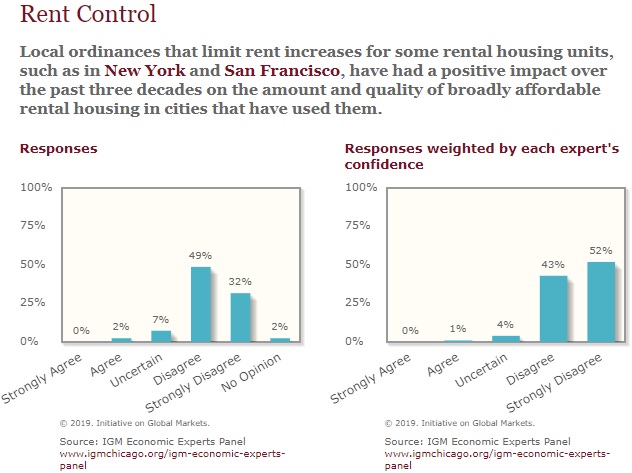
Let’s close with a look at how economists from across the philosophical spectrum view rent control
Here’s some survey data from the University of Chicago.


Incidentally, there’s an obvious reason why politicians persist in pushing bad policy. In the case of rent control, it’s because tenants outnumber landlords.

So even if politicians understand that the policy will backfire, their desire to get votes will trump common sense. Especially if they assume they can blame “greedy landlords” for the inevitable housing shortages and then push for government housing subsidies as an ostensible solution.

Another example of Mitchell’s Law.

Monday, March 4, 2019

The Folly of Rent Control

March 2, 2019 by Dan Mitchell @ International Liberty

People sometimes ask me how I’ve managed to write a column every single day since November 2009.  Sadly, the answer has a lot to do with politicians having a vote-buying and power-grabbing incentive to produce a never-ending supply of bad policies.
 
Consider what just happened in Oregon.
Oregon Gov. Kate Brown signed into law a first-in-the-nation rent control bill Thursday…Senate Bill 608′s rent control and eviction protections go into effect immediately. …The law caps annual rent increases to 7 percent plus inflation throughout the state, which amounts to a limit of just over 10 percent this year. …The bill passed quickly through the House and Senate amid a Democratic supermajority.
This is spectacularly bad policy.
  • My first reaction is that such laws should be unconstitutional since politicians are violating a provision of the Bill of Rights by taking part of the value of private property without compensation.
  • My second reaction is that such laws will backfire because they address (in a bone-headed fashion) the symptom of rising rents rather than the (usually government-caused) problem of inadequate housing supply.
  • My third reaction is that price controls never work, regardless of the market or sector, so limits on rent will exacerbate housing problems.

By the way, economic illiteracy is not confined to Oregon. Or even to the United States

Berlin is contemplating rent control as well.
…local politicians here have proposed a radical idea to tackle the problem: introducing a rent cap that would freeze all existing rents for the next five years. …By freezing existing rents for five years, Zado said, the city could help prevent massive increases. …but there could also be significant downsides. Such a policy could exacerbate the city’s existing housing shortage: some experts say it might lead developers to seek buyers, not renters, for their new apartments. …said Michael Voigtländer of the German Economic Institute in Cologne. “That lack of housing won’t be solved if the rents are capped.” …head of the German Housing Industry association, told German newspaper Die Zeit it could even keep developers from building additional housing in the coming years: “A rent stop would lead to our member companies building about 50,000 fewer apartments in the next five years,” he said.
The national government also is acting in a self-destructive manner.
Germany has taken nationwide action in recent years to begin grappling with this problem: in 2015, parliament passed a law restricting how much landlords could raise rents. Under that legislation, the rental price on a new contract should be no more than 10% higher than the average price in that particular neighbourhood.
Let’s see what experts have to say about this issue.

We’ll start with the perspective of landlords, which was included in this New York Times report.
…landlords say that the legislation will compel owners to take their properties off the rental market because they will no longer be able to earn enough rent from them — deepening the housing crisis rather than easing it. …Mr. DiLorenzo said his primary fear was that lawmakers would ultimately bar rents from rising more than a bare minimum, which would prevent landlords from meeting their expenses and eventually drive them out of business. The real solution to rising rents, he said, is to make it easier to build decent and affordable housing in Oregon by eliminating a multitude of fees and regulations.
Landlords have an obvious interest in this issue, so let’s now share some insights from people who don’t have a dog in the fight, but who understand economics.

Megan McArdle debunks this inane example of price controls.
Serial experimentation with this policy has repeatedly shown the same result. Initially, tenants rejoice, and rent control looks like a victory for the poor over the landlord class. But the stifling of price signals leads to problems. …incomes rise, and rents don’t. People with higher incomes have more resources to pursue access to artificially cheap real estate: friends who work for management companies, “key fees” or simply incomes that promise landlords they won’t have to worry about collecting the rent. …lucky insiders come to dominate rent-controlled apartments, especially because having gotten their hands on an absurdly cheap apartment, said elites are loathe to move and free up space for others. The longer the rent-control policies remain, the more these imbalances grow. …Deprived of the ability to make a profit, landlords skimp on maintenance and refuse to build new housing.
Megan also explains that the damage of rent control is compounded by policies that restrict the development of additional housing.
Rent control is one of the most effective ways to destroy a city’s housing stock, but it’s far from the only one. You can also enact extremely strict building codes, with lengthy and highly bureaucratic processes, which will restrict the supply of housing. This is what has happened in many American cities… policymakers should remember that a price is just the intersection of supply and demand. If you alter the price, but don’t alter the supply or the demand, the problem doesn’t go away; rationing just shows up in different forms.
Mark Hemingway, originally from Oregon, explains in the Wall Street Journal what is happening in the state.
Virtually every mainstream economist, from Paul Krugman to Thomas Sowell, has condemned rent control as bad policy. Oregon’s problem isn’t rising rents. It’s the lack of affordable housing… the state remains resistant to new development. Oregon adopted widely hailed “smart growth” policies in the 1970s, imposing “urban growth boundaries” around cities to prevent sprawl. …This has artificially inflated the price of land within the boundaries. …On top of all this, Oregon has a red-tape problem that skews developer incentives. “Systems and development charges and permit fees for even a 500-square-foot unit in the city of Eugene right now are close to about $20,000 per unit,” says real-estate agent James St. Clair. “There’s no incentive to build small affordable units…” Rather than addressing the lack of housing supply, legislators have seized on rent control.
For those who prefer videos over words, here’s a succinct video from Johan Norberg on the folly of rent control.


Mark Perry of the American Enterprise Institute summarize the real problem in a column for the Foundation for Economic Education.
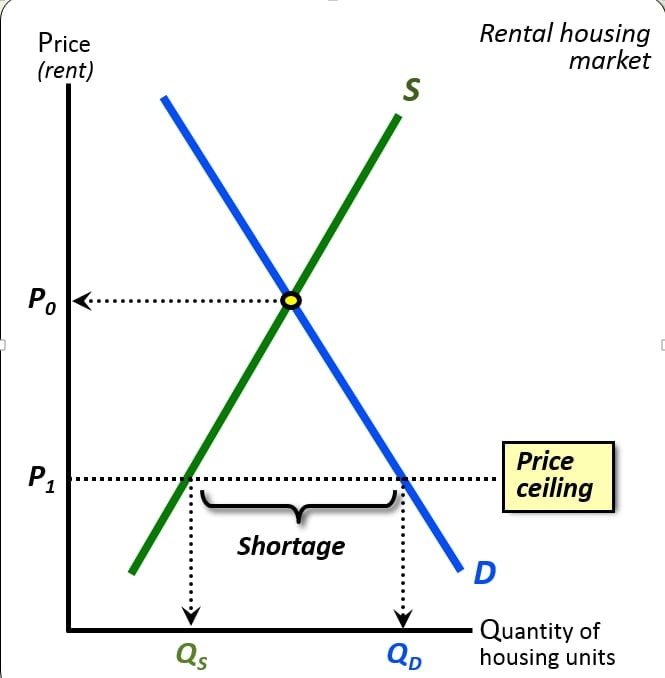
…rent control is making a comeback in response to rising housing prices in urban areas across the country in states like California, Illinois, Washington, and Massachusetts. …As the graphical Supply/Demand analysis…illustrates very clearly, rent control laws that artificially force the rental price of housing (P1 above) below the market-clearing equilibrium price (P0) are guaranteed to create a housing shortage by: a) increasing the number of rental units demanded at the artificially low rents (QD) and b) decreasing the number of rental units supplied to the market (QS). You can artificially restrict the amount of rent a landlord can legally charge for a rental unit, but you can’t force developers, builders, and landlords to build or supply more rental housing in the future. And the supply of rental housing in markets with rent control is guaranteed to decline. …Price controls aren’t the answer. Building more housing is the only real solution to increase the supply of affordable housing.
Here’s Mark’s graph.

In another column for FEE, Luis Pablo de la Horra summarizes why rent control is so misguided.
Rent control is one of those policies that continues to attract the favor of the public despite the fact it has repeatedly proven to be ineffective when it comes to improving the lives of those it is aimed at. …Rent controls often lead to a shortage of rental houses since landladies and landlords find it unprofitable to rent out their apartments at capped prices. In addition, the stock of dwellings tends to deteriorate because home-owners will have little incentive to invest in the maintenance and refurbishment of their houses. …here is some empirical evidence. A 2017 paper published by three Stanford economists shows that rent controls in San Francisco reduced rental housing supply by 15 percent, which in turn increased rental prices in the other parts of the city by around 5 percent. Another recent paper blames restrictions on the use of land (the so-called zoning) for the increasing housing prices in large US cities.
Let’s see what the other side has to say on the topic. Unsurprisingly, the New York Times is on the wrong side.

Here are some excerpts from an editorial that is a case study of economic illiteracy.
New York’s system of rent regulation, limiting how much landlords can charge tenants, began in the 1940s to help a growing middle class. There are about one million apartments covered under rent-restricting regulations now… here are some actions lawmakers can take: …Return control of the rent laws to New York City… Landlords’ ability to raise the rent by 20 percent every time an apartment is vacated is a perverse incentive… Lawmakers should scrap this incentive entirely. …the state agency that enforces rent laws…needs more funding… require landlords to submit receipts for improvements to individual apartments to the agency and the tenant.
This is remarkably bad. And sad as well. The New York Times in recent memory was actually economically sensible, endorsing a flat tax and urging elimination of the minimum wage.


Now it fully embraces policies that even rational left-leaning economists condemn.

Indeed, you can probably tell a lot about the ethics of your left-wing friends if you ask them about rent control.

The ones with good intentions will reject rent control while the demagogues (and the ignorant) will applaud this foolish example of price controls.

Minneapolis provides a good example of ethical leftists, as Elliot Kaufman explains in the Wall Street Journal.
Earlier this month the City Council overwhelmingly approved an ambitious plan to encourage higher-density development and increase the supply of housing. …The Comp Plan would allow the construction of duplexes and triplexes in areas once reserved for single-family homes, rezoning areas near public transportation for larger apartment buildings, and doing away with parking requirements for new housing. …The Comp Plan takes a market-based approach but proclaims left-wing goals. It vows to “eliminate” racial and economic disparities and aggressively fight climate change. …The Comp Plan promotes denser development, which urbanists on both left and right see as the solution to a host of problems. More density in a city like Minneapolis could help renew both geographic and economic mobility.
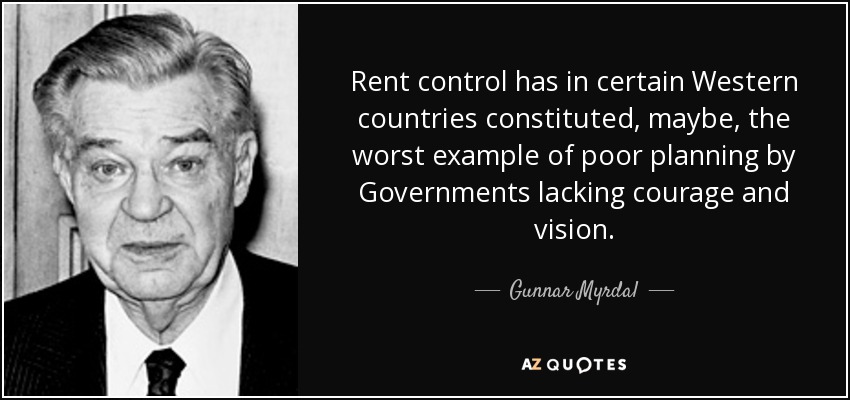
We’ll close with this great quote from a Swedish economist.


P.S. Rent control can be a great scam for privileged insiders.

P.P.S. Rent control also rewards and empowers unscrupulous and reprehensible people.

P.P.P.S. Amazingly, California voters actually rejected a state referendum to allow rent control (though this isn’t stopping one of their politicians from trying to muck up rental markets).