Search This Blog

De Omnibus Dubitandum - Lux Veritas

Showing posts with label George Leef. Show all posts

Wednesday, March 22, 2023

People Should be “Seething Mad” Over COVID – And Much More

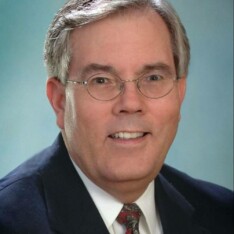
George Leef George Leef, March 21, 2023 @ American Institute for Economic Research

From early in 2020 until well into 2022, government officials in most countries imposed an array of draconian policies that were said to be necessary to protect the populace against COVID-19. In supposedly democratic nations like the United States, Great Britain, Australia, New Zealand, and Canada, officials didn’t bother with legislation – they just decreed that schools must close, masks must be worn, people must submit to vaccine jabs, non-essential businesses must close, and other mandates. They also imposed numerous prohibitions, such as gatherings for religious, sporting, or cultural events, and even enjoying a day at the beach. Enforcement of all their dictates was vigorous, occasionally brutal.

When a few people dared to question the need for or legality of the COVID policies, officials replied that they were only doing what “the science” said was the right response, usually followed by the insinuation that doubters were dangerous, retrograde people who didn’t care about putting lives at risk. Even infectious disease experts who disagreed that there was any scientific justification for the panoply of rules were ridiculed, smeared, and “deplatformed.” The last time there was such a concerted attack on freedom of speech in the US was during World War I, when the Wilson Administration pulled out all the stops in an effort to silence critics of the war.

The COVID response led to a huge contraction of liberty. But officials and their many allies scoffed: “So what? Foolish people shouldn’t be allowed to make up their own minds when experts know what’s best.”

But now, despite efforts to suppress it, information has leaked out, showing that the COVID policies were a great mistake, imposed by arrogant officials who were not following science, but rather were following their own authoritarian instincts. They were not telling people the truth about COVID, but lying to justify their assertion of power. They weren’t doing what was in the public interest, but rather what was in the interest of certain pressure groups.

Many people are angry over the harm that has been done by the tyrants who made the COVID decisions.

One of them is James Allan, a professor of law at Queensland University in Australia. In his recent article “I Am Still Seething Mad at What the Political Class Did to Us,” he explains why the politicians and their allies are utterly contemptible. He writes of their heavy-handed approach:

It was despotic, thuggish and overwhelmingly flew in the face of the data – data we had at the time, to be clear. Also culpable were the preponderance of the doctorly caste and the vast majority of journalists who exhibited zero skepticism and became barely better than PR fearmongering agents for the Government, not too unlike Pravda in that regard.

Professor Allan is particularly incensed over the revelations in Great Britain that Health Minister Matt Hancock chose to use his position to ratchet up the level of anxiety over the disease as much as possible, in order to maximize compliance. We know that because he gave journalist Isabel Oakeshott access to his texts so she could write a book about the government’s handling of COVID. She was expected to write a fawning book and keep the texts secret, but when she read them, she was just appalled and made them public. (That look behind the curtain is similar to the disclosure here of the nefarious relationship between Democrats and Twitter in promoting information they wanted people to believe, while suppressing information they didn’t want us to know.)

Allan continues:

It was in the public interest for people to see these texts and know that their political class was comprised of charlatans and heartless zealots fired by self-interest, making things up on the fly and continually mouthing ‘this is the Science’ when they knew it was simply guesses and cover to look good politically.

Correct, and officials in the US did the same things.

As Dr. Scott Atlas points out in Newsweek, “America’s COVID Response Was Based on Lies.” He writes, 

The tragic failure of reckless, unprecedented lockdowns that were contrary to established pandemic science, and the added massive harms of those policies on children, the elderly, and lower-income families, are indisputable and well-documented in numerous studies. This was the biggest, the most tragic, and the most unethical breakdown of public health leadership in modern history.

Atlas points out that even though there was little or no evidence to support the dictates of the authorities and – even early on – much evidence against them, we were told over and over again that (I’ll list only some of the lies he discusses): COVID had a far higher mortality rate than the flu, that everyone was at significant risk of death from it, that asymptomatic people were major drivers of the disease, that masks gave protection and would stop the spread, and that vaccines would stop the disease.

And instead of listening to and debating different points of view, officials did their utmost to silence and discredit critics. The authors of the Great Barrington Declaration, three esteemed professionals, were called “fringe epidemiologists” by National Institutes of Health Director Dr. Francis Collins. The approach these scientists advocated would do the most good for vulnerable people, with the least damage to the rest of us – but it didn’t involve massive government intervention. That idea had to be trashed!

Collins and his ilk didn’t behave like scientists looking for truth, but instead like defenders of an ideology who cannot abide any disagreement. The people ought to be angry over that.

Another medical expert who has sought to enlighten the public on the appalling behavior of government officials during COVID is Dr. Marty Makary of Johns Hopkins. He points out in this article that:

the Centers for Disease Control and Prevention weaponized research itself by putting out its own flawed studies in its own non-peer-reviewed medical journal, MMWR. In the final analysis, public health officials actively propagated misinformation that ruined lives and forever damaged public trust in the medical profession.

Indeed, we shouldn’t trust the medical profession, nor the “public servants” who shoved their knee-jerk authoritarian “solutions” to COVID down our throats, nor the journalists who were accomplices in the disaster.

But we shouldn’t stop there.

The government’s authoritarian COVID policies are just the most visible proof that it’s a terrible idea to turn anything of importance over to government control.

Here’s the huge lesson in the terrible COVID response: public officials are just as self-interested as any other human beings. That doesn’t always mean lining their pockets at the expense of the rest of us; it also means savoring the power to direct other people’s behavior. It means the ability to do things that inflict damage on great numbers of ordinary people, while enjoying accolades from special interest groups and the press.

If people learn those lessons, they’re well on their way to understanding Public Choice Theory. Public Choice teaches that government “solutions” to problems often make things worse because the people who are in charge are flawed, fallible, corruptible human beings just like everyone else. Moreover, they are usually insulated from the adverse consequences of their decisions, so they have little incentive to correct their mistakes.

Public Choice is the antidote for the romantic view of government – that it uses power carefully to make things better for society. That’s hardly ever true.

If people are now skeptical about allowing government officials to dictate how we must behave during an outbreak of disease, they can also be persuaded to be skeptical about allowing government officials to run education, energy policy, and much more.

Government schools do a poor job of educating their students. Why? Because the education bureaucracy is in league with teachers’ unions and doesn’t suffer in the least if students graduate from high school lacking even the skills that nearly all fourth graders used to have.

Government energy officials are mostly crusaders for “green” energy sources. They’re eager to replace fossil fuels with wind and solar generation as fast as possible, lest Earth overheat. They’re in league with certain interest groups and don’t listen to people who advocate a free market in energy, any more than the lockdowners listened to those who disagreed with them.

How bad could things get?

Have you ever heard of The Year Without a Summer? It was 1816, and in the US, the weather was so bad that crops failed. The cause was a volcanic eruption that blanketed the atmosphere with so much dust and ash that far less sunlight reached Earth’s surface than usual. Our population is now much larger than in 1816, and very dependent on electrical energy. What would happen if we had another major volcanic eruption after government has switched us away from fossil fuels? The answer is that great numbers of people would freeze and starve.

If you dig into almost any governmental bureaucracy, you find that the officials in charge aren’t experts dedicated to the public welfare, but instead are ordinary people who happen to have known the right people to land comfy jobs where they get to boss others around. They always cause a lot of unforeseen harm.

Maybe there is a silver lining in the COVID disaster. The control freaks who grabbed power might have so overplayed their hand that the result will be widespread revulsion against putting so much trust in government.

Think of the situation in America as a chess game where one side has a great superiority on the board and is thinking “Mate in 3,” but then makes an overly aggressive move that loses its queen. That’s what may have happened the way the COVID authoritarians (or as I call them in my novel, Takers) have so alienated vast numbers of Americans with their brazen assaults on freedom since early 2020. We have a “teachable moment” in the country when the people can see how bad government control truly is.

So our task ahead is to make the most of this opening, to throw the forces of statism on the defensive.' 
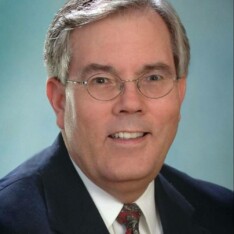
George Leef

George Leef is director of editorial content for the James G. Martin Center for Academic Renewal. He holds a bachelor of arts degree from Carroll College (Waukesha, WI) and a juris doctor from Duke University School of Law. He was a vice president of the John Locke Foundation until 2003.

A regular columnist for Forbes.com, Leef was book review editor of The Freeman, published by the Foundation for Economic Education, from 1996 to 2012. He has published numerous articles in The Freeman, Reason, The Free Market, Cato Journal, The Detroit News, Independent Review, and Regulation. He writes regularly for the National Review’s The Corner blog and for EdWatchDaily.

He recently authored the novel, The Awakening of Jennifer Van Arsdale (Bombardier Books, 2022).

Get notified of new articles from George Leef and AIER.

Tuesday, February 7, 2023

An Apostate Indicts Our Educational System

George LeefGeorge Leef  – February 1, 2023 @ American Institute for Economic Research


Michel Gibson was on the road to a career in the academic world. He was about to begin a Ph.D. program in philosophy at Oxford, when he realized that a professorship wouldn’t give him the freedom for deep, independent thinking and writing he longed for.  He began to think deeply and independently about what has happened to American higher education and came to the radical conclusion that it’s a big waste of time, money, and talent. He blames it for the slowdown of innovation.

Plenty of people complain about our ineffectual education system, but Gibson is actually challenging it. He has created the 1517 Fund, which invests in young people who have ideas and ambition. Gibson helps them to get business ventures off the ground with startup financing—but the deal is that the recipients must either have dropped out of college or never enrolled at all.

You might be thinking, “Haven’t I heard of something like that before?” Yes, you probably have. Back in 2011, Peter Thiel began his Thiel Fellowship program. It sought young people who were willing to eschew college to get on with their ideas, giving them grants of $100,000 and access to Thiel’s business savvy. Not long after Gibson bailed out of academia, he took a job with Thiel, at first as an investment analyst, but soon to help get the Fellowship up and running.

After five years with the Thiel Fellowship, Gibson decided to strike out on his own, searching the world for talented young people to invest in. Gibson has now written an incendiary book entitled Paper Belt on Fire: How Renegade Investors Sparked a Revolt Against the University. It is a combination of a memoir recounting his time with the Thiel Fellowship and then his efforts at getting his own 1517 Fund going, and a manifesto setting forth Gibson’s indictment of our educational system, which has turned into a huge waste of time, money, and above all, talent.

So, what is the 1517 Fund? It is Gibson’s way of finding young people who have ideas and want to put them into effect without the long, expensive detour through college.  The name comes from the year when Martin Luther posted in 95 Theses, attacking the Catholic Church for its corrupt sale of indulgences to the faithful who believed they brought salvation. Gibson sees the modern university as doing essentially the same thing, selling expensive pieces of paper (degrees) that will supposedly bring the holder a life of success and fulfillment. They have grown astoundingly wealthy (dozens have endowments in excess of $1 billion and nine even have endowments of over $2 billion per student), yet they continue charging students huge sums to attend and, as the “Varsity Blues” scandal revealed, some will, in effect, sell admission to mediocre students as long as they’ll collect a big enough check from someone in the family.

The high cost of college degrees is bad enough, but Gibson is more concerned about the way schools fail to challenge the brightest students, wasting their time on courses they don’t want or need and “turning them into krill for too-big-to fail corporate leviathans.” He approvingly cites George Mason University economics professor Bryan Caplan, who argues in his book The Case Against Education that college degrees are no longer about acquiring useful skills and knowledge, but merely a means of signaling that the student is trainable. Instead of allowing sharp, energetic young men and women to vegetate in colleges, Gibson is on a mission to find them and put them on the fast track to success.

He is accomplishing his mission. The 1517 Fund has a growing portfolio of profitable companies started due to its support. Moreover, his idea is spreading; other funds are now doing the same thing, and on a few occasions the 1517 Fund has suffered from the “cram down” when another fund poaches a rising star. Despite the hand-wringing from the education establishment that Thiel, Gibson, and others are doing something terrible when they persuade smart young people to eschew college, their idea is catching on.

The world faces a lot of serious problems and, Gibson says, the rate of progress has “flatlined” for the last fifty years, but the mania for educational credentials keeps a lot of talent locked away for years on end. “Our education system,” he writes, “takes its sweet time pushing students out to the frontier in any subject, not because it’s difficult, but because there’s no urgency to get them there. The final, damning point is that the institutions simply don’t trust younger scientists and inventors. Grant-making bodies cover their asses by awarding research funding only to the established over the new, the prestigious over the experimental.”

What will happen to the US if we don’t break out of the college credential funk? We will gradually decline in prosperity and innovation, that’s what. Gibson points to economist Joel Mokyr’s book The Lever of Riches, where he argues that nations go into decline when they stop innovating and rest on their laurels, as was the case with China from the fourteenth century on. The same malaise is now affecting America. Gibson quotes former Google CEO Larry Page: “There are many, many exciting and important things you could do that you just can’t because they’re illegal or they’re not allowed by regulation.”

Indeed so. America has gone from a society where the people were free to try almost anything to one where they must seek permission from authorities—authorities who have little if anything to gain from saying “yes” and much to lose if they do. Regulators usually embrace the “precautionary principle” and drag their heels until they’re satisfied that no one will be harmed if an innovation is approved. (That problem is not the same as Gibson’s major complaint about the way our education system squanders talent, but they’re closely related and both need to be solved.)

Gibson is scornful of American university leaders. They constantly talk about how their schools “transform” students and enrich their lives, but never provide any actual evidence for those claims. Do students gain much in knowledge and skill from the day they first enter upon campus until the day they leave? Schools could test for that, but for some reason don’t.

A positive thing that our academic leaders could do would be to have their various departments set forth the top five unsolved problems in their respective fields, and free their faculty members to work on them. Gibson isn’t optimistic about the prospects of that happening, however.

What I have long called “the college bubble” has begun to deflate, as more and more young Americans realize that the costs exceed the benefits. So far, the schools suffering enrollment declines have been smaller, regional institutions; the prestige colleges and universities still have far more applicants than spaces. That attests to the strength of the belief that a degree from the likes of Harvard is worth the high cost in time and money. But that belief is apt to change as Gibson, Thiel, and others continue to help sharp and ambitious young people succeed just with their innate talents.

George Leef
George Leef 

George Leef is director of editorial content for the James G. Martin Center for Academic Renewal. He holds a bachelor of arts degree from Carroll College (Waukesha, WI) and a juris doctor from Duke University School of Law. He was a vice president of the John Locke Foundation until 2003.

A regular columnist for Forbes.com, Leef was book review editor of The Freeman, published by the Foundation for Economic Education, from 1996 to 2012. He has published numerous articles in The Freeman, Reason, The Free Market, Cato Journal, The Detroit News, Independent Review, and Regulation. He writes regularly for the National Review’s The Corner blog and for EdWatchDaily.

He recently authored the novel, The Awakening of Jennifer Van Arsdale (Bombardier Books, 2022).

Get notified of new articles from George Leef and AIER.

Tuesday, November 29, 2022

MFE (Merit, Fairness, and Equality) Versus DEI (Diversity, Equity, and Inclusion) Should be NC (No Contest)

George Leef George Leef  – November 25, 2022 @ American Institute for Economic Research

Roughly one century ago, “progressives” set out to take over American education. They wanted to extirpate the individualism that had always been the hallmark of the people’s character, so that they would be receptive to the collectivism and central control that progressivism calls for. The best way to make that happen would be to instill their precepts in young minds.

The progressives (I will not call them “liberals” even though that’s common parlance today; the progressive project is the exact opposite of true liberalism) have been extraordinarily successful in their goal of dominating our educational institutions. For many decades, they made slow-but-steady progress, as more and more teachers and professors of a leftist bent were hired. Traditional academic norms, however, held most of them back from going too far and blatantly turning their classes into propaganda for their pet beliefs. The American Association of University Professors held to the idea that faculty should teach their subjects and not deviate into matters of personal opinion.

Those norms have been eroding. They began to give way in the 1970s, and have been receding ever since. Increasingly, new faculty members have been emboldened to put a political slant on their teaching. Many were upfront about it. One professor, Donald Lazere, even wrote a book entitled Why Higher Education Should Have a Leftist Bias.

Having absorbed progressive beliefs throughout their own education, many faculty members now see their roles as “change agents” rather than as objective scholars. Many courses that were formerly politically neutral (English, for example) have been turned into indoctrination camps where the readings and assignments have an overwhelmingly leftist bias. Faculty are able to do that because most college administrators are on their side. Just like the faculty, administrators have been steeped in progressive activism. Very few are willing to clash with faculty (and students) who want to politicize their schools. Quite often, they take the lead in doing so.

At the University of Tennessee, for example, the administration has demanded diversity plans from all the academic units of the university. Perhaps more alarmingly, the diversity, equity, and inclusion mania has been brought into the U.S. Naval Academy.

The DEI fixation prevents academic leaders from standing up for academic freedom when students who say they’re offended demand that professors be punished, as has occurred at University of Pennsylvania Law School regarding Professor Amy Wax. They are also eager to demand that applicants for faculty positions or advancement submit “ diversity statements,” which amount to loyalty oaths to a set of ideas—an requirement utterly at odds with the concept of the university as a place for free inquiry.

With the divisive and anti-educational DEI entrenched at so many colleges and universities, it seems that there is an opportunity for some “product differentiation.” Why shouldn’t those schools that stick to education, and eschew DEI, trumpet that fact to prospective students, families, and financial supporters?

That is what Professors Dorian Abbot of the University of Chicago and Ivan Marinovic of Stanford University propose. Colleges and universities that are not beholden to DEI should declare themselves for MFE: merit, freedom,  and equality. Writing in Newsweek, they state, “We propose an alternative framework called Merit, Fairness, and Equality (MFE) whereby university applicants are treated as individuals and evaluated through a rigorous and unbiased process based on their merit and qualifications alone.”

What MFE would mean is that students would be admitted only because of their academic and personal achievements, not because of their ancestry or family connections. It would also mean that school personnel would be similarly chosen on merit, with no favoritism for applicants because of their race or other immutable characteristics, and no favoritism for those who espouse certain political beliefs.

At DEI institutions, individuals applying for faculty positions often have to declare their support for the DEI agenda by submitting a “diversity statement.” Those statements make it possible for the decision-makers to cull out anyone who is not an advocate of that agenda. If, for example, a chemistry professor said, “I believe in treating all students equally and am completely colorblind, in that I do not take race into account in my teaching, grading, or interactions with students,” that would ruin his chances at DEI schools, no matter how stellar his teaching and research might be.

On the other hand, MFE schools would announce that they have no ideological litmus tests and hire and promote faculty purely on the basis of achievement.

Furthermore, the DEI agenda adversely affects students. At DEI schools, students have to watch what they say, lest they find themselves under investigation by the school’s “bias response team,” for having said something deemed offensive by another student. They also may be compelled to take courses that have scant knowledge content but are intended to impart DEI beliefs such as the existence of “white privilege.”

A school that had embraced MFE would have no such obstacles to freedom of speech and would not try to indoctrinate students with politicized courses. 

As matters now stand, most colleges and universities are partially to wholly in thrall to DEI. It is divisive and destructive, but has swept through most schools with little opposition since those who don’t like it fear being “canceled” by DEI zealots.

Can DEI be stopped? Robert Maranto, Michael Mills, and Catherine Salmon observe in this article on The Hill, “you can’t beat something with nothing,” and suggest that MFE is the something that might beat it. MFE, they point out, “accords with public opinion” since “Seventy-five percent of Americans believe that gender, race or ethnicity should not factor into educational admissions decisions.”

DEI has mostly conquered through stealth, and its advocates fear to engage in debate over its tenets and effects. What currently protects schools that embrace it from competition is the fact non-DEI schools don’t have a shorthand way of communicating that fact. MFE would be exactly the way to do that. 

Colleges and universities that have resisted DEI could proudly declare themselves to be schools dedicated to Merit, Fairness, and Equality and explain why that matters. Students who want education without any ideological overlay would gravitate toward MFE institutions. Also, education supporters who don’t want to waste their money backing schools that are undermining the foundations of the nation would look for MFE schools.

One more thing—MFE schools not only deliver better education, but can do so at lower cost because they don’t waste resources on “diversity” administrators.

Colleges and universities that have succumbed to DEI ought to be at a big competitive disadvantage versus those that just offer worthwhile education. Let us hope that MFE catches on. 

 George Leef

George Leef is director of editorial content for the James G. Martin Center for Academic Renewal. He holds a bachelor of arts degree from Carroll College (Waukesha, WI) and a juris doctor from Duke University School of Law. He was a vice president of the John Locke Foundation until 2003.

A regular columnist for Forbes.com, Leef was book review editor of The Freeman, published by the Foundation for Economic Education, from 1996 to 2012. He has published numerous articles in The Freeman, Reason, The Free Market, Cato Journal, The Detroit News, Independent Review, and Regulation. He writes regularly for the National Review’s The Corner blog and for EdWatchDaily.

He recently authored the novel, The Awakening of Jennifer Van Arsdale (Bombardier Books, 2022).

Get notified of new articles from George Leef and AIER.